Improve Your Service Request Management

Select a process
Choose a process to continue working in your connected workspace.
Find Bottlenecks and Improve Service Request Efficiency
ProcessMind helps you uncover critical delays, rework loops, and unnecessary steps within your service request process. Our platform reveals hidden bottlenecks and variations impacting efficiency and customer satisfaction. By analyzing your data, we provide actionable insights to streamline operations, reduce costs, and improve service delivery across your system.
Download our pre-configured data template and address common challenges to reach your efficiency goals. Follow our six-step improvement plan and consult the Data Template Guide to transform your operations.
Show detailed description
The Service Request Management process is a cornerstone of effective organizational operations, pivotal for delivering efficient support and maintaining high levels of customer and employee satisfaction. However, many organizations grapple with opaque workflows, persistent manual bottlenecks, and unacceptably slow resolution times, hindering productivity and impacting overall service quality. ProcessMind offers an unparalleled, end-to-end perspective of your entire service request journey, from the moment of initial submission to its final resolution, regardless of which underlying system your organization utilizes. By meticulously analyzing your event logs, ProcessMind meticulously constructs the actual sequence of activities, illuminating hidden inefficiencies, exposing unexpected delays, and identifying costly rework loops that conventional reporting methods often fail to detect. Users gain immediate clarity on precisely where requests get stuck, identify the fundamental root causes of prolonged resolution times, and pinpoint specific areas that are ripe for automation and standardization. This profound, data-driven dive into your operational data provides truly actionable insights, helping you understand not just what happened in your service request workflow, but critically, why, across every single step.
Organizations commonly face a myriad of challenges in service request management, including inconsistent processing, elevated operational costs driven by excessive manual handoffs, and ultimately, dissatisfied customers or employees. Whether your service requests pertain to critical IT support issues, intricate HR queries, essential facilities management tasks, or any other internal or external service function, process deviations and non-compliance can lead to significant operational risks, wasted resources, and damage to reputation. ProcessMind is engineered to tackle these challenges directly by visually mapping the true paths requests take, clearly highlighting deviations from established standard operating procedures, and identifying unauthorized steps or activities that introduce risk or delay. The benefits of analyzing this vital process with ProcessMind are extensive and measurable: significantly faster request resolution times, substantial reductions in operational costs through the precise elimination of unnecessary steps and redundant tasks, improved resource allocation based on actual workload, and a marked boost in both internal and external customer satisfaction scores. Furthermore, you can pinpoint exactly where process automation can yield the greatest impact, transforming sluggish, manual tasks into swift, automated workflows, and ensuring far better adherence to crucial service level agreements.
With ProcessMind, you are empowered to dive deep into detailed process variants, comprehensively understand the intricate impact of parallel activities on overall cycle times, and accurately quantify the frequency and cost of rework for specific request types. Our platform helps you discover critical insights such as the most efficient pathways for high-priority requests, the precise impact of different teams or individual agents on resolution times, and detect potential compliance gaps that could expose your organization to risk within your service delivery framework. This exceptionally detailed analysis empowers you to not only optimize your existing workflows for immediate gains but also to strategically design more resilient, agile, and efficient processes for the future, completely independent of your specific source system. Ready to transform your service request management from a reactive, often chaotic function into a proactive, highly optimized powerhouse of efficiency? Getting started is refreshingly straightforward. Begin by securely extracting your service request data, including all relevant event logs, directly from your system. We encourage you to refer to our comprehensive data template for detailed guidance on the required fields and optimal format, ensuring a smooth, accurate, and rapid analysis. ProcessMind is specifically designed to integrate seamlessly with your existing data infrastructure, making it exceptionally easy to unlock the full, transformative potential of your service operations.
The 6-Step Path to Optimize Service Request Management
Connect & Discover
What to do
Extract event log data from your system, ensuring you capture the Service Request ID, activity names, and timestamps for each event. This forms the foundation for process analysis.
Why it matters
Accurate and comprehensive data is essential for a reliable process model, providing a true picture of how service requests flow through your organization.
Expected outcome
A complete and accurate event log, ready for process mapping and analysis.
Map Your Process
What to do
Visualize the end-to-end journey of your service requests using the extracted event data. Identify all variations and common paths, along with their frequencies.
Why it matters
A clear visual representation helps all stakeholders understand the actual process, not just the documented one, revealing deviations and actual flows.
Expected outcome
A comprehensive process map illustrating all activity sequences and their performance.
Identify Bottlenecks
What to do
Analyze the process map to pinpoint activities or transitions where service requests experience significant delays, high wait times, or frequent reworks.
Why it matters
Pinpointing these areas allows you to focus improvement efforts on the most impactful parts of the process, reducing overall cycle time and improving efficiency.
Expected outcome
A prioritized list of specific bottlenecks, quantified by their impact on service request processing.
Analyze Root Causes
What to do
Investigate the underlying reasons for identified bottlenecks, such as resource constraints, manual handoffs, data quality issues, or policy non-compliance.
Why it matters
Addressing symptoms without understanding root causes leads to temporary fixes. A deep dive ensures sustainable improvements that tackle core inefficiencies.
Expected outcome
A clear understanding of the systemic issues driving process inefficiencies, with supporting data.
Design Improvements
What to do
Based on root cause analysis, propose specific, actionable changes to optimize the service request process, such as automation, re-sequencing tasks, or new training.
Why it matters
Proactive design of improvements ensures that solutions are well-considered, targeted, and aligned with strategic goals, maximizing positive impact.
Expected outcome
A detailed improvement plan, outlining specific changes, their expected impact, and implementation steps.
Monitor & Iterate
What to do
Implement the designed improvements and continuously monitor key performance indicators to assess their effectiveness. Be prepared to adjust and refine as needed.
Why it matters
Process improvement is an ongoing journey. Continuous monitoring ensures that benefits are sustained and allows for agile adaptation to new challenges or opportunities.
Expected outcome
Sustained process efficiency and continuous optimization, demonstrating measurable improvements in service request management.
WHAT YOU WILL GET
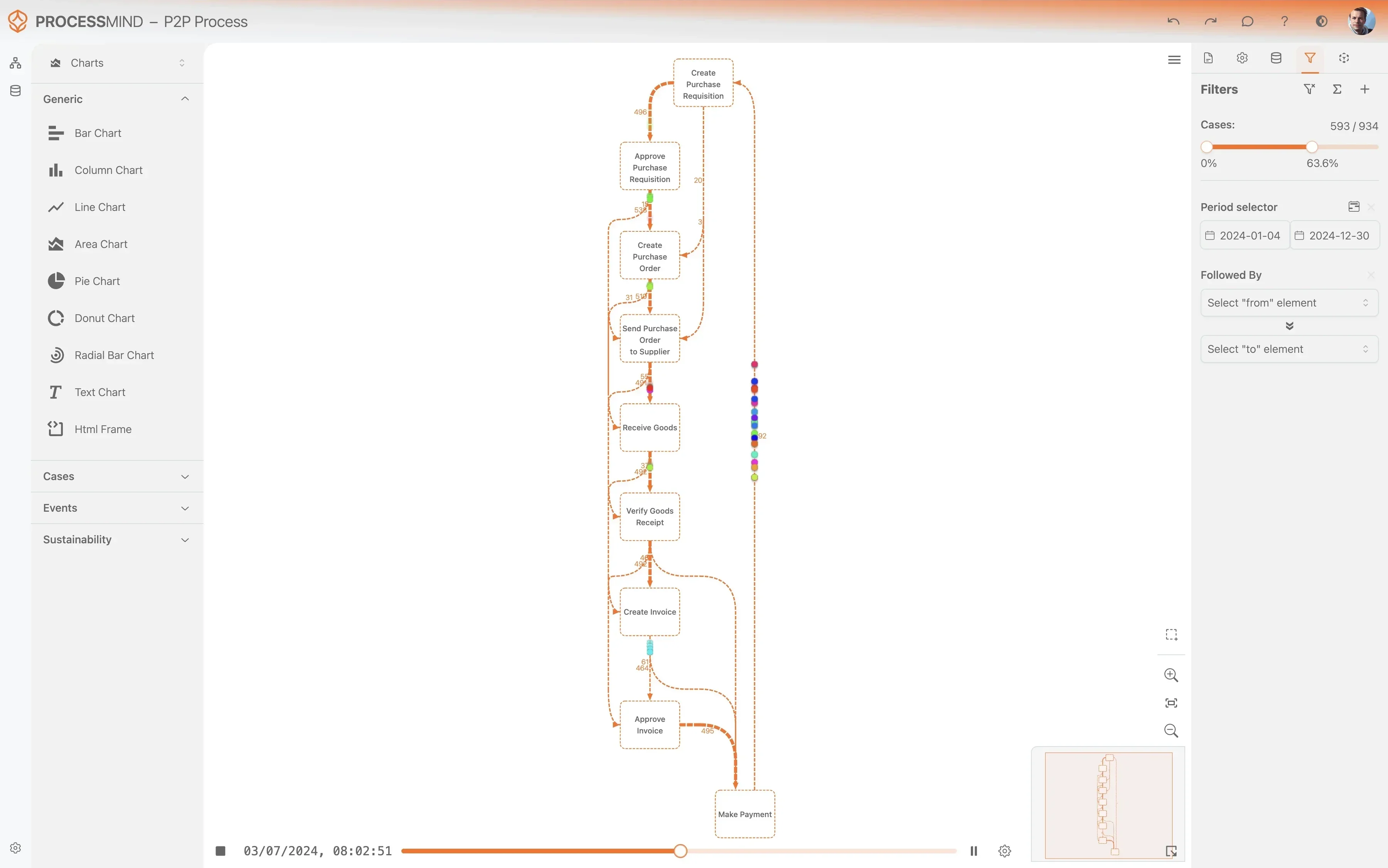
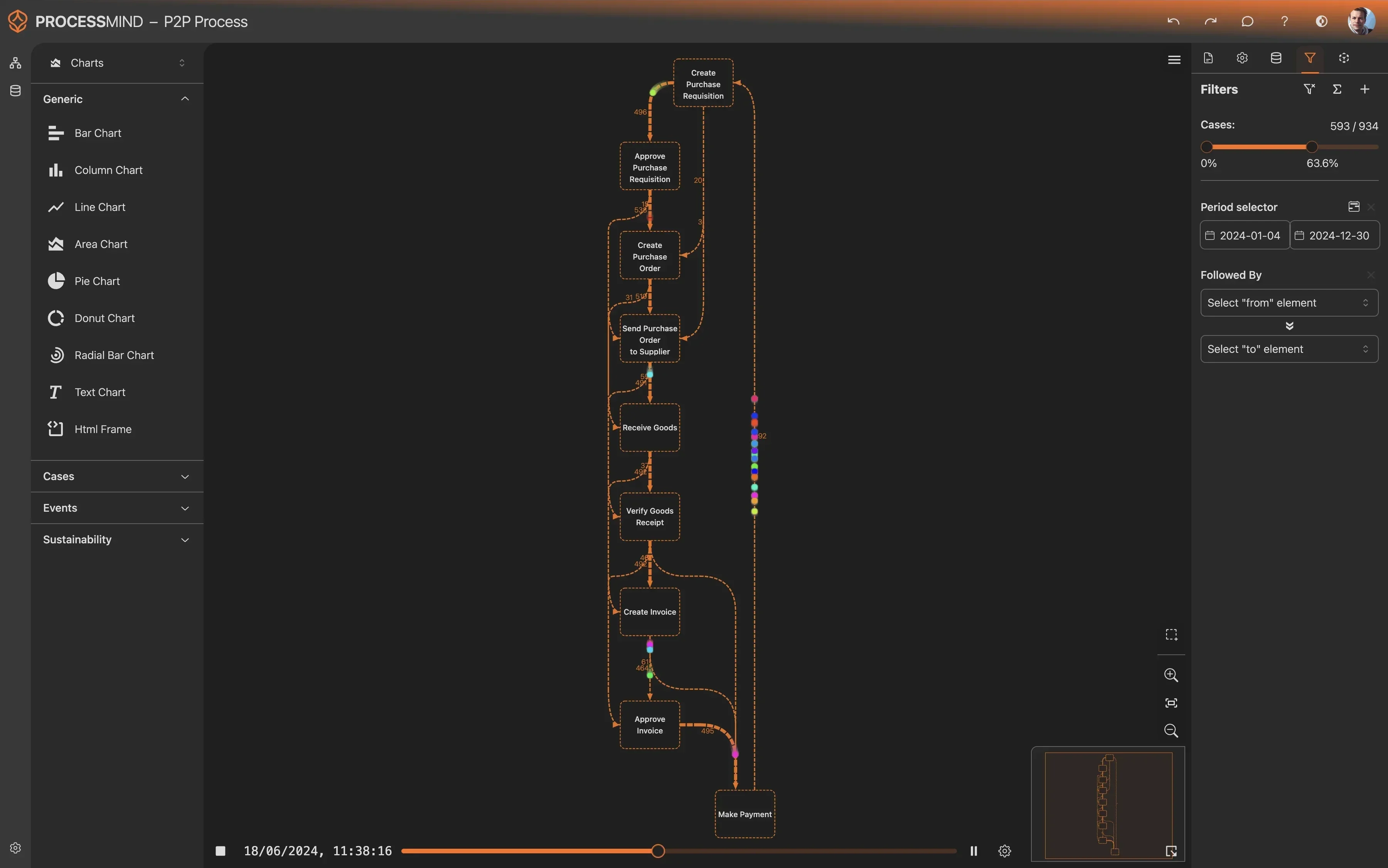
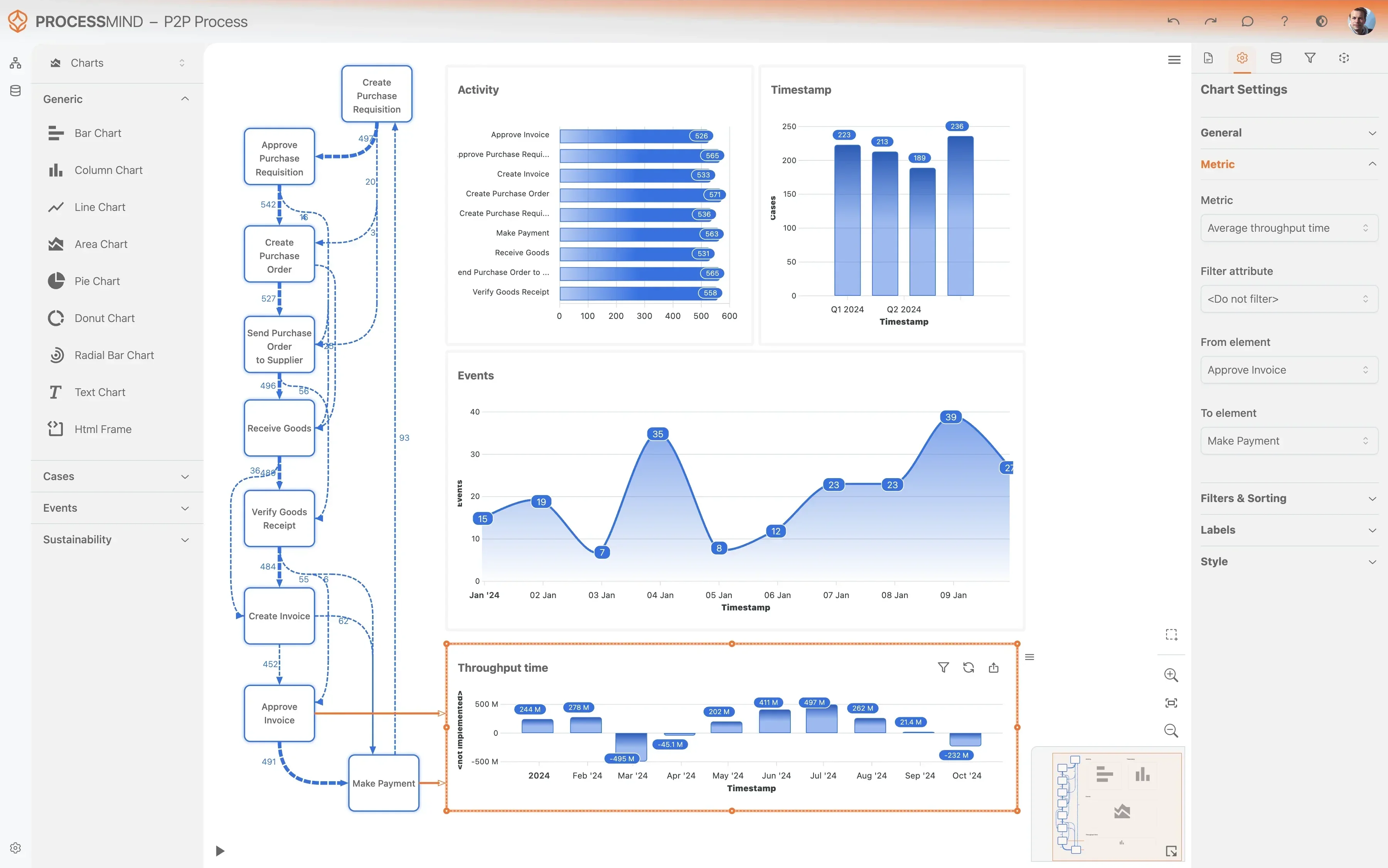
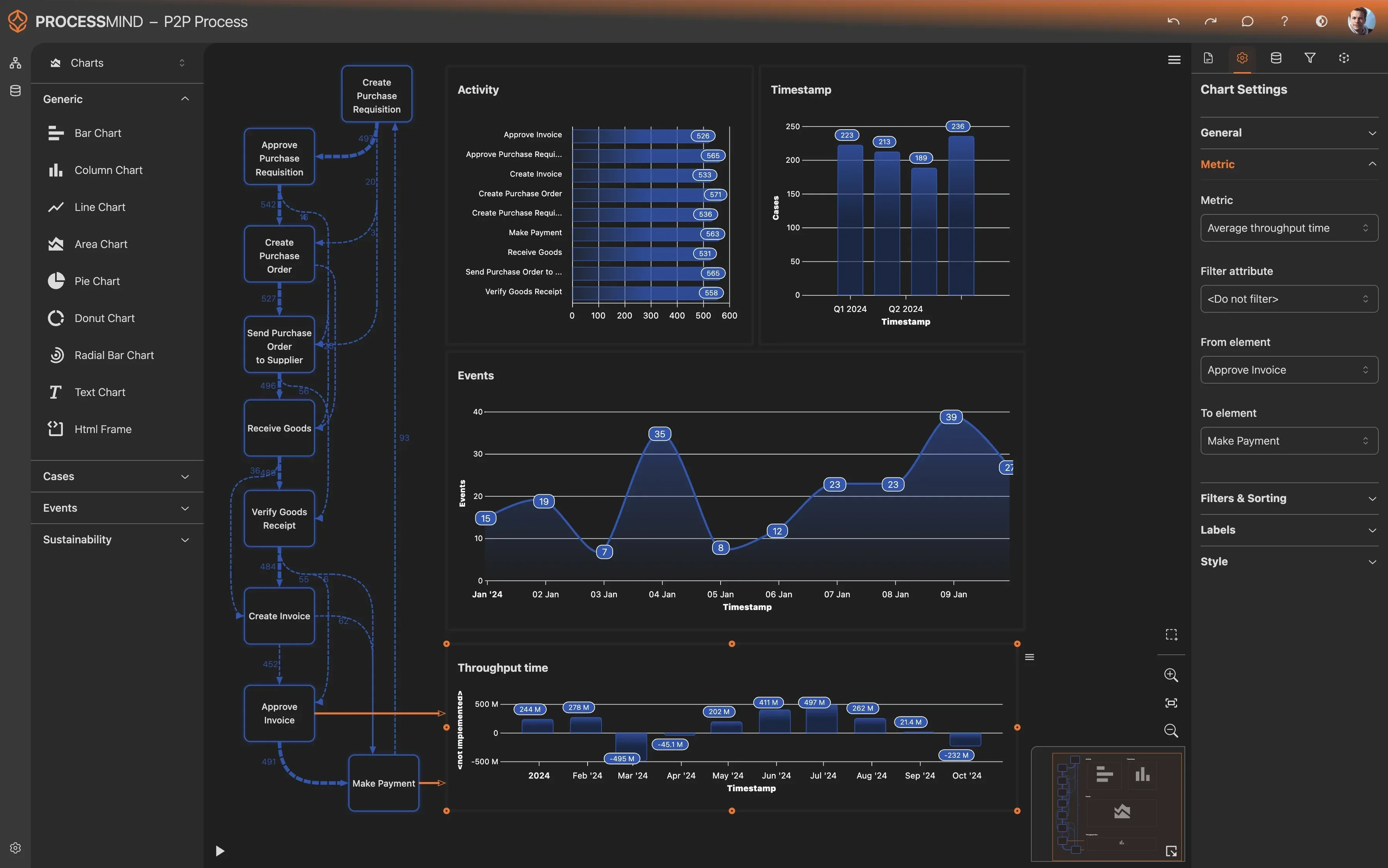
Discover the True Path of Your Service Requests
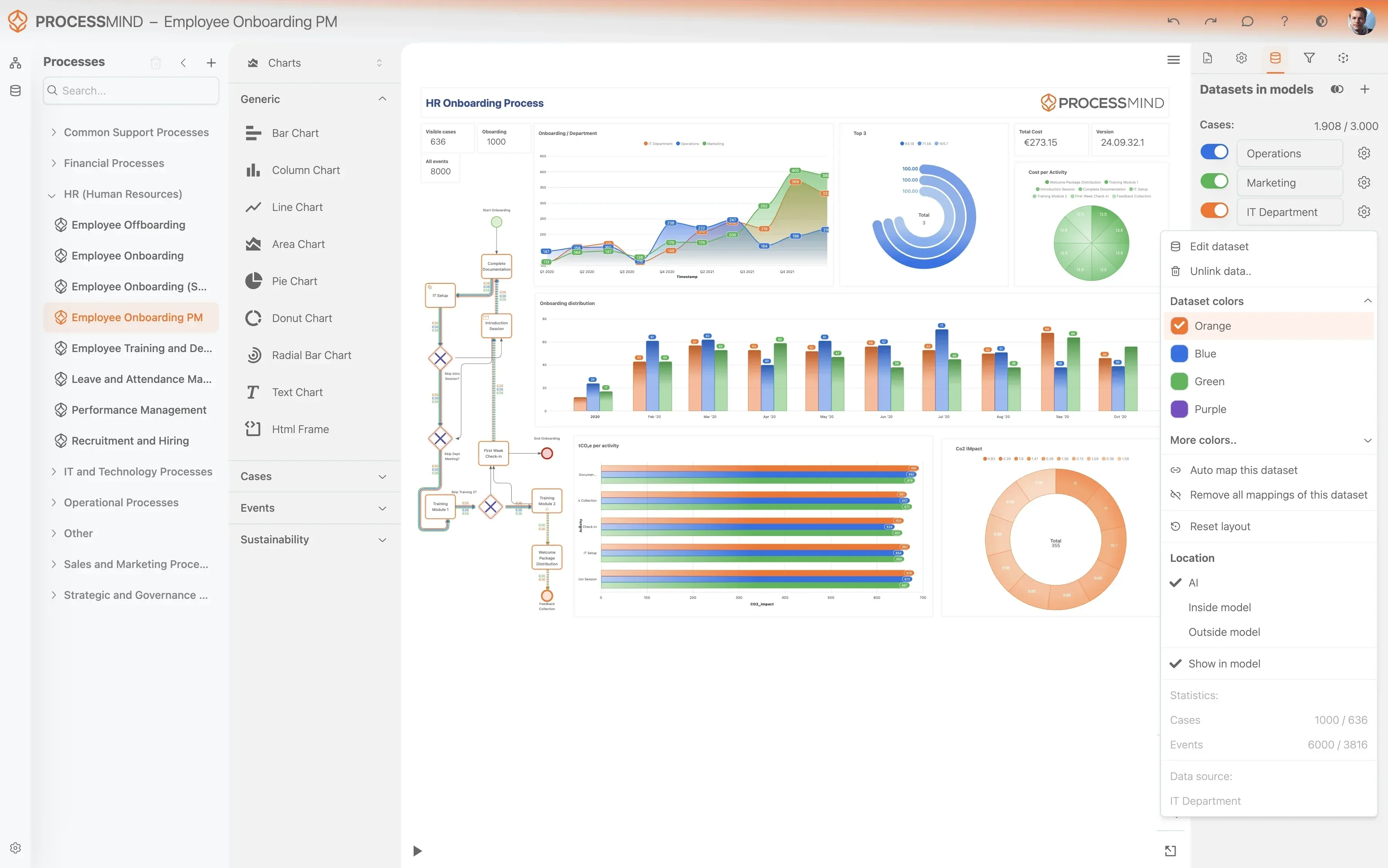
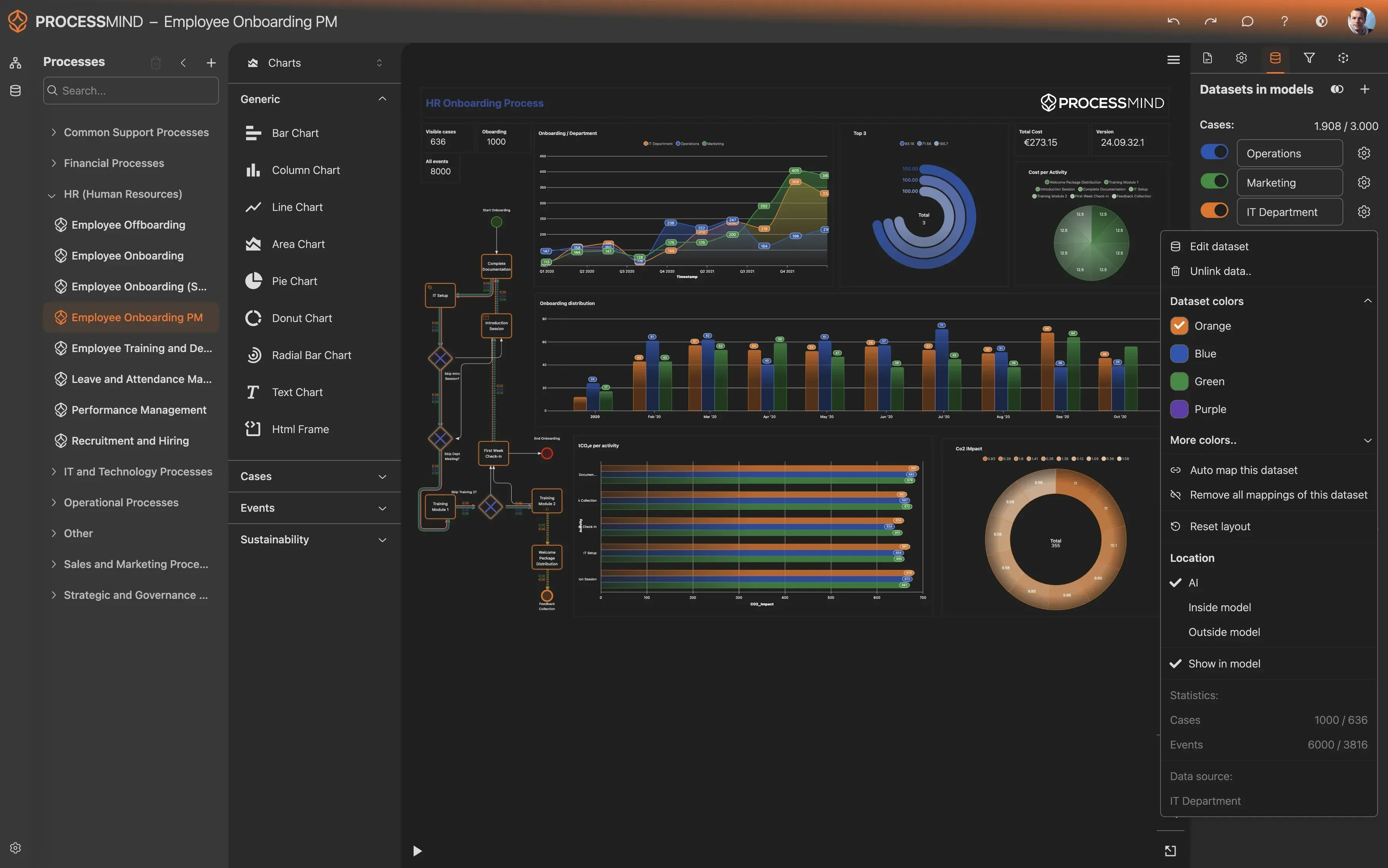
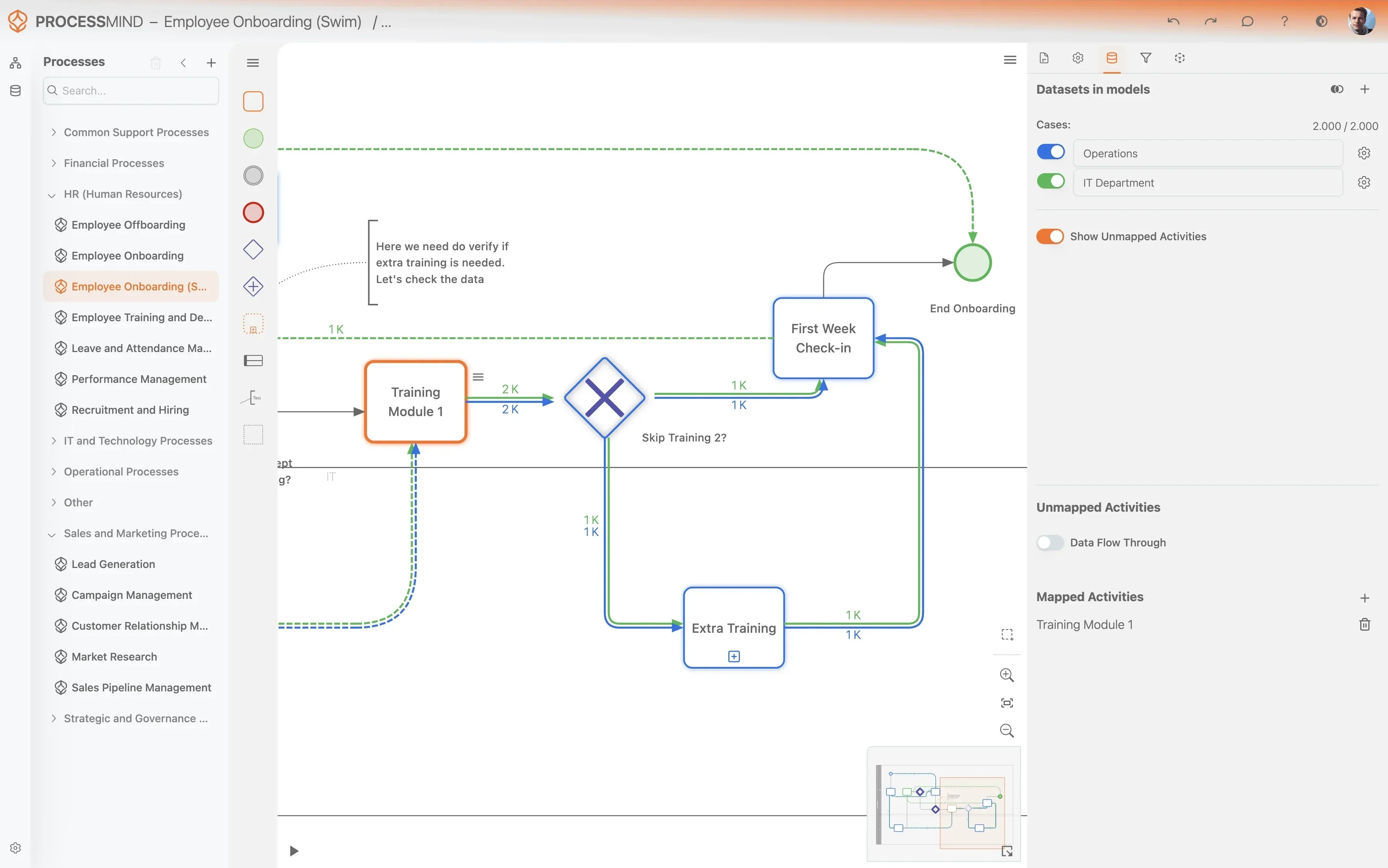
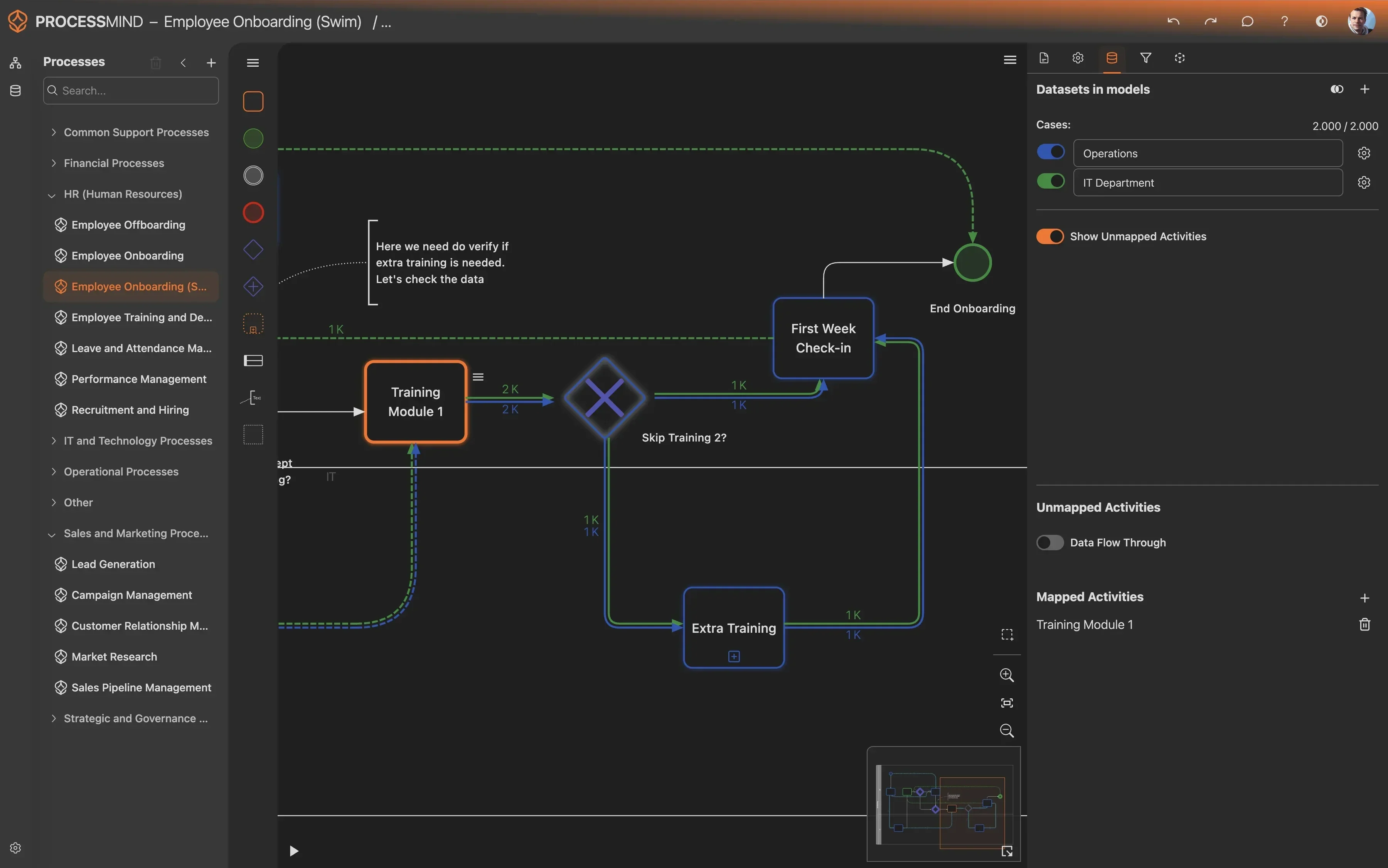
- Visualize end-to-end service request journeys
- Identify critical bottlenecks and deviations
- Pinpoint root causes for delayed resolution
- Optimize workflows for faster service delivery
TYPICAL OUTCOMES
Transformative Results in Service Request Management
These outcomes illustrate the significant improvements organizations can achieve by applying process mining to their Service Request Management workflows, identifying inefficiencies and optimizing processes for better performance.
Average reduction in request cycle time
Process mining identifies and eliminates delays, streamlining the service request lifecycle from creation to resolution, leading to quicker service delivery.
Increase in meeting service level agreements
By identifying root causes of SLA breaches, organizations can proactively address bottlenecks and process deviations, ensuring more requests are resolved within agreed-upon times.
Decrease in requests requiring additional work
Uncover instances where requests re-enter previous stages or require repeated execution due to errors or incomplete information, drastically cutting down on wasted effort and costs.
Increase in adherence to standard procedures
Gain clear visibility into process deviations and ensure service agents follow standard operating procedures, reducing risks and improving consistency across all requests.
Reduction in unnecessary transfers and idle time
Visualize and optimize transitions between different support teams or process steps, decreasing idle time and improving coordination for quicker request progression and faster resolution.
Results vary based on the specific process complexity, data quality, and organizational context. These figures represent typical improvements observed across various Service Request Management implementations.
Recommended Data
For customized data recommendations, choose your specific process.
FAQs
Frequently asked questions
Process mining visualizes the actual flow of your service requests, identifying bottlenecks, deviations, and rework. It helps uncover root causes for delays and inefficiencies, enabling data-driven optimization strategies. This approach enhances transparency and allows for continuous process improvement.
Process mining can pinpoint issues like excessive resolution times, frequent Service Level Agreement breaches, and high reassignments or rework. It also uncovers inefficient routing, suboptimal resource allocation, and inconsistent handling practices within your request processes. This reveals critical bottlenecks and deviations from desired paths.
The core data required is an event log, which includes a case identifier, an activity name, and a timestamp for each event. For Service Request Management, this means the Service Request ID, the specific action taken, and when it occurred. Additional attributes like agent, department, and request type enhance the analysis.
You can expect significant reductions in service request resolution times and improved Service Level Agreement adherence. Process mining helps minimize rework and reassignments, streamline information gathering, and enhance resource allocation, directly impacting efficiency and user satisfaction. It also reveals opportunities for automation.
Initial data extraction and model setup can typically be completed within a few weeks, depending on data complexity and IT readiness. Early insights, such as discovering your main process variants and identifying major bottlenecks, can often be achieved rapidly after the initial data load. Continuous monitoring then provides ongoing optimization opportunities.
Data can typically be extracted from your source system using standard reporting tools, database queries, or API integrations. The goal is to obtain event logs in a structured format, usually CSV or a database table, containing the necessary case ID, activity, and timestamp information. Consulting your system administrator or a data engineer is often helpful for this step.
Beyond access to your source system for data extraction, you will need a process mining software platform. This platform handles the ingestion, analysis, and visualization of your event log data. Most solutions are cloud-based, requiring only a web browser, while some may offer on-premise deployment options.
Yes, process mining is excellent for compliance. It provides an objective view of every executed step, making it easy to detect deviations from prescribed procedures or regulatory requirements. This transparency helps ensure that all service requests adhere to established guidelines and mandates.
While standard reporting provides aggregated metrics and predefined views, process mining uncovers the actual end-to-end flow of every single service request. It visually reconstructs the entire process, revealing hidden deviations, reworks, and bottlenecks that traditional reporting might miss. This allows for deep root cause analysis and proactive optimization.
No, process mining provides valuable insights for organizations of all sizes. Even smaller teams can uncover inefficiencies, improve compliance, and optimize resource allocation within their Service Request Management. The benefits scale with the complexity and volume of your processes.
Start Optimizing Your Service Request Management Today
Uncover inefficiencies, boost resolution times with powerful insights.
No credit card required