Improve Your Recruitment & Talent Acquisition

Select a process
Choose a process to continue working in your connected workspace.
Improve Recruitment and Talent Acquisition with Process Mining
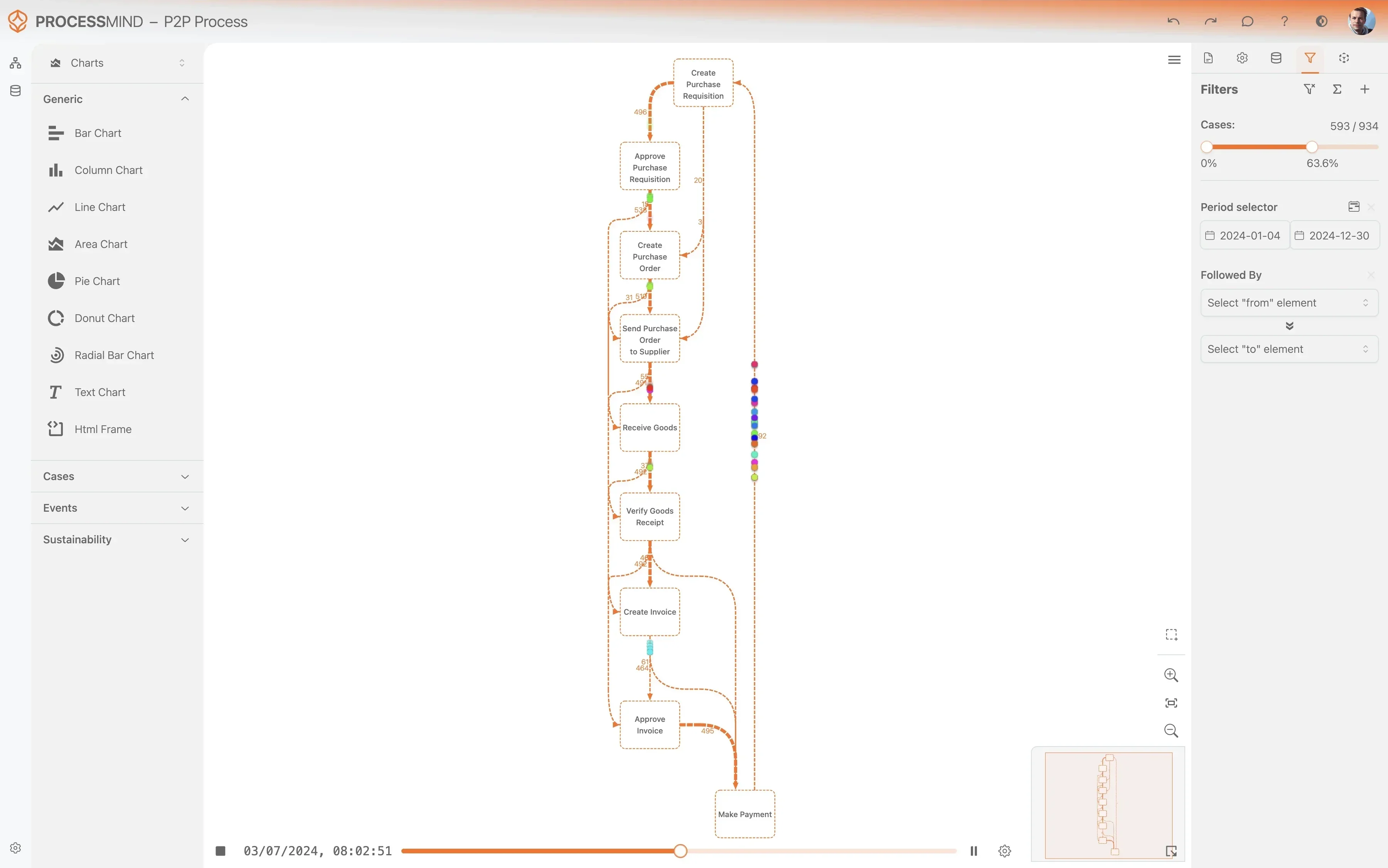
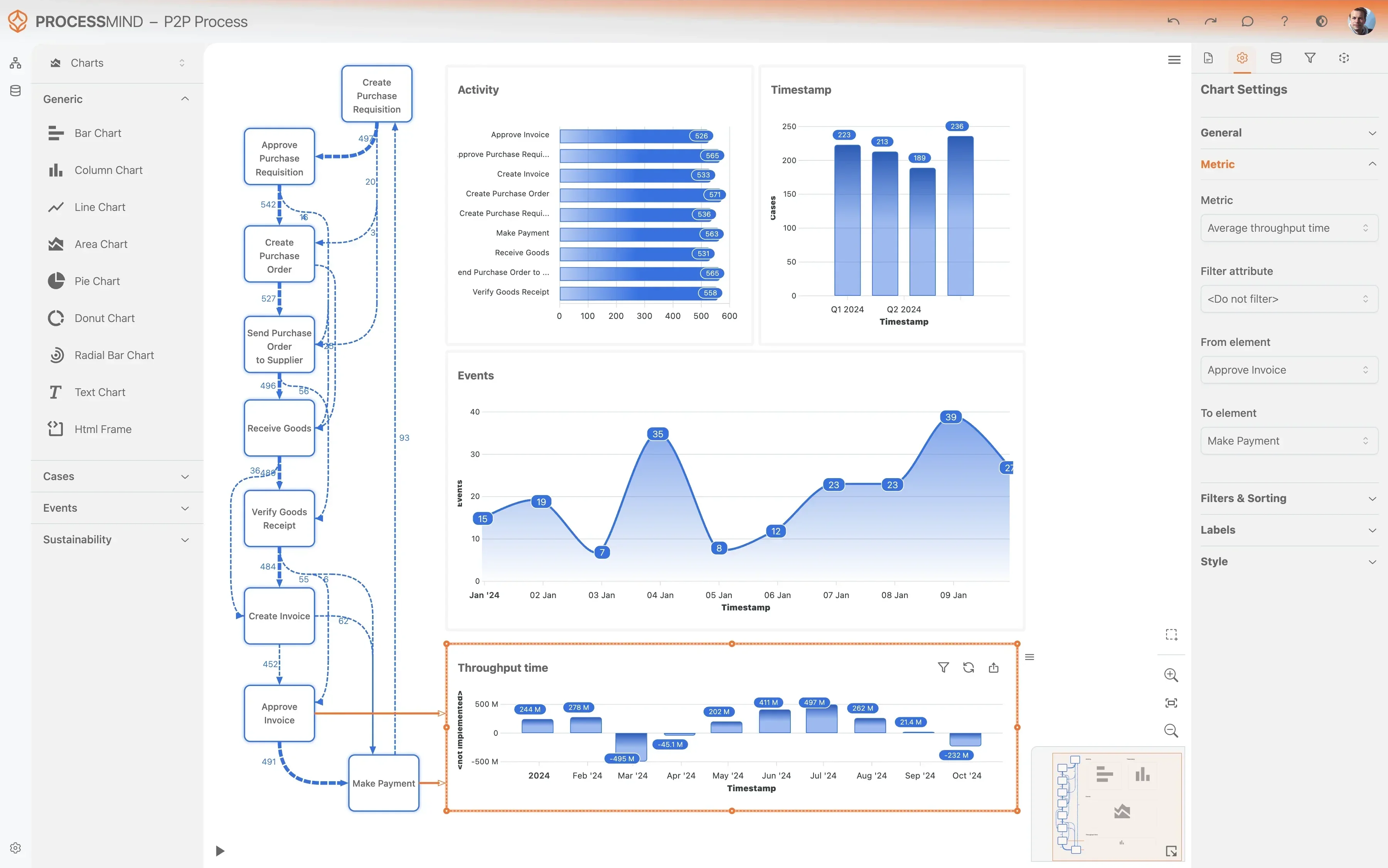
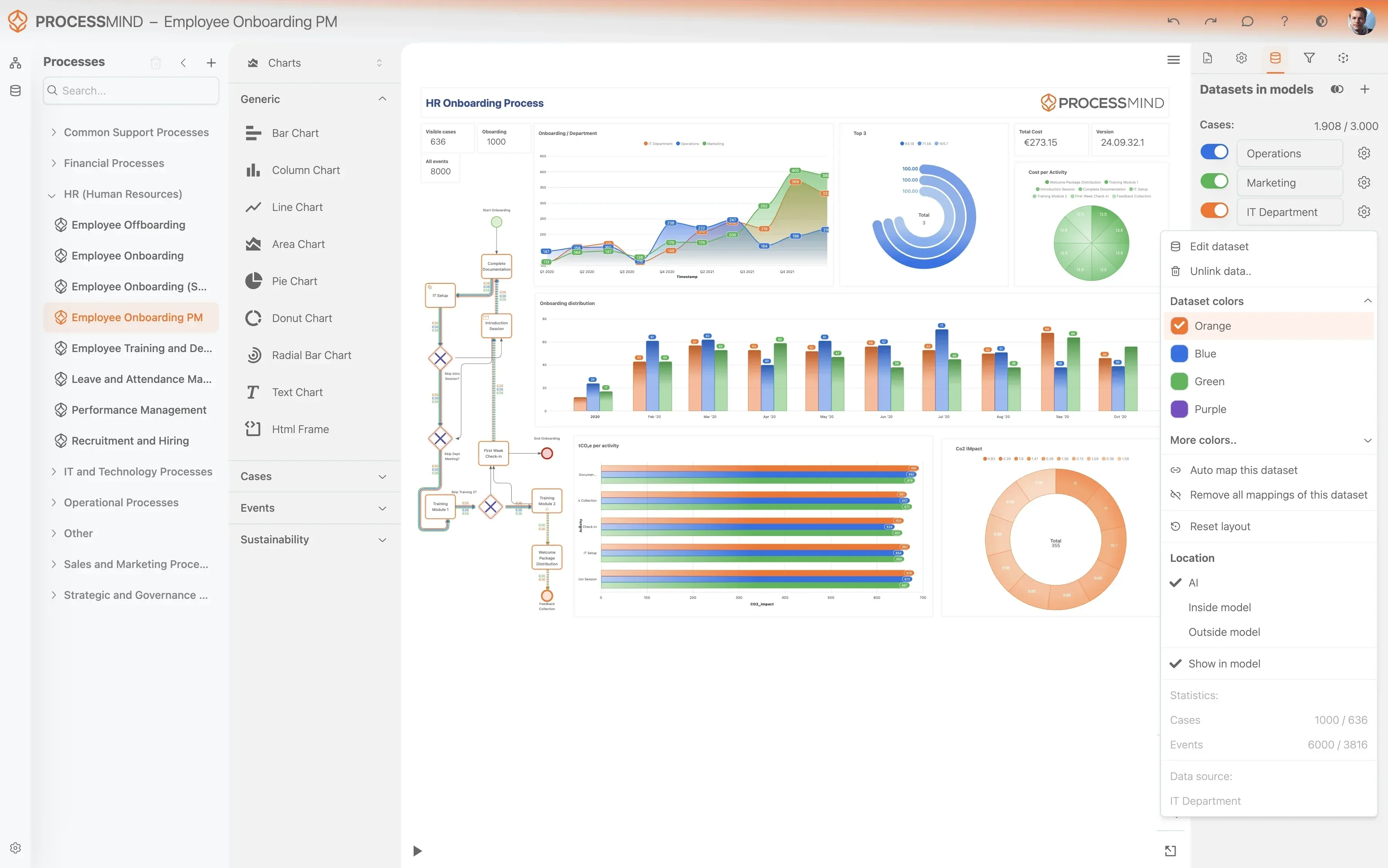
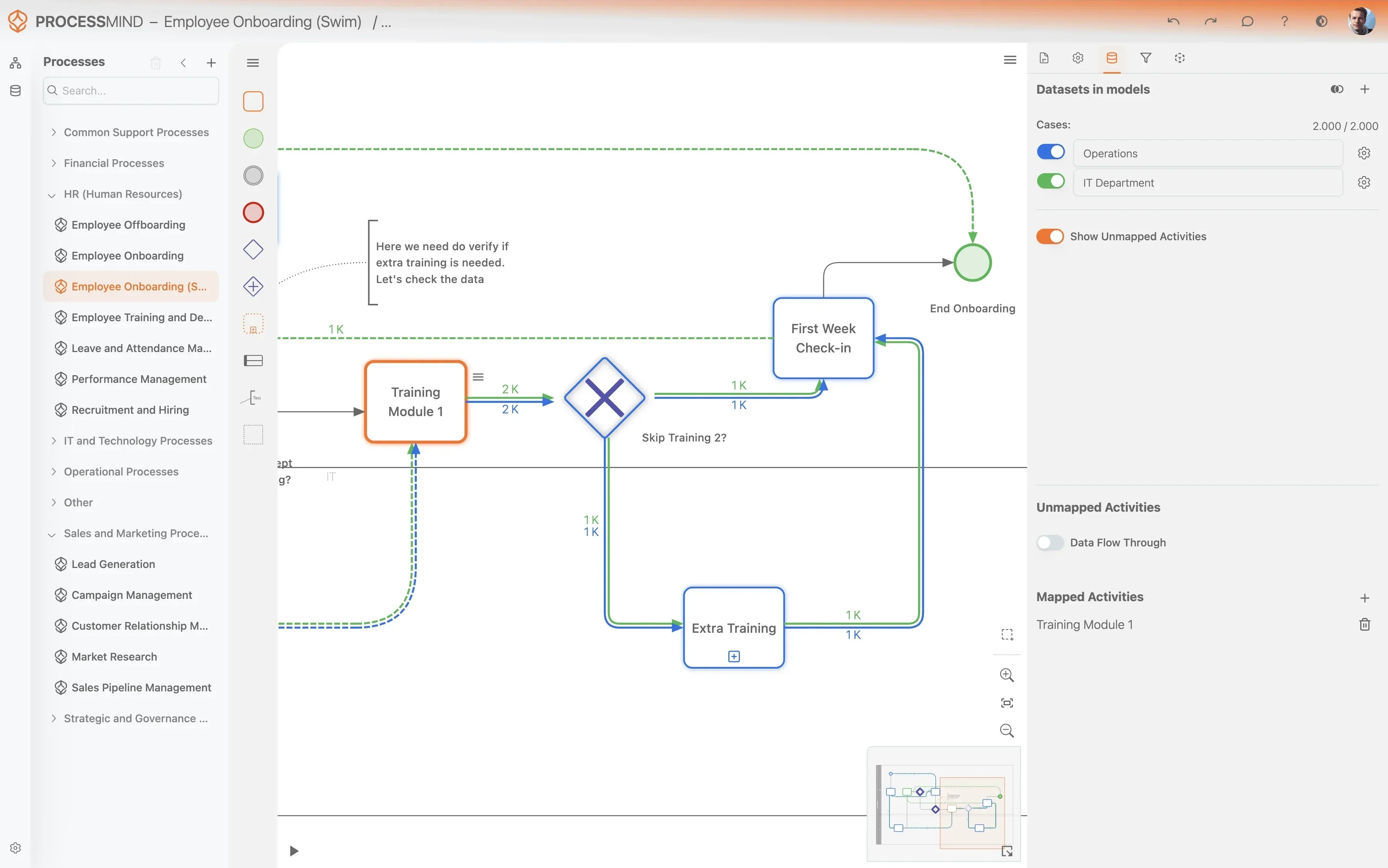
ProcessMind helps you uncover hidden inefficiencies and bottlenecks in your recruitment workflows. Easily identify where delays occur, understand rework loops, and pinpoint areas for standardization. Our platform reveals the true execution of your process, enabling data-driven optimization.
Download our pre-configured data template and address common challenges to reach your efficiency goals. Follow our six-step improvement plan and consult the Data Template Guide to transform your operations.
Show detailed description
Recruitment and talent acquisition are critical functions, forming the gateway to your organization's future success. However, the actual flow of candidates from initial application to successful onboarding is often obscured by complex workflows and data residing in disparate systems. Process mining for Recruitment and Talent Acquisition offers an unprecedented level of transparency, allowing you to move beyond assumptions and truly understand how your process operates. By analyzing event logs from your existing systems, ProcessMind constructs a comprehensive visual map of every journey a candidate takes. This reveals not just the intended sequence of steps, but also every deviation, rework loop, and unexpected delay that impacts your time-to-hire and overall efficiency. You'll uncover hidden bottlenecks in interview stages, identify instances where compliance protocols are bypassed, and pinpoint exact areas ripe for automation, giving you the power to optimize every step, regardless of which system your data resides in.
Organizations frequently grapple with a host of challenges in their recruitment efforts, many of which persist across different technology stacks. These include lengthy time-to-hire metrics that cause top talent to seek opportunities elsewhere, high candidate drop-off rates due to slow or cumbersome application processes, and inefficient interview scheduling that consumes valuable recruiter and hiring manager time. Budget overruns, difficulties in tracking compliance with local regulations like GDPR or internal policies, and a suboptimal candidate experience are also common pain points. Often, these issues stem from a lack of end-to-end visibility, where data from different stages, such as applicant tracking, background checks, and HR onboarding, are fragmented across various systems. Without a unified view, identifying the root causes of these inefficiencies becomes a daunting task, leading to reactive solutions rather than proactive, data-driven improvements. Process mining provides this essential unified perspective, illuminating the true impact of these challenges on your operational effectiveness.
Analyzing your Recruitment and Talent Acquisition process with ProcessMind provides actionable insights that translate directly into tangible benefits. You can significantly reduce your time-to-hire by identifying and eliminating critical bottlenecks, leading to faster placements and a competitive edge in securing talent. By uncovering rework loops and unnecessary steps, you can streamline workflows, reducing operational costs and freeing up your recruitment team to focus on strategic initiatives rather than administrative tasks. ProcessMind helps you ensure compliance across all stages, highlighting any deviations from mandated procedures and allowing you to mitigate risks proactively. Furthermore, by optimizing the candidate journey, you enhance the candidate experience, boosting your employer brand and improving offer acceptance rates. Whether your data originates from your ERP, your ATS, or any other source system, ProcessMind empowers you to make data-driven decisions for process improvement, automation initiatives, and more effective resource allocation, ultimately fostering a more efficient, compliant, and candidate-centric recruitment ecosystem.
Getting started with ProcessMind to optimize your Recruitment and Talent Acquisition process is straightforward and designed to be inclusive of all your existing data sources. Our platform is built to ingest event log data from any of your systems, whether it's your primary HR system, a specialized applicant tracking system, or even custom databases that manage specific stages of your hiring pipeline. You don't need to overhaul your entire IT infrastructure; ProcessMind works with the data you already have. To facilitate a quick and efficient setup, we provide an intuitive data ingestion wizard and a clear, easy-to-use data template. This template guides you in structuring your event logs, ensuring all necessary information, such as case identifiers like "Job Application," activity names, and timestamps, is correctly formatted. By following these simple steps, you can quickly begin mapping your entire recruitment journey, visualize actual process flows, and unlock the insights needed to transform your talent acquisition strategy, regardless of where your operational data resides.
The 6-Step Path to Optimize Recruitment & Talent Acquisition
Connect and discover data
What to do
Extract event logs from your recruitment system, HRIS, or ATS. Capture key activities, timestamps, and job application identifiers.
Why it matters
This establishes the foundation for process analysis, providing a complete view of every application journey without manual effort.
Expected outcome
A comprehensive event log ready for initial process visualization and analysis.
Map your process flows
What to do
Visualize the end-to-end recruitment process using extracted data. Identify all executed paths, common variations, and reworks.
Why it matters
Gain an objective, data-driven understanding of how the recruitment process actually runs, uncovering hidden complexities.
Expected outcome
A visual representation of all process variants and their frequencies.
Identify process bottlenecks
What to do
Analyze activity durations and waiting times between steps. Pinpoint specific activities or transitions that cause significant delays.
Why it matters
Efficiently identify the critical points where applications get stuck, preventing candidates from moving quickly through the pipeline.
Expected outcome
A clear list of the longest-running activities and waiting times, highlighting major delays.
Analyze root causes
What to do
Drill down into identified bottlenecks to understand their underlying causes. Correlate delays with attributes like job type or department.
Why it matters
Move beyond symptoms to understand the why behind inefficiencies, enabling targeted and effective solutions rather than guesswork.
Expected outcome
Insights into the specific factors contributing to delays, rework, or deviations.
Design process improvements
What to do
Based on root cause analysis, brainstorm and design specific changes to the recruitment process, such as automation or role redefinition.
Why it matters
Translate data-driven insights into actionable strategies that directly address identified inefficiencies and improve candidate experience.
Expected outcome
A prioritized list of improvement initiatives with clear objectives and expected impacts.
Monitor and iterate
What to do
Implement chosen improvements and continuously monitor process performance metrics. Track indicators like time-to-hire and offer acceptance rate.
Why it matters
Ensure that implemented changes deliver the desired results and adapt the process as needed based on ongoing performance data.
Expected outcome
Sustained process efficiency and continuous improvement, leading to better talent acquisition outcomes.
TYPICAL OUTCOMES
Achieve Excellence in Recruitment
These outcomes illustrate the tangible improvements organizations experience by leveraging process mining to optimize their recruitment and talent acquisition workflows. By identifying bottlenecks and inefficiencies, companies can streamline their hiring journey from application to onboarding.
Overall reduction in hiring duration
Pinpoint and remove bottlenecks across the entire recruitment lifecycle, from application to offer acceptance, to significantly reduce the time needed to fill open positions. This ensures top talent is secured quicker, enhancing organizational agility.
Improvement in candidate retention
Identify the exact stages where qualified candidates withdraw from the process and understand the root causes. Implement targeted interventions to improve the candidate experience, retaining more applicants in the pipeline.
Adherence to regulatory and internal policies
Automatically detect and prevent non-compliant hiring activities or missed mandatory steps within the recruitment workflow. This ensures consistent adherence to regulatory requirements and internal policies, effectively mitigating legal and reputational risks.
Streamlined decision-making stages
Expedite the critical stages between candidate interviews and the extension of job offers by identifying and eliminating bottlenecks in feedback collection and approval workflows. This secures top talent more rapidly, reducing the risk of losing candidates to competitors.
Boost in successful hiring
Understand the key factors influencing offer acceptance rates, from offer timing to candidate experience, and optimize your overall strategy. This leads to a higher percentage of accepted offers, successfully converting desired talent into new hires.
Results vary based on process complexity and data quality. These figures represent typical improvements observed across implementations.
Recommended Data
For customized data recommendations, choose your specific process.
FAQs
Frequently asked questions
Process mining utilizes data from your existing systems to create an objective, X-ray view of your actual hiring process. It visually reconstructs every step, from application submission to offer acceptance, helping you identify deviations, bottlenecks, and inefficiencies. This deep insight reveals how your process truly operates, rather than how you assume it does, enabling data-driven optimization.
Process mining can pinpoint various common issues, such as excessively long time-to-hire cycles and frequent candidate drop-offs at specific stages. It helps visualize bottlenecks in interview scheduling, suboptimal recruiter workload distribution, and delays in offer approval, providing clear evidence for targeted improvements. You can also identify inefficiencies in candidate source performance and manual reworks.
To begin, you primarily need an event log containing a Case ID, an Activity name, and a Timestamp for each event. For recruitment, the Case ID would be the 'Job Application' or 'Candidate ID', the Activity would be each distinct step in the hiring workflow, and the Timestamp would mark when each activity occurred. Additional attributes like 'Recruiter Name', 'Job Role', or 'Candidate Source' can enrich the analysis significantly.
Data is extracted using reporting features, API access, or direct database access from your source system. We often collaborate with your IT team to identify the most efficient and secure way to export the event logs and relevant attributes. The goal is to obtain structured data containing case identifiers, activity names, and timestamps for each process step.
The initial setup and data analysis phase usually takes a few weeks, depending on data availability and complexity. Once the initial findings are presented, actionable insights can be implemented immediately. Measurable improvements are often visible within the first 3-6 months, with continuous monitoring allowing for ongoing optimization.
Yes, process mining is excellent for identifying deviations from your standardized and compliant recruitment paths. It can highlight instances where mandatory steps were skipped, approvals were missed, or timelines were not met. This allows you to address potential compliance risks proactively and ensures adherence to internal policies and external regulations.
No, process mining complements your existing HR analytics and reporting tools by providing a deeper, end-to-end view of process execution. While traditional tools tell you 'what' happened, process mining reveals 'how' and 'why' things happened in your process. It offers diagnostic and prescriptive insights beyond standard dashboards.
The primary technical requirement is secure access to your system's historical process data, usually through direct integration or regular data exports. A process mining software platform is then used to ingest and analyze this data. No specific hardware or extensive software installation is typically needed on your end, as most modern solutions are cloud-based.
The initial setup requires some collaboration with your IT and HR teams for data access and context. However, once implemented, modern process mining solutions visualize the data intuitively. This empowers HR professionals to easily understand complex processes and identify areas for improvement without deep technical expertise.
The primary goal of process mining is to improve the process itself, not to single out individuals. While it can highlight areas where specific teams or steps are underperforming, the focus remains on systemic issues and collective improvement opportunities across the entire recruitment workflow. It aims to optimize the overall process efficiency.
Transform Your Recruitment & Talent Acquisition Today
Works with existing systems, reveal bottlenecks, and improve hiring speed.
No credit card required, set up in minutes.