Improve Your Record to Report - Journal Entry

Select a process
Choose a process to continue working in your connected workspace.
Optimize Journal Entry in SAP ECC for Accurate Reporting
Journal entries often introduce delays and compliance risks into financial cycles. Our platform helps you pinpoint processing bottlenecks and ensure accurate, timely financial reporting. Discover how to streamline your operations and unlock significant efficiency gains across your accounting functions.
Download our pre-configured data template and address common challenges to reach your efficiency goals. Follow our six-step improvement plan and consult the Data Template Guide to transform your operations.
Show detailed description
Why Optimizing Your Record to Report - Journal Entry Process is Critical
Journal entries form the bedrock of accurate financial reporting within the Record to Report cycle. In an SAP ECC environment, managing these entries efficiently is paramount for timely financial closes, maintaining regulatory compliance, and ensuring the integrity of your financial statements. Inefficiencies in this process, such as delays in approvals, errors requiring rework, or a lack of visibility into bottlenecks, can lead to significant financial implications. These include prolonged closing cycles, increased operational costs due to manual interventions, and potential compliance risks from inaccurate or untimely reporting. Understanding the true end-to-end flow of your journal entries, from creation to final posting and reconciliation, is essential for identifying areas that hinder financial accuracy and operational velocity.
How Process Mining Transforms Journal Entry Analysis in SAP ECC
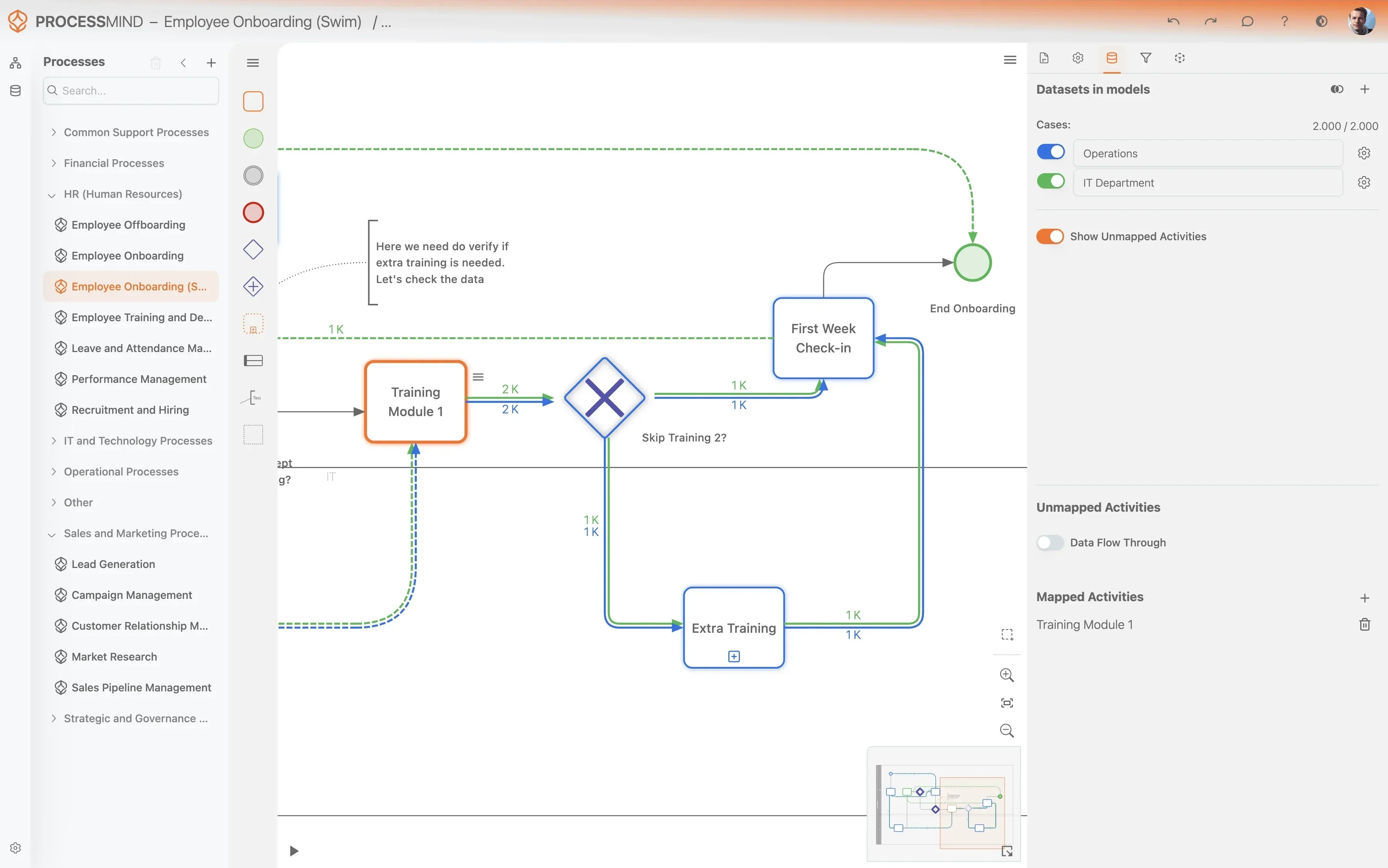
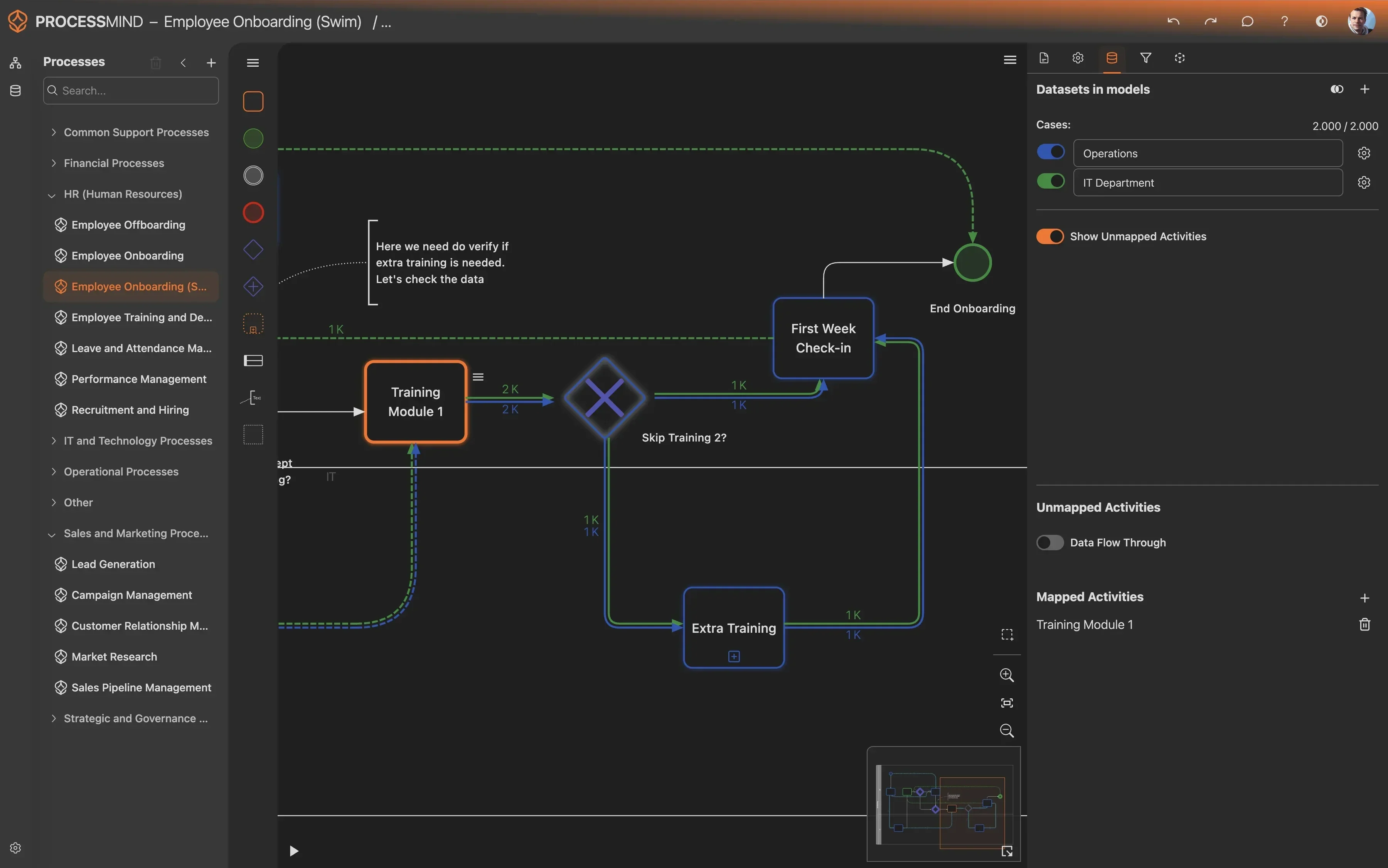
Process mining offers a revolutionary approach to understanding and improving your Record to Report - Journal Entry process within SAP ECC. Unlike traditional analysis methods that rely on assumptions or manual audits, process mining uses event logs directly from your SAP ECC FI-GL module, drawing insights from tables like BKPF, BSEG, and FAGLFLEXA. By using the Journal Entry ID as the case identifier, it reconstructs the actual execution path of every single journal entry. This provides an objective, data-driven visualization of your process, revealing the real sequence of activities, hidden delays, and deviations from the intended flow. You gain concrete answers to questions like: What is the average cycle time from Journal Entry Created to Journal Entry Posted? Which approval steps cause the most significant delays? How often are journal entries rejected and corrected, and what are the root causes? Process mining empowers you to pinpoint exact bottlenecks, quantify their impact, and identify opportunities for streamlining, helping you understand how to improve Record to Report - Journal Entry.
Key Areas for Enhancing Your Journal Entry Process
Through process mining, common improvement areas within the Record to Report - Journal Entry process in SAP ECC become evident. You can uncover significant opportunities in:
- Reducing Approval Bottlenecks: Identify specific approvers or approval stages that cause delays, enabling targeted training or workflow reconfigurations to accelerate Journal Entry Approved activities.
- Minimizing Rework and Rejections: Analyze patterns in Journal Entry Rejected and Journal Entry Corrected and Resubmitted activities to understand why entries are being rejected, addressing issues at the source, such as incomplete initial submissions or unclear guidelines.
- Streamlining Documentation Flow: Track the timing of Supporting Documentation Attached to ensure it precedes or coincides with submission for review, preventing delays caused by missing information.
- Optimizing Posting Verification: Examine the lead time between Journal Entry Posted and Posting Verified to ensure timely follow-up and reconciliation, reducing the Record to Report - Journal Entry cycle time.
- Automating Manual Steps: Discover opportunities to automate repetitive manual tasks by identifying frequently occurring sequences or standard Journal Entry Type processing that could benefit from robotic process automation (RPA).
Realizing Tangible Outcomes for Your Financial Operations
Optimizing your Record to Report - Journal Entry process with process mining yields substantial and measurable benefits. You can expect to achieve:
- Faster Financial Close: By identifying and eliminating delays, you can significantly reduce the overall cycle time for journal entries, contributing to a quicker and more predictable financial close.
- Improved Financial Accuracy: Reducing rework and errors directly leads to higher data quality and fewer discrepancies in your financial records.
- Enhanced Compliance: A clear, documented, and consistently executed process ensures adherence to internal policies and external regulatory requirements, mitigating audit risks.
- Lower Operational Costs: Streamlining workflows and reducing manual effort translates into significant cost savings and more efficient resource utilization.
- Better Decision-Making: With transparent, data-driven insights into your process performance, finance leaders can make informed decisions to drive continuous improvement and strategic initiatives.
Taking the First Step Towards Journal Entry Optimization
Embarking on the journey to optimize your Record to Report - Journal Entry process in SAP ECC is a strategic move that pays dividends across your entire finance function. Leveraging a specialized process mining approach provides the clarity and actionable insights you need to move beyond assumptions and truly transform your operations. By understanding the intricate paths of your journal entries, you can confidently drive efficiency, accuracy, and compliance, ensuring your financial reporting is robust and reliable.
The 6-Step Improvement Path for Record to Report - Journal Entry
Download the Template
What to do
Obtain the pre-configured Excel template tailored for Journal Entry data from SAP ECC. This template ensures your data is structured correctly for analysis.
Why it matters
Using the correct template from the start saves time and prevents data mapping errors, ensuring a smooth upload and accurate insights for your Journal Entry process.
Expected outcome
A ready-to-use Excel template with the right columns for your Journal Entry process data.
Export Your Journal Entries
What to do
Extract 3-6 months of historical Journal Entry data from SAP ECC, leveraging tables like BKPF and BSEG. Fill the downloaded template with this real operational data.
Why it matters
Comprehensive historical data provides a realistic view of your Journal Entry process, revealing recurring issues and variations that impact efficiency and compliance.
Expected outcome
A populated Excel template containing your actual Journal Entry process data, ready for upload.
Upload Your Dataset
What to do
Securely upload your filled Excel template to ProcessMind. The system will automatically process and prepare your Journal Entry data for immediate analysis.
Why it matters
A swift and secure data upload means you can quickly move from data collection to insight generation, accelerating your improvement efforts without manual processing delays.
Expected outcome
Your Journal Entry data is successfully uploaded, processed, and ready for exploration within ProcessMind.
Analyze Your Journal Entries
What to do
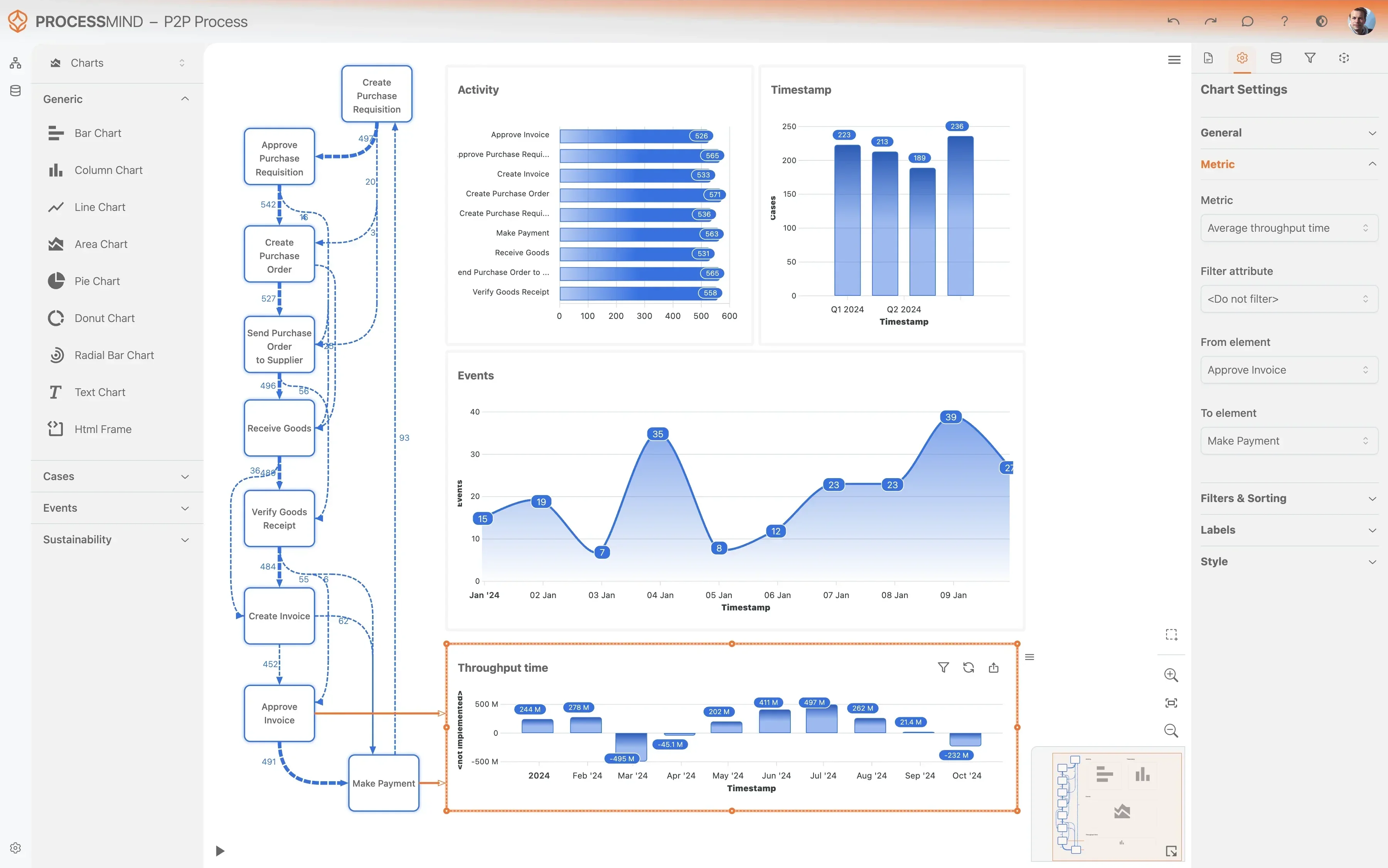
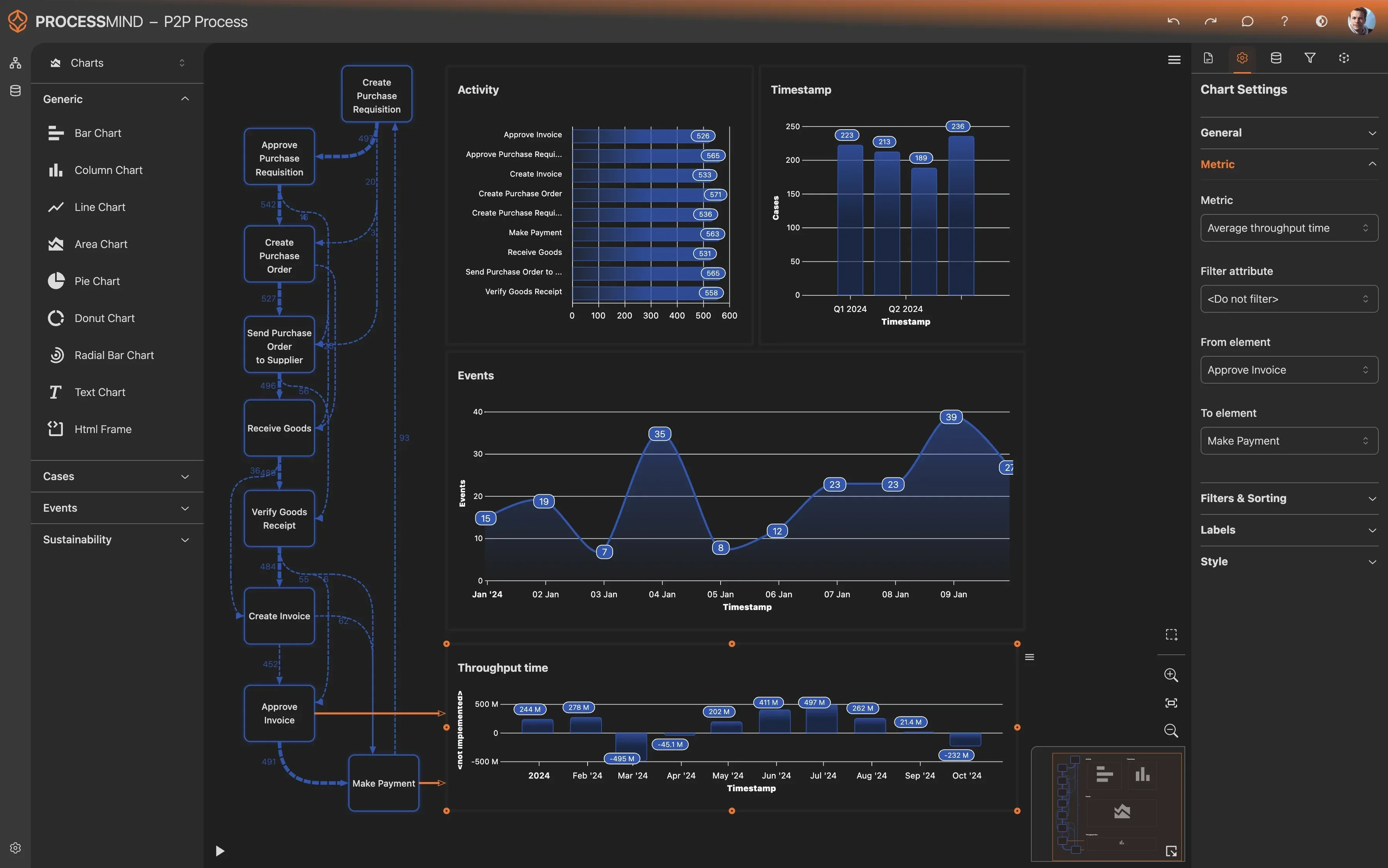
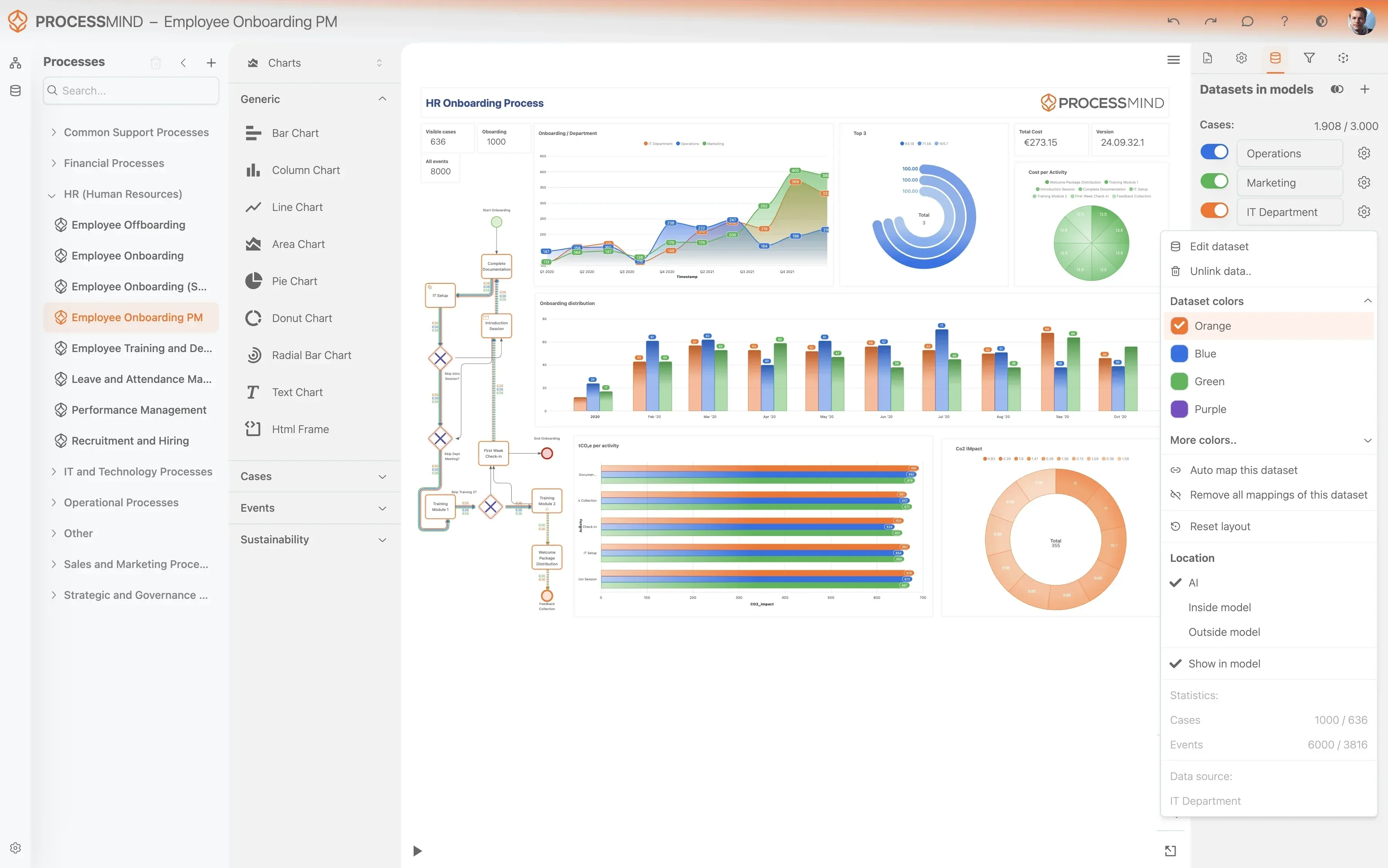
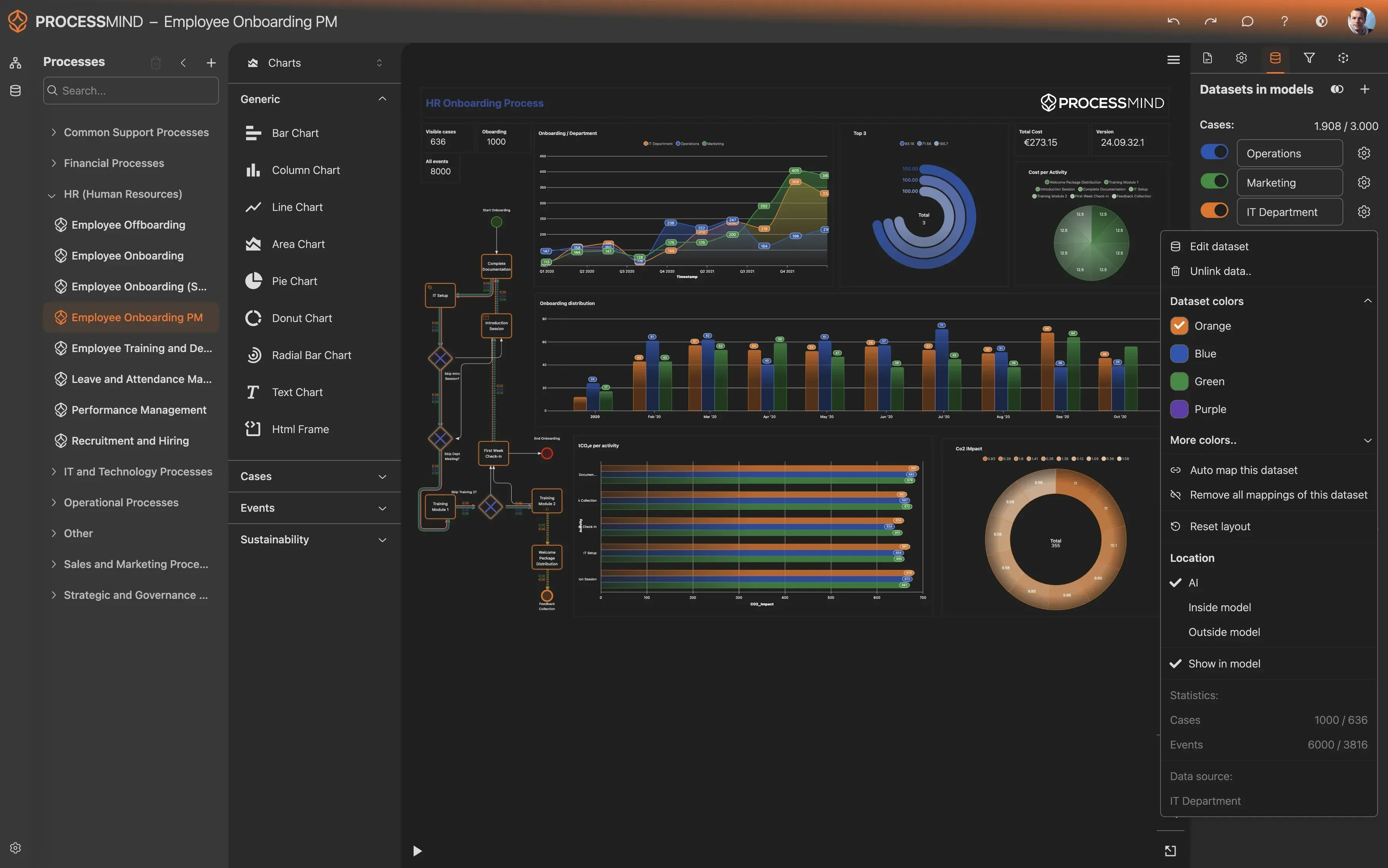
Explore the auto-generated dashboards, process maps, and key performance indicators for your Journal Entry process. Use AI recommendations to identify bottlenecks.
Why it matters
Gaining deep visibility into your Journal Entry workflow helps pinpoint approval delays, rework loops, and compliance risks, enabling data-backed decision-making.
Expected outcome
Clear insights into Journal Entry performance, with identified bottlenecks, compliance gaps, and automation areas.
Implement Solutions
What to do
Based on ProcessMind's analysis, prioritize and implement targeted improvements to streamline Journal Entry creation, review, approval, and posting within SAP ECC.
Why it matters
Acting on identified opportunities directly translates to reduced manual effort, faster financial close cycles, and enhanced accuracy in your Record to Report function.
Expected outcome
Optimized Journal Entry processes, with new policies or configurations implemented to address inefficiencies.
Monitor Progress
What to do
Periodically re-upload fresh Journal Entry data from SAP ECC to ProcessMind to track the impact of your implemented changes and monitor ongoing performance.
Why it matters
Continuous monitoring ensures improvements are sustained, new issues are promptly detected, and the Journal Entry process remains efficient and compliant over time.
Expected outcome
Measurable improvements in processing times, reduced errors, and sustained efficiency confirmed by data.
WHAT YOU WILL GET
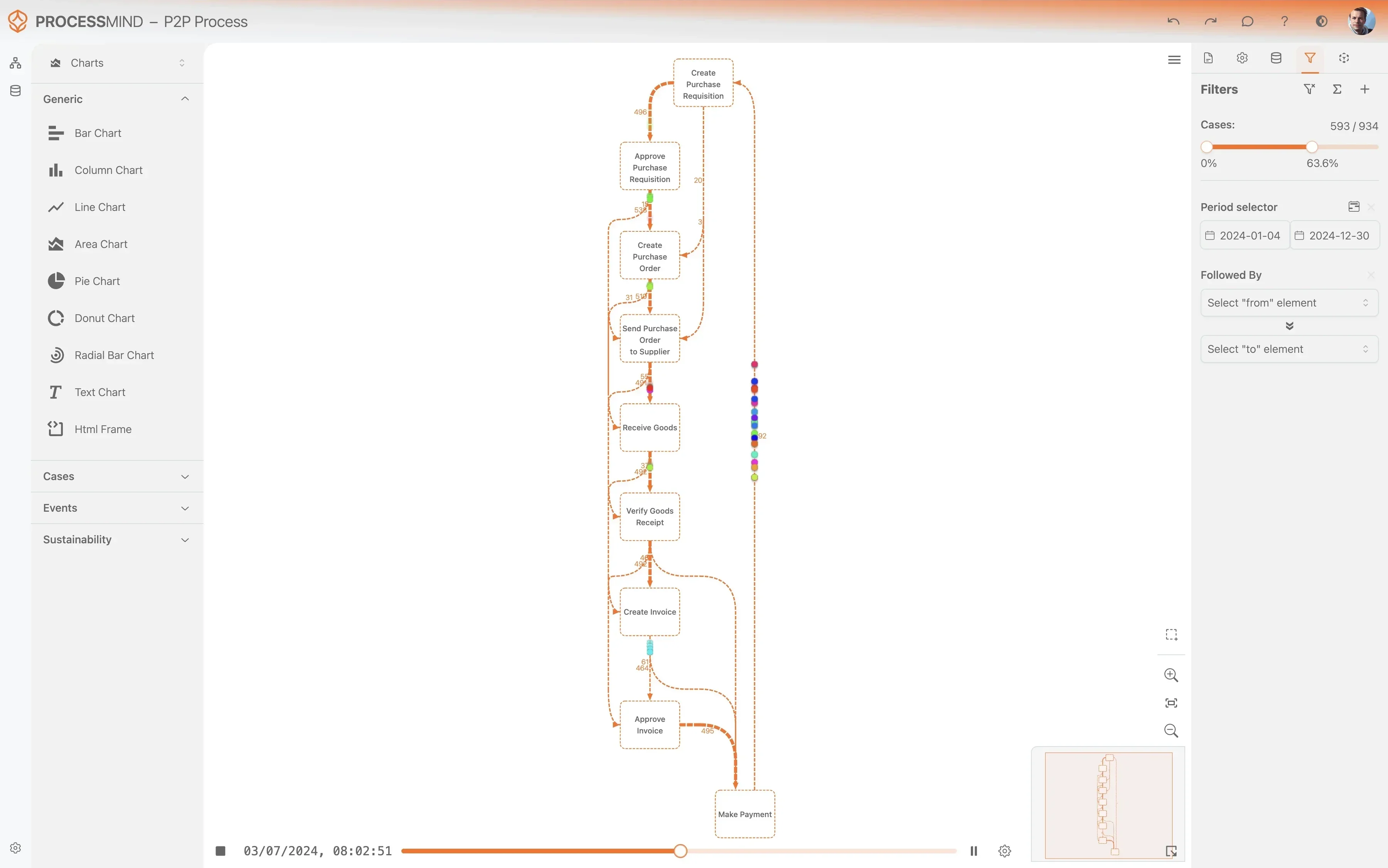
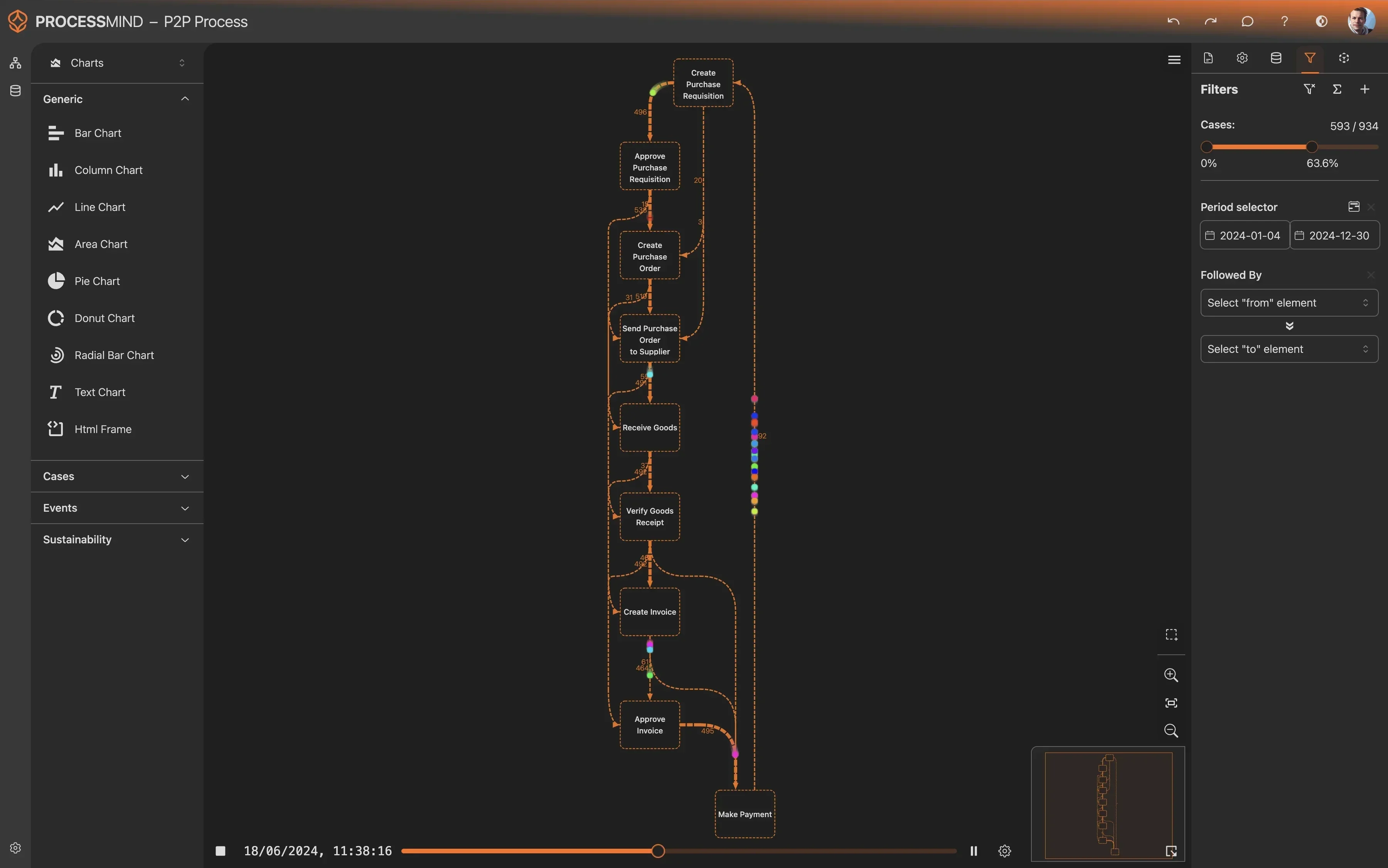
Discover How Journal Entries Truly Flow in SAP ECC
- Pinpoint journal entry processing delays
- Verify journal entry compliance and accuracy
- Streamline SAP ECC journal entry workflows
- Optimize financial reporting cycle time
TYPICAL OUTCOMES
Transforming Journal Entry Processing
By analyzing the end-to-end Journal Entry process in SAP ECC using Journal Entry ID as the case identifier, organizations gain actionable insights. These insights lead to significant improvements in efficiency, compliance, and accuracy within their Record to Report cycle.
Average reduction in approval time
Identify bottlenecks and delays in the approval process, streamlining workflows to accelerate critical financial postings.
Decrease in entries returned for rework
Pinpoint root causes of rejections, such as missing data or incorrect GL accounts, to improve first-time submission quality and efficiency.
Improved adherence to regulatory rules
Ensure all journal entries follow defined internal policies and external regulations, reducing audit risks and improving data integrity.
Reduced delay from approval to posting
Minimize the gap between journal entry approval and actual posting to the general ledger, ensuring financial records are updated promptly.
Decrease in resubmissions post-review
Identify and eliminate the causes of repetitive corrections and resubmissions, leading to a first-time right process and saving valuable time.
Decrease in incorrect initial postings
Reduce the percentage of journal entries that need to be reversed due to errors, improving data accuracy and reducing additional processing effort.
Results vary based on process complexity and data quality. These figures represent typical improvements observed across implementations focusing on Journal Entry processes.
Recommended Data
FAQs
Frequently asked questions
Process mining visualizes the actual flow of your Journal Entry process by analyzing event logs from SAP ECC. It uncovers bottlenecks like excessive approval times or frequent rejections, identifies compliance gaps, and highlights variations in processing paths. This deep visibility helps pinpoint the root causes of inefficiencies.
To perform process mining for Journal Entries, you primarily need event log data containing a case identifier (like Journal Entry ID), an activity name (e.g., "Entry Created," "Approved," "Posted"), and a timestamp for each activity. Additional attributes, such as user, document type, or amount, enrich the analysis by providing context. This data is typically found in standard SAP tables related to journal entries and their statuses.
Data extraction from SAP ECC for process mining usually involves querying specific tables such as BKPF (Document Header), BSEG (Document Segment), and status tables, or using standard SAP reports. Depending on the volume and complexity, you might use SAP tools like Data Extraction Connectors, custom ABAP programs, or direct database access methods. It's crucial to ensure the extracted data maintains the chronological order of activities.
Process mining can help achieve significant improvements, such as reducing journal entry approval times by identifying delay points and optimizing workflows. You can expect to minimize rejection rates, enhance compliance adherence, and accelerate post-approval posting. Ultimately, it leads to a more standardized, efficient, and transparent Record to Report - Journal Entry process.
The initial setup for data extraction and model creation can vary, but generally, it takes a few weeks, depending on data availability and system complexity. Once the data is loaded and the model is built, initial insights and process visualizations are often available within days. Actionable recommendations and process improvement initiatives usually follow within one to three months.
Yes, process mining tools are generally compatible with older SAP ECC versions as they primarily rely on extracting historical transaction data from the underlying database tables. The age of the system doesn't typically prevent data extraction, as long as the necessary tables and fields containing event log information are accessible. The focus is on the data itself, not the SAP ECC frontend version.
While basic familiarity with SAP ECC data structures is beneficial for data extraction, many modern process mining tools offer user-friendly interfaces and pre-built connectors. You may require a data engineer or an IT specialist for the initial data pipeline setup. Interpreting the results and driving process change often involves collaboration between business process owners and data analysts.
Absolutely. Process mining explicitly visualizes every step and deviation in the Journal Entry process, making it easy to identify instances where established policies or regulatory requirements were not followed. This includes detecting unauthorized changes, incorrect approval sequences, or delays that could impact reporting deadlines. It provides clear evidence for audit trails and compliance checks.
Optimize Your Record to Report - Journal Entry Now
Reduce Journal Entry cycle time by 30% and ensure flawless reporting.
No credit card needed, start improving today.