Improve Your Expense Management
Select a process
Choose a process to continue working in your connected workspace.
Optimize Expensify Expense Management for Faster Reimbursements
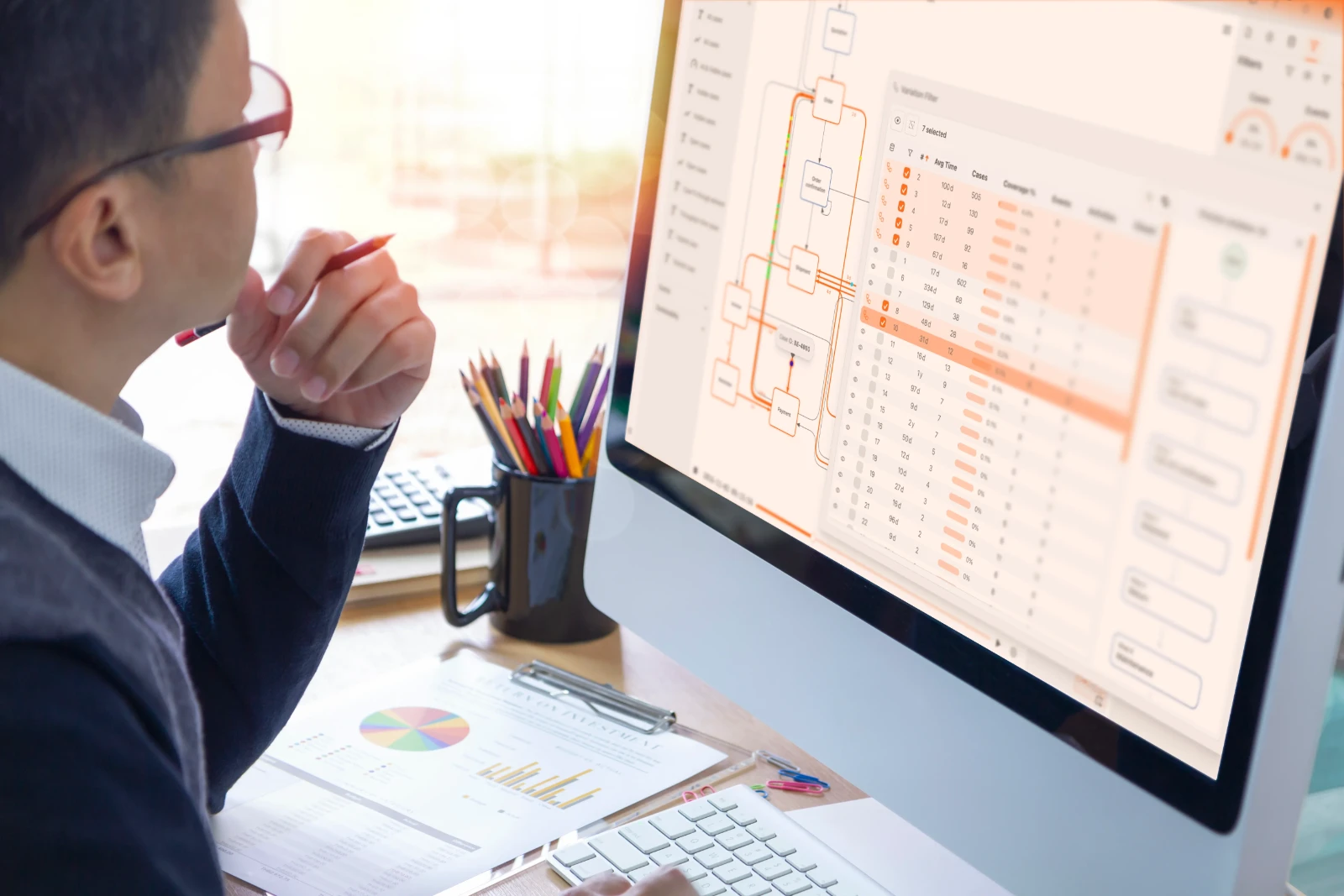
Expense management processes often face challenges like approval delays, policy non-compliance, or unnecessary rework. Our platform helps you identify these exact bottlenecks and inefficiencies, providing clear insights into root causes. This enables data-driven improvements, leading to streamlined operations, reduced costs, and improved employee satisfaction.
Download our pre-configured data template and address common challenges to reach your efficiency goals. Follow our six-step improvement plan and consult the Data Template Guide to transform your operations.
Show detailed description
Why Optimizing Expense Management Matters
Even with robust systems like Expensify, managing expenses effectively can present significant challenges. Without clear visibility into your actual process flows, inefficiencies can hide, leading to increased operational costs, delayed reimbursements, and decreased employee satisfaction. Imagine employees waiting weeks for their money, or finance teams spending countless hours chasing approvals or correcting errors. These issues not only strain your financial resources but also impact morale and productivity across the organization. By actively seeking to improve Expense Management, you are not just streamlining a financial task, you are investing in your company's efficiency, compliance, and employee trust. Understanding "how to improve Expense Management" becomes a critical strategic initiative.
How Process Mining Unlocks Expense Process Insights
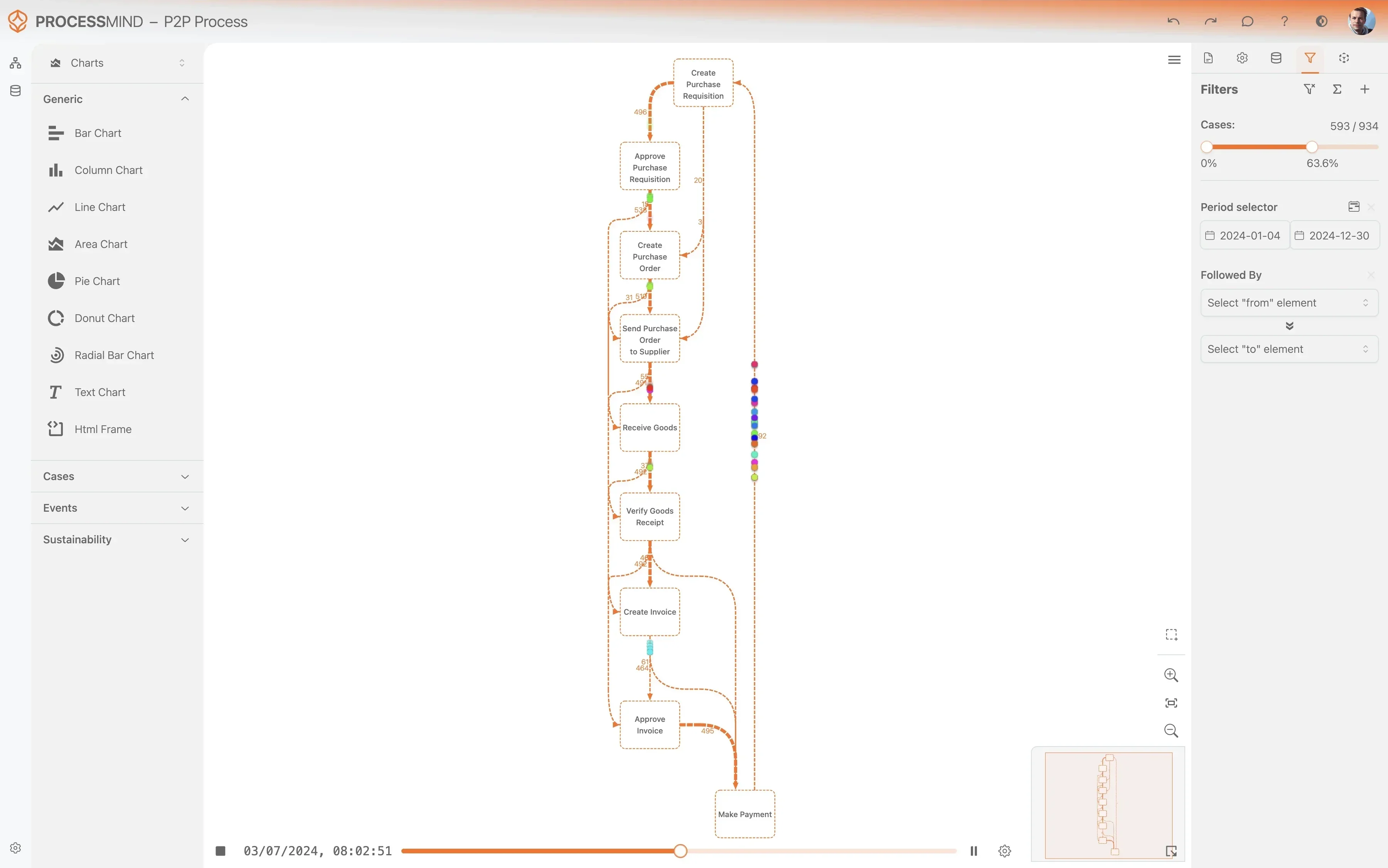
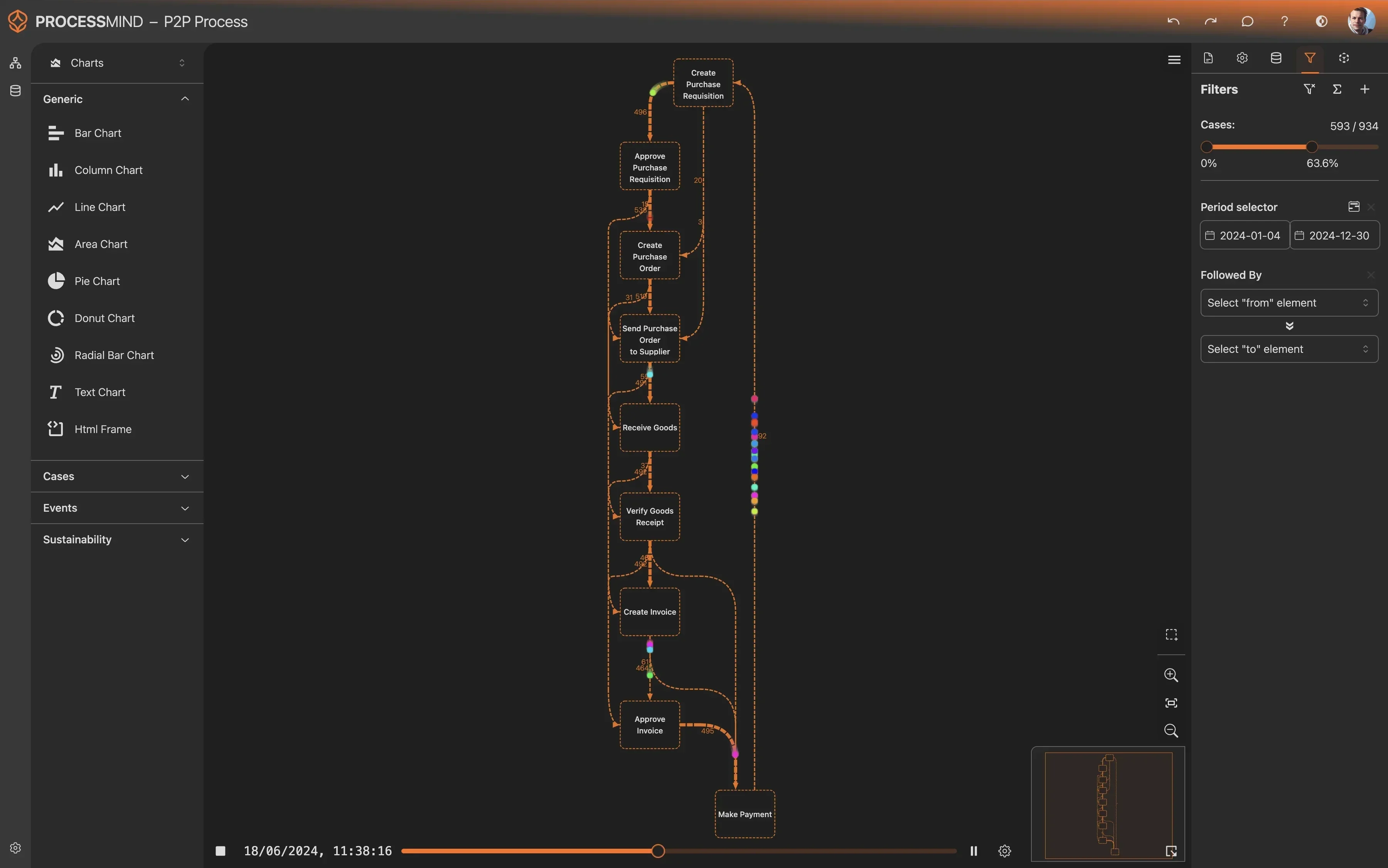
Process mining offers a unique, data-driven approach to Expense Management optimization. Instead of relying on assumptions or anecdotal evidence, it uses event log data directly from your Expensify system and any integrated financial platforms to reconstruct the actual journey of every expense report. This powerful analytical technique visualizes the complete, end-to-end process, revealing precisely how expense reports flow from creation to final reimbursement and accounting. You can identify exactly where bottlenecks occur, measure the true cycle time of each activity, and uncover deviations from your intended process. For instance, process mining can show you if certain managers are consistently slow in approvals, if specific expense categories trigger more revisions, or if certain policy checks are causing unexpected delays. This deep dive into your operational data provides actionable insights that manual audits or traditional reporting simply cannot.
Key Areas for Expense Process Improvement
Applying process mining to your Expensify Expense Management can highlight several critical areas for improvement:
- Approval Workflow Streamlining: Pinpoint specific approvers or approval stages that are causing significant delays. Understand if parallel approvals are truly parallel or if sequential steps are unnecessarily extending cycle times. This directly helps "reduce Expense Management cycle time."
- Policy Compliance Enforcement: Identify common types of policy violations and the stages where they are most frequently introduced or detected. This enables targeted training or system rule adjustments to improve compliance proactively.
- Reimbursement Efficiency: Analyze the handoff between approval and actual reimbursement execution. Determine if delays occur in scheduling, payment processing, or accounting reconciliation.
- Resource Allocation: Gain insight into the workload distribution across your finance and management teams involved in the expense process, allowing for better resource planning and load balancing.
- Process Automation Opportunities: Discover repetitive manual tasks or common rework loops that could be automated or simplified, freeing up valuable staff time.
Expected Outcomes of Optimization
The proactive optimization of your Expense Management process through process mining yields measurable and impactful benefits:
- Faster Reimbursements: Significantly reduce the overall cycle time from expense submission to reimbursement, leading to happier employees and improved cash flow management.
- Reduced Operational Costs: Minimize manual errors, reduce the need for constant follow-ups, and cut down on administrative overhead associated with managing expenses.
- Enhanced Compliance: Ensure consistent adherence to company expense policies, mitigating financial risk and simplifying audit processes.
- Improved Employee Satisfaction: A smooth, predictable, and fast reimbursement process boosts employee morale and trust in the organization's administrative functions.
- Better Financial Control: Gain greater transparency into spending patterns and process performance, allowing for more accurate budgeting and forecasting.
By leveraging process mining, you transform your Expensify usage from merely managing expenses to actively optimizing the entire Expense Management journey.
Getting Started with Expensify Process Optimization
Embarking on this optimization journey begins with understanding your current state. This guide provides the framework and tools to analyze your Expensify data and uncover the hidden inefficiencies in your Expense Management process. By embracing a data-driven approach, you are empowered to make informed decisions that lead to tangible improvements. Start exploring your process today and discover how much more efficient and compliant your expense management can become.
The 6-Step Improvement Path for Expense Management
Download the Template
What to do
Obtain the ProcessMind Excel template specifically designed for Expense Management data, ensuring it aligns with Expensify's typical data structure.
Why it matters
Using the correct template simplifies data preparation, making it easier to extract and format your Expensify data for seamless analysis.
Expected outcome
A structured Excel template ready to receive your Expensify expense report data, ensuring compatibility with ProcessMind.
Export Your Data
What to do
Extract 3-6 months of historical expense report data from Expensify, including details like submission dates, approval statuses, and reimbursement times. Populate the downloaded template with this information.
Why it matters
Comprehensive historical data provides a robust foundation for identifying recurring issues, understanding process variations, and benchmarking performance over time.
Expected outcome
A completed Excel template containing 3-6 months of real-world Expensify expense data, ready for upload.
Upload Your Dataset
What to do
Securely upload your filled ProcessMind template, containing your Expensify data, to the ProcessMind platform for automated processing and analysis.
Why it matters
A quick and secure upload initiates the advanced analytical process, transforming raw data into actionable insights without manual effort.
Expected outcome
Your Expensify expense data successfully ingested by ProcessMind, with analysis initiated and dashboards being generated automatically.
Analyze Your Process
What to do
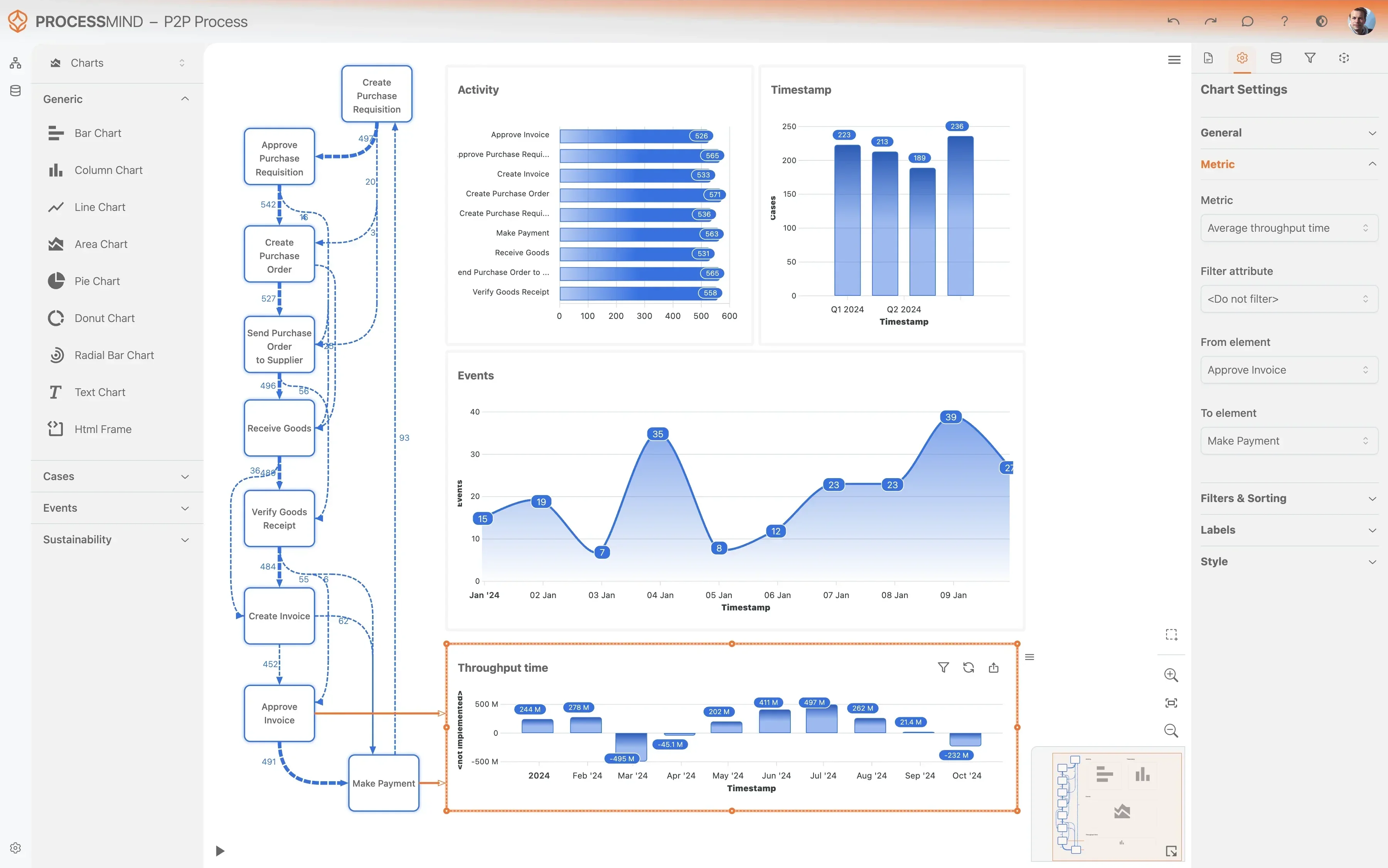
Explore the auto-generated dashboards and process maps in ProcessMind. Leverage AI-driven recommendations to pinpoint bottlenecks and non-compliant expense reports in Expensify.
Why it matters
Visualizing your end-to-end expense management process in Expensify reveals hidden inefficiencies, compliance risks, and areas for automation.
Expected outcome
Clear identification of key bottlenecks, policy deviations, and inefficiencies within your Expensify expense management process.
Implement Improvements
What to do
Based on ProcessMind's insights, prioritize and implement changes to your Expensify configurations, approval workflows, or employee guidelines.
Why it matters
Taking action on data-driven insights directly leads to faster reimbursement times, reduced manual work, and enhanced compliance within Expensify.
Expected outcome
Specific, data-backed process changes deployed in your Expensify setup, addressing identified pain points and improving efficiency.
Monitor Your Process
What to do
Periodically re-export fresh data from Expensify and upload it to ProcessMind to continuously track the impact of your improvements and monitor key performance indicators.
Why it matters
Continuous monitoring ensures that improvements are sustained, new issues are quickly detected, and your Expensify process remains optimized over time.
Expected outcome
Measurable improvements in expense management KPIs, sustained efficiency, and ongoing compliance assurance in Expensify.
TYPICAL OUTCOMES
What You Can Achieve in Expense Management
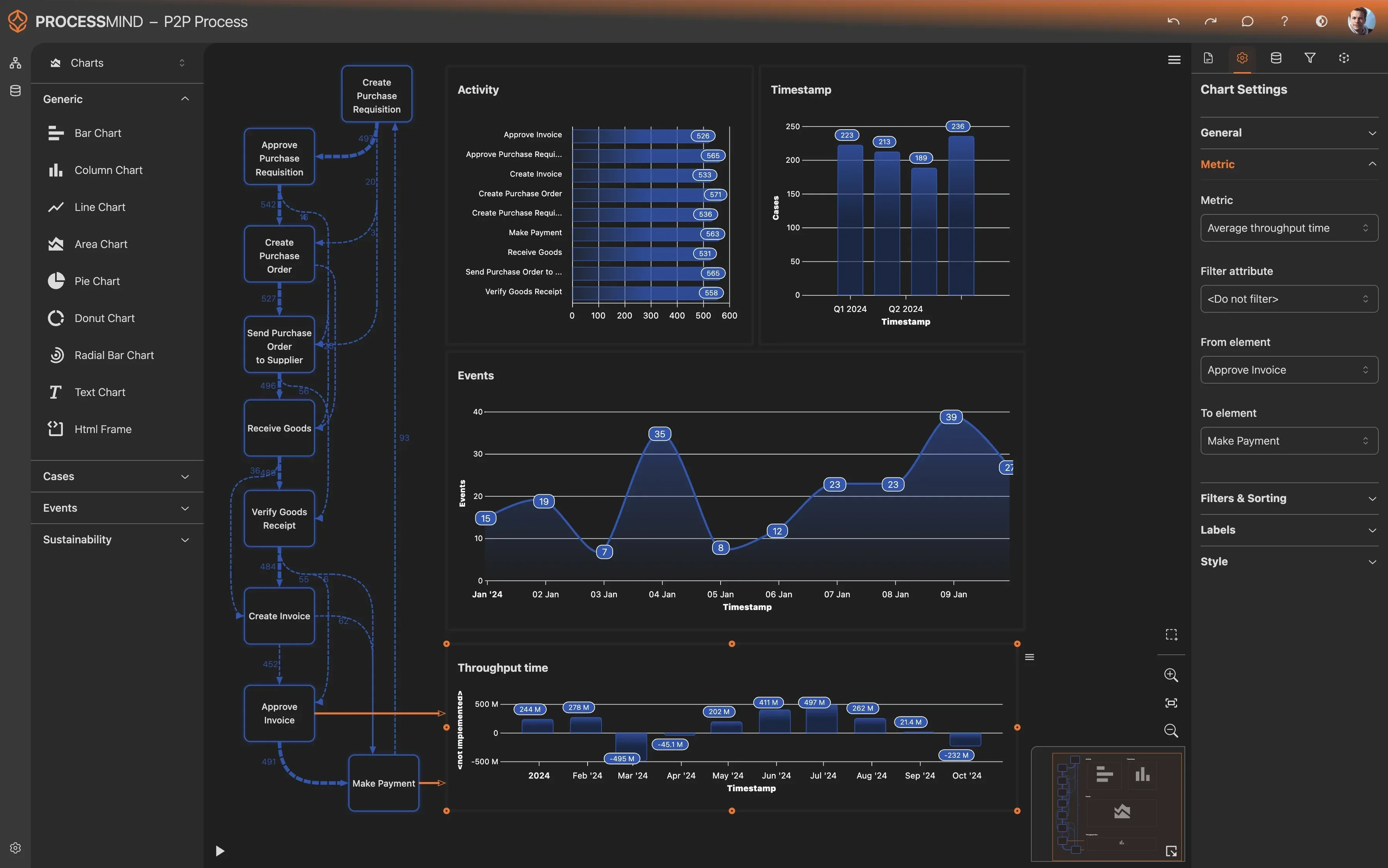
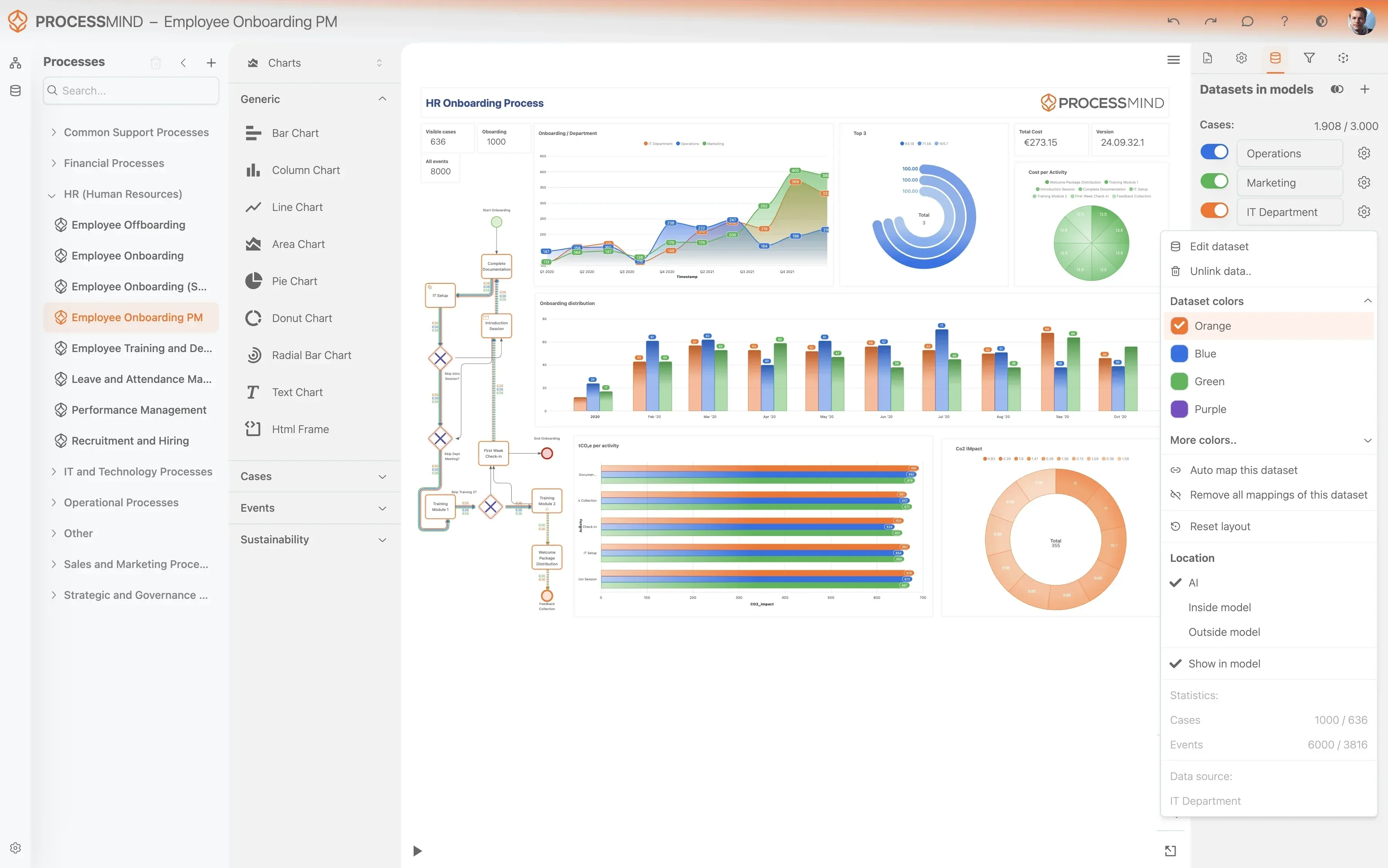
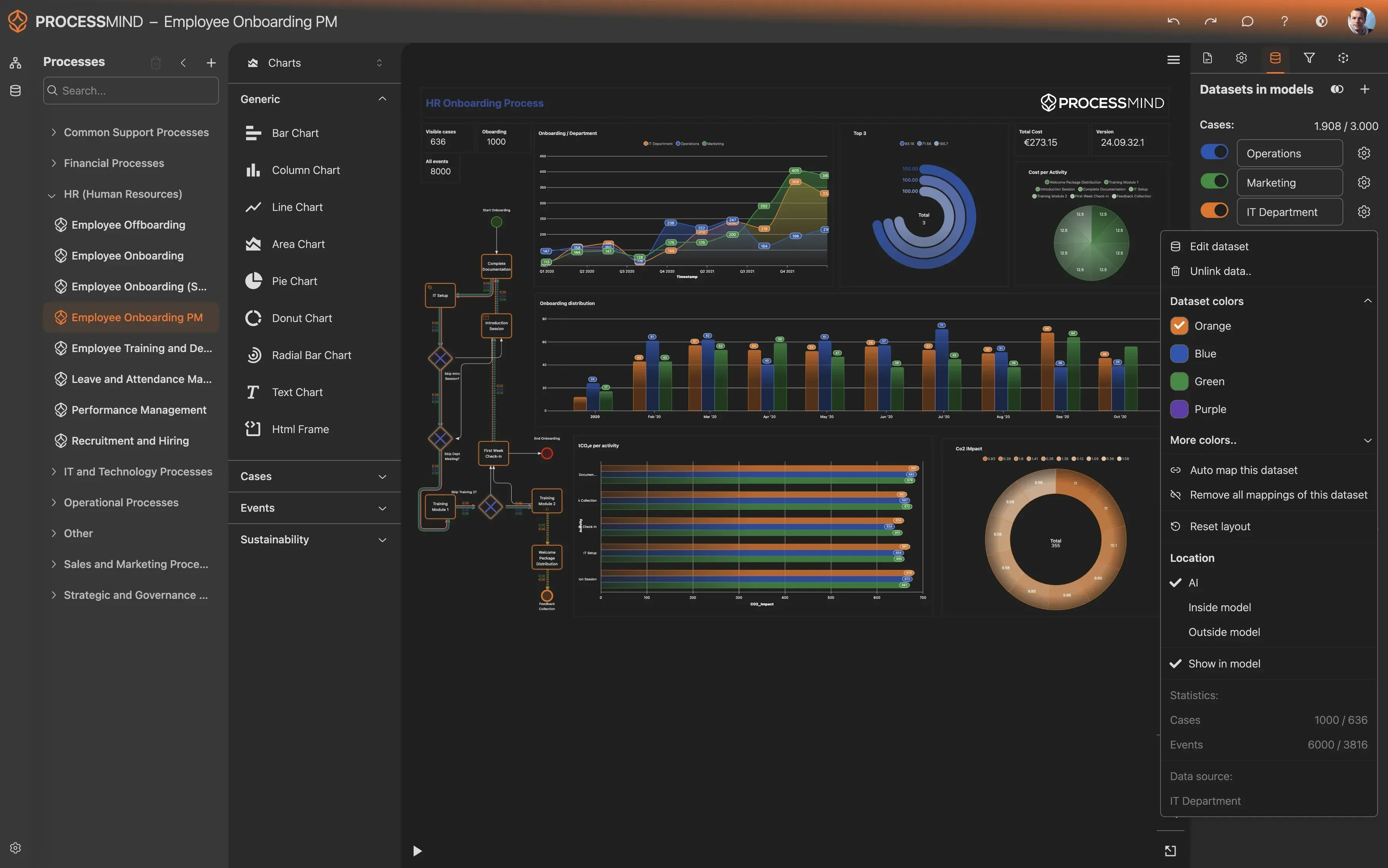
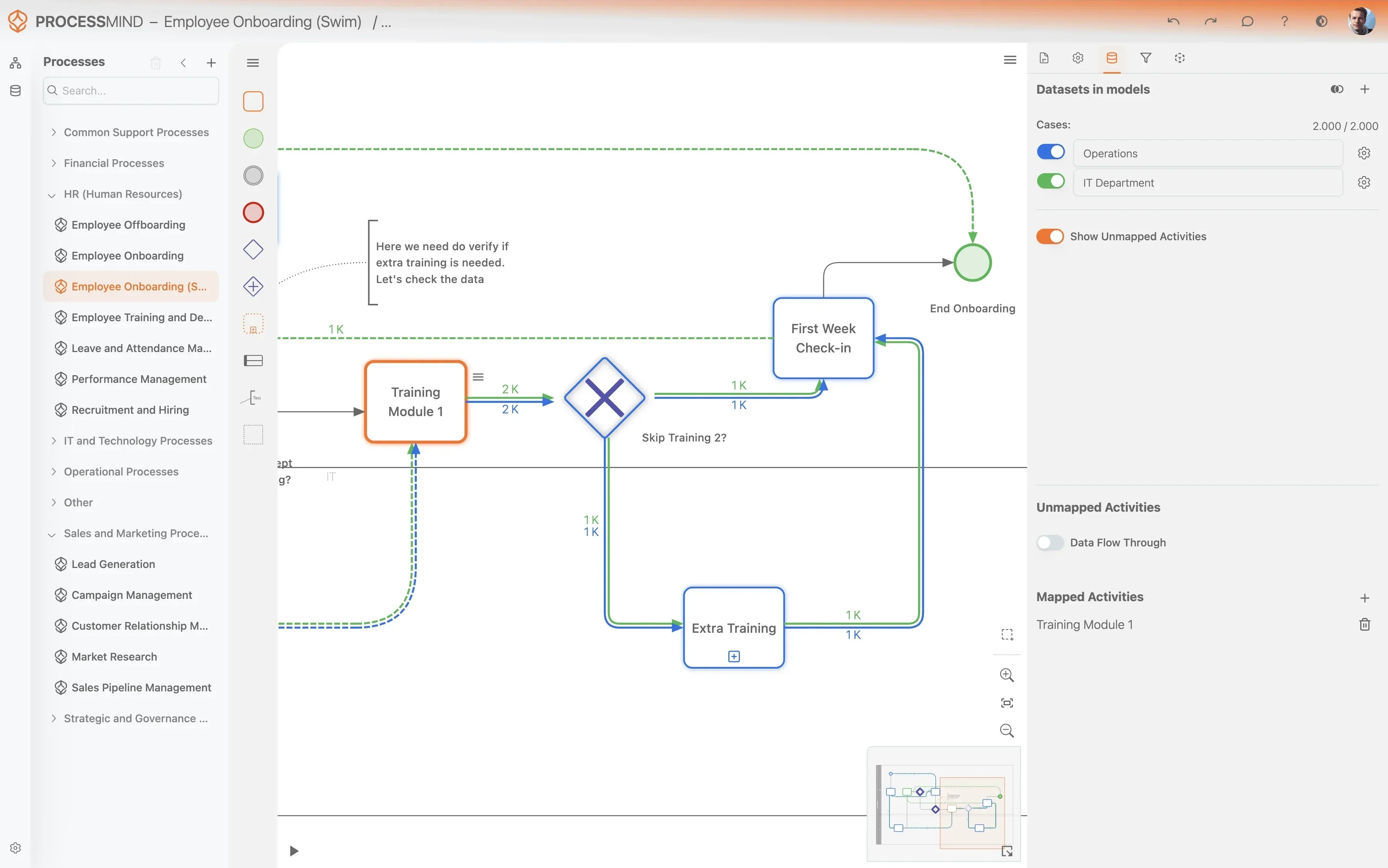
These outcomes highlight the typical improvements organizations achieve by applying process mining to their Expense Management process. By analyzing data from systems like Expensify, process mining helps uncover bottlenecks and inefficiencies, leading to significant operational enhancements.
Average reduction in total processing time
Streamline your entire expense management process, from submission to reimbursement, by identifying and removing bottlenecks to achieve significant time savings.
Decrease in manual rework efforts
Minimize the costly cycle of sending expense reports back for revisions. Process mining uncovers root causes of rework, leading to more first-pass approvals and lower operational expenses.
Reduction in detected policy violations
Proactively identify and address non-compliant expense submissions. Process mining ensures consistent application of expense policies, reducing audit risks and financial discrepancies.
Faster employee payout lead time
Improve employee satisfaction and trust by significantly expediting reimbursement payouts. Pinpoint and optimize delays between finance approval and actual reimbursement execution.
Decrease in manager and finance rejections
Reduce the number of expense reports rejected by managers and finance, improving submission quality and overall process efficiency. This minimizes delays and reduces frustration for all parties.
Results vary based on process complexity, existing inefficiencies, and data quality. These figures represent common improvements observed across various implementations.
Recommended Data
FAQs
Frequently asked questions
Process mining analyzes your Expensify data to create an objective, data-driven map of your actual expense report journey. It reveals hidden bottlenecks, compliance deviations, and inefficiencies that hinder your process. This allows you to accelerate approval cycles, reduce rejections, and optimize resource allocation.
Process mining can pinpoint the root causes of slow approval cycles, frequent expense report rejections, and inconsistent policy application within Expensify. It also helps identify sources of delayed employee reimbursements, excessive manual rework, and high operational costs. By visualizing the true process, you gain clarity on where to focus improvement efforts.
To begin, you primarily need event log data from Expensify, which captures every step an expense report takes. This includes the 'Expense Report ID' as the case identifier, activity names such as "Submitted" or "Approved," and precise timestamps for each activity. Additional attributes like approver, amount, or policy violations can further enrich the analysis.
You can expect a clear, data-driven visualization of your end-to-end expense process, revealing all actual process variations. This leads to quantified insights into bottlenecks, compliance gaps, and areas of manual rework. Ultimately, you gain actionable recommendations to accelerate approvals, minimize rejections, reduce operational costs, and improve employee satisfaction.
Data extraction typically involves using Expensify's built-in reporting features or its API. The goal is to obtain a comprehensive historical record of all expense report events. Your process mining vendor can often provide specific guidance or connectors to streamline this data acquisition.
No, process mining is a non-invasive analytical technique. It operates solely on historical data that has been exported from Expensify. This means it analyzes past events without interacting with or disrupting your live operational system or user workflows.
Initial process visualizations and bottleneck identification can often be achieved within a few weeks of successful data ingestion and modeling. Realizing measurable improvements, such as reduced approval times, usually involves an iterative approach of analysis, process changes, and subsequent monitoring over several months. The exact timeline depends on the complexity of your current process and the scope of improvements.
While some technical proficiency is helpful for initial data extraction and setup, many modern process mining platforms are designed for business users. They offer intuitive interfaces for analysis, allowing your business analysts or process owners to gain insights directly. Ongoing support and training are usually available from vendors.
The core technical requirement is reliable access to your Expensify event data, usually via reports or API, in a structured format like CSV or a database table. You will also need a process mining software platform to ingest, model, and analyze this data. This platform can be cloud-based or installed on your own infrastructure.
Optimize Expense Management: Start Your Free Trial Today
Streamline Expensify expenses, reduce cycle time by 30%, and boost satisfaction.
No credit card required, start optimizing today.