Improve Your Asset Maintenance
Select a process
Choose a process to continue working in your connected workspace.
Optimize Asset Maintenance in Infor EAM for Reliability
Our platform helps you uncover hidden bottlenecks that slow down your maintenance workflows. You can identify delays in scheduling and procurement that often lead to increased costs and asset downtime. By visualizing the actual flow of work, you can streamline operations and improve overall reliability.
Download our pre-configured data template and address common challenges to reach your efficiency goals. Follow our six-step improvement plan and consult the Data Template Guide to transform your operations.
Show detailed description
The Business Impact of Optimizing Asset Maintenance
Managing physical assets effectively is the backbone of any industrial, manufacturing, or facility management operation. When you utilize Infor EAM, you are sitting on a goldmine of data regarding your equipment health, technician performance, and operational costs. However, without a clear view of how work orders actually flow through your organization, you risk high operational costs, unnecessary labor expenditures, and the ever-present threat of unexpected equipment failure. Optimizing asset maintenance is not just about fixing things faster, it is about shifting from a reactive mindset to a proactive, reliable strategy that treats maintenance as a value driver rather than a cost center. By focusing on the flow of work, you can ensure that your most critical assets receive the attention they need before a minor issue turns into a catastrophic breakdown.
How Process Mining Visualizes the Maintenance Lifecycle
Process mining takes the timestamps, status changes, and event logs already present in Infor EAM and transforms them into a living map of your maintenance operations. Instead of looking at static spreadsheets or simple counts of how many work orders were closed last month, you can see the actual path each work order took from inception to closure. This technology allows you to visualize the loops where work is sent back for re-inspection, the long pauses between material requisition and work commencement, and the deviations from your standard operating procedures. This transparency allows maintenance managers to see the as-is process, which is often significantly different from the documented procedures. By surfacing these hidden realities, you can make decisions based on objective data rather than anecdotal evidence.
Identifying Bottlenecks in the Maintenance Flow
One of the most common areas for improvement in Infor EAM is the transition between planning and execution. A work order might sit in a waiting for parts status for several days, but traditional reporting might not show you which specific suppliers or internal logistics steps are causing the delay. Process mining helps you identify these specific bottlenecks with precision. You might discover that the primary delay is not the technical execution itself, but the administrative burden of technical inspections or the complexity of the financial settlement process. By uncovering these friction points, you can reallocate resources, streamline approval workflows, or renegotiate supplier contracts to reduce the overall cycle time of your maintenance activities. Reducing these delays directly translates to increased asset uptime and more efficient use of your skilled labor force.
Driving Reliability and Compliance through Data
The ultimate goal of optimizing asset maintenance is to increase asset availability while ensuring full compliance with safety and industry regulations. By reducing the cycle time of a maintenance work order, you directly decrease the time an asset is offline, which has a direct impact on your bottom line. Furthermore, process mining provides an automated audit trail that is invaluable for compliance. You can prove that every technical inspection, quality control test, and safety sign-off was performed in the correct sequence and within the required timeframe. This level of detail helps mitigate risk, prepares your organization for audits, and ensures that your maintenance records in Infor EAM are a true reflection of the work performed in the field.
Building a Sustainable Maintenance Strategy
Transitioning to a data-driven approach allows your maintenance team to move away from firefighting and toward a strategy of continuous improvement. By using the insights gained from analyzing your Infor EAM data, you can refine your resource scheduling, optimize your spare parts inventory, and move closer to predictive maintenance models. The journey toward excellence starts with a deep understanding of your current state. Once you see the patterns and inefficiencies in your work order lifecycle, you can begin making the incremental changes that lead to significant long-term gains in reliability, safety, and cost management. Embracing process mining for asset maintenance ensures that your organization remains competitive and that your infrastructure is always ready to meet the demands of the business.
The 6-Step Improvement Path for Asset Maintenance
Download the Template
What to do
Access the standardized Excel template designed for Infor EAM maintenance work orders and asset records.
Why it matters
Ensures your maintenance data aligns with process mining requirements, saving time on data mapping and preparation.
Expected outcome
A ready-to-use template for your maintenance data.
Export Your Data
What to do
Export 3 to 6 months of historical work order data from Infor EAM, including technical inspections, resource schedules, and completion logs.
Why it matters
Real-world data provides the baseline for identifying bottlenecks in your technician utilization and spare parts procurement.
Expected outcome
A populated dataset reflecting actual maintenance workflows.
Upload Your Dataset
What to do
Securely upload your completed maintenance dataset into ProcessMind for automated process discovery and mapping.
Why it matters
Centralizing your maintenance history allows the platform to automatically visualize the end-to-end lifecycle of every work order.
Expected outcome
An interactive digital twin of your maintenance process.
Analyze Your Process
What to do
Review AI-driven dashboards to identify delays between technical inspections and material requisitions within your Infor EAM environment.
Why it matters
Pinpointing where work orders stall allows you to reduce unplanned downtime and optimize resource planning across your equipment portfolio.
Expected outcome
Clear insights into maintenance bottlenecks and inefficiencies.
Implement Improvements
What to do
Act on findings by streamlining parts procurement or adjusting technician schedules to improve response times for high-priority work orders.
Why it matters
Translating insights into action directly lowers maintenance costs and ensures higher equipment reliability and regulatory compliance.
Expected outcome
Optimized maintenance procedures and improved asset performance.
Monitor Your Process
What to do
Periodically refresh your data to track KPIs like mean time to repair and technician efficiency after implementing process changes.
Why it matters
Continuous monitoring ensures that improvements are sustained and allows you to adapt to new operational challenges in real time.
Expected outcome
A data-driven cycle of continuous maintenance improvement.
YOUR MAINTENANCE INSIGHTS
Visualize Your Entire Asset Maintenance Lifecycle
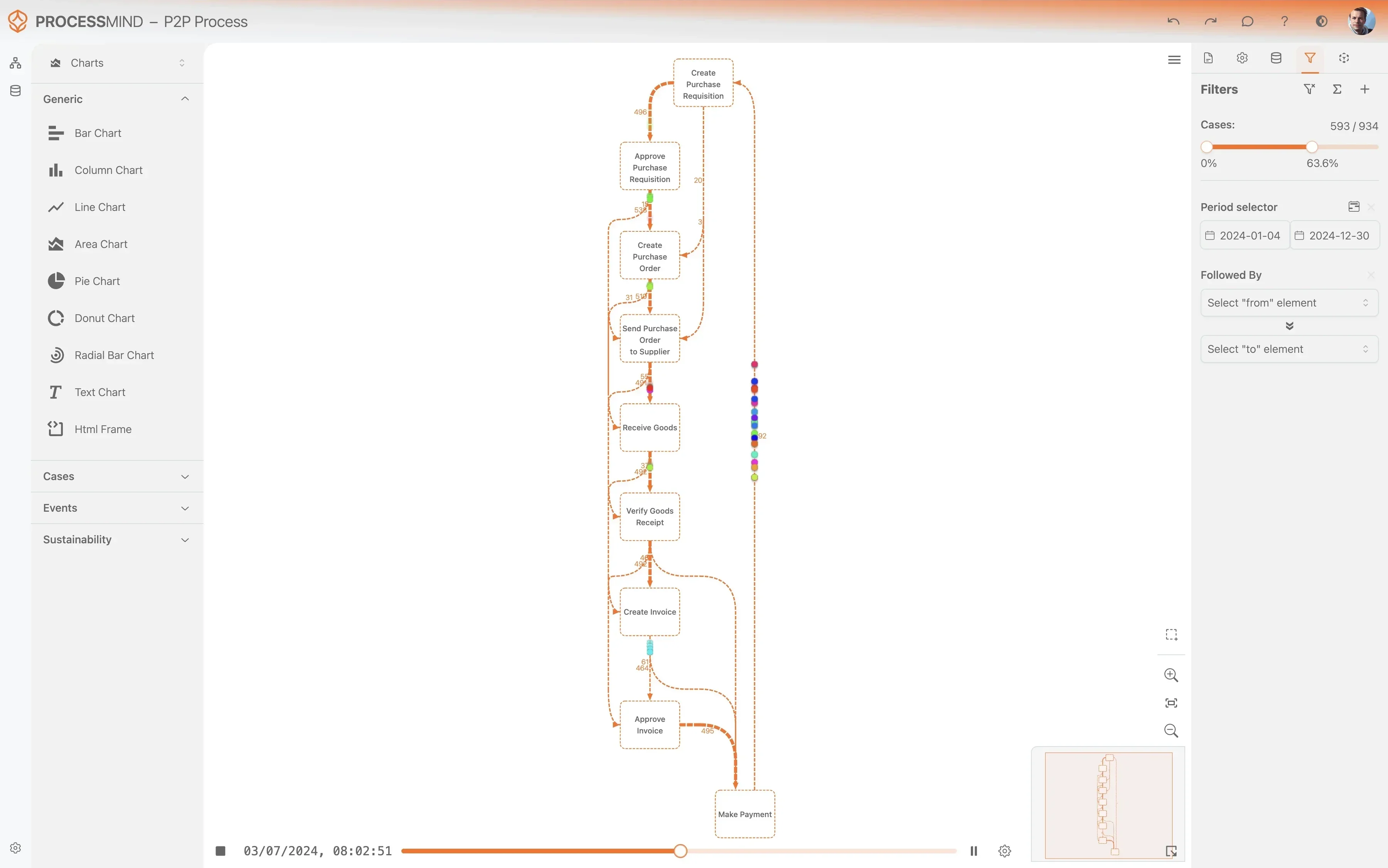
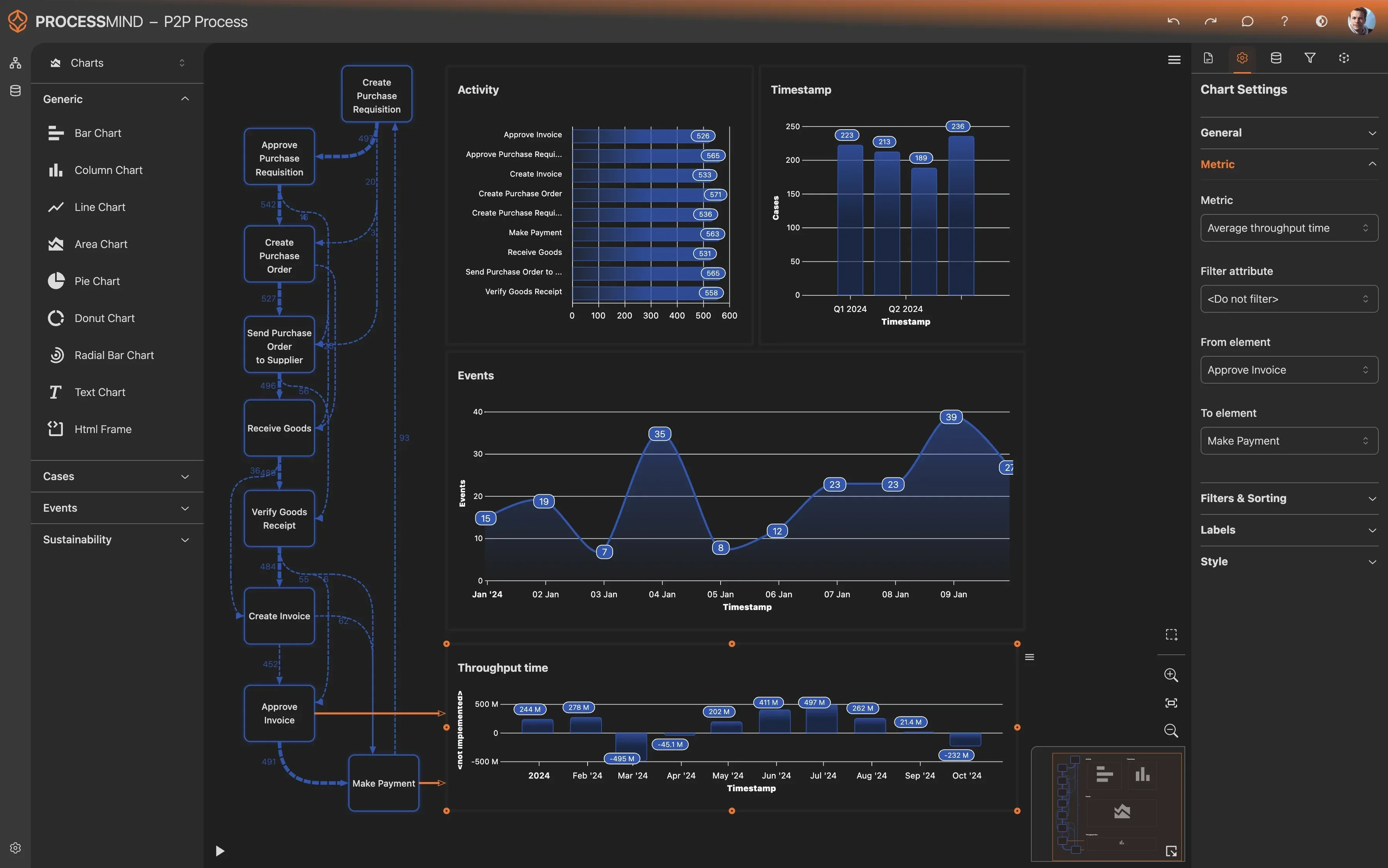
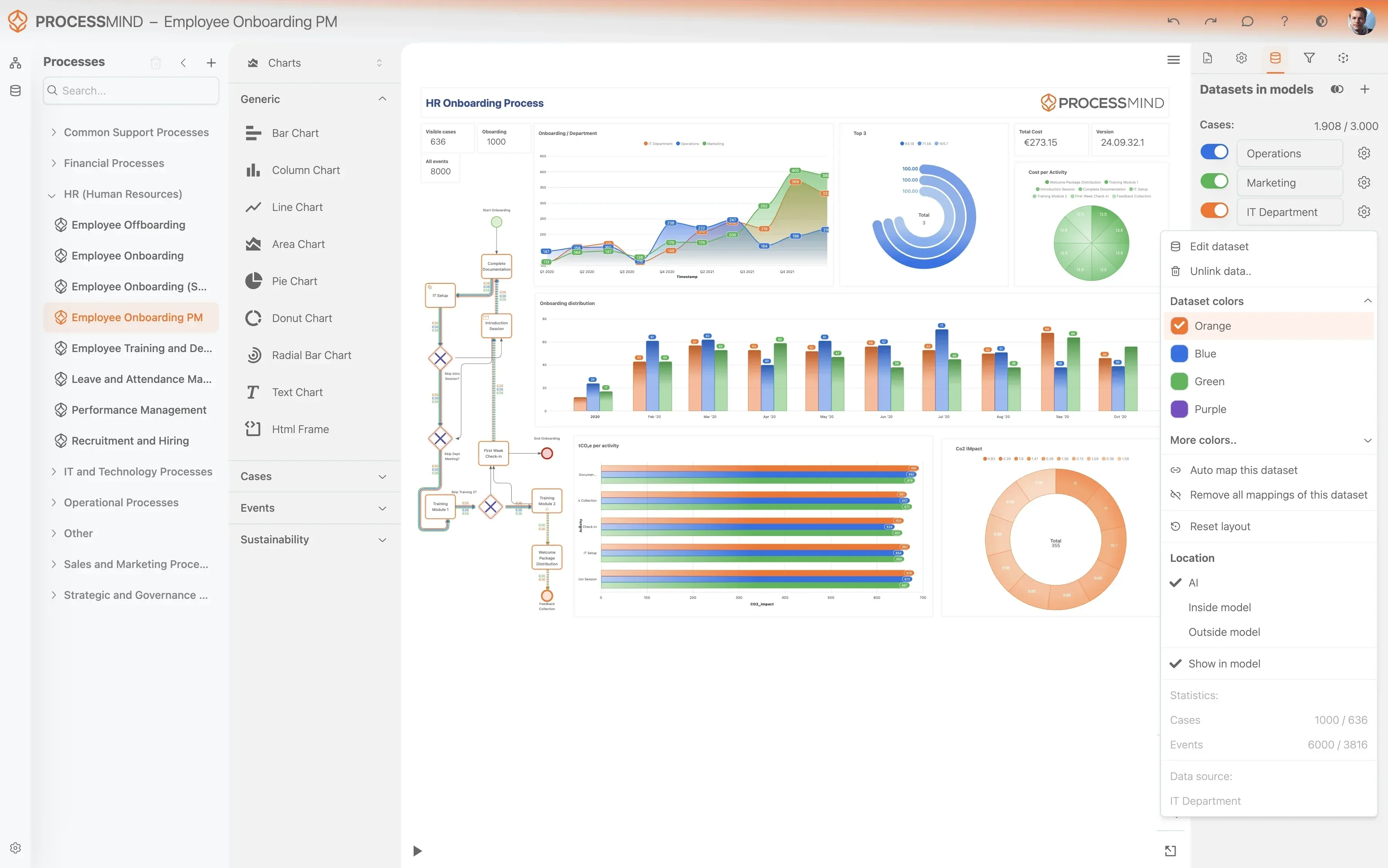
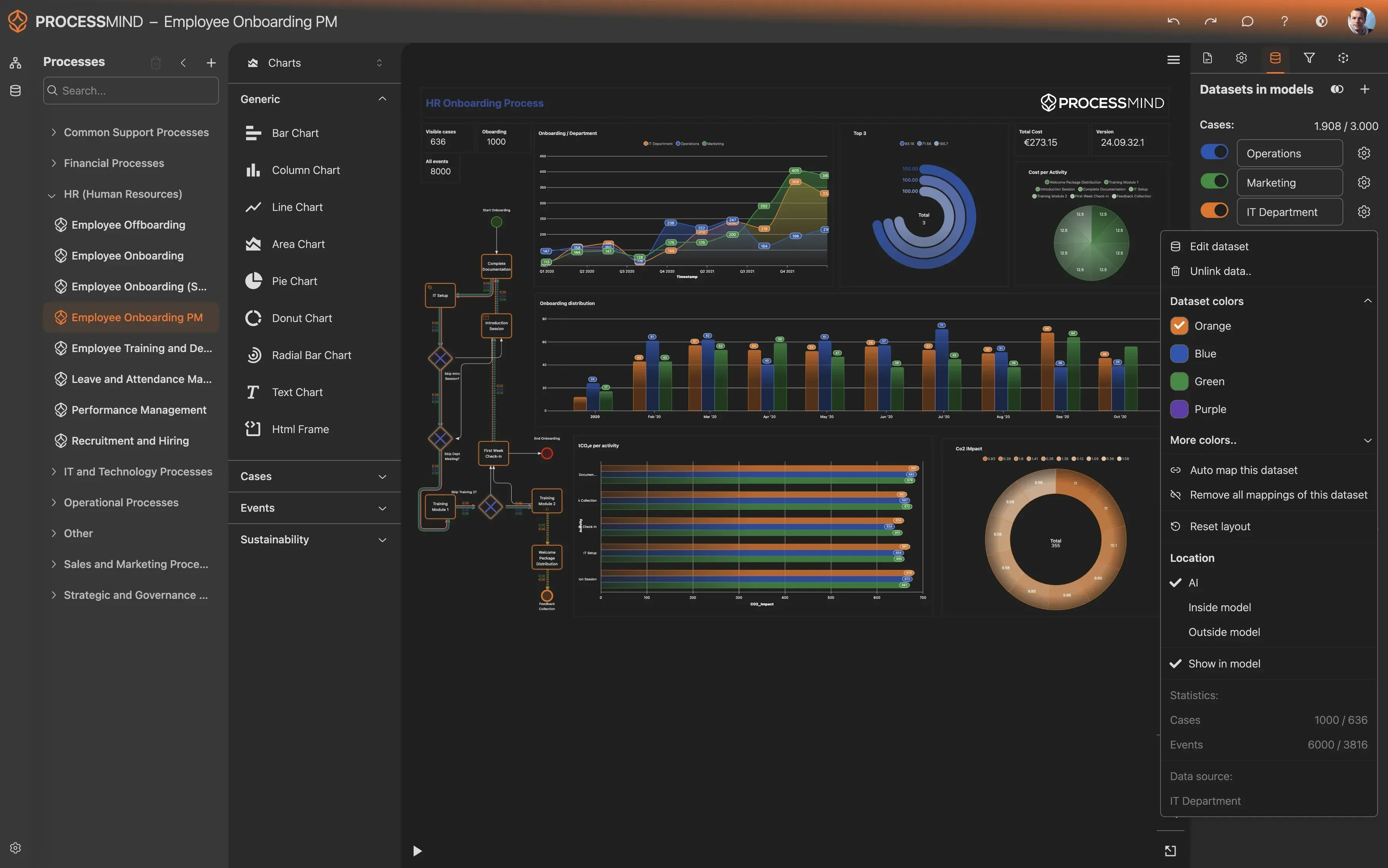
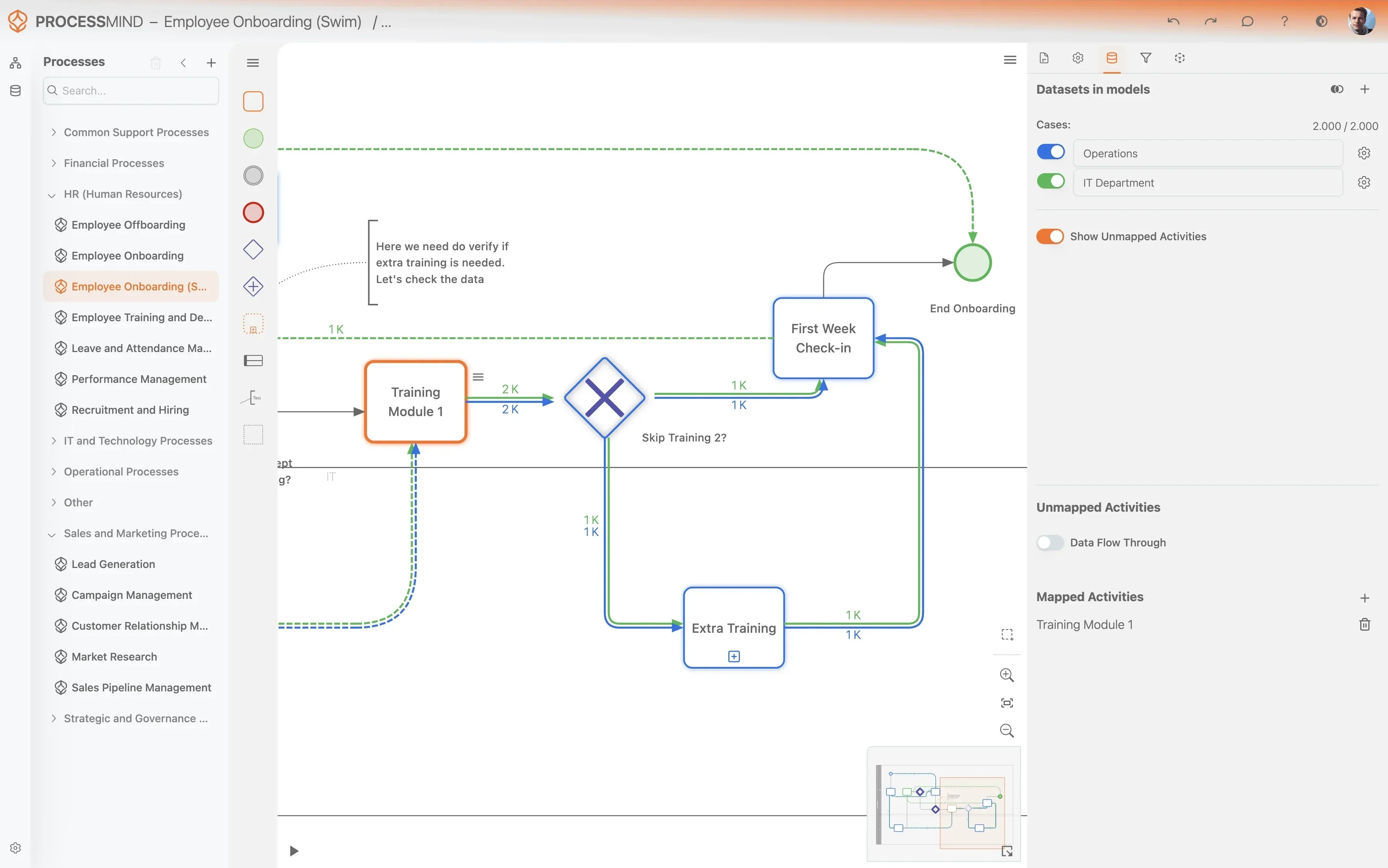
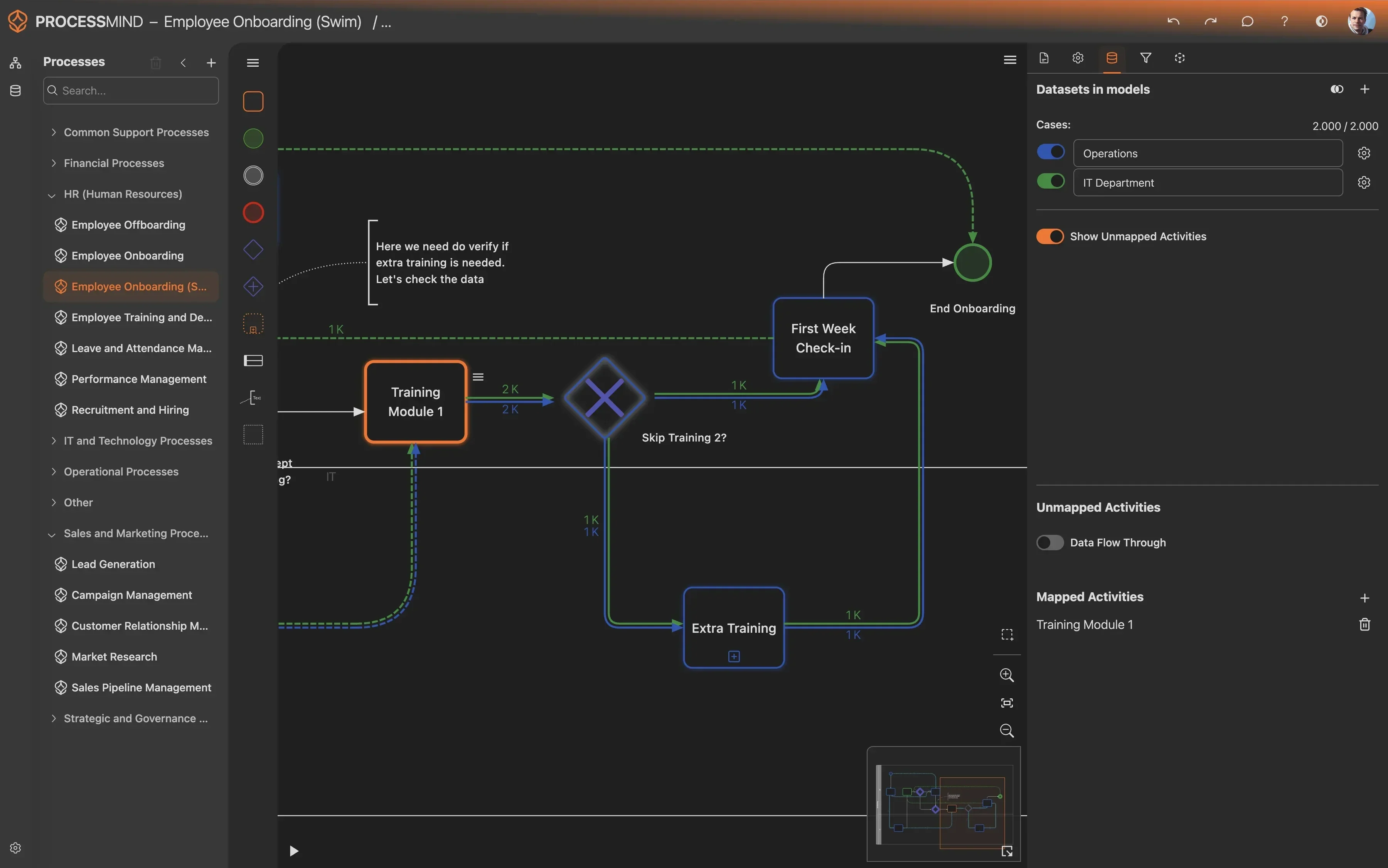
- Map your end to end work order process
- Identify bottlenecks in parts procurement
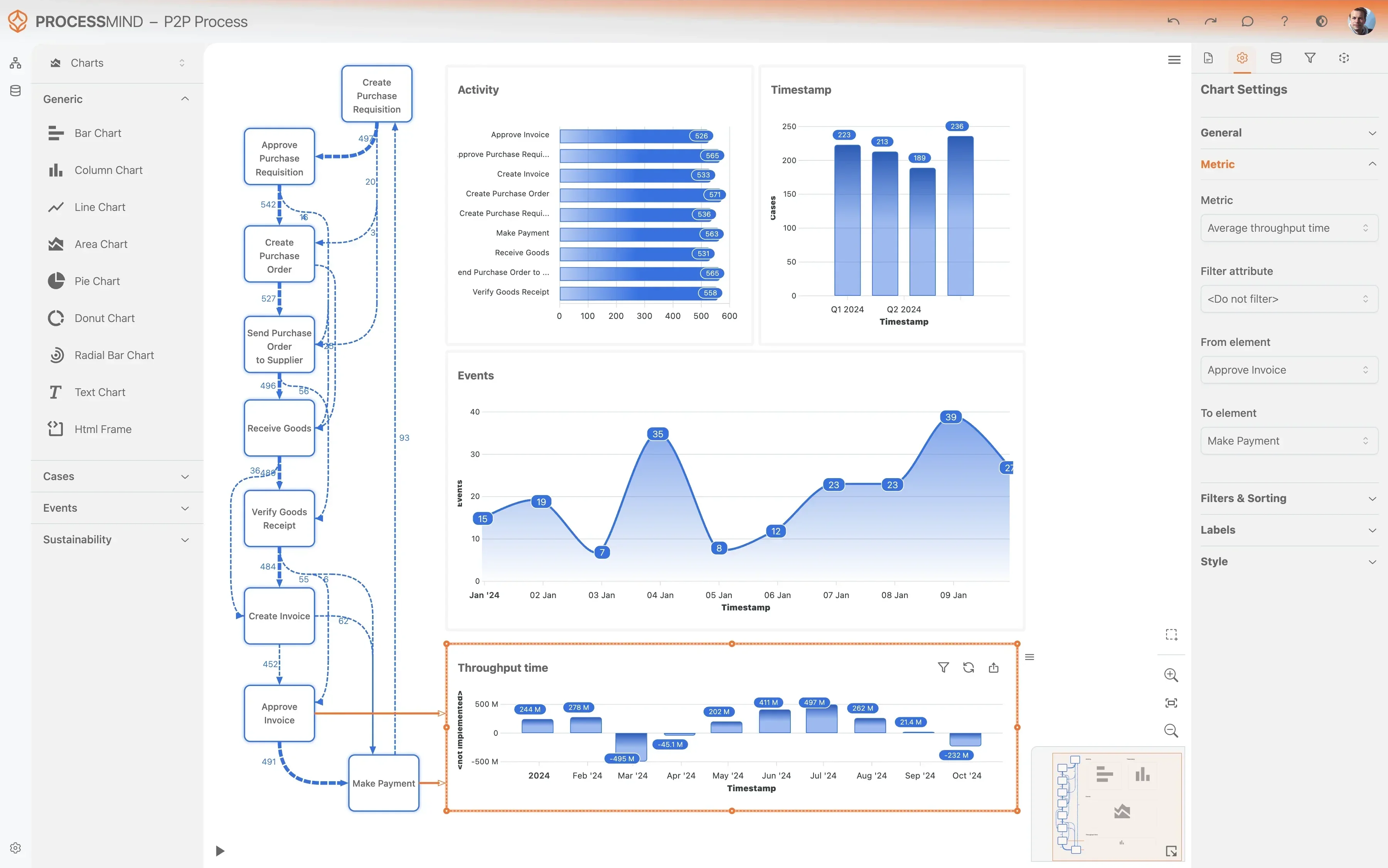
- Find inefficiencies in technician scheduling
- Compare performance across maintenance sites
PROVEN OUTCOMES
Optimizing Asset Maintenance Performance
Organizations using process mining on Maintenance Work Orders within Infor EAM consistently uncover hidden inefficiencies, allowing them to reduce cycle times and improve equipment reliability. These metrics represent the typical operational gains achieved through data-driven process optimization.
Reduction in mean time to repair
Streamlining the path from maintenance request to final closure minimizes equipment downtime and improves overall operational availability.
Increase in preventive work ratio
Identifying bottlenecks in PM scheduling helps organizations move away from costly reactive repairs toward a more stable planned maintenance model.
Increase in value added wrench time
Reducing administrative overhead and waiting periods ensures that technicians spend more time on technical repairs rather than documentation.
Improvement in SLA achievement
Targeted process improvements ensure that high criticality assets receive priority attention to meet strict service level agreements and safety targets.
Reduction in material lead times
Eliminating delays between material requisition and work commencement prevents technicians from waiting on necessary spare parts and supplies.
Reduction in repeat repair cycles
Analyzing rework loops helps identify root causes such as technical skill gaps, leading to more consistent right first time execution.
Results vary based on process complexity and data quality. These figures represent typical improvements observed across various maintenance implementations.
Recommended Data
FAQs
Frequently asked questions
Process mining applies specialized algorithms to the transaction logs within Infor EAM to visualize the end to end flow of your maintenance work orders. It reveals the actual path of every request from creation to closure, identifying where delays or deviations occur in your real world operations.
Data is typically extracted from the core work order and activity tables, such as EVT and ACT, using standard database connectors or API calls. You will need to export the event logs that track status changes, timestamps, and resource assignments to build the process model.
By pinpointing the specific stages where work orders stall, such as waiting for parts or pending manager approval, you can address root causes of delays. Visualizing these bottlenecks allows you to implement targeted changes to your approval workflows or material requisition cycles to keep tasks moving.
Once the initial data extraction is configured, the first process maps can usually be generated within two to four weeks. This timeline depends on the complexity of your Infor EAM configuration and the availability of historical work order data.
The minimum requirements are a unique work order identifier, a timestamp for each status change, and an activity description. Adding dimensions like equipment type, department, or technician ID allows for much deeper filtering and more granular analysis of team performance.
Process mining uses the work order type field to categorize and compare different maintenance strategies automatically. You can analyze why preventive tasks might be delayed compared to emergency repairs and identify opportunities to better balance your scheduling.
The analysis reveals the gaps between work order assignment and actual execution, highlighting periods of inactivity or administrative overhead. This visibility helps managers reschedule labor more effectively and ensures technicians spend more time on actual maintenance tasks.
You do not need to change your current processes to begin, but the analysis often reveals where data entry is inconsistent. Improving how your team logs status updates and completions will significantly enhance the accuracy and value of future process mining insights.
Optimize Asset Maintenance in Infor EAM Today
Reduce maintenance cycle time by 30 percent starting today
No credit card required. Setup in minutes