Improve Your Change Management

Select a process
Choose a process to continue working in your connected workspace.
Optimize ServiceNow Change Management
Process inefficiencies often manifest as bottlenecks in approvals or implementation steps, leading to frustrating delays and potential compliance issues. Our platform helps you pinpoint these exact areas, revealing hidden opportunities to streamline your operations. Discover how to reduce risks, improve stability, and accelerate deployments for a more efficient workflow.
Download our pre-configured data template and address common challenges to reach your efficiency goals. Follow our six-step improvement plan and consult the Data Template Guide to transform your operations.
Show detailed description
Understanding the Need for Change Management Optimization
Change Management is a critical process for any organization, serving as the backbone for controlling the lifecycle of all changes, from creation to closure. In ServiceNow, effective Change Management ensures system stability, minimizes disruption, and facilitates the smooth deployment of new services or updates. However, without clear visibility into the actual process execution, your Change Management can become a source of frustration and inefficiency. Slow approvals, overlooked compliance steps, and repeated rework can lead to extended cycle times, increased operational costs, and even failed changes that negatively impact business operations and user satisfaction. Optimizing your Change Management process in ServiceNow is not just about efficiency, it is about mitigating risk, upholding service quality, and accelerating the delivery of value to your organization.
How Process Mining Illuminates Your Change Management
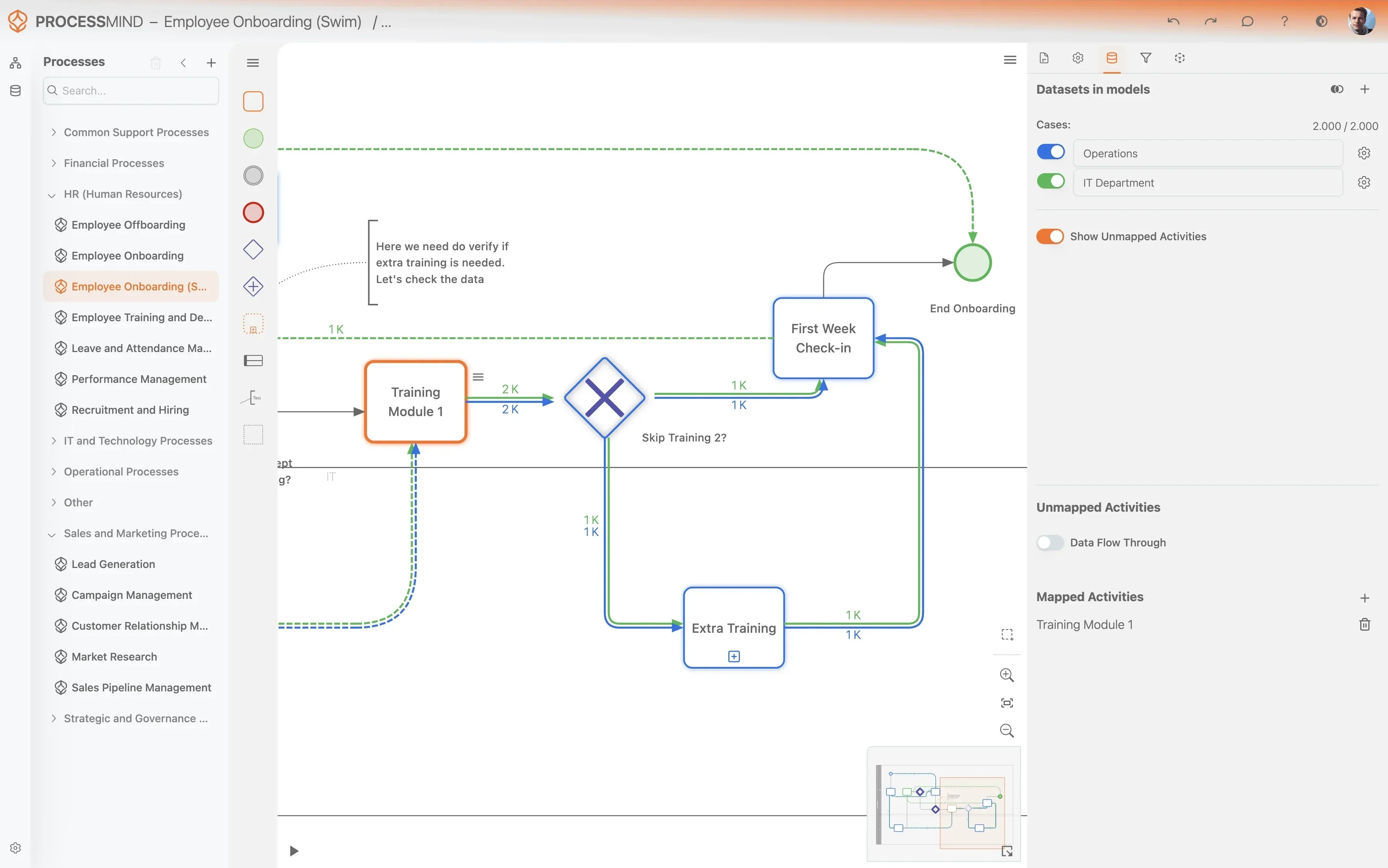
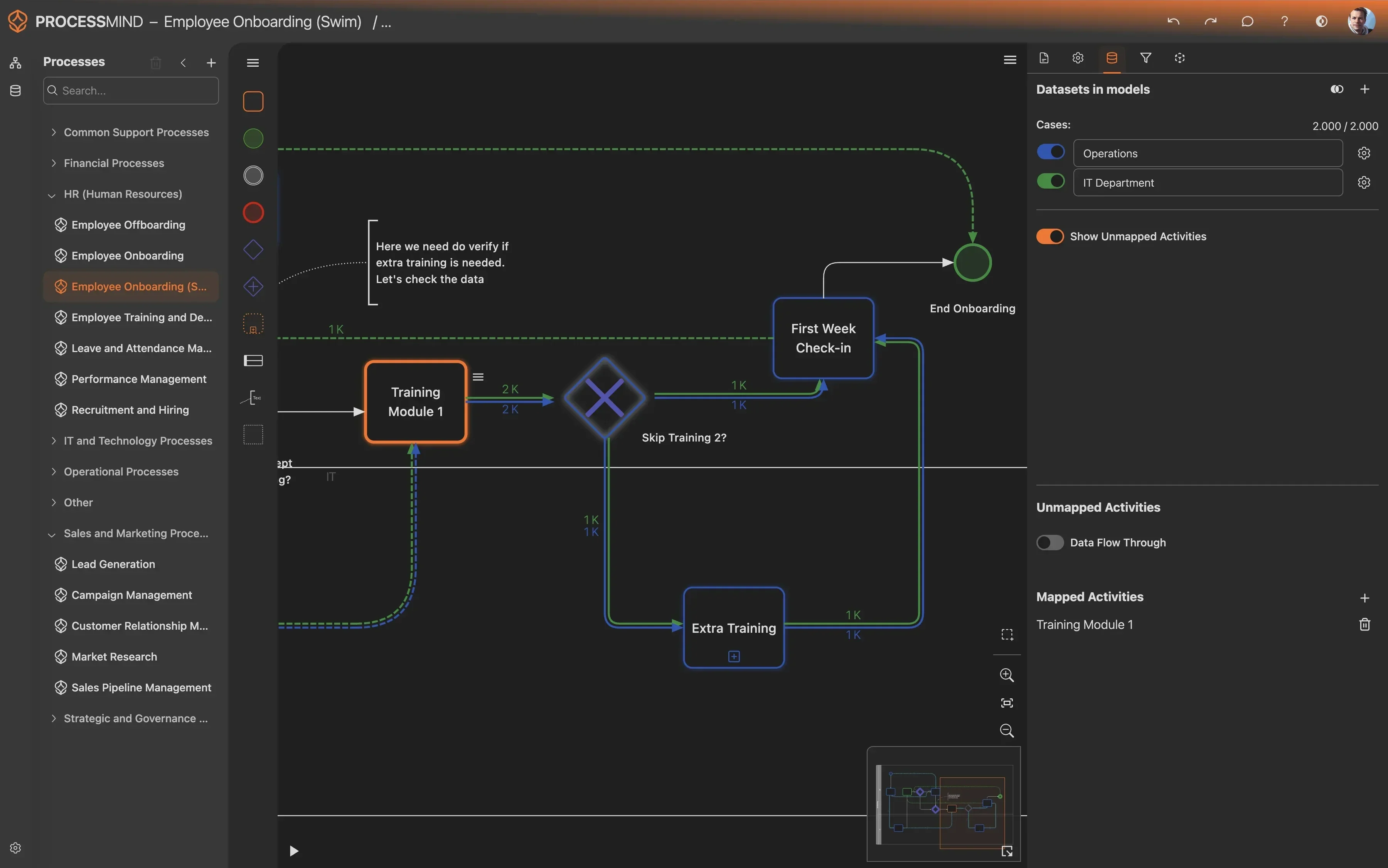
Process mining offers an unparalleled lens into the intricate workings of your ServiceNow Change Management process. By analyzing the rich audit trail data generated within ServiceNow, process mining reconstructs the complete, end-to-end journey of every change request. This includes tracking each activity from the initial "Change Request Created" through to "Change Closed", providing a factual, data-driven visualization of how changes actually flow, not just how they are intended to. You gain deep insights into process variants, allowing you to compare optimal paths against less efficient ones, and identify precisely where your processes deviate. This detailed view empowers you to uncover hidden bottlenecks in approval stages, pinpoint delays in implementation or testing, and reveal instances of rework that inflate cycle time and consume valuable resources. Process mining helps you move beyond assumptions, providing concrete evidence to support your optimization initiatives.
Key Areas for Improvement in Your Change Management
Leveraging process mining for your ServiceNow Change Management uncovers specific opportunities for improvement across various dimensions:
- Bottleneck Identification: Easily visualize and quantify where changes get stuck, whether in the "Risk Assessment Performed" phase, during "Change Request Approved" handoffs, or within specific "Implementation Plan Developed" stages. You can identify which teams or individuals contribute to delays.
- Cycle Time Reduction: Pinpoint activities or sequences of activities that prolong the overall change cycle time. By understanding the true duration of each step, you can target specific areas to streamline, accelerating change delivery.
- Compliance Verification: Automatically detect deviations from your defined Change Management policies. For example, identify changes that bypass critical approval steps, or where required "Testing Performed" was not adequately documented, ensuring your processes consistently adhere to governance standards.
- Rework and Rerun Analysis: Discover instances where changes are rejected, reopened, or require multiple attempts at implementation or testing. Understanding the root causes of rework allows you to address fundamental issues in your change execution.
- Resource Optimization: Gain insight into resource utilization across different change types and identify opportunities to balance workloads and improve team efficiency.
Realizing Tangible Outcomes and Benefits
Optimizing your Change Management with process mining in ServiceNow leads to significant, measurable benefits. You can expect a notable reduction in your average change cycle time, allowing changes to be implemented faster and more reliably. This directly translates to improved first-time-right rates, meaning fewer failed changes and less need for costly rework. Compliance to internal policies and external regulations will be enhanced, reducing audit risks and ensuring consistent service delivery. Ultimately, process optimization of Change Management leads to lower operational costs, better allocation of IT resources, and a substantial increase in service stability and reliability. By embracing a data-driven approach, you empower your organization to make informed decisions that accelerate value delivery and enhance your overall IT service management performance.
Getting Started with Your Change Management Optimization Journey
Embarking on your Change Management optimization journey with process mining in ServiceNow is a straightforward process. The insights gained from analyzing your actual process execution provide a clear roadmap for improvement, enabling you to implement targeted changes with confidence. By understanding the true state of your Change Management, you can transform it from a potential bottleneck into a highly efficient and reliable engine for delivering IT services and business value. Start exploring how process mining can unlock the full potential of your ServiceNow Change Management today, leading to more efficient processes and superior operational outcomes.
The 6-Step Improvement Path for Change Management
Download Data Template
What to do
Get the pre-configured Excel template designed for Change Management. This template guides you on the required data structure for effective process analysis.
Why it matters
A standardized template ensures your data is correctly formatted, preventing errors and speeding up the initial setup for your Change Management analysis.
Expected outcome
You will have the correct data structure defined, ready to populate with your ServiceNow change data.
Export ServiceNow Data
What to do
Extract 3-6 months of historical Change Management data directly from your ServiceNow instance. Populate the downloaded template with your real-world change request data.
Why it matters
Real historical data provides an accurate foundation for identifying actual bottlenecks, compliance issues, and efficiency gaps in your Change Management process.
Expected outcome
Your template will be filled with comprehensive, relevant Change Management data from ServiceNow, ready for upload.
Upload Your Dataset
What to do
Securely upload your filled Excel template to the ProcessMind platform. The system will automatically initiate the analysis of your Change Management data.
Why it matters
Effortless data ingestion means you can quickly move from data collection to insight generation, accelerating your improvement journey without technical hurdles.
Expected outcome
Your Change Management data will be securely processed, and automatic analysis will begin, preparing your dashboards.
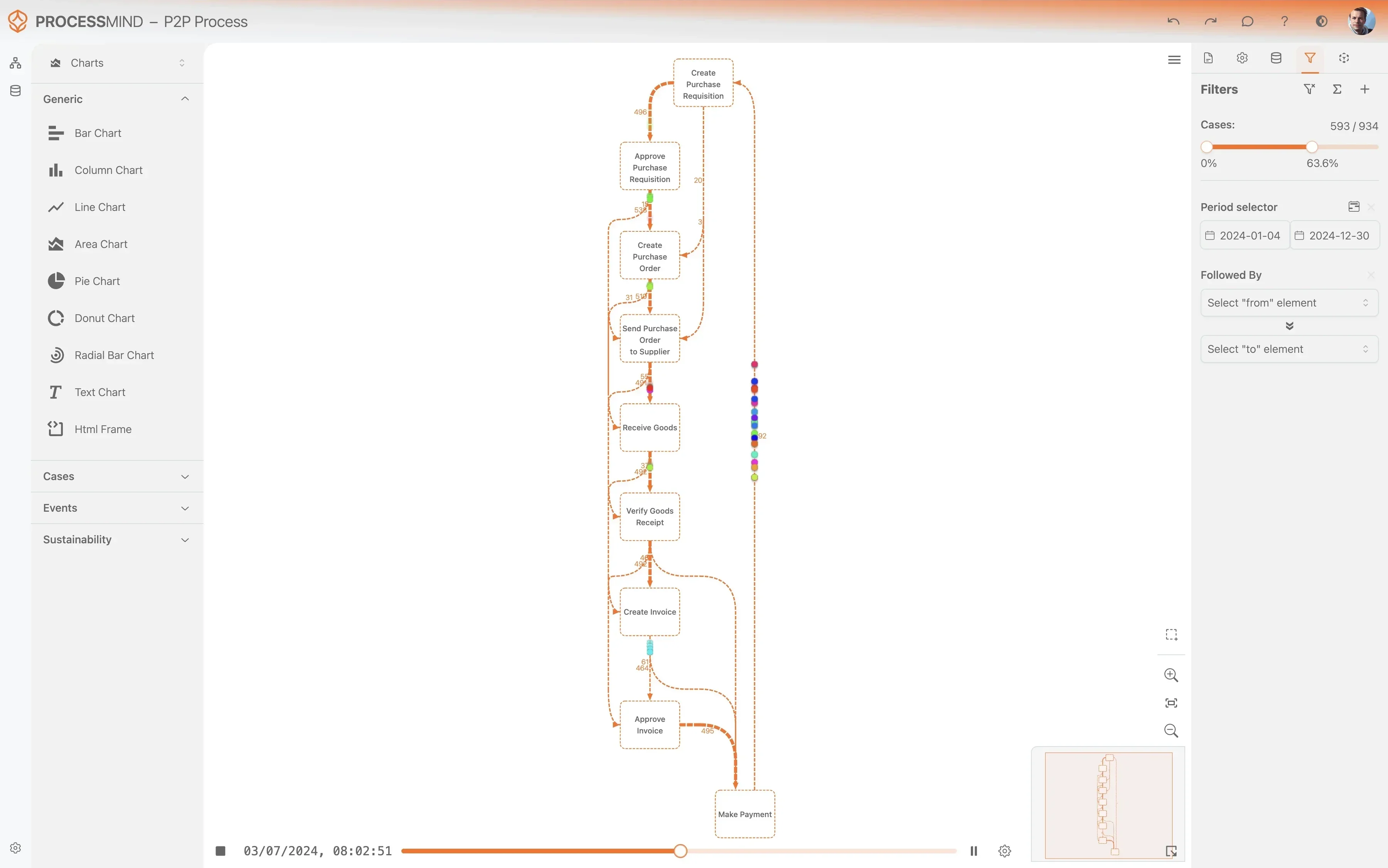
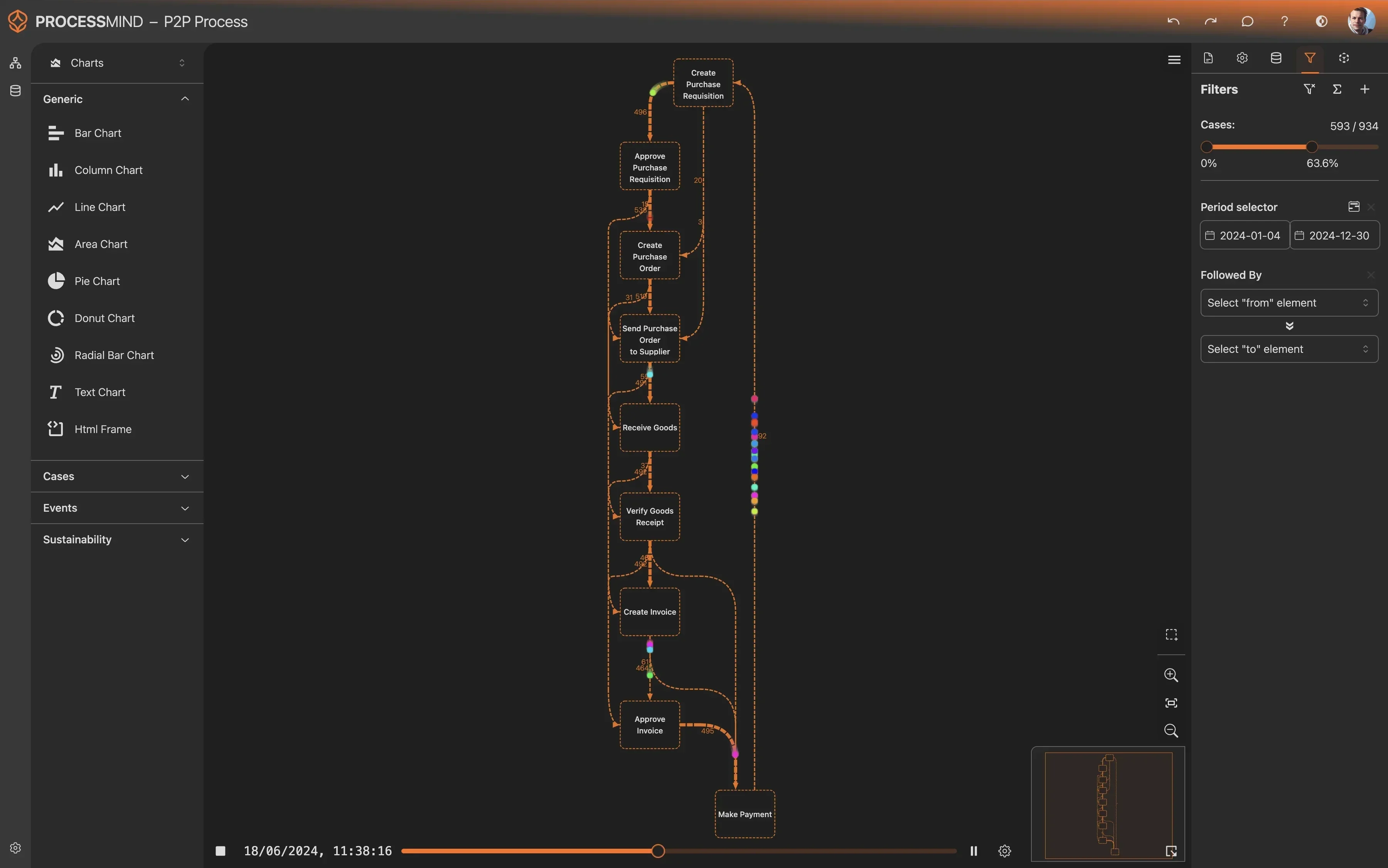
Analyze Change Process
What to do
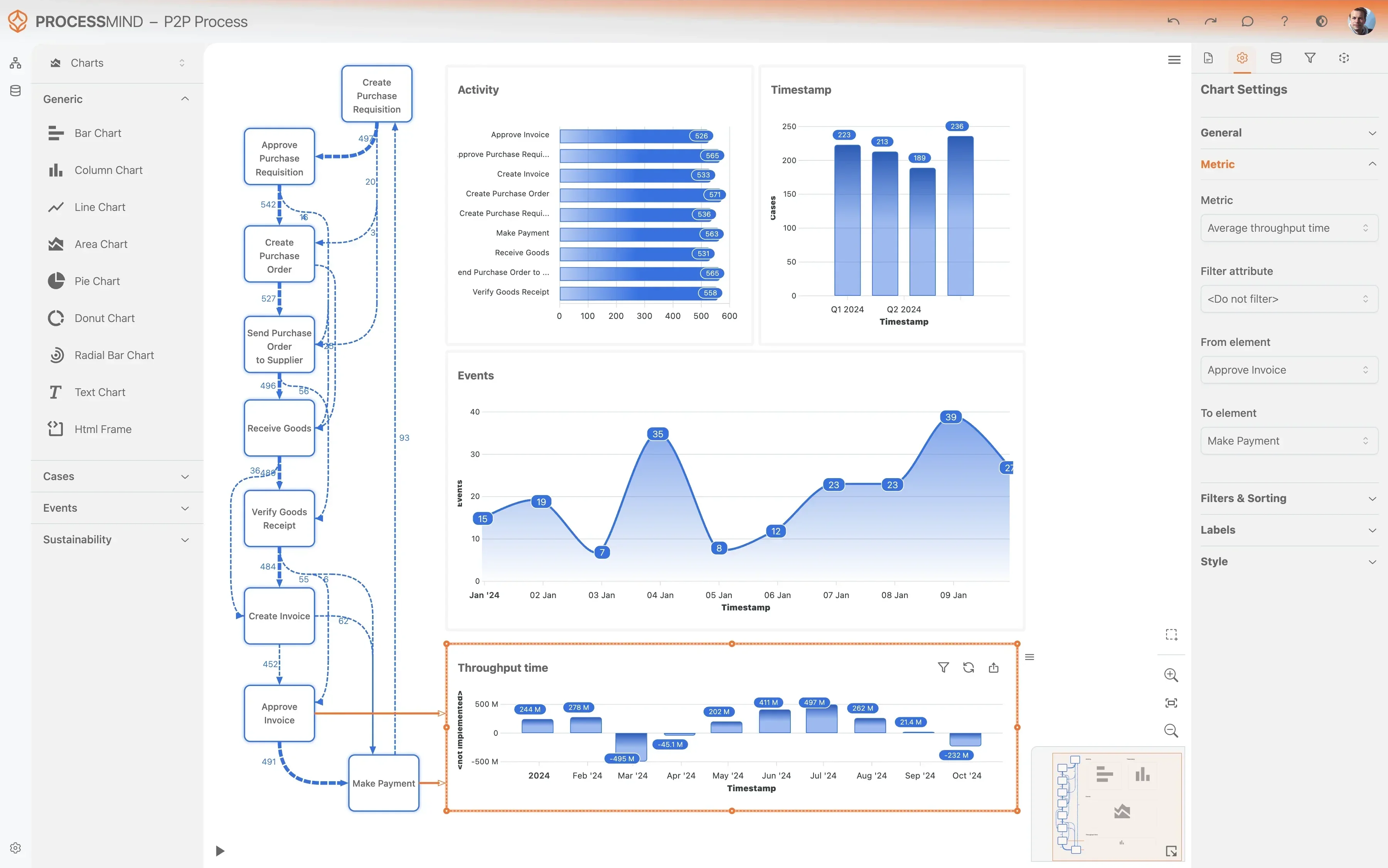
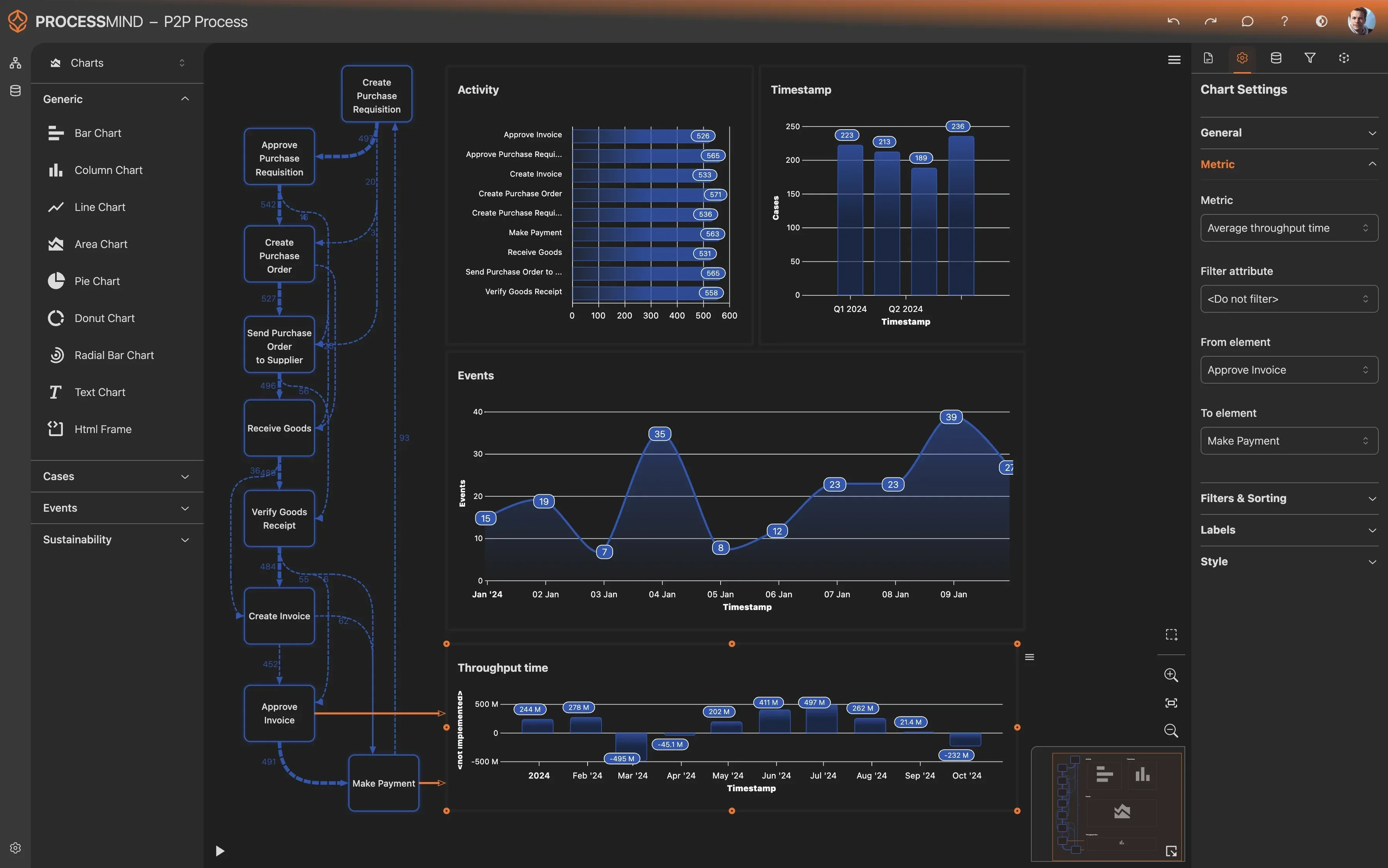
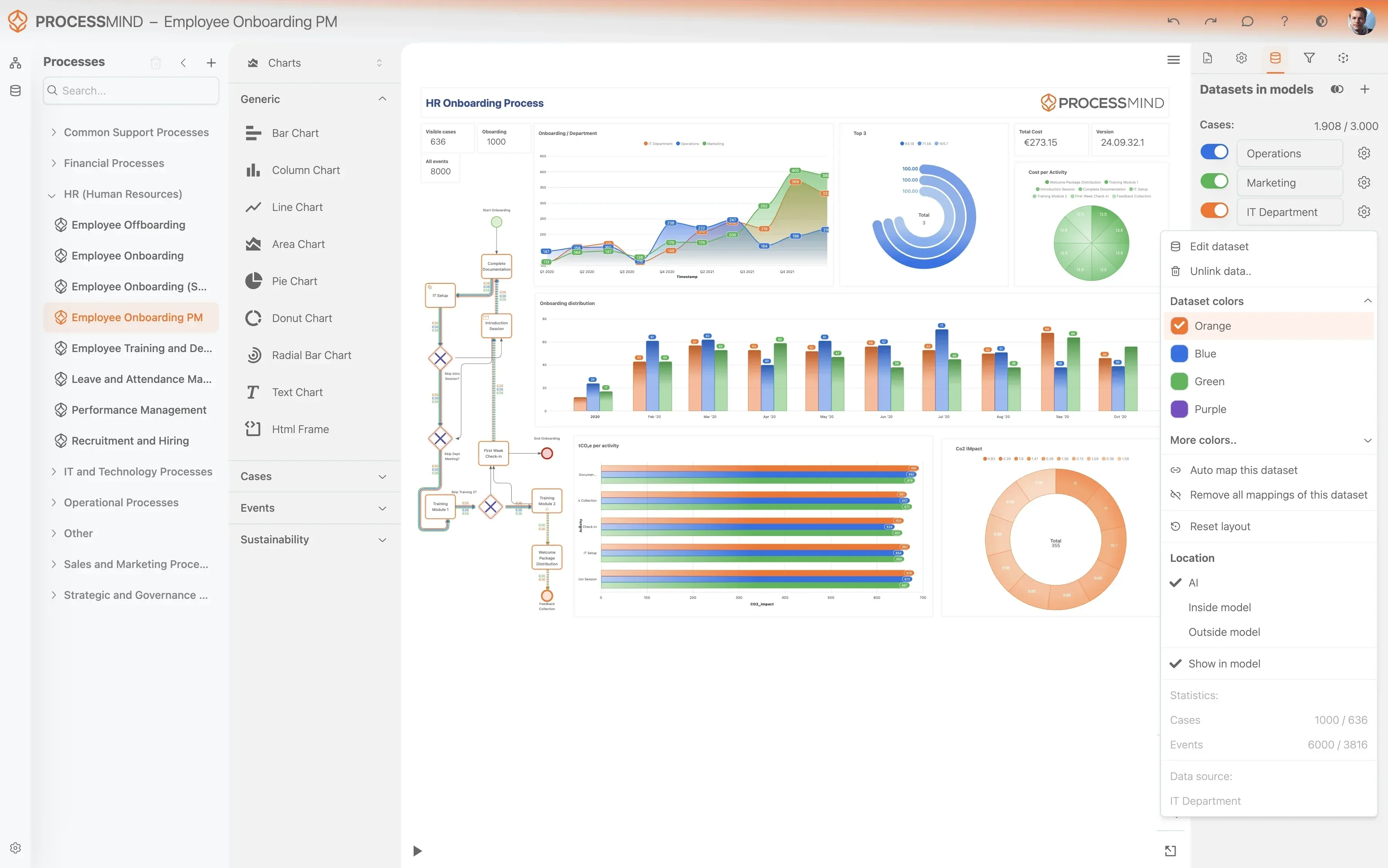
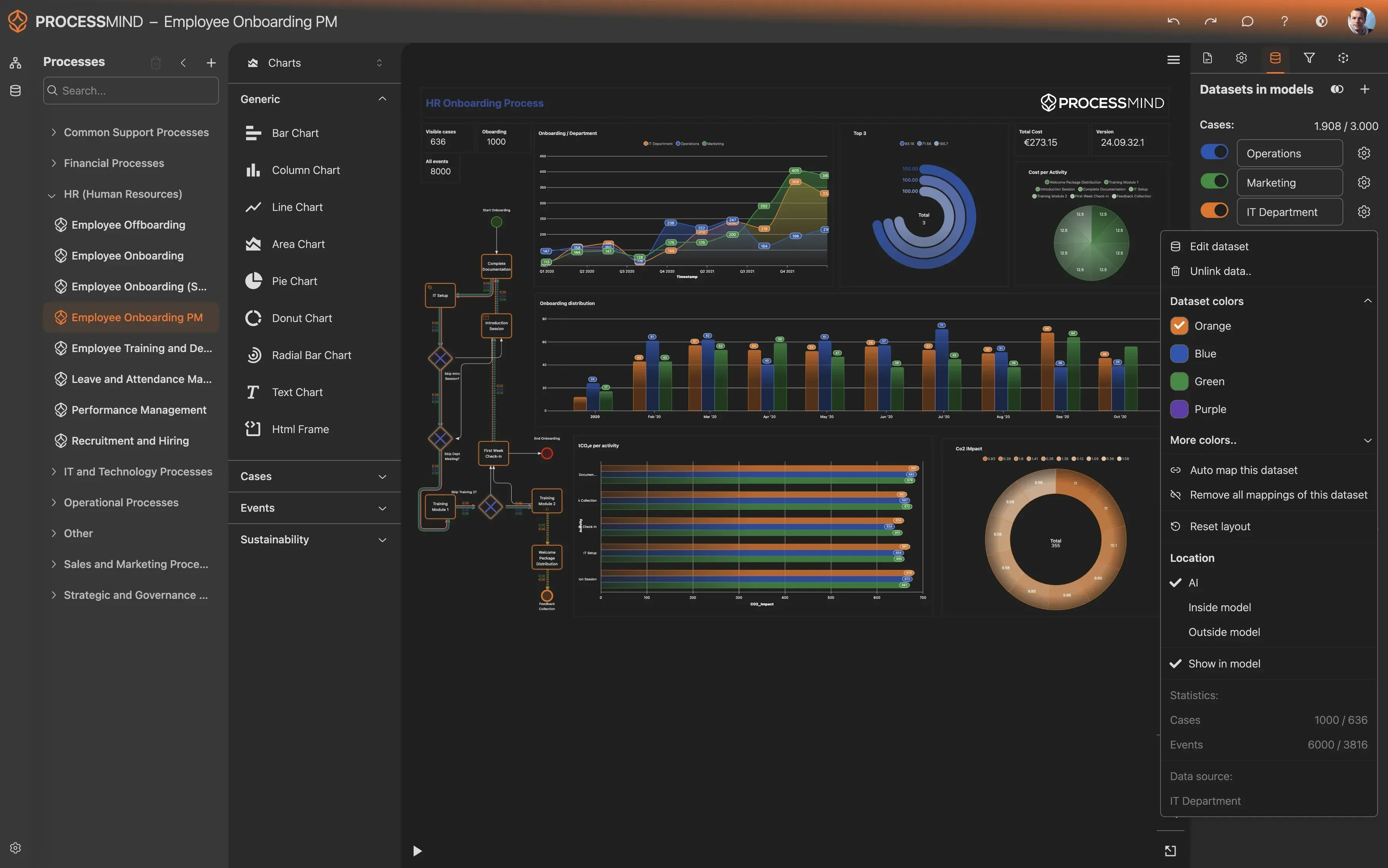
Explore the auto-generated dashboards and interactive visualizations for your Change Management process. Review AI-driven recommendations tailored to your data.
Why it matters
Gain deep visibility into your change workflows, pinpointing inefficiencies, non-compliant paths, and areas for automation to reduce change failure rates.
Expected outcome
You will have a clear understanding of your Change Management process bottlenecks, deviations, and specific improvement opportunities.
Implement Key Changes
What to do
Prioritize and implement the identified improvement opportunities in your Change Management process. This could involve adjusting workflows or approval steps in ServiceNow.
Why it matters
Acting on data-backed insights ensures that your efforts directly address the root causes of issues, leading to tangible operational improvements and reduced risks.
Expected outcome
Your Change Management process will be optimized, with specific changes made to improve efficiency and compliance in ServiceNow.
Monitor Progress Continuously
What to do
Periodically re-export and re-upload updated Change Management data from ServiceNow to ProcessMind to track the impact of your implemented changes.
Why it matters
Continuous monitoring validates your improvements and helps sustain long-term efficiency gains, ensuring your Change Management process remains optimized and adaptable.
Expected outcome
You will clearly see the measurable improvements in your Change Management KPIs and ensure ongoing process health.
TYPICAL OUTCOMES
Realizing Value in Change Management
These outcomes represent the quantifiable benefits organizations typically achieve by optimizing their Change Management process. Through detailed analysis of ServiceNow Change Request data, process mining identifies inefficiencies and bottlenecks, leading to significant operational improvements.
Average reduction in approval time
Streamline your change approval processes by identifying and eliminating bottlenecks, leading to quicker decision-making and faster change progression.
Decrease in post-implementation issues
Proactively identify root causes of change failures, such as inadequate testing or missing steps, to enhance stability and minimize service disruptions.
Reduction in non-conforming changes
Ensure all changes adhere to predefined processes and regulatory standards, reducing the risk of unauthorized changes and improving audit readiness.
Shorter average implementation duration
Uncover delays in the implementation phase, optimize resource allocation, and accelerate the rollout of changes into production environments.
Decrease in rework activities and associated costs
Pinpoint and eliminate the sources of rework in your change processes, saving resources and ensuring higher quality execution from the start.
Individual results may vary based on the specific complexities of your Change Management process and the quality of your data. These figures represent typical improvements observed across successful implementations.
Recommended Data
FAQs
Frequently asked questions
Process mining visualizes the actual flow of your Change Management process, revealing hidden bottlenecks, rework loops, and non-compliant paths. This uncovers inefficiencies and areas where changes are delayed, fail, or bypass controls. It provides a data-driven understanding to optimize your operations and increase efficiency.
You primarily need event logs from your ServiceNow Change Management module. This includes the Change Request ID as the case identifier, activity names, and corresponding timestamps for each event. User or role information associated with activities is also beneficial for deeper analysis.
Traditional reporting shows "what happened," focusing on aggregated metrics and KPIs. Process mining, however, visualizes "how it happened," reconstructing the complete end-to-end process flow from event logs. It reveals actual paths, deviations, and root causes of inefficiencies that dashboards might not expose.
You can expect to accelerate change approval cycles, minimize change failure rates, and optimize implementation durations. Process mining helps eliminate rework, boost SLA adherence, and improve regulatory compliance. Ultimately, it leads to a more efficient and robust Change Management process.
Process mining can pinpoint issues like slow approvals, frequent change failures, unauthorized changes, and lengthy implementation delays. It also highlights inconsistent risk assessments, testing delays, and poor handoffs between teams. By mapping the real process, it exposes root causes of these common problems.
Data can typically be extracted from ServiceNow using standard reporting tools, database exports, or API integrations. The goal is to obtain a flat file, like a CSV, containing the Change Request ID, activity name, and timestamp for each step. Your ServiceNow administrators or data team can assist with this export.
Initial insights can often be gained within a few weeks of data extraction and loading, providing a foundational understanding of your process. More in-depth analysis and identification of actionable improvement opportunities usually take several additional weeks. The overall timeline depends on data complexity and project scope.
You'll need access to a process mining software tool, which handles the data ingestion, visualization, and analysis. Technical skills involve basic data manipulation, SQL knowledge for data preparation, and an understanding of process modeling concepts. Many tools offer user-friendly interfaces to simplify the process.
While process mining tools don't typically integrate directly to perform changes within ServiceNow, they connect to extract historical data for analysis. Many tools offer connectors or APIs to pull event logs from ServiceNow. This data is then processed externally to provide insights without impacting your live system.
Stop Failed Changes, Boost ServiceNow Success Now!
Pinpoint bottlenecks to achieve a 95% change success rate with ease.
No credit card required, setup in minutes.