Improve Your Purchase to Pay - Purchase Order

Optimize Purchase Order Processing in NetSuite for Efficiency
Complex procurement processes often hide bottlenecks that lead to costly delays and compliance risks. Our platform helps you pinpoint exact inefficiencies from the initial requisition through to goods receipt. We provide clear, actionable steps to streamline your operations and achieve significant gains in speed and compliance.
Download our pre-configured data template and address common challenges to reach your efficiency goals. Follow our six-step improvement plan and consult the Data Template Guide to transform your operations.
Show detailed description
Understanding and Optimizing Your Purchase Order Process in NetSuite
The Purchase to Pay, P2P, process is the backbone of an efficient procurement function, and at its core lies the Purchase Order. Within your NetSuite environment, the lifecycle of a Purchase Order, from initial requisition to goods receipt, is a complex series of activities involving multiple departments and stakeholders. Inefficient Purchase Order management can lead to significant business challenges, including delayed supplier payments, increased operational costs, strained vendor relationships, and compliance risks. Manual errors and process deviations often go unnoticed, creating hidden bottlenecks that impact your entire supply chain and financial health. Effectively managing and optimizing the Purchase Order process is critical for maintaining healthy cash flow, ensuring timely product availability, and achieving overall operational excellence.
How Process Mining Illuminates Purchase Order Bottlenecks
Process mining offers a powerful lens to analyze the actual execution of your Purchase Order process within NetSuite. Instead of relying on assumptions or anecdotal evidence, process mining extracts event log data from your NetSuite system, reconstructing the real-world sequence of every Purchase Order. By setting the Case Identifier to 'Purchase Order', this approach allows you to track individual orders as they progress through activities like 'Purchase Requisition Created', 'Purchase Order Approved', 'Purchase Order Sent to Vendor', and 'Goods Receipt Posted'. This creates a visual, data-driven map of your process, revealing exactly where Purchase Orders get stuck, identifying non-standard paths, and quantifying the time spent in each activity.
This analytical capability is crucial for understanding the true Purchase to Pay - Purchase Order cycle time. You can pinpoint specific bottlenecks, such as prolonged approval times for certain departments or approvers, delays between 'Purchase Order Confirmed by Vendor' and 'Goods Receipt Initiated', or excessive 'Purchase Order Changed' events indicating poor initial planning. Process mining also highlights deviations from your intended process flow, exposing why some Purchase Orders bypass standard approvals or undergo unexpected rework loops. This empirical insight is essential for effective process optimization in NetSuite, enabling you to move beyond guesswork and address root causes with precision.
Key Areas for Purchase Order Process Improvement
Leveraging process mining on your NetSuite Purchase Order data typically uncovers several critical areas for improvement:
- Approval Workflow Optimization: Identify stages where Purchase Orders consistently experience extended approval times. This could point to inefficient approval matrix configurations, lack of automated routing, or specific individuals acting as bottlenecks. Optimizing these workflows can significantly reduce Purchase to Pay - Purchase Order cycle time.
- Goods Receipt Efficiency: Analyze the time lag between a Purchase Order being confirmed or sent and the actual goods being received and posted. Delays here can impact inventory levels, production schedules, and ultimately, customer satisfaction. Process mining helps you understand the factors contributing to these delays, whether it is vendor lead times, internal receiving processes, or data entry errors.
- Compliance and Deviations: Detect instances where Purchase Orders do not follow established procurement policies, such as orders placed without proper requisitions or approvals. Identifying these deviations allows you to enforce compliance more effectively and mitigate financial or operational risks.
- Vendor Performance Analysis: Gain insights into the actual lead times and reliability of your vendors based on the 'Purchase Order Sent to Vendor' and 'Goods Receipt Posted' events. This data is invaluable for strategic sourcing decisions and improving supplier relationships.
Achieving Measurable Outcomes Through Optimization
The proactive approach of using process mining to analyze and improve your Purchase to Pay - Purchase Order process in NetSuite leads to tangible, measurable benefits:
- Reduced Cycle Time: Expect a significant reduction in the end-to-end Purchase Order cycle time, from requisition creation to goods receipt, freeing up working capital and accelerating product availability.
- Cost Savings: By eliminating rework, reducing manual effort, and preventing delays, your organization can achieve substantial operational cost reductions. Improved compliance also minimizes financial risks associated with unauthorized purchases.
- Enhanced Efficiency: Streamlined workflows and automated decision-making, informed by process mining insights, boost the overall efficiency of your procurement department and related functions.
- Improved Compliance and Governance: A clear understanding of actual process execution enables stronger enforcement of internal policies and external regulations, reducing audit risks.
- Better Vendor Relationships: Faster processing and clearer communication, facilitated by optimized workflows, lead to improved relationships with your suppliers.
Getting Started with Purchase Order Process Optimization
Embarking on the journey to optimize your Purchase to Pay - Purchase Order process in NetSuite begins with understanding your current state through data. Process mining provides this foundational understanding, offering clear, actionable insights into how to improve your procurement operations. By leveraging this approach, you can transform inefficiencies into strategic advantages, ensuring your Purchase Orders flow smoothly and effectively through your NetSuite environment.
The 6-Step Improvement Path for Purchase to Pay - Purchase Order
Download the Data Template
What to do
Obtain the pre-structured Excel template designed for Purchase to Pay data. This template guides you on the specific data fields required for analysis.
Why it matters
Using the correct data structure from the start ensures accurate and efficient processing later. It simplifies data preparation and avoids rework.
Expected outcome
A ready-to-fill Excel template for your Purchase Order process data.
Export Your NetSuite Data
What to do
Extract 3-6 months of historical Purchase Order data from your NetSuite system. Populate the downloaded template with your real process data.
Why it matters
Comprehensive historical data provides a true picture of your process. This forms the foundation for discovering patterns and areas for improvement.
Expected outcome
A populated data template reflecting your recent Purchase Order activities in NetSuite.
Upload Your Dataset Securely
What to do
Upload your completed data template to the ProcessMind platform. Your data will undergo automatic validation and preparation for analysis.
Why it matters
A secure and efficient upload process ensures your data is quickly ready for analysis, minimizing manual effort and speeding up insights.
Expected outcome
Your Purchase Order data securely loaded and ready for in-depth process analysis.
Analyze Your PO Process
What to do
Explore the auto-generated dashboards, process maps, and performance metrics. Utilize AI-driven recommendations to identify bottlenecks and deviations.
Why it matters
Uncover hidden inefficiencies and compliance gaps within your Purchase Order process. Gain actionable insights to streamline operations and reduce costs.
Expected outcome
A clear understanding of your Purchase Order process, including key bottlenecks and improvement opportunities.
Implement Actionable Changes
What to do
Prioritize the identified improvement opportunities and translate them into concrete actions. Apply changes directly within your NetSuite environment or related processes.
Why it matters
Taking action on insights is crucial for realizing tangible benefits. This step transforms analysis into measurable operational improvements and efficiency gains.
Expected outcome
Concrete improvements implemented in your Purchase Order process, addressing identified issues.
Monitor & Optimize Continuously
What to do
Periodically re-upload updated Purchase Order data from NetSuite to track the impact of your changes. Continuously refine processes based on new insights.
Why it matters
Continuous monitoring ensures sustained process health and identifies new areas for optimization. Measure the long-term impact of your improvement initiatives.
Expected outcome
Ongoing visibility into your Purchase Order performance and sustained improvements over time.
WHAT YOU WILL GET
Uncover Hidden Efficiencies in NetSuite PO Processing
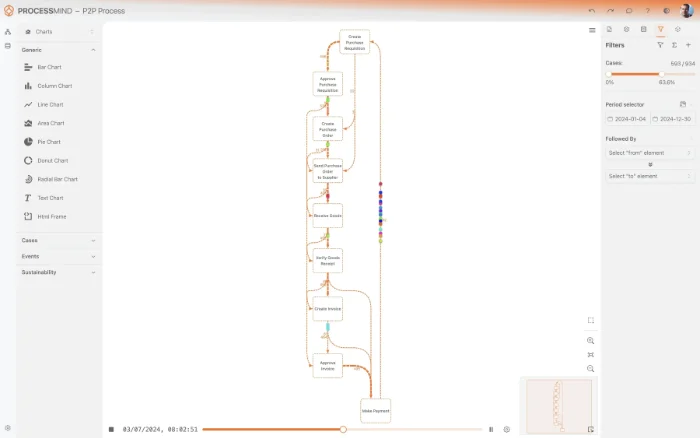
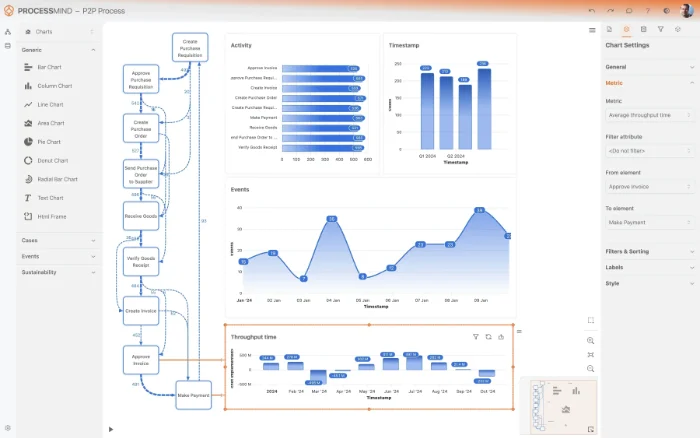
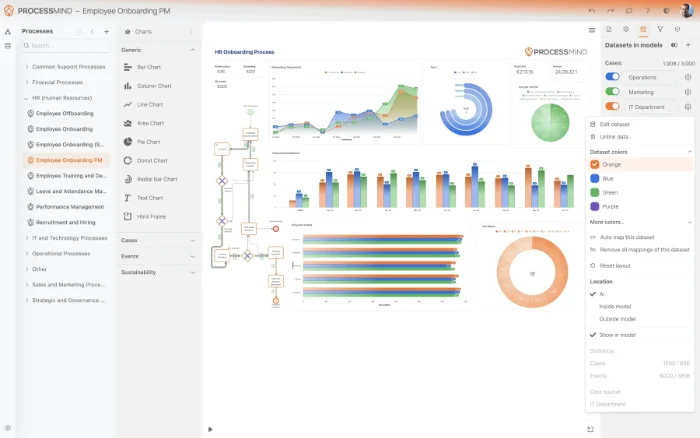
- Visualize actual NetSuite PO process flow
- Pinpoint PO bottlenecks and compliance risks
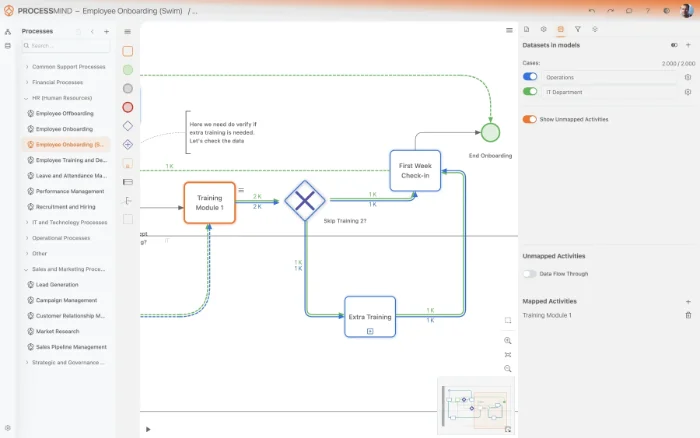
- Detect non-compliant Purchase Order activities
- Optimize PO cycle times and resource usage
TYPICAL OUTCOMES
Real-World Results from Optimizing Purchase Orders
By applying process mining to your NetSuite Purchase Order data, organizations gain clear insights into inefficiencies and bottlenecks. These outcomes represent the common, tangible improvements achieved through data-driven process optimization.
Reduced approval cycle time
Identify and eliminate bottlenecks in your purchase order approval workflows, leading to significantly quicker processing.
Higher process conformance
Ensure your purchase-to-pay process adheres strictly to procurement policies, minimizing unauthorized deviations and reducing compliance risks.
Decrease in change order rate
Pinpoint root causes of frequent purchase order modifications, reducing manual rework, improving efficiency, and cutting operational costs.
Higher on-time delivery rate
Gain clear, data-driven insights into vendor performance to negotiate better terms and ensure goods are received promptly, enhancing supply chain predictability.
Shorter goods receipt time
Streamline and speed up the critical goods receipt process, reducing inventory holding times and improving overall operational flow.
Decrease in unauthorized purchases
Automatically detect and curb purchases made outside of approved channels, leading to better contract compliance and significant cost savings.
Actual results may vary depending on your specific process complexity, data quality, and the scope of implementation. The figures mentioned reflect typical improvements observed across various organizations.
Recommended Data
FAQs
Frequently asked questions
Process mining analyzes your NetSuite Purchase Order data to visualize the actual process flow. It identifies bottlenecks, compliance gaps, and inefficiencies, like lengthy approval times or unauthorized purchases. This insight allows you to make data-driven decisions to streamline operations and reduce costs.
To effectively mine your Purchase Order process, we primarily need event logs from NetSuite. This includes purchase order creation, approval steps, status changes, goods receipt, and invoice matching, along with timestamps and the responsible user for each event. Your NetSuite transaction and audit logs usually contain this information.
After data extraction and initial setup, you can typically expect to see preliminary process insights within a few weeks. The exact timeline depends on data complexity and volume, but quick wins often become apparent early on. Full, actionable recommendations usually follow within one to two months.
Yes, absolutely. By analyzing the actual execution paths against defined process models, process mining can highlight deviations, such as purchases made outside approved channels or changes to POs without proper authorization. This helps enforce compliance and identify areas needing stricter controls.
You can expect significant improvements such as reducing PO approval cycle times, minimizing rejection rates, and enhancing vendor delivery predictability. Process mining provides the insights to streamline departmental handoffs, eliminate unauthorized workarounds, and ultimately achieve greater efficiency and cost savings in your procurement.
Data extraction from NetSuite can be done through various methods, including saved searches, custom reports, or API integrations. The specific approach depends on your NetSuite configuration and the volume of data. Our experts can guide you in setting up efficient, secure extraction methods to ensure data completeness.
The main technical requirement is access to your NetSuite system for data extraction, typically with read-only permissions. Beyond that, a secure environment for data processing and analysis is needed. The process mining platform itself is usually cloud-based, minimizing your internal IT infrastructure burden.
While some initial IT support for data extraction is beneficial, modern process mining tools are designed for business users. They feature intuitive interfaces that allow your procurement and process teams to analyze insights without extensive data science backgrounds. Training and support are typically provided to ensure your team's success.
Streamline Purchase Orders: Boost NetSuite Efficiency Now
Reduce Purchase Order cycle time by 30% and eliminate bottlenecks with our platform.
No credit card required. Start optimizing today.