Improve Your Transportation Management

Select a process
Choose a process to continue working in your connected workspace.
Optimize Transportation Management in Trimble TMS
Complex operational processes can often conceal hidden inefficiencies and compliance risks. Our platform helps you pinpoint exact bottlenecks, from initial planning to final delivery confirmation, ensuring smoother workflows. Discover how to streamline operations, reduce costs, and elevate customer satisfaction with clearer insights.
Download our pre-configured data template and address common challenges to reach your efficiency goals. Follow our six-step improvement plan and consult the Data Template Guide to transform your operations.
Show detailed description
Why Optimizing Transportation Management is Crucial for Your Business
In today's fast-paced global economy, efficient Transportation Management is not just an operational necessity; it's a critical driver of profitability and customer satisfaction. While systems like Trimble TMS provide robust tools for managing fleets, routing, and logistics, the underlying processes can still harbor inefficiencies that impact your bottom line. Unseen bottlenecks, hidden compliance gaps, and suboptimal workflows can lead to increased operational costs, missed delivery deadlines, and ultimately, a decline in customer trust. Understanding the true end-to-end journey of every shipment, from the initial request to final payment, is paramount. Without this comprehensive view, even the most advanced Trimble TMS implementation may not unlock its full potential, leaving valuable optimization opportunities undiscovered. This section will explore the profound business impact of well-optimized transportation processes and the hidden costs of ignoring inefficiencies.
Unlocking Deeper Insights with Process Mining for Trimble TMS
Process mining offers a revolutionary approach to understanding and improving your Transportation Management operations within Trimble TMS. Instead of relying on assumptions or anecdotal evidence, it uses the digital footprints left in your system's event logs to reconstruct the actual, end-to-end flow of every shipment. By treating each "Shipment" as a distinct case, process mining meticulously traces every activity, from "Transportation Request Received" and "Shipment Planned" to "Goods Delivered" and "Payment Processed." This analytical power allows you to visualize the real process paths taken, identify deviations from standard operating procedures, and pinpoint exact areas where delays, rework, or unnecessary steps occur. You'll gain an objective, data-driven perspective on how your transportation processes truly operate, revealing the "how" and "why" behind performance gaps that are often invisible in traditional reporting.
Key Areas for Improving Your Transportation Management Process
Leveraging process mining on your Trimble TMS data illuminates specific areas ripe for improvement:
- Bottleneck Identification and Resolution: Easily spot where shipments get stuck, whether it's during "Carrier Selected," "Pickup Scheduled," or "Customs Cleared." Understanding these choke points allows you to focus resources on the most impactful interventions, helping you to improve Transportation Management efficiency.
- Reducing Transportation Management Cycle Time: Analyze the duration of each process step to identify activities that contribute excessively to the overall shipment cycle time. This insight is crucial for implementing strategies that reduce Transportation Management cycle time from initial request to final delivery and payment.
- Optimizing Carrier Performance: By correlating activities with the "Carrier" attribute, you can identify which carriers consistently lead to delays or require more rework, enabling data-driven decisions for carrier selection and negotiation.
- Ensuring Compliance and Reducing Rework: Detect instances where processes deviate from predefined rules, such as unusual sequences between "Goods Delivered" and "Proof of Delivery Received," or repeated "Freight Bill Audited" activities, which can signal compliance issues or training needs.
- Enhancing Resource Allocation and Planning: Understand the impact of planning activities like "Shipment Planned" and "Delivery Scheduled" on subsequent steps, leading to more effective scheduling and resource utilization across your logistics network.
Realizing Tangible Outcomes from Process Optimization
The insights derived from process mining your Trimble TMS data translate directly into measurable business benefits:
- Significant Cost Reduction: By eliminating rework, minimizing demurrage charges, optimizing routing, and improving carrier selection, you can achieve substantial savings across your transportation budget. Process optimization helps reduce operational expenses associated with inefficient workflows.
- Increased Operational Efficiency: Streamlined processes lead to faster shipment cycles, improved on-time delivery rates, and better utilization of your fleet and personnel. This means more shipments handled with the same resources, directly improving Transportation Management cycle time.
- Enhanced Customer Satisfaction: Reliable, on-time deliveries and transparent communication about shipment progress build customer trust and loyalty. Proactive management of potential delays, identified through process mining, leads to a superior customer experience.
- Improved Regulatory and Internal Compliance: Clear visibility into process execution ensures adherence to internal policies and external regulations, reducing the risk of fines and reputational damage, particularly for complex international shipments involving "Customs Cleared."
- Data-Driven Strategic Decision Making: Gain the factual basis needed to make informed strategic decisions regarding logistics network design, technology investments, and supply chain partnerships, continually elevating your Trimble TMS operations.
Embarking on Your Journey to Transportation Management Excellence
Improving Transportation Management in Trimble TMS doesn't have to be a daunting task. With process mining, you have a powerful, objective tool to uncover the real story behind your logistics operations. This detailed perspective empowers you to move beyond assumptions, identify precise areas for improvement, and implement changes that yield significant, measurable results. Begin your journey toward a more efficient, compliant, and cost-effective transportation network by leveraging the insights process mining provides.
The 6-Step Improvement Path for Transportation Management
Download the Template
What to do
Get the Excel template designed for Transportation Management process data from Trimble TMS. This template helps structure your data correctly for analysis.
Why it matters
Using the right template ensures your data is uniformly formatted, which is crucial for accurate and efficient process mining analysis.
Expected outcome
An Excel template, ready to be populated with your Trimble TMS transportation data.
Export Your Data
What to do
Extract 3-6 months of historical shipment data from Trimble TMS. Populate the downloaded template with relevant activities and attributes for your transportation process.
Why it matters
Comprehensive historical data is vital for a clear understanding of past performance, helping to reveal recurring patterns, inefficiencies, and compliance gaps.
Expected outcome
A populated Excel template containing 3-6 months of real-world transportation process data from Trimble TMS.
Upload Your Dataset
What to do
Securely upload your filled Excel template to ProcessMind. The platform will automatically begin processing and analyzing your Transportation Management data.
Why it matters
Quickly transform raw data into an actionable process model without manual effort, enabling rapid insights into your Trimble TMS operations.
Expected outcome
Your Trimble TMS transportation data securely uploaded and ready for automated process discovery and analysis in ProcessMind.
Analyze Your Process
What to do
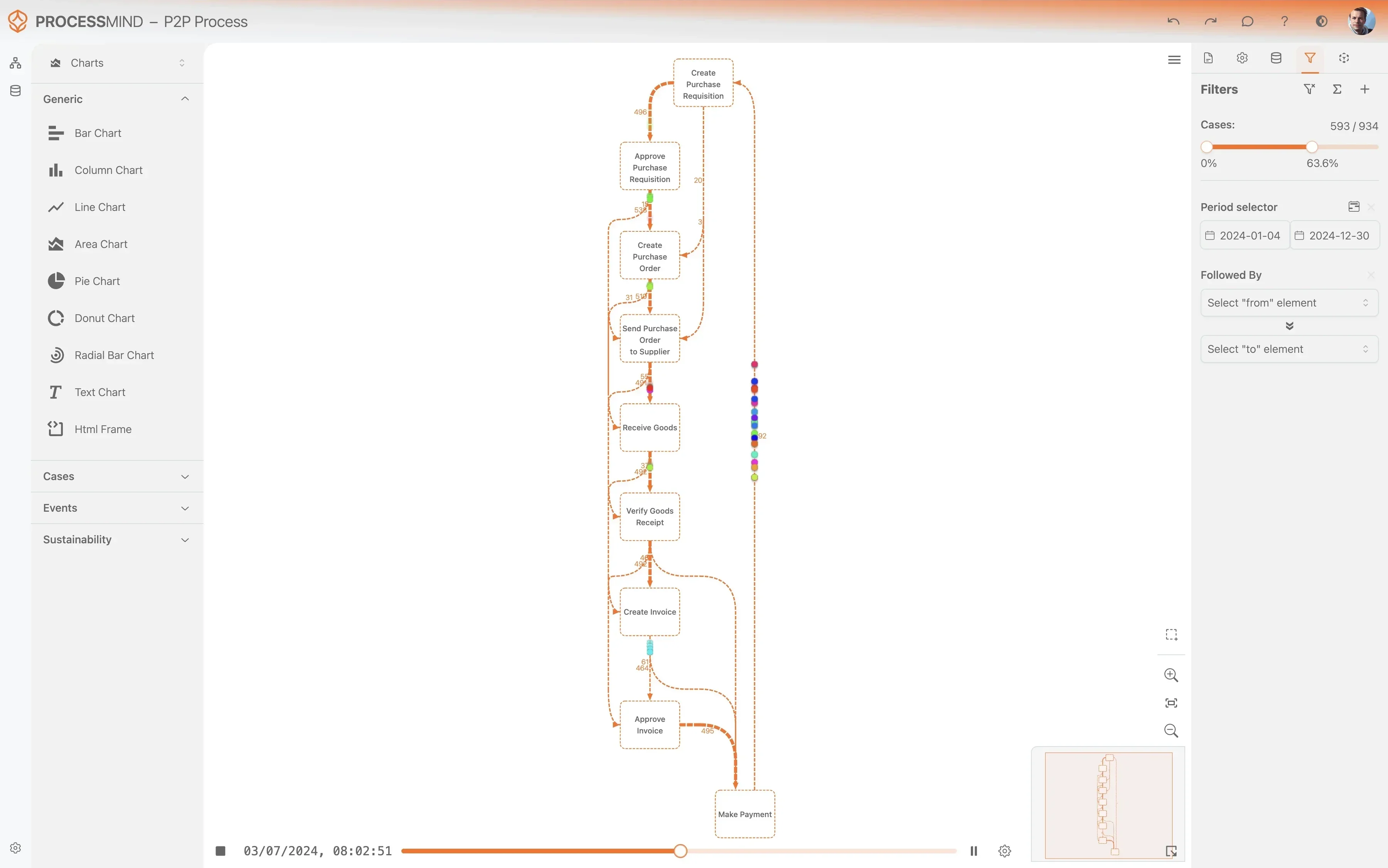
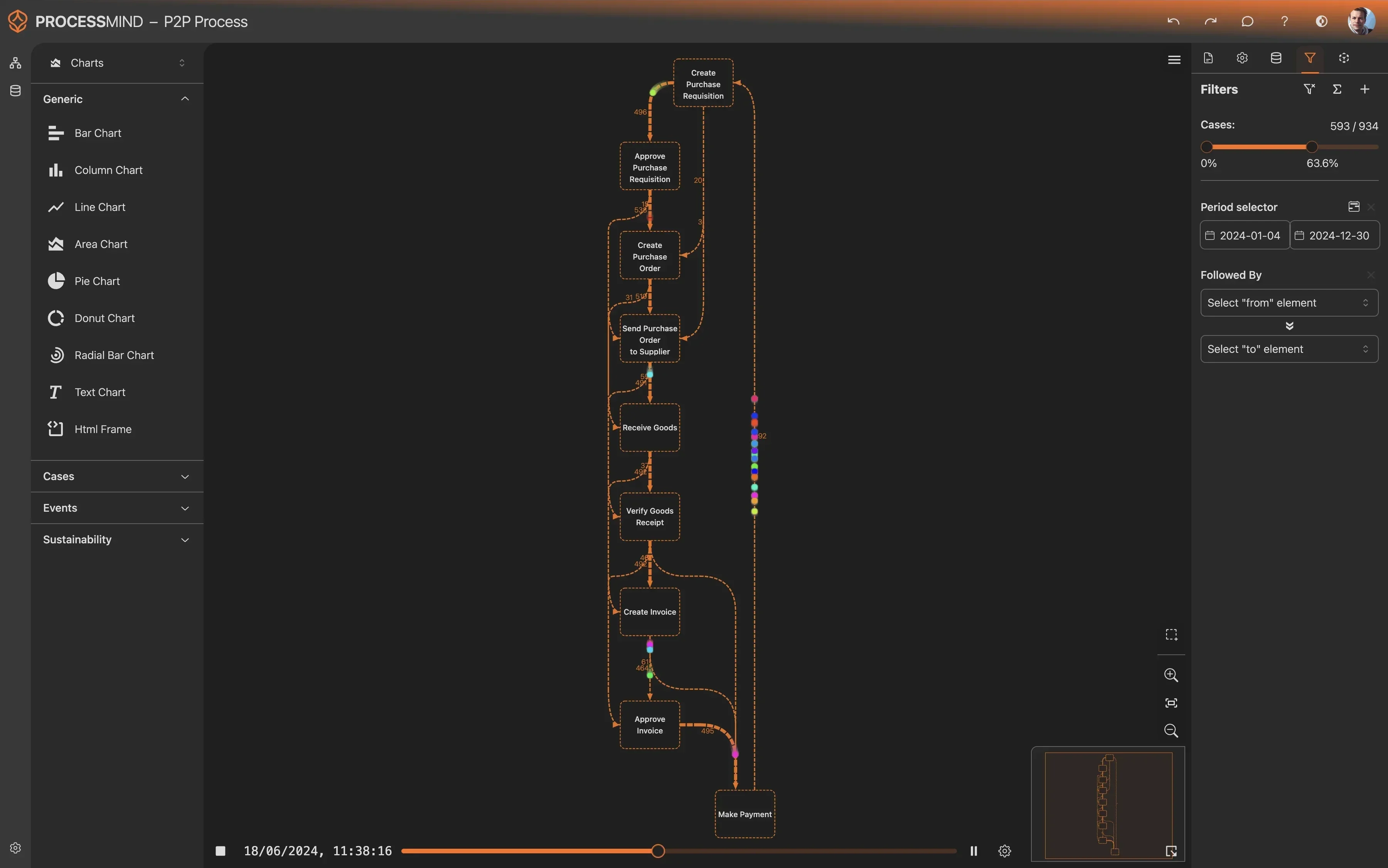
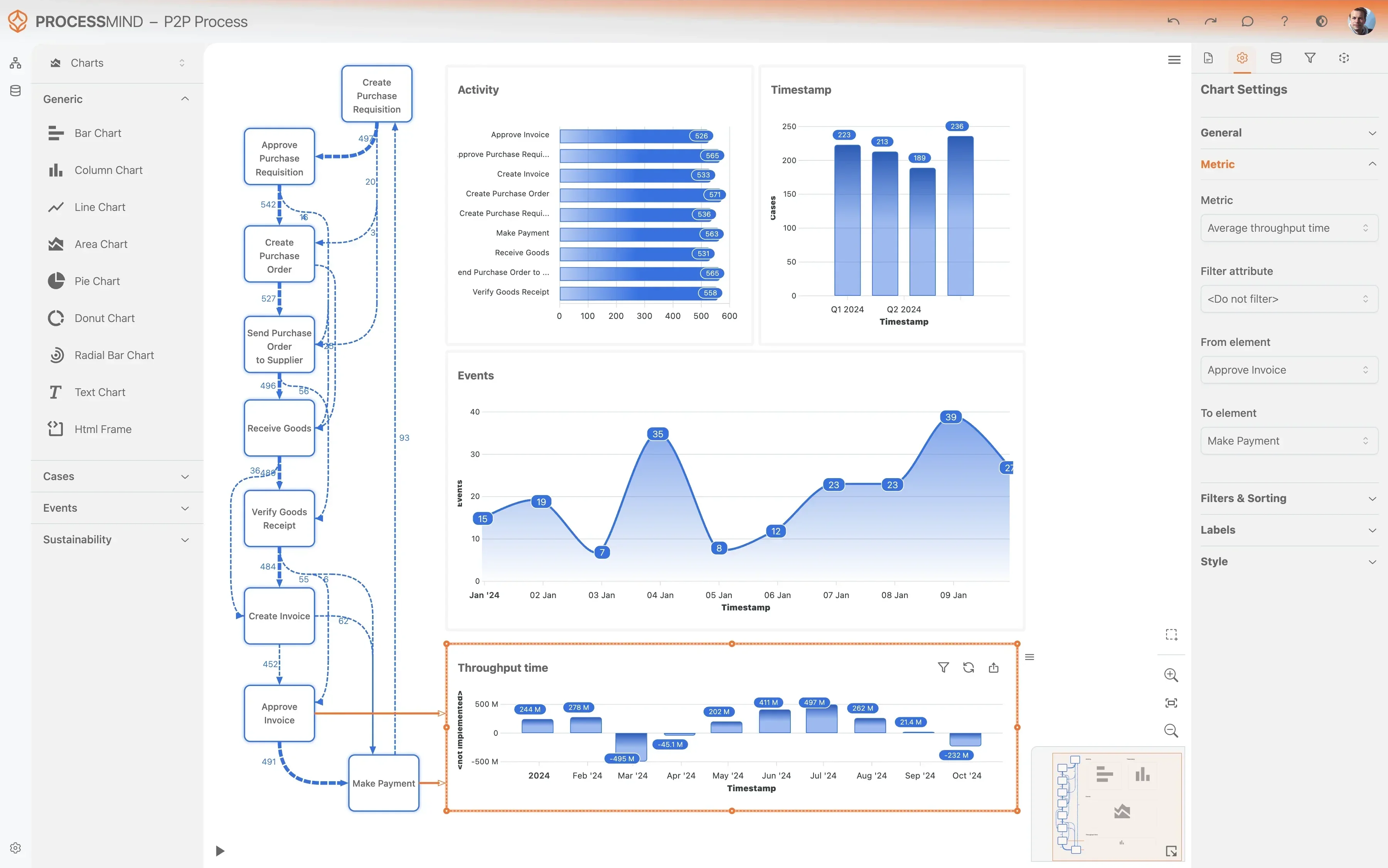
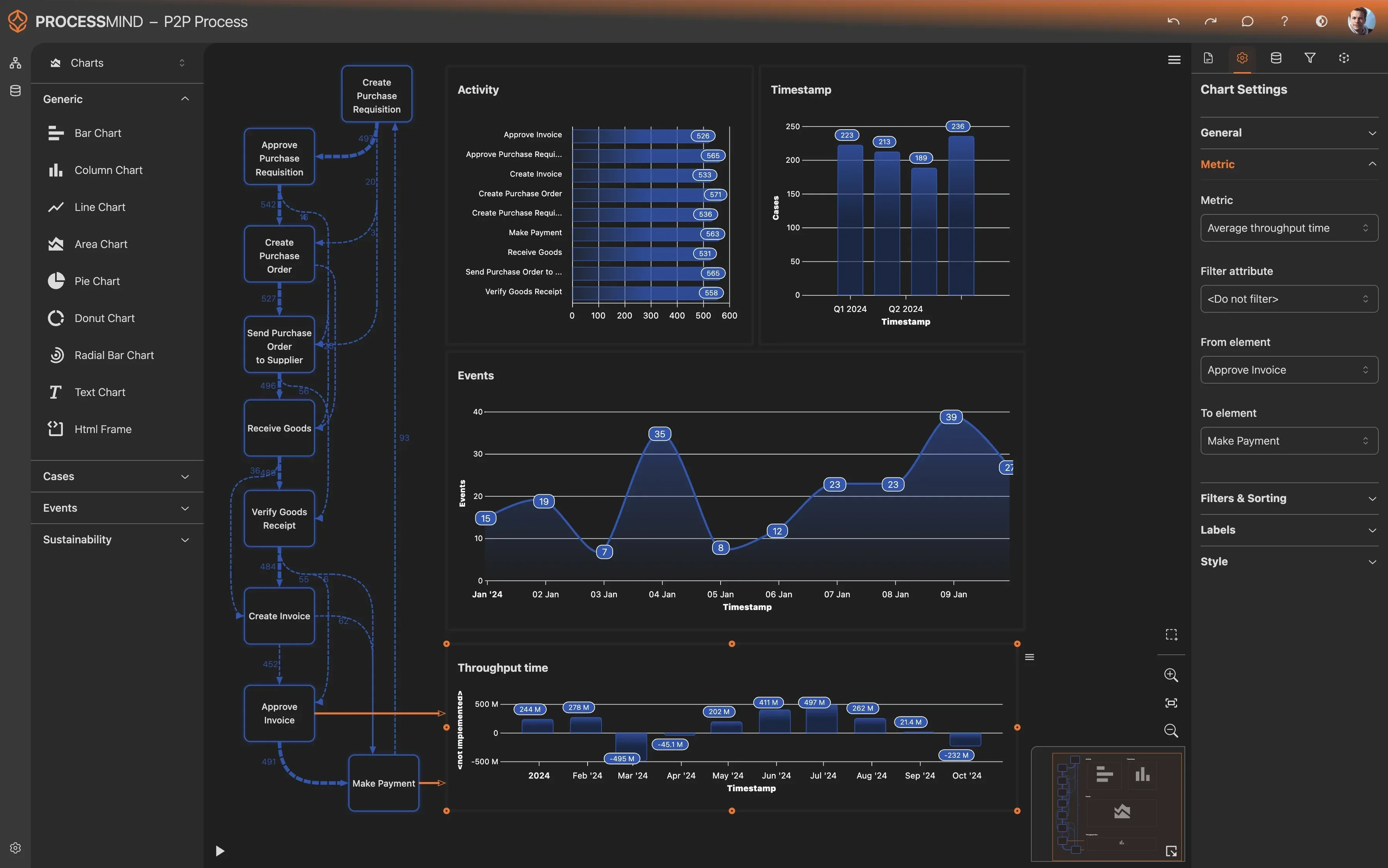
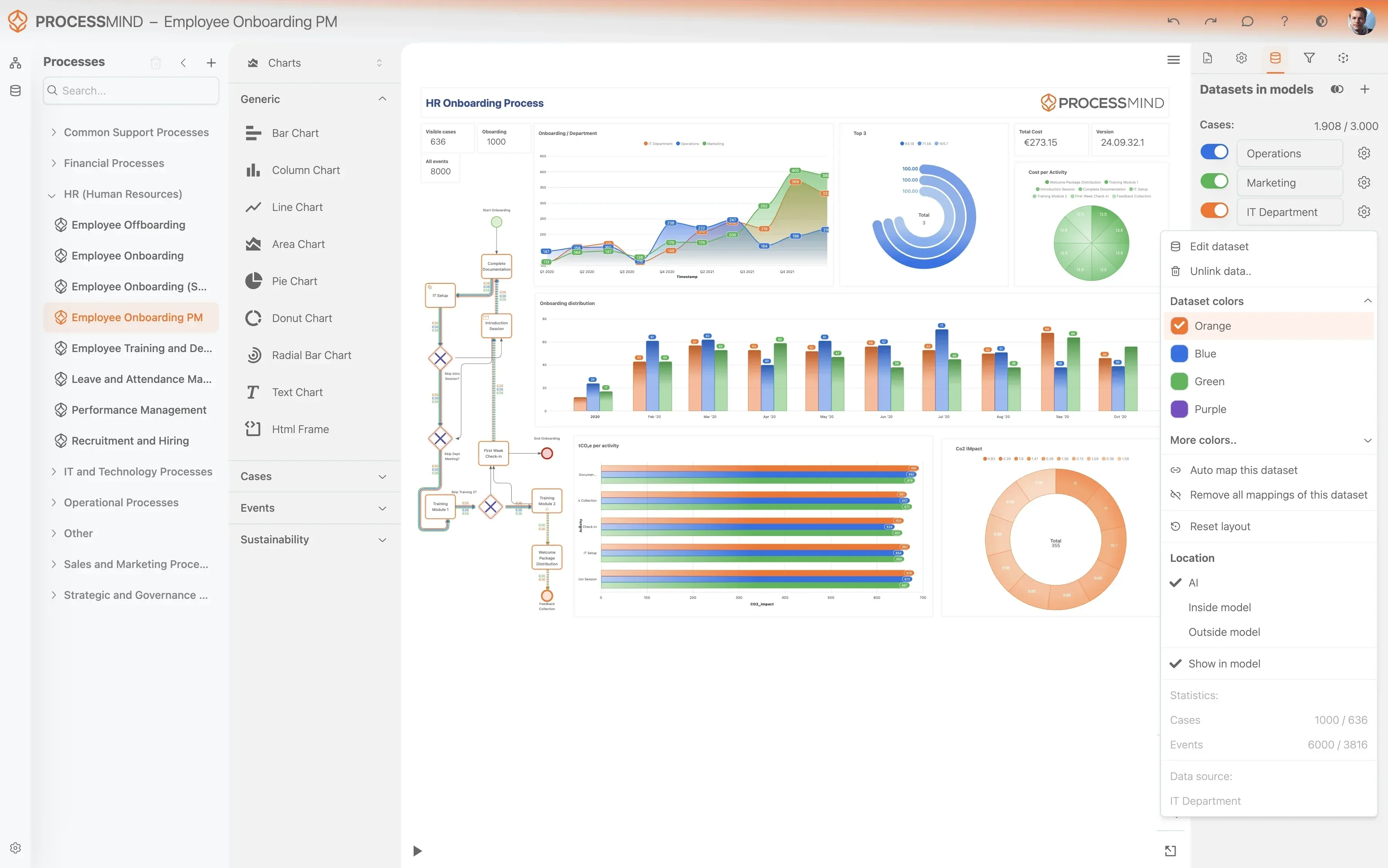
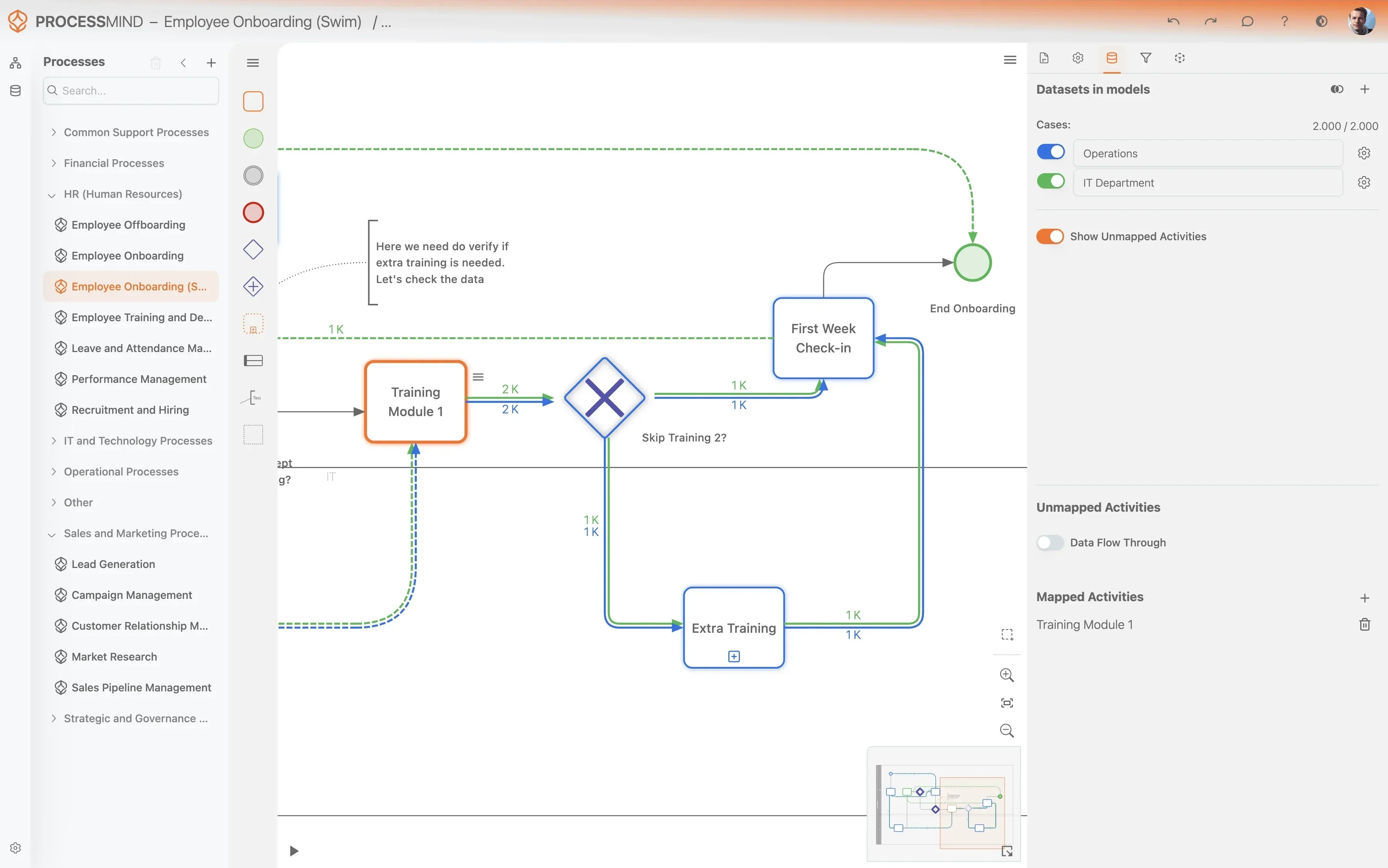
Explore auto-generated dashboards, process maps, and performance metrics for your Transportation Management process. Use AI-driven insights to pinpoint bottlenecks.
Why it matters
Gain an unbiased, data-driven view of your complete shipment journey, allowing you to identify inefficiencies, compliance issues, and areas for cost reduction.
Expected outcome
A clear understanding of your Transportation Management process performance, including identified bottlenecks and improvement opportunities.
Implement Improvements
What to do
Prioritize identified opportunities, like optimizing carrier selection or streamlining delivery scheduling, and put concrete changes into action within Trimble TMS.
Why it matters
Translating insights into action leads to tangible operational improvements, enhancing logistics efficiency, reducing transit times, and improving customer satisfaction.
Expected outcome
Initiated changes to your Transportation Management process, directly addressing previously identified inefficiencies.
Monitor Your Process
What to do
Periodically re-upload updated data from Trimble TMS to ProcessMind. Track the impact of implemented changes and measure KPI improvements over time.
Why it matters
Continuous monitoring ensures that improvements are sustained and allows for proactive identification of new deviations or opportunities, maintaining optimal performance.
Expected outcome
Ongoing visibility into your Transportation Management process, with measured improvements in key performance indicators and sustained optimization.
TYPICAL OUTCOMES
Achieving Operational Excellence in Transportation
These outcomes illustrate the operational efficiencies and cost reductions typically realized when applying process mining to Transportation Management data, specifically analyzing shipment processes within Trimble TMS. By identifying bottlenecks and inefficiencies, organizations gain actionable insights to optimize their transportation operations.
Improvement in on-time delivery
Process mining identifies root causes of shipment delays, allowing organizations to implement targeted improvements and deliver goods more reliably to customers.
Quicker proof of delivery processing
By analyzing the Proof of Delivery Cycle Time, businesses can streamline the receipt of essential documentation, accelerating invoicing and improving cash flow.
Decrease in manual entry mistakes
Process mining identifies frequent manual errors in shipment booking, leading to corrective actions that improve data quality and reduce re-work, saving time and costs.
Savings through mode selection
By analyzing optimal mode utilization, organizations can ensure the most cost-effective and efficient transport methods are consistently chosen, directly impacting the bottom line.
Better adherence to standards
Process mining provides full visibility into shipment milestones, ensuring adherence to internal tracking protocols and regulatory requirements, reducing audit risks.
Shorter processing times
Pinpoint and resolve bottlenecks in the customs clearance process, significantly reducing delays and improving overall transit times for international shipments.
Results vary based on process complexity and data quality. These figures represent typical improvements observed across implementations.
Recommended Data
FAQs
Frequently asked questions
Process mining provides a data-driven view of your actual transportation processes, as recorded in Trimble TMS. It identifies deviations, bottlenecks, and root causes of inefficiencies like shipment delays or high costs. This allows you to optimize workflows, improve carrier performance, and enhance overall operational efficiency.
You primarily need event log data, including a Case Identifier, an Activity, and a Timestamp. For Transportation Management, the Shipment ID typically serves as the Case Identifier. Activities could include 'Shipment Booked', 'Carrier Assigned', 'In Transit', 'Customs Cleared', 'Delivered', and the corresponding timestamps for each event.
Data extraction typically involves using Trimble TMS's reporting functionalities, API integrations, or direct database access, if available and permissible. The goal is to export transaction logs or audit trails that capture the sequence and timing of events for each shipment. It's crucial to ensure the extracted data maintains the Case ID, Activity, and Timestamp structure.
You can expect to uncover inefficiencies leading to significant reductions in shipment delays and transportation costs. Process mining helps standardize carrier performance, accelerate proof of delivery, and improve the accuracy of delivery dates and freight bill auditing. Ultimately, it leads to increased end-to-end shipment visibility and enhanced process compliance.
While initial data extraction requires careful planning, the process mining tools themselves are designed to be user-friendly for analysis. Modern process mining platforms offer connectors and data transformation capabilities to streamline the ingestion of data from various systems, including established TMS solutions. The complexity often lies more in understanding your data structure than in operating the tool.
After successful data extraction and initial data preparation, you can often generate initial process maps and discover key insights within a few weeks. The timeline depends on data volume, data quality, and the complexity of your process. Comprehensive optimization efforts, however, are an ongoing process that yields continuous improvements.
Beyond access to your Trimble TMS data, you will need a process mining software platform, either cloud-based or on-premises. Your team should ideally include data analysts or process experts who can interpret the results and collaborate with IT for data integration. No specialized hardware is typically needed beyond standard computing infrastructure.
Yes, process mining is highly effective for compliance monitoring. By visualizing the actual process flow, you can identify every deviation from the ideal, compliant path. This allows you to pinpoint where and why non-compliance occurs, enabling targeted corrective actions and continuous adherence to both external regulations and internal standards.
Optimize Your Transportation Management: Start Now.
Transform your logistics: Reduce cycle time by 30% with our platform.
No credit card required. Begin your free trial today.