Improve Your Expense Management

Select a process
Choose a process to continue working in your connected workspace.
Transform Expense Management: Improve Efficiency and Compliance
ProcessMind helps you quickly identify inefficiencies, bottlenecks, and compliance issues within your expense management process. Pinpoint areas causing delays, rework, and increased costs, regardless of your current system. Gain clarity on process variations and ensure smooth, compliant operations.
Download our pre-configured data template and address common challenges to reach your efficiency goals. Follow our six-step improvement plan and consult the Data Template Guide to transform your operations.
Show detailed description
Expense management is a critical yet often complex process within any organization, touching every employee and impacting financial health. While seemingly straightforward, the journey of an expense report, from submission to final reimbursement, is frequently riddled with inefficiencies, hidden costs, and compliance risks. Process mining for expense management offers an unparalleled, objective lens into this intricate workflow. By analyzing event log data from your ERP or any source system, ProcessMind meticulously reconstructs every single expense report journey. This powerful analysis reveals the true state of your process, uncovering bottlenecks that slow down reimbursements, identifying non-compliant spending patterns, and exposing deviations from your defined policies. You gain clear visibility into areas of rework, unexpected delays in approvals, and unnecessary manual interventions, all of which contribute to increased operational costs and employee frustration.
Organizations commonly struggle with a lack of transparency, leading to an inability to pinpoint why certain expense reports take longer to process or why some policies are inconsistently applied. Manual review processes are prone to human error, and tracking the true cost associated with processing each expense report, beyond the reimbursement itself, remains a significant challenge. These issues are universal, impacting businesses regardless of their underlying financial systems. Without a comprehensive understanding of the actual process flow, efforts to streamline and optimize often fall short, resulting in continued inefficiencies, potential audit failures, and a less than ideal experience for your employees. Process mining bridges this gap, providing the deep insights needed to tackle these challenges head-on.
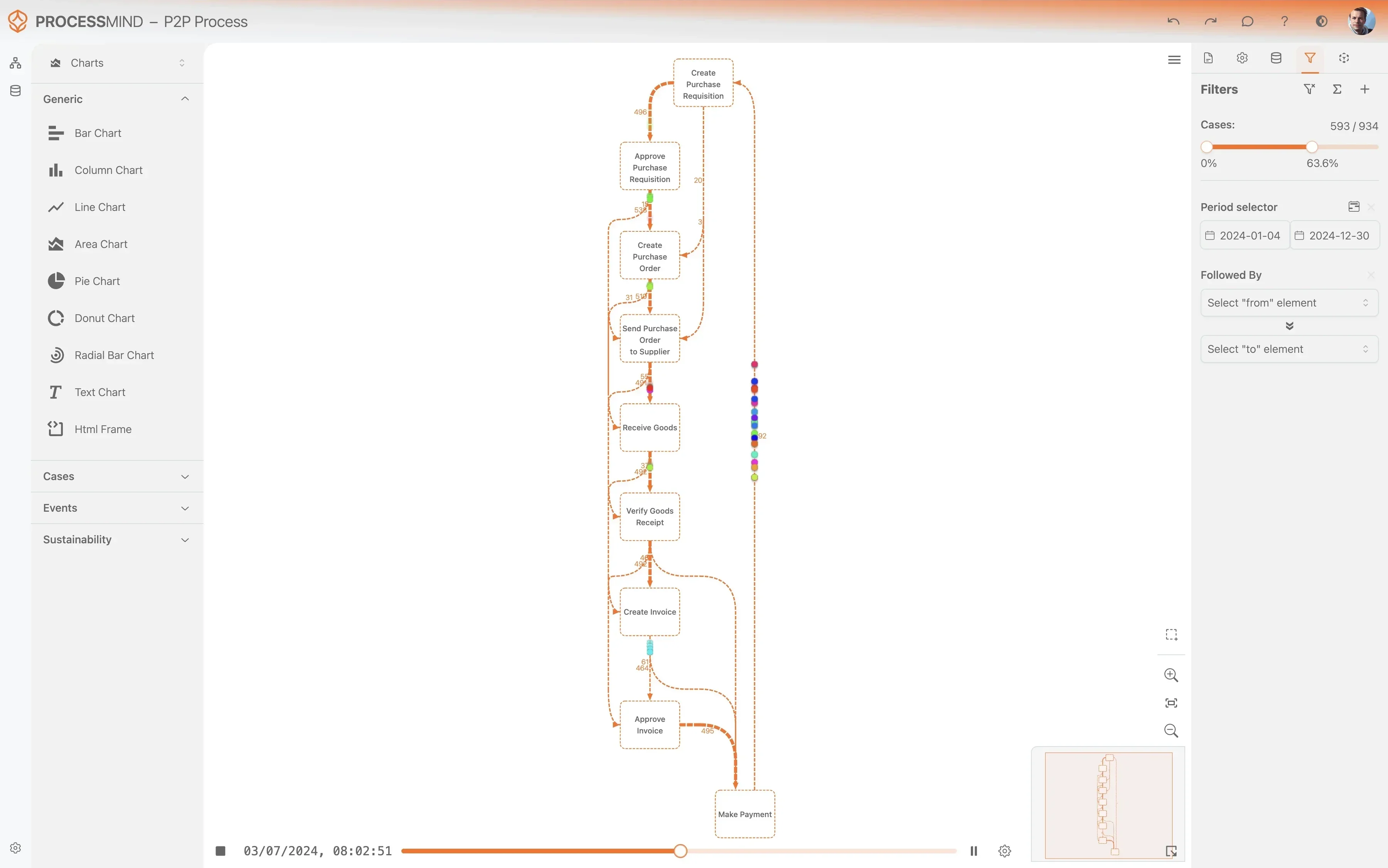
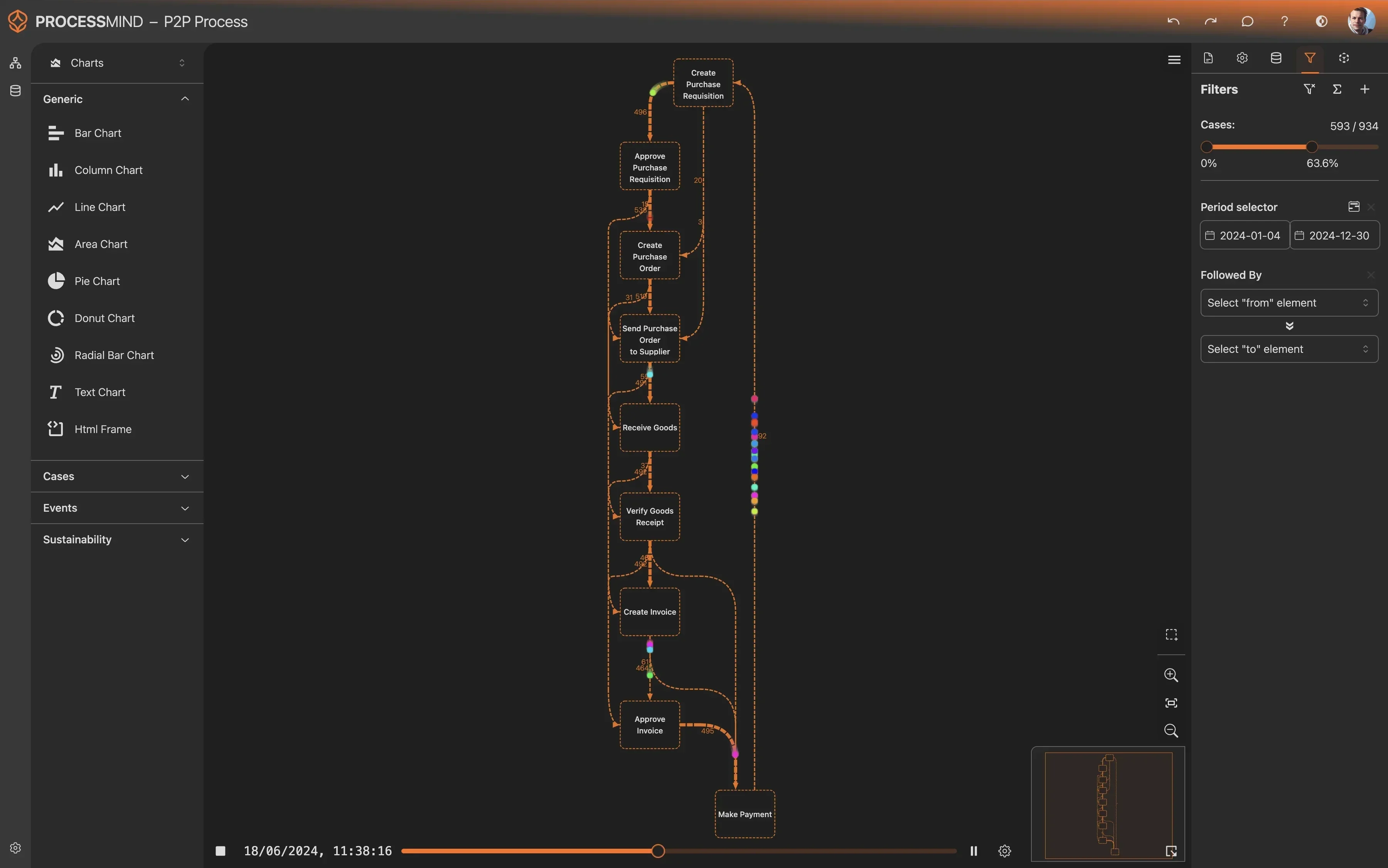
ProcessMind empowers your organization to move beyond assumptions and make data-driven decisions that genuinely transform expense management. By leveraging the rich event data already residing in your systems, our platform constructs a dynamic process map, visually illustrating every path an expense report takes. This granular view allows you to identify precise activities that cause delays, such as specific approval steps that are frequently rerouted or departments with exceptionally long processing times. Imagine pinpointing the exact reason why a certain percentage of expense reports require multiple resubmissions, or discovering how often out-of-policy expenses are approved without proper justification. ProcessMind not only highlights these issues but also quantifies their impact, showing you the associated time and cost.
The benefits extend far beyond mere efficiency. Our analysis helps you significantly strengthen compliance by detecting anomalies, identifying potential fraud risks, and ensuring that all expense claims adhere strictly to company policies. You can proactively address policy breaches, reduce audit risks, and maintain greater control over corporate spending. Furthermore, optimizing your expense management process leads to substantial cost reductions. By eliminating unnecessary steps, automating repetitive tasks, and accelerating reimbursement cycles, you can reduce administrative overhead and improve cash flow. Ultimately, a streamlined expense management process means happier employees, faster reimbursements, and a more robust financial operation, all achieved without the need for disruptive system overhauls or complex integrations with your current ERP or financial tools. ProcessMind simply extracts value from the data you already have.
Embarking on your journey to optimized expense management with ProcessMind is designed to be straightforward and inclusive of any system you currently use. We understand that your organization relies on specific ERPs, accounting software, or homegrown solutions, and our platform is built to integrate seamlessly with the data from all of them. To begin uncovering the powerful insights hidden within your expense data, your first step involves extracting an event log. This log typically includes the Expense Report ID, which acts as the unique case identifier, alongside activity names, timestamps for each activity, and any relevant attributes like the submitter's department, expense type, or approval status.
To assist you in this crucial first stage, ProcessMind provides a comprehensive and easy-to-follow data template. This template outlines the specific data points required and offers guidance on how to extract them from your source system, ensuring that you collect all the necessary information for a thorough analysis. Our approach is intentionally system-agnostic, meaning you don't need to adapt your existing infrastructure; instead, ProcessMind adapts to your data. Once your event log data is prepared and uploaded, ProcessMind swiftly transforms it into actionable insights, revealing the true performance of your expense management process and empowering you to make immediate, impactful improvements. Discover the inefficiencies, ensure compliance, and achieve significant cost savings by starting your process mining journey today.
The 6-Step Path to Optimize Expense Management
Connect Your Data
What to do
Extract expense report data from your system, ensuring you capture key events, timestamps, and case identifiers.
Why it matters
Laying the foundation with comprehensive data is crucial for an accurate and complete understanding of your expense management process.
Expected outcome
A complete and structured dataset ready for process analysis, providing a full picture.
Map Your Expense Process
What to do
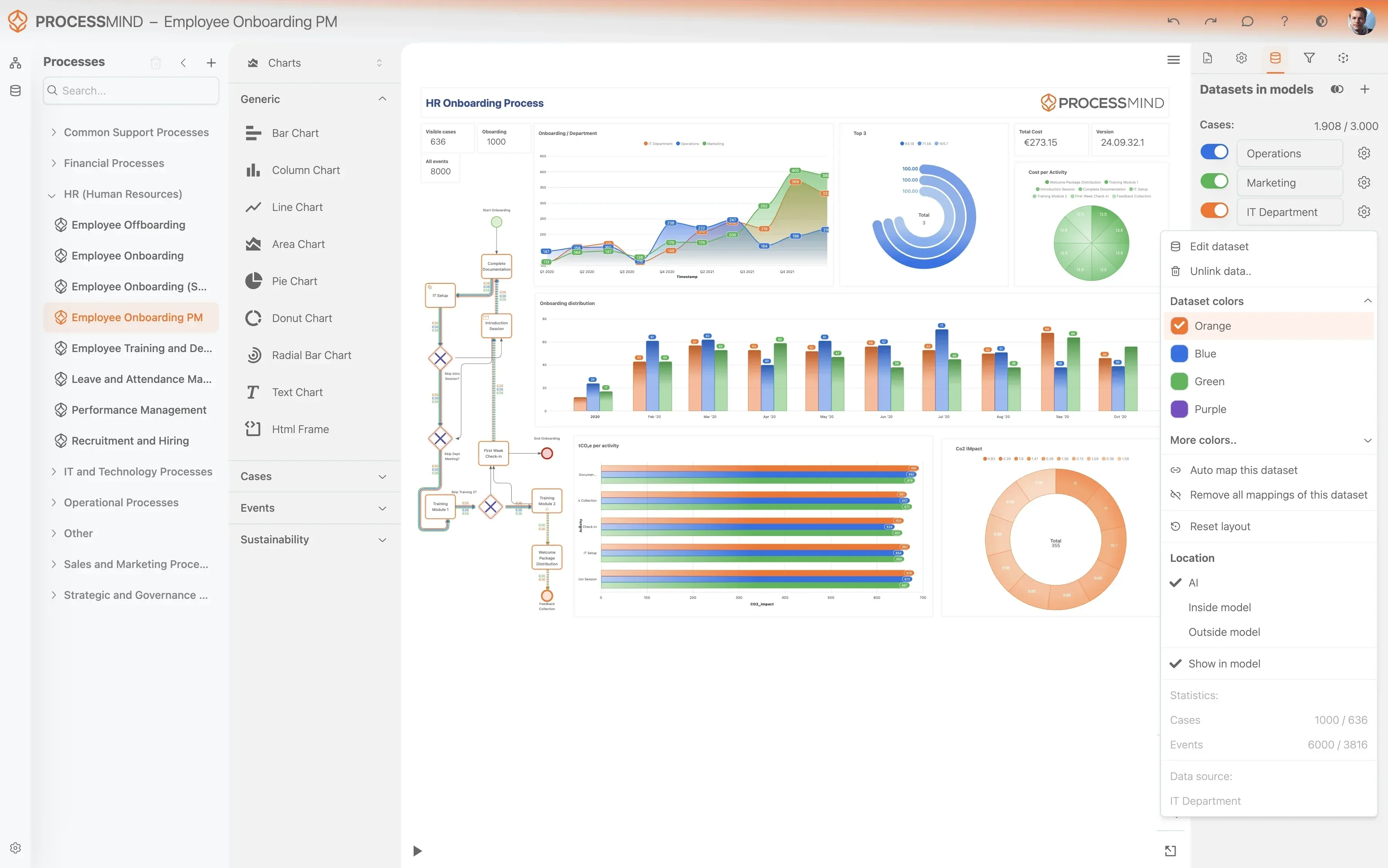
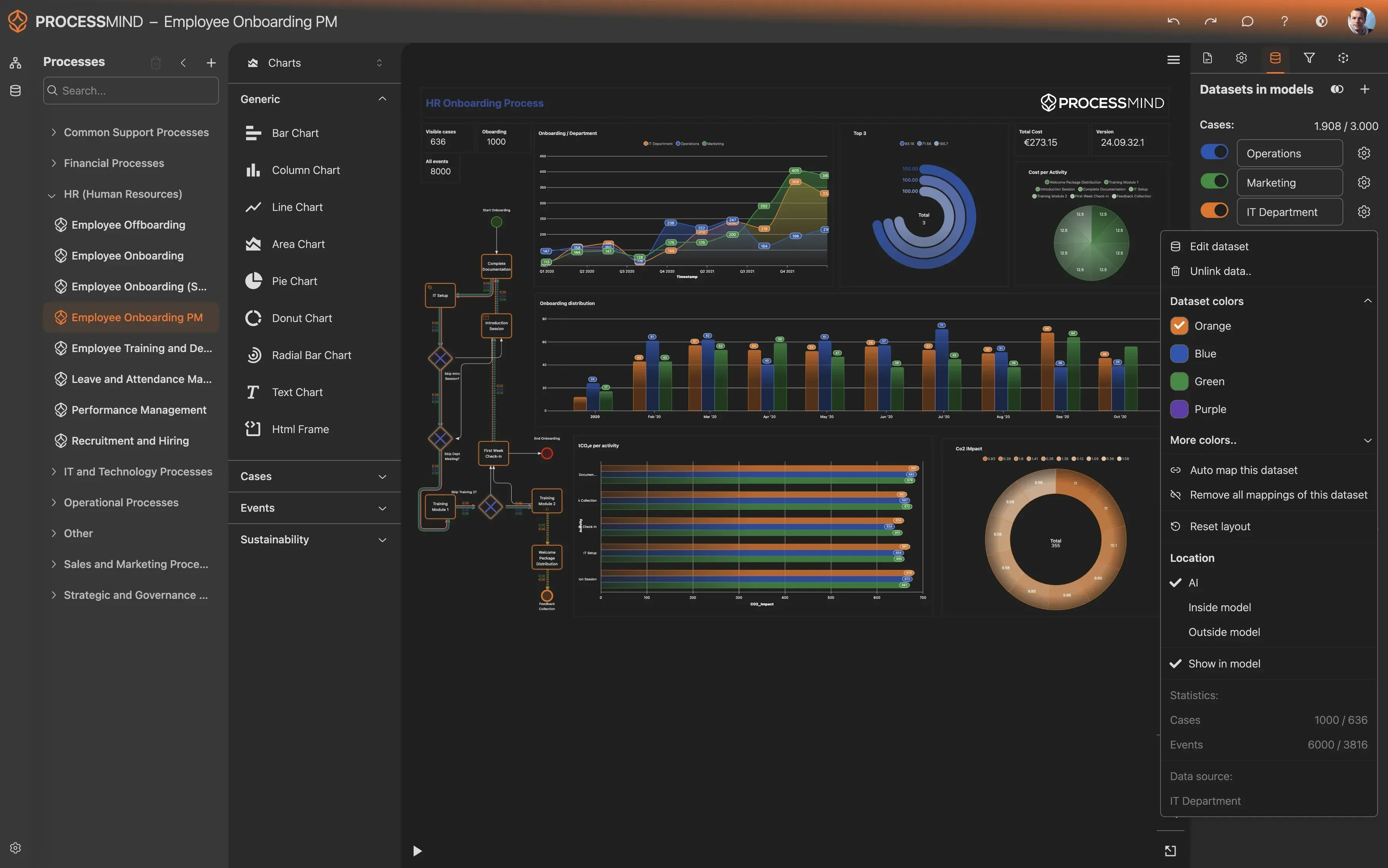
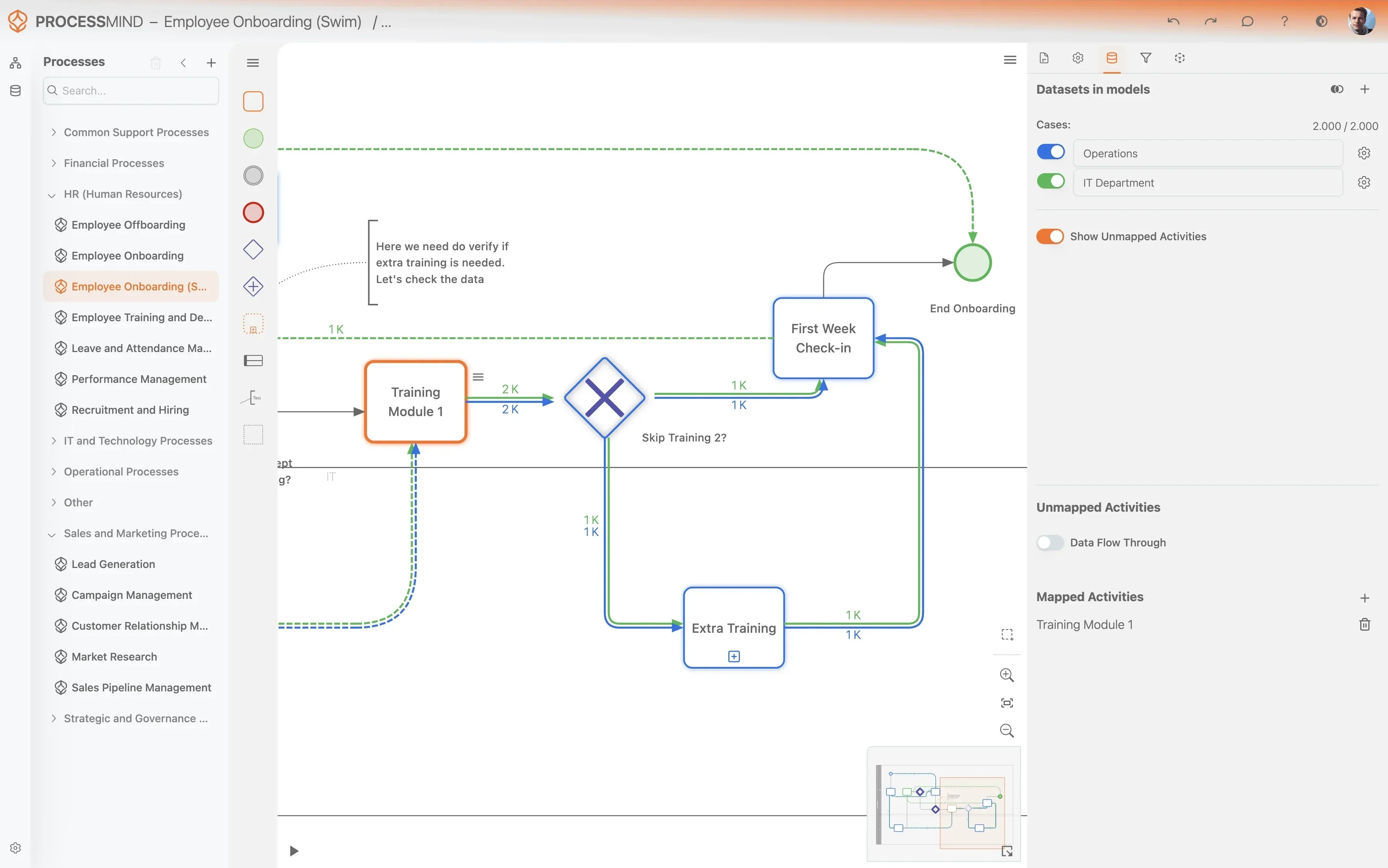
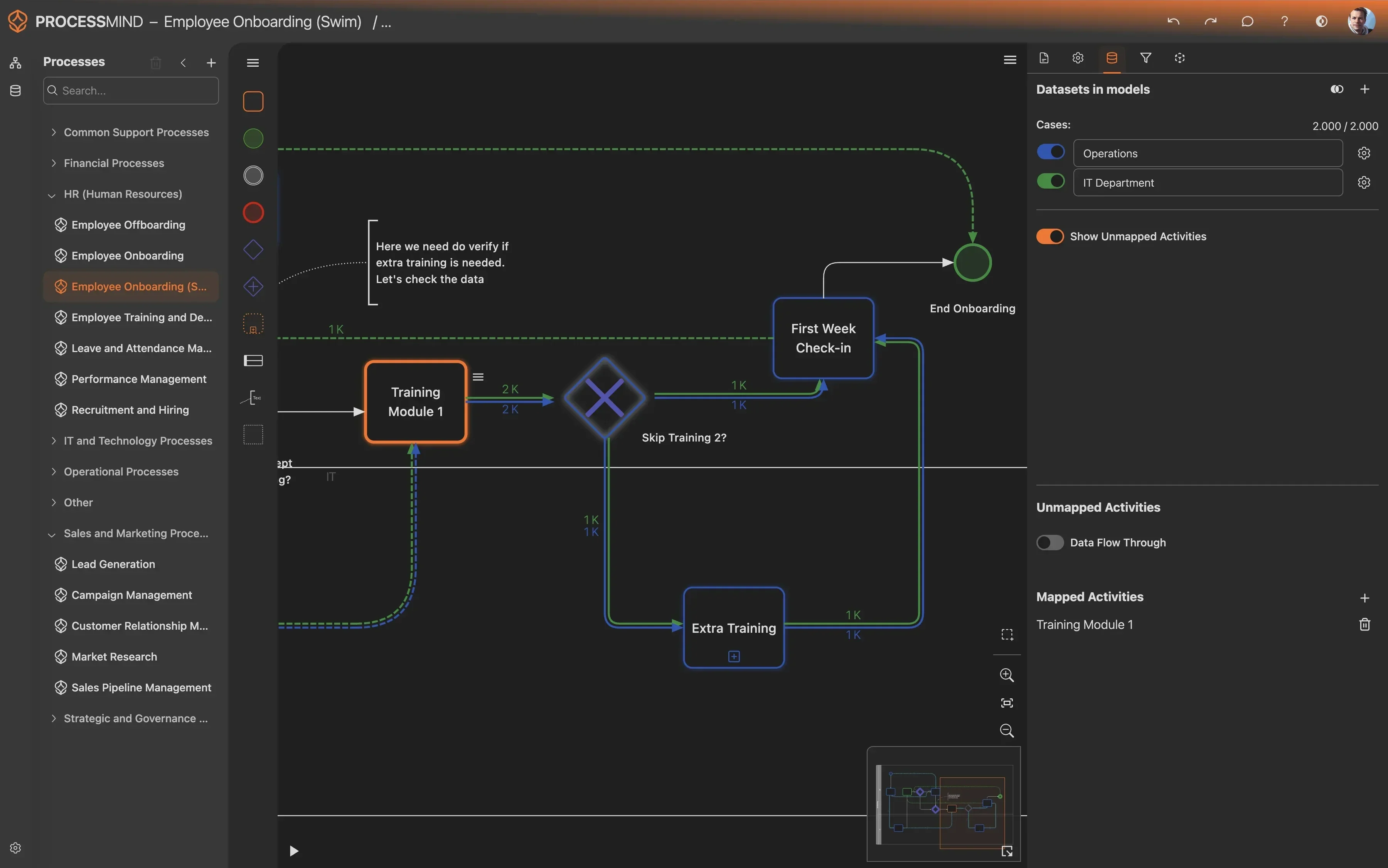
Visualize the end-to-end journey of an expense report, from creation to reimbursement, using process mining tools.
Why it matters
This visualization uncovers the actual flow, revealing deviations from the ideal path and potential process variations.
Expected outcome
A clear visual representation of all process variants and their frequencies, showing how work truly flows.
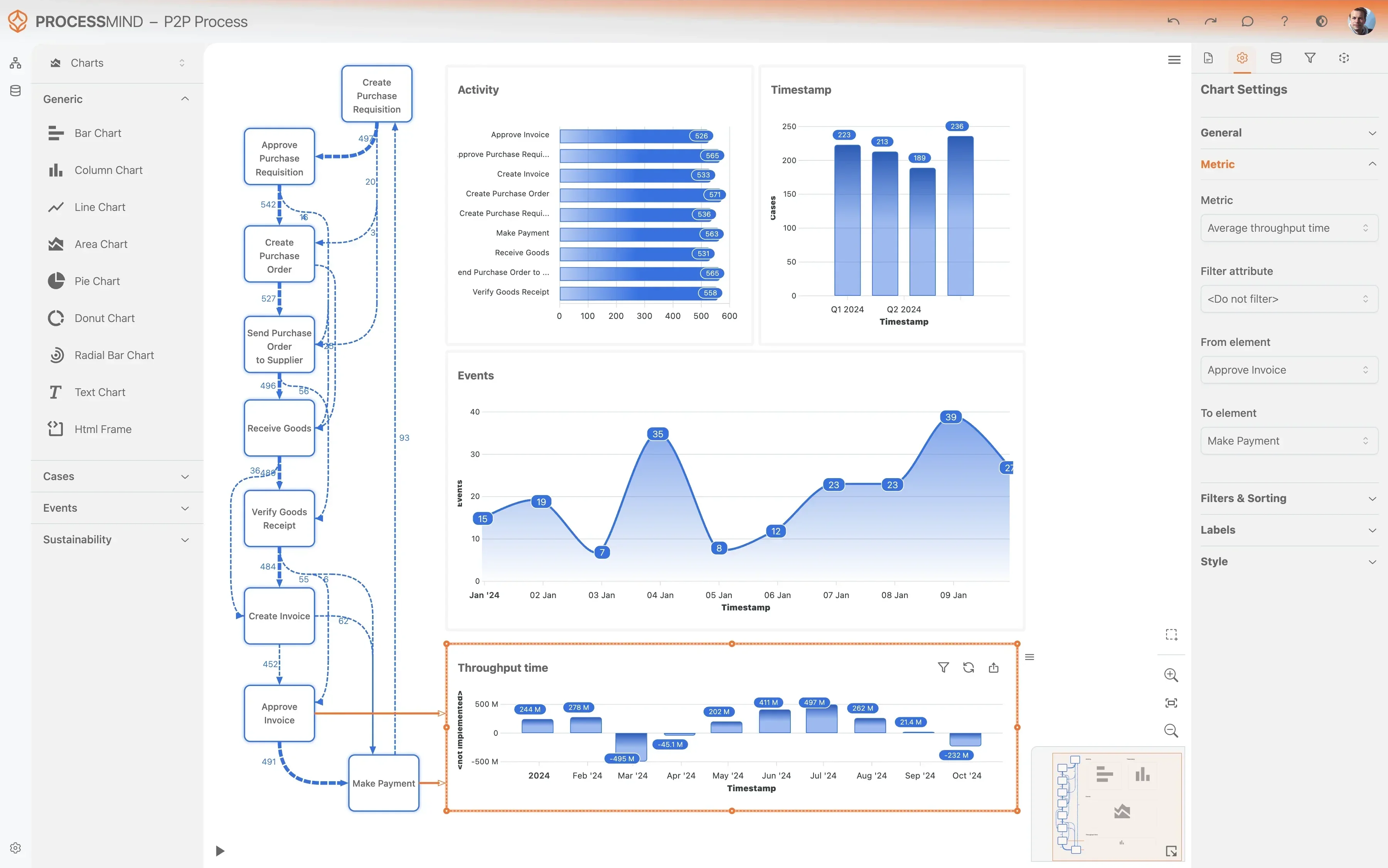
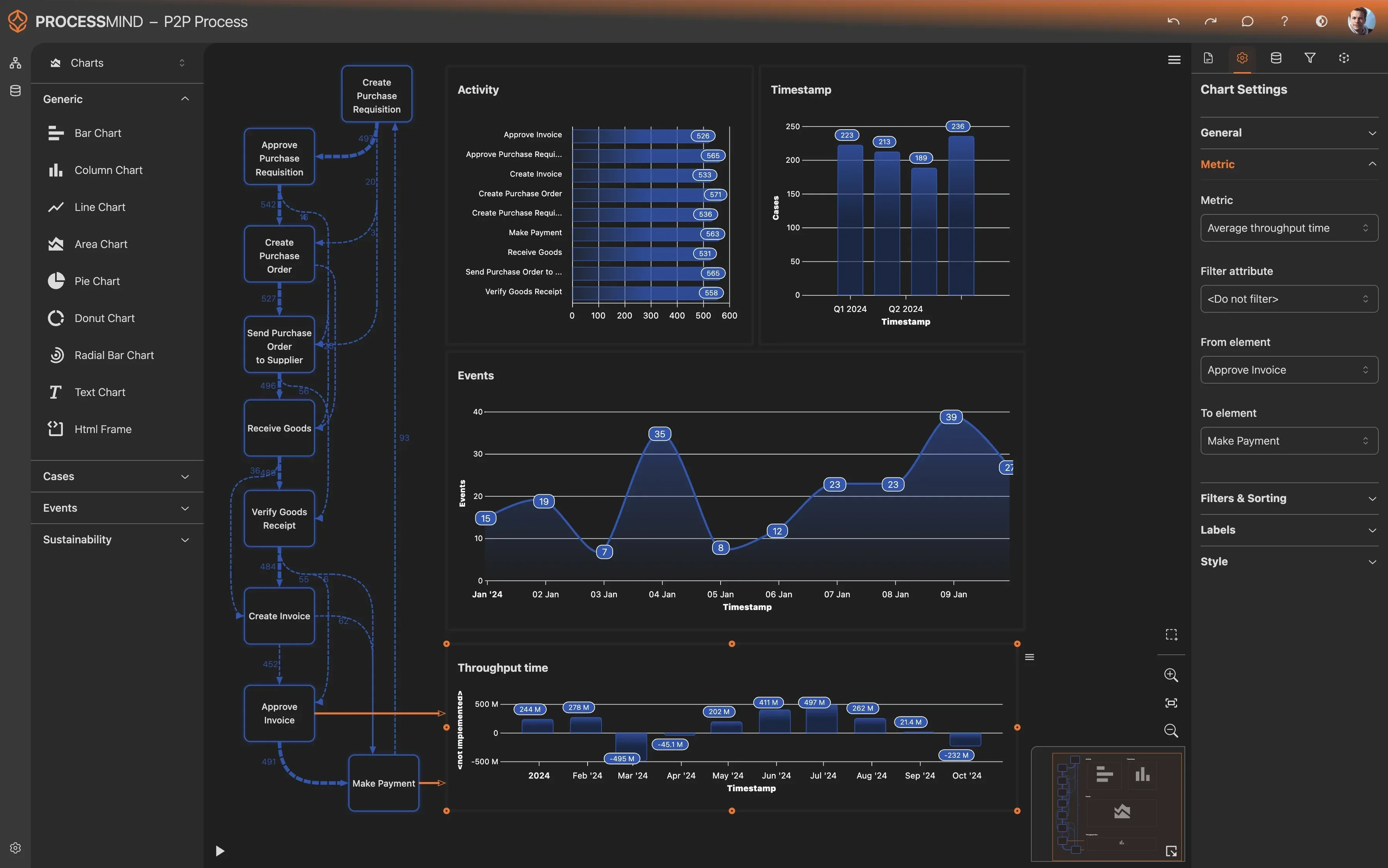
Identify Process Bottlenecks
What to do
Pinpoint stages in the expense management process where delays are frequent, causing reports to get stuck or take too long.
Why it matters
Identifying these choke points allows you to focus improvement efforts on areas with the greatest impact on efficiency and speed.
Expected outcome
A prioritized list of specific activities or transitions causing significant delays in expense processing.
Analyze Root Causes
What to do
Investigate the underlying reasons for identified bottlenecks and deviations, understanding why certain issues occur repeatedly.
Why it matters
Understanding the root causes, rather than just the symptoms, enables you to implement sustainable solutions that prevent recurrence.
Expected outcome
Clear insights into delays, rework, and non-compliance, supporting informed decision-making.
Design Process Improvements
What to do
Develop and model concrete solutions to address the identified root causes, focusing on streamlining workflows and automating tasks.
Why it matters
Designing targeted improvements ensures that changes directly tackle the problems, leading to measurable efficiency gains.
Expected outcome
A strategic plan with proposed process changes, automation candidates, and expected benefits.
Monitor & Iterate
What to do
Continuously track the performance of your expense management process after implementing changes and adjust as needed.
Why it matters
Ongoing monitoring ensures that improvements are sustained, new issues are caught early, and the process remains optimized over time.
Expected outcome
A dynamic, optimized expense process with continuous performance tracking and adaptive adjustments.
TYPICAL OUTCOMES
What Organizations Achieve
Process mining for expense management reveals hidden bottlenecks and inefficiencies, leading to significant improvements in processing times and compliance. By analyzing each Expense Report ID, organizations gain actionable insights to streamline approval workflows and reduce manual effort.
Average reduction in approval time
Identify and remove bottlenecks in the approval process to significantly speed up how quickly expense reports are reviewed and authorized.
Decrease in reports requiring corrections
Pinpoint the root causes of rejected and reworked expense reports, leading to higher first-pass approval rates and saving time for both employees and finance.
Stronger adherence to expense policies
Gain clear insights into policy violations and their causes, enabling proactive measures to ensure consistent application of rules and reduce financial risk.
Reduced time from approval to payment
Accelerate the process of reimbursing employees by identifying and eliminating delays in payout execution, boosting employee satisfaction.
Reduction in operational expense management costs
By streamlining processes, reducing manual effort, and minimizing rework, organizations can significantly lower the total cost associated with processing each expense report.
Greater consistency in expense processes
Uncover and reduce unnecessary variations in expense management workflows, leading to more predictable, efficient, and consistent operations across the organization.
Results vary based on process complexity and data quality. These figures represent typical improvements observed across implementations.
Recommended Data
For customized data recommendations, choose your specific process.
FAQs
Frequently asked questions
Process mining analyzes the actual flow of your expense reports, creating a data-driven map of the entire journey. It reveals hidden bottlenecks, compliance deviations, and inefficiencies that hinder your process. This insight allows you to optimize workflows, accelerate approvals, and reduce processing costs.
Process mining can pinpoint root causes of slow approval cycles, frequent expense report rejections, and inconsistent policy application. It helps identify sources of delayed employee reimbursements, excessive manual rework, and high operational costs. By visualizing the true process, you gain clarity on where to focus improvement efforts.
You primarily need event log data that includes a case identifier, typically the Expense Report ID, an activity name for each step, and a timestamp for when each activity occurred. This data allows the process mining tool to reconstruct the complete journey of every expense report. Additional attributes like approver, amount, or expense category can enrich the analysis.
You can expect accelerated expense report approvals, a lower rejection rate, and more consistent policy enforcement. Process mining helps optimize workflows, leading to reduced processing costs and fortified audit compliance readiness. Ultimately, it delivers a more efficient and transparent expense management process and faster reimbursements.
Data extraction typically involves utilizing your system's reporting features, API access, or direct database access if permissible. The goal is to obtain a comprehensive historical record of all expense report events, identifying fields corresponding to the case identifier, activity name, and timestamp. Consulting your system's documentation or support can provide specific extraction methods.
Initial insights can often be generated within a few weeks, depending on data availability and complexity. The time primarily involves data extraction, cleaning, and loading into a process mining tool. More substantial process improvements and realized benefits typically emerge within three to six months after implementing recommended changes.
Yes, process mining is highly effective in identifying expense policy violations. By comparing the actual, observed process flows with predefined rules and compliance requirements, the tool can flag deviations. This allows organizations to proactively detect unauthorized steps, unusual approval patterns, or missed compliance checks that would otherwise go unnoticed.
While specialized process mining software is required, no deep coding skills are typically needed for analysis once the data is prepared. Familiarity with data analysis concepts and understanding your expense management process are beneficial. Some modern tools offer intuitive interfaces designed for business users, reducing the need for extensive technical expertise.
No, process mining complements your existing reporting and analytics tools by offering deeper, diagnostic insights. While standard reports show what happened, process mining explains why it happened by visualizing the actual flow and variations of your processes. It provides a foundational understanding that enhances the value of your current metrics and reports.
No, process mining is a non-invasive analytical technique. It works by analyzing historical data exports from your system, so it does not interfere with your live expense management system or ongoing user activities. The analysis happens independently, providing insights without operational disruption.
Start Optimizing Your Expense Management Today
Uncover hidden inefficiencies and ensure compliance across all your expense processes.
No credit card required • Setup in 5 minutes