Improve Your Revenue Cycle Management

Select a process
Choose a process to continue working in your connected workspace.
Optimize Waystar Revenue Cycle Management for Faster Cash Flow
Our platform helps you uncover hidden inefficiencies in your revenue cycle management process. You can identify bottlenecks causing payment delays, improve denial prevention, and address compliance challenges. We guide you through practical steps to enhance cash flow and reduce errors, streamlining operations for better financial performance.
Download our pre-configured data template and address common challenges to reach your efficiency goals. Follow our six-step improvement plan and consult the Data Template Guide to transform your operations.
Show detailed description
Why Optimize Your Revenue Cycle in Waystar?
Revenue Cycle Management, RCM, is the backbone of financial health for healthcare organizations. It encompasses all administrative and clinical functions that contribute to the capture, management, and collection of patient service revenue. Efficient RCM ensures steady cash flow, minimizes financial losses, and supports the overall sustainability of healthcare providers. However, despite leveraging advanced systems like Waystar for claims management, denial prevention, and patient payments, many organizations still encounter significant inefficiencies.
The complexities of RCM, involving numerous stakeholders, intricate billing rules, and regulatory requirements, often create hidden bottlenecks. These inefficiencies translate directly into delayed payments, increased operational costs due to rework, higher days in accounts receivable, and potential compliance risks. Optimizing your Revenue Cycle Management processes is not just about reducing costs, it is about enhancing patient satisfaction, improving financial predictability, and ensuring your organization remains robust and compliant in a dynamic healthcare landscape.
Unlocking RCM Efficiency with Process Mining in Waystar
Process mining offers a unique, data-driven approach to understanding and improving your Revenue Cycle Management within Waystar. By treating each 'Billing Event' as a case, process mining meticulously reconstructs the actual end-to-end journey of every claim and payment. This goes beyond traditional reporting, which often shows aggregated data, to reveal the precise sequence of activities, decision points, and deviations that occur in practice.
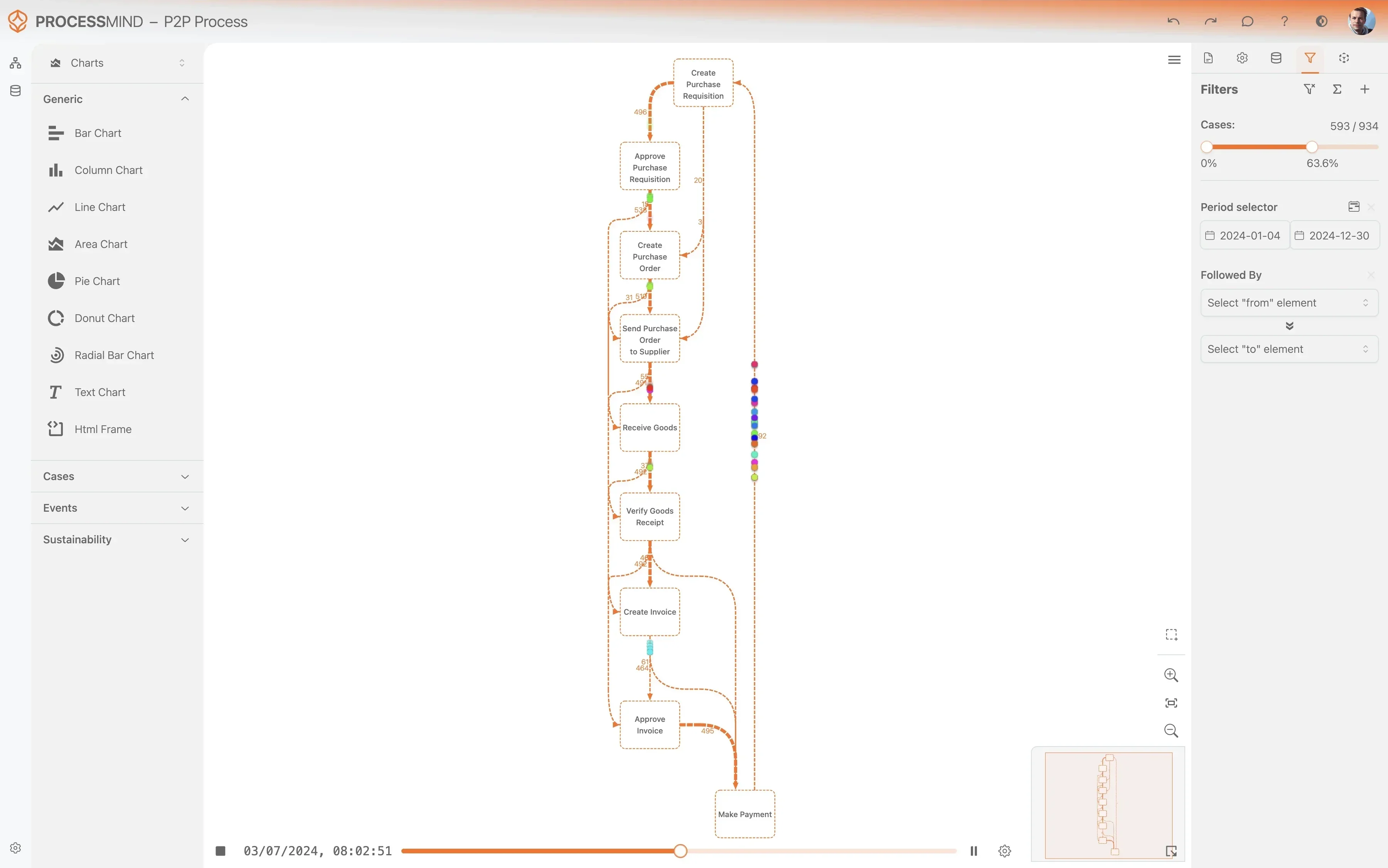
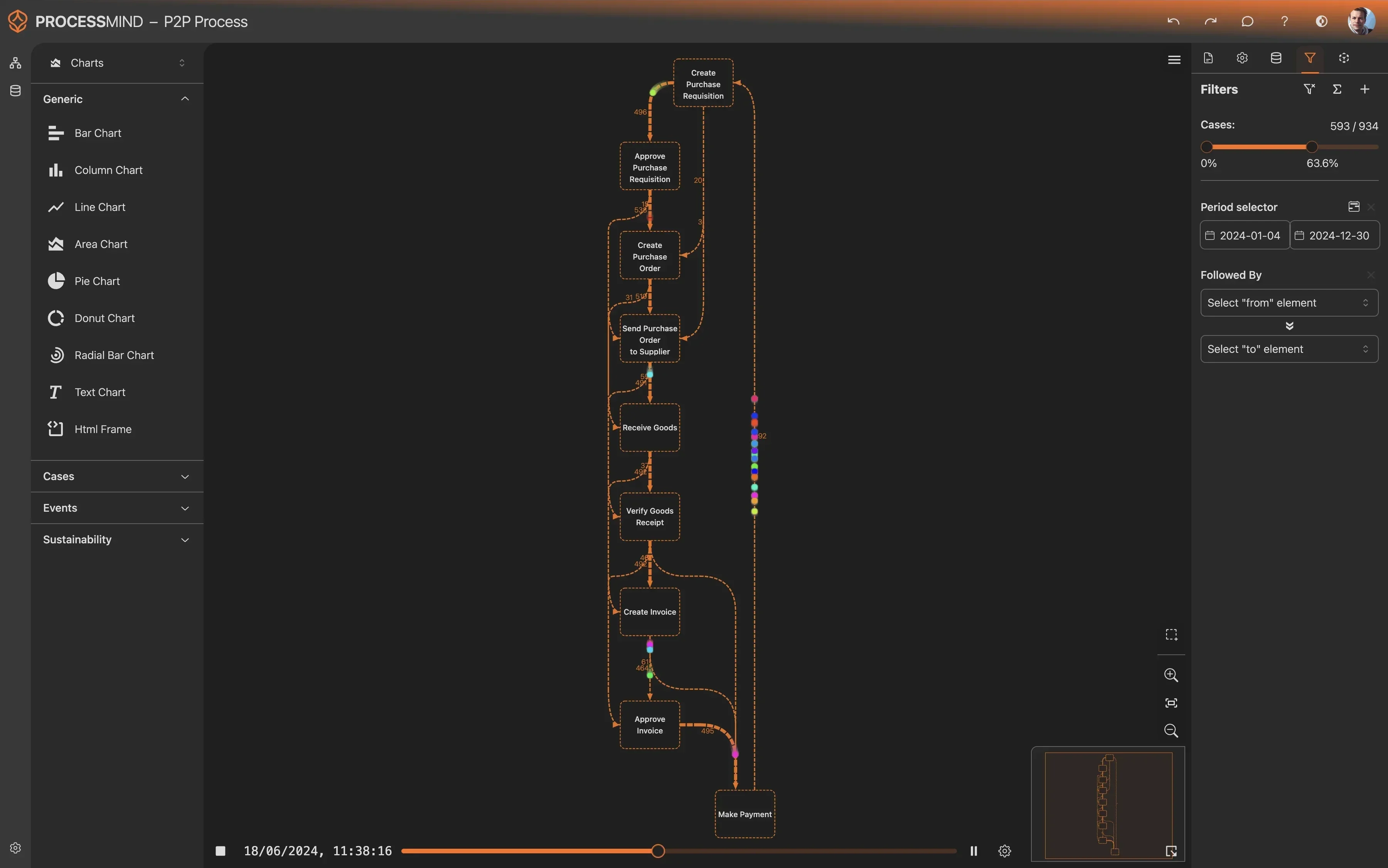
Imagine an X-ray view of your RCM process: process mining visualizes the true flow from initial service order to final account closure. It highlights where claims spend excessive time, which activities are frequently repeated, and where processes diverge from the intended path. For Waystar users, this means uncovering exactly how claims are managed, where denials originate, and how patient payments are processed, identifying specific points of friction that impact your cash flow and operational efficiency. This capability is crucial for process optimization, providing an unparalleled level of detail to help you understand how to improve Revenue Cycle Management effectively.
Key Areas for RCM Process Improvement
Applying process mining to your Waystar RCM data illuminates several critical areas for improvement:
- Denial Prevention and Management: Identify the most common root causes of claim denials and rejections. Process mining can pinpoint specific activities or data entry points in Waystar that consistently lead to denials, allowing you to implement targeted preventive measures and reduce the need for costly rework.
- Payment Velocity and Cycle Time Reduction: Discover where delays occur in the journey from service provision to payment posting. Whether it is in charge capture, invoice generation, payer submission, or payment reconciliation, process mining highlights bottlenecks that extend your Revenue Cycle Management cycle time. Reducing this cycle time directly accelerates cash flow.
- Billing Accuracy and Compliance: Uncover inconsistencies or errors in charge capture and invoice processing. Ensure that your billing practices within Waystar consistently adhere to internal policies and external regulatory requirements, mitigating compliance risks and improving clean claim rates.
- Resource Utilization: Analyze activity durations and resource involvement to identify where staff may be over or underutilized, or where certain process steps consume disproportionate resources. This insight supports more effective resource allocation and training.
- Automate manual steps: Identify frequently repeated, rule-based manual steps that are candidates for automation to free up staff and increase processing speed.
Realizing Tangible Benefits: The Outcomes of RCM Optimization
Optimizing your Revenue Cycle Management processes through process mining yields significant, measurable benefits:
- Accelerated Cash Flow: By reducing the Revenue Cycle Management cycle time and improving payment velocity, you will see a faster realization of revenue.
- Reduced Operational Costs: Minimizing reworks, denials, and manual interventions directly lowers the cost of managing your RCM operations.
- Improved Compliance Posture: Proactive identification and correction of process deviations ensure better adherence to healthcare regulations, reducing audit risks.
- Enhanced Patient and Payer Satisfaction: Smoother billing and payment processes lead to a better experience for patients and more efficient interactions with payers.
- Increased Clean Claim Rates: Identifying and addressing root causes of denials leads to a higher percentage of claims processed correctly the first time.
Ultimately, understanding how to improve Revenue Cycle Management and how to reduce Revenue Cycle Management cycle time through process optimization translates into a more robust financial foundation for your healthcare organization, all while leveraging your existing investment in Waystar technology.
Begin Your Journey to Waystar RCM Excellence
Ready to transform your Revenue Cycle Management? Process mining provides the clarity and actionable insights you need to pinpoint exact inefficiencies in your Waystar RCM process. This comprehensive guide empowers you to move beyond guesswork and implement data-driven improvements that lead to faster cash flow, reduced operational costs, and stronger compliance. Explore how you can leverage your Waystar data to achieve unparalleled process excellence.
The 6-Step Improvement Path for Revenue Cycle Management
Download the Template
What to do
Get the pre-formatted Excel template designed for Revenue Cycle Management. This template guides you on the required data structure for optimal analysis.
Why it matters
A standardized data structure ensures accurate mapping and comprehensive analysis, laying the groundwork for reliable insights into your RCM process.
Expected outcome
A clear, organized Excel template ready to be populated with your Waystar RCM data.
Export Your RCM Data
What to do
Extract 3-6 months of historical Revenue Cycle Management data from your Waystar system. Populate the downloaded template with this real-world operational data.
Why it matters
Using recent historical data provides a realistic view of your RCM process, highlighting current bottlenecks and inefficiencies for targeted improvements.
Expected outcome
A populated data template containing a comprehensive historical record of your RCM billing events from Waystar.
Upload Your Dataset
What to do
Securely upload your filled Waystar RCM data template to ProcessMind. Our system will automatically process and prepare your data for analysis.
Why it matters
Quickly transform raw data into an analyzable format, eliminating manual data processing delays and accelerating your journey to insights.
Expected outcome
Your Waystar RCM data is processed and ready, forming the foundation for detailed process mining analysis.
Analyze RCM Workflows
What to do
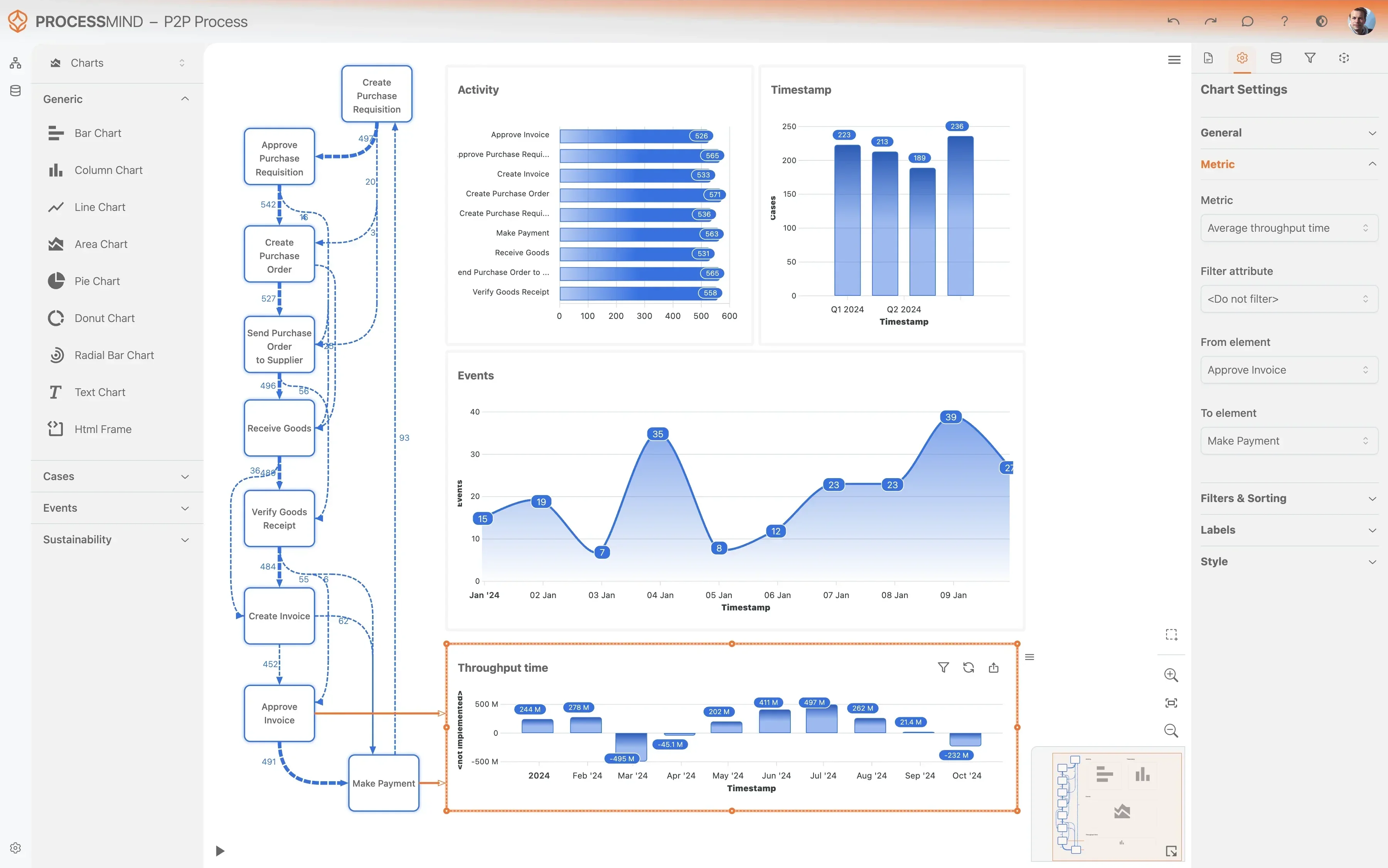
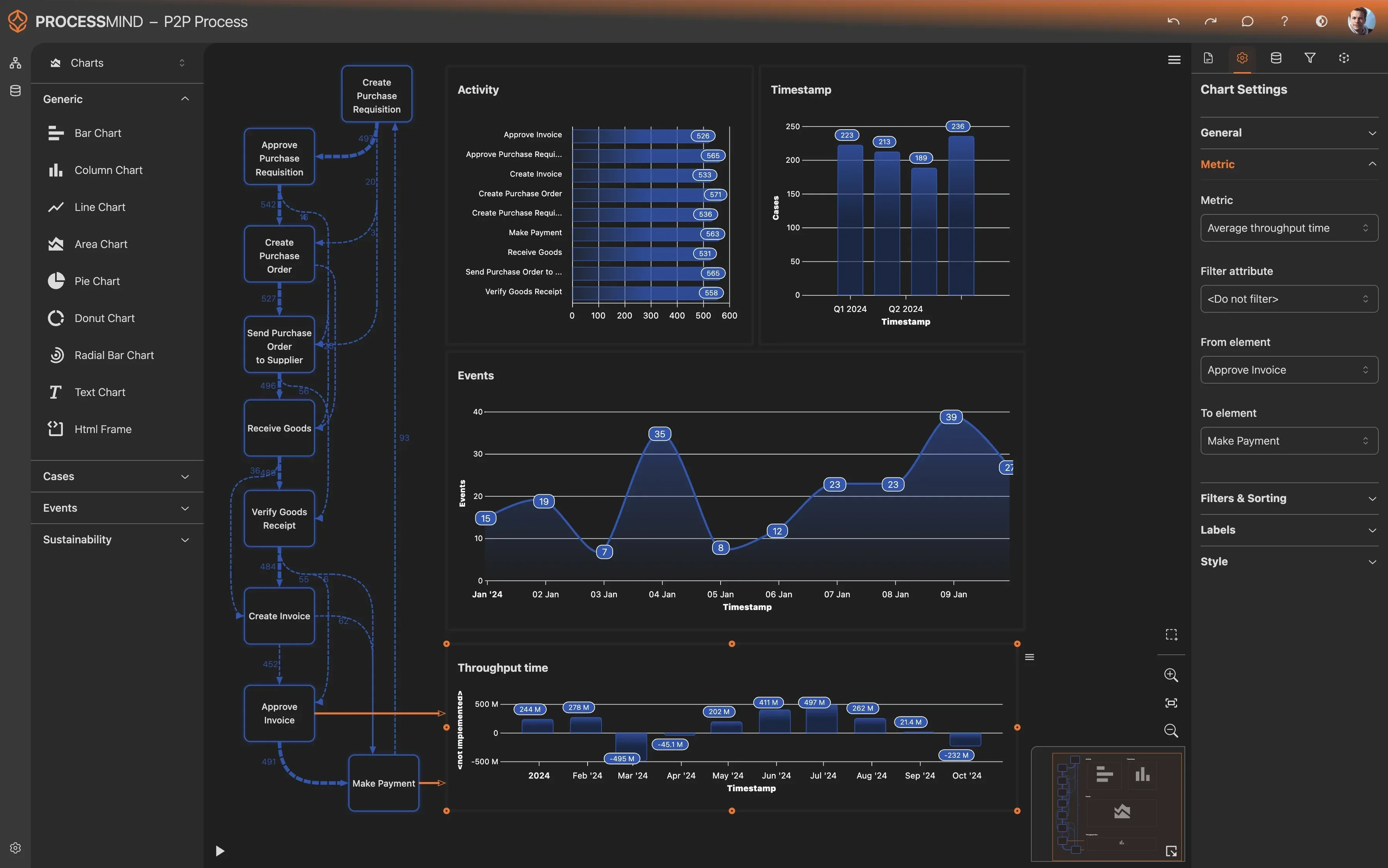
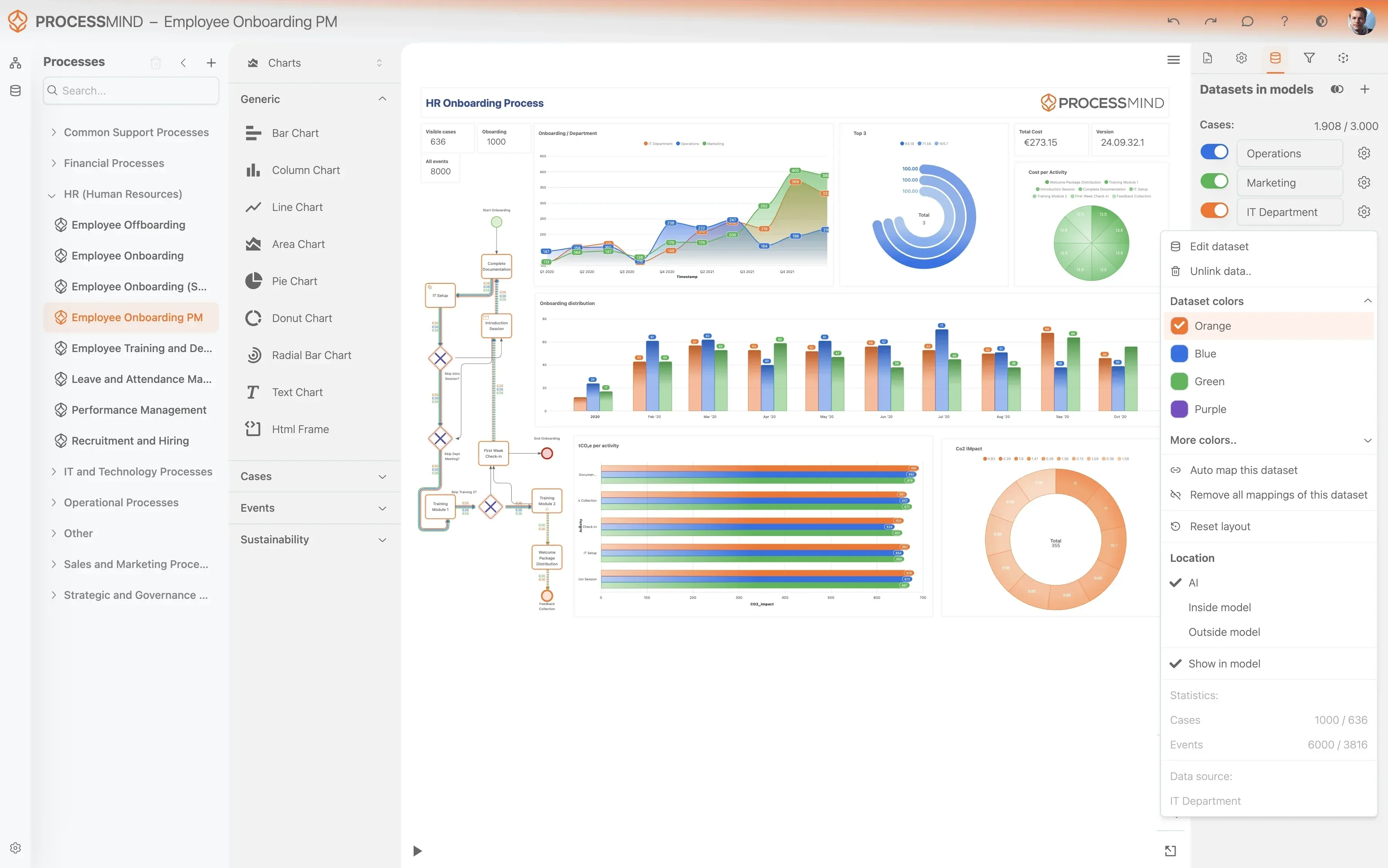
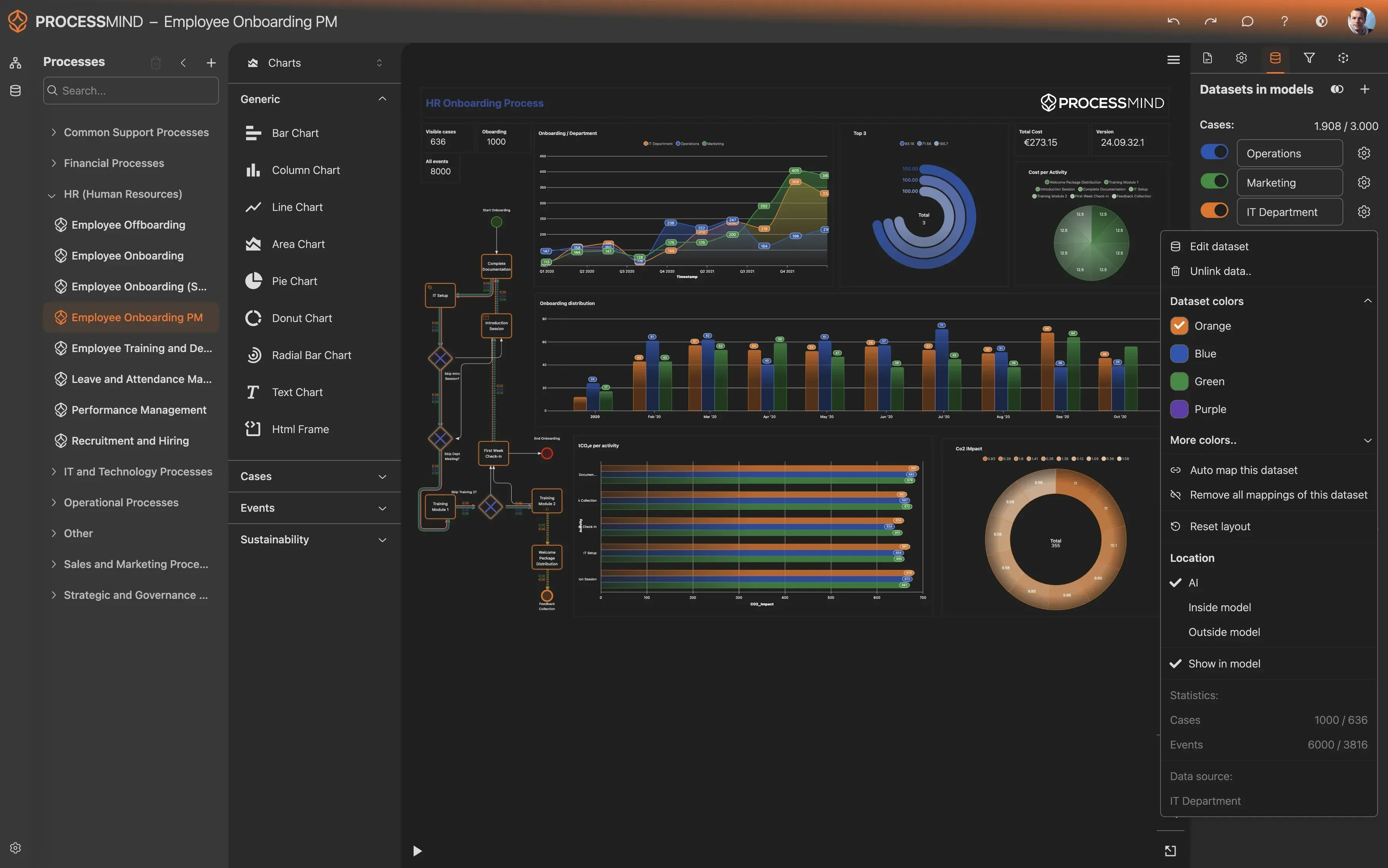
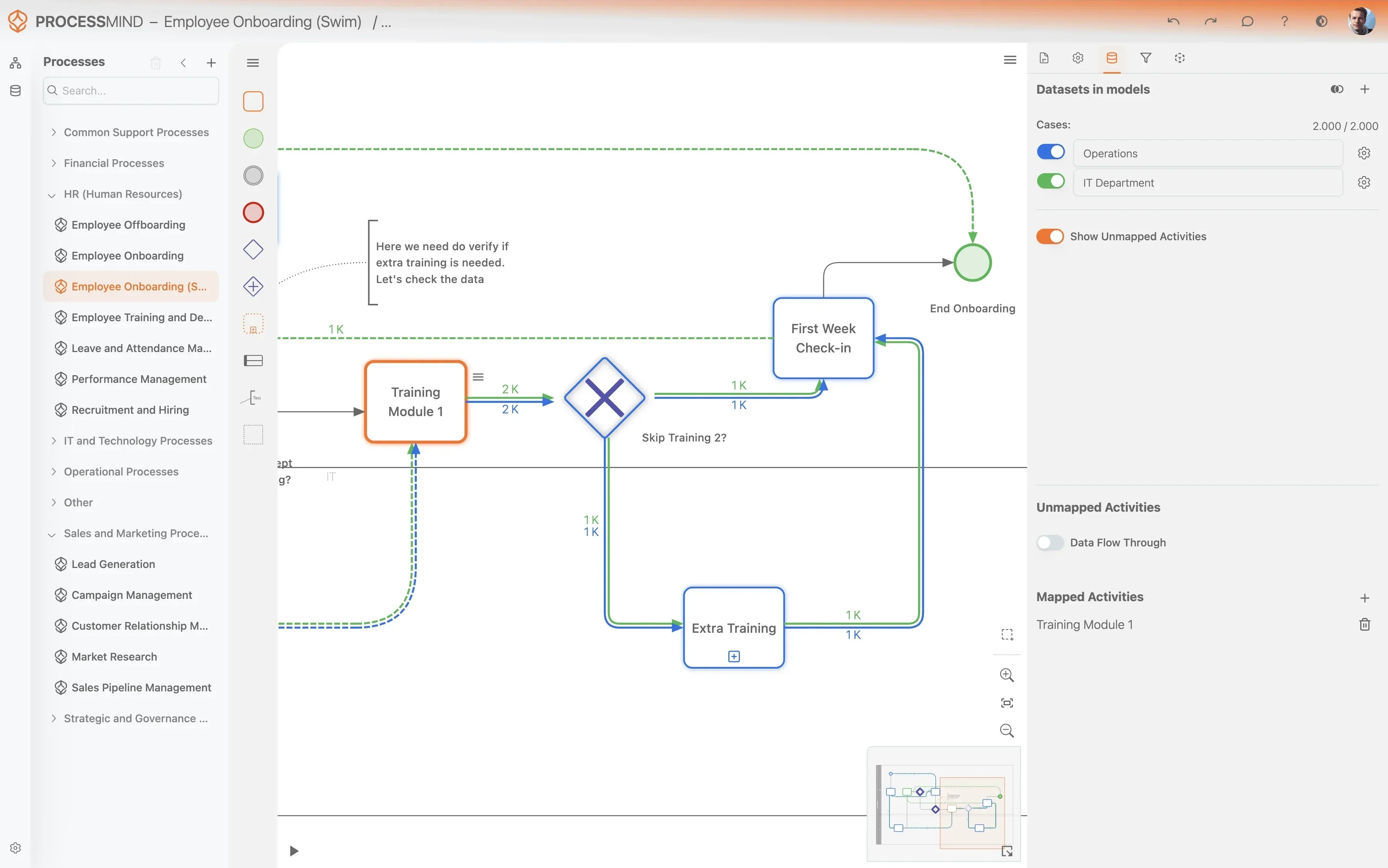
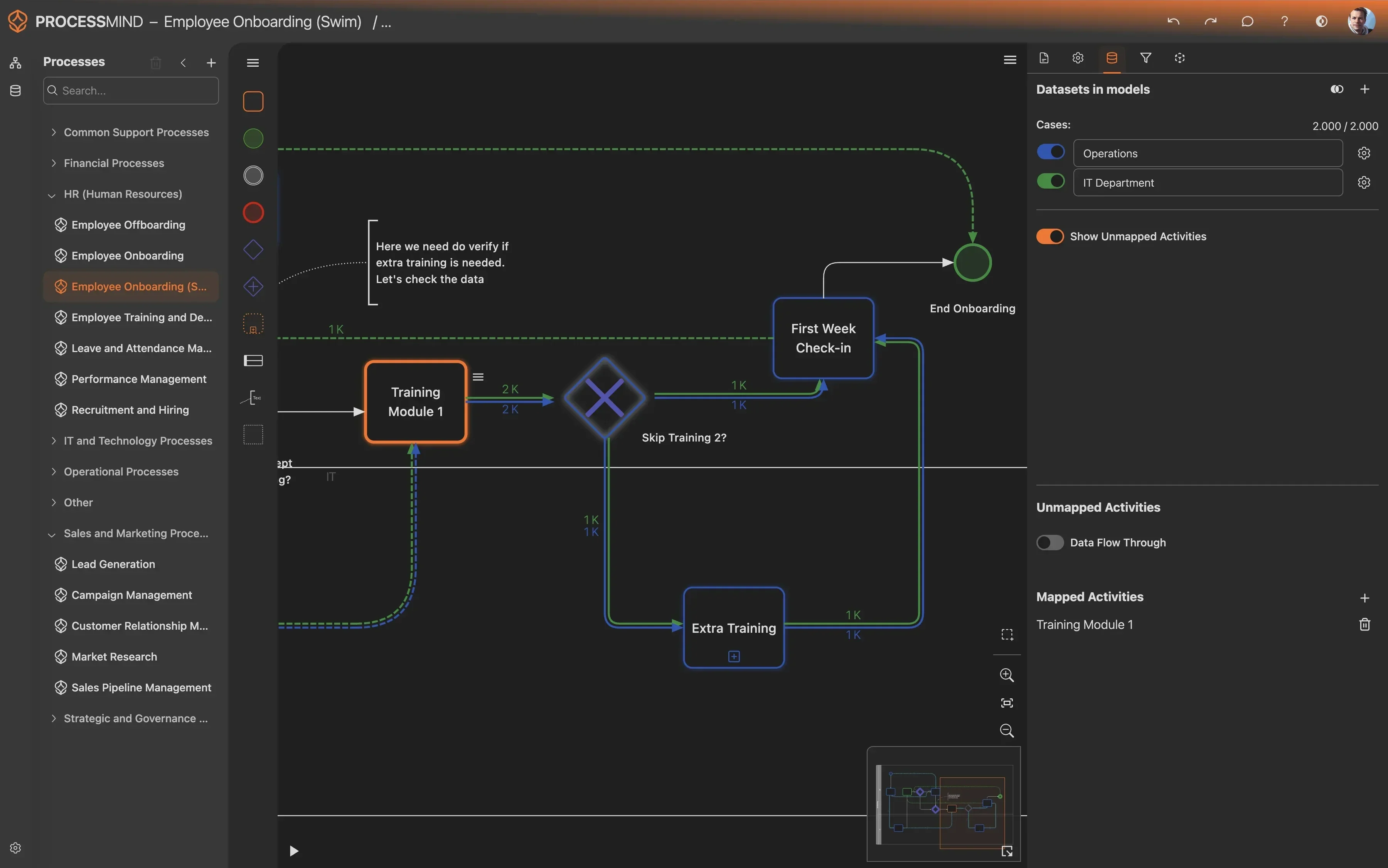
Explore the auto-generated dashboards and interactive process maps of your Waystar RCM. Leverage AI-driven recommendations to uncover inefficiencies and compliance gaps.
Why it matters
Gain deep visibility into billing events, payment cycles, and denial reasons, identifying root causes of delays and financial leakage in RCM.
Expected outcome
A clear understanding of your RCM process's actual performance, with data-backed insights and recommendations for improvement.
Implement Key Changes
What to do
Prioritize the identified opportunities from your RCM analysis. Develop and execute concrete action plans to streamline billing, accelerate payments, and reduce denials.
Why it matters
Translate insights into tangible operational changes that directly impact cash flow, reduce administrative burdens, and improve financial performance.
Expected outcome
Actionable strategies put into practice, targeting specific RCM bottlenecks identified in your Waystar operations.
Monitor RCM Performance
What to do
Periodically re-upload updated RCM data from Waystar to track the impact of your implemented improvements. Continuously refine your process based on new insights.
Why it matters
Ensure sustainable gains and adapt to evolving RCM challenges. Measure the return on investment of your efforts and maintain compliance over time.
Expected outcome
Ongoing optimization of your RCM process, with clear metrics demonstrating improved efficiency and financial health.
TYPICAL OUTCOMES
Achieving Superior Revenue Cycle Performance with Waystar
Our process mining solutions for Revenue Cycle Management identify hidden inefficiencies and bottlenecks in your Waystar billing events, revealing clear paths to optimize financial workflows and accelerate cash realization. These outcomes illustrate the tangible benefits organizations typically achieve by transforming their revenue operations.
Overall revenue acceleration
Process mining identifies bottlenecks in payment processing, significantly reducing the time from invoice generation to payment posting. This improves cash flow and operational efficiency.
Decrease in initial claim rejections
By pinpointing root causes of claim denials, organizations can proactively address issues, leading to a substantial decrease in the rate of rejected claims. This improves revenue assurance and reduces rework.
Accelerated invoice dispute handling
Process mining helps streamline the dispute resolution workflow, reducing the average time taken to resolve invoice disputes. This minimizes delays in revenue realization and enhances patient satisfaction.
Higher revenue capture completeness
Gaps in charge capture are identified and closed, ensuring that all services provided are accurately billed. This directly leads to an increase in realized revenue and reduced leakage.
Adherence to payment posting SLAs
Process mining monitors payment posting activities against predefined SLAs and regulatory requirements. This ensures timely processing, mitigating compliance risks and potential penalties.
Results vary based on the specific complexities of your revenue cycle and the quality of your Waystar data. The figures presented here reflect typical improvements observed across various implementations.
Recommended Data
FAQs
Frequently asked questions
Process mining analyzes your Waystar billing event data to visualize the actual RCM process. It uncovers bottlenecks like prolonged payment cycles and frequent claim denials, helping identify root causes for inefficiencies. This leads to targeted improvements for faster cash flow and reduced costs.
To effectively analyze your Revenue Cycle Management, we primarily need event logs from your Waystar system. Key data includes billing events, payment postings, claim submissions, denials, and adjustments, ensuring each record has a case ID, activity, and timestamp. This data allows for reconstruction of the full RCM journey.
You can expect significant improvements such as a reduction in overall payment cycle time and a decrease in claim denial rates, potentially by 20% or more. The analysis helps accelerate invoice dispute resolution, improve charge capture accuracy, and minimize manual rework. Ultimately, this leads to better cash flow, enhanced compliance, and operational efficiency.
Integrating Waystar data generally requires secure access to your system's data exports, often through APIs, database connections, or flat file exports. The process mining tool will then ingest and transform this data into an event log format. Minimal IT involvement is typically needed once the initial data connection is established.
Process mining precisely maps out every step of your RCM process, highlighting where claim denials frequently occur and identifying the root causes of prolonged payment cycles. By visualizing deviations from the optimal path, it provides actionable insights to streamline workflows and implement targeted interventions. This allows you to address these common problems directly and effectively.
Initial setup for Waystar RCM process mining typically involves data extraction and transformation, which can take a few weeks depending on data volume and complexity. The analytical insights become available quickly thereafter, often within days of data ingestion. This allows for rapid identification of improvement areas without a prolonged setup phase.
Yes, process mining allows you to monitor your RCM processes against defined compliance rules and standards. It can detect deviations or exceptions that might indicate non-compliance, such as incorrect billing procedures or delayed submissions. This proactive monitoring helps in identifying and rectifying compliance gaps before they lead to fines or audits.
No, most modern process mining platforms are designed with user-friendly interfaces, often featuring drag-and-drop functionality and visual dashboards. While an understanding of your RCM process and data is beneficial, extensive coding skills are generally not required to analyze and interpret the results. Training is typically provided to enable effective use.
Organizations typically see a significant ROI through reduced operational costs, improved cash flow, and increased revenue capture. This is achieved by reducing manual rework, minimizing claim denials, accelerating payment cycles, and ensuring better compliance. The value often becomes apparent within months of implementing the insights.
Optimize Revenue Cycle Management, Boost Cash Flow Now
Pinpoint inefficiencies, achieve 30% faster cycle times, and boost cash flow.
No credit card required, start optimizing today.