Improve Your Change Management

Select a process
Choose a process to continue working in your connected workspace.
Optimize Your Change Management Process
ProcessMind helps you uncover hidden inefficiencies and bottlenecks within your change management process. Identify areas of rework, compliance risks, and delayed approvals that slow down your operations. Gain clear insights into where your system could be performing better. Our platform empowers you to streamline operations and enhance overall process flow, regardless of your source system.
Download our pre-configured data template and address common challenges to reach your efficiency goals. Follow our six-step improvement plan and consult the Data Template Guide to transform your operations.
Show detailed description
Optimizing your change management process is crucial for maintaining agility, compliance, and operational stability within your organization. ProcessMind offers a unique lens into your entire change management lifecycle, from initial request creation to final closure. Many organizations struggle with opaque change processes, where understanding actual execution versus planned workflows remains elusive. Traditional reporting often only scratches the surface, leaving critical questions unanswered: Where are the bottlenecks? Which approval steps cause the most delays? Are changes consistently implemented according to policy? ProcessMind reveals these hidden inefficiencies, rework loops, and compliance risks by visualizing every step taken in your process. It highlights deviations from the ideal path, identifies manual workarounds, and uncovers the root causes of delays, regardless of whether your change data resides in a single, integrated system or is scattered across multiple platforms. This deep, data-driven understanding empowers you to move beyond guesswork and address the true pain points in your change management. Analyzing your change management process with ProcessMind delivers tangible benefits that translate directly into improved organizational performance. By providing a comprehensive, end-to-end view of every change request, ProcessMind helps you identify opportunities to streamline workflows, reduce cycle times, and accelerate the successful implementation of changes. You can pinpoint specific areas where automation could yield the greatest impact, optimize resource allocation, and ensure greater adherence to your internal policies and external regulations. Imagine having the power to quantify the impact of process changes before implementation or to demonstrate a clear return on investment for your process improvement initiatives. ProcessMind enables you to make data-driven decisions that enhance efficiency, improve compliance, and ultimately foster a more agile and responsive organizational culture. It provides the evidence needed to challenge assumptions, validate improvements, and continuously evolve your change management strategy. One of ProcessMind's core strengths is its system-agnostic approach. We understand that your change management data might reside in various tools, from your ERP system to specialized ITSM platforms, or even custom-built applications. You might be using different systems for different parts of the process, making it incredibly difficult to get a unified view. ProcessMind is designed to consolidate this disparate data, transforming raw event logs into a clear, interactive process map. This means you can gain profound insights into your change management process regardless of your underlying source system infrastructure. Our platform standardizes your data, allowing you to compare process performance across different departments, teams, or even historical periods, all within a single, consistent framework. This inclusivity ensures that every organization, regardless of its technological landscape, can leverage process mining to unlock its full potential for change management optimization. Getting started with ProcessMind to analyze your change management process is straightforward and designed for rapid value realization. To begin your journey toward unparalleled process visibility and optimization, simply prepare your change request event log data. We offer a comprehensive data template that outlines the required fields, such as Change Request ID, activity description, timestamp, and user. This template guides you through the necessary data extraction, making the onboarding process smooth and efficient. Once your data is uploaded, ProcessMind automatically constructs an interactive process map, allowing you to immediately explore bottlenecks, uncover deviations, and identify areas for improvement. Leverage our intuitive dashboards and powerful analytics to transform your raw data into actionable insights, driving smarter decisions and ensuring your change management process operates at peak efficiency.
The 6-Step Path to Optimize Your Change Management Process
Connect & Discover Data
What to do
Ingest your Change Management data from any relevant system or data source. This involves setting up data connectors and ensuring data quality for accurate analysis.
Why it matters
Comprehensive data collection is the foundation for understanding your current process. Without complete data, insights will be limited or misleading.
Expected outcome
A unified dataset ready for analysis, accurately reflecting all change management activities.
Map Your Change Process
What to do
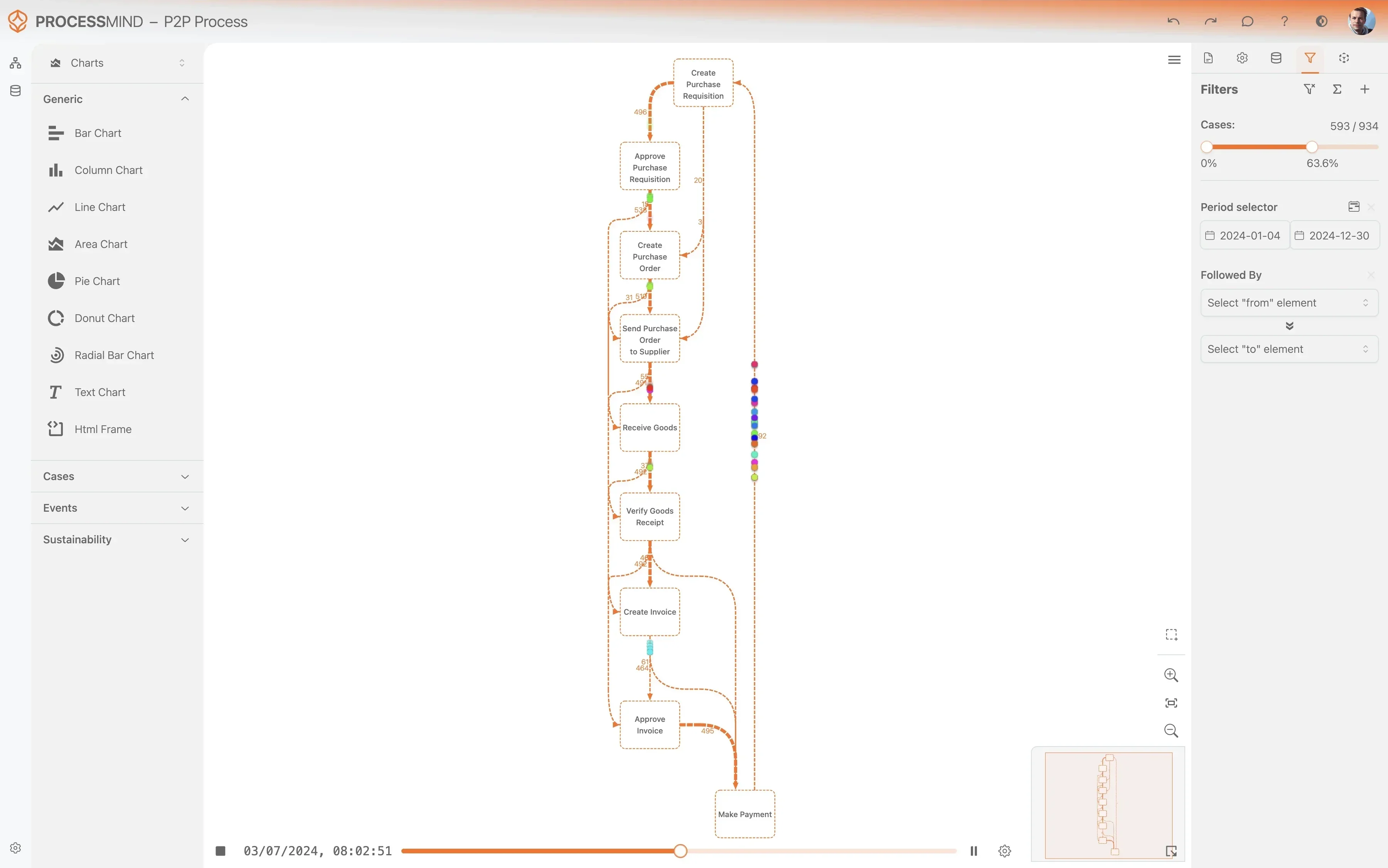
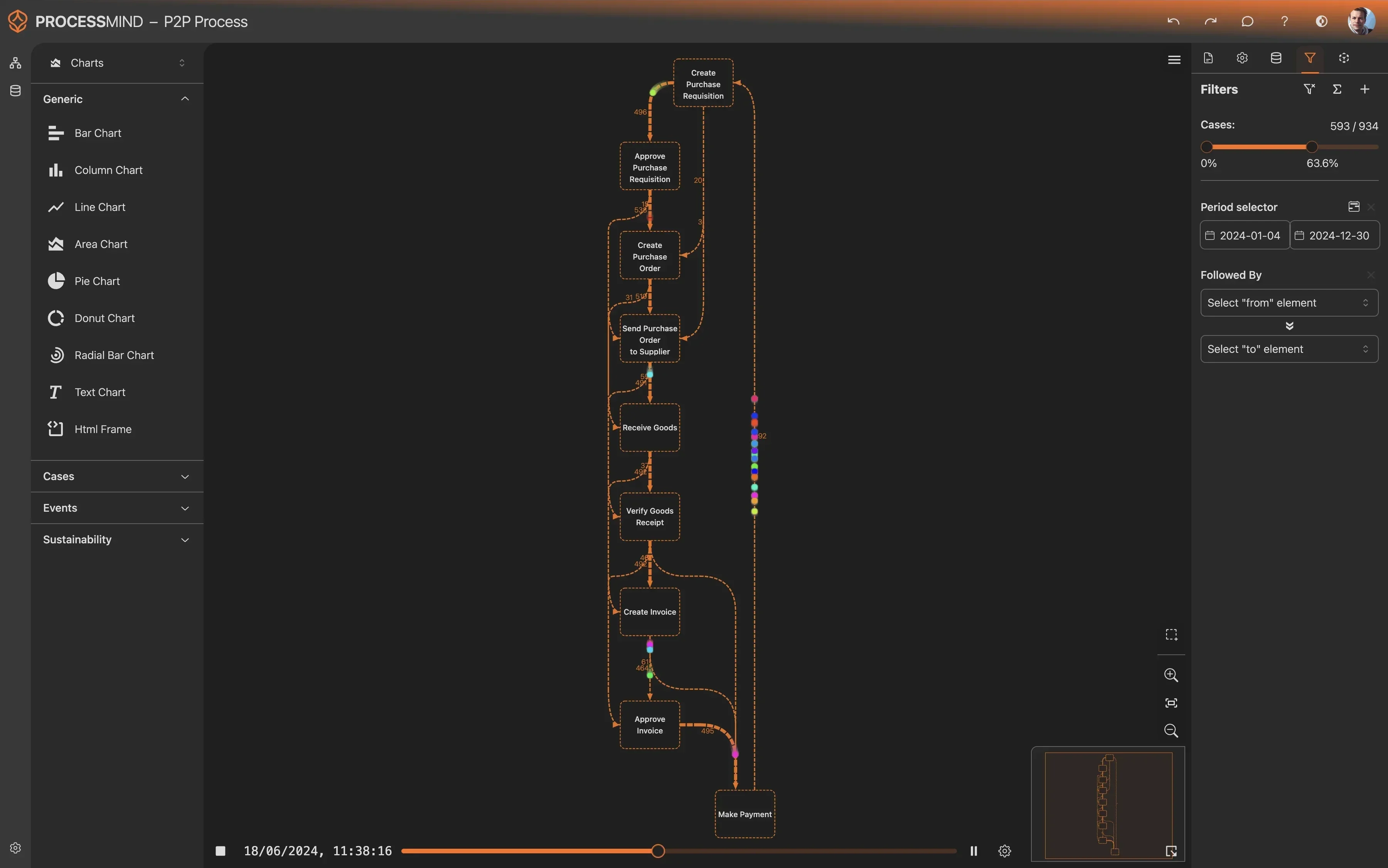
Visualize the end-to-end flow of your change management process from connected data. Understand all paths and variations from request creation to closure.
Why it matters
A clear visual map reveals how changes actually flow, not just how they are documented. This helps in spotting deviations and undocumented steps.
Expected outcome
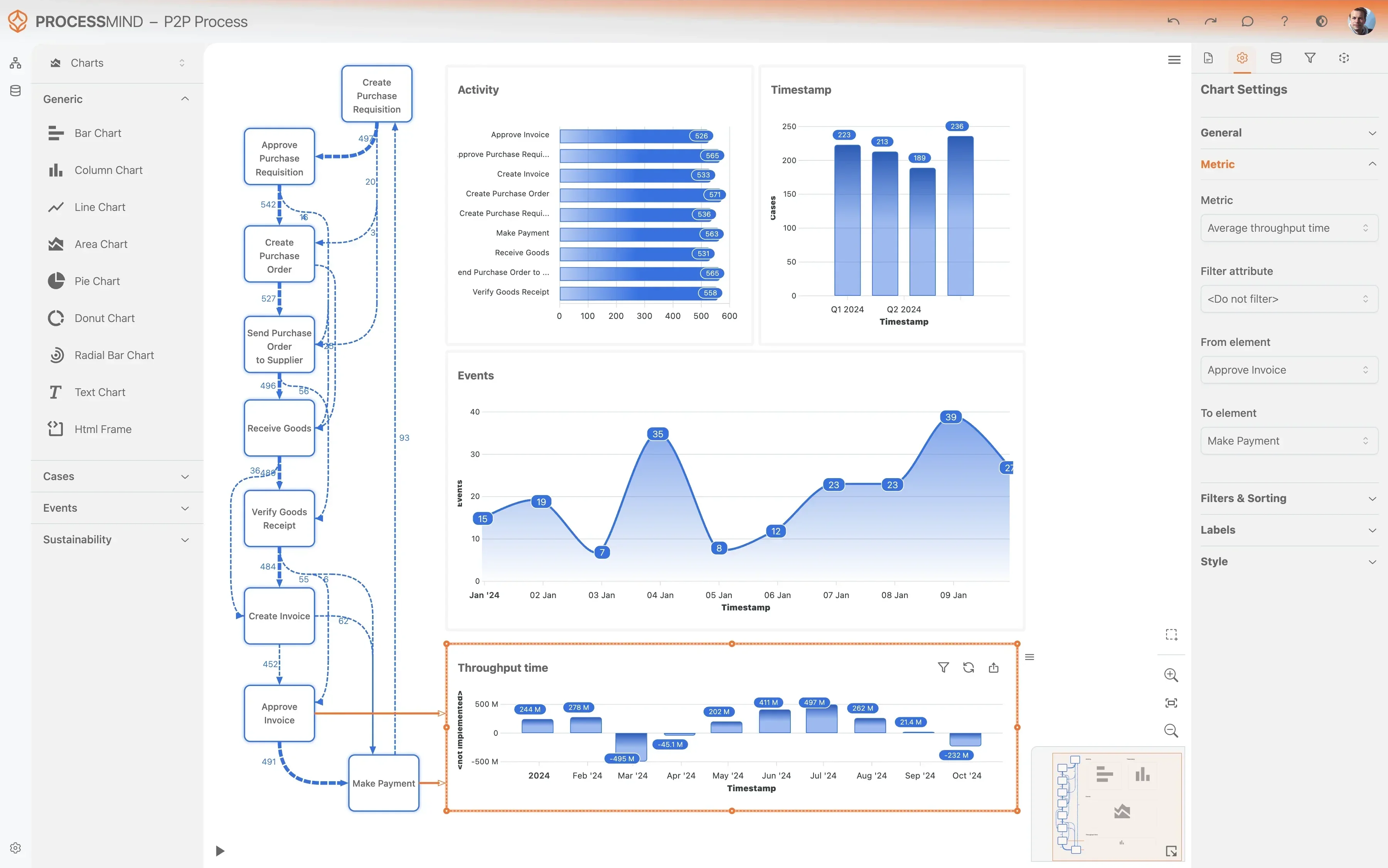
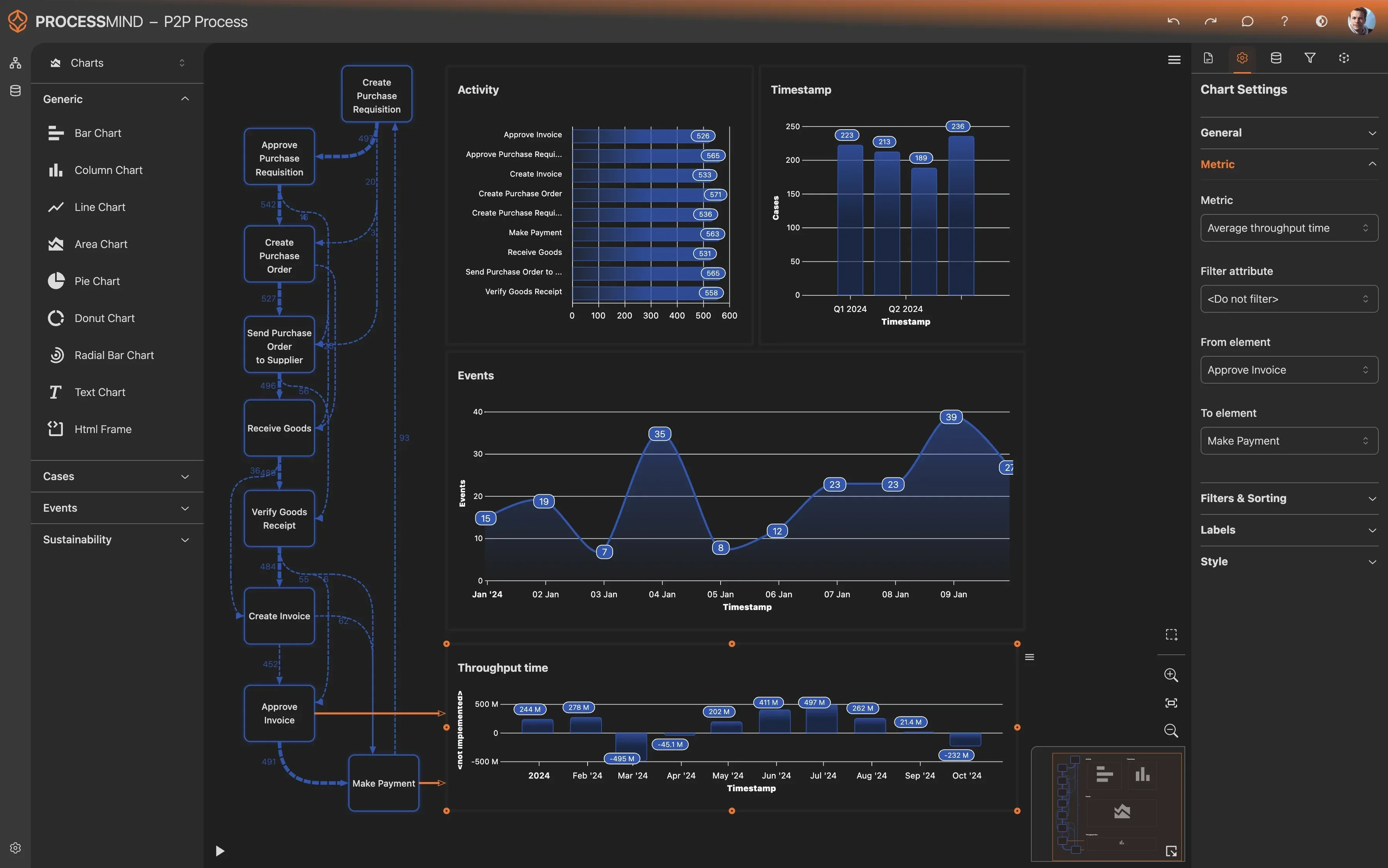
A comprehensive process map showing all activities, events, and their sequence in your Change Management.
Pinpoint Process Bottlenecks
What to do
Use the process map to identify specific stages or activities where changes frequently get stuck, experience long wait times, or accumulate.
Why it matters
Locating bottlenecks is crucial for targeted improvement efforts. Addressing these points can significantly reduce lead times and improve overall efficiency.
Expected outcome
A prioritized list of specific process steps causing delays or performance issues within your Change Management.
Analyze Root Causes
What to do
Investigate the underlying reasons for identified bottlenecks and deviations. Drill down into specific cases to understand factors contributing to delays or rework.
Why it matters
Understanding the "why" behind process issues allows you to implement sustainable solutions rather than just patching symptoms.
Expected outcome
A clear understanding of the fundamental problems driving inefficiencies and non-conformance in your change process.
Design Process Improvements
What to do
Based on root cause analysis, formulate concrete strategies and changes to optimize your Change Management process, including automation or re-sequencing.
Why it matters
Well-designed improvements lead to a more efficient, compliant, and predictable change process, enhancing organizational agility and reducing risk.
Expected outcome
A detailed plan for implementing specific changes to workflow, roles, or system configurations to improve process performance.
Monitor & Iterate
What to do
Implement the designed improvements and continuously monitor their impact using your process data. Be prepared to refine and adjust as needed.
Why it matters
Continuous monitoring ensures that improvements deliver the expected results and allows for agile adaptation to new challenges or evolving business needs.
Expected outcome
Sustainably improved change management performance, with ongoing optimization and a culture of continuous improvement.
TYPICAL OUTCOMES
Tangible Benefits of Optimized Change Management
These outcomes represent common improvements observed when organizations apply process mining to their change management workflows, uncovering inefficiencies and bottlenecks that hinder smooth transitions and adoption. By visualizing and analyzing every step of a change request, teams can implement data-driven improvements.
Average reduction in approval time
Pinpoint and eliminate bottlenecks within the change approval workflow. This ensures critical changes move to implementation faster, accelerating value delivery.
Decrease in wasted effort
Identify the root causes of change rejections and rework, such as incomplete information or unclear requirements. This improves the quality of initial requests and saves significant effort.
Improvement in adherence to policies
Automatically detect deviations from standard change processes and policies. This strengthens governance, reduces audit risks, and ensures changes are handled consistently and securely.
Lower volume of unplanned changes
Gain insights into the underlying causes driving emergency changes. This enables proactive planning and scheduling, minimizing disruptions and enhancing overall service stability.
Higher percentage meeting deadlines
Identify delays in change planning and execution to ensure more changes are completed by their target dates. This improves service level agreement performance and stakeholder satisfaction.
Reduction in change-related incidents
Analyze the connection between change processes and post-implementation problems, identifying weaknesses in testing or implementation. This leads to more stable systems and fewer service disruptions.
Results vary based on process complexity, system integration, and data quality. These figures represent typical improvements observed across various change management implementations.
Recommended Data
For customized data recommendations, choose your specific process.
FAQs
Frequently asked questions
Process mining visualizes the actual flow of your changes, identifying bottlenecks, uncovering non-standard paths, and highlighting compliance gaps. It helps accelerate approvals, standardize workflows, and leads to more efficient resource allocation. This ultimately reduces rework, minimizes service disruptions, and ensures faster implementation cycles across your organization.
You primarily need event logs related to your change requests from the source system. Key data points include the Change Request ID as the case identifier, activity names, and timestamps for each activity. Information on the responsible user or group, and attributes like change type, is also highly beneficial for a richer analysis.
Data extraction typically involves using your system's built-in reporting features, direct database queries, or integration tools. The goal is to obtain a complete, structured dataset containing the case identifier, activity, and timestamp for every change request. This ensures all required event log attributes are captured for comprehensive analysis.
You can expect significant improvements like accelerated change approval cycle times and reduced emergency change volumes. Process mining leads to enhanced compliance, minimized change-induced service impacts, and lower operational costs due to identified inefficiencies. Many organizations achieve better resource utilization and improved real-time visibility into change progress, making the process more predictable and effective.
The initial setup, including data extraction and model creation, can typically be completed within a few weeks, depending on data availability and complexity. You can often see preliminary insights and identify immediate improvement opportunities within the first month of analysis. Continuous monitoring then provides ongoing optimization suggestions, allowing for sustained process improvement.
Yes, process mining is excellent for compliance checking. It automatically compares your actual change processes against predefined rules and ideal process models, highlighting any unauthorized deviations or missing steps. This helps identify compliance gaps, such as changes bypassing required approvals or incomplete post-implementation reviews, providing auditable evidence.
It is common for real-world data to have inconsistencies, and process mining tools are designed to handle this. They often reveal data quality issues themselves, which is a valuable insight for improving data governance. We work with you to clean and transform the data, ensuring reliable analysis even with initial imperfections.
While process mining involves advanced analytics, modern tools streamline much of the complexity. Our approach simplifies the setup by focusing on your specific Change Management data, minimizing the need for extensive in-house technical skills beyond basic data access. Most solutions are cloud-based, requiring only a standard web browser for access, so no complex on-premise software installation is typically necessary.
Yes, absolutely. Process mining can precisely pinpoint stages in your Change Management where rejections, reworks, or emergency changes frequently occur. It uncovers the preceding activities or conditions that contribute to these issues. By understanding these root causes, you can implement targeted interventions to streamline processes and reduce costly inefficiencies.
Yes, if your source system data includes a field identifying the change type, process mining tools can filter and analyze these categories separately. This allows you to compare the efficiency and compliance of standard, normal, and emergency changes. You can then identify specific areas for optimization tailored to each change category.
Optimize Your Change Management for Peak Efficiency
Streamline your processes, reduce risks, and achieve faster adoption.
No credit card required. Setup in minutes.