Improve Your Claims Processing

Optimize Claims Processing in Duck Creek Claims for Faster Resolution
Claims processing can often be complex, leading to avoidable delays and unexpected compliance issues. Our platform provides clear insights, helping you pinpoint bottlenecks and hidden inefficiencies within your workflows. Discover how to streamline operations, reduce costs, and enhance overall customer satisfaction with our guided approach.
Download our pre-configured data template and address common challenges to reach your efficiency goals. Follow our six-step improvement plan and consult the Data Template Guide to transform your operations.
Show detailed description
Why Optimizing Claims Processing is Critical for Insurers
Efficient claims processing is the backbone of any successful insurance operation. It's not just about managing payouts; it's a direct reflection of your company's commitment to its policyholders, financial stability, and regulatory compliance. Inefficient claims handling, even within robust systems like Duck Creek Claims, can lead to a cascade of negative consequences. These include escalating operational costs due to rework and manual interventions, diminished customer satisfaction resulting from delays and lack of transparency, and increased risk of non-compliance with industry regulations. The hidden costs of an unoptimized claims journey – from initial submission to final payment – can significantly impact your bottom line and tarnish your brand's reputation. Understanding the actual flow of claims through your Duck Creek Claims system is the first step towards transforming these challenges into opportunities for growth and loyalty.
Unlocking Efficiency with Process Mining in Duck Creek Claims
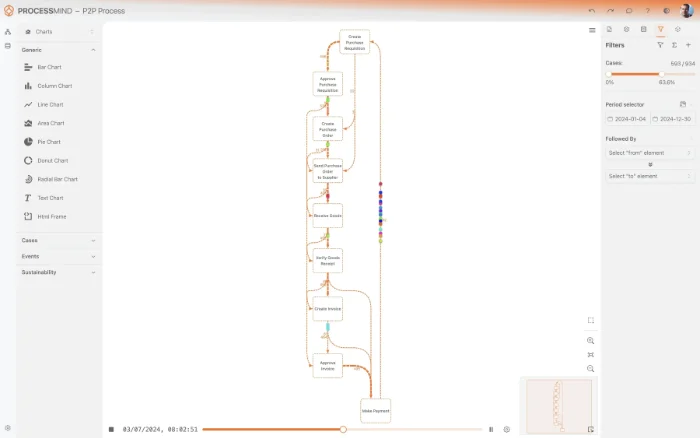
Process mining offers an unparalleled lens into the reality of your claims operations within Duck Creek Claims. Unlike traditional reporting or business intelligence, which show what happened, process mining reveals how it happened, tracing every single claim's journey from Claim Submitted to Claim Closed. By extracting event data directly from your Duck Creek Claims system logs, process mining constructs a precise, visual map of your end-to-end claims workflow. This sophisticated approach allows you to:
- Visualize Actual Processes: See the true paths claims take, identifying common deviations from the intended, ideal process flow. Are claims often routed back for Additional Information Requested multiple times? Process mining will highlight these loops.
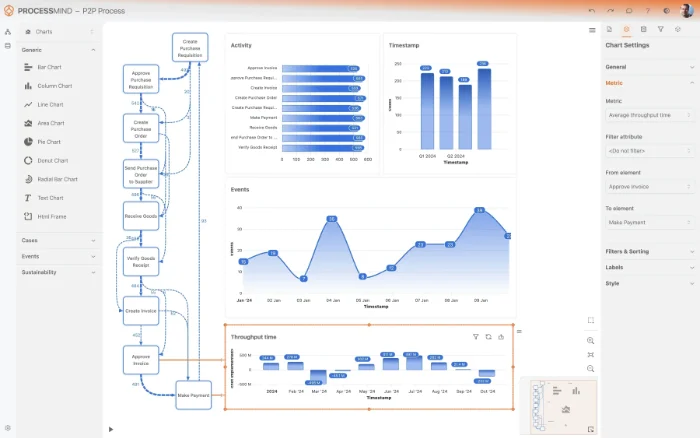
- Pinpoint Bottlenecks and Delays: Automatically identify where claims get stuck, whether it's a specific Department, an Assigned Adjuster, or a particular activity like Investigation Started or Payment Authorized. Understand the exact points causing Claims Processing cycle time extensions.
- Analyze Root Causes of Inefficiency: Dive deep to understand why certain bottlenecks occur. Is it specific Claim Types that consistently cause delays? Or perhaps claims originating from a particular Submission Channel?
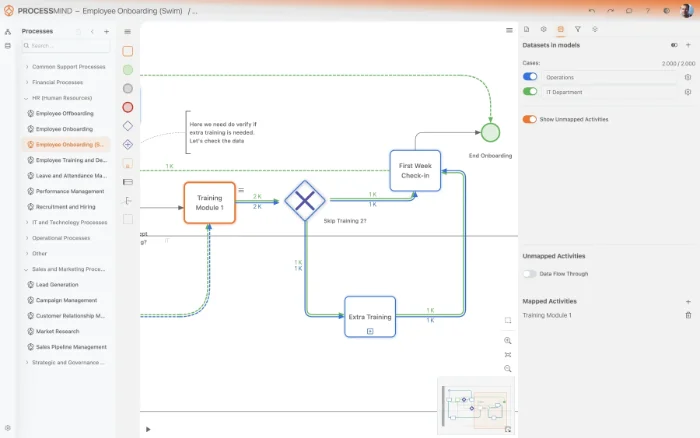
- Ensure Compliance and Detect Deviations: Automatically detect instances where standard operating procedures (SOPs) or regulatory requirements are not being followed. Uncover skipped steps or unauthorized shortcuts that could lead to compliance issues.
- Measure Performance Accurately: Gain precise metrics on cycle time for various claim types, activity durations, and adherence to Resolution Target Dates, enabling data-driven performance management.
This detailed analysis empowers you to move beyond assumptions, providing concrete evidence for targeted process optimization efforts specific to your Duck Creek Claims environment.
Key Improvement Areas in Your Claims Workflow
Leveraging process mining insights derived from your Duck Creek Claims data opens doors to a multitude of claims processing improvement opportunities:
- Reduce Cycle Times: Identify and eliminate unnecessary delays between activities, streamline handoffs, and optimize queues to accelerate the time from Claim Submitted to Payment Issued.
- Minimize Rework and Redundancy: Pinpoint activities that are frequently repeated or steps that lead to claims being sent back, designing interventions to get it right the first time.
- Enhance Resource Utilization: Understand adjuster workloads, identify where resources are over or underutilized, and rebalance tasks for maximum efficiency without compromising quality.
- Improve Compliance Adherence: Proactively identify process deviations that could result in non-compliance, allowing for targeted training or system rule adjustments within Duck Creek Claims.
- Optimize Automation Potential: Discover repetitive, rules-based activities that are ripe for automation, freeing up human adjusters for more complex, high-value tasks.
- Increase Customer Satisfaction: Faster, more transparent Claims Processing directly translates to a better experience for policyholders, strengthening their trust and loyalty.
Measurable Benefits of Streamlined Claims Processing
By strategically applying insights from process mining, you can expect significant, measurable improvements in your Duck Creek Claims operations:
- Accelerated Claim Resolution: Drastically reduce Claims Processing cycle time, often by 15-30% or more, leading to quicker payouts and happier customers.
- Lower Operational Costs: Achieve substantial savings by reducing rework, eliminating unnecessary manual steps, and optimizing resource allocation.
- Enhanced Compliance Posture: Mitigate regulatory risks and avoid potential fines by ensuring processes consistently meet internal and external standards.
- Improved Employee Productivity: Empower your claims adjusters and staff with clearer, more efficient workflows, reducing frustration and increasing output.
- Superior Customer Experience: Deliver on the promise of timely and fair claim resolution, fostering long-term policyholder relationships.
- Data-Driven Strategic Planning: Gain the evidence needed to make informed decisions about system configurations, training programs, and future investments in your Duck Creek Claims platform.
Getting Started: Your Path to Claims Processing Excellence
Embarking on your journey to process optimization within Claims Processing using Duck Creek Claims doesn't require complex technical expertise. Our guided approach provides a clear framework to begin extracting valuable insights immediately. You can start uncovering bottlenecks and inefficiencies within your claims workflow and implement targeted improvements. Unlock the full potential of your Duck Creek Claims system and transform your claims operations into a competitive advantage.
The 6-Step Improvement Path for Claims Processing
Download the Template
What to do
Access and download the pre-configured Excel data template designed specifically for Claims Processing from Duck Creek Claims. This template provides the optimal structure for your data export.
Why it matters
Using the correct data structure from the start ensures seamless integration with ProcessMind, preventing data mismatches and accelerating your analysis setup.
Expected outcome
A ready-to-fill Excel template tailored for Duck Creek Claims data.
Export Your Data
What to do
Extract 3-6 months of historical claims data from your Duck Creek Claims system. Populate the downloaded template with your real-world claim transactions and associated details.
Why it matters
Comprehensive historical data is crucial for ProcessMind to accurately map your claims journey, uncover trends, and identify deep-seated bottlenecks.
Expected outcome
A complete dataset reflecting your recent claims processing activities.
Upload Your Dataset
What to do
Securely upload your populated Excel template to the ProcessMind platform. The system will automatically ingest and prepare your claims data for in-depth analysis.
Why it matters
This step initiates the automated discovery of your actual claims process, ensuring data privacy and integrity throughout the analysis phase.
Expected outcome
Your claims data securely processed and ready for visualization and analysis.
Analyze Your Process
What to do
Explore the auto-generated visual process maps and dashboards specific to your claims operations. Leverage AI-driven insights to pinpoint inefficiencies, compliance gaps, and root causes.
Why it matters
Understanding the true flow and variations in your claims process reveals hidden bottlenecks and areas for significant improvement in efficiency and customer satisfaction.
Expected outcome
Clear understanding of process variations, bottlenecks, and data-driven improvement recommendations.
Implement Improvements
What to do
Prioritize the opportunities identified by ProcessMind and formulate concrete action plans. Integrate changes within your Duck Creek Claims workflows and operational procedures.
Why it matters
Acting on insights directly improves cycle times, reduces processing costs, enhances compliance, and ultimately boosts policyholder satisfaction for your claims.
Expected outcome
Targeted changes deployed to optimize claims processing, based on factual process insights.
Monitor Your Process
What to do
Regularly re-upload fresh claims data from Duck Creek Claims to ProcessMind. Continuously track the impact of your implemented changes and process evolution over time.
Why it matters
Ongoing monitoring ensures sustained performance gains and proactive identification of new deviations or opportunities, driving continuous operational excellence.
Expected outcome
Measurable improvements in KPIs, sustained efficiency, and an agile claims processing operation.
WHAT YOU WILL GET
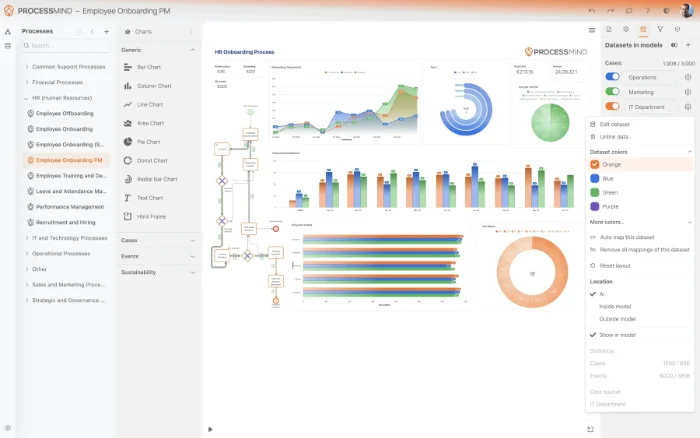
Visualize Claims Processing for Rapid Improvement
- Visualize end-to-end claims journeys
- Pinpoint key bottlenecks and delays
- Identify compliance deviations
- Optimize resource allocation
TYPICAL OUTCOMES
Real-World Impact on Claims Processing
These outcomes illustrate the tangible benefits organizations typically realize by applying process mining to their claims processing workflows. By leveraging detailed insights from your Duck Creek Claims data, these improvements are achieved through identifying and eliminating bottlenecks, optimizing workflows, and enhancing overall efficiency in claims resolution.
Average reduction in end-to-end time
By identifying and eliminating bottlenecks, organizations can significantly reduce the time it takes to process a claim from submission to closure, improving efficiency and customer satisfaction.
Decrease in claims requiring re-processing
Process mining identifies root causes of rework, allowing teams to implement targeted improvements that reduce errors and unnecessary re-processing steps, saving time and resources.
Improved adherence to standard workflows
By visualizing deviations from the ideal process, organizations can enforce standard operating procedures more effectively, leading to consistent and predictable claim handling.
Average reduction in approval duration
Pinpointing and optimizing delay points in the approval chain allows for quicker decision-making and payment authorization, speeding up the entire claims lifecycle.
Reduction in requests for missing data
Understanding why additional information is frequently requested enables improvements to initial intake forms and processes, reducing friction for claimants and accelerating processing.
Decrease in early claim rejections
By analyzing the reasons for initial rejections, organizations can refine eligibility criteria and submission guidelines, leading to fewer invalid claims entering the process.
Individual results may vary based on the complexity of your claims processes, the volume of data, and specific system configurations. The figures provided here reflect common improvements observed across various implementations.
Recommended Data
FAQs
Frequently asked questions
Process mining can pinpoint bottlenecks, rework loops, and non-compliance within your Duck Creek Claims workflows. It reveals deviations from standard procedures and highlights areas contributing to excessive cycle times or inefficient settlement calculations. This granular insight helps you understand the true path claims take.
By analyzing actual process execution, process mining helps reduce claim resolution times and eliminate rework. You can achieve faster approvals, more consistent adherence to policies, and optimize adjuster workload distribution. This leads to improved efficiency and significant cost savings.
For process mining, you primarily need event logs from Duck Creek Claims. This includes a case identifier (Claim ID), an activity name (e.g., "Claim Initiated", "Investigation Complete"), and a timestamp for each activity. Additional attributes like adjuster details or claim type can enrich the analysis.
You will need access to your Duck Creek Claims database or data warehouse to extract event log data. A process mining software platform is then used to ingest and analyze this data. Basic data transformation skills might be required to prepare the data in the correct format.
Initial data extraction and model setup can typically be completed within a few weeks, depending on data availability and complexity. Once the initial model is established, insights can be generated almost immediately. Continuous monitoring provides ongoing optimization opportunities.
No, process mining is non-intrusive as it only requires read-access to historical data from your Duck Creek Claims system. It doesn't interfere with live operations or require changes to your current IT infrastructure during the analysis phase. Implementation of improvements is a separate step.
The initial step is to identify a clear business problem or improvement goal, such as reducing claim cycle time. Then, work with your IT team to identify the relevant event data sources within Duck Creek Claims and establish a method for data extraction. This foundational work ensures the analysis is targeted and effective.
Yes, by associating activities with specific adjusters in your event data, process mining can visualize individual and team workload patterns. It can identify imbalances, highlight high-performing workflows, and uncover areas where training or process adjustments could improve efficiency across your adjusting team. This provides actionable insights for resource optimization.
End Claim Backlogs: Optimize Your Claims Processing Now
Achieve 70% straight-through processing, reducing costs and delays.
Free 14-day trial, no credit card required.