Improve Your Software Development Lifecycle

Select a process
Choose a process to continue working in your connected workspace.
Optimize Software Development on GitHub for Faster Releases
Software development often encounters bottlenecks, leading to delayed releases and unmet compliance. Our platform helps pinpoint inefficiencies across your entire development lifecycle, from initial coding to final deployment. Understand your processes deeply and discover opportunities for faster, more reliable software delivery.
Download our pre-configured data template and address common challenges to reach your efficiency goals. Follow our six-step improvement plan and consult the Data Template Guide to transform your operations.
Show detailed description
Why Optimize Your Software Development Lifecycle?
In today's fast-paced digital landscape, an efficient Software Development Lifecycle, SDLC, is not just a best practice, it is a critical competitive advantage. Organizations are under constant pressure to deliver new features, security updates, and bug fixes with speed and precision. However, the inherent complexity of modern software development, often involving distributed teams, diverse toolchains, and intricate dependencies, can introduce significant inefficiencies. Without a clear, data-driven understanding of your actual development processes, you risk encountering persistent bottlenecks, costly rework, prolonged cycle times, and challenges in maintaining compliance standards.
Inefficiencies within your SDLC translate directly into tangible business costs. These include delayed product launches, missed market opportunities, increased operational expenses due to resource overruns, and potential impacts on software quality that can damage user trust and satisfaction. Understanding the true flow of work, from initial concept to final deployment, is paramount for sustainable growth and innovation.
Unlocking SDLC Insights with Process Mining on GitHub
Process mining offers a powerful lens to demystify your Software Development Lifecycle, especially when leveraging the rich event data available within GitHub. Instead of relying on assumptions or anecdotal evidence, process mining reconstructs the actual sequence of activities for every development item, providing an objective, end-to-end view of your processes. By analyzing logs from GitHub, including events related to Issues, Pull Requests, Actions, and Project board movements, you can visualize exactly how work progresses through stages such as 'Development Item Created', 'Design Started', 'Code Review Performed', 'QA Testing Completed', and 'Deployed to Production'.
This analytical approach helps you answer crucial questions: Where do development items typically get stuck? Are certain teams or developers consistently facing delays? What are the most common rework loops, and where do they originate? By mapping the real process flow, process mining reveals hidden deviations from your intended SDLC, exposing bottlenecks and areas for optimization that might otherwise remain invisible. It provides the empirical evidence needed to move beyond guesswork and implement targeted improvements.
Key Areas for Software Development Lifecycle Improvement
Applying process mining to your GitHub-based Software Development Lifecycle opens up several avenues for significant improvement:
- Bottleneck Identification and Resolution: Pinpoint exact stages or activities where development items experience prolonged waiting times. For instance, you might discover that 'Code Review Performed' takes unusually long for specific project types or that 'QA Testing Started' often has a significant delay after 'Integration Testing Started'. Understanding these chokepoints is the first step in how to improve Software Development Lifecycle efficiency.
- Cycle Time Reduction: Analyze the time spent in each phase and the overall lead time from 'Development Item Created' to 'Deployed to Production'. By identifying the activities consuming the most time, you can implement strategies to reduce your Software Development Lifecycle cycle time, accelerating delivery.
- Quality Gate Enforcement: Verify that all critical quality gates, such as 'Unit Testing Performed' or 'User Acceptance Testing Approved', are consistently met before a development item progresses. This ensures adherence to quality standards and reduces the likelihood of defects reaching production.
- Rework and Deviation Analysis: Detect instances where work loops back to previous stages, indicating rework. For example, a development item moving from 'QA Testing Started' back to 'Development Started' signals a defect or missed requirement that needs addressing.
- Compliance and Audit Readiness: Ensure that your development processes comply with internal standards or external regulatory requirements by providing an auditable trail of all activities and transitions within your SDLC.
Tangible Outcomes of SDLC Process Optimization
The insights gained from process mining your GitHub SDLC translate into measurable business benefits:
- Accelerated Time-to-Market: By eliminating bottlenecks and streamlining workflows, you can deliver software features and updates to your users much faster, gaining a competitive edge.
- Enhanced Software Quality: Consistent enforcement of quality gates and reduced rework contribute to higher-quality software, leading to fewer post-release defects and a better user experience.
- Reduced Development Costs: Optimizing resource allocation, minimizing wasted effort from rework, and improving overall process efficiency directly lower operational expenses associated with software development.
- Improved Team Productivity and Morale: Clearer processes and fewer impediments lead to more productive development teams, fostering a positive work environment and boosting morale.
- Data-Driven Strategic Planning: Equip your leadership with concrete data to make informed decisions about resource planning, technology investments, and process enhancements.
Getting Started with Your GitHub SDLC Optimization Journey
Taking control of your Software Development Lifecycle on GitHub empowers your organization to achieve peak performance. By adopting a process mining approach, you gain the clarity needed to transform your development practices from reactive to proactive. This continuous improvement journey allows you to consistently deliver high-quality software faster and more reliably. Start exploring how process mining can illuminate your SDLC and unlock its full potential for efficiency and innovation.
The 6-Step Improvement Path for Software Development Lifecycle
Download the Template
What to do
Get the Excel template specifically designed for analyzing your Software Development Lifecycle process. This template defines the structure needed for effective process mining.
Why it matters
A standardized data structure ensures that all relevant GitHub activities, like pull requests and issue updates, are captured correctly, laying the foundation for accurate analysis.
Expected outcome
A ready-to-use Excel template structured for your GitHub development data.
Export Your GitHub Data
What to do
Extract 3-6 months of historical data from GitHub, covering issues, pull requests, and commit history. Populate the downloaded template with this real-world data from your repositories.
Why it matters
Utilizing recent historical data provides a comprehensive view of past development cycles, enabling the identification of recurring patterns, bottlenecks, and areas for improvement.
Expected outcome
A populated Excel template containing your historical Software Development Lifecycle data from GitHub.
Upload Your Dataset
What to do
Upload your meticulously filled data template to ProcessMind. Our secure platform will automatically process and prepare your GitHub development data for analysis.
Why it matters
Seamless data ingestion is crucial for quickly transforming raw GitHub event logs into an actionable process model, without manual data manipulation or complex configurations.
Expected outcome
Your GitHub development data securely uploaded and ready for automated process discovery.
Analyze Your Dev Process
What to do
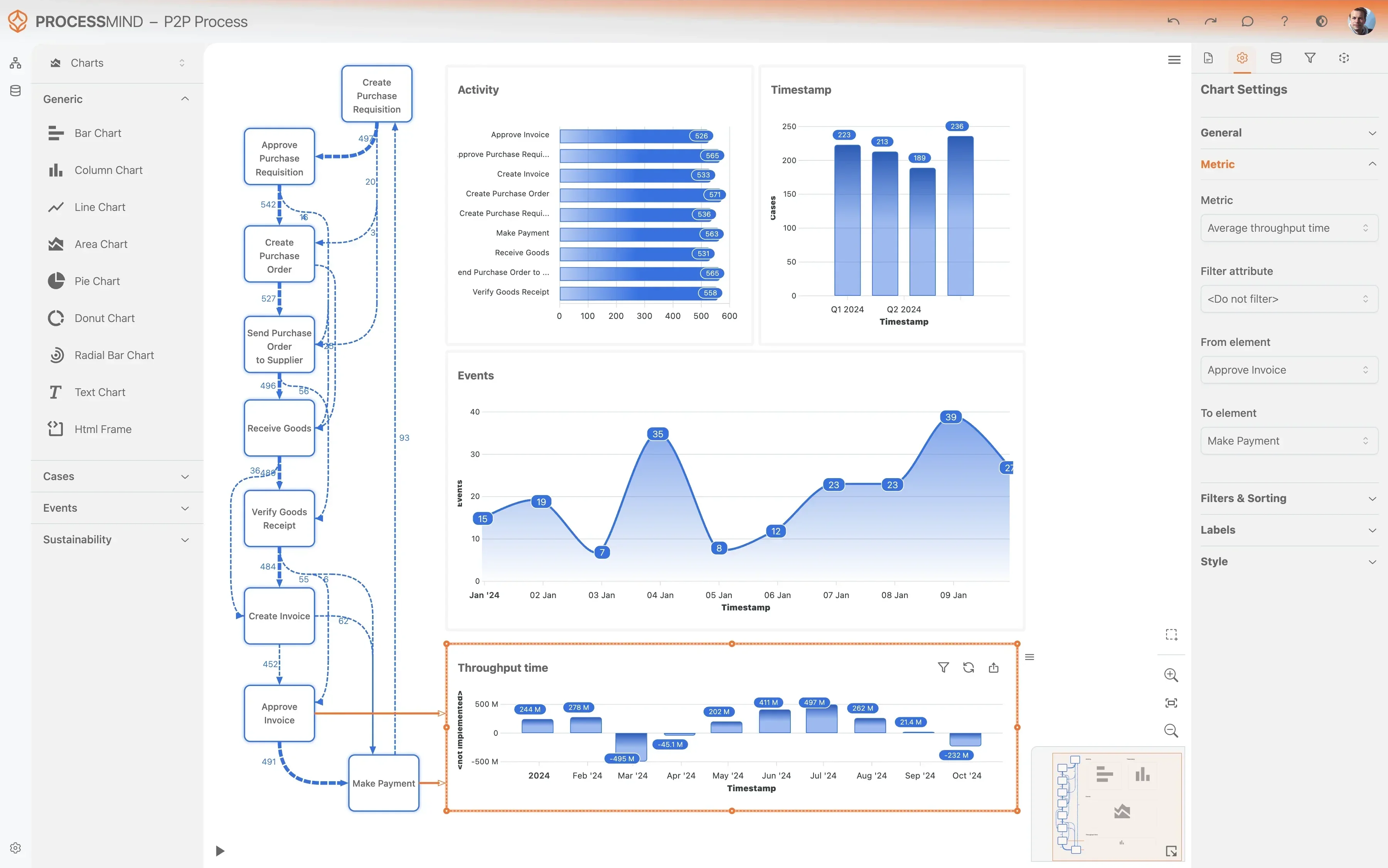
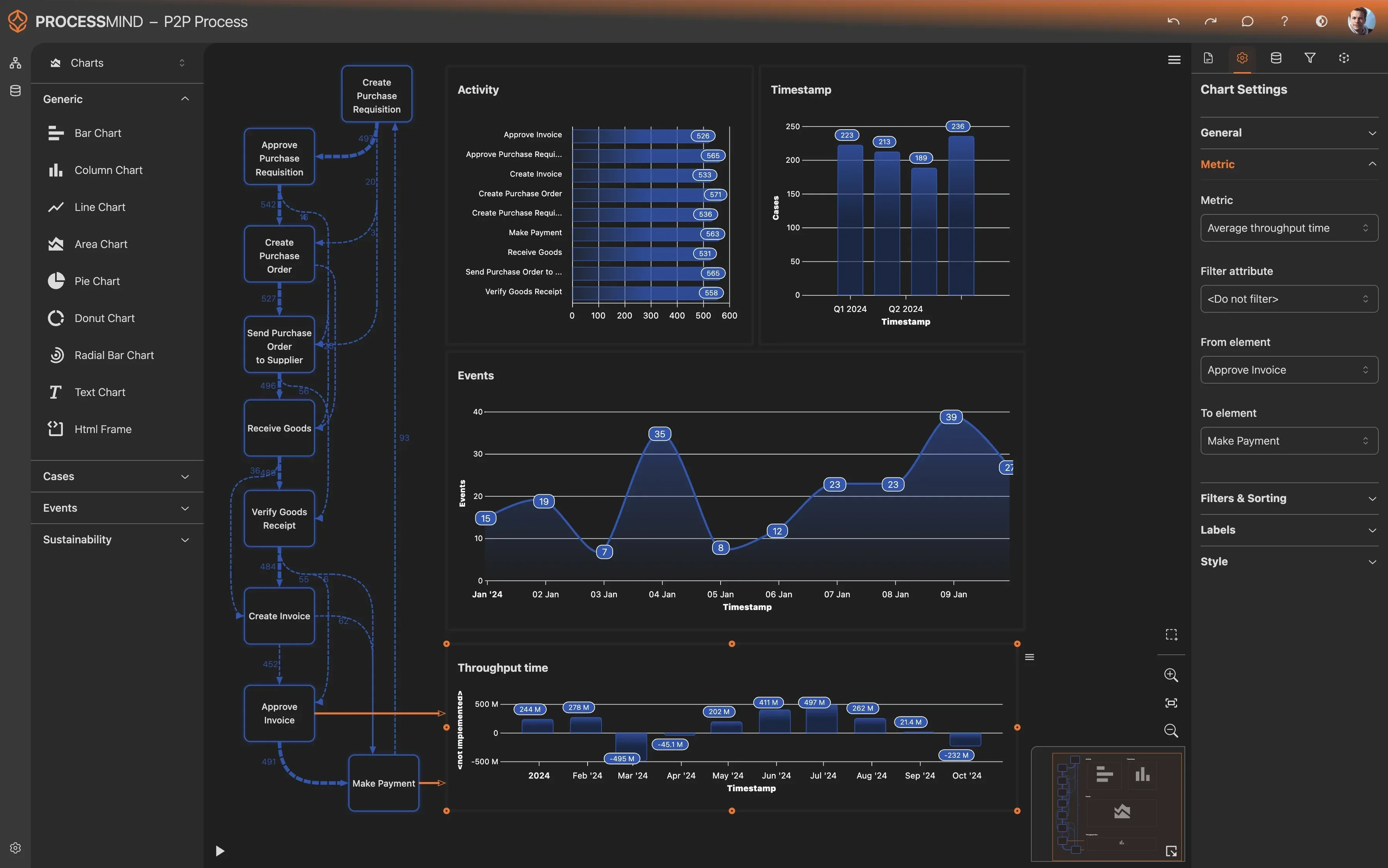
Explore the auto-generated dashboards and interactive process maps to visualize your Software Development Lifecycle. Leverage AI-driven insights to uncover hidden inefficiencies.
Why it matters
Gaining a clear, data-driven understanding of your entire development workflow, including issue resolution times and code review cycles, is key to pinpointing exact problem areas.
Expected outcome
A comprehensive understanding of your GitHub development process, complete with bottlenecks and root causes.
Implement Improvements
What to do
Prioritize the identified improvement opportunities, such as streamlining pull request workflows or optimizing testing phases. Develop and execute action plans based on these insights.
Why it matters
Transforming insights into concrete actions allows you to address inefficiencies directly, leading to faster development cycles, improved code quality, and reduced reworks.
Expected outcome
Actionable strategies implemented to optimize your Software Development Lifecycle within GitHub.
Monitor Your Progress
What to do
Periodically re-upload fresh GitHub data to track the impact of your changes. Continuously measure key performance indicators like lead time and defect rates.
Why it matters
Ongoing monitoring ensures that implemented improvements are sustained and allows for continuous identification of new areas for optimization, fostering a culture of continuous improvement.
Expected outcome
Sustained process improvements and measurable enhancements in your GitHub development efficiency.
WHAT YOU WILL GET
Uncover SDLC Insights, Accelerate GitHub Releases
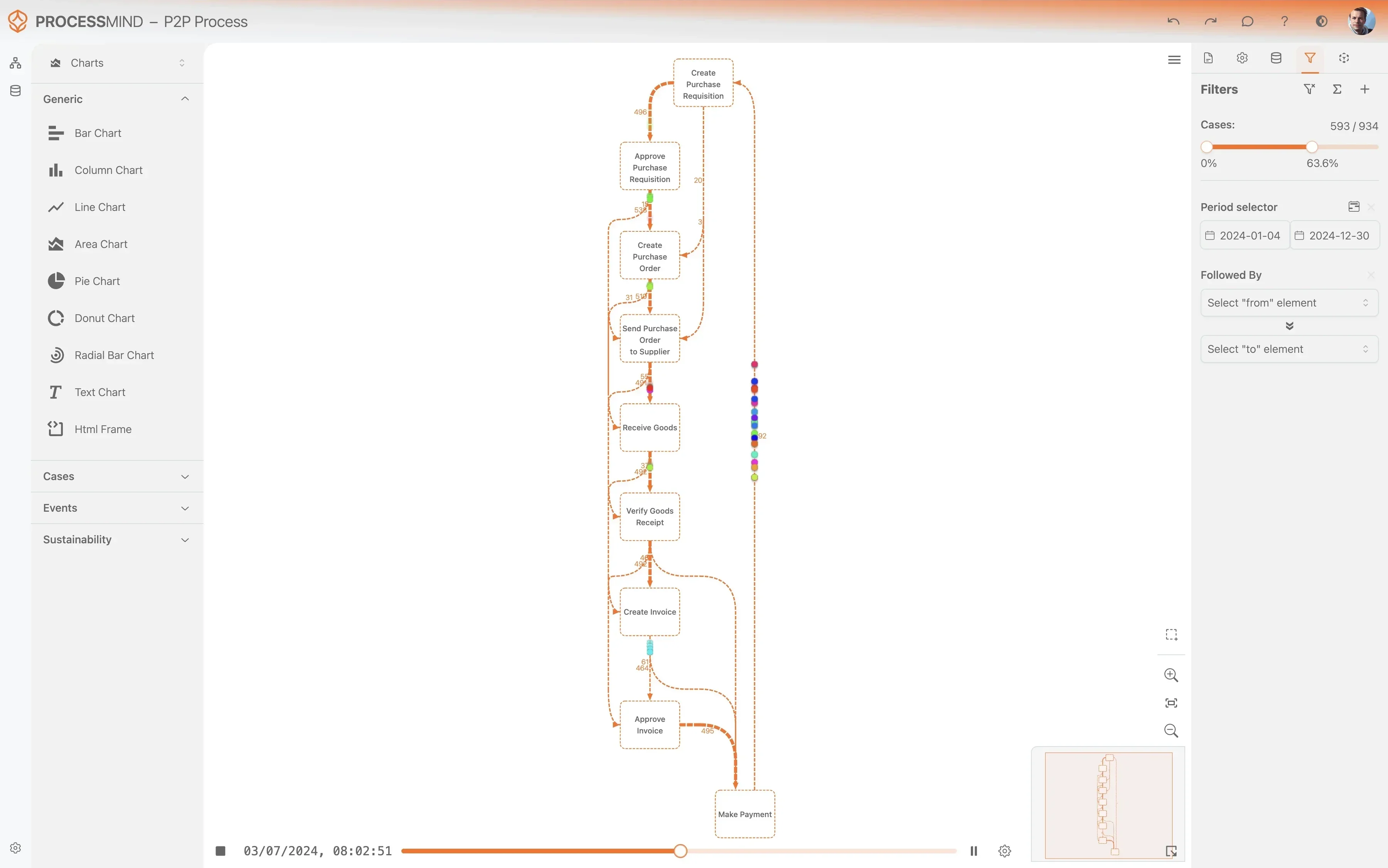
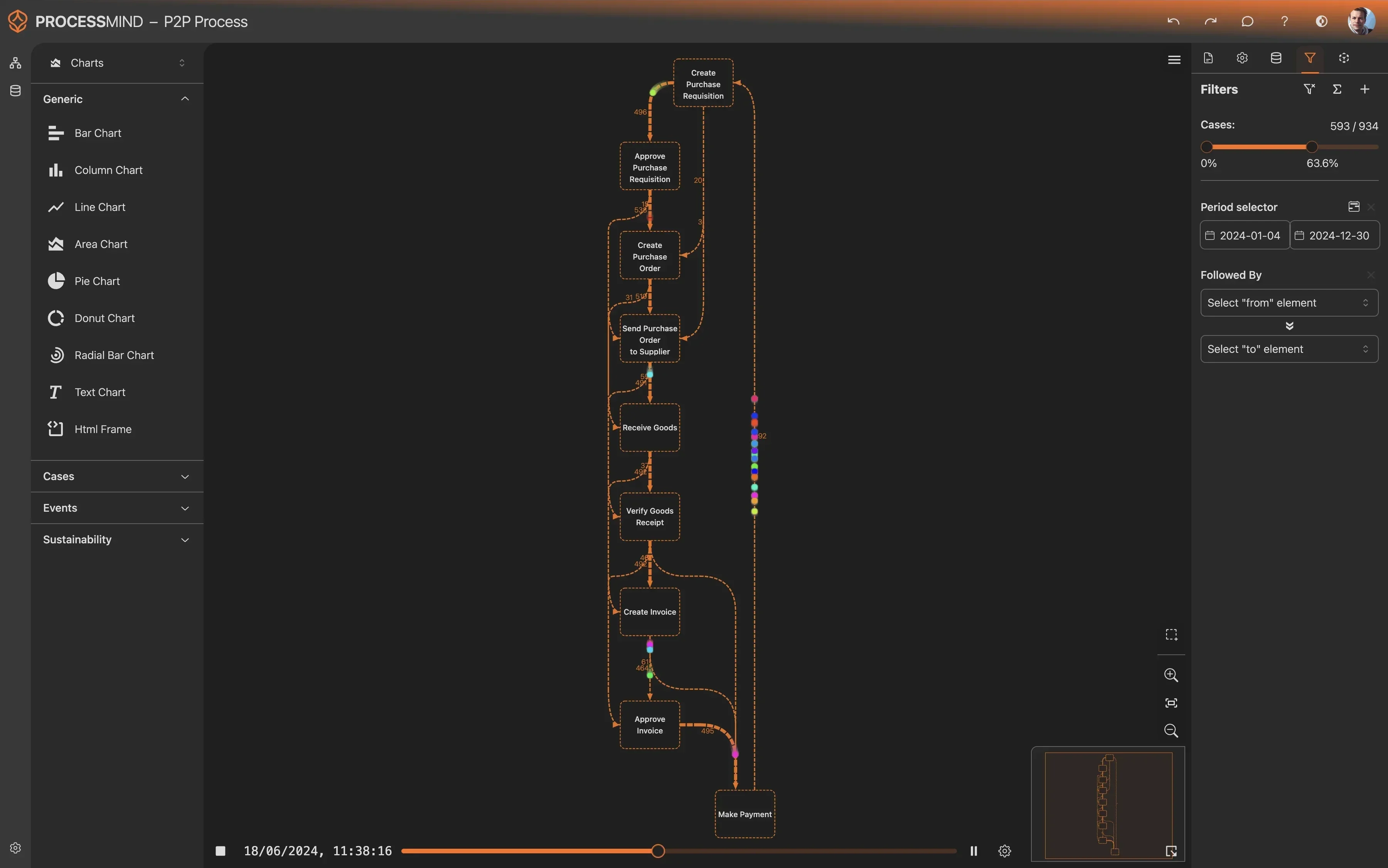
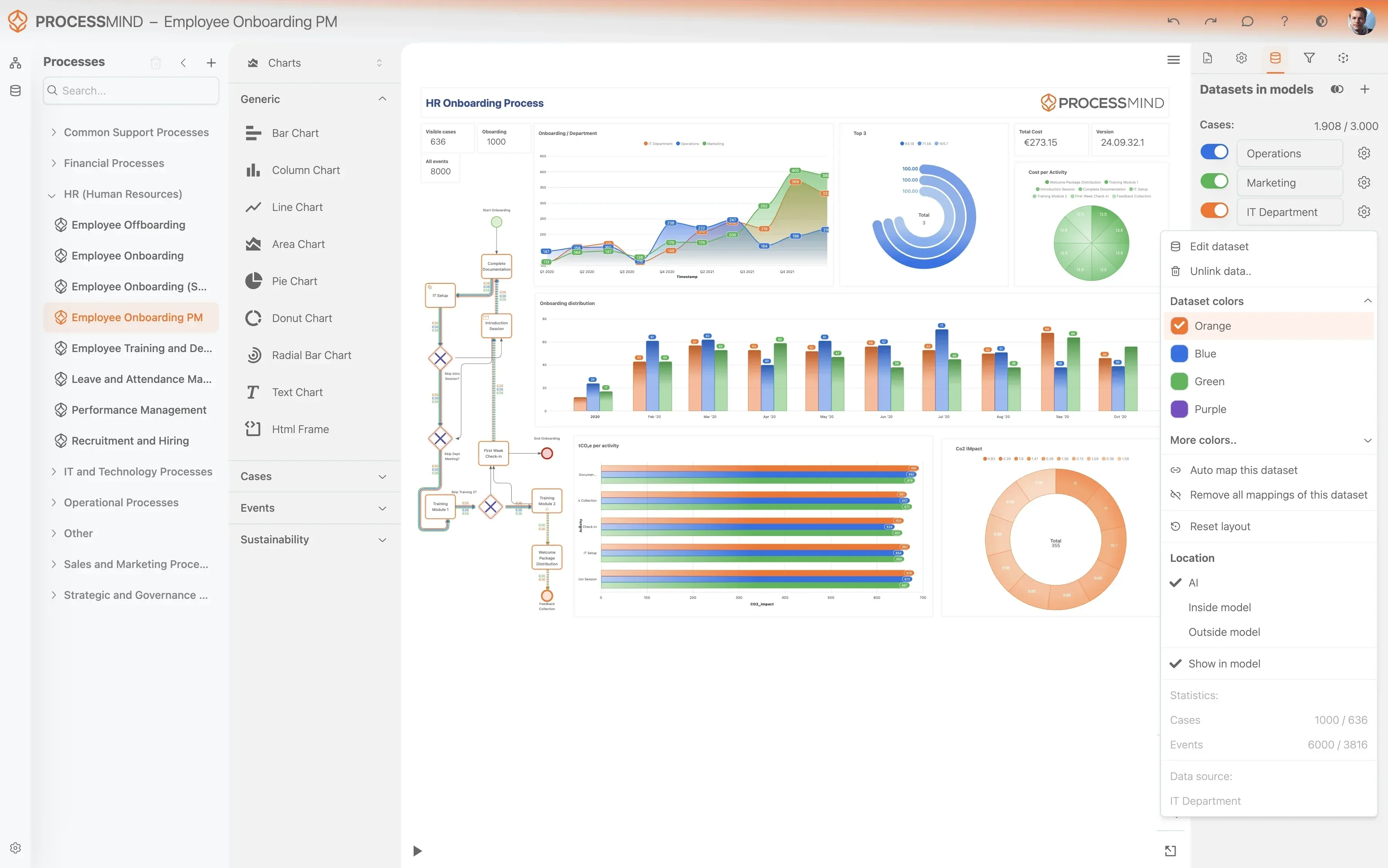
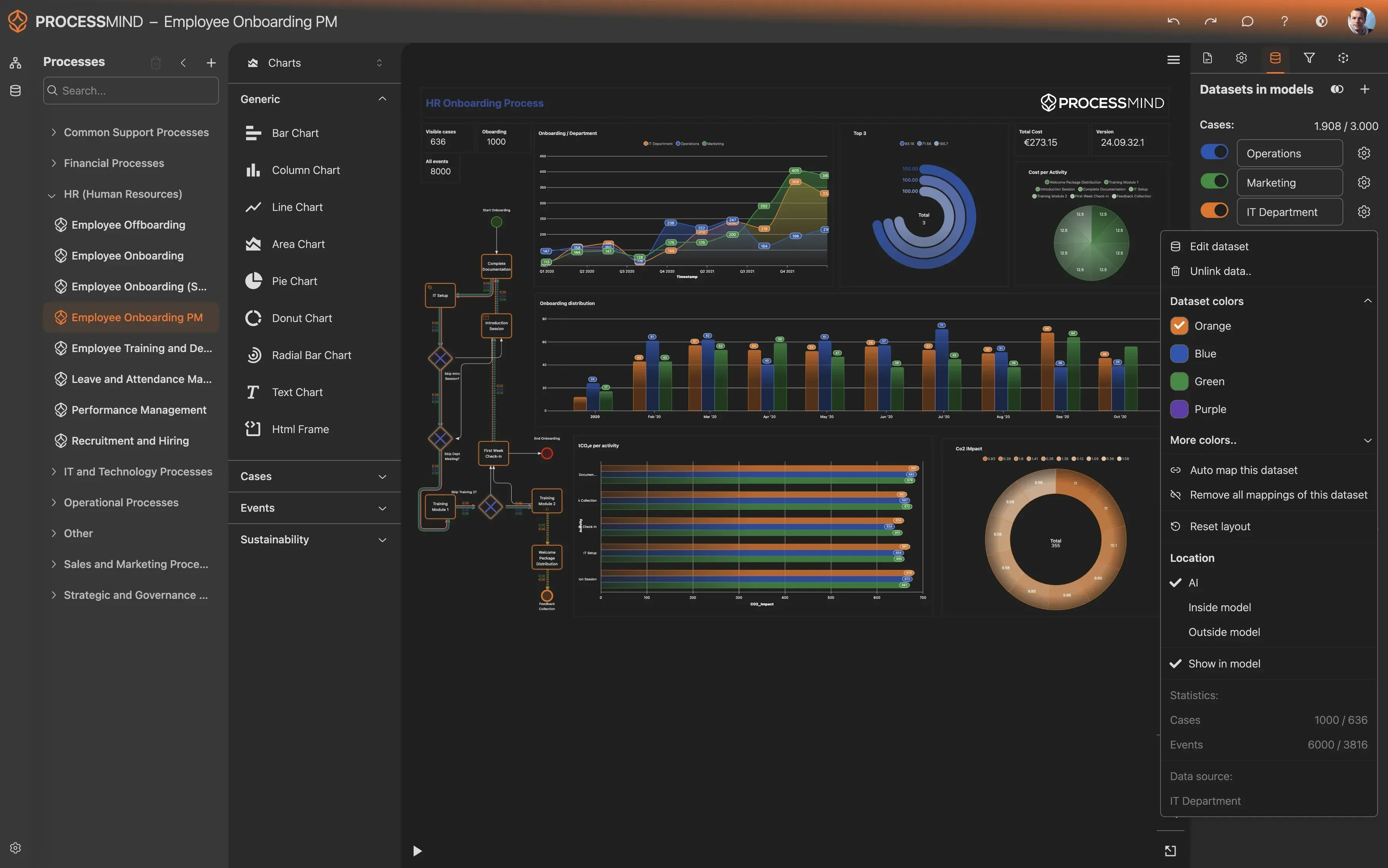
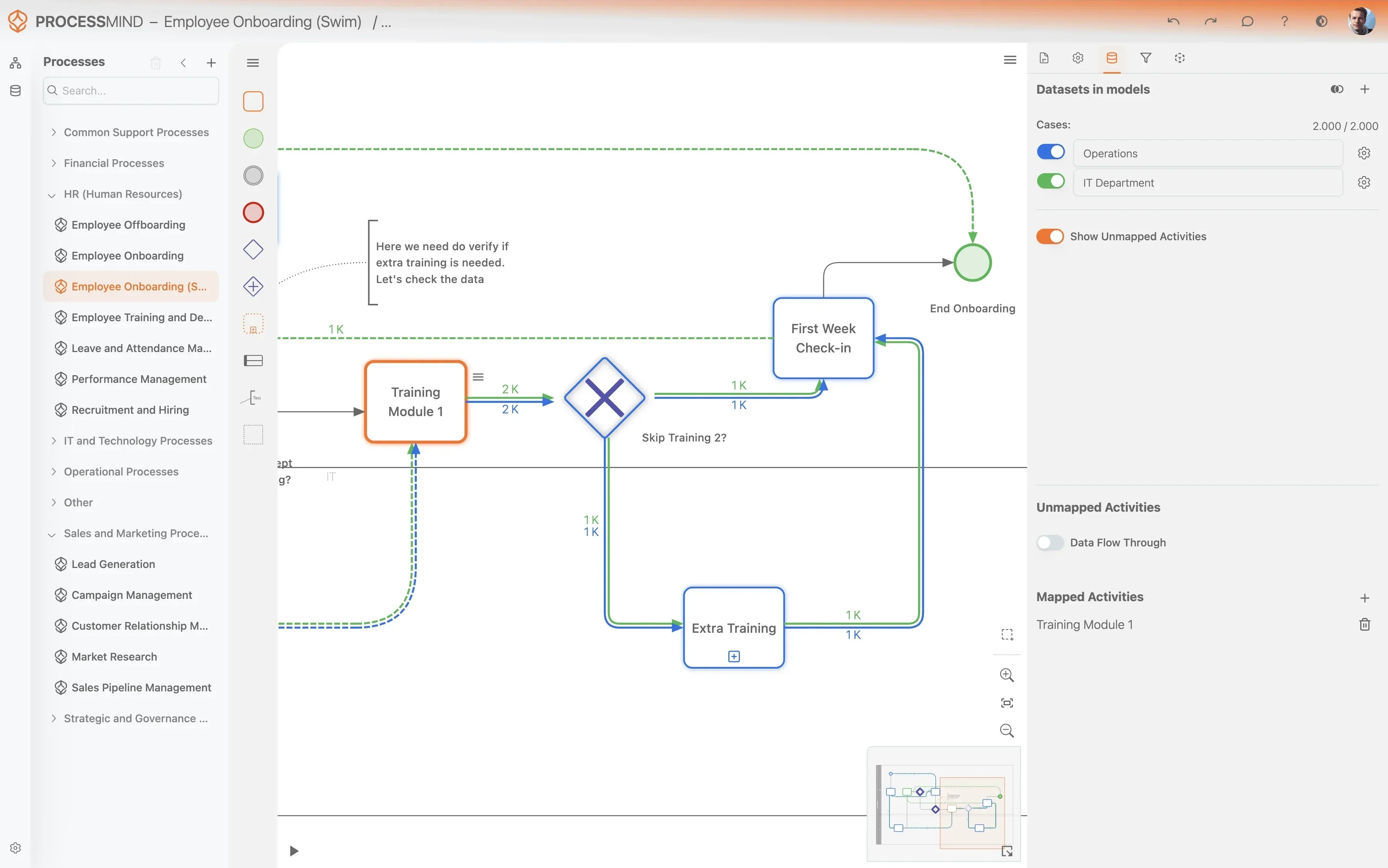
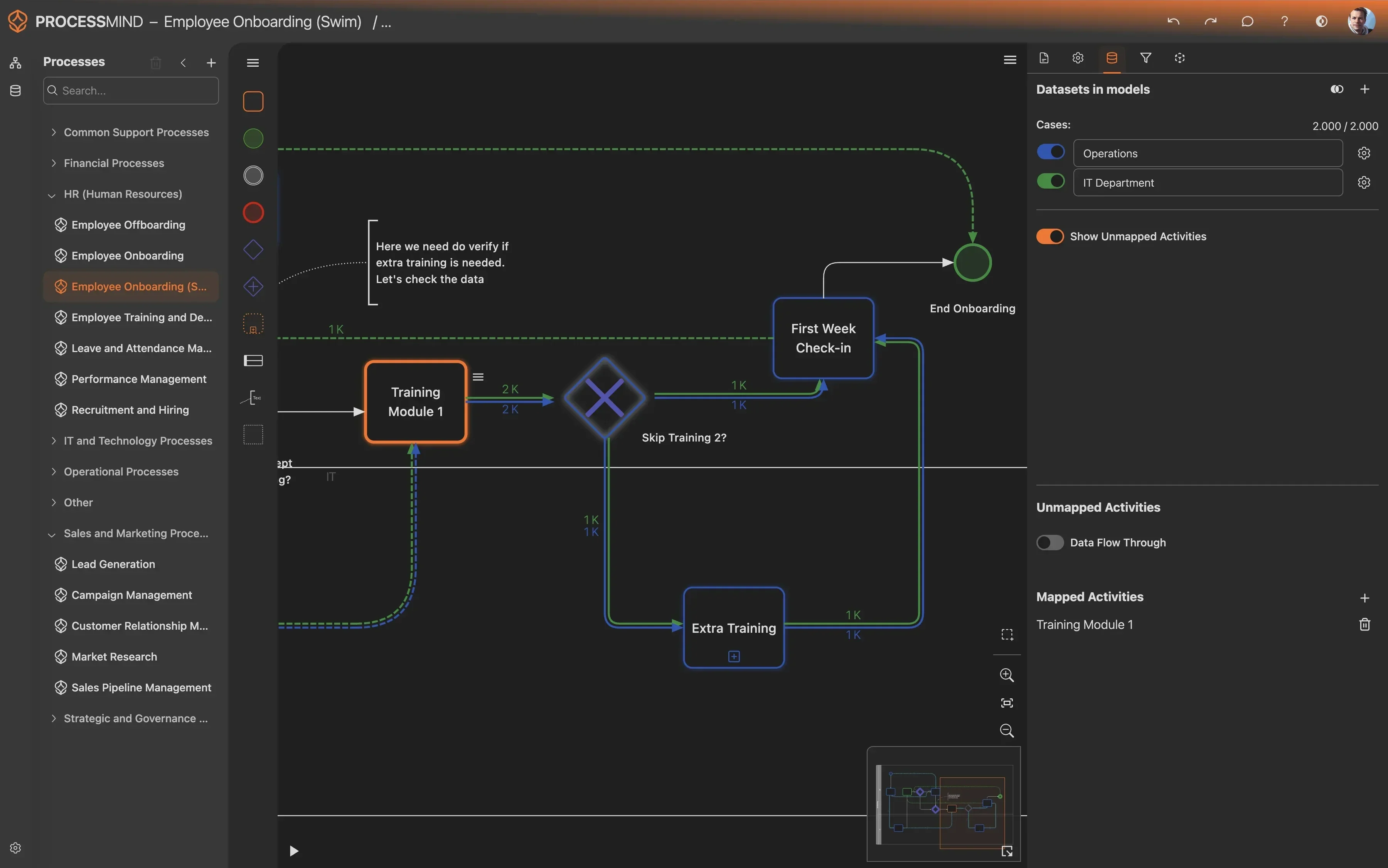
- Visualize end-to-end SDLC on GitHub
- Identify exact bottlenecks in your pipeline
- Pinpoint compliance risks and deviations
- Optimize release cycles for speed and quality
TYPICAL OUTCOMES
Achieve Faster, More Predictable Software Delivery
By analyzing development item workflows within GitHub, organizations uncover hidden bottlenecks and inefficiencies. These actionable insights enable targeted process optimizations, leading to a more streamlined and reliable Software Development Lifecycle.
Average reduction in end-to-end time
Process mining identifies bottlenecks, allowing teams to streamline workflows and deploy features to production faster, accelerating time-to-market.
Decrease in items re-entering stages
By pinpointing frequent regression loops and quality issues, organizations reduce costly rework, improving first-pass yield and developer efficiency.
Increase in standard flow adherence
Process mining highlights deviations from the standard SDLC, enabling teams to enforce best practices, ensuring regulatory compliance and consistent quality.
Faster completion of review activities
Pinpointing delays in the code review process allows for targeted interventions, speeding up a critical quality gate and accelerating overall development.
Better allocation of developer resources
By understanding workload distribution, process mining helps balance tasks across developers, preventing overload and underutilization, leading to more efficient project delivery.
Results vary based on process complexity, team dynamics, and data quality. These figures represent common improvements observed across successful implementations of process mining in software development.
Recommended Data
FAQs
Frequently asked questions
Process mining visualizes your actual development workflows by analyzing event logs from systems like GitHub. It reveals bottlenecks, rework loops, and non-standard paths, providing data-driven insights to streamline your SDLC and accelerate releases.
You typically need event data detailing development item status changes, pull request actions, commit activities, and issue updates. Key attributes include activity name, timestamp, and a case identifier like a development item ID or pull request number.
You can expect to identify specific bottlenecks, quantify rework, and uncover compliance gaps within weeks of initial setup. Tangible improvements, such as reduced cycle times or lower defect rates, typically emerge in the subsequent weeks as you implement data-driven changes.
Yes, process mining precisely maps the duration of each activity and the transitions between them. This allows you to visually pinpoint where development items get stuck, quantifying the impact of delays in specific stages or team handoffs.
Initial data extraction and model setup require some effort, but modern process mining tools simplify much of the analysis. Once configured, you gain continuous insights, allowing for iterative improvements rather than large, infrequent overhauls.
You need access to your GitHub data, either directly via API or through export capabilities, and a process mining platform. Basic data transformation skills are helpful to prepare the event log for analysis.
Data is typically pseudonymized or aggregated to protect sensitive information before being ingested into the process mining tool. Ensure your chosen platform complies with relevant data governance and security standards, and establish clear access controls.
Absolutely. Process mining creates an undeniable digital twin of your actual development process, highlighting any deviations from mandated procedures. This provides clear evidence for auditors and helps ensure consistent adherence to regulatory requirements.
Boost Your SDLC: Pinpoint Inefficiencies Instantly
Reduce cycle time by 30% and streamline your GitHub development process.
No credit card required, set up in minutes.