Improve Your Accounts Payable Invoice Processing

Optimize Accounts Payable Invoice Processing in SAP ECC
Accounts Payable Invoice Processing often faces approval delays, errors, and compliance challenges. Our platform helps you pinpoint exact bottlenecks and inefficiencies within your existing workflow. Discover how to streamline operations, cut costs, and enhance compliance by understanding the full lifecycle of every invoice.
Download our pre-configured data template and address common challenges to reach your efficiency goals. Follow our six-step improvement plan and consult the Data Template Guide to transform your operations.
Show detailed description
Why Optimize Accounts Payable Invoice Processing in SAP ECC?
Accounts Payable (AP) Invoice Processing is a critical function that underpins your organization's financial health and supplier relationships. Inefficient AP processes, especially within a complex system like SAP ECC, can lead to significant financial leakage, operational bottlenecks, and compliance risks. Imagine late payment penalties eroding your margins, missed early payment discounts costing thousands, or frustrated suppliers due to delayed payments. These issues are often symptoms of deeper, hidden inefficiencies within your Accounts Payable Invoice Processing workflow.
Manual data entry, fragmented approval processes, and a lack of real-time visibility into invoice statuses contribute to extended cycle times and increased processing costs. Moreover, deviations from internal policies or regulatory requirements can expose your business to audits and penalties. Optimizing this process isn't just about saving money; it's about ensuring financial accuracy, maintaining strong vendor partnerships, and freeing up valuable resources to focus on strategic initiatives. Understanding the complete lifecycle of every invoice, from 'Invoice Received' to 'Payment Cleared', is paramount to achieving these goals.
How Process Mining Transforms AP Invoice Analysis
Process mining offers an unparalleled, data-driven approach to dissecting your Accounts Payable Invoice Processing within SAP ECC. Instead of relying on anecdotal evidence or manual audits, process mining leverages event data directly from your SAP ECC FI-GL module (e.g., from tables like BKPF, BSEG) to reconstruct the actual end-to-end journey of every single invoice. This provides an objective, empirical view of how your processes truly operate, revealing the real-world sequence of activities and their durations.
For each invoice, process mining tracks every step: from 'Invoice Data Captured' to 'Invoice Validated', 'Purchase Order Matched', 'Goods Receipt Matched', 'Discrepancy Resolved', 'Invoice Routed for Approval', 'Invoice Approved', 'Invoice Posted', 'Payment Scheduled', 'Payment Executed', and finally, 'Payment Cleared'. By visualizing these complete process flows, you can pinpoint exact bottlenecks, identify redundant steps, and uncover unauthorized process deviations that might otherwise remain hidden. This powerful analytical capability allows you to move beyond surface-level observations and dive into the root causes of delays and inefficiencies in your Accounts Payable Invoice Processing.
Key Improvement Areas Identified Through Process Mining
With process mining, you gain clear insights into specific areas ripe for improvement within your SAP ECC Accounts Payable Invoice Processing:
- Approval Workflow Optimization: Easily identify where invoices get stuck in approval queues, who the bottleneck approvers are, and how approval workflows deviate from standard paths. This insight enables you to streamline approval routing and reduce overall cycle time.
- Matching Discrepancies and Resolution: Analyze the frequency and duration of 'Discrepancy Resolved' activities, particularly those related to 'Purchase Order Matched' and 'Goods Receipt Matched'. Understand why discrepancies occur, which vendors or PO types are most affected, and how long it takes to resolve them, thereby reducing manual rework.
- Payment Term Compliance and Cash Flow: Monitor adherence to payment terms and 'Invoice Due Date'. Process mining highlights instances of late payments, missed early payment discount opportunities, or premature payments, helping you optimize cash flow and improve supplier relationships by ensuring timely 'Payment Executed'.
- Automation Potential: Discover highly repetitive, standardized tasks that are ideal candidates for robotic process automation (RPA) or enhanced system configurations within SAP ECC, freeing up your team from mundane activities.
Expected Outcomes: Measurable Benefits for Your Business
Implementing process optimization driven by process mining in your Accounts Payable Invoice Processing will lead to tangible, measurable benefits:
- Reduced Cycle Time: Significantly decrease the average time it takes to process an invoice from receipt to payment, often by 30% or more, by eliminating bottlenecks and streamlining activities.
- Lower Processing Costs: Achieve substantial cost savings through reduced manual effort, fewer errors requiring rework, and the elimination of late payment penalties.
- Enhanced Compliance: Ensure consistent adherence to internal policies, payment terms, and regulatory requirements, minimizing risks and improving audit readiness.
- Optimized Cash Flow Management: Improve your working capital by strategically managing payment timings, maximizing early payment discounts, and avoiding unnecessary expedited payments.
- Stronger Supplier Relationships: Foster trust and goodwill with your vendors through consistent, timely, and transparent payment processing.
Getting Started with Accounts Payable Process Optimization
Embarking on the journey to optimize your Accounts Payable Invoice Processing in SAP ECC with process mining is more accessible than you might think. By leveraging your existing SAP ECC data, you can quickly gain profound insights into your current state. This allows you to make informed, data-backed decisions that drive real operational improvements. Begin transforming your AP function into a lean, efficient, and compliant powerhouse today.
The 6-Step Improvement Path for Accounts Payable Invoice Processing
Download AP Template
What to do
Get the pre-configured Excel template tailored for SAP ECC Accounts Payable Invoice Processing. This template outlines the necessary data structure for accurate analysis.
Why it matters
A standardized data format is crucial for consistent data extraction and ensures that all relevant information is captured for comprehensive process analysis.
Expected outcome
An empty, structured Excel template ready to receive your SAP ECC Accounts Payable data.
Export SAP ECC Data
What to do
Extract 3-6 months of historical invoice processing data from your SAP ECC system, leveraging tables like BKPF and BSEG. Populate the downloaded template with this real operational data.
Why it matters
Using a robust dataset provides a realistic view of your current AP process performance, enabling accurate identification of inefficiencies and compliance gaps.
Expected outcome
A populated Excel template containing 3-6 months of your historical Accounts Payable invoice data.
Upload Your AP Dataset
What to do
Securely upload your completed SAP ECC Accounts Payable data template to ProcessMind. The system will automatically begin processing and preparing your dataset for analysis.
Why it matters
Quick and secure data ingestion allows for rapid transition from raw data to actionable insights, minimizing delays in starting your process improvement journey.
Expected outcome
Your SAP ECC Accounts Payable data successfully ingested and ready for process mining analysis in ProcessMind.
Analyze AP Bottlenecks
What to do
Explore the auto-generated dashboards and visual process maps to identify bottlenecks, compliance deviations, and variations in your Accounts Payable invoice flows. Leverage AI-driven insights.
Why it matters
Understanding the actual end-to-end process reveals hidden inefficiencies, non-conformant paths, and areas where automation or policy enforcement can yield significant benefits.
Expected outcome
Clear insights into process variations, root causes of delays, and specific areas for improvement in your AP invoice processing.
Implement AP Optimizations
What to do
Prioritize and implement the identified opportunities to streamline invoice approvals, automate matching, or refine payment terms directly within your SAP ECC environment.
Why it matters
Translating insights into action directly improves process efficiency, reduces manual effort, enhances compliance, and accelerates cash flow within your organization.
Expected outcome
Tangible changes in your SAP ECC AP configuration or processes, aimed at reducing cycle times and improving adherence to policies.
Monitor AP Performance
What to do
Periodically re-upload fresh SAP ECC Accounts Payable data to continuously track the impact of your improvements and measure key performance indicator (KPI) changes over time.
Why it matters
Continuous monitoring ensures sustained process health, allows for proactive identification of new issues, and demonstrates the return on investment of your improvement initiatives.
Expected outcome
Ongoing visibility into AP process performance, validated KPI improvements, and a foundation for continuous operational excellence.
YOUR DISCOVERY
Uncover AP Invoice Processing Truths in SAP ECC
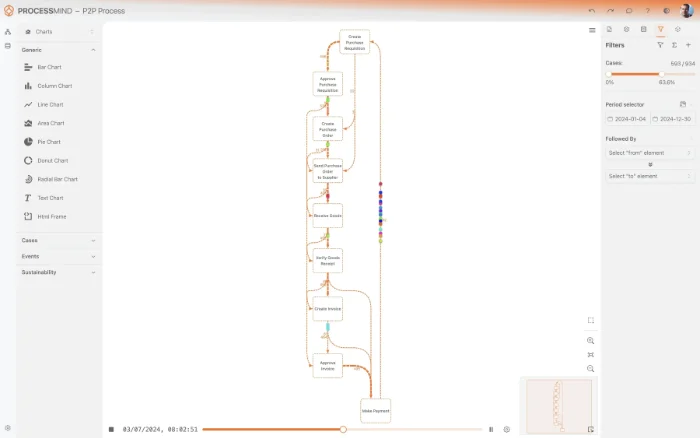
- Visualize your true Accounts Payable process flow
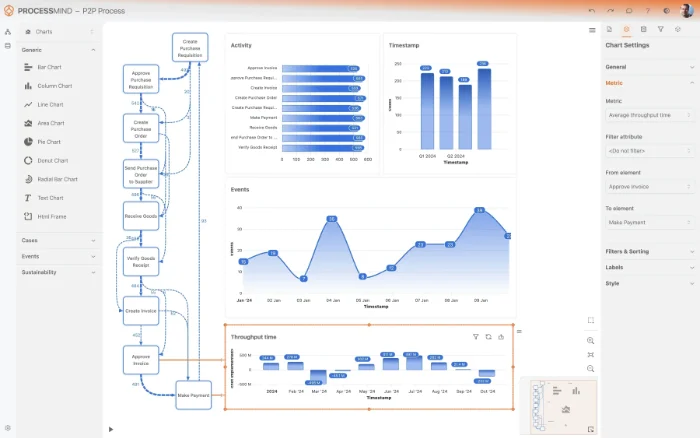
- Pinpoint exact bottlenecks and approval delays
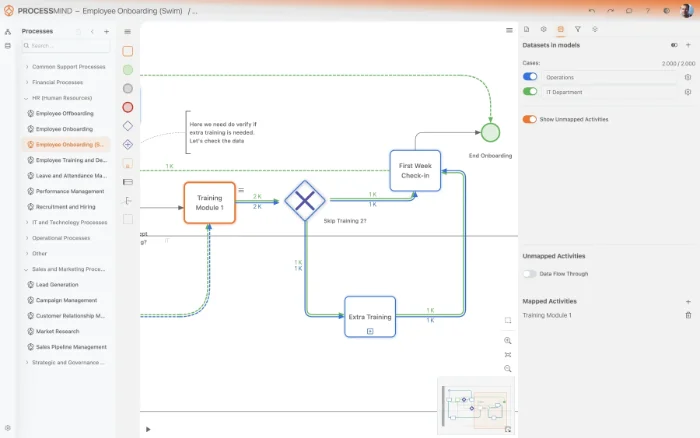
- Uncover non-compliance and error root causes
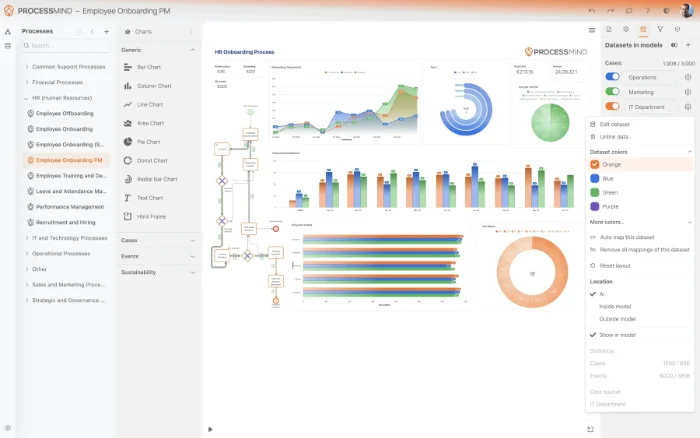
- Optimize processing time and reduce costs
TYPICAL RESULTS
Achievable Outcomes in Accounts Payable Processing
These outcomes showcase the tangible benefits organizations typically realize by leveraging process mining to optimize their Accounts Payable invoice processing, identifying bottlenecks and inefficiencies within SAP ECC. By gaining deep insights from their invoice data, companies can streamline operations and enhance financial control.
Reduction in approval cycle time
Streamline your invoice approval workflows, eliminating bottlenecks and accelerating the critical approval step to ensure timely processing and payment.
Boost in early payment discount rate
Optimize payment schedules by identifying and prioritizing invoices eligible for early payment discounts, directly improving your bottom line.
Decrease in invoices requiring rework
Pinpoint and resolve the root causes of data discrepancies and errors that lead to invoices re-entering processing stages, improving data quality and efficiency.
Less manual intervention required
Identify opportunities to automate repetitive tasks and reduce manual touchpoints, freeing up AP staff for more strategic activities and reducing processing costs.
Reduction in PO-GR-Invoice matching time
Optimize the matching process for purchase orders, goods receipts, and invoices, reducing delays and improving the efficiency of your procure-to-pay cycle.
Results vary based on process complexity and data quality. These figures represent typical improvements observed across implementations.
Recommended Data
FAQs
Frequently asked questions
Process mining reconstructs the actual end-to-end flow of your AP invoices, revealing hidden variations, bottlenecks, and rework loops within SAP ECC. It identifies exact deviations from standard processes and their impact on efficiency, compliance, and cost. This allows for data-driven prioritization of optimization efforts.
You primarily need event logs detailing invoice creation, approval steps, payment postings, and any associated changes. Key SAP ECC tables often include BKPF, BSEG, VBRK, RBKP, and RSEG, along with user activity logs related to these transactions. A clear case identifier, like the invoice number, and precise timestamps for each event are essential.
Process mining visualizes all approval paths and times, pinpointing exactly where and why invoices get stuck, and which specific approvers or departments cause delays. By identifying these critical bottlenecks and their root causes, it enables targeted interventions to streamline workflows. This directly contributes to reducing approval times and the number of overdue invoices.
Initial data extraction and model creation can often be completed within 4-6 weeks, depending on data availability and system complexity. Actionable insights typically emerge shortly after, allowing for immediate, small-scale improvements. Full process optimization and measurable impact usually take several months as changes are implemented, monitored, and refined.
No, process mining fundamentally differs from traditional reporting by reconstructing the actual end-to-end process from event data. While reports show 'what happened', process mining reveals 'how' and 'why' it happened, discovering hidden variations and compliance issues. This provides a deep, data-driven understanding for prescriptive actions, not just descriptive summaries.
Yes, by analyzing the complete invoice lifecycle, including receipt, approval, and payment timing against vendor terms, process mining highlights missed early payment discount opportunities. It identifies specific process steps or delays that prevent timely payments, allowing you to optimize workflows to maximize cost savings. This leads to a higher capture rate of available discounts.
The primary technical requirement involves the ability to extract event log data from relevant SAP ECC tables. This can often be done using standard SAP tools, custom ABAP programs, or direct database connectors. The process mining software then ingests and analyzes this extracted data, typically requiring no real-time integration with SAP ECC itself for the initial analytical phase.
Stop Late Fees: Optimize Accounts Payable Now & Save 60%
Eliminate duplicate payments, automate processing, and cut costs by 60% with our platform.
No credit card required, setup in minutes