Improve Your Supply Chain Management

Select a process
Choose a process to continue working in your connected workspace.
Optimize Oracle SCM Cloud Supply Chains for Greater Efficiency
Complex processes often hide inefficiencies and drive up operational costs. Our platform helps you pinpoint bottlenecks from start to finish, guiding data-driven improvements. Discover how to streamline operations, enhance compliance, and achieve a more resilient system.
Download our pre-configured data template and address common challenges to reach your efficiency goals. Follow our six-step improvement plan and consult the Data Template Guide to transform your operations.
Show detailed description
Why Optimize Your Supply Chain Management with Oracle SCM Cloud?
Managing an efficient supply chain is more critical today than ever before. Global complexities, fluctuating demand, and the constant pressure to reduce costs mean that any inefficiency can severely impact your bottom line and customer satisfaction. Even with robust systems like Oracle SCM Cloud, which centralizes critical operations from planning to logistics, hidden inefficiencies can emerge over time. These issues, often subtle, can manifest as unexpected delays, escalating operational costs, excessive inventory, or even compliance risks. Without clear visibility into the actual flow of your logistics orders, identifying and resolving these bottlenecks becomes a daunting task. Understanding the real-world execution of your Supply Chain Management processes is the first step toward achieving truly resilient and cost-effective operations.
How Process Mining Unlocks Oracle SCM Cloud Efficiency
Process mining offers a revolutionary approach to understanding and improving your Oracle SCM Cloud operations. By analyzing event data generated within your system, it reconstructs the complete, end-to-end journey of every logistics order. This includes every activity from "Demand Forecast Generated" and "Customer Order Received" through to "Goods Picked and Packed," "Shipment Scheduled," and finally, "Proof of Delivery Signed." Unlike traditional reporting, process mining doesn't just show you predefined metrics, it reveals the actual sequence of events, variations in your process, and where delays truly occur. This powerful diagnostic capability helps you pinpoint the precise stages where bottlenecks emerge, identify process deviations that lead to rework, and uncover root causes for extended cycle times within your Supply Chain Management process. You gain an objective, data-driven view of how your supply chain actually functions, not just how it's designed to.
Key Improvement Areas Identified Through Process Mining
Leveraging process mining on your Oracle SCM Cloud data provides actionable insights across several critical areas:
- Bottleneck Identification and Resolution: Easily spot where logistics orders get stuck, whether it's during "Inventory Availability Checked," "Production Scheduled," or "Goods In Transit." This allows you to target specific steps for immediate improvement.
- Cycle Time Reduction: Analyze the time spent between each activity to identify stages that contribute most to delays. By understanding these durations, you can implement strategies to significantly reduce your overall Supply Chain Management cycle time, leading to faster delivery.
- Inventory Optimization: Link process flow to inventory levels. Discover if delays in "Raw Materials Received" or slow "Goods Produced" impact inventory holding costs or lead to stockouts, enabling more precise inventory management.
- Supplier and Carrier Performance: While not directly measuring supplier quality, the timing from "Purchase Order Issued" to "Raw Materials Received" and "Goods Loaded for Transport" to "Goods Unloaded at Destination" offers crucial insights into external partner efficiency and reliability.
- Compliance and Standardization: Uncover instances where processes deviate from your defined standard operating procedures. This helps enforce compliance, reduce errors, and ensure a consistent customer experience.
- Transportation Efficiency: Evaluate the actual routes and modes of transport against planned schedules. Identify opportunities to optimize logistics, reducing transit times and costs for goods moving through the supply chain.
Expected Outcomes of Optimized Supply Chain Management
By applying process mining to your Oracle SCM Cloud data, you can expect significant, measurable improvements:
- Reduced Operational Costs: By eliminating waste, optimizing inventory, and streamlining logistics, you can achieve substantial cost savings across your entire supply chain.
- Faster Lead Times and Improved On-Time Delivery: Pinpointing and resolving bottlenecks directly translates to quicker processing and delivery of goods, enhancing customer satisfaction and competitiveness.
- Enhanced Compliance and Reduced Risk: A clearer understanding of process deviations helps you ensure adherence to regulatory requirements and internal policies, mitigating potential risks.
- Greater Supply Chain Resilience: Proactive identification of weak points allows you to build a more robust and adaptable supply chain, better prepared for disruptions.
- Data-Driven Decision Making: Move beyond intuition. Make informed decisions based on the objective reality of your process data, continuously driving process optimization.
Getting Started with Your SCM Process Improvement Journey
Taking control of your Oracle SCM Cloud processes doesn't require complex data science expertise. Our approach is designed to guide you through the process mining journey, helping you transform raw event data into actionable insights. Begin uncovering the hidden potential within your supply chain today, making your operations more efficient, compliant, and ready for future challenges. Explore how process mining can illuminate your path to superior Supply Chain Management.
The 6-Step Improvement Path for Supply Chain Management
Download the Template
What to do
Obtain the pre-formatted Excel template designed for Supply Chain Management data. This template ensures your data from Oracle SCM Cloud is structured correctly for analysis.
Why it matters
A standardized template simplifies data preparation, reducing errors and ensuring all necessary fields for comprehensive SCM analysis are captured.
Expected outcome
A ready-to-fill Excel template specific to Oracle SCM Cloud SCM data.
Export Your Data
What to do
Extract 3-6 months of historical Supply Chain Management data from your Oracle SCM Cloud system. Populate the downloaded template with relevant logistics orders.
Why it matters
Sufficient historical data provides a robust foundation for identifying recurring patterns, bottlenecks, and areas for improvement across your supply chain processes.
Expected outcome
A completed Excel template populated with your recent Oracle SCM Cloud Supply Chain Management data.
Upload Your Dataset
What to do
Securely upload your filled Supply Chain Management data template to ProcessMind. The system will automatically process and prepare your data for analysis.
Why it matters
Automated data ingestion eliminates manual processing delays and prepares your SCM data quickly, allowing for immediate insights into operational flows.
Expected outcome
Your Oracle SCM Cloud Supply Chain Management data successfully uploaded and ready for analysis within ProcessMind.
Analyze Your Process
What to do
Explore auto-generated dashboards and deep-dive into the end-to-end Supply Chain Management process flow. Leverage AI-driven recommendations to pinpoint inefficiencies.
Why it matters
Visualizing the actual process flow reveals hidden delays, compliance issues, and resource waste, providing actionable intelligence to optimize your SCM operations.
Expected outcome
A clear understanding of bottlenecks, deviations, and optimization opportunities within your Oracle SCM Cloud Supply Chain processes.
Implement Improvements
What to do
Prioritize and act on the identified improvement opportunities within your Supply Chain Management. Apply changes to streamline logistics, inventory, or order management.
Why it matters
Translating insights into action leads to tangible enhancements in lead times, inventory accuracy, and overall operational efficiency, driving cost savings and customer satisfaction.
Expected outcome
Concrete actions initiated in Oracle SCM Cloud to address inefficiencies and optimize specific Supply Chain Management process steps.
Monitor Your Process
What to do
Periodically re-upload new Supply Chain Management data from Oracle SCM Cloud to track the impact of your implemented changes. Continuously measure KPI improvements over time.
Why it matters
Ongoing monitoring ensures sustained performance gains and allows for agile adjustments, fostering a culture of continuous optimization within your supply chain.
Expected outcome
Measurable improvements in key Supply Chain Management KPIs, validating the effectiveness of your optimization efforts and ensuring ongoing efficiency.
WHAT YOU WILL GET
Pinpoint SCM Bottlenecks and Drive Efficiency Now
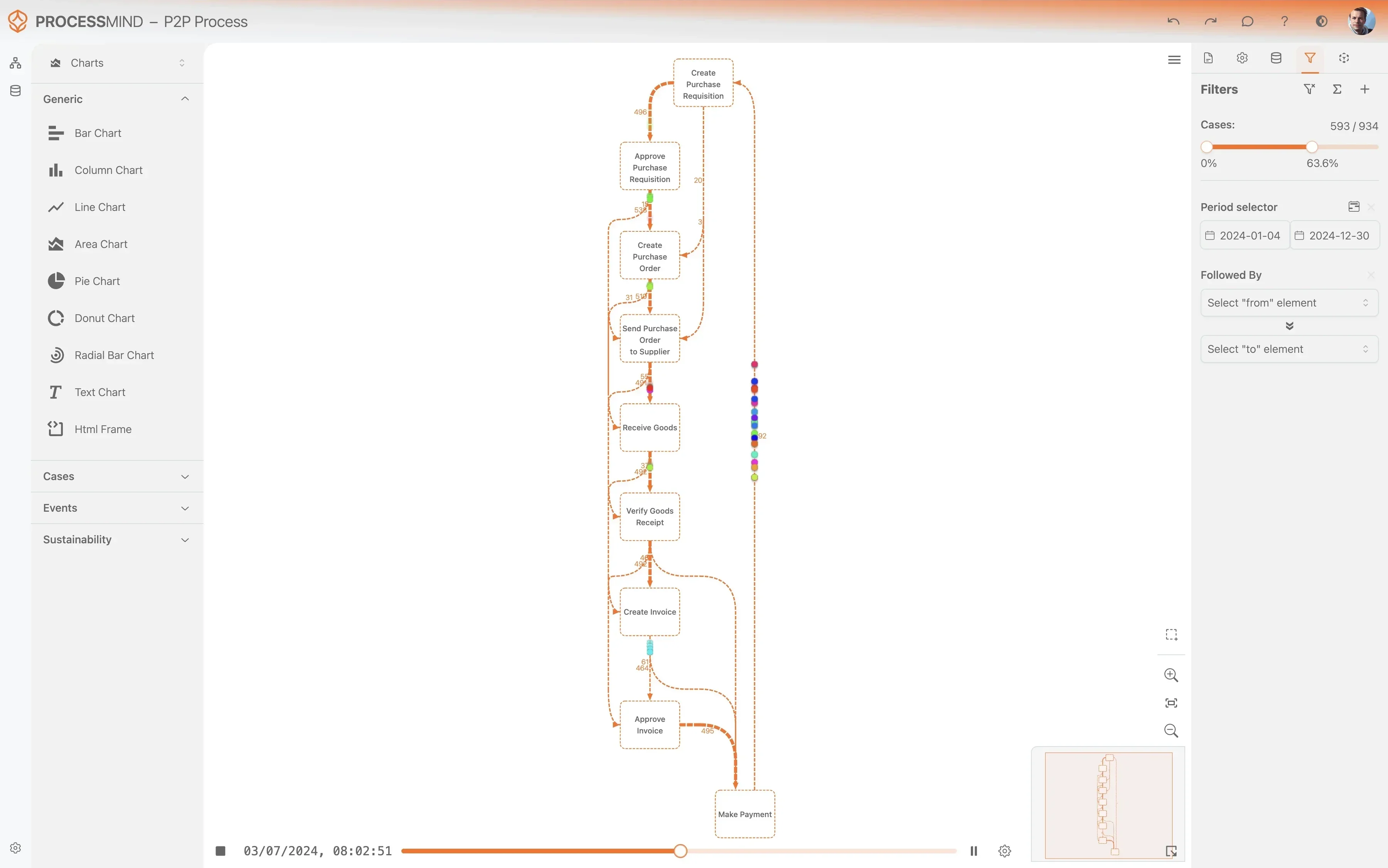
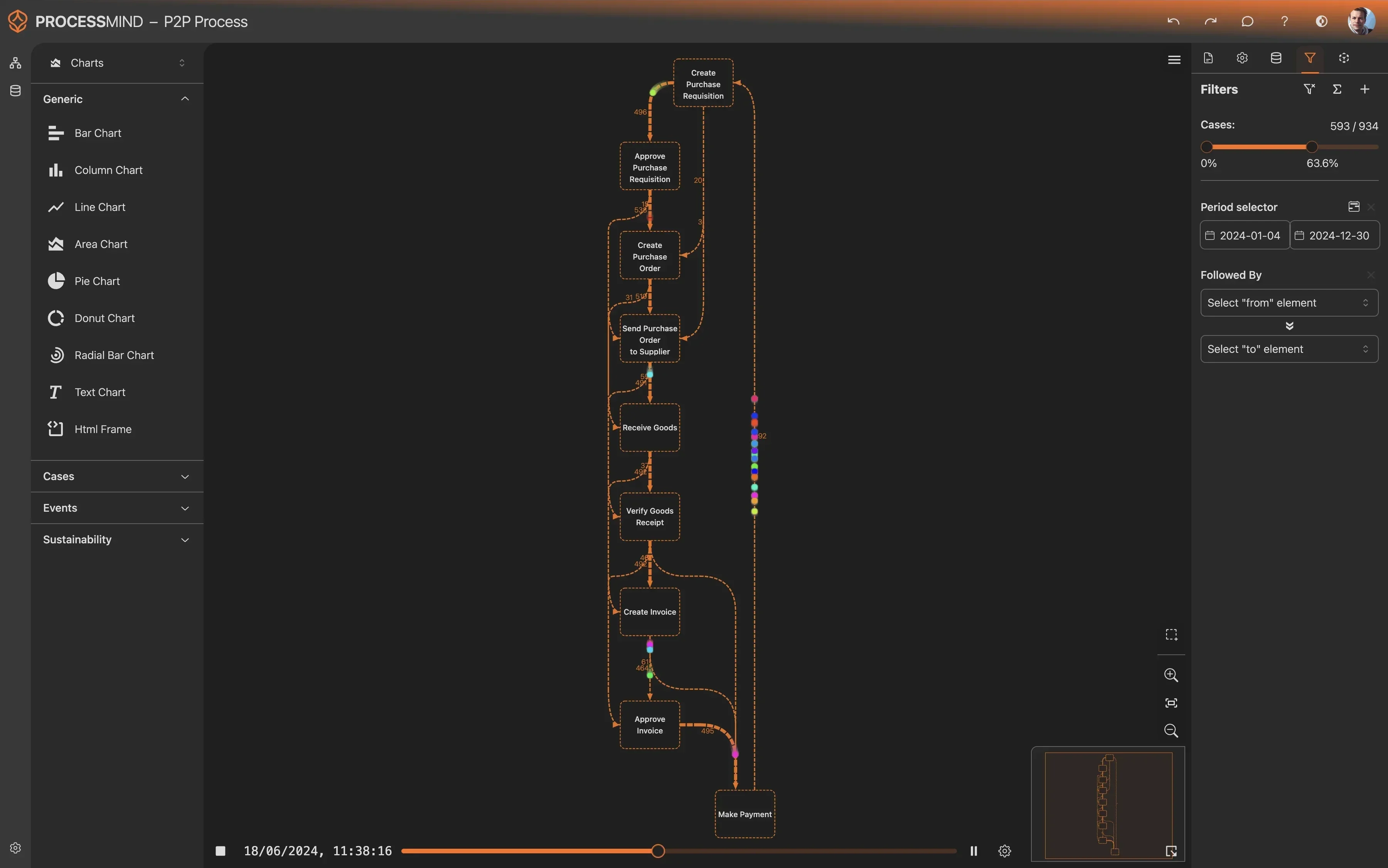
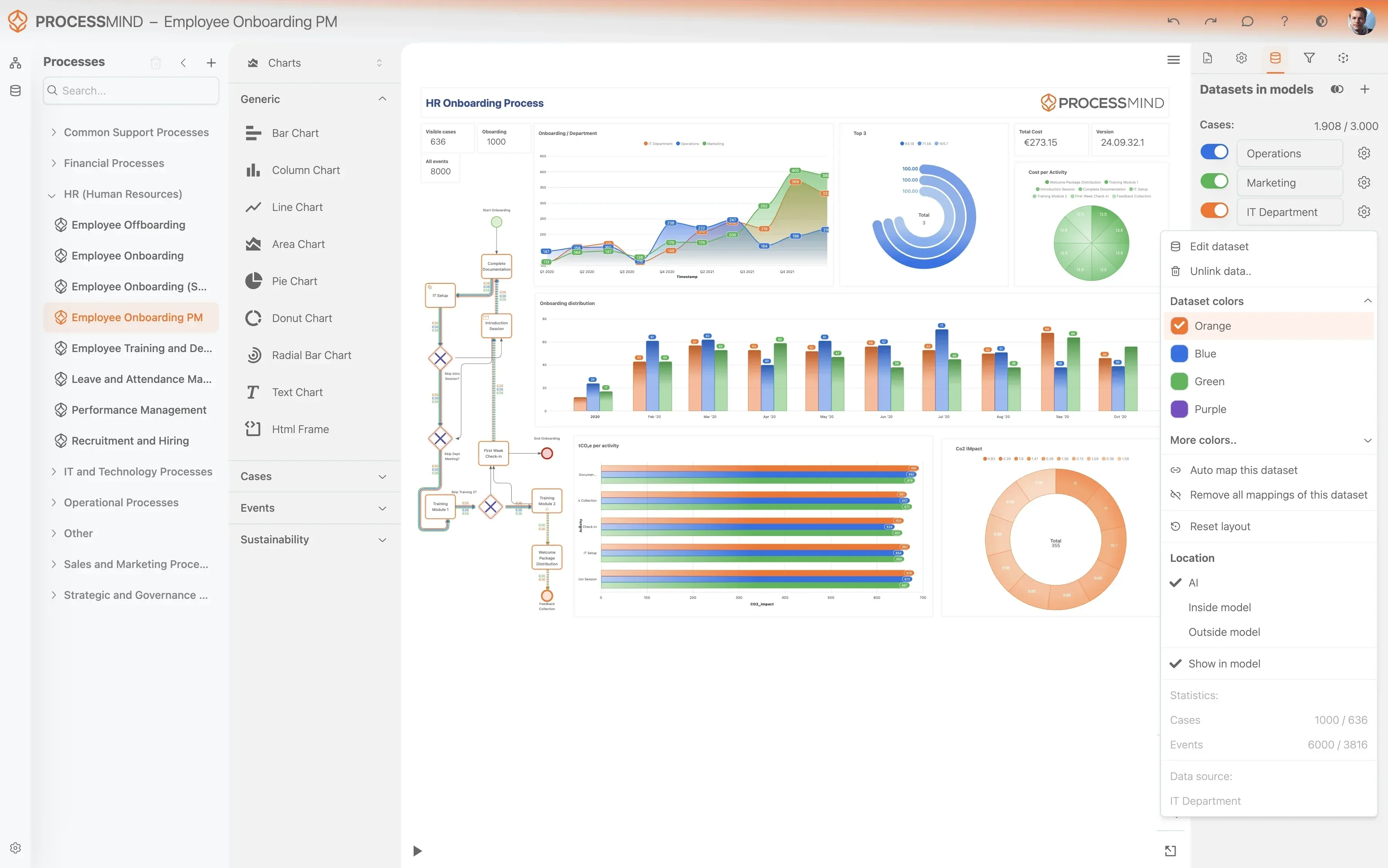
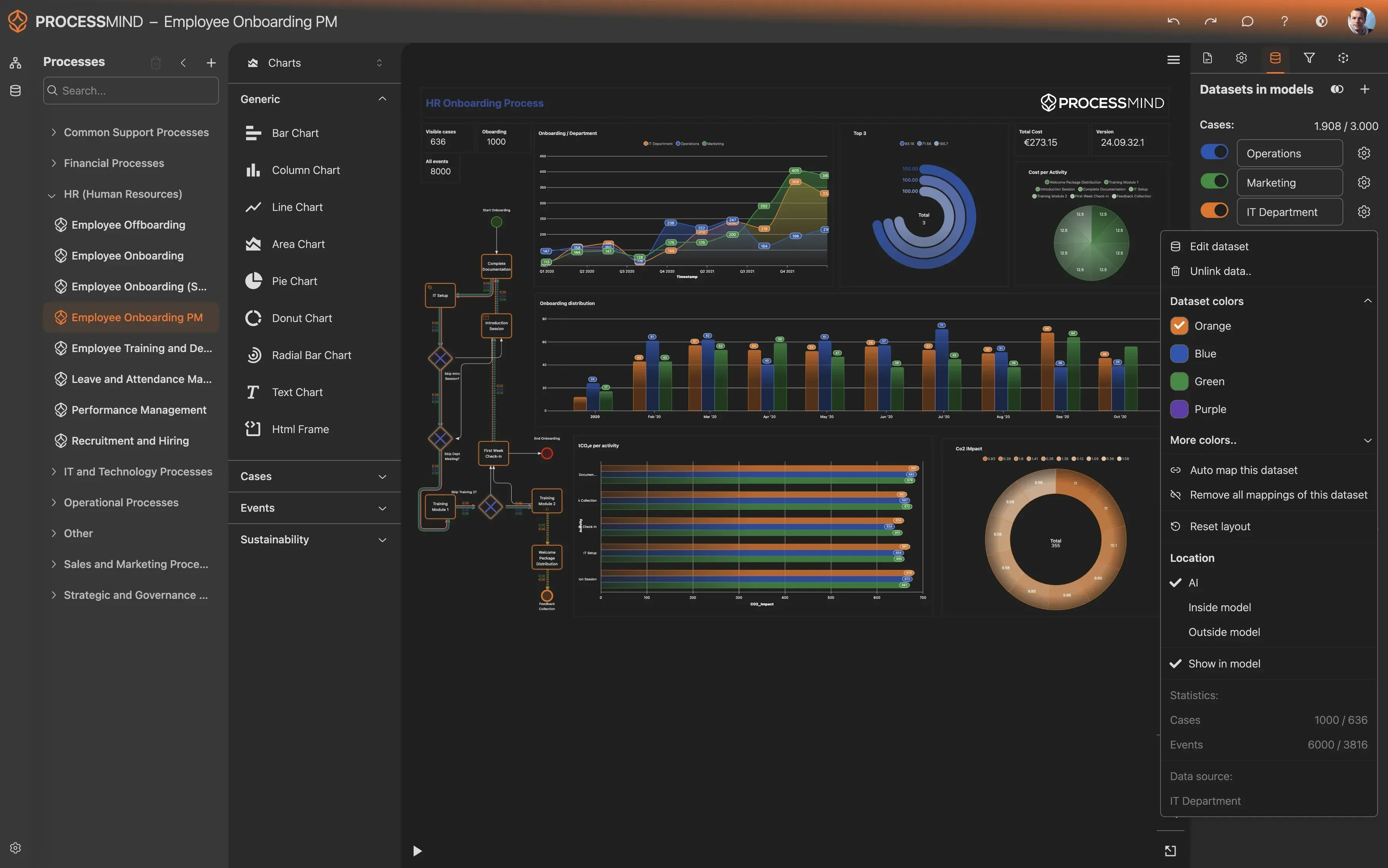
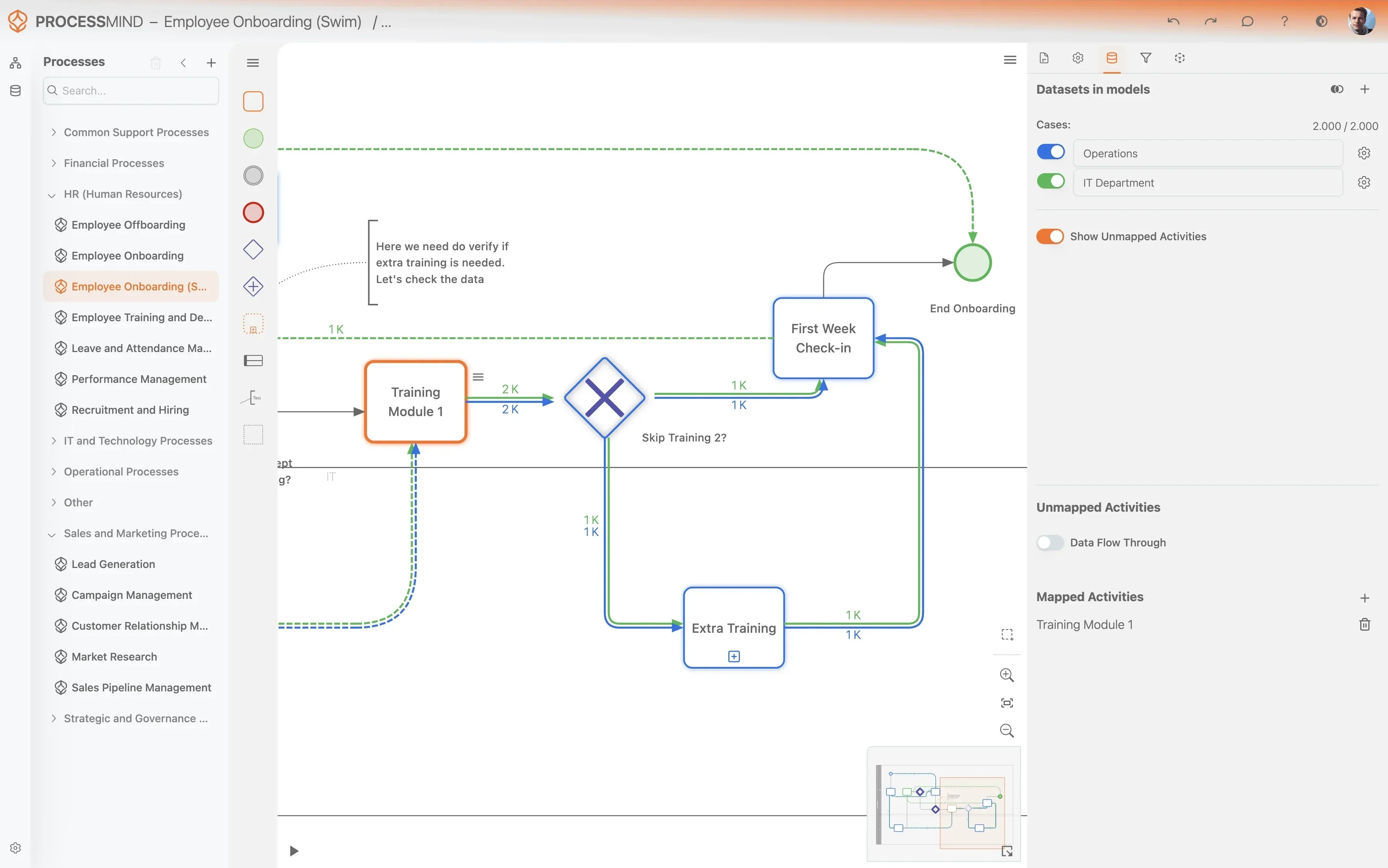
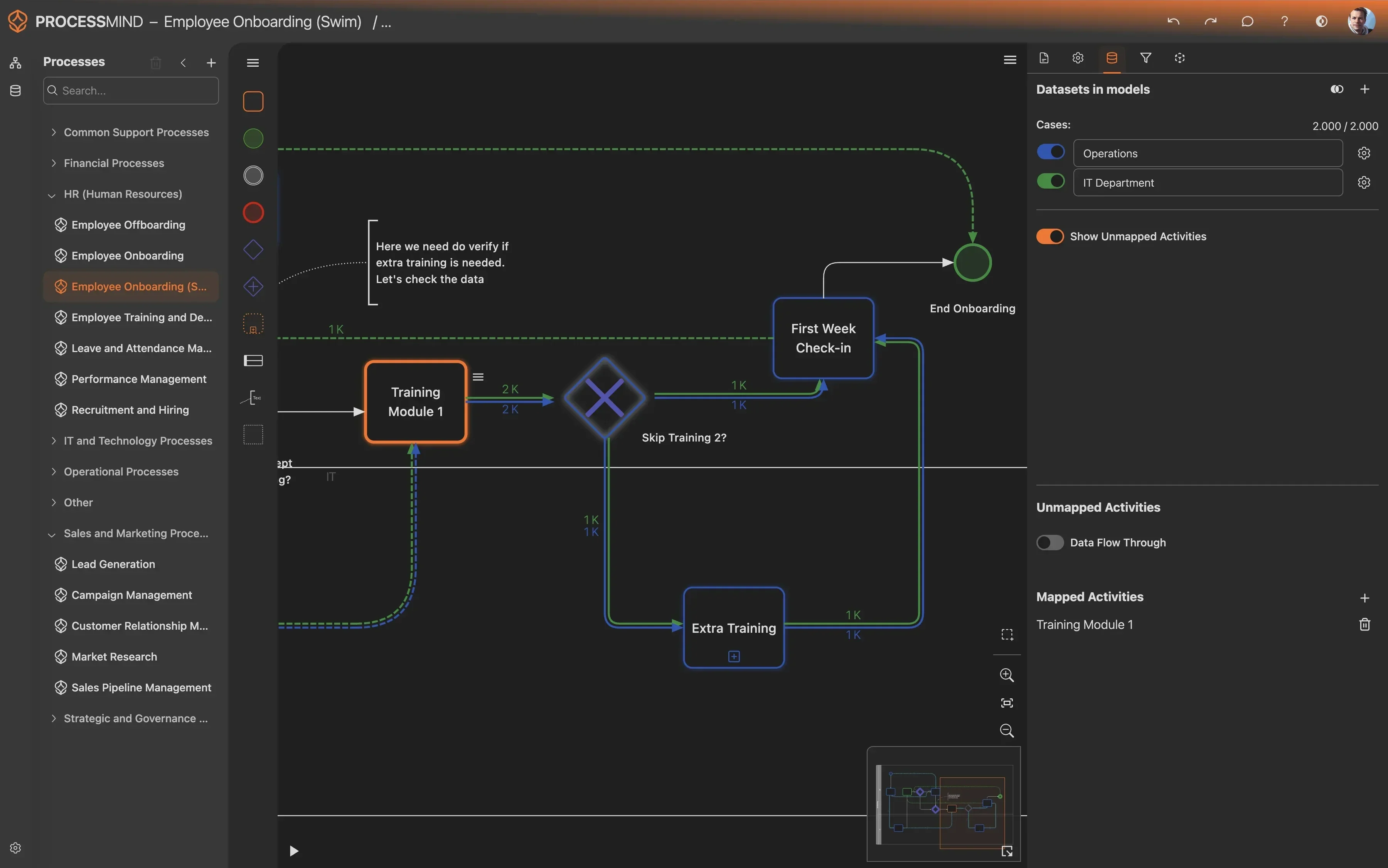
- Visualize end-to-end SCM process flows
- Identify costly delays in order fulfillment
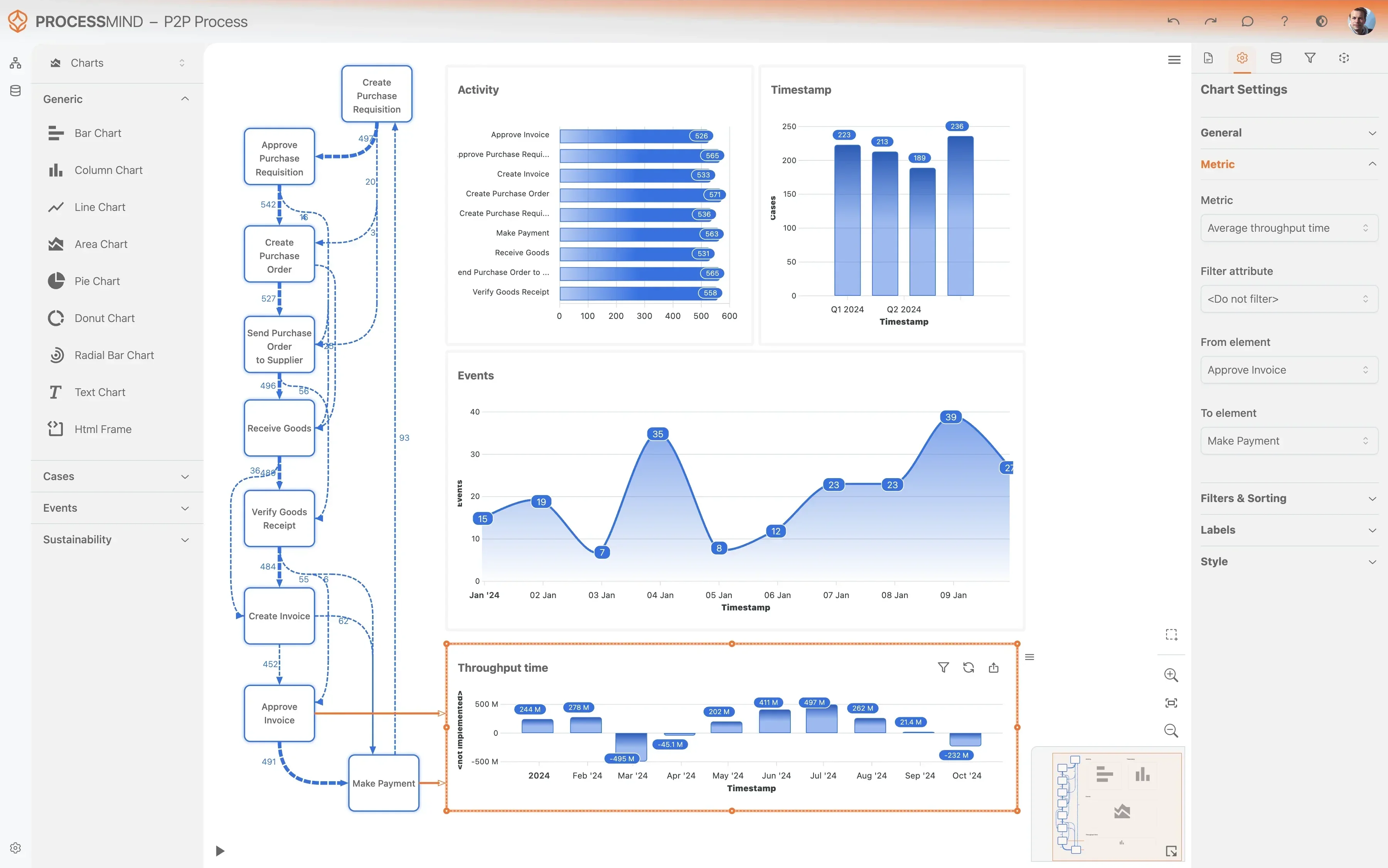
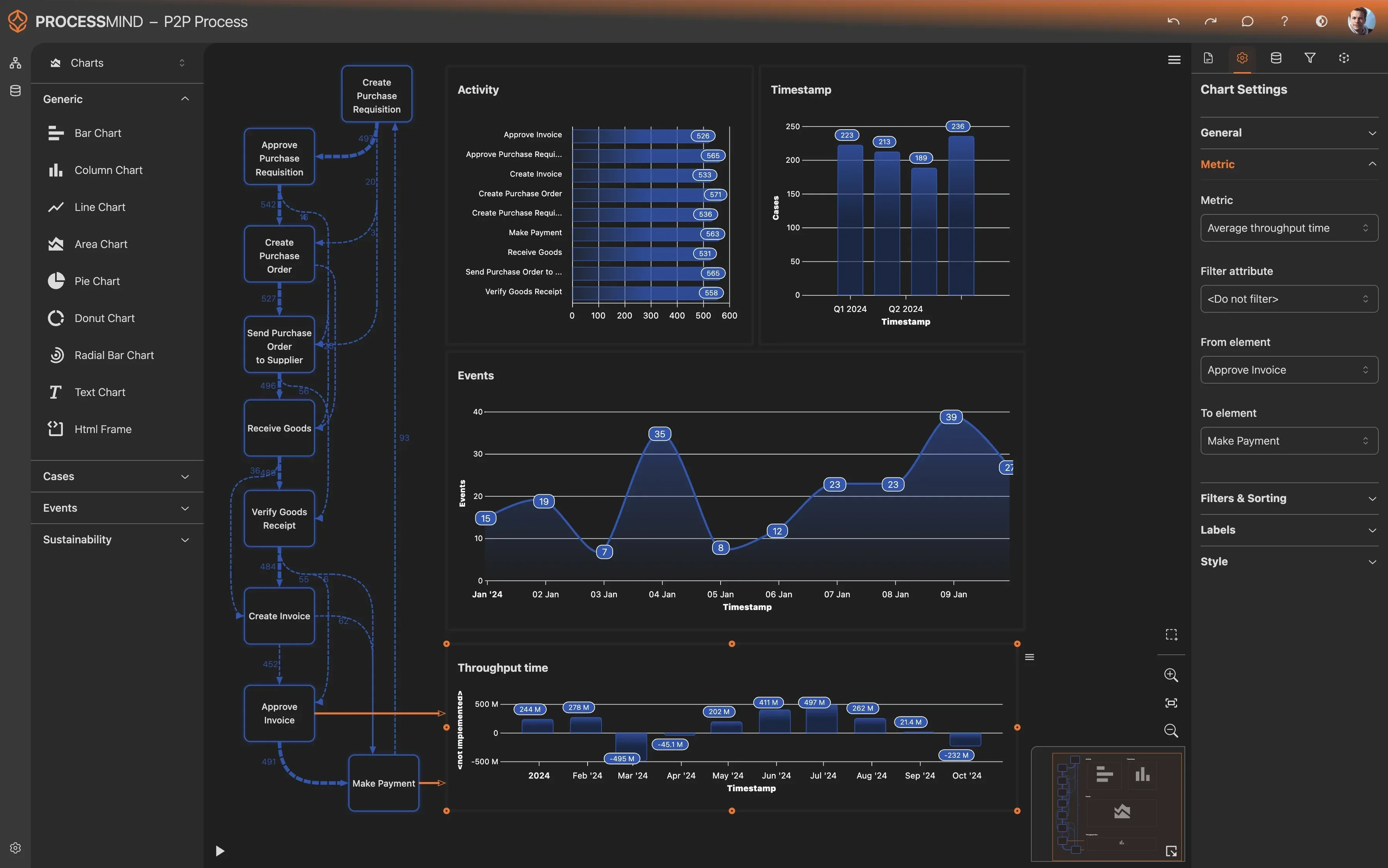
- Compare supplier and logistics performance
- Optimize inventory and delivery cycles
TYPICAL OUTCOMES
Quantifiable Improvements in Supply Chain Management
These outcomes illustrate the potential efficiencies and cost savings organizations can realize by applying process mining to their Oracle SCM Cloud data, uncovering bottlenecks and opportunities for optimization in logistics orders and other key processes.
Reduction in late customer orders
By pinpointing and addressing the root causes of delays, organizations can significantly reduce late customer deliveries, boosting satisfaction and preventing revenue loss.
Average reduction in order fulfillment
Optimizing the complete order-to-delivery process, from customer order to proof of delivery, drastically shortens cycle times and enhances overall operational speed.
Decrease in manual interventions
Identifying and eliminating process deviations that lead to rework, such as re-picking or re-scheduling, directly lowers operational costs and improves efficiency.
Improvement in regulatory adherence
Ensuring all logistics processes consistently follow internal and external regulations reduces audit risks, avoids penalties, and builds a more robust, trustworthy supply chain.
Efficiency gains in operations
By analyzing process throughput and resource bottlenecks, organizations can make data-driven decisions to better allocate resources, maximizing operational capacity and cutting waste.
Results vary based on the specific complexities of your supply chain, the scope of the project, and the quality of your operational data. These figures represent typical improvements observed across various implementations.
Recommended Data
FAQs
Frequently asked questions
Process mining analyzes event log data from your Oracle SCM Cloud system to reconstruct the actual execution of your supply chain processes. It visually identifies bottlenecks, deviations, and inefficiencies, providing objective insights into how operations truly run. This helps you understand complex process flows, from order creation to delivery, enabling data-driven optimization.
Process mining visually maps every step of your supply chain, highlighting where delays occur, such as in production, shipment, or inventory stages. It pinpoints the exact activities and resources causing slowdowns by analyzing timestamps and case durations. This objective view allows you to target specific areas for improvement, like optimizing resource allocation or standardizing inconsistent steps.
To perform process mining, you primarily need event log data. This includes a case identifier, for example, a logistics order ID, an activity name, and a timestamp for when each activity occurred. Additional attributes like resource information, costs, or product details can enrich the analysis and provide deeper insights into process variations and performance.
After data extraction and initial setup, which typically takes a few weeks depending on data volume and complexity, initial process maps and basic performance insights can be generated rapidly. Within the first month, you can usually identify major bottlenecks and areas for improvement. Deeper, more granular analysis and root cause investigations will naturally follow.
Process mining precisely identifies the stages and activities that contribute most significantly to delivery delays, from order entry to final shipment. It uncovers root causes like inventory shortages, production backlogs, or inefficient transportation routes. By revealing these specific issues, process mining enables targeted interventions to streamline workflows and reduce lead times, directly impacting on-time delivery rates.
Implementing process mining generally requires access to your Oracle SCM Cloud database or data warehouse for extracting event logs. You will also need a process mining software platform, which can be cloud-based or on-premise. Secure data transfer mechanisms and possibly some scripting for data transformation are also common technical considerations.
Yes, process mining is highly effective at identifying deviations from standard processes, which can indicate potential compliance risks. By comparing actual process execution against predefined rules or target models, it highlights non-compliant steps or missing audit trails. This allows you to proactively address inconsistencies and strengthen regulatory adherence.
Integrating process mining primarily involves extracting event log data, not modifying your Oracle SCM Cloud system's core functionality. Modern process mining tools offer connectors and robust data ingestion capabilities that simplify this process. While some initial data mapping and transformation may be required, it generally doesn't disrupt your operational SCM environment.
The ROI from process mining in SCM can be substantial, stemming from reduced operational costs, improved efficiency, and enhanced customer satisfaction. Expect to see benefits like a significant reduction in late deliveries, optimized inventory levels, and lower transportation spend. These improvements translate into tangible financial gains and a more resilient supply chain.
Master Your Oracle SCM: Boost Supply Chain Efficiency Now
Achieve 90% forecast accuracy and eliminate stockouts, starting today.
No credit card required, instant setup.