Improve Your Accounts Receivable

Select a process
Choose a process to continue working in your connected workspace.
Optimize Accounts Receivable for Faster Cash Flow
Our platform helps you uncover hidden bottlenecks and late payment patterns within your data. By analyzing your invoice lifecycle, you can identify why certain steps take longer than expected. Use these insights to streamline your operations and improve your overall cash flow.
Download our pre-configured data template and address common challenges to reach your efficiency goals. Follow our six-step improvement plan and consult the Data Template Guide to transform your operations.
Show detailed description
Optimize Your Accounts Receivable for Faster Cash Flow
In the modern financial landscape, maintaining a healthy cash flow is the lifeblood of any successful organization. Our process mining solution for Accounts Receivable offers an unprecedented level of visibility into your entire invoicing cycle, from the moment an invoice is generated until the final payment is cleared in your books. By leveraging the data already residing within your ERP, ProcessMind acts as a diagnostic tool that maps out every step of the journey for every Invoice Number. This allows you to move beyond static reports and see the dynamic flow of capital through your business, revealing not just what is happening, but exactly why certain processes might be slowing down your financial operations. Whether you are dealing with a single global instance or a fragmented landscape of regional platforms, our tool harmonizes your data to provide a single, truthful version of your financial reality. This transparency is the essential first step toward transforming your finance department from a cost center into a strategic value driver.
Many organizations struggle with invisible bottlenecks that inflate their Days Sales Outstanding, or DSO. These issues often manifest as manual workarounds, lengthy dispute resolution cycles, or inconsistent payment behaviors from customers that go unnoticed in traditional spreadsheets. Regardless of the specific technical setup of your source system, these challenges remain consistent across industries. Without a clear view of the process, your team might be spending valuable time chasing low priority payments or navigating complex approval chains that add unnecessary days to the collection cycle. Policy compliance also becomes a concern when manual adjustments are made to payment terms or discounts without proper oversight, leading to potential revenue leakage and audit risks. Understanding these friction points is the first step toward building a more resilient and efficient credit to cash process that protects your bottom line and ensures operational stability.
By analyzing your data with ProcessMind, you gain the ability to pinpoint the exact locations where friction occurs. You can discover the deviations from your standard operating procedures that contribute to payment delays and quantify the financial impact of every bottleneck. The platform allows you to compare different regions, customer segments, or business units to identify best practices that can be scaled across the entire organization. You will gain insights into which customers consistently pay late, which dispute types take the longest to resolve, and where automation could most effectively reduce manual effort. Beyond the numbers, process mining provides a unique window into the health of your customer relationships. Frequent disputes and long resolution times are often symptoms of underlying communication gaps or master data inaccuracies. When you can see the entire lifecycle of an Invoice Number, you can identify patterns where certain products or services consistently lead to payment friction. This allows your team to address the root causes, whether they are logistical errors or billing discrepancies, before they impact the customer experience.
Embarking on your process mining journey is a straightforward process designed to be inclusive of any technological infrastructure you currently have in place. To begin, you will need to extract key data points from your ERP, such as document dates, posting dates, clearing dates, and the associated Invoice Number for each transaction. We provide a comprehensive data template that outlines exactly which fields are required to build a robust process model. By mapping your internal data to this template, you can quickly upload your information to ProcessMind and start visualizing your Accounts Receivable process in minutes. This flexible approach ensures that your organization can achieve financial excellence and operational transparency, regardless of the complexity or age of your source systems. Our goal is to help you unlock the value hidden in your transaction logs, turning raw data into actionable intelligence that drives results and supports the long term financial health of your enterprise.
6-Step Improvement Path for Accounts Receivable
Connect and Discover
What to do
Connect your ERP to the platform by mapping invoice numbers, activity timestamps, and status changes like Invoice Created and Payment Received.
Why it matters
Building a data-driven foundation ensures that process analysis is based on actual transaction logs rather than subjective interviews or guesses.
Expected outcome
A complete event log ready for process mining analysis.
Map Your Process
What to do
Generate a visual flow of your receivables cycle to see how invoices move from dispatch to clearing, including loops for disputes or credit memos.
Why it matters
Visualizing the as-is process reveals the complexity of manual workarounds and deviations from the standard financial policy.
Expected outcome
A clear visualization of the end-to-end receivables flow.
Identify Bottlenecks
What to do
Analyze the time gaps between activities to find where invoices sit idle, such as the delay between a reminder being sent and payment being posted.
Why it matters
Identifying friction points helps you focus resources on the specific stages that increase your Days Sales Outstanding.
Expected outcome
A prioritized list of process delays and friction points.
Analyze Root Causes
What to do
Filter data by customer type or region to understand why certain invoices trigger dispute cases or require manual bank statement matching.
Why it matters
Uncovering the root cause of payment delays allows you to implement structural fixes rather than just treating symptoms.
Expected outcome
Data-backed insights into the causes of process inefficiency.
Design Improvements
What to do
Optimize your workflow by automating standard reminders for low-risk accounts and standardizing the steps for resolving customer disputes.
Why it matters
Standardized processes reduce the manual effort required per invoice, allowing your team to focus on high-value collections.
Expected outcome
A redesigned process flow aimed at reducing cycle times.
Monitor and Iterate
What to do
Track your improvements in real-time by monitoring key performance indicators and comparing new process data against your initial baseline.
Why it matters
Continuous monitoring ensures that changes are effective and allows you to adapt quickly to new patterns in customer payment behavior.
Expected outcome
Sustained reduction in DSO and improved cash flow visibility.
WHAT YOU WILL GET
Gain Complete Visibility Over Your Revenue Cycle
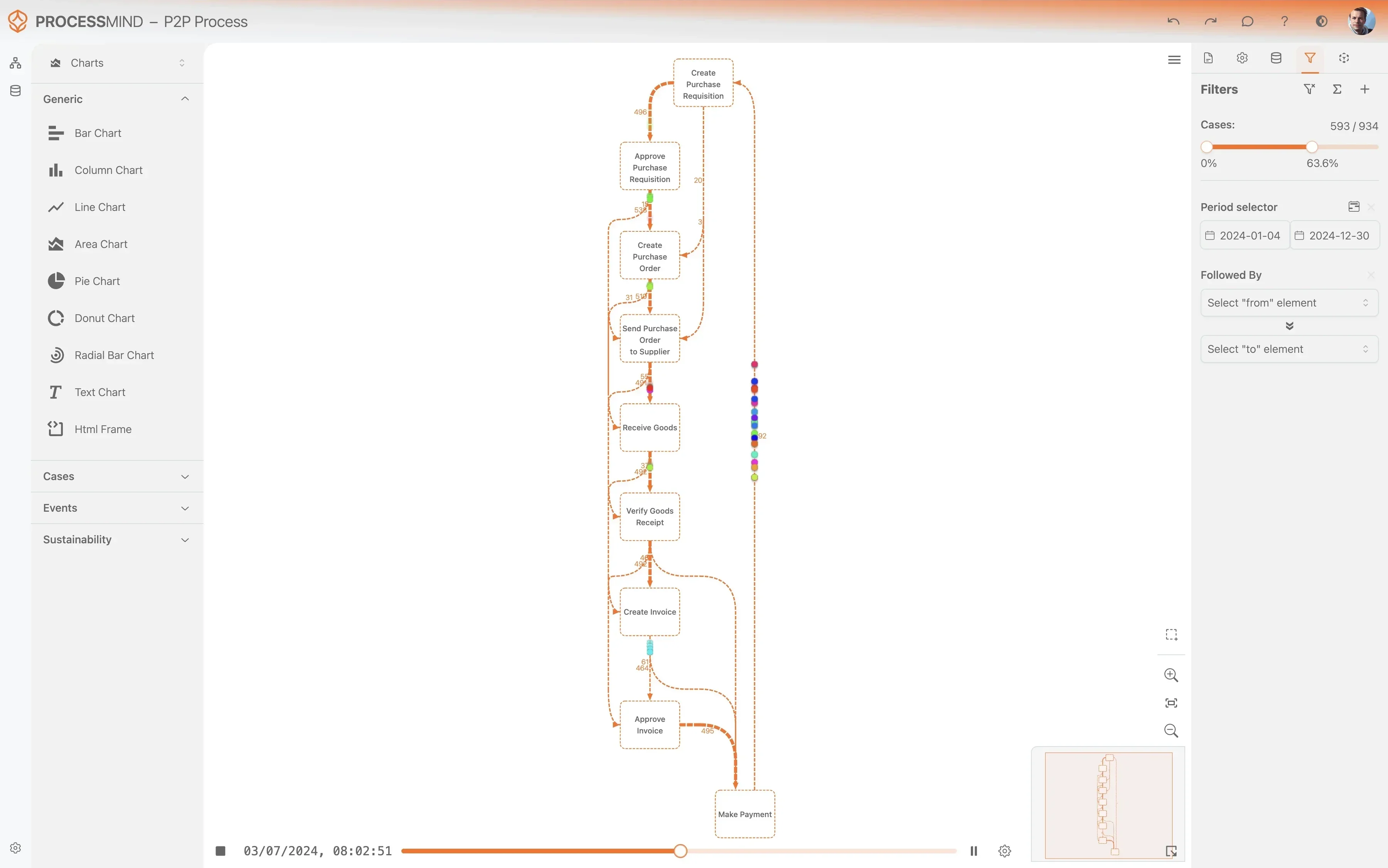
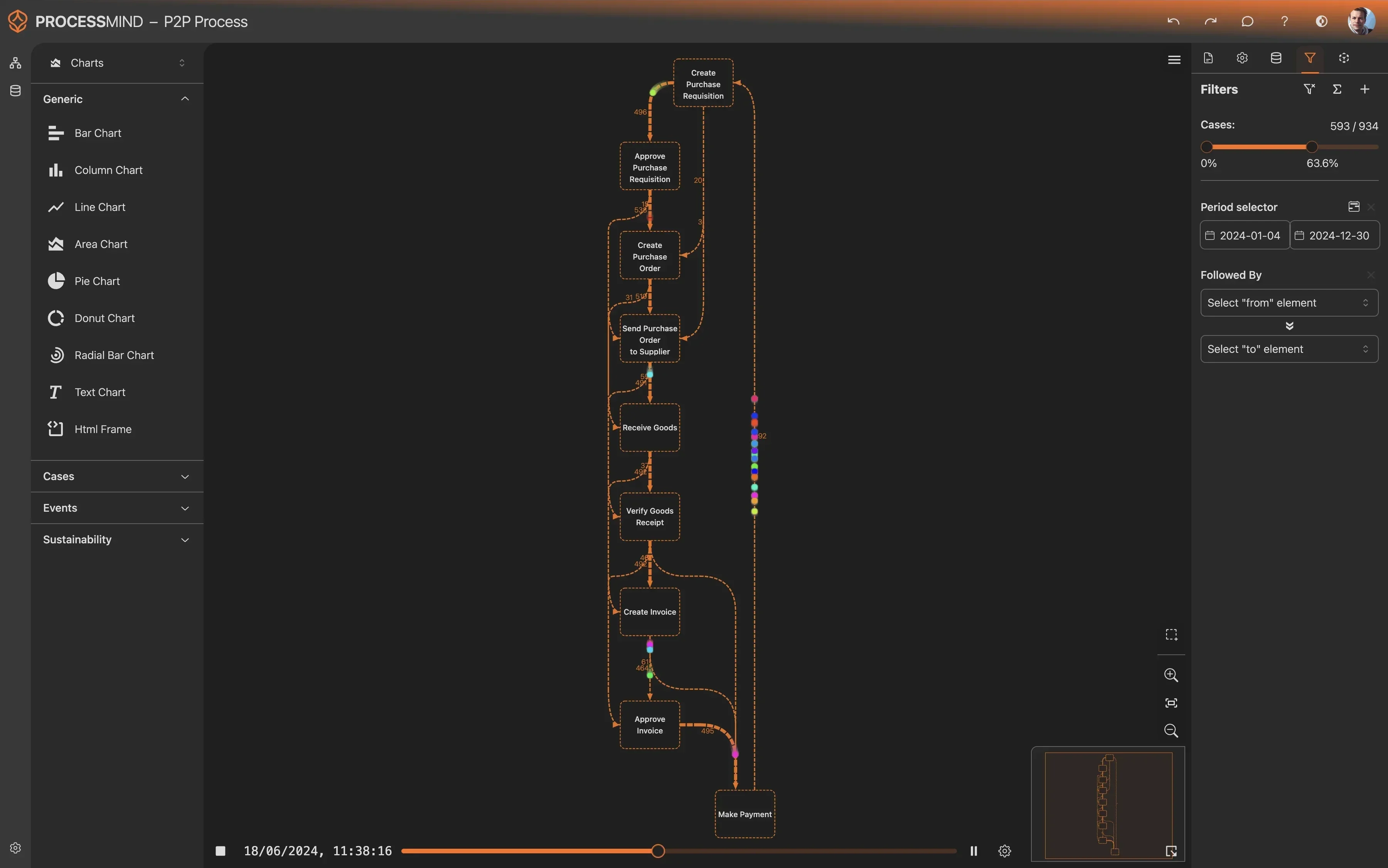
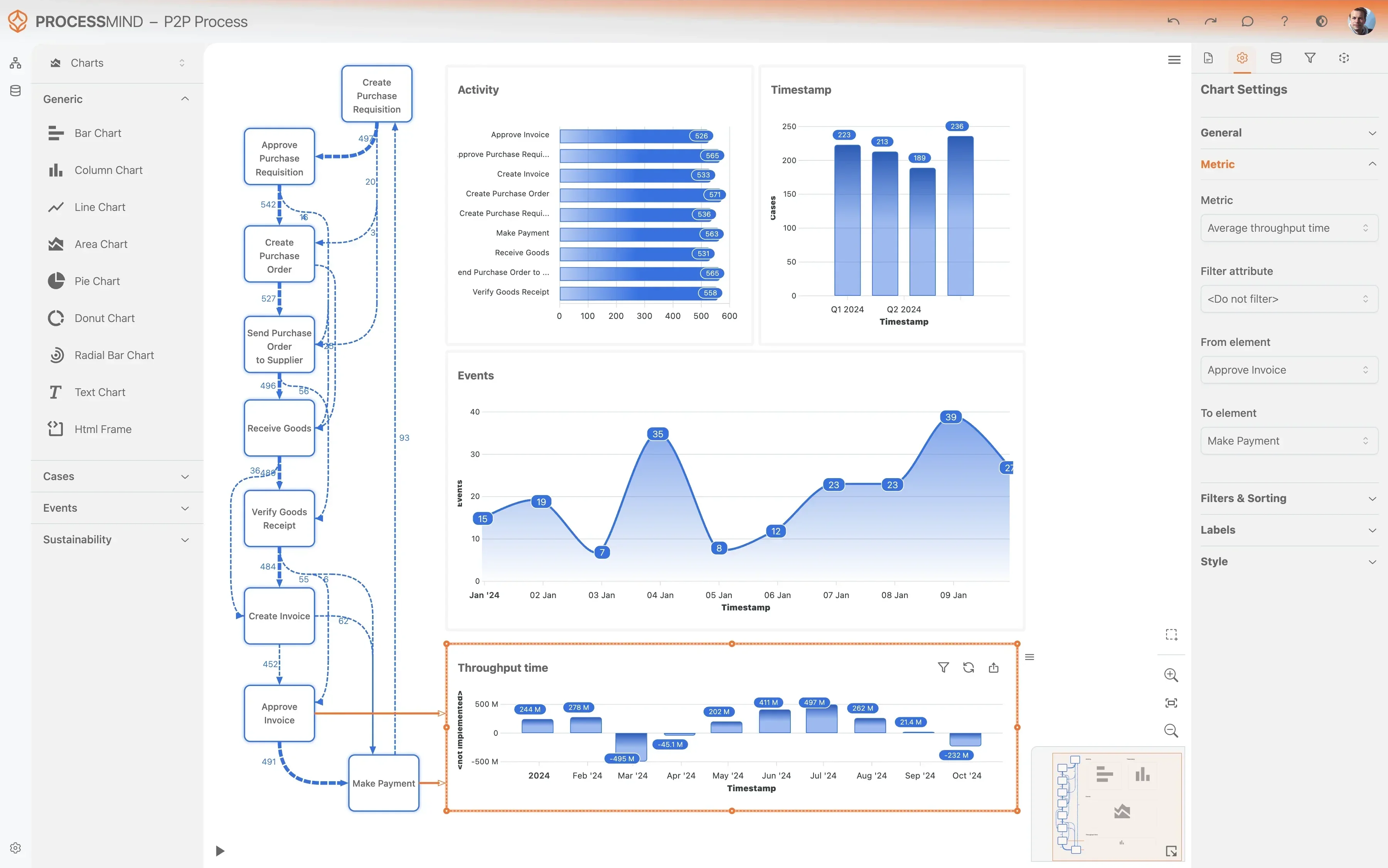
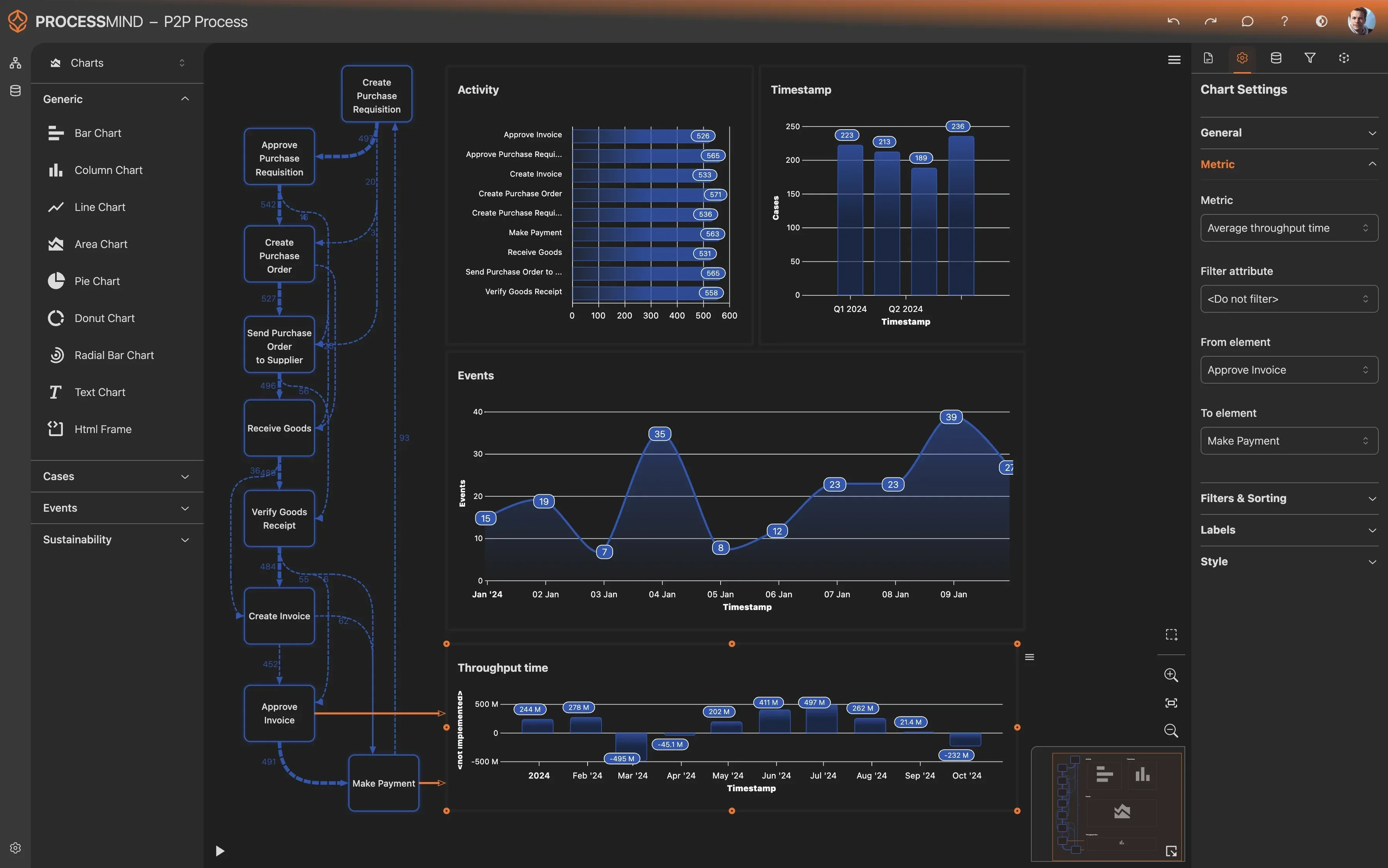
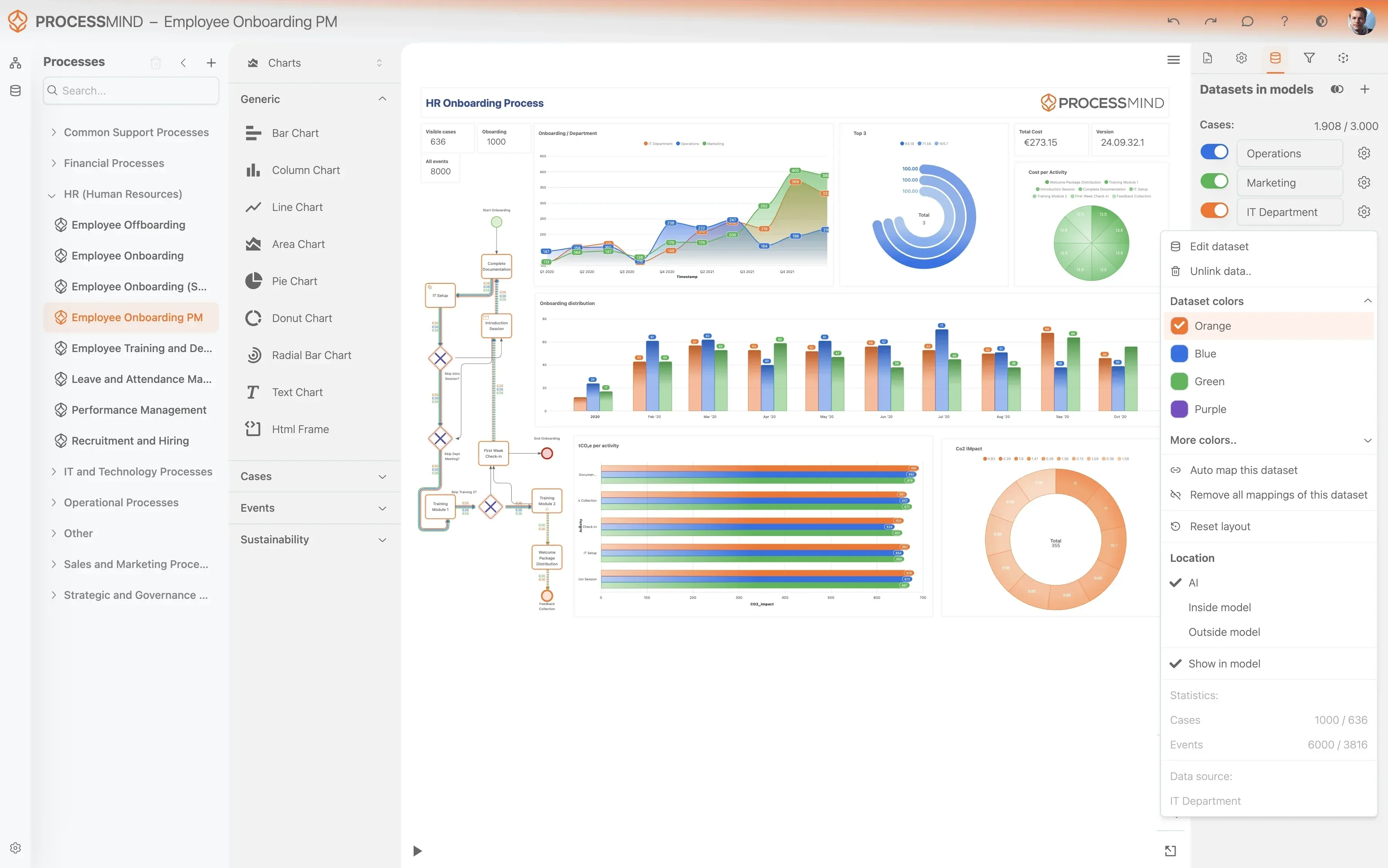
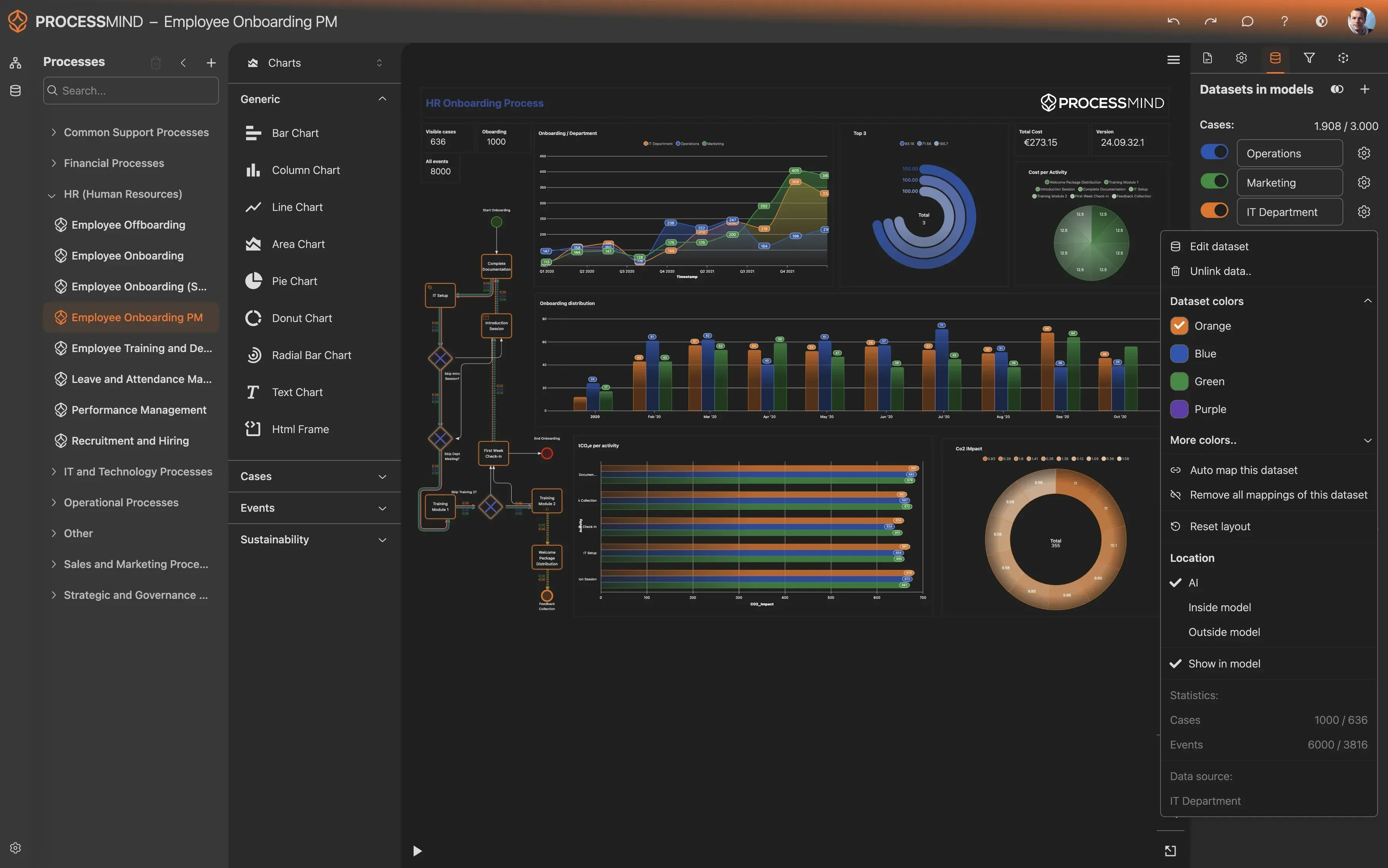
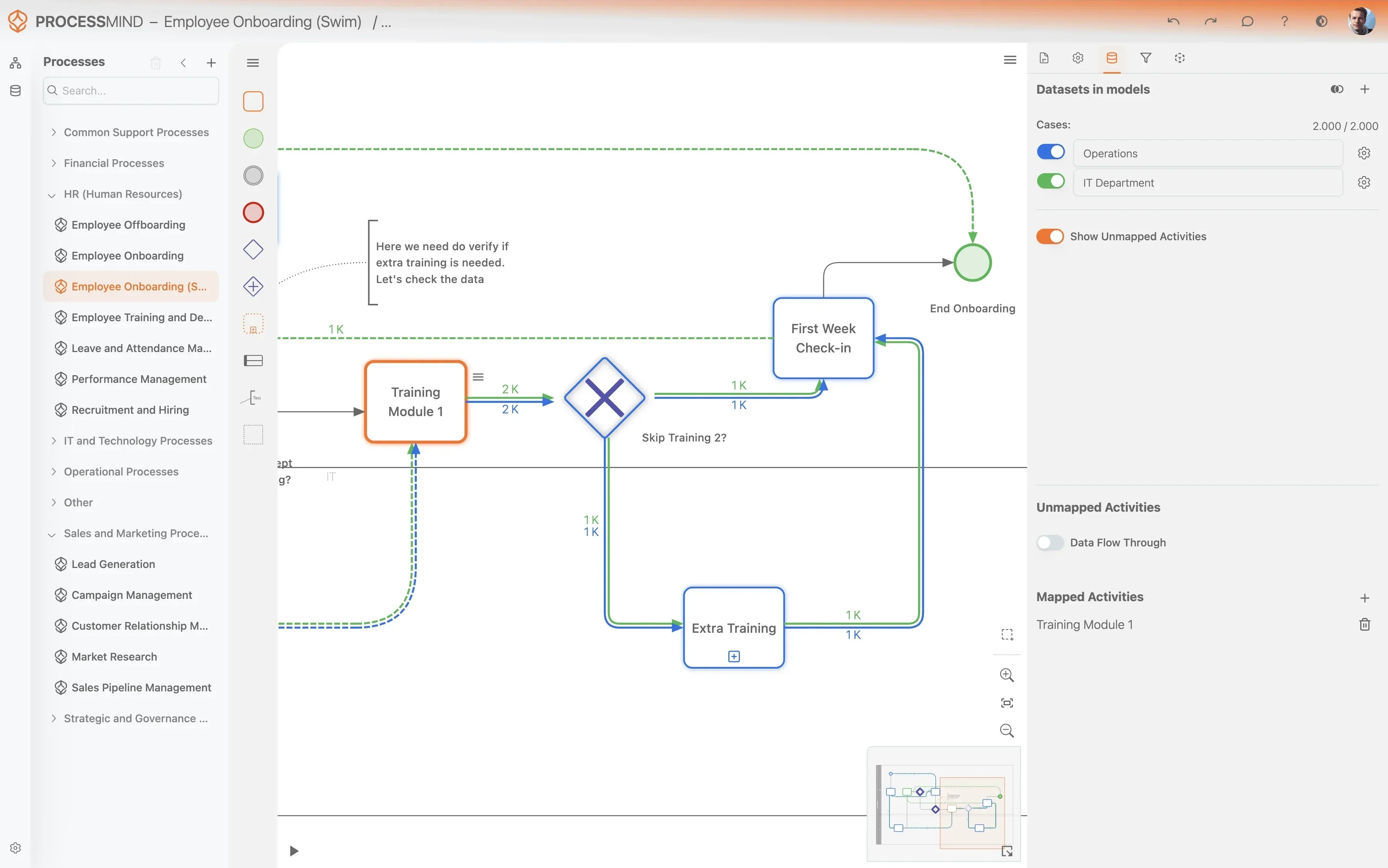
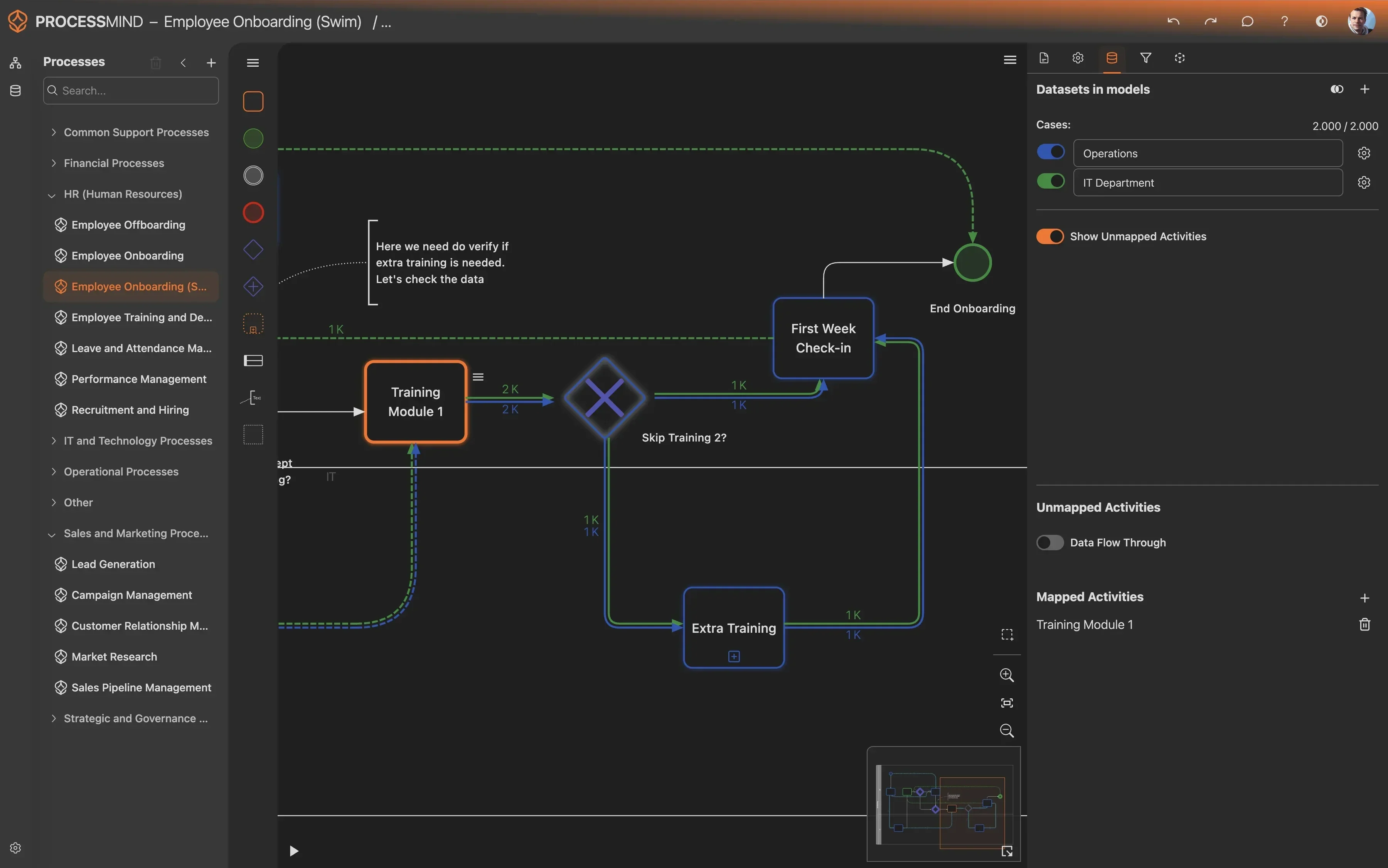
- Map every step of your actual invoice lifecycle
- Pinpoint specific causes for payment delays
- Identify manual rework and process deviations
- Quantify the impact of bottlenecks on cash flow
PROVEN OUTCOMES
Quantifiable Improvements in Accounts Receivable
By analyzing every Invoice Number across your financial systems, organizations identify hidden bottlenecks and streamline the collection cycle. These outcomes reflect the efficiency gains achieved through data-driven process optimization.
Average decrease in payment lag
By identifying bottlenecks between invoice creation and clearing, organizations accelerate cash conversion and improve overall liquidity management.
Automated bank reconciliation
Optimizing matching logic reduces manual intervention by allowing bank statements to be reconciled against open invoices without human effort.
Reduction in resolution cycle
Streamlining internal workflows and evidence gathering ensures that contested invoices are resolved quickly, which helps unlock stalled cash flow.
Reduction in credit memo volume
Identifying root causes of errors during initial invoice generation leads to fewer credit memos and significantly less administrative rework.
Better adherence to due dates
Enhanced visibility into customer behavior helps teams enforce contractual terms and identify segments that frequently miss payment due dates.
Reduction in administrative delay
Moving invoices to customers faster ensures the payment clock starts sooner, which directly shortens the overall cash conversion cycle.
Individual results vary based on process complexity and data quality. These figures represent typical improvements observed across various organizational implementations.
Recommended Data
For customized data recommendations, choose your specific process.
FAQs
Frequently asked questions
Process mining extracts event data from your financial system to reconstruct the entire lifecycle of an invoice, from generation to final clearing. By using the Invoice Number as a unique identifier, it maps out every activity and status change to show how transactions actually flow through your organization.
You need to extract activity logs that include a unique case identifier, such as the Invoice Number, along with timestamps and the names of the actions performed. This typically includes events like invoice issuance, payment receipt, dispute opening, and final reconciliation, which allows the tool to build a chronological sequence of events.
Yes, the tool identifies the exact friction points that cause payment delays, such as long dispatch lead times or inefficient collection workflows. By visualizing these bottlenecks, finance teams can implement targeted improvements to accelerate cash flow and meet goals like reducing DSO by 15 percent.
While standard reports provide static snapshots of aging balances or total outstanding amounts, process mining reveals the dynamic movement between these states. It highlights non linear paths, such as repeated credit memos or complex partial payment chains, which traditional dashboards often miss.
The software tracks every disputed invoice to show where they stall, whether they are waiting for internal validation or external customer feedback. This transparency helps identify if specific departments or invoice types are causing delays, allowing for standardized resolution steps and faster clearing of contested balances.
By analyzing the specific steps where manual intervention is required, process mining identifies why certain payments fail to match automatically. It reveals patterns in manual rework that suggest where your matching rules or incoming data quality need adjustment to achieve higher touchless posting rates.
Most organizations can view their initial process maps within four to six weeks once the connection to the source system is established and data mapping is finalized. This initial phase focuses on high impact areas like the most common causes for payment delays or manual adjustments in the clearing process.
Data can be masked or pseudonymized during the extraction process to ensure that sensitive customer details are protected while the process patterns remain visible. Security protocols are typically applied to comply with internal financial audits and international data privacy regulations, keeping the focus on process efficiency.
Boost Your Working Capital with Smarter AR Today
Reduce DSO and streamline collections with real-time analytics
No credit card required. Works with any ERP.