Improve Your Incident Management

Select a process
Choose a process to continue working in your connected workspace.
Optimize Zendesk Support Incident Management for Faster Resolution
Effectively managing incidents is crucial for user satisfaction and operational efficiency. Our platform helps you uncover hidden delays and bottlenecks that impede rapid resolution. Pinpoint exactly where inefficiencies lie and receive actionable guidance to streamline your processes, leading to faster resolutions.
Download our pre-configured data template and address common challenges to reach your efficiency goals. Follow our six-step improvement plan and consult the Data Template Guide to transform your operations.
Show detailed description
Why Optimizing Incident Management is Crucial for Your Business
Effective incident management is the backbone of reliable service delivery and user satisfaction. In today's fast-paced digital environment, any disruption, however minor, can quickly escalate, impacting business operations, customer trust, and even regulatory compliance. While Zendesk Support provides a robust platform for logging and tracking incidents, the true challenge lies in ensuring those incidents are resolved efficiently and effectively. Without clear visibility into the actual flow of work, organizations often struggle with hidden delays, frequent reworks, and missed service level agreements (SLAs). These inefficiencies not only frustrate users and support agents but also contribute to increased operational costs and a damaged brand reputation. Understanding the real-world performance of your Incident Management process is not just about fixing problems, it is about proactively safeguarding your business and ensuring continuous service improvement.
How Process Mining Illuminates Your Zendesk Support Incident Flow
Process mining offers a powerful lens to cut through the complexity of your Incident Management data within Zendesk Support. By analyzing event logs, which capture every interaction and status change for each incident, process mining reconstructs the actual journey an incident takes from its initial report to its final closure. This comprehensive, end-to-end view reveals much more than standard reporting. It identifies all paths, even deviations from the intended process, pinpointing exactly where bottlenecks occur, where reassignments are excessive, or where incidents are frequently reopened. You can visualize the full cycle time for various incident types, comparing actual performance against target SLAs. This capability transforms raw Zendesk data into actionable insights, showing you precisely how incidents flow through your support teams, which steps consume the most time, and where manual interventions or inefficiencies prolong resolution.
Pinpointing Key Improvement Areas in Incident Resolution
With process mining, you gain the ability to uncover specific areas ripe for improvement in your Zendesk Incident Management. For example, you might discover:
- Excessive Handoffs: Are incidents being transferred between support groups, such as from initial support to a specialized team, more often than necessary, adding unnecessary delays to the cycle time? Process mining can highlight these frequent transfers and their impact.
- Resolution Delays: Identify stages where incidents typically stall, such as prolonged periods between "Diagnosis Initiated" and "Resolution Identified," indicating a need for better training or resource allocation.
- Rework Loops: Uncover patterns where incidents are frequently reopened after being marked "Resolved," suggesting issues with the initial resolution quality or user confirmation process.
- SLA Compliance Gaps: Clearly visualize which incident categories or priorities are consistently missing their SLA targets, allowing you to focus improvement efforts where they matter most.
- Root Cause Analysis: Connect process patterns to common Root Cause Category attributes, enabling proactive measures to prevent recurring incidents.
This level of detail moves beyond anecdotal evidence, providing data-driven insights to truly optimize Incident Management within Zendesk Support.
Realizing Tangible Benefits Through Incident Process Optimization
The insights gained from process mining translate directly into significant, measurable benefits for your organization. By addressing the identified inefficiencies and bottlenecks, you can expect to:
- Reduce Incident Management Cycle Time: Accelerate incident resolution, leading to faster restoration of services and reduced downtime for affected users.
- Improve SLA Adherence: Consistently meet or exceed your service level agreements, enhancing customer satisfaction and avoiding potential penalties.
- Lower Operational Costs: Streamline workflows, reduce rework, and optimize resource allocation, leading to more efficient use of your support team's time and resources.
- Enhance User and Agent Satisfaction: Users benefit from quicker resolutions and clearer communication, while agents experience more streamlined processes and reduced frustration from inefficient workflows.
- Foster Continuous Improvement: Establish a data-driven culture where process performance is continuously monitored and improved, ensuring your incident management evolves with your business needs.
Ultimately, optimizing Incident Management helps you transform your support operations from reactive firefighting to proactive, efficient service delivery.
Take Control of Your Zendesk Incident Management
Improving your Incident Management processes in Zendesk Support does not require an overhaul of your entire system. Instead, it begins with understanding your current state through the unbiased lens of process mining. This approach empowers you to make informed decisions based on empirical data, rather than assumptions. By leveraging detailed process insights, you can move beyond simply tracking incidents to actively shaping a more responsive, efficient, and user-centric support operation. Take the first step towards transforming your Incident Management with a data-driven approach that pinpoints exactly how to reduce cycle time and enhance overall service quality.
The 6-Step Improvement Path for Incident Management
Download the Template
What to do
Obtain the pre-structured Excel template designed for Incident Management data. This ensures your Zendesk Support data aligns with ProcessMind's analysis requirements.
Why it matters
A standardized template streamlines data preparation, reducing errors and ensuring that all critical incident details are captured for accurate analysis.
Expected outcome
You will have a ready-to-fill Excel template tailored for your Zendesk Support incident data.
Export Your Zendesk Data
What to do
Extract 3-6 months of historical incident data from Zendesk Support. Use reporting features or API to gather ticket, user, and SLA policy information, then populate the template.
Why it matters
Comprehensive historical data provides a robust foundation for identifying recurring issues, process variations, and performance trends over time.
Expected outcome
Your incident data from Zendesk Support will be accurately populated within the provided Excel template.
Upload Your Dataset
What to do
Upload your completed Excel template to the secure ProcessMind platform. The system will automatically process and validate your incident management data.
Why it matters
Effortless upload ensures your data is quickly available for analysis, minimizing setup time and allowing you to focus on gaining insights rapidly.
Expected outcome
Your Zendesk incident data will be securely uploaded and ready for automated process mining analysis.
Analyze Your Incident Process
What to do
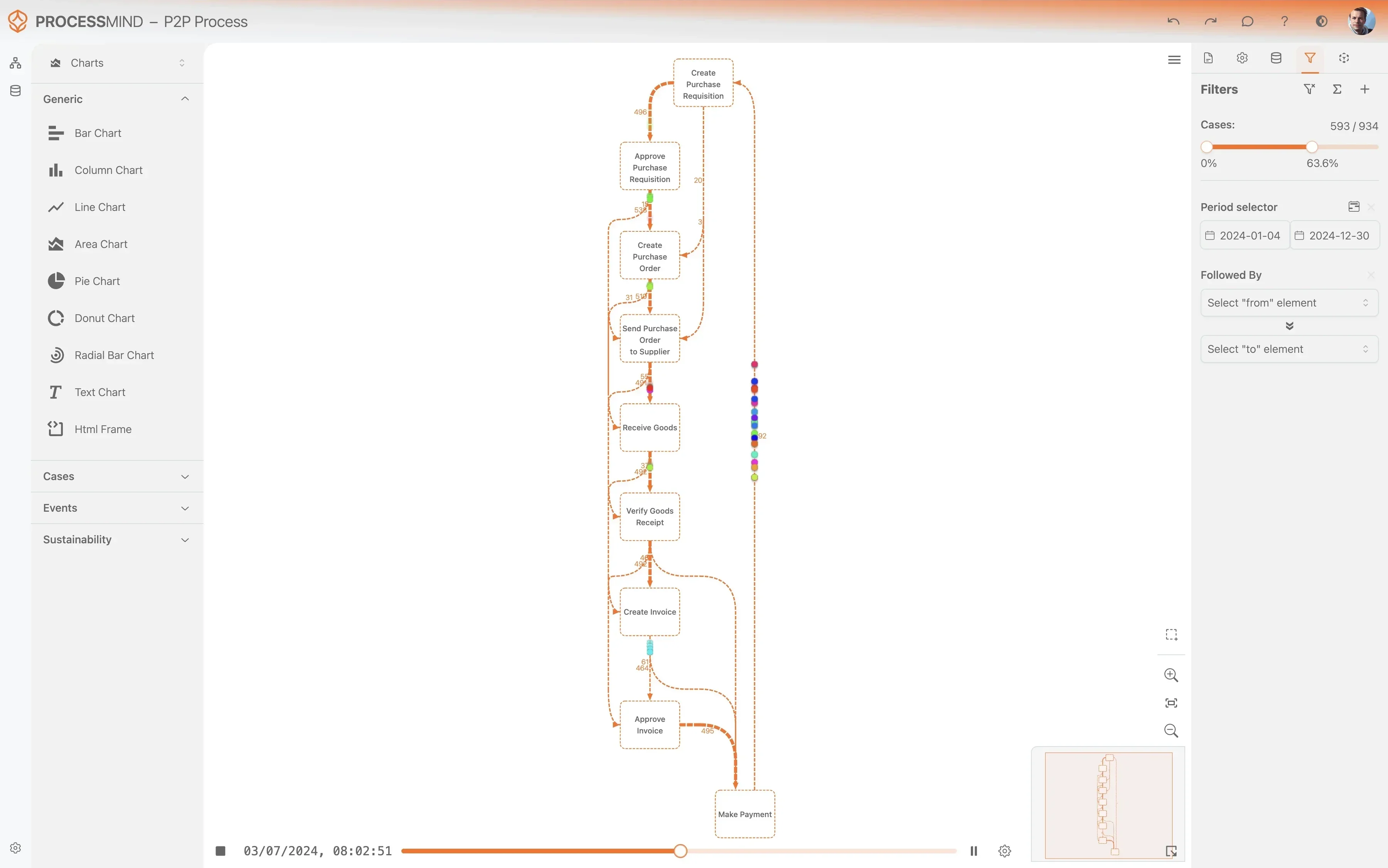
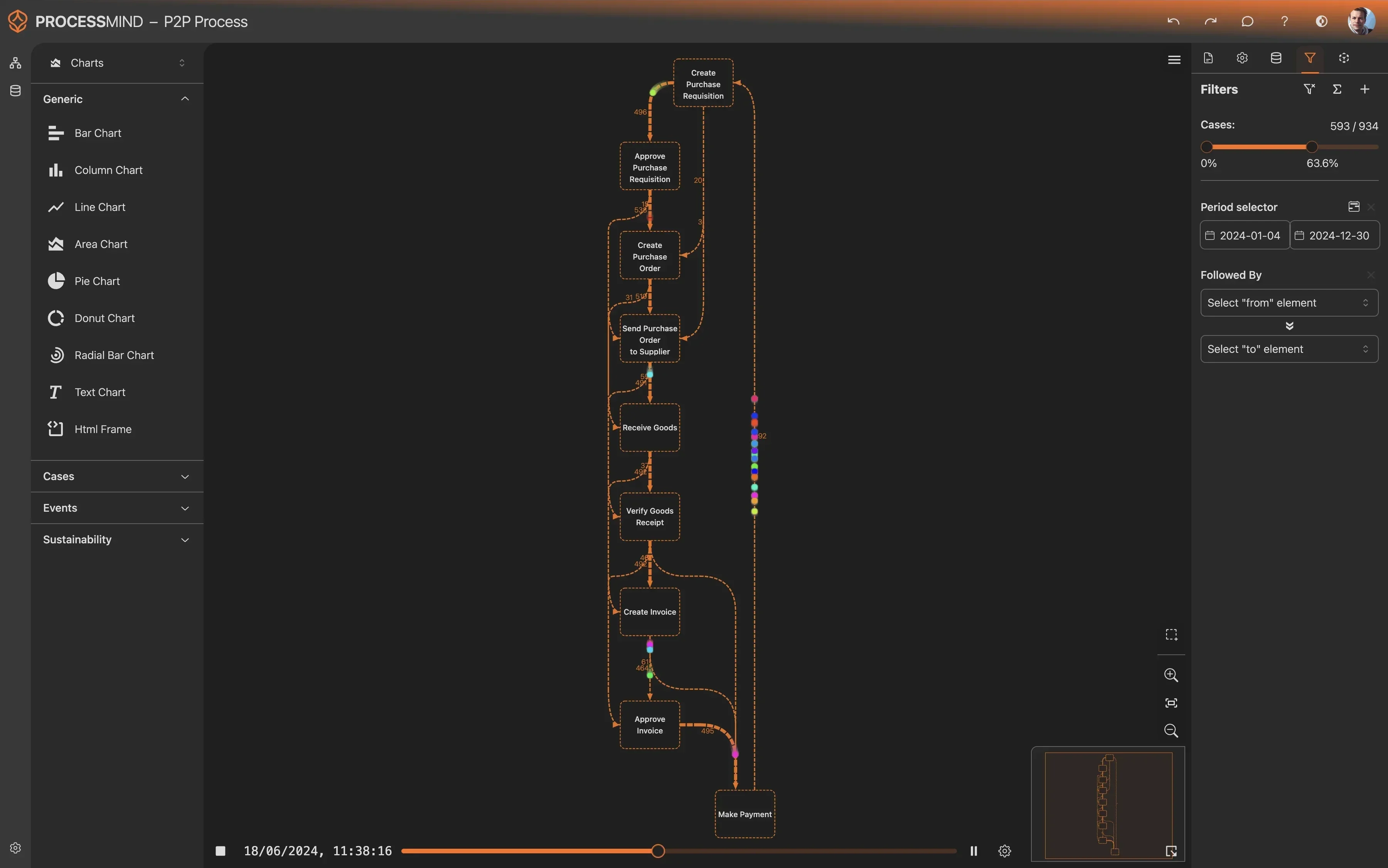
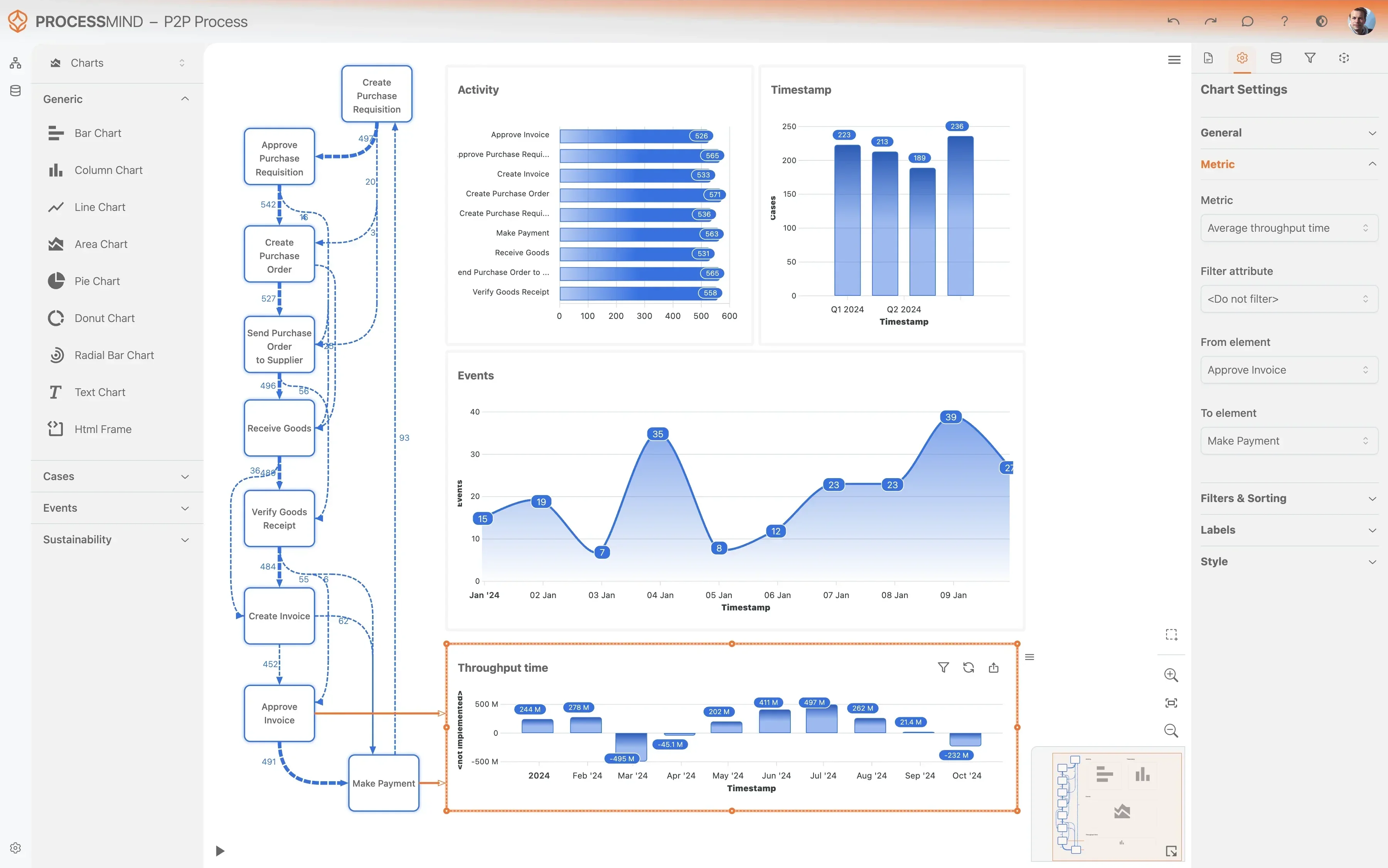
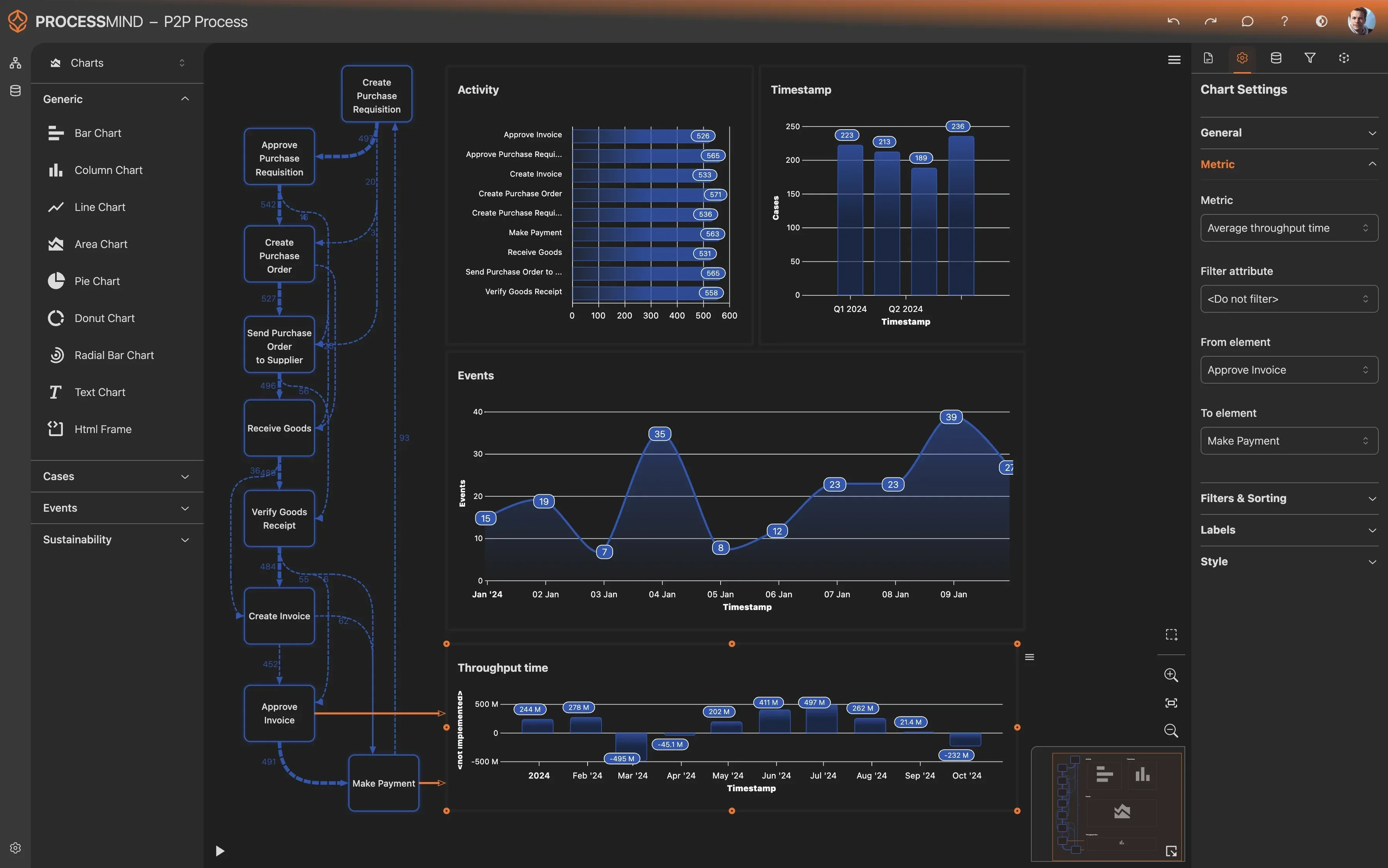
Explore the auto-generated dashboards and visual process maps for your Incident Management. Leverage AI-driven recommendations to pinpoint bottlenecks and non-compliant paths.
Why it matters
Gain deep insights into resolution times, SLA adherence, and agent workload, revealing hidden inefficiencies and compliance gaps that impact service quality.
Expected outcome
You will have a clear, data-driven understanding of your Incident Management process and prioritized areas for improvement.
Implement Improvements
What to do
Prioritize the identified improvement opportunities, such as optimizing ticket routing rules or refining resolution workflows within Zendesk Support, and take action.
Why it matters
Translating insights into action directly addresses root causes of delays and inefficiencies, leading to immediate operational enhancements and better service delivery.
Expected outcome
Your Incident Management process will be optimized, resulting in faster resolution times and improved resource allocation.
Monitor & Sustain Progress
What to do
Regularly re-upload fresh incident data from Zendesk Support to ProcessMind. Continuously track key performance indicators to measure the impact of your implemented changes.
Why it matters
Ongoing monitoring ensures that improvements are sustained, new issues are promptly identified, and your Incident Management process remains efficient and effective over time.
Expected outcome
You will maintain an optimized Incident Management process, consistently meeting SLAs and enhancing user satisfaction.
TYPICAL OUTCOMES
Elevate Your Incident Management
These outcomes showcase the measurable improvements organizations typically achieve by applying process mining to their Zendesk Support incident management flows. By analyzing every "Incident ID" from creation to resolution, critical bottlenecks and inefficiencies are pinpointed, leading to significantly faster incident resolution times and enhanced service reliability.
Reduction in average cycle time
Streamline your incident resolution process, identifying and eliminating bottlenecks to significantly reduce the time from incident report to closure. This improves user satisfaction and operational efficiency.
Improvement in SLA adherence rate
Pinpoint root causes of SLA breaches and implement targeted improvements to ensure more incidents are resolved within defined service level agreements. This builds trust and meets service commitments.
Reduction in transfers per incident
Optimize routing and knowledge transfer paths to reduce unnecessary incident handoffs between teams or agents. This accelerates resolution and minimizes potential for errors.
Increase in FCR rate
Identify and resolve issues during the initial user interaction by equipping agents with better tools and knowledge. This dramatically improves customer satisfaction and reduces overall operational load.
Decrease in repeated activities
Uncover and eliminate recurring rework loops where incidents are revisited after resolution attempts. This prevents wasted effort, saves costs, and speeds up final incident closure.
Results vary based on the specifics of your incident management process, existing data quality, and organizational context. The figures presented here illustrate typical improvements observed across diverse implementations.
Recommended Data
FAQs
Frequently asked questions
Process mining uses your Zendesk data to visualize the actual flow of incidents, revealing deviations, bottlenecks, and rework loops. This helps you identify root causes of delays and inefficiencies, leading to faster resolution times and improved service quality. It provides an objective, data-driven view of your operations.
You primarily need event logs detailing each step an incident takes, including incident ID, activity description, timestamp, and the actor involved. Key fields from Zendesk Support would typically include ticket ID, status changes, assignee changes, comments, and relevant timestamps for creation, update, and resolution. This data allows the process mining tool to reconstruct the complete incident journey.
You can expect accelerated incident resolution times and better SLA adherence by identifying and eliminating process inefficiencies. Process mining helps reduce excessive handoffs, minimize rework cycles, and standardize prioritization, leading to more efficient handling. Ultimately, this enhances user satisfaction and operational consistency.
Initial setup and data extraction can typically be completed within a few days to two weeks, depending on data volume and accessibility. The first insights often emerge rapidly after the data is ingested and modeled in the process mining tool. Full analysis and identification of actionable improvements may take a few weeks.
Basic data extraction skills, often involving SQL or Zendesk's reporting APIs, are helpful to get the necessary event logs. Most process mining platforms offer user-friendly interfaces for analysis, but understanding process concepts is beneficial. Some technical assistance might be required for initial data connection and transformation.
Yes, process mining is highly effective at uncovering 'shadow processes', which are unofficial ways incidents are handled outside standard procedures. By visualizing all actual process paths from your Zendesk data, it highlights deviations from the ideal process model. This helps in bringing transparency and compliance to incident management.
Process mining precisely identifies where and why SLA breaches occur within your incident management workflow. It pinpoints specific activities, delays, or handoffs that contribute to missing targets. By highlighting these critical path bottlenecks, it enables targeted interventions to boost your SLA adherence rates.
Data security is paramount. Process mining tools typically offer robust security features, including data anonymization options and secure data storage. You maintain control over your data, and most solutions comply with industry standards and regulations to ensure privacy and protection throughout the analysis process.
By identifying and eliminating inefficiencies like rework, excessive handoffs, and prolonged resolution times, process mining directly reduces the manual effort and resources spent on each incident. This optimization translates into lower operational costs, allowing your teams to handle more incidents effectively or reallocate resources.
While identifying bottlenecks is a key strength, process mining offers a broader scope. It can analyze resource utilization, uncover compliance violations, measure process variations, and predict future outcomes. It provides a holistic view of your incident management process, far beyond just spotting delays.
Optimize Incident Management, Resolve Faster Today
Cut MTTR by 35%, eliminate recurring incidents, and boost satisfaction.
No credit card required, start improving in minutes