Improve Your Software Development Lifecycle

Select a process
Choose a process to continue working in your connected workspace.
Optimize the GitLab SDLC: Speed Up Development and Improve Quality
Software development processes often suffer from unforeseen delays and quality issues. Our platform helps you pinpoint bottlenecks and inefficient steps, guiding you to make data-driven improvements. Understand the true flow of work to accelerate time-to-market and enhance software quality.
Download our pre-configured data template and address common challenges to reach your efficiency goals. Follow our six-step improvement plan and consult the Data Template Guide to transform your operations.
Show detailed description
Why Optimize Your Software Development Lifecycle in GitLab?
Modern software development is complex and dynamic. While platforms like GitLab provide robust tools for collaboration, version control, and CI/CD, the actual flow of work, from requirements gathering to deployment, often harbors hidden inefficiencies. These inefficiencies in your Software Development Lifecycle, SDLC, can manifest as prolonged cycle times, missed deadlines, unexpected reworks, and increased development costs. Ultimately, this impacts your ability to innovate rapidly, deliver high-quality products, and maintain a competitive edge in the market.
Traditional project management dashboards and reports offer a snapshot of planned progress, but they often fail to reveal the true path a development item takes. They might tell you what should happen, but not what actually happened, where delays accumulated, or why certain steps were repeated. Understanding these real-world process executions is critical for identifying genuine bottlenecks and making data-driven improvements to your development pipeline within GitLab.
Unlocking SDLC Efficiency with Process Mining
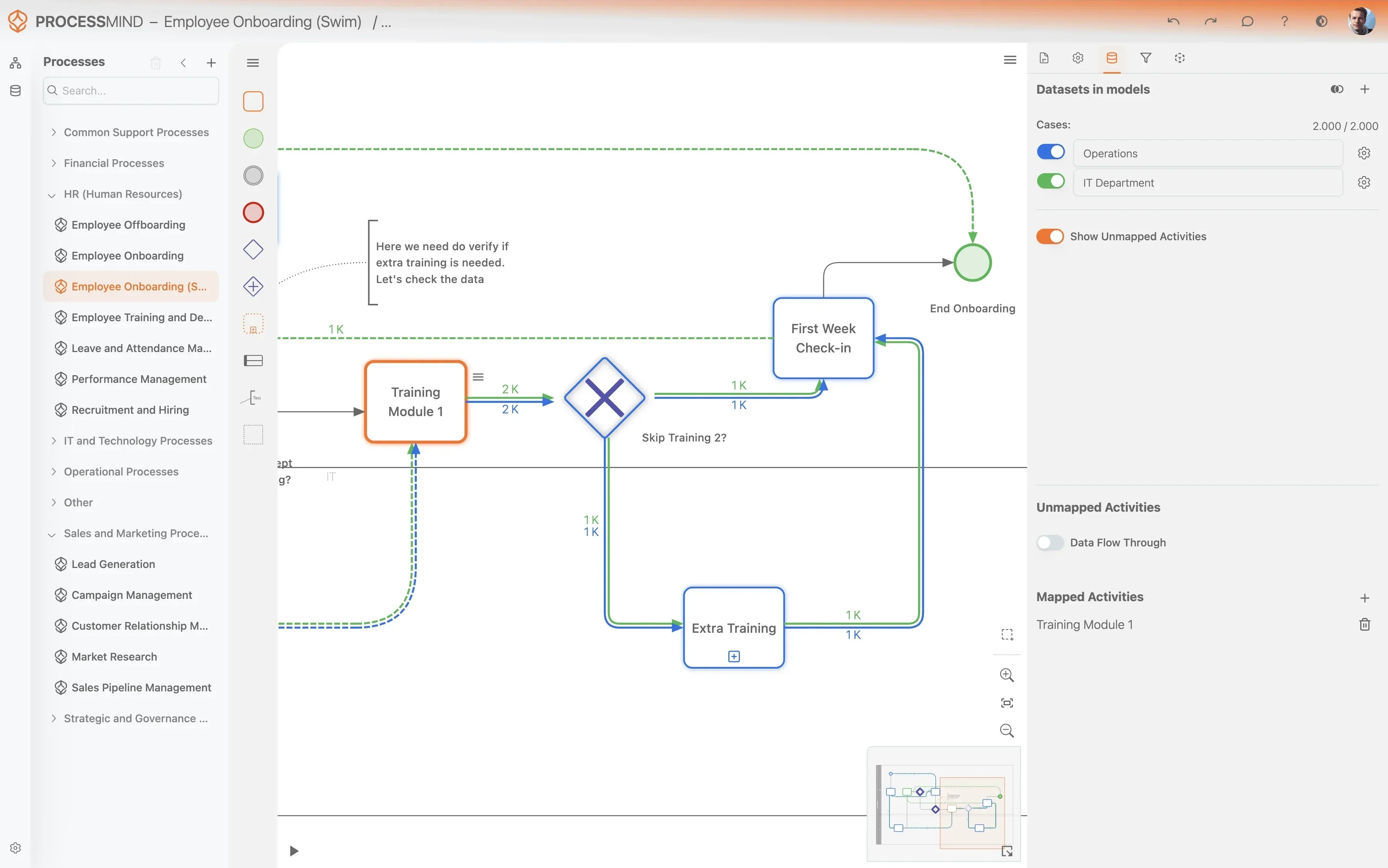
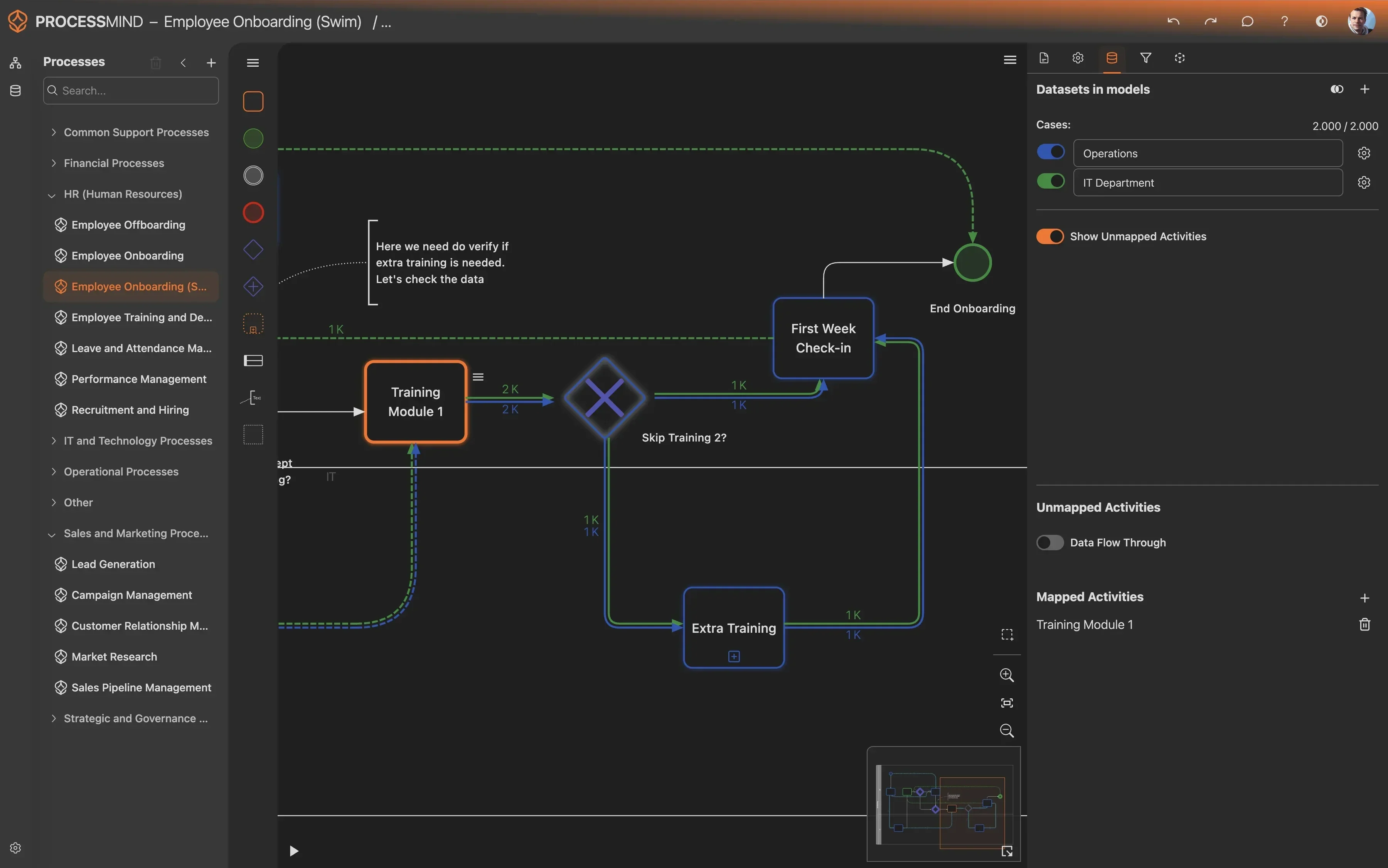
Process mining offers a powerful, data-driven approach to dissecting your Software Development Lifecycle. By analyzing event logs generated within GitLab, process mining reconstructs the exact journey of every development item, providing an unparalleled end-to-end view of your SDLC. This perspective moves beyond static reports, creating dynamic process maps that illustrate every step, deviation, and rework loop that occurred.
For each development item, from its creation to deployment, process mining meticulously tracks activities such as Requirements Gathered, Design Started, Development Started, Code Review Performed, Unit Testing Performed, QA Testing Completed, and Deployed to Production. This granular visibility allows you to see the precise sequence of events, identify where work frequently stalls, and uncover unintended detours that lead to delays. It helps you answer critical questions, like which stages consistently exceed planned durations, whether quality gates are being skipped, or if specific development item types always require multiple rounds of code review. This factual insight empowers you to target your optimization efforts effectively.
Key Improvement Areas for GitLab SDLC
Leveraging process mining on your GitLab data opens up several critical areas for improvement within your Software Development Lifecycle:
- Bottleneck Identification: Pinpoint exactly where your development items spend excessive time or get stuck. For instance, you can discover if the "Code Review Performed" activity is consistently delaying releases, or if "Integration Testing Started" frequently waits on dependencies.
- Cycle Time Reduction: Analyze the actual time taken for each stage and the overall SDLC. This insight helps you discover opportunities to streamline processes, remove unnecessary handoffs, and accelerate time-to-market for your software products.
- Quality Gate Adherence and Compliance: Verify that all essential steps and quality checks, such as "QA Testing Completed" or "User Acceptance Testing Approved", are consistently executed before a development item progresses. This ensures compliance with internal standards and regulatory requirements, minimizing risks.
- Rework and Deviation Analysis: Understand why development items frequently loop back to previous stages, for example, from "QA Testing Started" back to "Development Started". Identifying these reworks allows you to address their root causes, reducing wasted effort and improving first-pass yield.
- Resource Optimization: Gain clarity on the actual workload distribution and identify stages where resources might be overstretched or underutilized, allowing for more efficient team allocation.
Tangible Outcomes of SDLC Process Optimization
By applying process mining to your GitLab-powered Software Development Lifecycle, you can expect significant, measurable benefits:
- Accelerated Delivery: Reduce your overall SDLC cycle time, enabling faster feature releases and quicker response to market demands.
- Enhanced Software Quality: By ensuring rigorous adherence to quality gates and identifying areas prone to defects, you can deliver more stable and reliable software.
- Reduced Operational Costs: Minimize rework, optimize resource utilization, and eliminate process waste, directly impacting your development budget.
- Improved Compliance and Auditability: Strengthen adherence to internal policies and external regulations, providing clear evidence of process execution for auditors.
- Data-Driven Innovation: Foster a culture of continuous improvement, where decisions are based on objective data rather than assumptions, leading to a more efficient and predictable development pipeline.
Begin Your SDLC Optimization Journey
Improving your Software Development Lifecycle in GitLab doesn't require a complete overhaul; it starts with understanding your current reality. Process mining provides the clarity you need to transform your development processes. Explore how you can leverage these insights to identify inefficiencies, reduce cycle time, and enhance the quality of your software delivery, driving meaningful improvements for your organization.
The 6-Step Improvement Path for Software Development Lifecycle
Download the Template
What to do
Access our pre-configured Excel template tailored for SDLC data. This template provides the optimal structure for capturing all relevant activities and attributes from your GitLab instance.
Why it matters
Having the right data structure from the start is crucial for accurate analysis, ensuring ProcessMind can effectively interpret your development workflow.
Expected outcome
A standardized Excel template ready to guide your data extraction from GitLab.
Export Your SDLC Data
What to do
Extract 3-6 months of historical development item data from GitLab, focusing on events like issue creation, code commits, merge requests, and deployment activities. Populate the downloaded template with this real-world data.
Why it matters
Comprehensive historical data provides a robust foundation for identifying recurring patterns, process variations, and critical bottlenecks within your SDLC.
Expected outcome
A populated Excel template containing your development lifecycle data, ready for analysis.
Upload Your Dataset
What to do
Securely upload your completed Excel template to the ProcessMind platform. Our system will automatically begin processing your SDLC data for analysis.
Why it matters
This step initiates the transformation of raw data into actionable insights, removing manual effort and ensuring data integrity for effective process mapping.
Expected outcome
Your SDLC data securely ingested and ready for automatic analysis by ProcessMind.
Analyze Your SDLC Process
What to do
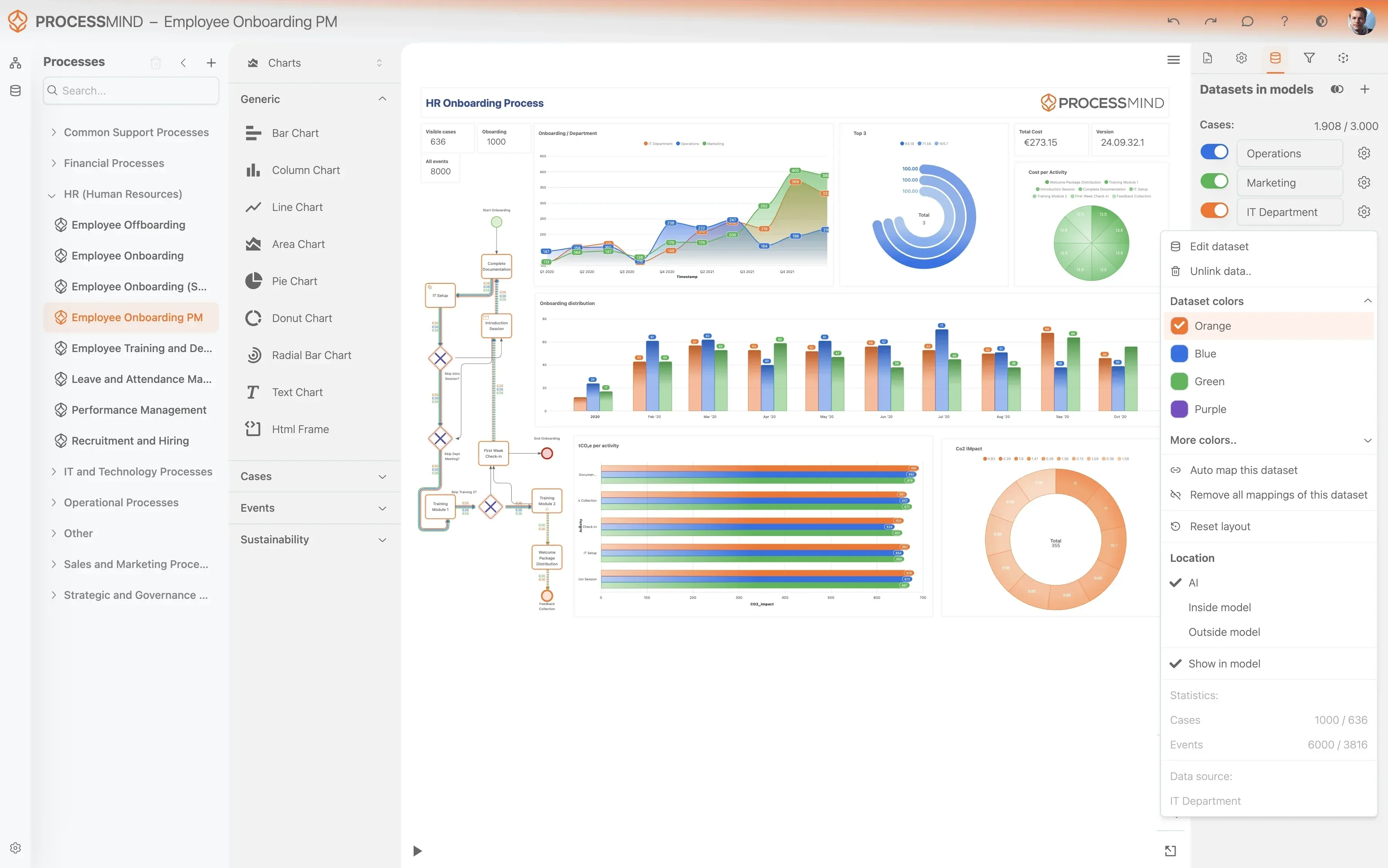
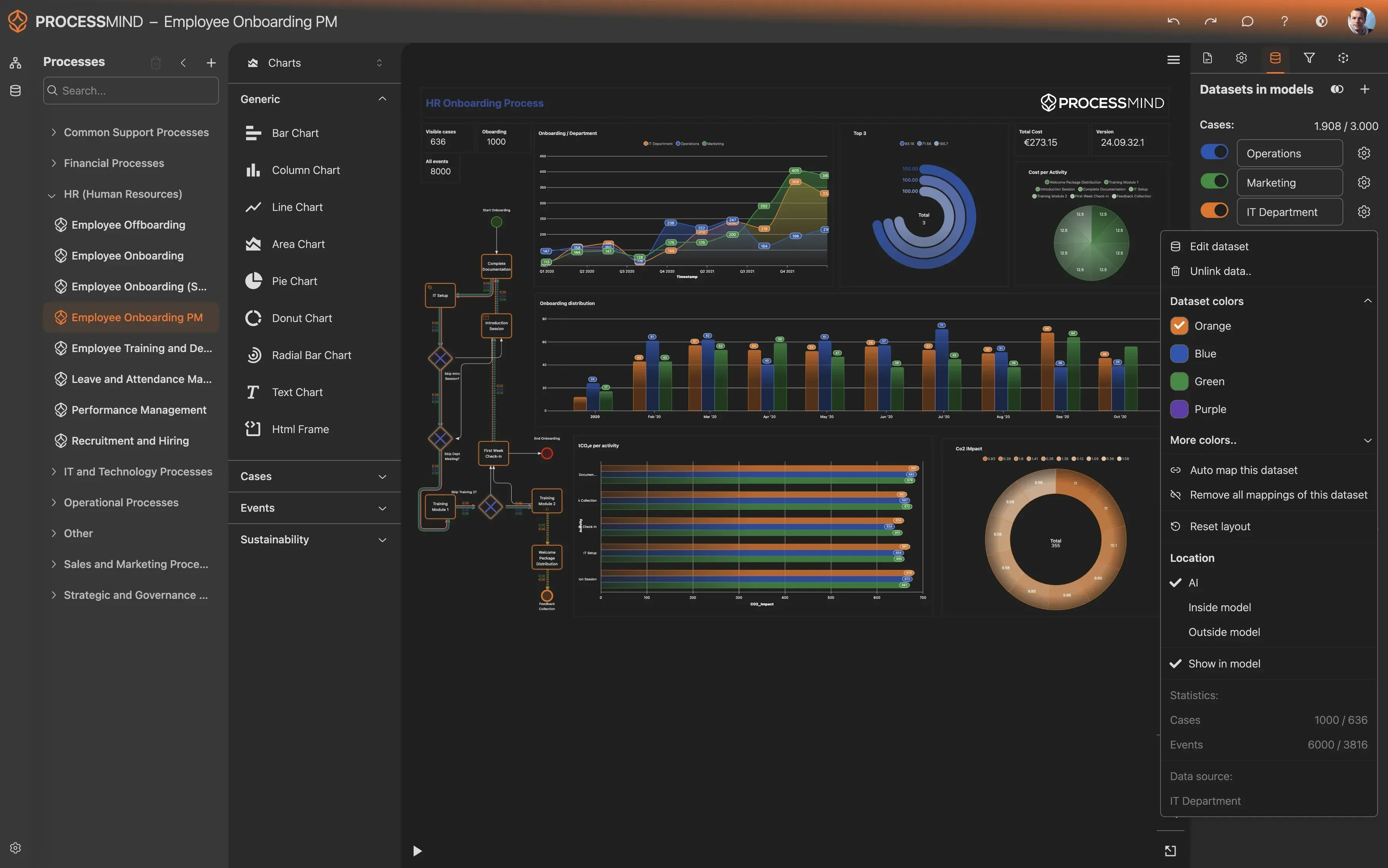
Explore auto-generated dashboards and interactive process maps that visualize your entire Software Development Lifecycle. Leverage AI-driven recommendations to pinpoint inefficiencies and compliance gaps.
Why it matters
Gain deep visibility into your development workflows, uncover hidden delays, rework loops, and identify specific areas causing extended cycle times or quality issues.
Expected outcome
Clear insights into SDLC bottlenecks, compliance adherence, and actionable opportunities for improvement.
Implement SDLC Improvements
What to do
Based on the insights and recommendations, prioritize and implement changes within your GitLab workflows, such as optimizing merge request approvals or streamlining testing phases. Take concrete action on identified opportunities.
Why it matters
Translating insights into action is key to realizing tangible benefits like faster feature delivery, reduced development costs, and enhanced software quality.
Expected outcome
Strategic changes in your development processes, addressing identified inefficiencies and improving workflow.
Monitor SDLC Progress
What to do
Periodically re-upload updated SDLC data from GitLab to ProcessMind. Continuously track key performance indicators to measure the impact of your implemented improvements over time.
Why it matters
Continuous monitoring ensures that improvements are sustained and allows for agile adjustments, maintaining peak efficiency and adapting to evolving development needs.
Expected outcome
Sustained process improvements, measurable KPI gains, and a data-driven approach to ongoing SDLC optimization.
WHAT YOU WILL GET
Uncover Your SDLC's True Path to Faster Delivery
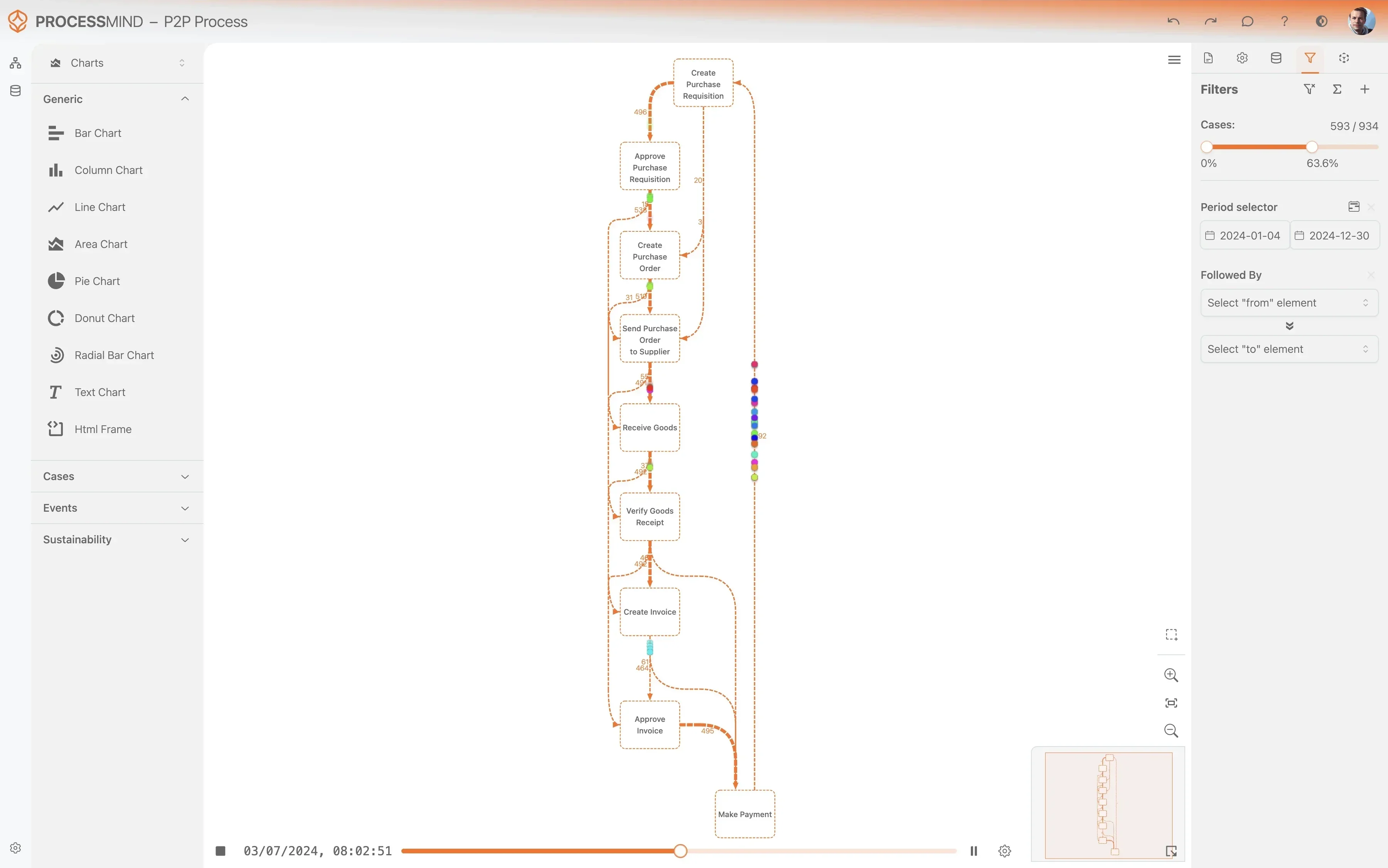
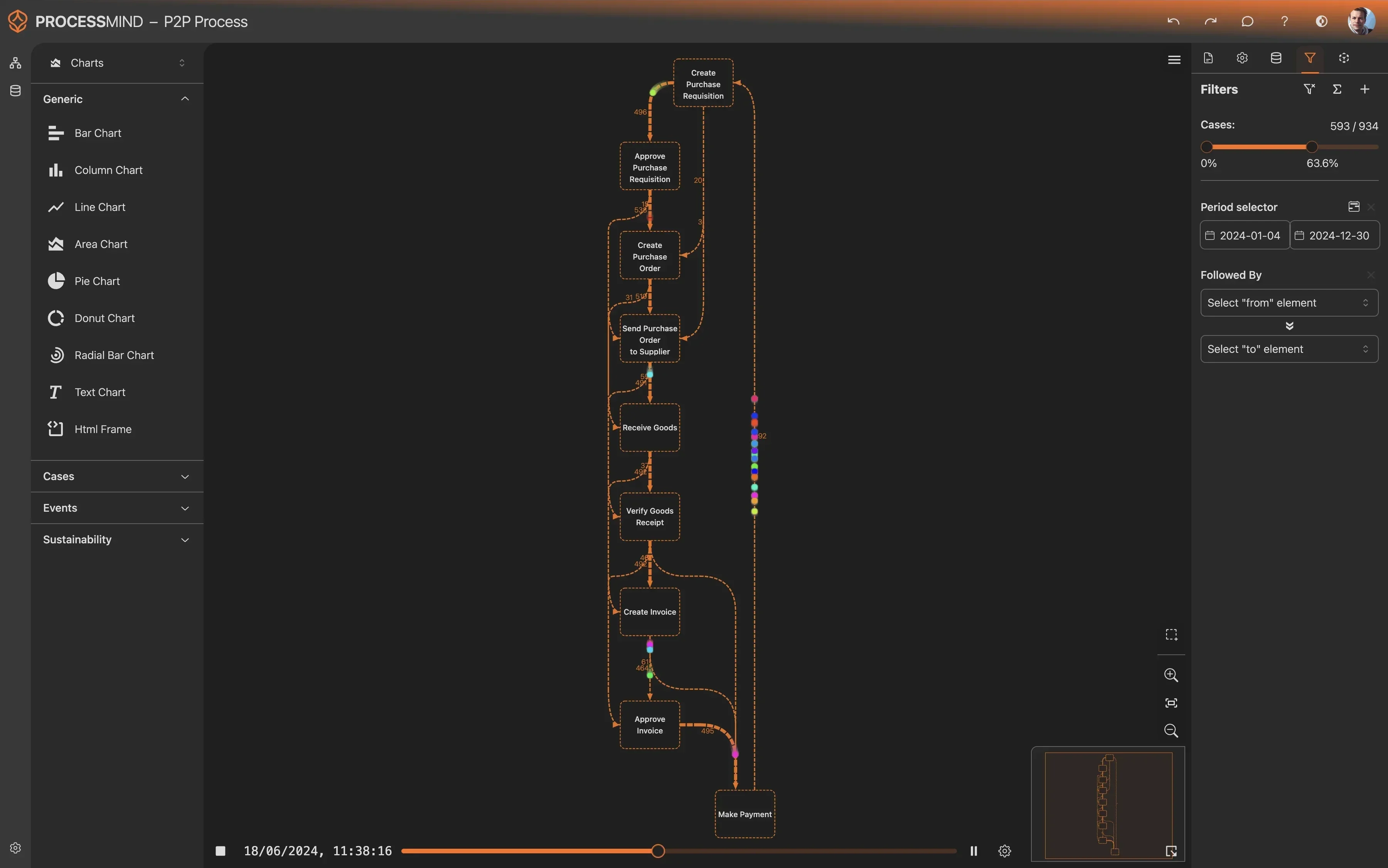
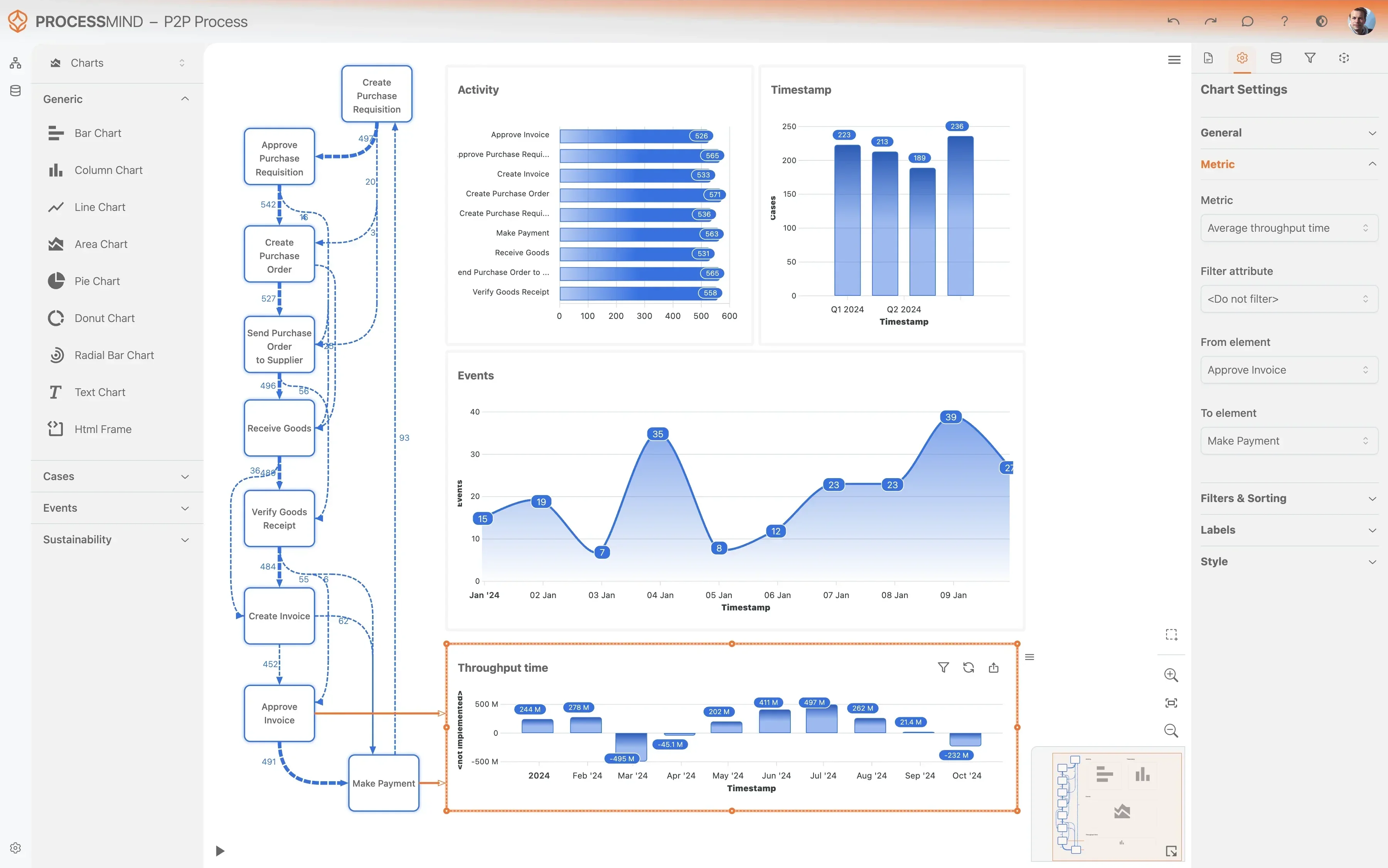
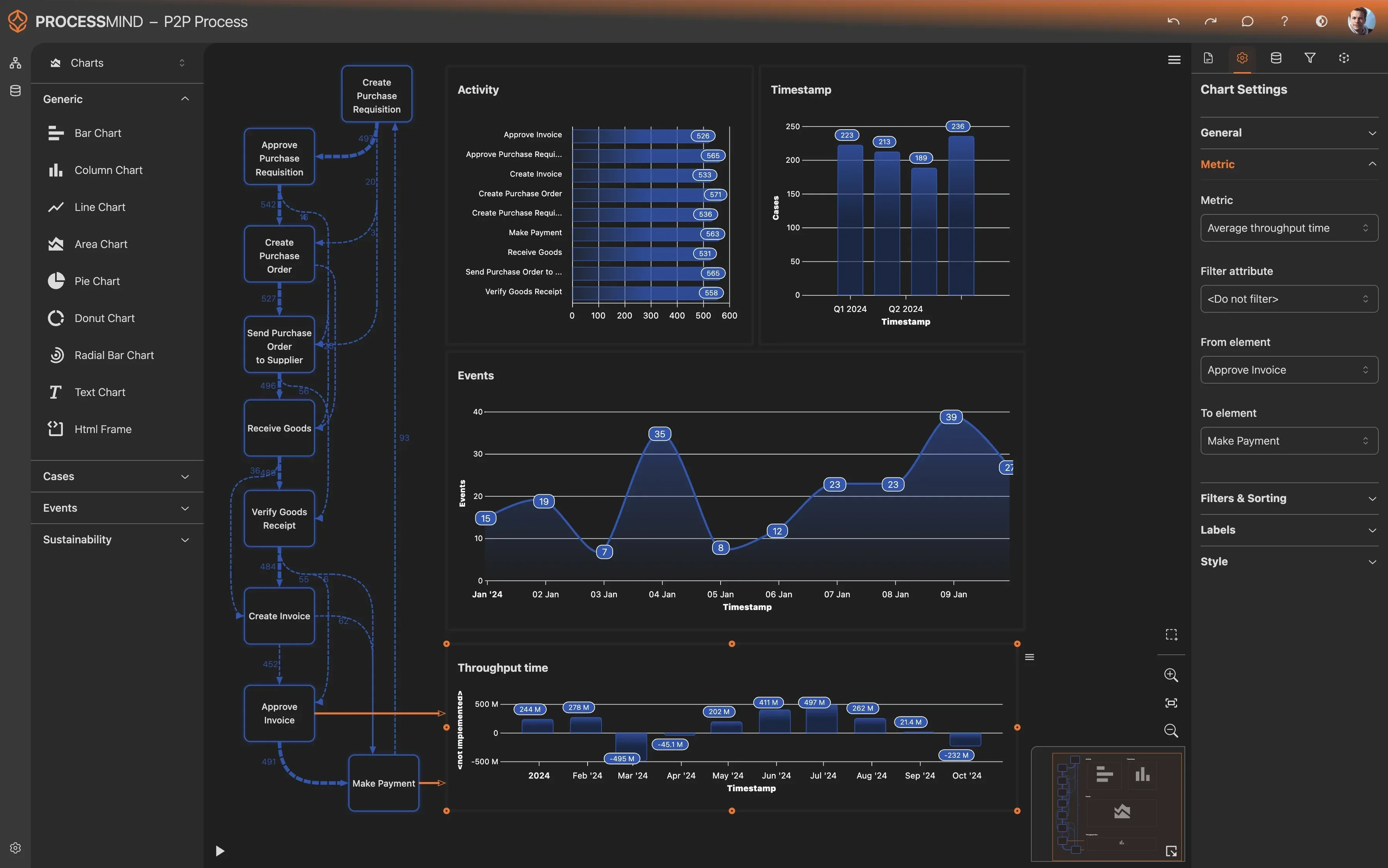
- Map actual code-to-deploy workflow
- Pinpoint delays in dev and testing
- Identify inefficient handoffs
- Accelerate time-to-market for releases
TYPICAL OUTCOMES
Elevate Your Software Development Performance
Process mining for the Software Development Lifecycle illuminates bottlenecks and inefficiencies within your GitLab pipelines, revealing tangible opportunities to accelerate delivery and enhance quality. These outcomes highlight the common gains achieved by teams optimizing their development processes.
Average reduction in development cycle
Streamline your software development process to reduce the total time from idea to production, enabling quicker market response and feature delivery.
Decrease in post-testing re-dos
Pinpoint and eliminate the root causes of rework after testing, leading to higher quality code, fewer defects, and a more efficient development pipeline.
Increase in standard process following
Ensure your development teams consistently follow established SDLC workflows, reducing deviations and improving process predictability and compliance.
Average time reduction to production
Optimize the final stages of your SDLC to accelerate deployments, getting new features and fixes to users faster and improving release predictability.
Decrease in critical issue escalations
Proactively identify and resolve issues before they escalate, reducing the frequency of severity spikes and improving overall product stability.
Results vary based on current process maturity, team structure, and data completeness. The figures presented reflect typical improvements observed across diverse implementations.
Recommended Data
FAQs
Frequently asked questions
Process mining analyzes your GitLab data to reveal the actual flow of your SDLC. It helps identify bottlenecks, like excessive code review times or frequent rework, and uncovers deviations from standard workflows. This insight enables you to optimize cycle times, reduce costs, and enhance overall efficiency.
You primarily need event logs detailing activities within your development items. This includes the Case Identifier, which is your Development Item ID, Activity Name, such as "Code Review Started" or "Testing Completed", and Timestamp for each event. Additional attributes, like assignee or item status, can provide richer insights.
Data can typically be extracted using GitLab's API to access issue, merge request, and pipeline activity logs. Many organizations also leverage custom scripts or integrate with existing data warehousing solutions. The goal is to collect event data in a structured format, usually CSV or JSON, suitable for process mining tools.
You can expect to reduce SDLC cycle times by identifying and eliminating inefficiencies. Typical improvements include accelerating code review, minimizing rework from failed testing, and enhancing adherence to planned release schedules. Ultimately, it leads to better resource allocation and faster deployment to production.
Yes, process mining works by analyzing your existing data, not by altering your current GitLab setup or workflows. It acts as a diagnostic tool, providing insights into your processes as they are. This non-invasive approach ensures minimal disruption during analysis.
Initial data extraction and preparation can take from a few days to a couple of weeks, depending on data availability and complexity. Once the data is in a process mining tool, first insights into process flows and bottlenecks can often be generated within a few hours to days. Deeper analysis and actionable recommendations will follow shortly after.
While basic data analysis skills are helpful, many modern process mining tools offer user-friendly interfaces. You will need some technical knowledge for data extraction and potentially for integrating with your GitLab environment. Some organizations opt for consulting services to accelerate their initial setup and analysis.
Absolutely. Process mining visualizes every path taken by your development items, clearly showing deviations from the intended, ideal workflow. By comparing actual paths against standard processes, you can pinpoint exactly where and when deviations occur. This helps identify the root causes for developers bypassing established procedures.
By identifying process inefficiencies that lead to rework and retesting, process mining directly targets cost reduction in QA. It highlights areas of frequent failure, like inconsistent user acceptance testing or specific stages with high defect rates. Addressing these root causes through process optimization significantly lowers testing expenditures.
Data quality is crucial, but process mining tools are designed to handle real-world data, which often includes inconsistencies. The initial phase often involves data cleaning and transformation to ensure accuracy. Even with imperfect data, process mining can still uncover valuable patterns and areas for improvement, while also highlighting data quality issues themselves.
Boost Your Software Development Lifecycle: Start Optimizing Now
Eliminate SDLC bottlenecks, reduce cycle time by 30%, and boost quality.
No credit card required, start optimizing instantly.