Improve Your Patient Journey

Select a process
Choose a process to continue working in your connected workspace.
Optimize Patient Journey Workflows in Epic EHR
Our platform provides deep visibility into your daily workflows by uncovering hidden bottlenecks and deviations that slow down progress. By analyzing event data, you can pinpoint exactly where delays occur and determine the root causes of operational friction. This insight allows you to streamline clinical paths and ensure a more efficient experience for everyone involved.
Download our pre-configured data template and address common challenges to reach your efficiency goals. Follow our six-step improvement plan and consult the Data Template Guide to transform your operations.
Show detailed description
The Strategic Value of Optimizing Patient Journeys
In the modern healthcare landscape, the patient journey is more than a series of clinical encounters, it is a complex web of interactions that determines the quality of care and the financial health of the organization. When you manage a patient journey within Epic EHR, you are dealing with a vast ecosystem where every registration, triage note, and medication order leaves a digital footprint. However, the sheer volume of data often obscures the actual flow of patients through your facilities. Optimizing this journey is essential because inefficiencies do not just represent lost revenue, they can lead to poorer clinical outcomes, increased clinician burnout, and decreased patient satisfaction. By focusing on process optimization, healthcare leaders can move away from anecdotal evidence and toward a data driven strategy that ensures patients receive the right care at the right time.
Turning Epic EHR Data into Process Intelligence
Process mining acts as a bridge between the raw data stored in Epic modules, such as EpicCare and Cadence, and the actionable insights needed for operational excellence. While Epic provides excellent reporting tools for individual snapshots, process mining looks at the longitudinal record of the patient episode. It connects the dots between a patient being registered in the emergency department and their eventual discharge from a specialized ward. By visualizing the actual path taken by thousands of patients, you can see the deviations from your standard of care protocols. This transparency allows you to identify where the process stalls, whether it is a delay in diagnostic testing or a bottleneck in specialist consultations, without needing to manually audit individual charts.
Targeting Hidden Bottlenecks and Friction Points
One of the most significant challenges in healthcare is the presence of invisible bottlenecks that delay care delivery. For example, a patient might spend hours in a holding pattern because a specific diagnostic result has not been reviewed, or because the discharge planning process did not begin early enough in the stay. Using process mining on your Epic EHR data allows you to isolate these friction points. You might discover that certain departments have a significantly higher cycle time for triage than others, or that specific treatment pathways frequently lead to unexpected readmissions. By pinpointing these areas, you can implement targeted interventions, such as adjusting staffing levels during peak admission times or automating certain notifications within the EHR to prompt faster clinical actions.
Measuring Success through Clinical and Operational KPIs
Improving the patient journey leads to measurable benefits across several key performance indicators. First and foremost is the reduction in total cycle time, which directly impacts bed turnover rates and hospital capacity. When you streamline the flow from admission to discharge, you increase your ability to serve more patients without necessarily adding more physical infrastructure. Furthermore, process mining helps ensure compliance with clinical pathways, which is critical for both patient safety and insurance reimbursement. By reducing the variance in how care is delivered, you create a more predictable and reliable environment. This not only improves the bottom line by reducing wasted resources but also enhances the patient experience by providing a smoother, more transparent path to recovery.
Advancing Your Healthcare Operations
Starting the journey toward a fully optimized clinical process does not require a complete overhaul of your existing systems. Instead, it begins with a shift in perspective, moving from managing individual tasks to managing the end to end flow. By leveraging specialized templates designed for Epic EHR, you can quickly gain visibility into your current state and begin identifying the low hanging fruit for improvement. Whether your goal is to reduce wait times in the emergency department, improve the efficiency of your surgical suites, or ensure timely follow up after discharge, the data already exists within your system. The key is to use process mining to unlock that data, allowing you to make informed decisions that benefit both your staff and the patients who rely on your care.
The 6-Step Improvement Path for Patient Journey
Download the Template
What to do
Obtain the specialized Excel template designed for Epic EHR data structures, ensuring all clinical and administrative fields are mapped correctly.
Why it matters
Starting with a pre-configured structure reduces mapping errors and aligns your patient episode data with process mining requirements.
Expected outcome
A ready-to-use data structure for your patient journey analysis.
Export Your Data
What to do
Use Reporting Workbench or Clarity to extract three to six months of patient encounter logs from Epic modules like Cadence and EpicCare.
Why it matters
Historical data provides a realistic baseline of how patients actually move through your facility, revealing hidden bottlenecks.
Expected outcome
A comprehensive dataset of recent patient interactions and clinical events.
Upload Your Dataset
What to do
Securely upload your completed file to ProcessMind to initiate the automated process discovery and mapping sequence.
Why it matters
Fast processing transforms raw clinical logs into interactive visualizations, allowing for immediate identification of flow inefficiencies.
Expected outcome
A digitized, end-to-end visualization of your actual patient journeys.
Analyze Your Process
What to do
Explore AI-generated dashboards to pinpoint delays in triage, diagnostics, or discharge and review automated optimization recommendations.
Why it matters
Understanding where clinical pathways deviate from the standard of care helps in reducing treatment variability and improving outcomes.
Expected outcome
Clear identification of primary bottlenecks and compliance gaps in care delivery.
Implement Improvements
What to do
Prioritize process changes, such as streamlining discharge planning or optimizing specialist consultations, and update Epic workflows accordingly.
Why it matters
Taking action on data-driven insights directly translates to shorter wait times and better utilization of clinical resources.
Expected outcome
Actionable changes deployed within your clinical and administrative teams.
Monitor Your Process
What to do
Regularly refresh your data to track the impact of changes on key performance indicators like length of stay and readmission rates.
Why it matters
Continuous monitoring ensures that improvements are sustained and allows you to pivot quickly if new bottlenecks emerge.
Expected outcome
Ongoing visibility into process health and measurable ROI of improvements.
YOUR CLINICAL INSIGHTS
Gain Complete Clarity on Your Epic EHR Workflows
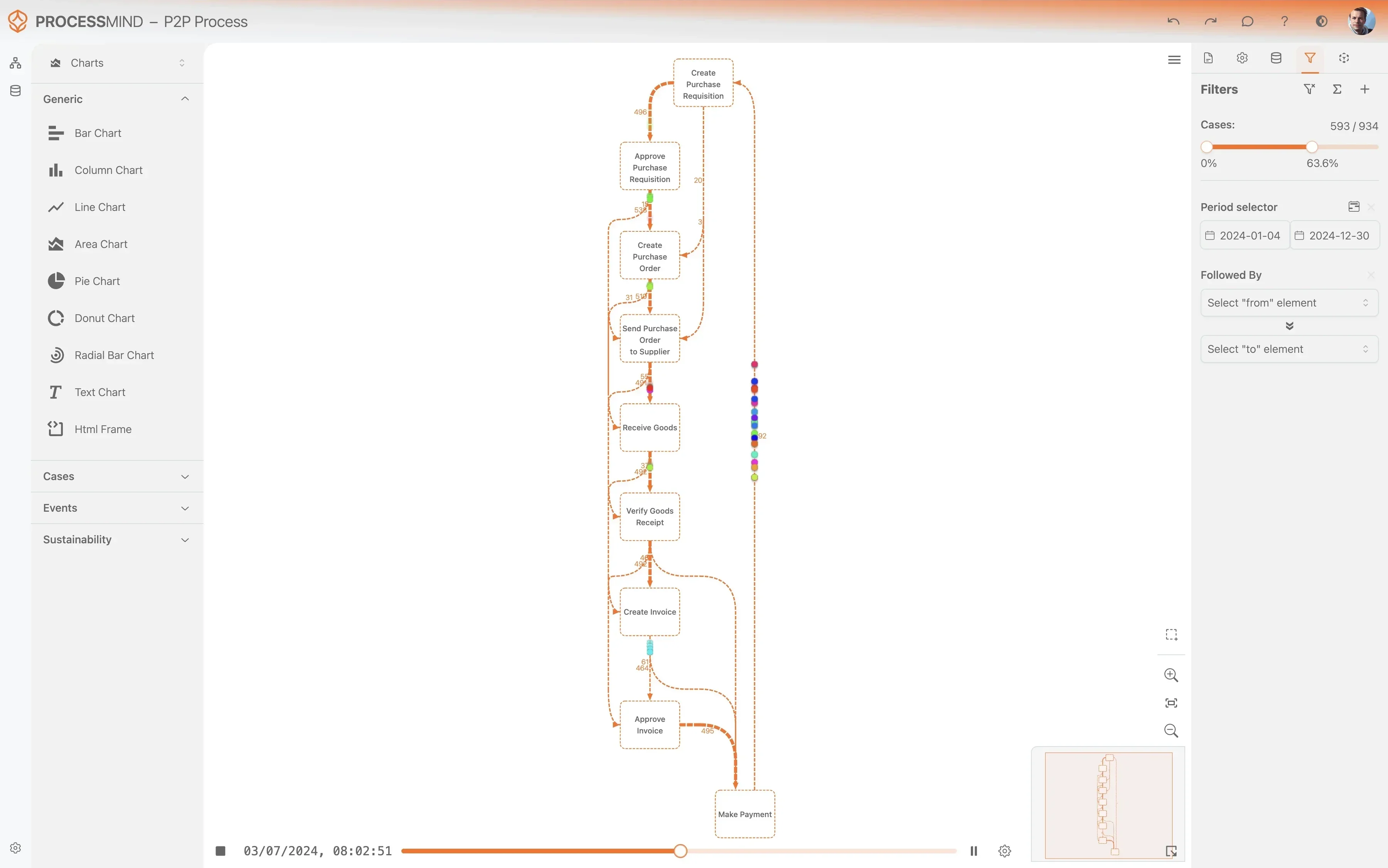
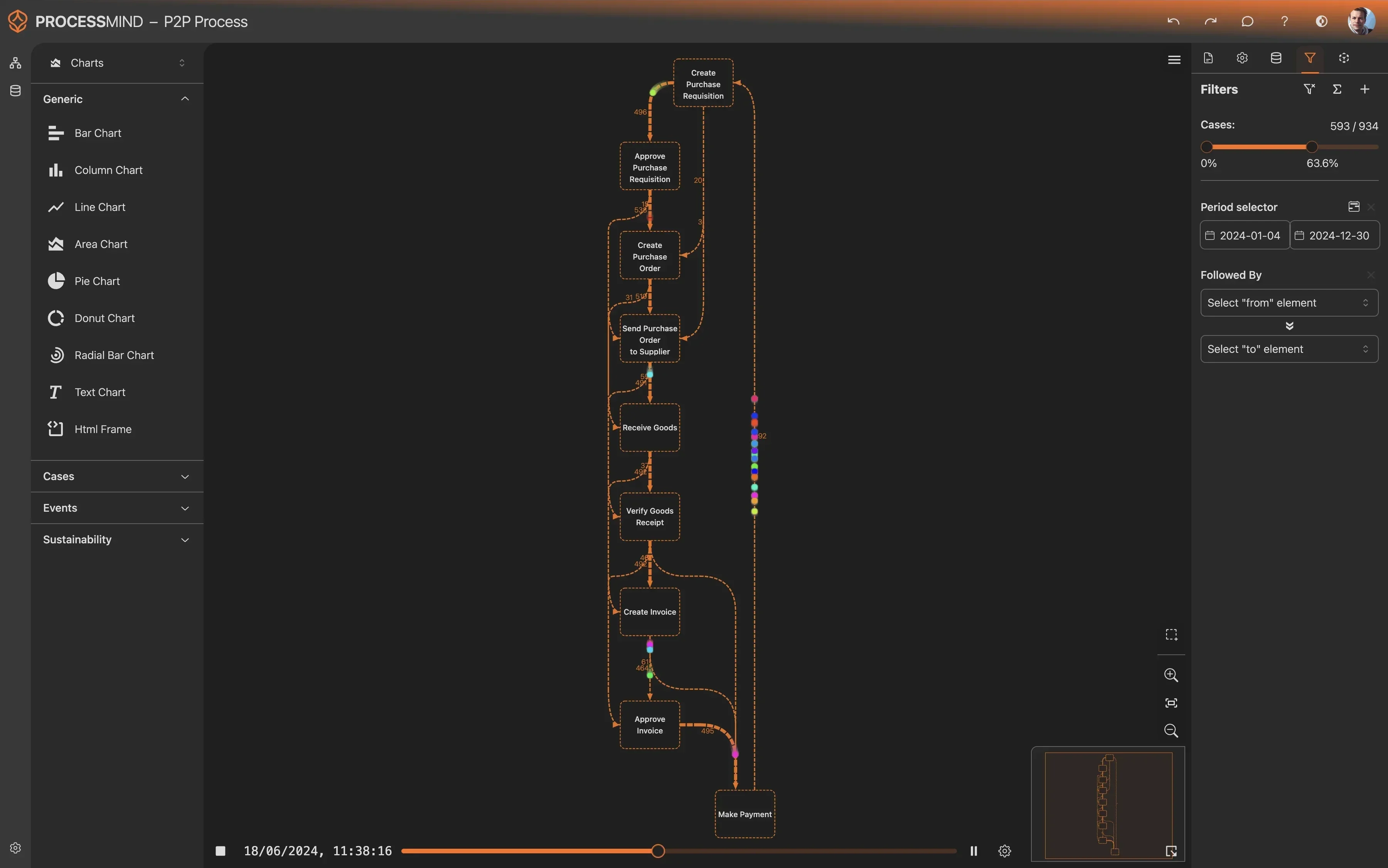
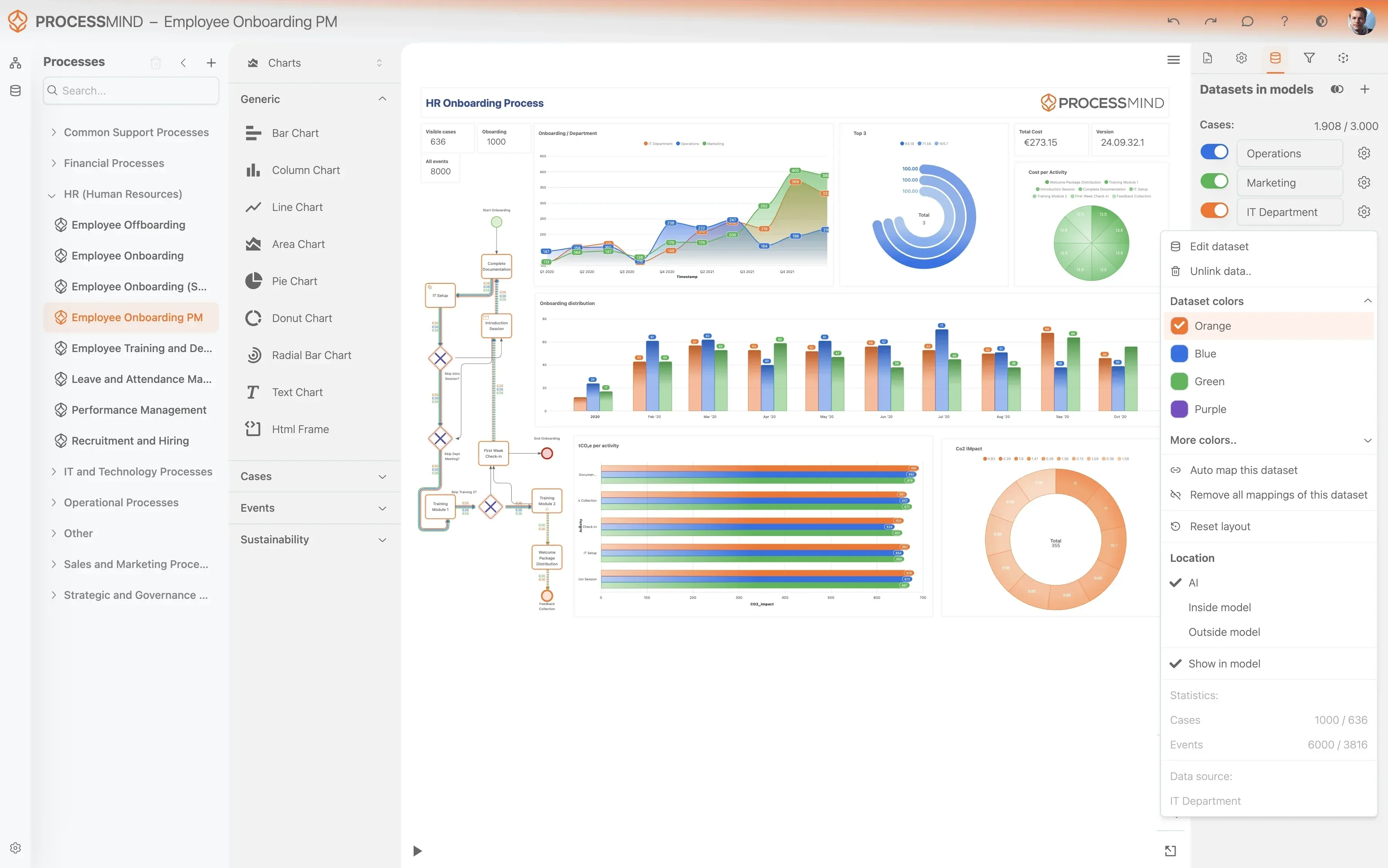
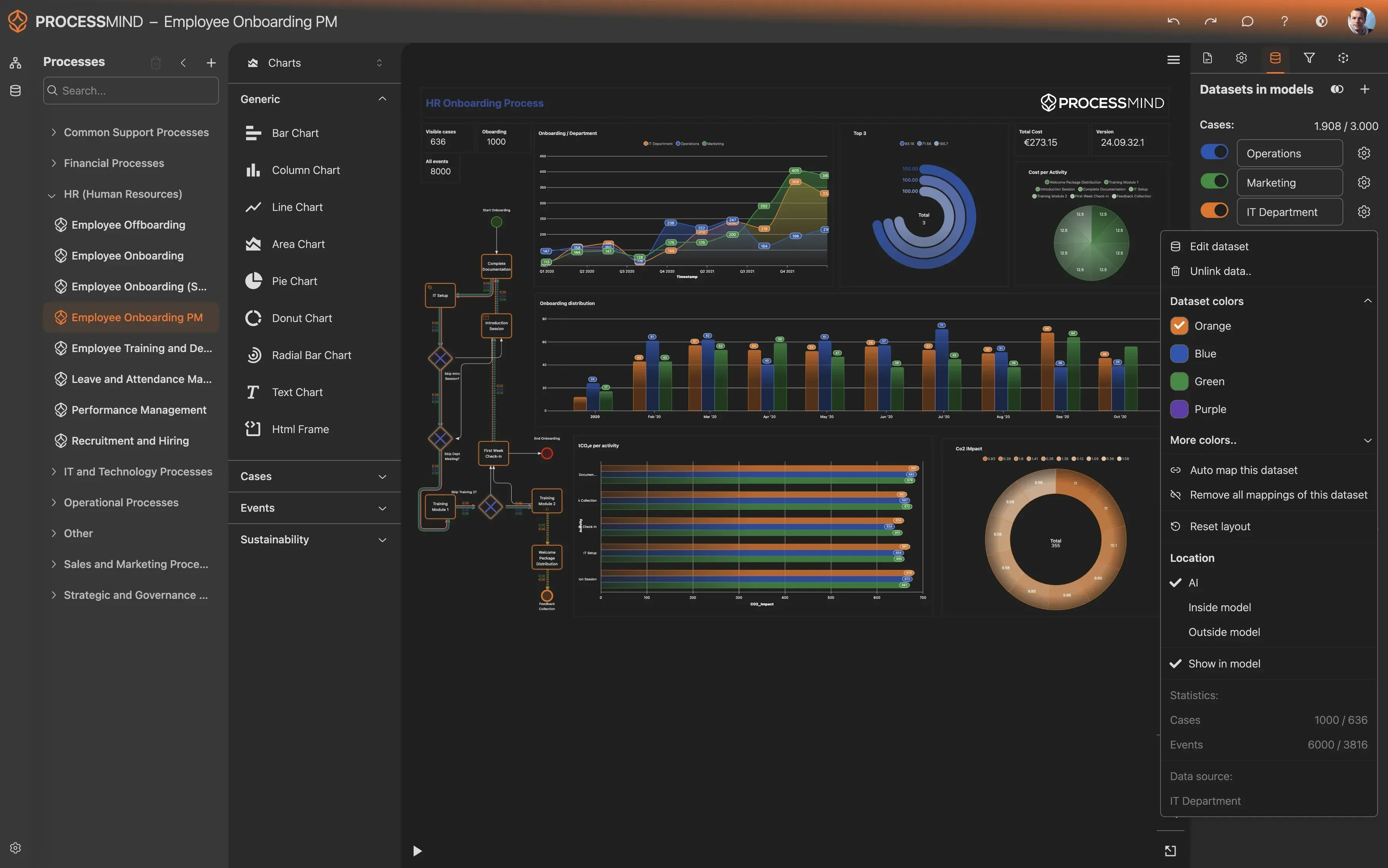
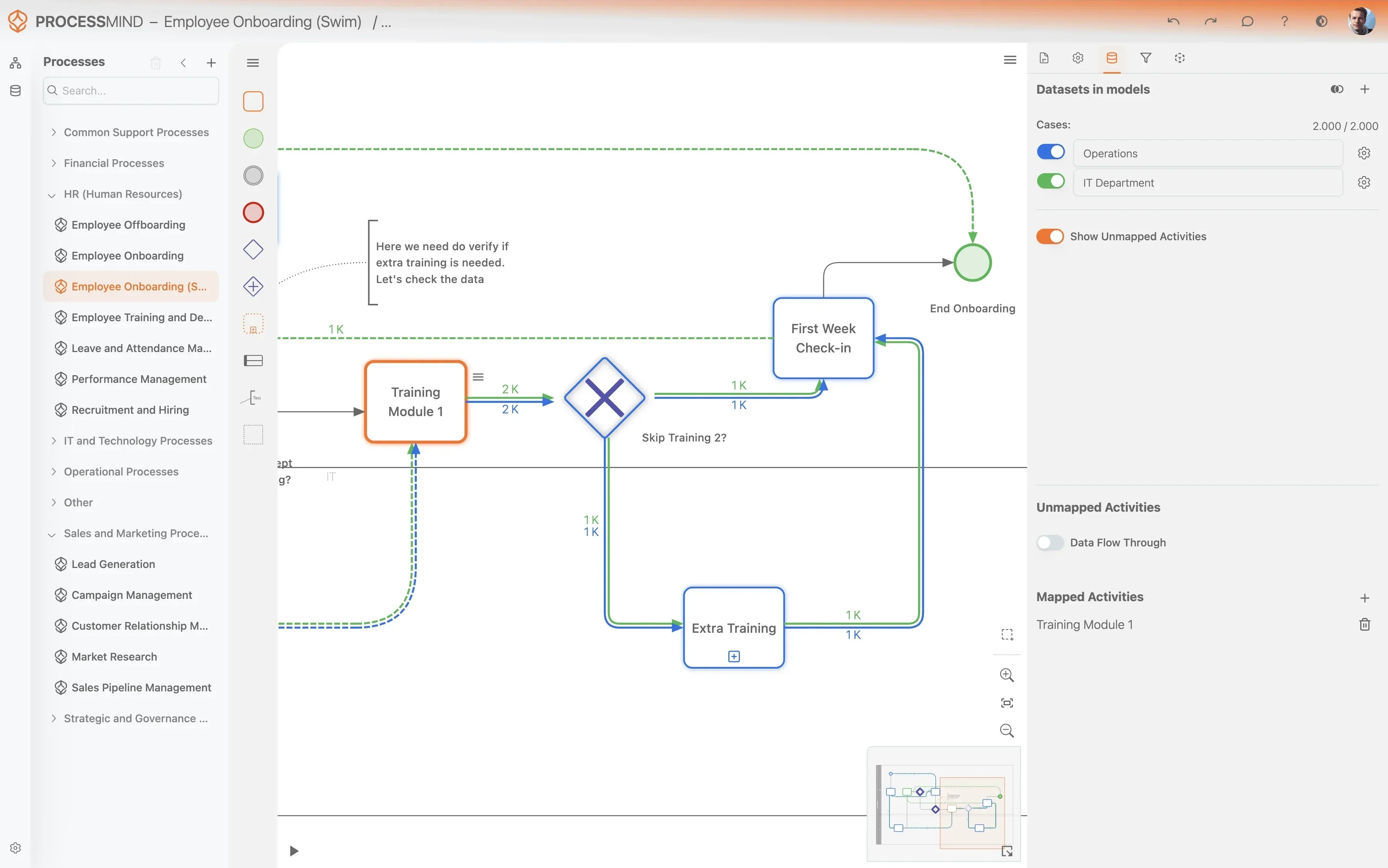
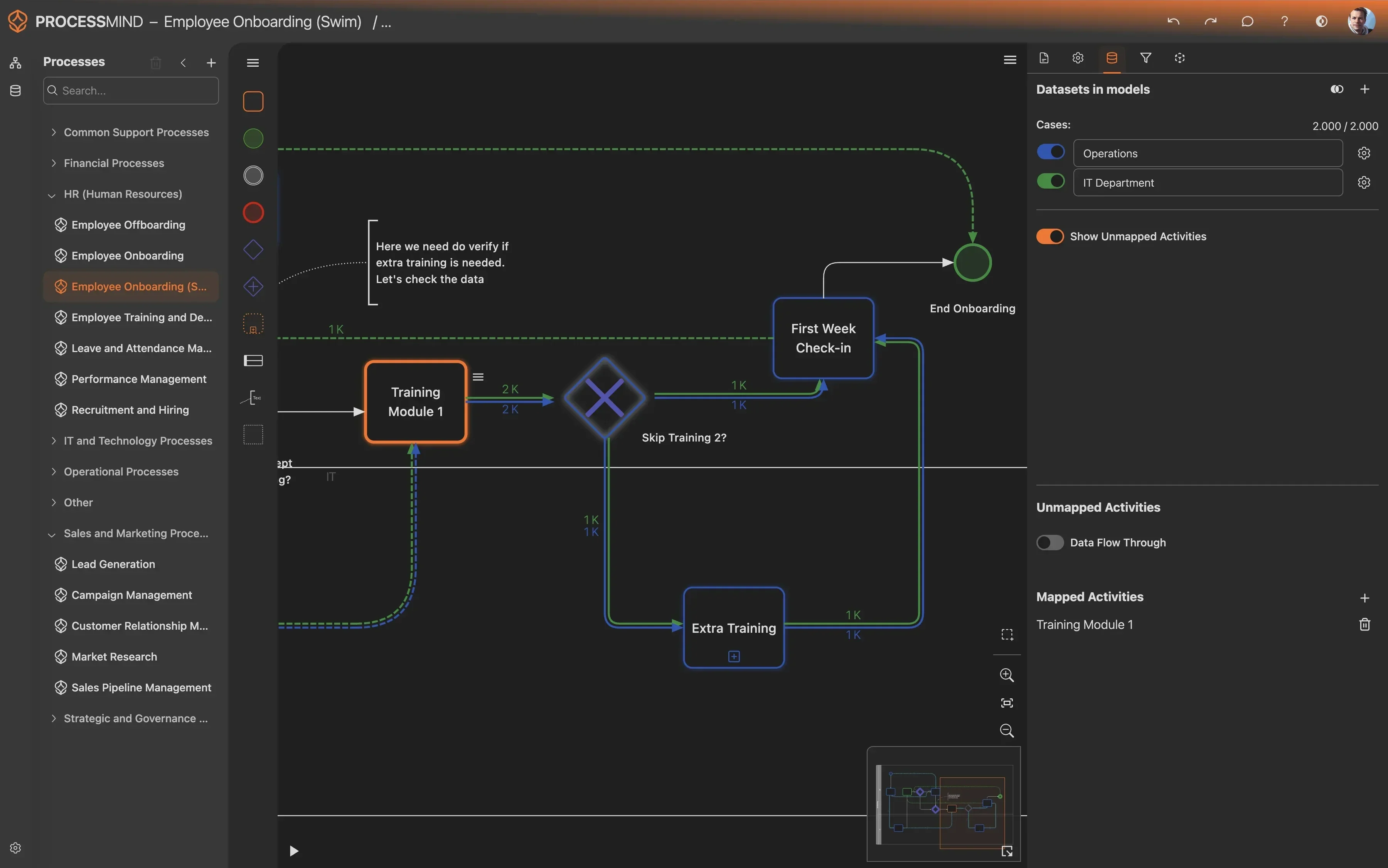
- Visualize actual patient paths in real time
- Identify root causes of discharge delays
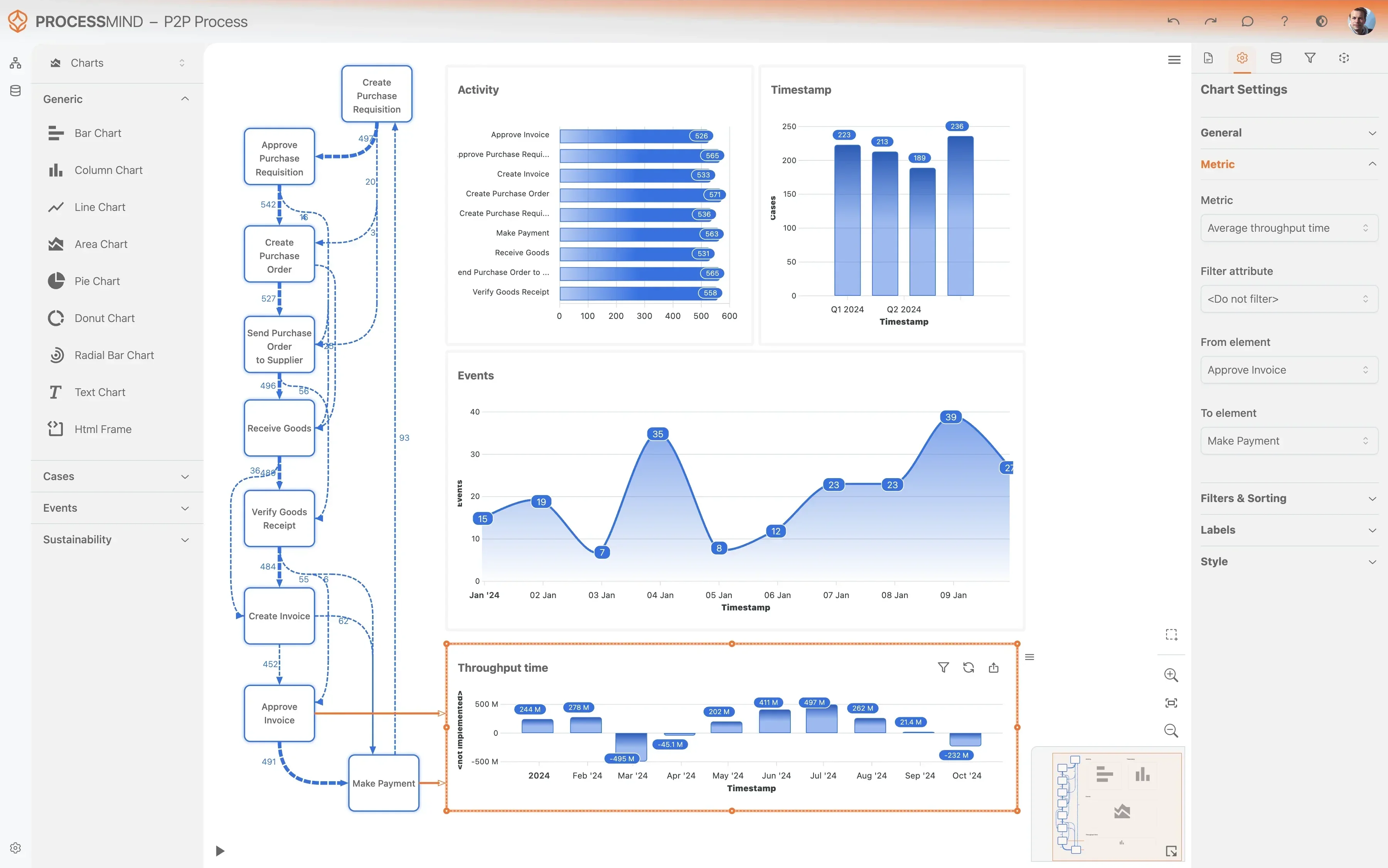
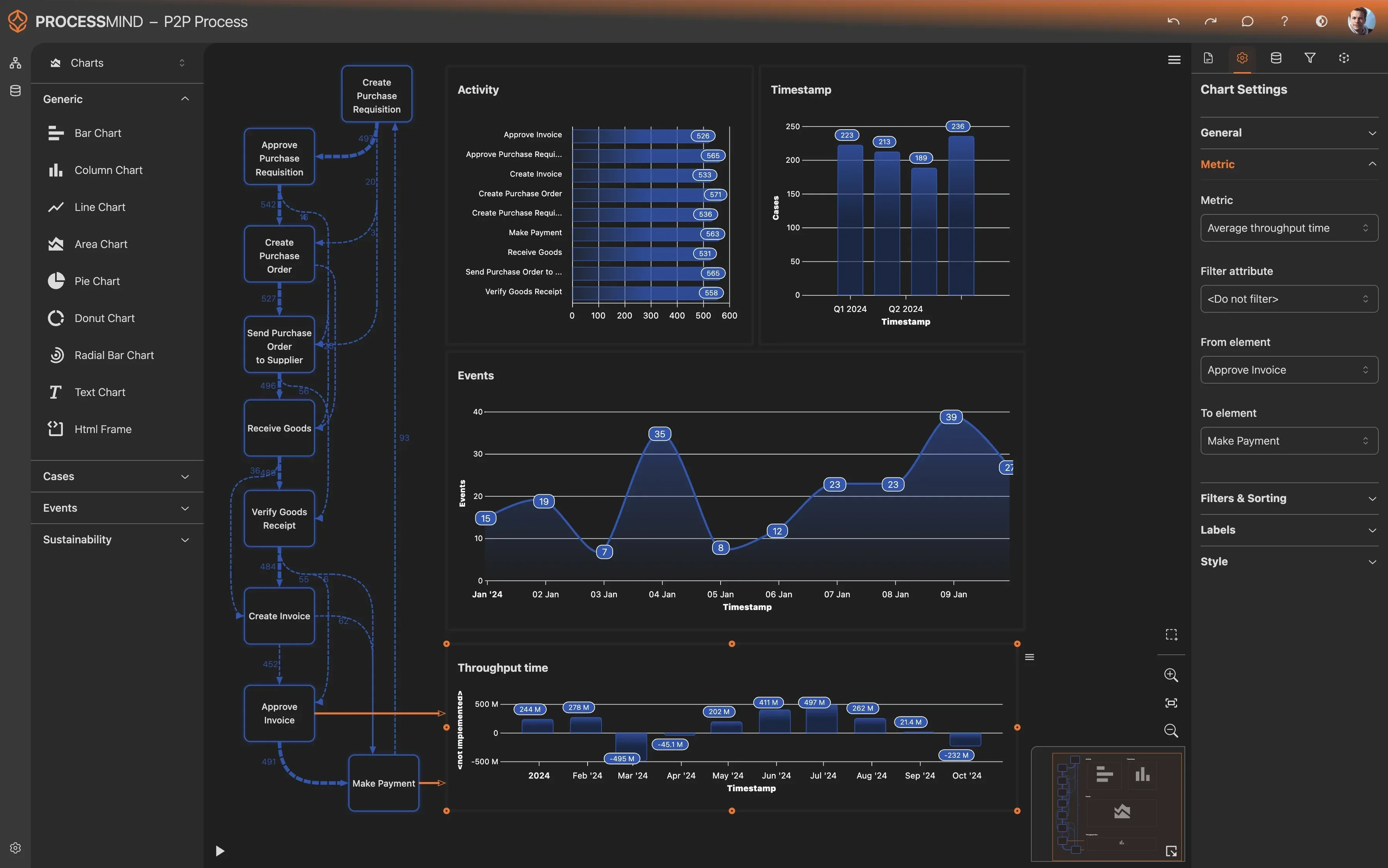
- Analyze triage performance across departments
- Track the impact of operational changes
PROVEN OUTCOMES
Optimizing Clinical and Operational Excellence
Healthcare organizations leverage process mining to visualize the complete Patient Episode within Epic EHR, allowing teams to eliminate care delays and improve resource utilization. These metrics demonstrate the impact of data-driven process optimization on the patient experience.
Reduction in triage completion time
Optimizing the flow from registration to initial assessment allows patients to receive clinical care much earlier in their journey.
Decrease in unplanned readmissions
Identifying gaps in discharge and follow up planning helps prevent patients from returning for unplanned care within 30 days of release.
Increase in protocol conformance
Aligning patient episodes with evidence based standards ensures that all clinical steps are performed in the correct sequence for better health outcomes.
Reduction in total length of stay
Initiating discharge planning earlier in the patient episode frees up critical bed space and reduces logistical bottlenecks during ward transfers.
Reduction in consultation lead time
Reducing the time between a consultation request and the actual assessment accelerates treatment decisions and improves the patient experience.
Results vary based on process complexity and data quality. These figures represent typical improvements observed across healthcare implementations.
Recommended Data
FAQs
Frequently asked questions
Process mining uses your Epic EHR log data to visualize exactly how patients move through your facility. It identifies hidden bottlenecks such as triage delays or ward transfer lags that traditional reporting might miss. This data-driven approach helps you transition from guessing where problems exist to seeing evidence based patterns.
You typically extract data from the Clarity or Caboodle reporting databases, focusing on event logs tied to the Patient Episode. The extraction needs to include a unique identifier, activity descriptions like triage start or discharge complete, and a timestamp for each event. Most teams use standard SQL queries or existing ETL pipelines to pull this information securely.
Yes, the tool can pinpoint exactly where the discharge process stalls, whether it is waiting for transport, pharmacy clearance, or physician sign-off. By visualizing these friction points, clinical managers can implement targeted changes to shorten the discharge cycle and increase bed availability. You can also monitor the impact of these changes in real time to ensure sustained improvement.
No, process mining is non-intrusive and works by analyzing the digital footprints already created by your staff in Epic. It captures the process as it currently exists without requiring clinicians to change how they document patient care. The insights gathered will actually help you simplify workflows by removing unnecessary steps and manual workarounds.
Most healthcare organizations see their first process maps within four to six weeks of initial data extraction. This timeline includes the initial data cleaning, mapping events to the patient journey, and validating the findings with clinical stakeholders. Once the foundation is set, ongoing monitoring provides immediate visibility into daily operations.
Privacy is a top priority, and the process mining setup usually involves de-identifying Patient Episode IDs before the data leaves your secure environment. You can filter out protected health information while still retaining the sequence of events necessary for process optimization. This ensures compliance with HIPAA and other healthcare data regulations while still providing actionable insights.
By analyzing the full patient journey, the tool can find correlations between specific treatment paths and unplanned readmissions. For instance, you might discover that patients who skip specific follow-up scheduling steps or experience rushed discharge planning are more likely to return. These insights allow you to standardize care protocols to improve patient outcomes and reduce return visits.
You generally need a data analyst familiar with Epic reporting structures and a clinical lead to interpret the process maps. The technical maintenance involves managing the data pipeline from Clarity or Caboodle to ensure the analysis reflects the most recent patient episodes. Many organizations start with a small pilot project before scaling to more complex departments.
Optimize Your Patient Journey and Reduce Cycle Time Today
Identify clinical bottlenecks to reduce cycle time by 30%.
No credit card required... Setup takes minutes.