Improve Your Order to Cash - Billing & Invoicing

Select a process
Choose a process to continue working in your connected workspace.
Optimize Your Order-to-Cash Billing and Invoicing Process
Our platform helps you uncover hidden inefficiencies and bottlenecks within your Order to Cash - Billing & Invoicing process. It identifies areas of manual effort, reworks, and delays that impact cash flow and customer satisfaction. Gain insights into process variations and ensure compliance, regardless of your underlying system.
Download our pre-configured data template and address common challenges to reach your efficiency goals. Follow our six-step improvement plan and consult the Data Template Guide to transform your operations.
Show detailed description
The Order to Cash, or OtC, process is the lifeblood of any business, culminating in the critical billing and invoicing phase. While appearing straightforward, this complex journey, from initial sales order fulfillment to the precise reconciliation of final payments, often harbors hidden inefficiencies and compliance risks that can severely impact an organization's financial health. ProcessMind offers an unparalleled analytical lens into your entire Order to Cash - Billing & Invoicing process. By meticulously analyzing every event and activity, we reveal the true execution path of your invoices, payments, and adjustments. This deep dive uncovers bottlenecks that delay payment, identifies deviations from standard operating procedures, highlights areas of manual rework, and exposes opportunities for automation. You gain a comprehensive, data-driven understanding of how your process actually works, rather than how it's supposed to work, providing clarity into cycle times, resource allocation, and adherence to financial regulations.
Organizations universally face challenges in their billing and invoicing workflows, regardless of the industry or the specific systems they employ. Common pain points include extended Days Sales Outstanding, DSO, due to delayed invoice creation or approval, frequent payment discrepancies requiring manual investigation, high rates of credit and re-bill requests, and a lack of transparency into the root causes of these issues. These problems not only strain financial resources but also degrade customer satisfaction and can expose the business to compliance vulnerabilities. ProcessMind directly addresses these universal challenges by offering a holistic view of your process performance. Our platform transforms raw event data from your various source systems into interactive process models, allowing you to visualize every variant, identify non-conforming invoices, and quantify the financial impact of process deviations. The benefits are substantial and immediate: expect to accelerate cash flow significantly, reduce your DSO by optimizing billing cycles, enhance compliance through clear process visibility, minimize operational costs associated with manual errors and rework, and ultimately improve the customer experience by ensuring timely and accurate invoicing.
ProcessMind's power lies in its system-agnostic approach. We seamlessly integrate with any of your source systems, whether it's your primary ERP, accounting software, or specialized billing applications, by ingesting your historical event logs. Our advanced algorithms then reconstruct the complete journey of each invoice, using the Invoice Number as the central case identifier. This allows us to deliver actionable insights into why certain invoices are delayed, which steps contribute most to rework, and where automation can yield the highest return on investment. You'll gain the ability to predict potential payment delays, monitor key performance indicators like first-pass payment rates, and continuously optimize your Order to Cash - Billing & Invoicing process to maintain peak efficiency. Getting started with ProcessMind is designed to be straightforward. To unlock these transformative insights, simply leverage our intuitive data template, which guides you through extracting the necessary event log data from your system. This template ensures that you provide all the critical information needed for our platform to build an accurate, comprehensive, and actionable view of your Order to Cash - Billing & Invoicing performance, setting you on the path to accelerated cash flow and enhanced operational excellence.
The 6-Step Guide to Optimize Billing & Invoicing Processes
Connect & Discover Data
What to do
Integrate your billing and invoicing data from your ERP or other data sources. Include all relevant activities like Invoice Generated, Payment Due Date Reached, and Customer Payment Received.
Why it matters
A comprehensive data connection lays the foundation for accurate process visualization, ensuring no critical step in your Order to Cash cycle is missed.
Expected outcome
All relevant billing and invoicing data successfully extracted and loaded for analysis, providing a complete picture.
Map Your Process Flow
What to do
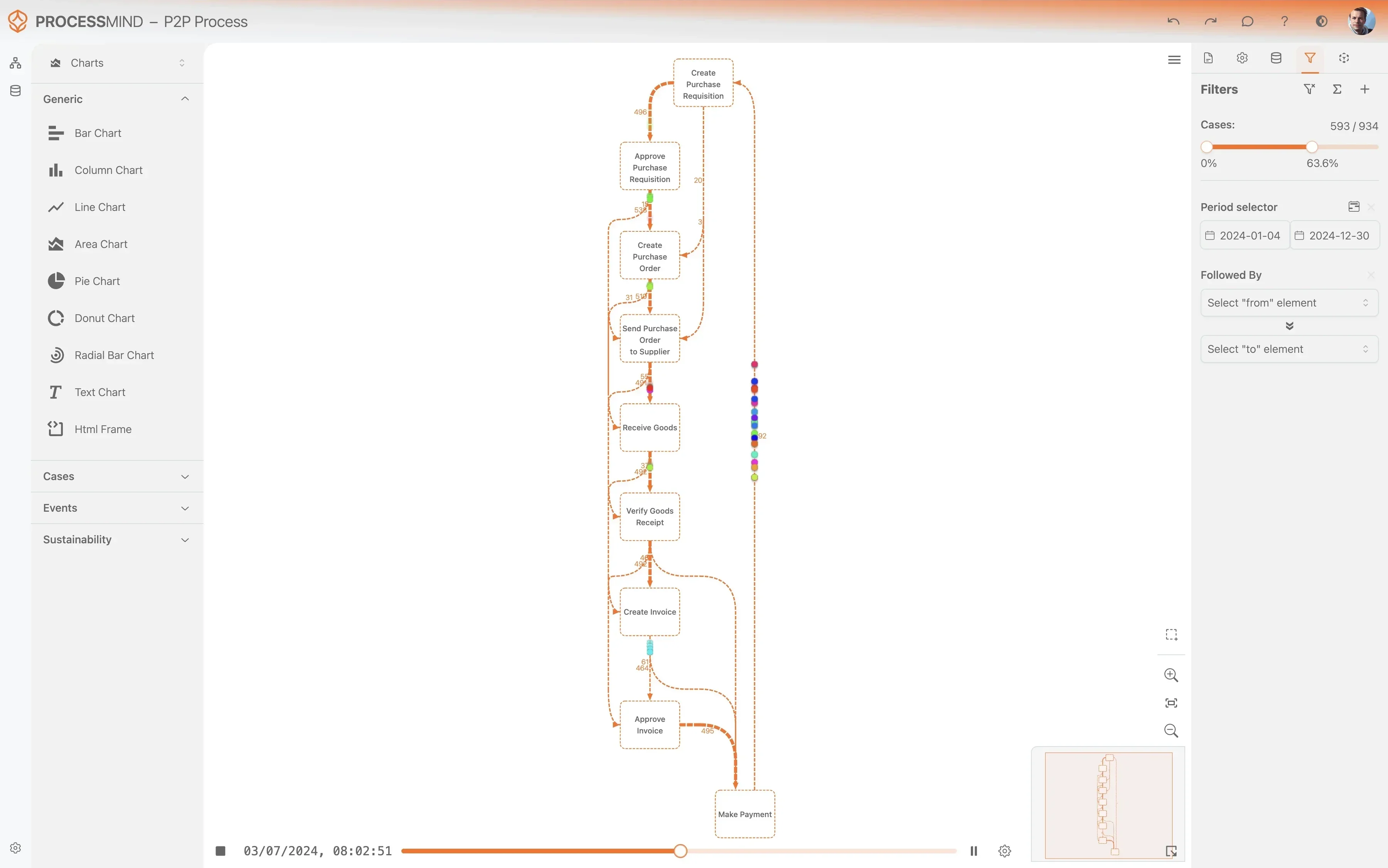
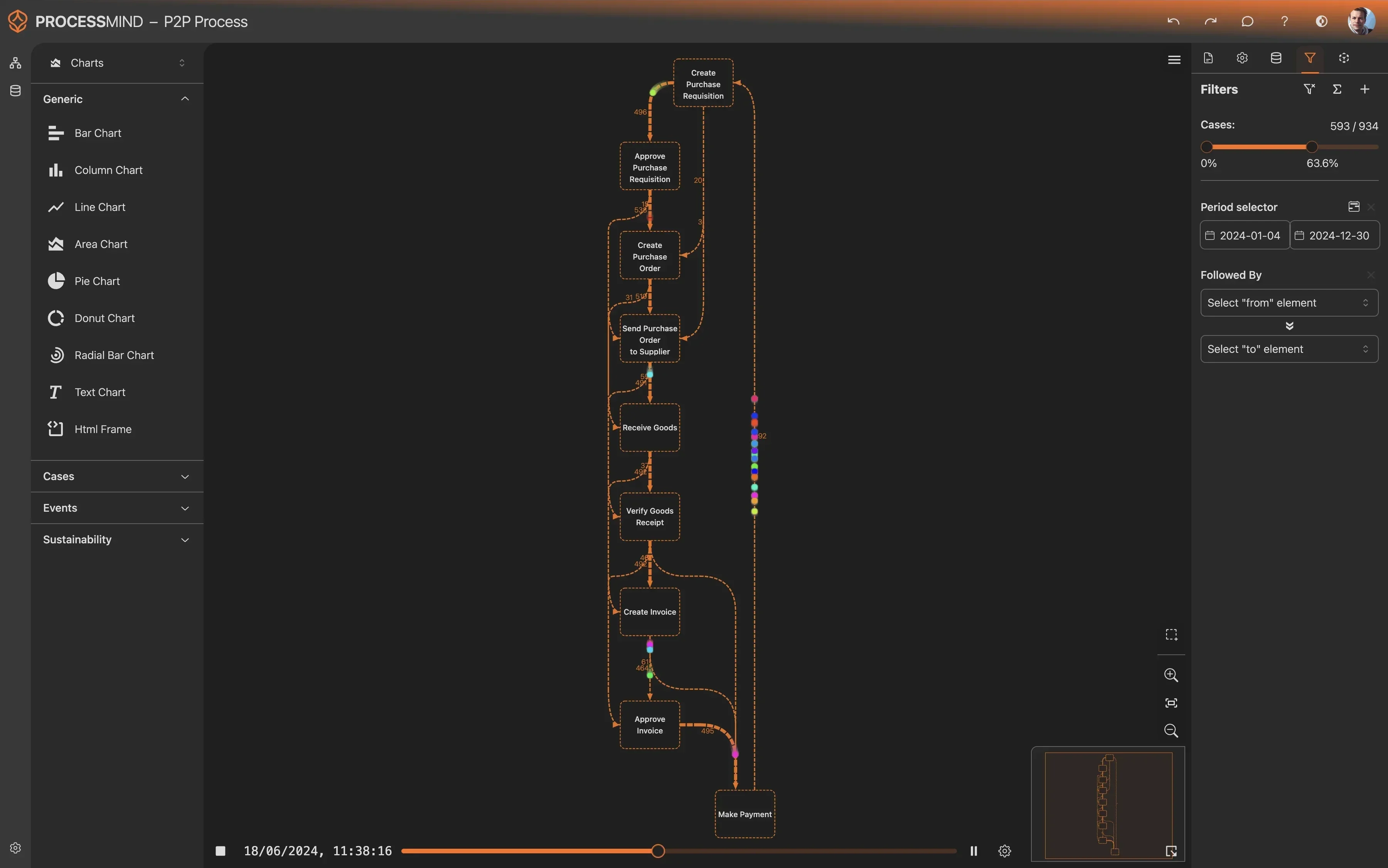
Visualize your end-to-end Order to Cash billing and invoicing process using the extracted data. Focus on common paths from Invoice Generated to Invoice Closed.
Why it matters
Understanding your actual process flow, not just the designed one, is crucial for identifying deviations, rework, and compliance issues.
Expected outcome
A clear, visual representation of your actual Order to Cash billing and invoicing process flow.
Identify Bottlenecks
What to do
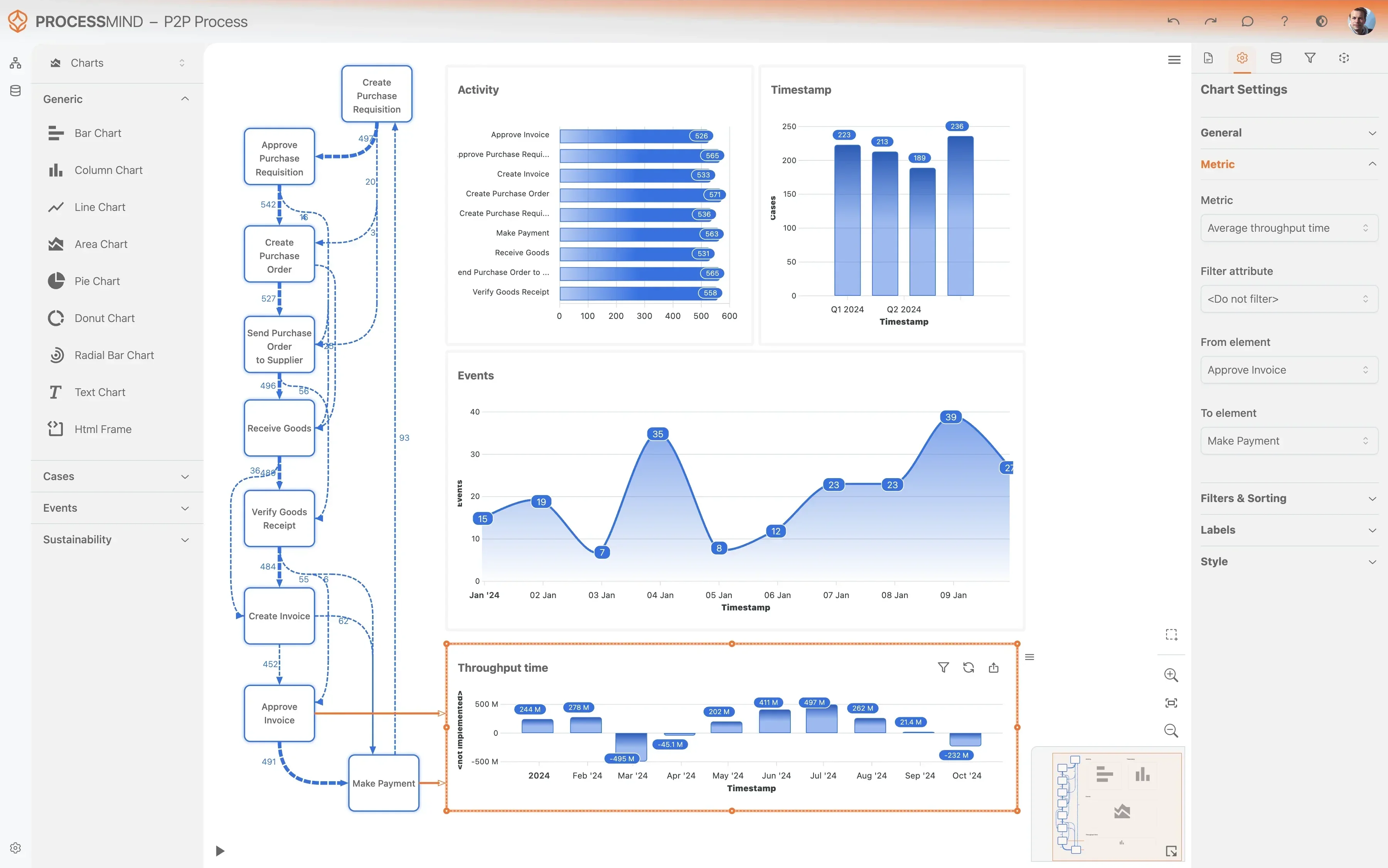
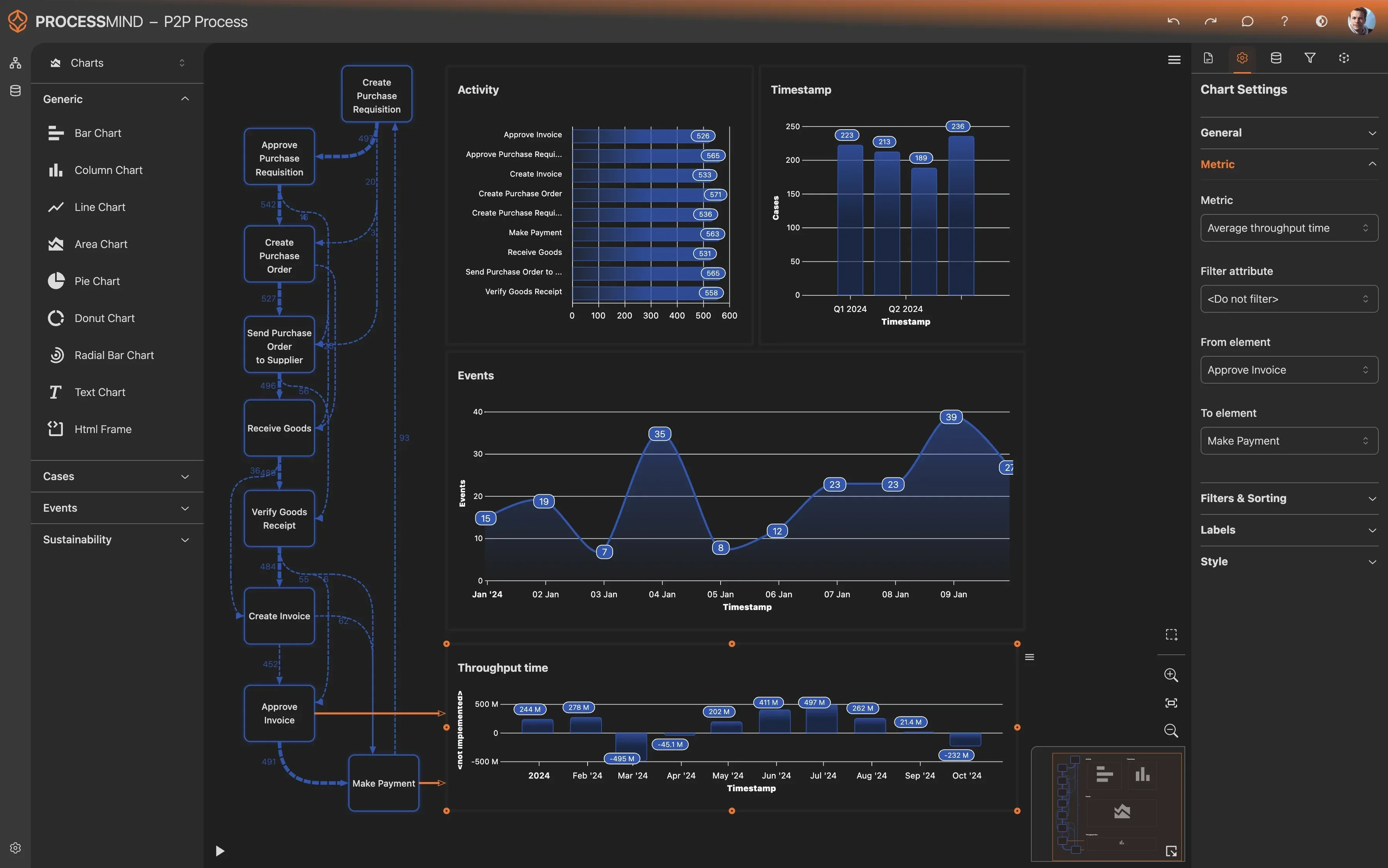
Pinpoint areas in your process where delays frequently occur. Look for long durations between activities like Invoice Sent to Customer and Customer Payment Received.
Why it matters
Identifying bottlenecks reveals where efficiency is lost, helping you target specific areas for improvement and reduce cycle times.
Expected outcome
Key delays and inefficient handoffs within your billing and invoicing process are clearly identified.
Analyze Root Causes
What to do
Investigate the underlying reasons for the identified bottlenecks and deviations. Analyze variations in activity sequences and processing times by attributes.
Why it matters
Understanding 'why' problems occur is essential for developing effective, long-lasting solutions rather than just addressing symptoms.
Expected outcome
The primary causes of process inefficiencies, rework, and delays in billing are clearly understood.
Design Improvements
What to do
Develop concrete action plans based on your root cause analysis. This might involve optimizing activity sequences or automating manual steps in your system.
Why it matters
Designing targeted improvements ensures that proposed changes directly address the identified issues, leading to tangible benefits.
Expected outcome
Specific, actionable process changes are defined to mitigate identified issues and improve overall efficiency.
Monitor & Iterate
What to do
Implement the designed improvements and continuously track their impact on your process KPIs. Regularly review the process to identify new areas for optimization.
Why it matters
Continuous monitoring ensures that improvements are sustained and allows for agile adaptation to new challenges or evolving business needs.
Expected outcome
Ongoing process performance visibility and a framework for continuous optimization and adaptation of your billing process.
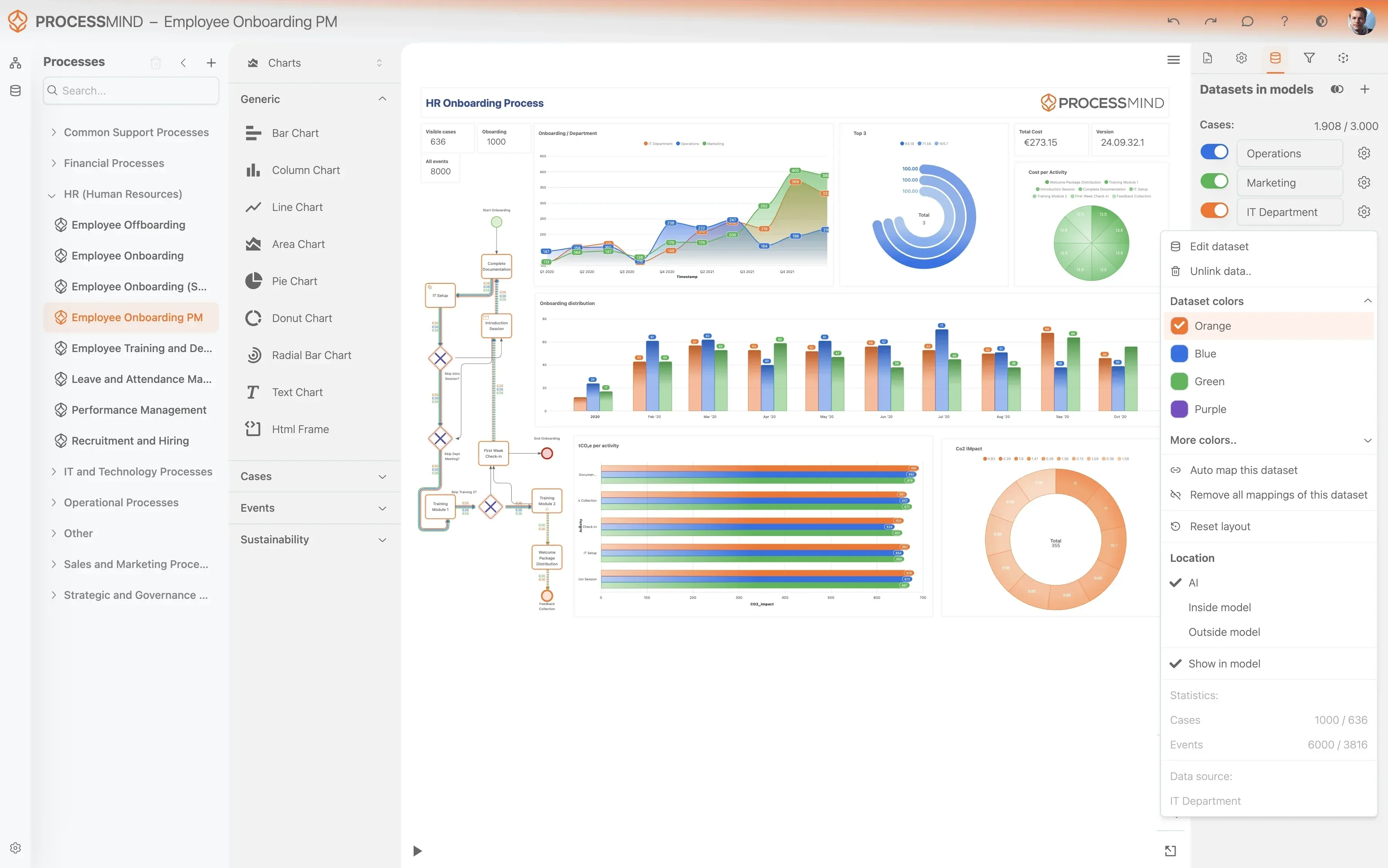
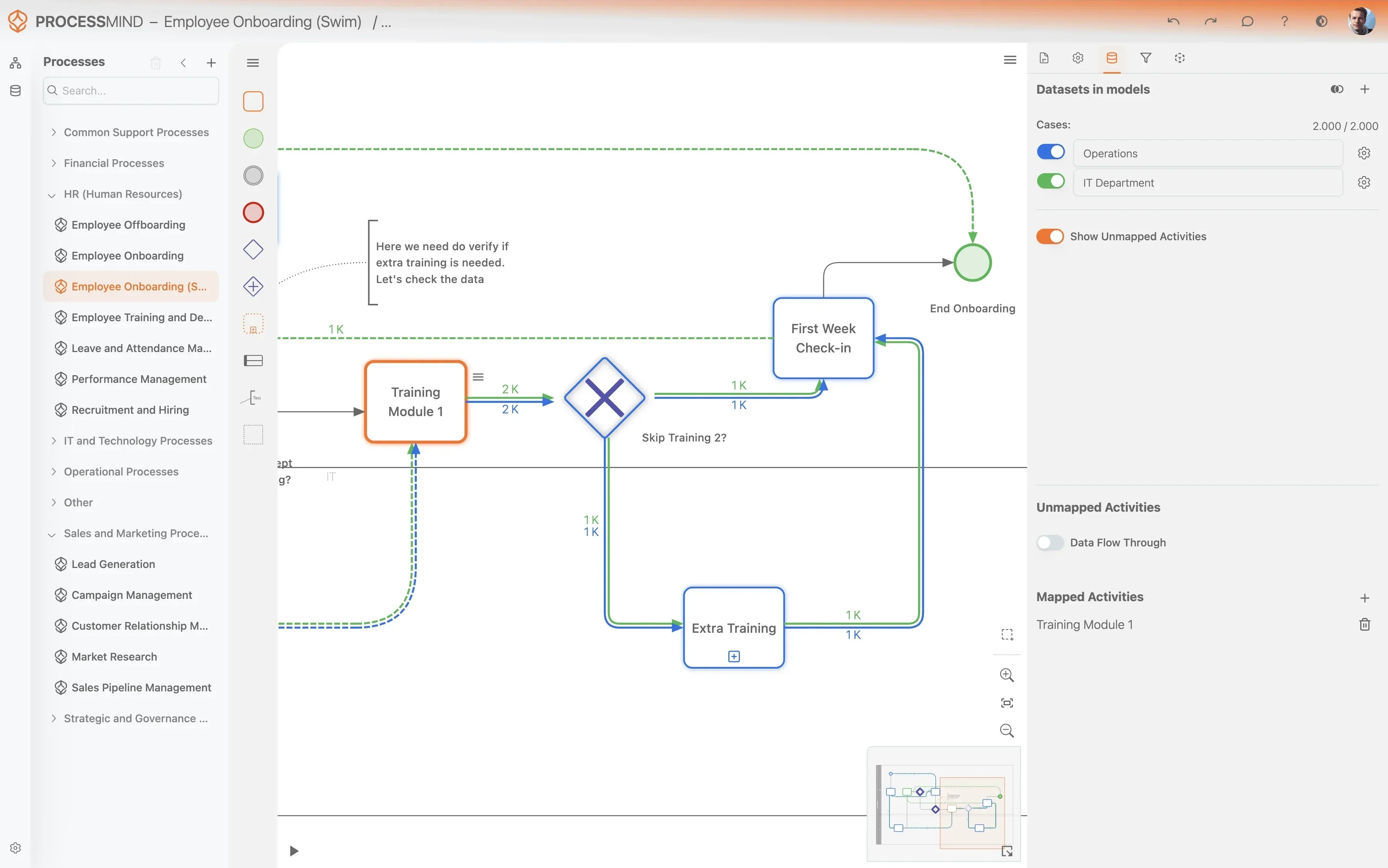
TYPICAL OUTCOMES
Achieving Excellence in Billing & Invoicing
These outcomes showcase the measurable improvements organizations typically achieve by optimizing their Order to Cash, specifically Billing & Invoicing, process through process mining. By identifying bottlenecks and automation opportunities, businesses significantly enhance efficiency and financial performance.
Average reduction in payment collection time
Decrease the average number of days it takes to collect payments from customers, significantly improving cash flow and working capital management.
Reduction in end-to-end invoice cycle time
Accelerate the entire invoice process, from generation to approval, ensuring invoices reach customers quicker and payments are initiated sooner.
Reduction in invoice rework and corrections
Reduce the percentage of invoices requiring modifications or re-submissions due to errors, leading to higher first-pass yield and reduced operational costs.
Speeding up payment reconciliation
Accelerate the time from customer payment receipt to its application and reconciliation, improving financial reporting accuracy and liquidity visibility.
Increased adherence to defined processes
Increase the percentage of billing activities that strictly follow defined process flows and internal policies, reducing deviations and improving audit readiness and compliance.
Results vary based on process complexity, data quality, and the specific improvements implemented. These figures represent typical improvements observed across various Order to Cash implementations.
Recommended Data
For customized data recommendations, choose your specific process.
FAQs
Frequently asked questions
Process mining provides an X-ray view of your actual billing and invoicing workflows, revealing how processes truly operate, not just how they are supposed to. It identifies bottlenecks, hidden inefficiencies, and frequent deviations, such as slow invoice generation or approval delays. This deep insight helps pinpoint the root causes of issues impacting cash flow and customer satisfaction.
To analyze your billing and invoicing process, you need event logs from your source system. These logs should include the Invoice Number as a case identifier, activity names, and precise timestamps for each step. Additional attributes like user IDs, invoice amounts, and customer details can further enrich the analysis.
Data extraction typically involves utilizing standard reporting tools, direct database queries, or leveraging APIs from your source system. The goal is to collect comprehensive event logs in a structured format, like CSV or database tables. This process is usually read-only and non-disruptive to live operations, ensuring data integrity.
Initial insights can often be generated within a few weeks of successful data extraction and ingestion into the process mining tool. The time varies based on data quality, complexity, and resource availability for analysis. Significant, actionable discoveries typically emerge within the first month or two.
Common improvements include a significant reduction in Days Sales Outstanding, DSO, faster invoice generation, and streamlined approval cycle times. You can also expect fewer manual adjustments, minimized invoice errors, and accelerated cash application and reconciliation processes. These lead to enhanced operational efficiency and better cash flow.
No, process mining is generally non-disruptive. It operates by analyzing historical data extracted from your system, not by interacting with live transactions or processes. Data extraction methods are typically designed to minimize impact on system performance, ensuring business continuity during analysis.
Absolutely. Process mining visualizes all actual process variants across your organization, highlighting deviations from the intended standard or best practices. By seeing these inconsistencies and their impact, you can pinpoint exactly where standardization efforts are most needed. This provides data-driven evidence to refine and enforce optimal processes.
Yes, process mining directly pinpoints specific delays in invoice generation, approval workflows, or cash application steps that negatively impact your DSO. By visualizing these bottlenecks and their root causes, you can implement targeted interventions to accelerate the cash collection cycle. This leads to more efficient working capital management.
Yes, process mining is highly effective at identifying the root causes of invoice errors and rework. By tracing the exact sequence of activities, it uncovers common process paths, specific user actions, or data quality issues that frequently lead to mistakes. This allows you to implement targeted improvements to improve accuracy and efficiency.
Traditional reporting typically shows aggregated metrics like average DSO or total invoices, indicating "what happened." Process mining, in contrast, reveals "how it happened" by visualizing the complete end-to-end flow of each invoice. It uncovers every step, variant, and deviation, providing a much deeper, diagnostic understanding of actual process execution.
Transform Your Billing & Invoicing Now, Boost Cash Flow
Uncover bottlenecks, reduce errors, and accelerate payments swiftly.
No credit card needed, begin in minutes.