Improve Your Claims Processing

Optimize Claims Processing in FINEOS for Faster Resolution
Claims processing can often suffer from delays, redundant steps, and compliance risks. Our platform helps you pinpoint where these inefficiencies occur. Understand the root causes to implement targeted improvements and accelerate resolution.
Download our pre-configured data template and address common challenges to reach your efficiency goals. Follow our six-step improvement plan and consult the Data Template Guide to transform your operations.
Show detailed description
Why Optimizing Claims Processing in FINEOS Claims is Critical
Claims Processing is the lifeblood of insurance operations, directly impacting customer satisfaction, financial performance, and regulatory compliance. Within a robust system like FINEOS Claims, managing the myriad of claim types, policy variations, and regulatory requirements can become incredibly complex. Even with advanced systems, inefficiencies often creep in, manifesting as extended cycle times, processing bottlenecks, increased operational costs, and potential compliance risks. These issues not only erode profitability but also lead to frustrated policyholders, tarnishing your brand reputation.
Failing to address these underlying process flaws means missed opportunities for cost savings, a greater likelihood of errors, and a slower response to market changes. Understanding the true flow of claims from submission to resolution in FINEOS Claims is not just about meeting service level agreements; it's about continuously enhancing your operational agility and ensuring a superior experience for every policyholder.
Unlocking Deeper Insights: How Process Mining Transforms FINEOS Claims Analysis
Traditional business intelligence and reporting tools offer a snapshot of your claims data, but they often fail to reveal the actual journey a claim takes. This is where process mining shines. By analyzing the granular event logs generated by FINEOS Claims – recording every activity, timestamp, and associated case identifier (Claim ID) – process mining reconstructs the entire claims workflow as it truly happens. This sophisticated approach allows you to:
- Visualize the End-to-End Process: See a dynamic map of your claims process in FINEOS, including all variants, deviations, and rework loops that might be hidden in standard reports.
- Pinpoint Bottlenecks with Precision: Identify exactly where claims get stuck or experience undue delays. Is it during Initial Review Performed, Investigation Started, or perhaps waiting for Additional Information Received? Process mining quantifies these delays.
- Uncover Rework and Deviations: Detect instances where claims repeatedly cycle between activities, such as Investigation Completed and Additional Information Requested, highlighting inefficiencies and potential training needs or system configuration issues within FINEOS.
- Analyze Root Causes: Drill down into specific claim paths to understand why certain claims take longer, cost more, or deviate from the standard path. Is it related to a specific Claim Type, Assigned Adjuster, or Submission Channel?
This level of transparency empowers you to move beyond assumptions, providing concrete, data-driven evidence for where and how to improve your Claims Processing in FINEOS Claims.
Key Improvement Areas Identified Through Process Optimization
Through the lens of process mining, several critical areas within your FINEOS Claims environment typically emerge as prime candidates for optimization:
- Optimizing Resource Allocation: By visualizing resource utilization across different activities, you can ensure adjusters and processing teams are deployed effectively, reducing overload and improving throughput.
- Streamlining Information Exchange: Identify delays associated with requesting and receiving additional information. This could uncover opportunities to automate information gathering or improve communication protocols with policyholders and third parties.
- Enhancing Compliance Adherence: Automatically detect if claims are bypassing mandatory review steps or if non-compliant paths are being taken, ensuring your processes consistently meet regulatory standards and internal policies.
- Reducing Manual Interventions: Pinpoint steps that are overly reliant on manual input and evaluate opportunities for automation or system enhancements within FINEOS to reduce human error and speed up processing.
- Accelerating Payment Authorization: Analyze the final stages of the process, from Settlement Calculated to Payment Issued, to identify any friction points that delay final resolution and policyholder satisfaction.
By focusing on these areas, you can significantly enhance the efficiency and effectiveness of your claims operations.
Achieving Measurable Outcomes: The Impact of Streamlined Claims Processing
Implementing process improvements identified through process mining yields substantial and measurable benefits for your organization:
- Reduced Claim Cycle Time: Accelerate the end-to-end resolution of claims, leading to faster payouts and improved service delivery. Imagine reducing average claim processing time by a significant percentage, directly impacting policyholder goodwill.
- Lower Operational Costs: Minimize expenses associated with rework, manual interventions, and unnecessary delays. Optimized processes mean less wasted effort and more efficient use of resources.
- Enhanced Compliance and Risk Mitigation: Ensure every claim adheres to regulatory requirements and internal best practices, reducing the risk of penalties and legal issues.
- Improved Policyholder Satisfaction: A quicker, more transparent, and consistent claims experience is a cornerstone of strong customer relationships and loyalty.
- Increased Productivity: Empower your teams to focus on value-added tasks by eliminating inefficiencies and providing clearer, optimized workflows within FINEOS Claims.
These tangible outcomes contribute directly to your organization's bottom line and competitive advantage.
Embark on Your Journey to Superior Claims Processing
Leveraging process mining for Claims Processing within FINEOS Claims is not merely about finding problems; it's about gaining the actionable intelligence needed to drive meaningful, sustainable improvements. This approach provides a clear roadmap for how to improve Claims Processing and how to reduce Claims Processing cycle time, empowering your team to proactively optimize workflows, enhance compliance, and deliver exceptional service. Start exploring the possibilities and transform your claims operations today.
The 6-Step Improvement Path for Claims Processing
Download the Template
What to do
Obtain the pre-defined Excel template tailored for Claims Processing in FINEOS Claims to structure your historical data correctly.
Why it matters
A standardized data structure is crucial for accurate and efficient process analysis, ensuring all relevant information is captured.
Expected outcome
A ready-to-use data template, perfectly structured for your FINEOS Claims data.
Export Your Claims Data
What to do
Extract 3-6 months of historical claims processing data directly from your FINEOS Claims system. Populate the provided template with this real-world operational data.
Why it matters
Using current, comprehensive data provides a realistic snapshot of your process, enabling insights into actual performance and identifying hidden issues.
Expected outcome
A populated data template with your recent claims processing history from FINEOS Claims.
Upload Your Dataset
What to do
Securely upload your completed Excel template containing FINEOS Claims data to ProcessMind. The platform will automatically begin processing your information.
Why it matters
Quick and secure data ingestion allows for rapid analysis, minimizing delays and accelerating your journey to process optimization.
Expected outcome
Your claims processing data securely uploaded and undergoing automatic initial analysis.
Analyze Your Claims Process
What to do
Explore the auto-generated dashboards and insights from ProcessMind, specifically designed for your Claims Processing workflow. Review AI-driven recommendations.
Why it matters
Visualizing bottlenecks, deviations, and root causes empowers informed decision-making to streamline operations and enhance compliance.
Expected outcome
Clear understanding of process inefficiencies, compliance gaps, and actionable insights to improve claims handling.
Implement Key Improvements
What to do
Prioritize and execute the identified improvement opportunities based on ProcessMind's recommendations. Take concrete steps to refine your claims workflow.
Why it matters
Translating insights into action directly addresses inefficiencies, leading to tangible improvements in cycle times and resource allocation.
Expected outcome
Implemented changes in your FINEOS Claims process, targeting identified bottlenecks and compliance issues.
Monitor Progress & Refine
What to do
Periodically re-upload updated FINEOS Claims data to ProcessMind to track the impact of your changes and measure KPI improvements over time.
Why it matters
Continuous monitoring ensures sustained gains, validates improvement efforts, and identifies new areas for ongoing optimization and agility.
Expected outcome
Ongoing visibility into claims processing performance, confirming positive impact and revealing new optimization opportunities.
WHAT YOU WILL GET
Uncover FINEOS Claims Bottlenecks Instantly
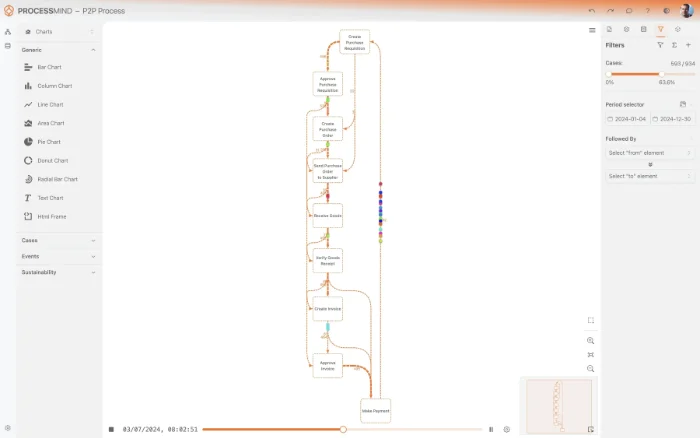
- Visualize actual FINEOS claims paths
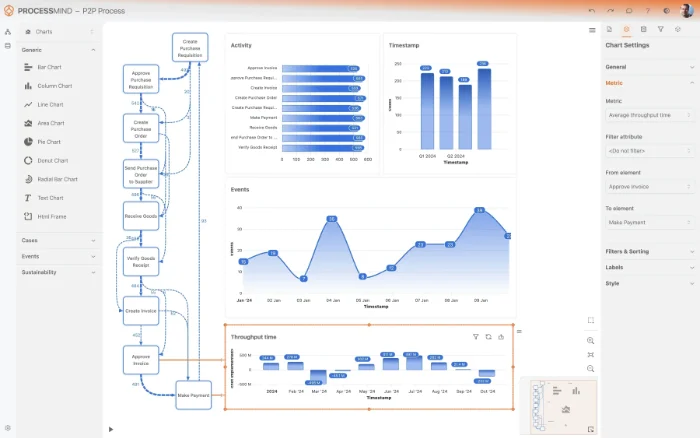
- Identify costly claims process variations
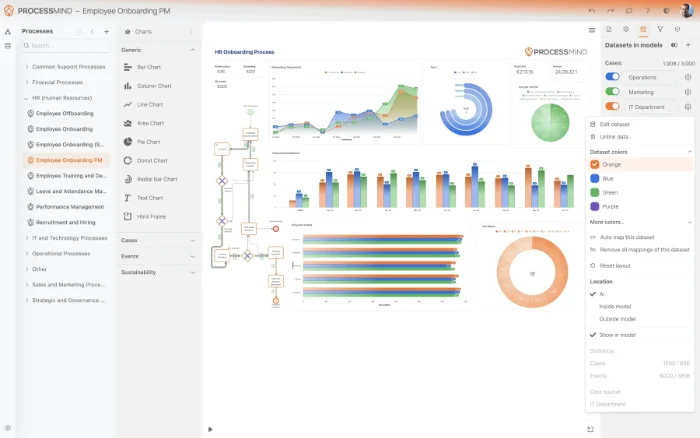
- Pinpoint hidden compliance risks in claims
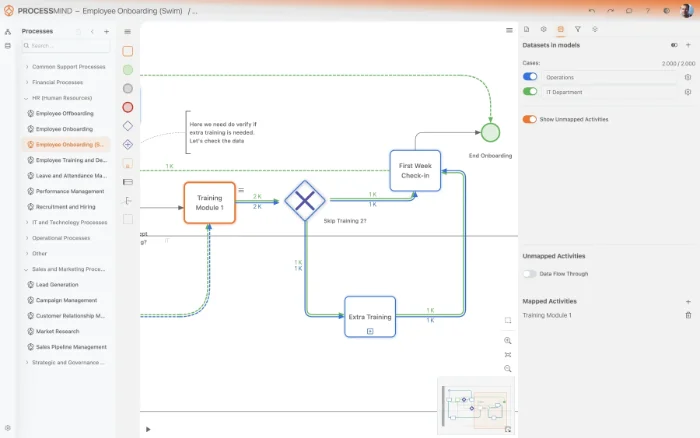
- Optimize resource allocation for claims
TYPICAL OUTCOMES
Achieving Excellence in Claims Processing
Leveraging process mining on your FINEOS Claims data reveals hidden bottlenecks and inefficiencies. These outcomes represent the tangible benefits organizations typically achieve by optimizing their claims processing workflows.
Average reduction in end-to-end time
Process mining identifies bottlenecks and inefficiencies, significantly cutting down the time it takes to process a claim from submission to closure.
Decrease in claims requiring re-processing
By pinpointing root causes of rework loops, organizations can streamline processes, leading to fewer claims needing re-entry into previous stages and lower operational costs.
Higher adherence to regulatory targets
Gain clear visibility into process deviations that impact service level agreement (SLA) compliance, ensuring claims are processed within defined timeframes and regulatory standards.
Fewer process variants detected
Uncover and eliminate unnecessary process variations, leading to more consistent, predictable, and efficient claim handling across all types.
Shorter approval times post-decision
Optimize the final stages of the claims process, significantly reducing the time from decision making to actual payment authorization, improving claimant satisfaction.
Individual results may vary depending on the specific complexity of your claims processes, existing system configurations, and data quality. The figures presented illustrate common improvements seen across successful implementations.
Recommended Data
FAQs
Frequently asked questions
Process mining analyzes your FINEOS Claims event log data to visualize the actual end-to-end process flow. It identifies common bottlenecks, unexpected deviations, and frequent rework loops that may be hidden within standard reports. This provides an objective, data-driven view of how claims are truly processed.
To start, you typically need an event log containing the Claim ID, activity names, and timestamps for each step in the claims process. Additionally, relevant case attributes like claim type, amount, or claimant demographics can enrich the analysis. This data is usually extracted from FINEOS via standard reporting or database access.
By mapping the actual process, process mining highlights where claims get stuck or repeatedly re-enter previous stages, pinpointing the root causes of delays and rework. This allows for targeted interventions to streamline workflows and eliminate inefficiencies. You gain clear insights into the steps contributing most to extended cycle times.
You generally need access to your FINEOS Claims database or data warehouse to extract event log data. This often involves SQL queries or existing reporting APIs. A process mining software tool, either cloud-based or on-premise, will then ingest and analyze this data.
Once the data is extracted and prepared, initial process models and insights can often be generated within a few days to a week. The speed depends on data quality and the complexity of the claims process. Deeper analysis and actionable recommendations will naturally take more time.
Yes, process mining can effectively audit claims against predefined compliance models, identifying instances where processes deviate from mandatory rules or standard operating procedures. This helps to proactively detect non-compliant claim handling pathways. It provides evidence of adherence and flags areas needing attention to ensure 100% regulatory compliance.
No, data extraction for process mining is typically performed on historical data snapshots or via read-only access to your FINEOS database. This ensures that there is no impact on your live claims processing operations or system performance. It's a non-invasive analytical approach.
While a basic understanding of data is helpful, many modern process mining tools are designed for business users and offer intuitive interfaces. You don't necessarily need advanced data science skills to get started. However, expertise in data engineering for extraction and analysis is beneficial for complex scenarios.
Accelerate Claims Processing: Get Started Today
Join leaders who achieve 70% straight-through processing in FINEOS.
No credit card required, setup in minutes.