Improve Your Expense Management

Your 6-step guide to optimize expense management in Coupa Expenses
Improve Your Expense Management

Optimize Expense Management in Coupa Expenses for Efficiency

Expense management processes can often be complex, leading to approval bottlenecks and compliance challenges. Our platform offers clear insights into your operations, helping you pinpoint inefficiencies and optimize every step. Discover how to streamline workflows, reduce costs, and ensure consistent policy adherence.

Download our pre-configured data template and address common challenges to reach your efficiency goals. Follow our six-step improvement plan and consult the Data Template Guide to transform your operations.

Show detailed description

Why Optimizing Expense Management in Coupa Expenses Matters

Even with robust platforms like Coupa Expenses, organizations frequently encounter hidden inefficiencies within their expense management processes. These inefficiencies, though subtle, can significantly impact your bottom line, employee satisfaction, and compliance posture. Delayed reimbursements frustrate employees, leading to reduced productivity and morale. Unclear or inconsistently applied policies can result in financial discrepancies, audit risks, and unnecessary administrative burden as finance teams chase down approvals or correct errors. Moreover, an inefficient expense process means higher operational costs due to excessive manual checks, rework, and prolonged approval cycles. Understanding and addressing these challenges is crucial for maintaining financial health and a positive work environment, ensuring that your investment in Coupa Expenses truly pays off.

How Process Mining Unlocks Efficiency in Coupa Expenses

Process mining offers a powerful lens to analyze your Expense Management process, moving beyond assumptions to reveal the true operational flow within Coupa Expenses. By leveraging event log data, process mining constructs an objective, data-driven map of every expense report's journey, from creation to final reimbursement. You can visually identify all variations, deviations from standard procedures, and rework loops that might be hidden in your system. For instance, you might uncover that a significant portion of expense reports repeatedly gets sent back for revision due to missing information, or that certain approvers consistently cause bottlenecks, extending the overall reimbursement cycle time. This capability provides unparalleled transparency, allowing you to pinpoint the exact activities or handoffs that are slowing down your process, driving up costs, or leading to non-compliance issues within your Coupa Expenses environment. It's about seeing the process as it actually unfolds, not just how it's documented.

Key Areas for Process Improvement and Optimization

With process mining, you gain precise insights into where your Expense Management process in Coupa Expenses needs improvement. Several common areas often emerge as prime targets for optimization. You can identify and reduce the number of steps an expense report takes, especially for low-value transactions, by streamlining approval workflows. Understanding the root causes of rejections and resubmissions allows you to implement better guidance for employees or adjust policy checks to prevent future issues. You might discover opportunities to automate routine checks that are currently performed manually, freeing up finance teams for more strategic tasks. Furthermore, by analyzing the cycle time of each activity, you can identify specific managers or departments that are consistent bottlenecks and work to improve their review processes. This targeted approach helps you proactively address inefficiencies rather than reacting to problems, leading to significant process optimization.

Expected Outcomes of Optimizing Your Expense Management Process

Implementing process mining for Expense Management in Coupa Expenses delivers measurable and impactful benefits across your organization. You can expect a notable reduction in the average reimbursement cycle time, directly leading to increased employee satisfaction and reduced administrative inquiries. By addressing policy violations proactively, you enhance compliance and minimize audit risks, safeguarding your financial integrity. Operational costs associated with processing expenses will decrease as you eliminate rework, automate tasks, and streamline approvals. Moreover, improved process efficiency means your finance team can allocate resources more effectively, shifting focus from reactive problem-solving to strategic financial management. Ultimately, process optimization of your Coupa Expenses workflow contributes to a more agile, compliant, and cost-effective financial operation.

Getting Started with Improving Your Coupa Expenses Process

Embarking on the journey to optimize your Expense Management with process mining in Coupa Expenses is more accessible than you might think. This guide is designed to help you leverage your existing Coupa data to uncover powerful insights quickly. By focusing on the 'how to improve Expense Management' and 'how to reduce Expense Management cycle time', you can immediately begin to visualize your current state, identify critical bottlenecks, and formulate data-driven strategies for process optimization. Starting today means moving closer to a more efficient, compliant, and employee-friendly expense management system, transforming challenges into opportunities for growth and financial excellence.

Expense Management Expense Reporting Reimbursement Process Approval Workflow Policy Compliance Finance Operations Cost Control Cycle Time Reduction Financial Accuracy

Common Problems & Challenges

Identify which challenges are impacting you

Delays in manager or finance approvals mean employees wait longer for reimbursements, impacting satisfaction and cash flow. These extended cycles often stem from bottlenecks, unclear responsibilities, or slow response times within Coupa Expenses. This directly affects employee morale and can tie up working capital.
ProcessMind uncovers where delays occur in the approval workflow, identifying specific approvers or stages that consistently slow down the process. By visualizing actual paths and bottlenecks in your Coupa Expenses data, ProcessMind pinpoint root causes and suggests improvements to accelerate approvals.

A high number of rejected expense reports leads to rework, frustration for employees, and increased administrative burden. These rejections often point to issues with policy adherence, missing documentation, or misunderstandings of submission requirements within Coupa Expenses. This inefficiency consumes valuable time for both employees and finance teams.
ProcessMind analyzes the paths of rejected reports, revealing common reasons for rejections and where in the Coupa Expenses workflow they occur. It helps identify patterns, such as specific expense categories or departments with higher rejection rates, enabling targeted training or policy clarification.

Non-compliance with expense policies can lead to financial losses, audit risks, and inconsistent spending. Without clear visibility, out-of-policy expenses may pass through the Coupa Expenses system unnoticed, creating potential compliance gaps and reputational damage. This puts the organization at risk of financial penalties and internal control failures.
ProcessMind flags actual deviations from your defined expense policies, leveraging Policy Violation Flag attributes in Coupa Expenses data. It highlights reports that bypass standard checks or contain expenses outside permitted categories, enabling proactive enforcement and improved audit outcomes.

Inconsistent or slow reimbursement processing negatively impacts employee satisfaction and can strain relationships. Delays from final approval to actual payment in Coupa Expenses often indicate inefficiencies in scheduling, execution, or integration with accounting systems. This directly affects employee experience and trust in the financial process.
ProcessMind visualizes the time taken from Finance Approved to Reimbursement Executed for each report, identifying bottlenecks in the reimbursement pipeline. It helps streamline the post-approval process in Coupa Expenses, ensuring timely payments and improving financial operational efficiency.

Expense reports sent back for revision due to errors or missing information create unnecessary manual effort and extend processing times. This constant back-and-forth in Coupa Expenses ties up resources in both submitting and reviewing departments, leading to wasted time and increased operational costs.
ProcessMind identifies how frequently reports cycle back for revision and the common stages where this occurs using the Expense Report Sent Back for Revision activity. By understanding these rework loops in your Coupa Expenses data, ProcessMind helps implement measures to reduce errors upfront, improving first-pass yield.

Without a clear, real-time understanding of the entire expense management process in Coupa Expenses, organizations struggle to identify root causes of inefficiencies. This lack of visibility prevents data-driven decision-making, making it difficult to pinpoint where delays or compliance issues originate.
ProcessMind creates an X-ray view of your complete expense management process, from creation to accounting, using your Coupa Expenses event data. It visualizes all actual paths taken by expense reports, revealing hidden bottlenecks, deviations, and optimization opportunities that were previously opaque.

Unintended variations in how expense reports are routed for approval lead to inconsistent processing, potential compliance gaps, and unpredictable cycle times. When reports bypass standard steps or follow ad-hoc paths in Coupa Expenses, it becomes challenging to maintain control and ensure fairness.
ProcessMind discovers all actual process variants taken by expense reports, highlighting the most common and the most deviant paths within your Coupa Expenses data. This helps in standardizing workflows, eliminating unauthorized shortcuts, and enforcing a consistent, compliant approval process.

Delays are often not uniform across the organization; certain departments or expense categories might consistently experience longer approval times or higher rejection rates. Without identifying these specific culprits within Coupa Expenses, generic improvements fail to address localized inefficiencies.
ProcessMind segments the process data by attributes like Employee Department and Expense Category to reveal which segments are performing poorly. It helps pinpoint areas in your Coupa Expenses usage where targeted training, policy adjustments, or resource reallocations are most needed to improve efficiency.

Manual and time-consuming audits of expense reports drain resources and delay the finalization of financial records. Identifying which reports truly require deeper scrutiny versus those that can be fast-tracked within Coupa Expenses is a significant challenge, leading to over-auditing or missed risks.
ProcessMind highlights reports with potential policy violations, unusual activity sequences, or high-risk attributes, streamlining your audit process. By focusing audit efforts on reports with a higher Policy Violation Flag or complex approval paths in Coupa Expenses, it reduces manual effort and increases audit effectiveness.

The cumulative time spent on approvals, rejections, revisions, and reimbursements translates into significant operational costs per expense report. Without understanding the specific activities contributing most to these costs within Coupa Expenses, it is difficult to identify areas for cost reduction.
ProcessMind quantifies the time and resources consumed by each activity and path in the expense management process. By pinpointing inefficient steps and rework loops revealed by your Coupa Expenses data, ProcessMind helps optimize workflows to reduce the overall cost of processing each report.

Lag between expense reimbursement and its final posting to accounting systems can cause discrepancies in financial reports and impede accurate financial closing. These delays, even after Reimbursement Executed in Coupa Expenses, can create reconciliation challenges and impact financial accuracy.
ProcessMind tracks the complete lifecycle up to Accounting Posted, identifying any gaps or delays in the final stages of the process. It reveals where the handoff to accounting systems in Coupa Expenses can be optimized, ensuring timely and accurate financial reporting.

Typical Goals

Define what success looks like

This goal aims to significantly cut down the total time it takes for an expense report to be approved, from submission to final manager and finance sign-off. Faster approval cycles in Coupa Expenses lead to quicker reimbursements, which directly improves employee satisfaction and reduces the number of inquiries directed to finance teams. This also helps in maintaining better cash flow management for the organization.
ProcessMind helps by analyzing the actual process flow of every expense report, identifying specific activities or roles that act as bottlenecks. It visualizes all approval paths, revealing where delays occur and quantifying their impact. You can pinpoint managers with long approval times, discover unnecessary approval steps, and simulate "what-if" scenarios to optimize the workflow. Achieving a 30-50% reduction in average approval time is a common outcome.

This goal focuses on reducing the frequency with which expense reports are sent back for revisions or ultimately rejected within Coupa Expenses. A lower rejection rate signifies higher quality submissions, less rework for employees and approvers, and a smoother overall process. This directly impacts operational efficiency and reduces processing costs per report.
ProcessMind identifies the common reasons for rejections, such as missing receipts, policy violations, or incorrect coding, by analyzing historical data. It can pinpoint patterns leading to rejections, highlight specific employees or departments with high rejection rates, and suggest proactive measures like improved pre-submission checks or clearer policy communication to improve first-pass approvals.

Achieving this goal means ensuring that all expense reports strictly adhere to company policies and regulatory requirements. Undetected policy violations can lead to financial risks, auditing issues, and inconsistent spending behavior. Stronger compliance within Coupa Expenses provides better cost control and maintains financial integrity.
ProcessMind automatically detects deviations from defined policy rules by comparing actual process execution against ideal compliant paths. It highlights specific violations, quantifies their impact, and identifies systemic issues that allow non-compliant behavior to occur. This enables organizations to implement targeted training, adjust policies, and improve pre-approval checks to proactively prevent future non-compliance.

This goal aims to significantly speed up the time it takes for employees to receive their reimbursements once an expense report is approved. Slow and inconsistent reimbursement speeds can lead to employee dissatisfaction and increased administrative inquiries. Improving this process in Coupa Expenses enhances employee experience and reduces financial strain on individuals.
ProcessMind maps the entire reimbursement sub-process, from final approval to payment execution. It identifies specific delays post-approval, such as manual handling, batch processing windows, or integration issues with payment systems. By analyzing these bottlenecks, ProcessMind enables organizations to streamline payment scheduling, automate handoffs, and ensure a consistent, faster reimbursement experience.

This goal is about reducing the need for employees and approvers to manually reprocess, correct, or revise expense reports due to errors or incompleteness. A high volume of manual rework in Coupa Expenses leads to wasted time, increased operational costs, and delays in the overall expense management process.
ProcessMind quantifies the amount of rework occurring at various stages of the expense report lifecycle. It identifies the root causes, such as frequent returns for missing information or incorrect coding, and highlights activities or roles contributing most to this rework. By understanding these drivers, organizations can implement process improvements like enhanced submission guidelines or automated validation rules to significantly reduce manual effort.

Achieving this goal means gaining a comprehensive, real-time understanding of every step an expense report takes, from creation to final accounting. Poor visibility in Coupa Expenses leads to hidden bottlenecks, delayed issue resolution, and an inability to make data-driven decisions for process optimization.
ProcessMind automatically discovers and visualizes the complete end-to-end process flow of all expense reports, revealing all actual variants and deviations from the intended path. It provides a clear overview of activities, handoffs, and cycle times, allowing stakeholders to identify inefficiencies, understand actual process behavior, and monitor performance continuously. This holistic view is crucial for proactive problem-solving.

This goal aims to reduce the variability in how expense reports are routed and approved, ensuring a consistent and predictable process. Uncontrolled variations in approval paths within Coupa Expenses can lead to confusion, delays, inconsistent application of policies, and difficulties in auditing.
ProcessMind discovers all existing process variants and compares them against ideal, predefined approval paths. It highlights deviations, identifies the reasons for varied routing, and pinpoints specific roles or conditions that introduce complexity. By understanding these variations, organizations can enforce standardized workflows, simplify approval matrices, and ensure a more predictable and efficient process.

This goal focuses on identifying and addressing performance disparities in expense report processing across different departments or cost centers. If specific organizational units consistently experience delays or higher rejection rates in Coupa Expenses, it can drag down overall efficiency and lead to inequitable employee experiences.
ProcessMind allows for detailed segmentation of process performance by employee department, cost center, or expense category. It highlights which areas are underperforming, quantifies their impact on cycle times and costs, and helps identify localized bottlenecks or training needs. This enables targeted interventions and process adjustments to achieve equitable and optimized performance across the entire organization.

This goal aims to streamline and accelerate the process of auditing expense reports, making it less resource-intensive and more effective. Inefficient audits within Coupa Expenses can consume significant time and effort, delay financial closures, and potentially miss critical compliance issues.
ProcessMind automates the creation of audit trails and can proactively flag high-risk transactions or suspicious patterns based on predefined rules or detected anomalies. This allows audit teams to focus their efforts on exceptions and non-compliant cases rather than sifting through every report. By reducing manual data collection and analysis, ProcessMind significantly cuts audit effort and speeds up the resolution of issues.

This goal seeks to lower the total operational cost associated with processing each expense report, from submission to reimbursement and accounting. High processing costs in Coupa Expenses reduce profitability and indicate inefficiencies that can be addressed. Achieving this goal directly impacts the bottom line.
ProcessMind quantifies the costs associated with each activity, rework loop, and approval step within the expense management process. It identifies key cost drivers, such as excessive manual interventions, multiple approval layers, or frequent rejections. By optimizing workflows, eliminating redundant steps, and automating routine tasks, ProcessMind helps organizations achieve significant reductions in the average cost to process each expense report.

This goal focuses on reducing the time between an expense report being reimbursed and its final posting to the accounting ledger. Delays in accounting posting within Coupa Expenses can lead to inaccuracies in financial statements, slower month-end close processes, and challenges in real-time cash flow management.
ProcessMind analyzes the specific steps and handoffs involved in the post-reimbursement accounting process. It identifies bottlenecks such as manual data entry, reconciliation issues, or delays in system integrations between Coupa Expenses and the general ledger. By streamlining these transitions and highlighting areas for automation, ProcessMind helps ensure timely and accurate financial reporting, improving overall financial accuracy.

The 6-Step Improvement Path for Expense Management

1

Download the Template

What to do

Access the pre-defined Excel template, structured to capture all relevant data points for a comprehensive Expense Management analysis.

Why it matters

Ensure your data is organized correctly from the start, laying a solid foundation for accurate analysis and meaningful insights.

Expected outcome

A ready-to-use template designed for efficient data collection from Coupa Expenses.

WHAT YOU WILL GET

Unlock Expense Process Efficiency in Coupa

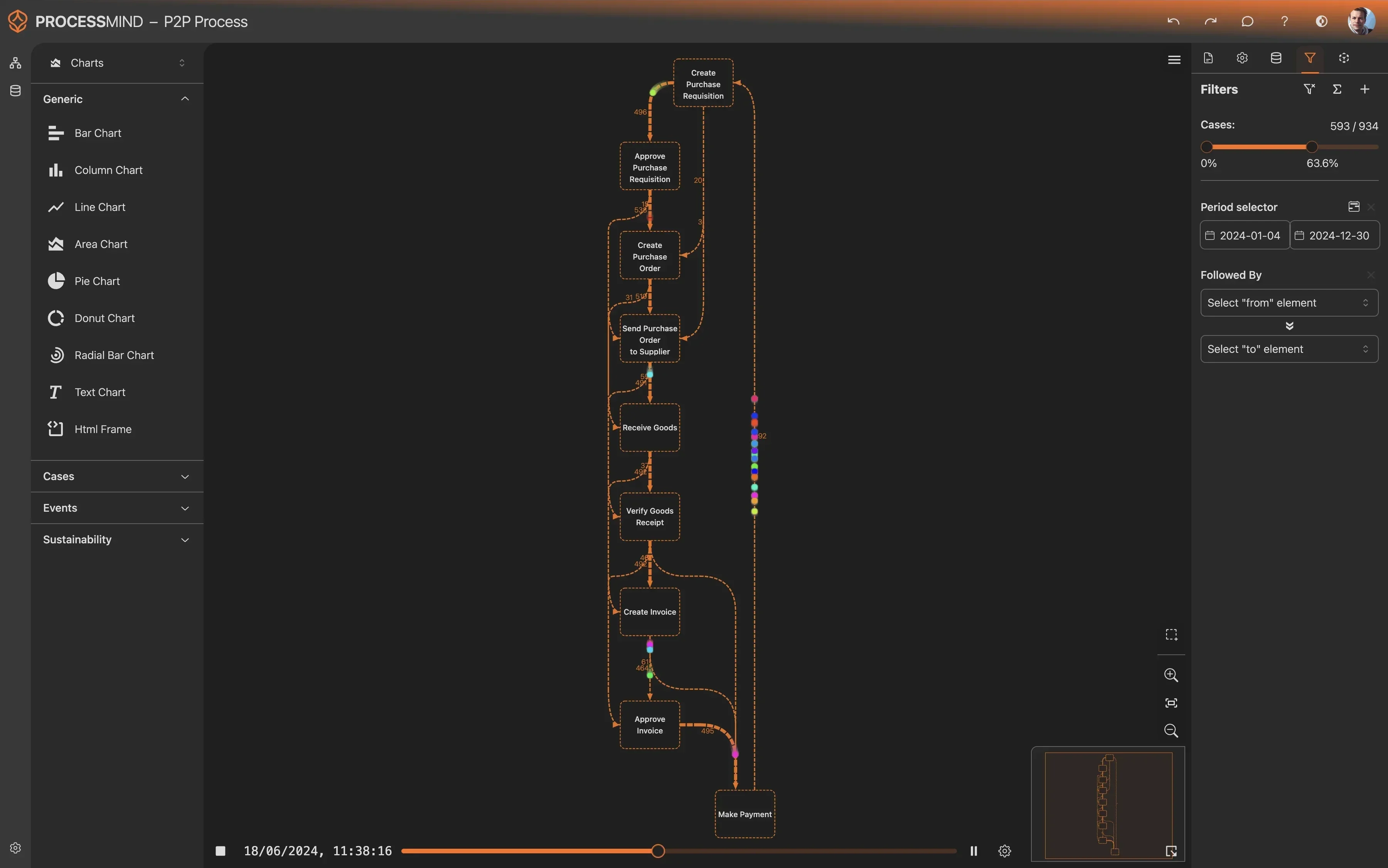
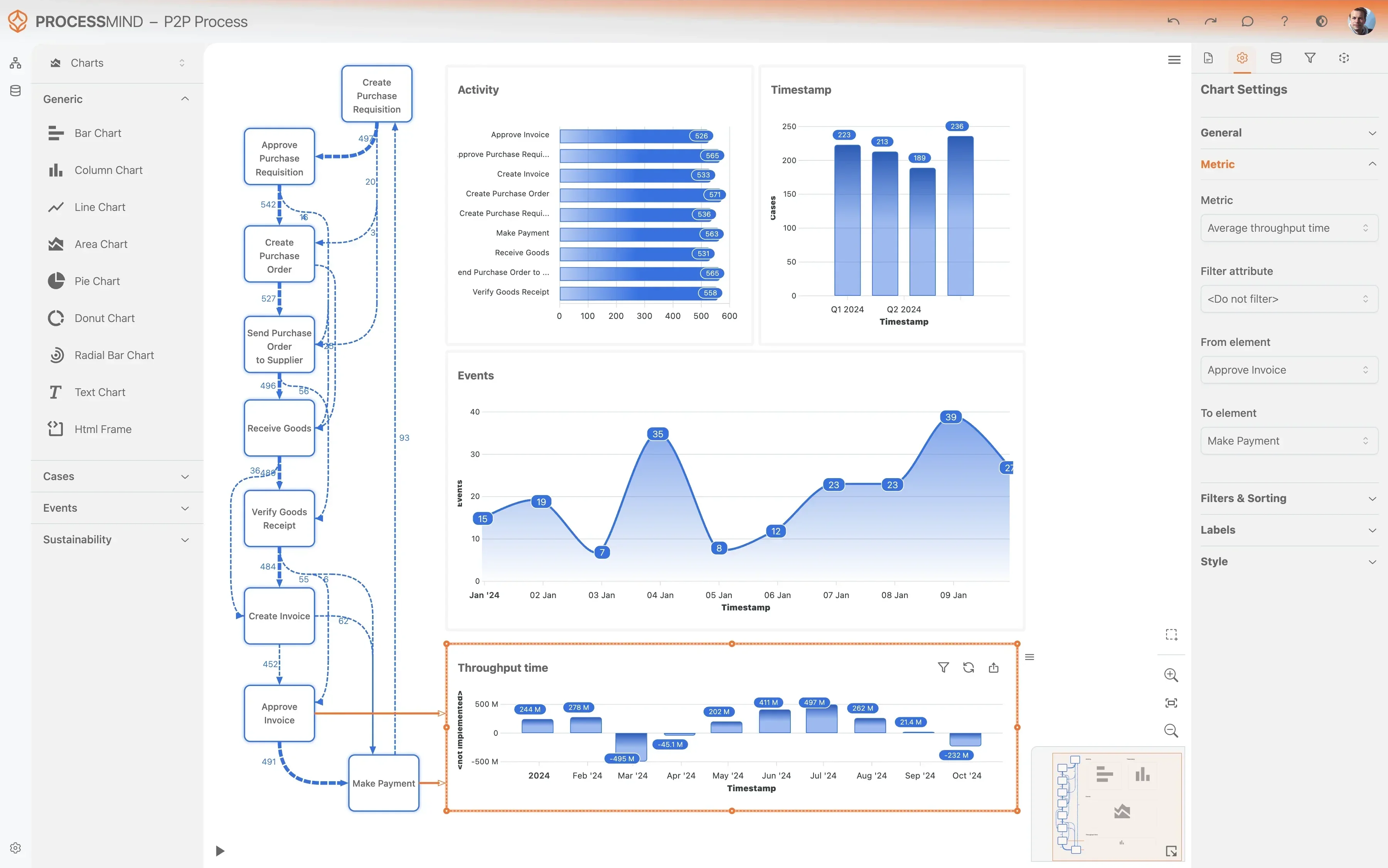
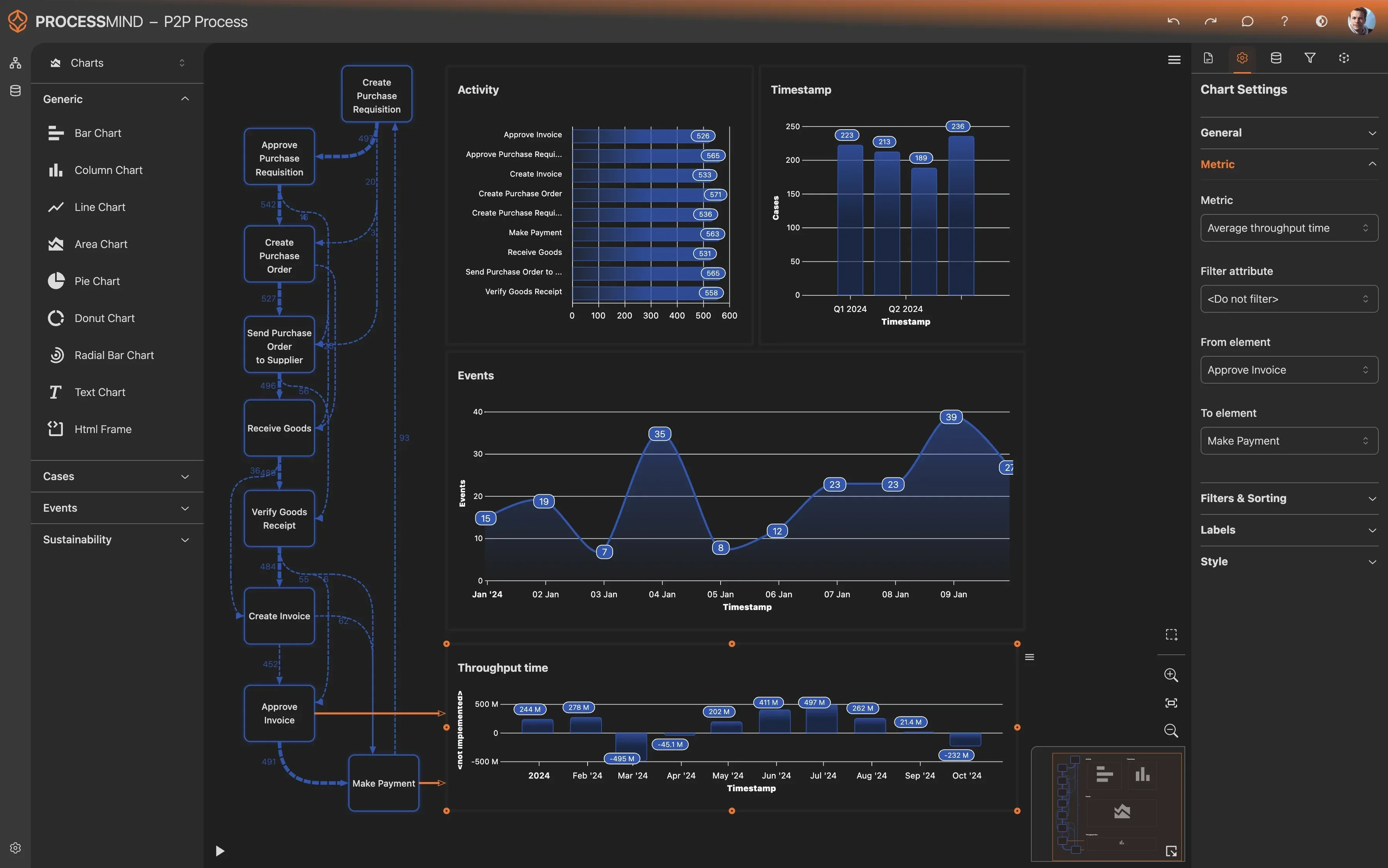
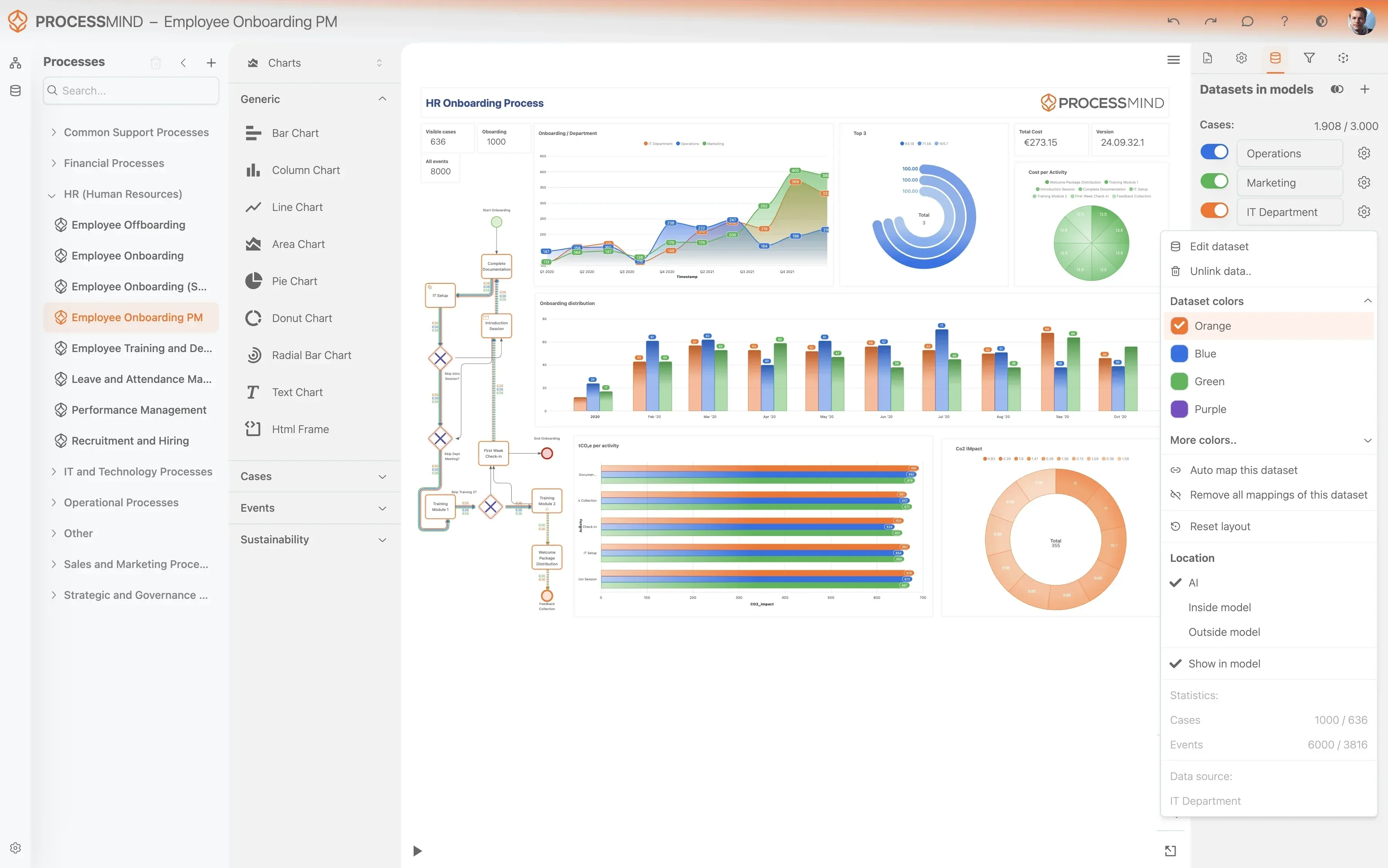
ProcessMind provides clear visualizations of your Coupa expense process, revealing where inefficiencies and compliance issues occur. Gain actionable insights to optimize every step, from submission to approval.
  • Visualize actual expense workflow in Coupa
  • Pinpoint approval bottlenecks instantly
  • Ensure consistent policy adherence
  • Reduce processing costs and cycle times
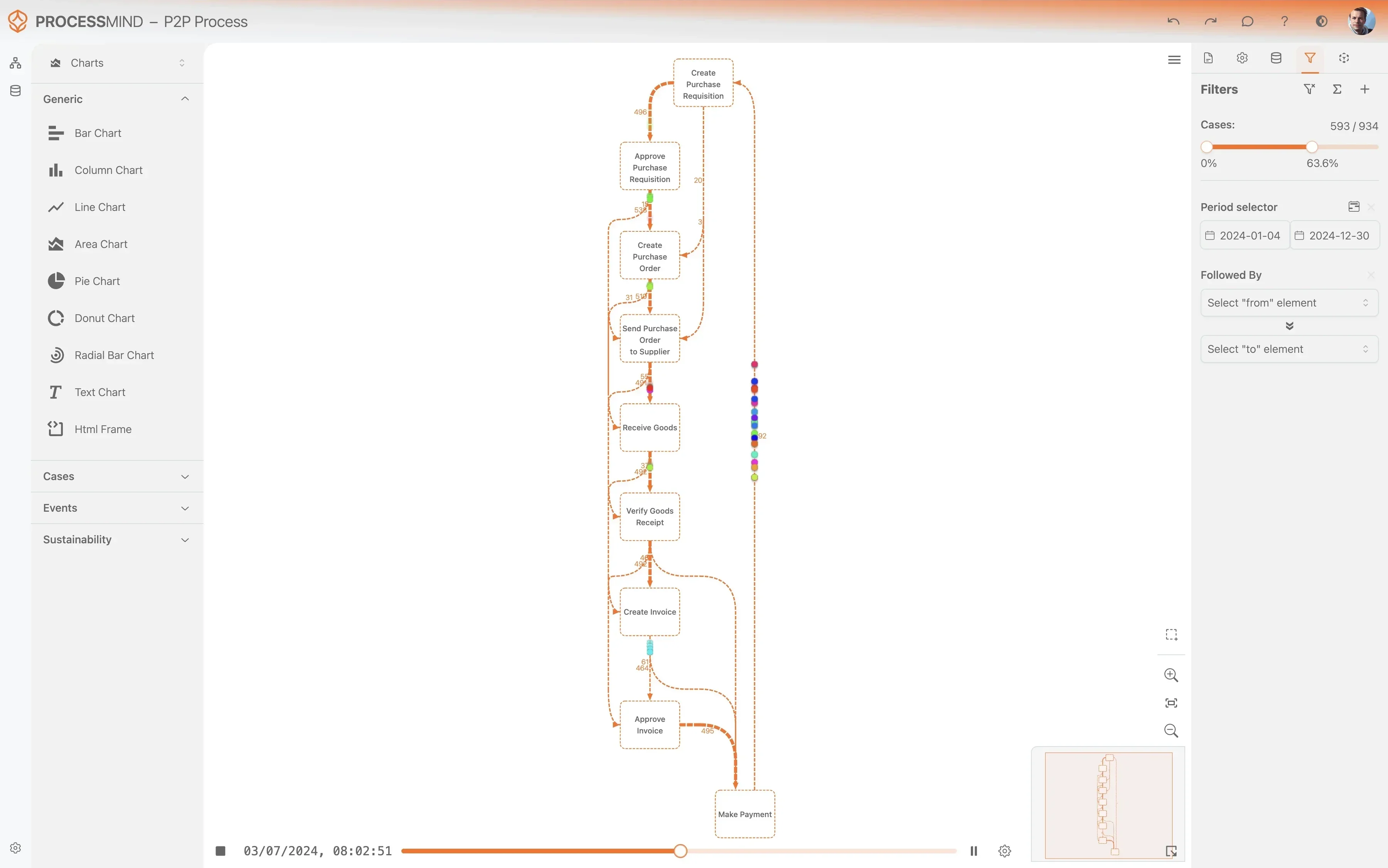
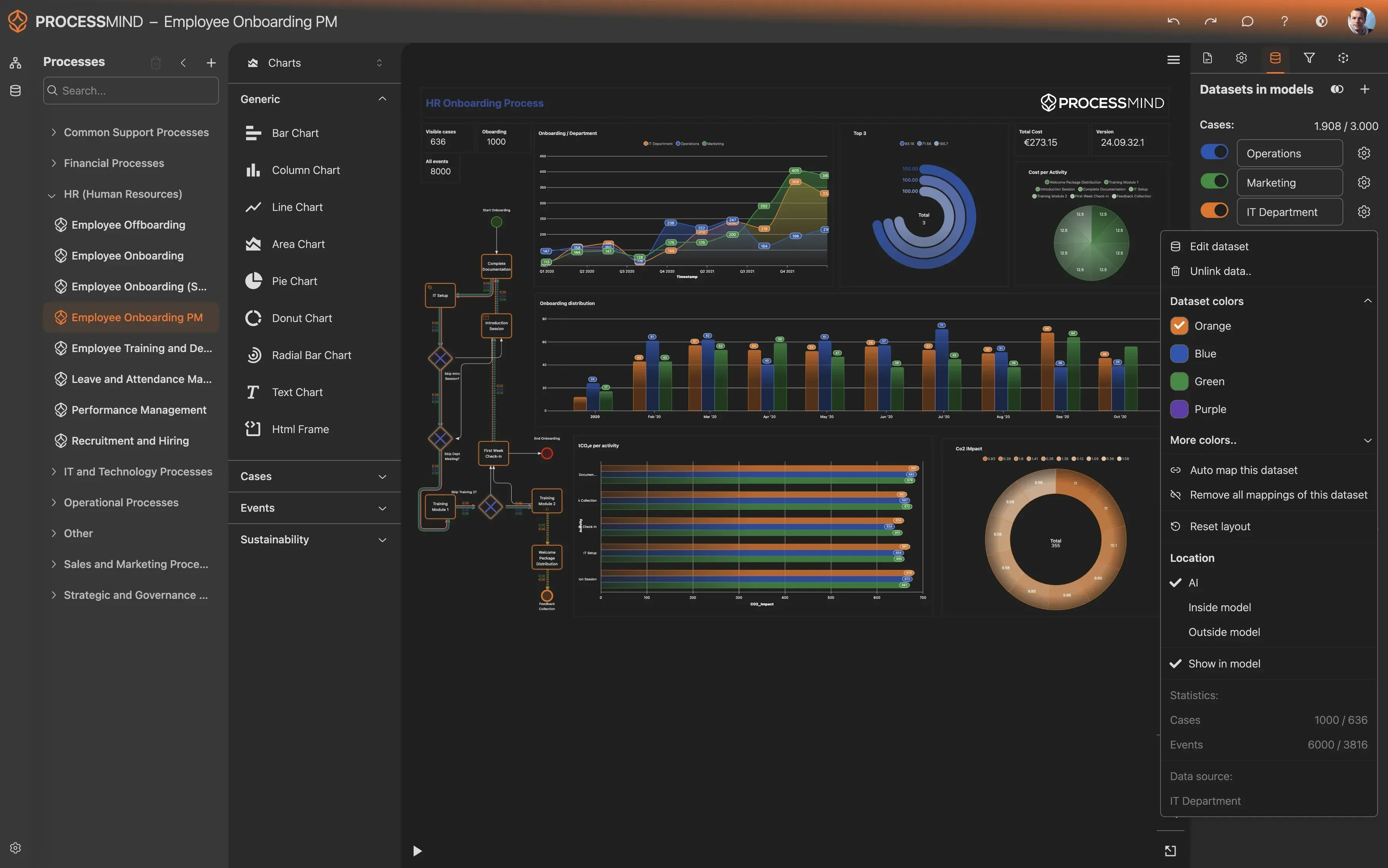
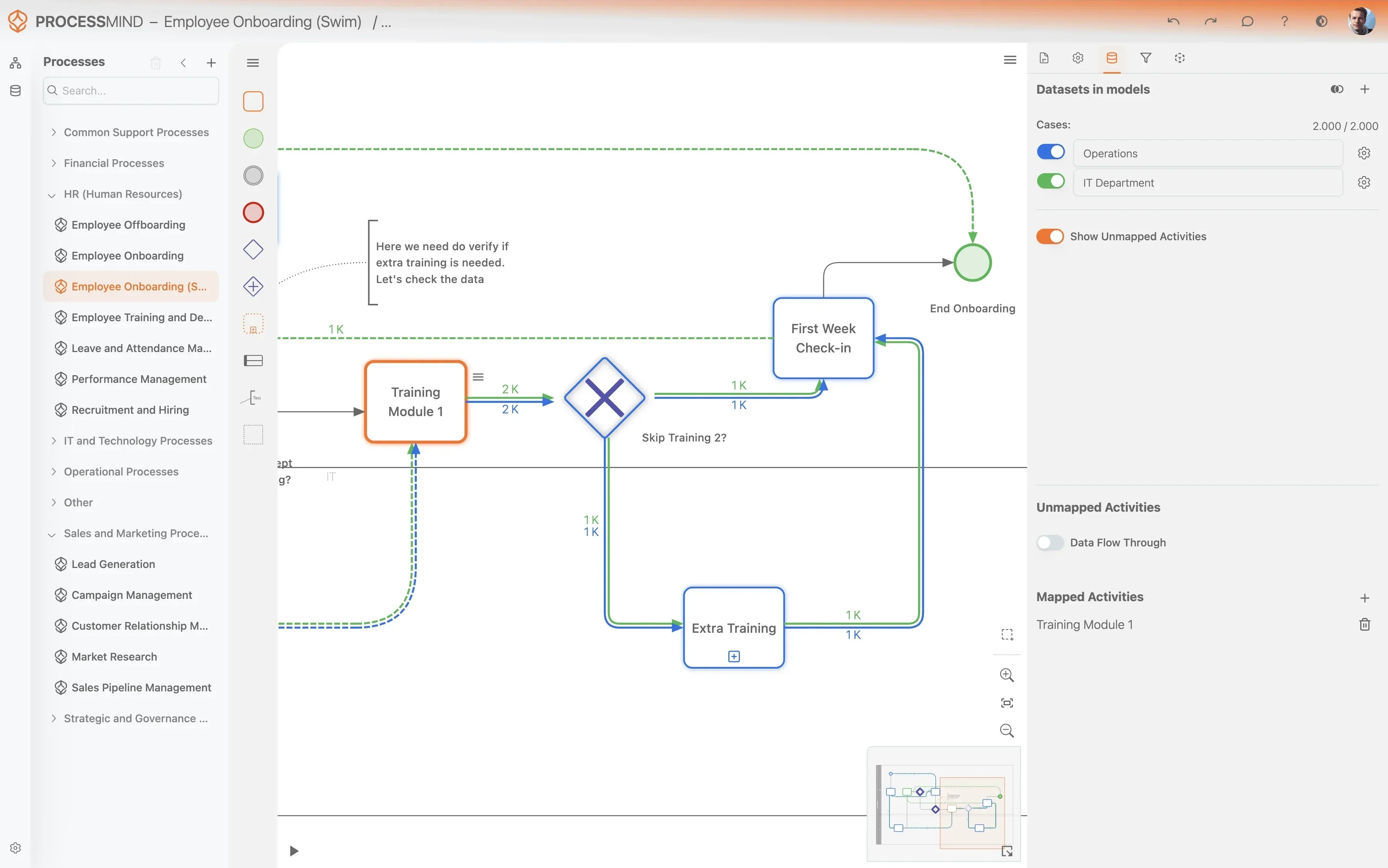
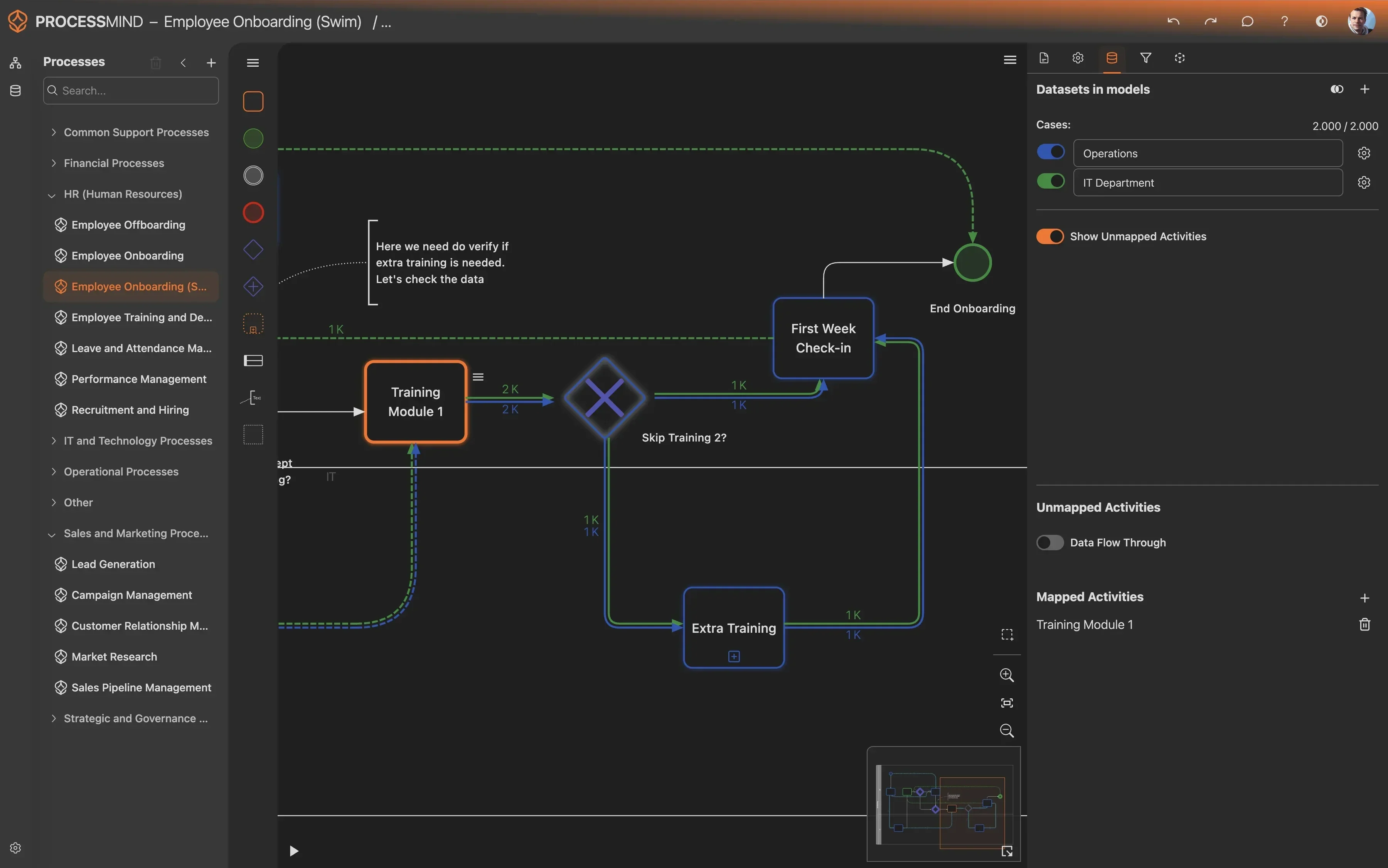
Discover your actual process flow
Identify bottlenecks and delays
Analyze process variants
Design your optimized process

TYPICAL OUTCOMES

Optimizing Your Expense Management Process

These outcomes showcase the measurable improvements organizations typically achieve by applying process mining to their expense management workflows, leveraging data from Coupa Expenses to identify and resolve bottlenecks.

0 %
Faster Approvals

Average reduction in approval time

Streamline the end-to-end expense approval process, ensuring employees are reimbursed quicker and finance teams operate more efficiently. Identify and remove bottlenecks to accelerate processing.

0 %
Reduced Rework & Rejections

Decrease in reports requiring revision

Identify root causes for rejections and rework, such as policy misunderstandings or common errors. Improve first-pass approval rates, saving significant time and resources for both employees and approvers.

0 %
Improved Policy Compliance

Reduction in detected policy violations

Gain clear visibility into policy non-compliance patterns and root causes. Strengthen adherence to expense policies, reducing financial risk and ensuring fair, consistent application across the organization.

0 days
Quicker Reimbursements

Average reduction in payment lead time

Pinpoint delays in the reimbursement execution process, ensuring employees receive their funds faster. This improves employee satisfaction and reduces inquiries to finance teams.

0 %
Streamlined Approval Paths

Reduction in process variant count

Uncover and consolidate unnecessary variations in expense approval processes. This leads to greater consistency, predictability, and efficiency across the organization by standardizing workflows.

Results vary based on process complexity and data quality. These figures represent typical improvements observed across implementations.

FAQs

Frequently asked questions

Process mining directly targets issues like lengthy approval cycles, frequent rejections, and undetected policy violations within Coupa Expenses. It provides a visual, data-driven map of your expense process, revealing bottlenecks and inefficiencies. This clarity helps in understanding why delays occur and where compliance gaps exist.

To perform process mining, you primarily need event logs from Coupa Expenses. This includes the Case Identifier, which is the Expense Report ID, the Activity performed, such as "Expense Report Submitted" or "Approved by Manager," and a precise Timestamp for each activity. Optionally, including information like the resource, expense category, or amount can enrich the analysis.

Applying process mining to expense management offers significant benefits, including a measurable reduction in expense approval cycle times and a decrease in rejection rates. It also enhances overall expense policy compliance and helps to standardize approval paths. Ultimately, this leads to lower processing costs per expense report and faster reimbursements.

Yes, process mining is highly effective in identifying expense policy violations. By comparing the actual, observed process flows with predefined rules and compliance requirements, the tool can flag deviations. This allows organizations to proactively detect unauthorized steps, unusual approval patterns, or missed compliance checks that would otherwise go unnoticed.

Data privacy and security are paramount when dealing with financial information. Process mining platforms can be configured to anonymize or pseudonymize sensitive fields, focusing the analysis on process steps and timings rather than personal financial details. Robust access controls and data governance policies ensure that only authorized personnel can view relevant information.

Data extraction from Coupa Expenses can be achieved through several methods, including direct API integrations, database access where permissible, or by exporting structured CSV files. The chosen method depends on your system setup and data governance policies. Ensuring secure and efficient data transfer is a key consideration.

Initial insights and the discovery of major bottlenecks can often be achieved within a few weeks of starting a process mining initiative, once data extraction and modeling are complete. More substantial process improvements and realized benefits typically emerge within three to six months, depending on the complexity of the process and the implementation of recommended changes.

No, process mining does not replace existing reporting tools; instead, it complements them by offering deeper, diagnostic insights. While standard reports show what happened, process mining explains why it happened by visualizing the actual flow and variations of your processes. It provides a foundational understanding that enhances the value of your current metrics.

Implementing process mining generally requires a multidisciplinary team. Key roles include data engineers for data extraction, transformation, and loading, and business analysts who understand the expense management process. Additionally, IT support for infrastructure setup and ongoing maintenance may be needed to ensure a smooth operation.

Optimize Expense Management: Eliminate Bottlenecks Today

Uncover inefficiencies and reduce expense cycle time by 30% with clear insights.

Start Your Free Trial

No credit card required. Get started in minutes.