Improve Your Accounts Receivable

Select a process
Choose a process to continue working in your connected workspace.
Optimize the Oracle Fusion Financials Accounts Receivable Process
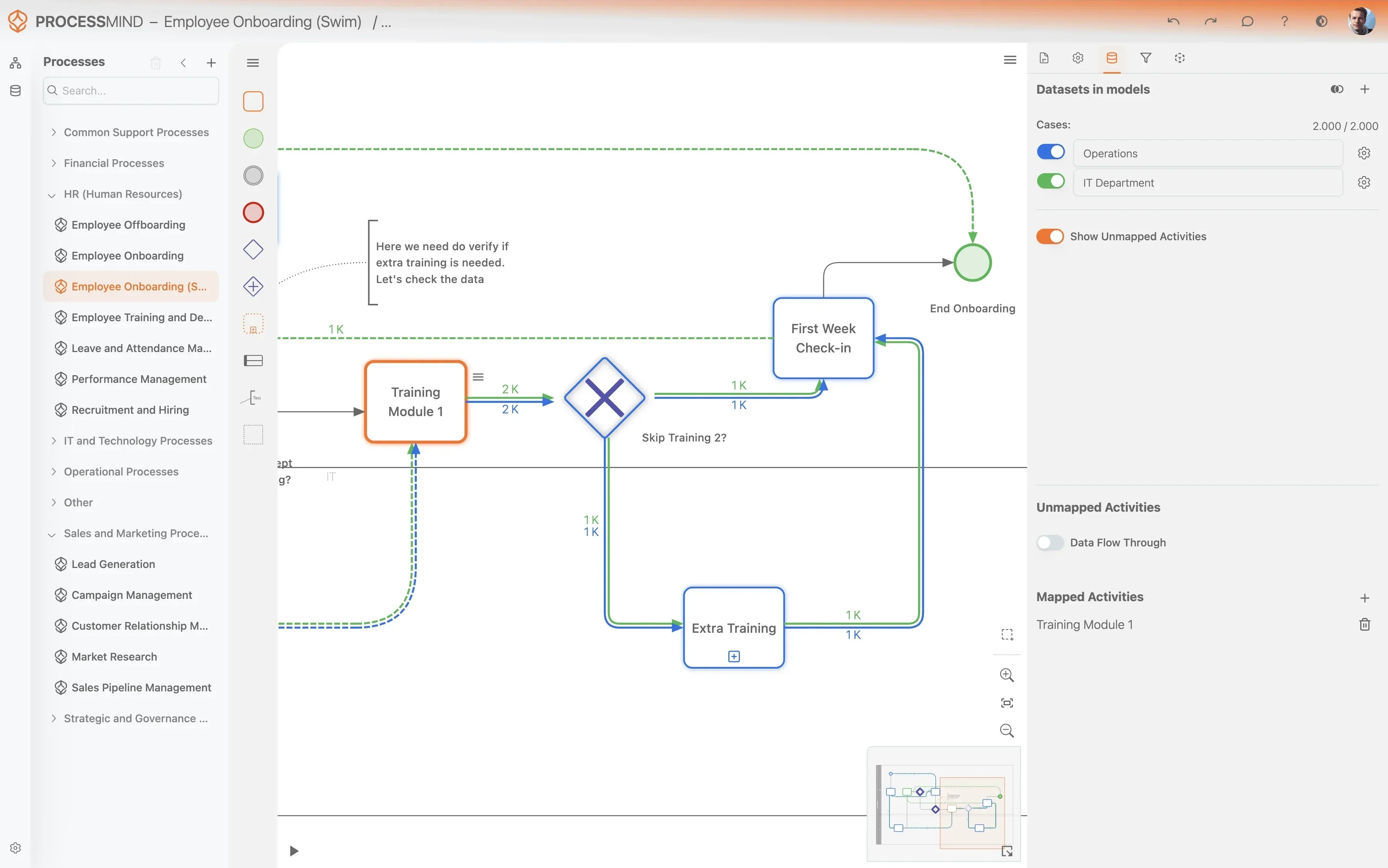
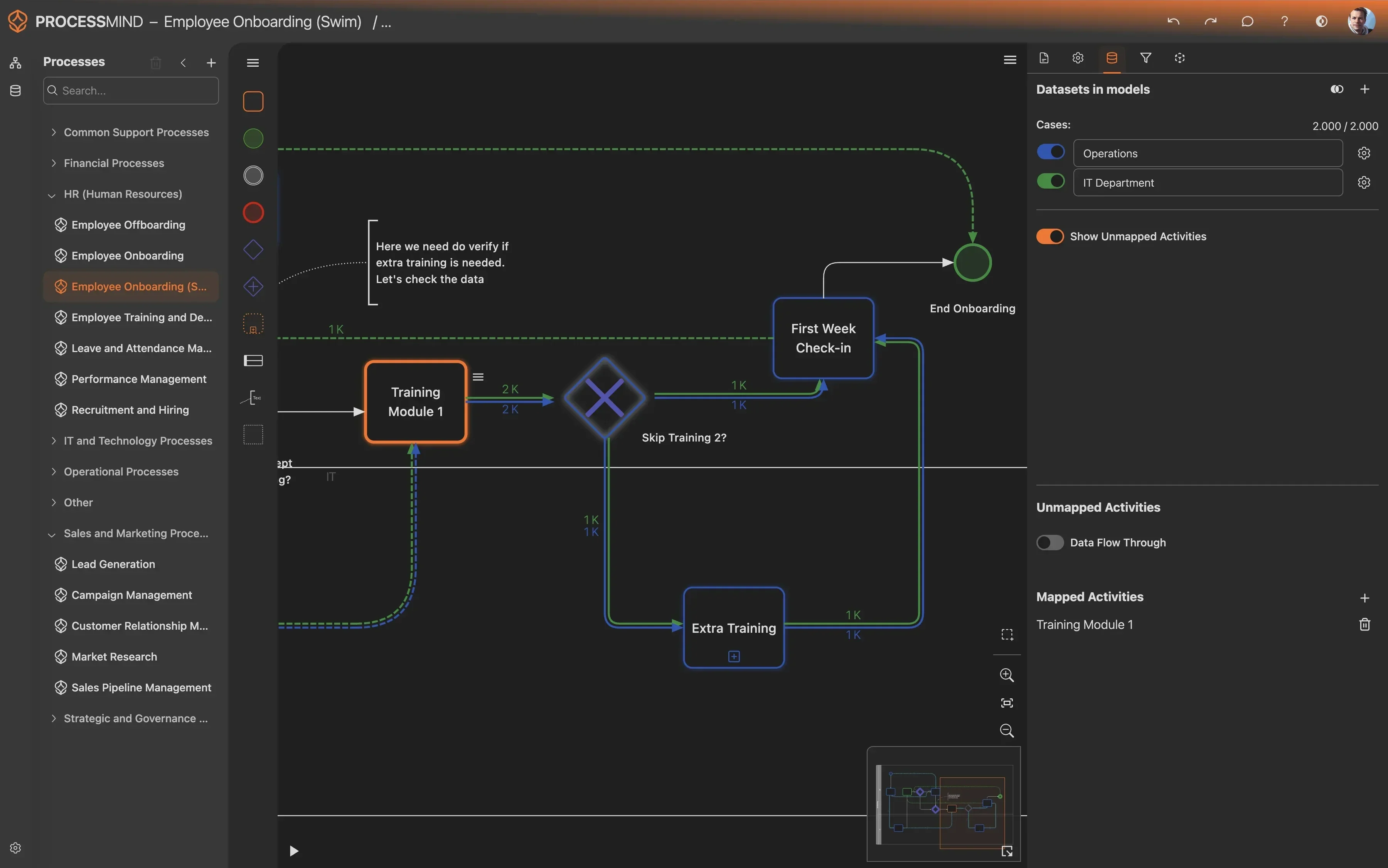
Our platform identifies hidden bottlenecks and process variations that slow down your collections cycle. You can pinpoint exactly where manual interventions create delays and increase operational costs. Use these insights to streamline workflows and improve overall financial health.
Download our pre-configured data template and address common challenges to reach your efficiency goals. Follow our six-step improvement plan and consult the Data Template Guide to transform your operations.
Show detailed description
The Strategic Value of Optimizing Accounts Receivable
Effective cash flow management is the cornerstone of a healthy enterprise, and within the context of Oracle Fusion Financials, the Accounts Receivable process serves as the primary engine for liquidity. When this process becomes sluggish or opaque, the consequences ripple across the entire organization, affecting everything from investment capacity to vendor relationships. Optimization is not just about getting paid faster, it is about creating a predictable, scalable financial operation that minimizes the cost of capital. By refining how you handle customer billing and collections, you transform a back-office function into a strategic asset that supports long-term growth. Improving this area allows your finance team to shift from manual tracking to strategic analysis, ensuring that your working capital is always working for you.
How Process Mining Illuminates the Oracle Fusion Landscape
Oracle Fusion Financials provides a robust framework for managing journals and financial consolidation, yet the complexity of modern business often leads to fragmented workflows. Process mining acts as a high-definition lens, pulling data directly from your system to map out the actual journey of every invoice. Instead of relying on anecdotal evidence about why payments are late, you can see the exact points where a document stalls. Whether it is a delay in the initial dispatch or a circular loop in the dispute management module, process mining reveals the as-is process in real-time. This visibility allows financial leaders to move beyond high-level KPIs like Days Sales Outstanding and drill down into the behavioral patterns that drive those numbers. Understanding the difference between your intended process and the reality of daily operations is the first step toward true process optimization.
Identifying and Resolving Functional Bottlenecks
One of the most significant advantages of analyzing your Accounts Receivable flow is the ability to pinpoint specific friction points that delay the cash cycle. In many organizations, the transition between invoice creation and dispatch is a hidden source of lag. Even a two-day delay in sending an invoice can have a massive cumulative impact on annual cash flow. Furthermore, the dispute resolution process within Oracle Fusion can often become a bottleneck where invoices sit for weeks without clear ownership. Process mining highlights these delays by showing where time is being lost to manual interventions, rework, or unnecessary approval layers. Once you identify these specific hurdles, you can implement targeted automation or policy changes to keep the process moving forward smoothly. This targeted approach is much more effective than broad, sweeping changes that may not address the root cause of the delay.
Enhancing Financial Compliance and Audit Readiness
Beyond efficiency, process optimization ensures that your financial operations remain compliant with internal controls and external regulations. Within Oracle Fusion Financials, maintaining a clean audit trail is essential for close management and financial reporting. Process mining provides a digital footprint of every action taken on an invoice, from the moment it is generated to the final bank statement matching. This level of transparency makes it easier to identify deviations from standard operating procedures, such as unauthorized credit memos or missed collection steps. By ensuring that every transaction follows a validated path, you reduce the risk of financial leakage and strengthen your overall governance framework. This visibility is invaluable during audit periods, as it provides a clear and undeniable record of how financial data was processed and validated.
Realizing Measurable Outcomes and Next Steps
The ultimate goal of learning how to improve Accounts Receivable is to achieve measurable improvements in financial health. When you streamline the billing cycle and learn how to reduce Accounts Receivable cycle time, you directly reduce the time it takes to convert sales into cash. This leads to lower administrative costs, as your collection agents can focus their efforts on high-risk accounts rather than chasing minor discrepancies. Organizations that leverage these insights often see a significant reduction in their aging buckets and a more consistent cash position. To begin this journey, you must first acknowledge that your current process likely contains hidden inefficiencies. By using the specialized tools and templates designed for Oracle Fusion, you can start uncovering these opportunities and building a more resilient financial foundation that supports the broader goals of your business.
Improving Accounts Receivable in Oracle Fusion
Download the Template
What to do
Obtain the standardized Excel template designed to map your Oracle Fusion Financials data to the process mining engine.
Why it matters
Starting with the correct data structure ensures seamless integration and accurate mapping of your invoice lifecycle events.
Expected outcome
A pre-configured template ready for data entry.
Export Your Data
What to do
Extract 3 to 6 months of invoice and payment history from Oracle Fusion using OTBI or BI Publisher reports.
Why it matters
High-quality historical data allows you to identify long-term trends in customer payment behavior and systemic bottlenecks.
Expected outcome
A populated dataset reflecting real-world AR transactions.
Upload Your Dataset
What to do
Securely upload your completed template to ProcessMind for automatic analysis and discovery of your process flow.
Why it matters
Centralizing your AR data enables a holistic view of the financial relationship with customers from billing to bank clearing.
Expected outcome
A digital twin of your Accounts Receivable process.
Analyze Your Process
What to do
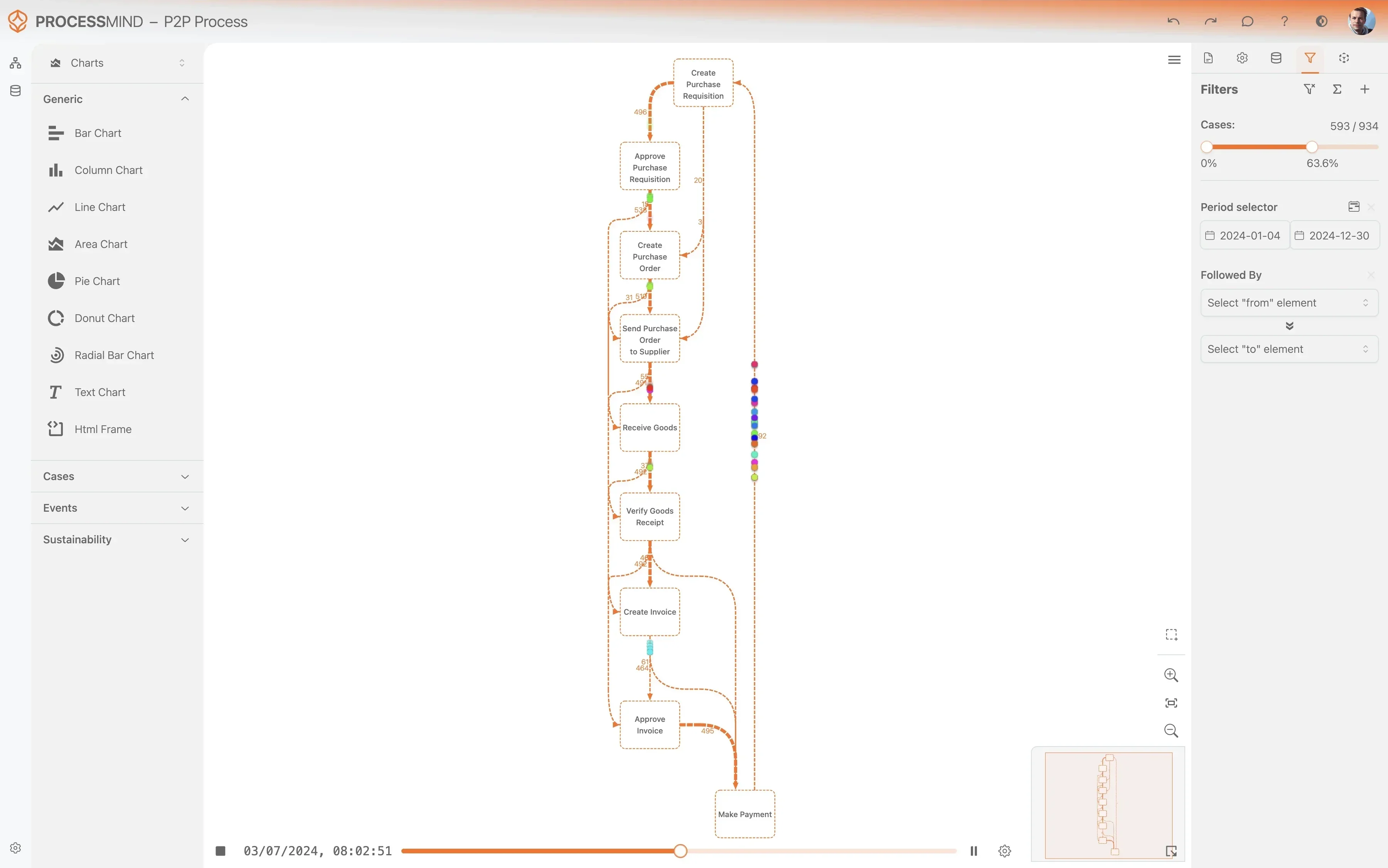
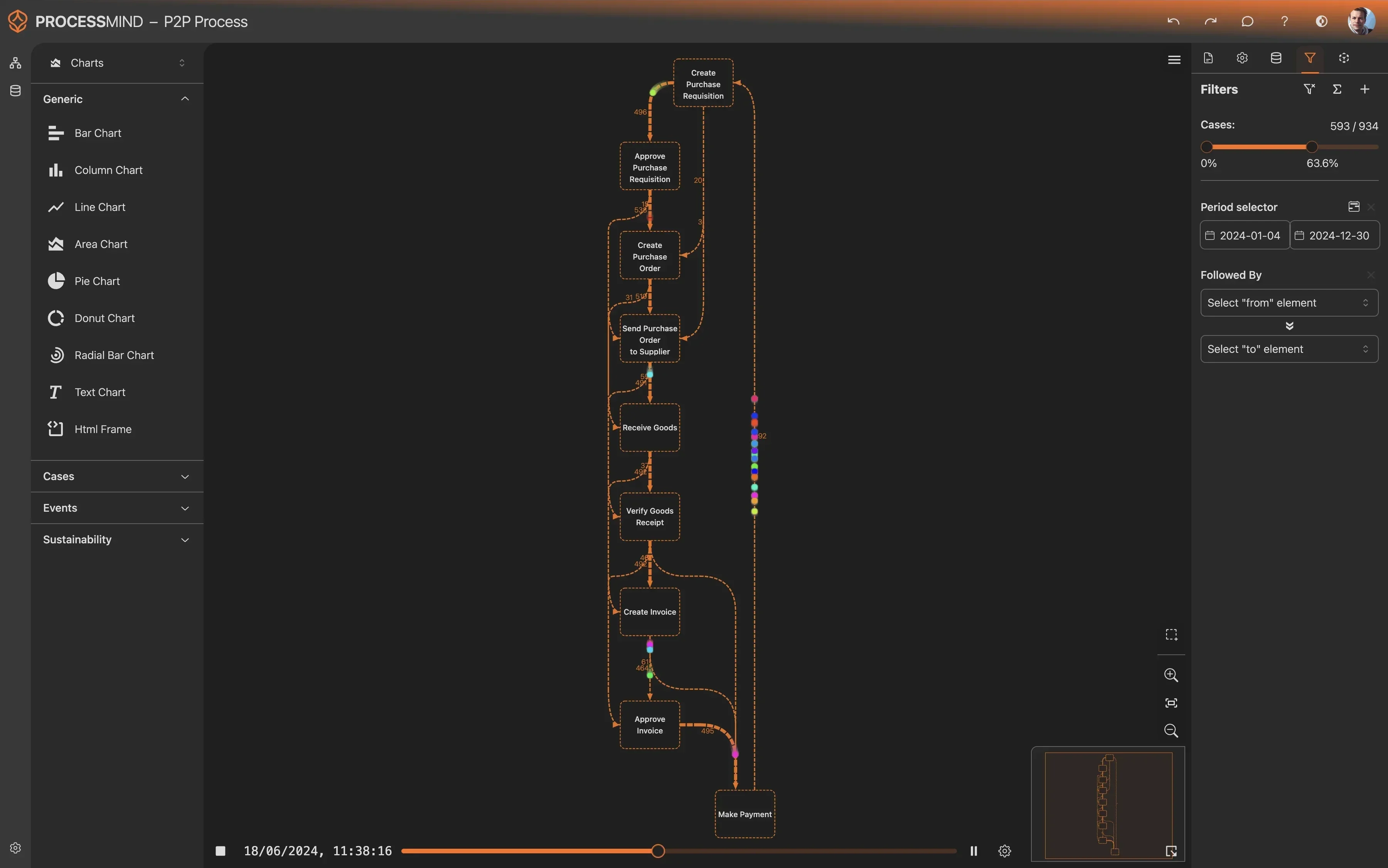
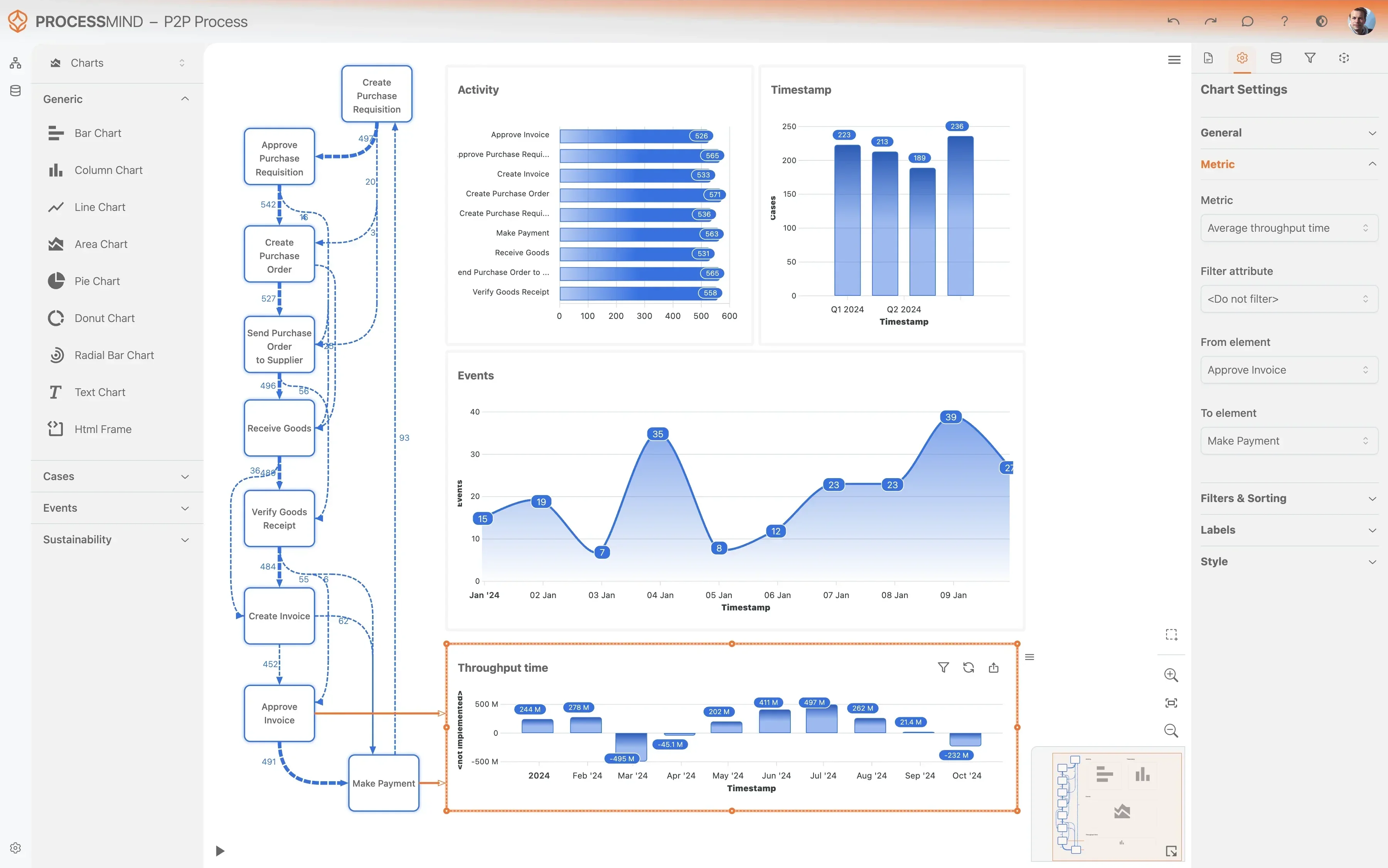
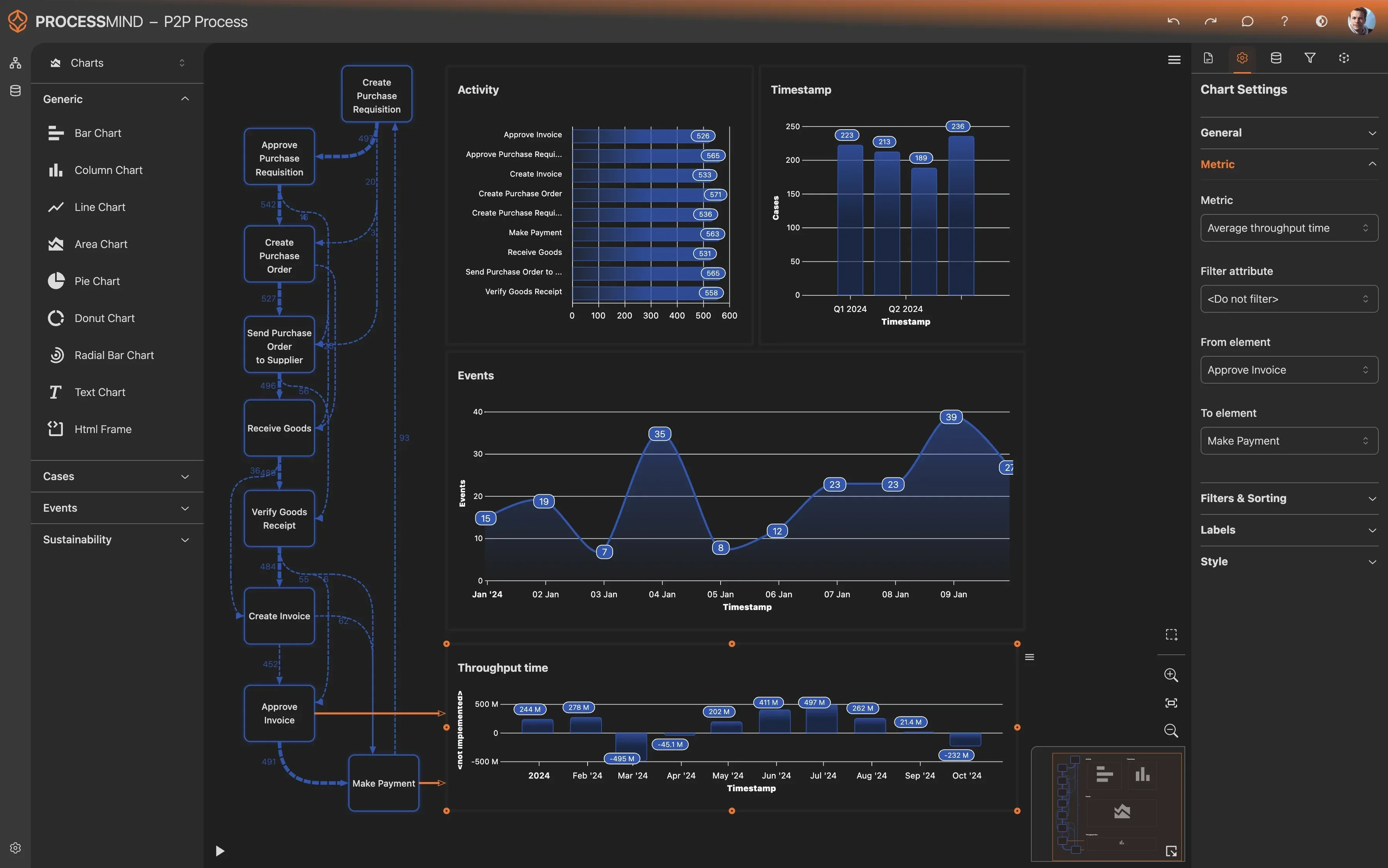
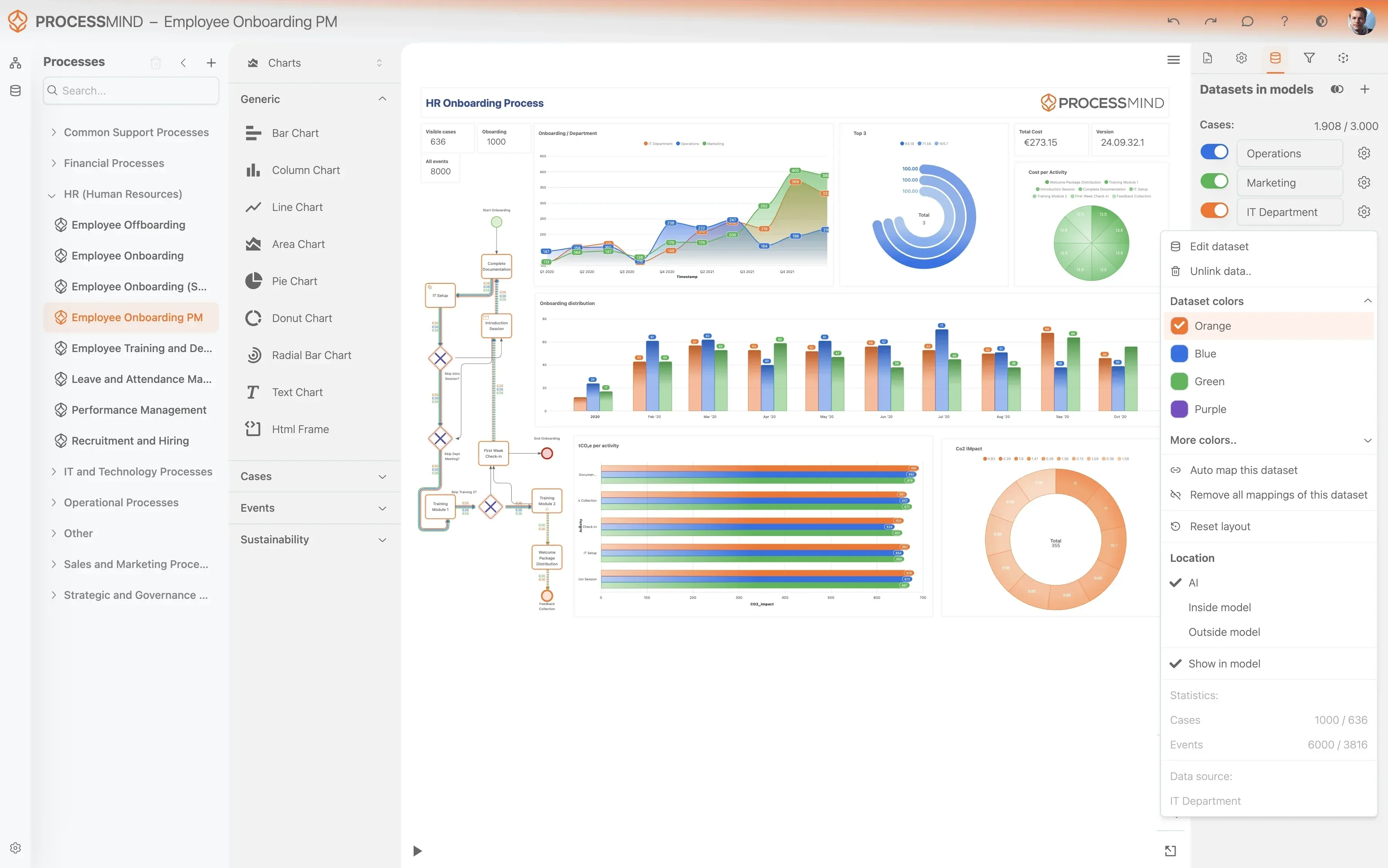
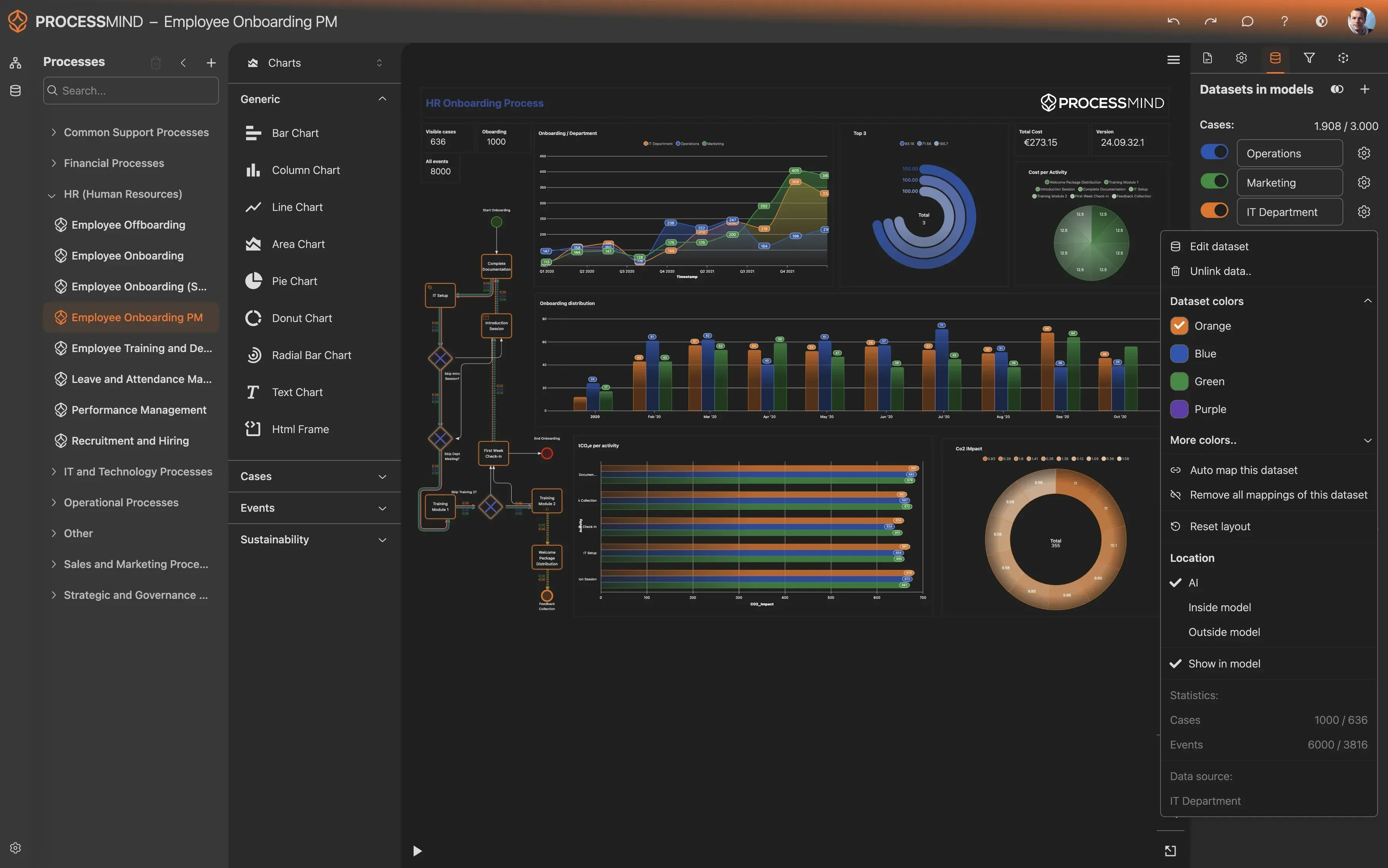
Explore AI-driven dashboards to identify friction points such as dispute delays, manual rework, and payment deviations.
Why it matters
Understanding the root causes of delays helps you target specific areas to reduce Days Sales Outstanding and improve cash flow.
Expected outcome
Visual insights into bottlenecks and optimization areas.
Implement Improvements
What to do
Prioritize and execute changes in Oracle Fusion, such as refining collection strategies or automating dispute workflows.
Why it matters
Taking data-backed action directly impacts your working capital and reduces the operational cost of collections.
Expected outcome
Streamlined AR workflows and improved collection efficiency.
Monitor Your Progress
What to do
Regularly re-upload data to track improvements in KPIs and ensure your process remains optimized over time.
Why it matters
Ongoing monitoring prevents process drift and ensures that your efficiency gains are sustained across the entire organization.
Expected outcome
Continuous visibility into AR performance and ROI.
PROVEN OUTCOMES
Drive Efficiency Across Your Receivables Cycle
By analyzing invoice number data within Oracle Fusion Financials, organizations identify hidden friction points and streamline their end to end collections workflows. These benchmarks reflect the typical improvements achieved through targeted process optimization and automated root cause analysis.
Decrease in Days Sales Outstanding
Organizations achieve faster liquidity by identifying and removing bottlenecks between invoice creation and final clearing.
Growth in touchless processing
Automating the matching of bank statements to invoices reduces the manual effort and cost required for daily reconciliation.
Reduction in resolution cycle time
Accelerating the transition from opening a case to final resolution minimizes delays in the payment cycle and improves cash flow.
Reduction in dispute frequency
Enhancing the initial billing and credit review process helps eliminate the causes of customer disputes and subsequent rework.
Decrease in administrative lead time
Moving invoices to customers faster ensures the payment clock starts sooner, directly reducing the overall cash conversion cycle.
Increase in clean invoice volume
Raising the percentage of invoices cleared without disputes or reminders indicates a highly efficient and standardized AR process.
Results vary based on process complexity and data quality. These figures represent typical improvements observed across implementations involving Oracle Fusion Financials.
Recommended Data
FAQs
Frequently asked questions
Process mining uses event data from Oracle Fusion Financials to create a visual map of your actual accounts receivable workflows. It identifies hidden bottlenecks in invoice creation, cash application, and collections that traditional reporting often misses.
Data is typically extracted from tables like RA CUSTOMER TRX ALL and AR CASH RECEIPTS ALL using standard APIs or BI Publisher reports. This process captures the lifecycle of an invoice by tracking status changes and payment events over time.
By analyzing the time gaps between invoice creation and payment receipt, the tool highlights specific process stages where delays occur. You can pinpoint whether high DSO is caused by late invoice dispatch, slow manual cash application, or inefficient collection strategies.
The Invoice Number is the primary case identifier used to track the end to end journey of a transaction. This allows the system to link every activity, from the initial billing event to the final reconciliation of funds, back to a single unique document.
Yes, the analysis identifies manual touchpoints and rework loops in your current cash application process. By understanding why certain payments require manual intervention, you can refine your matching rules in Oracle to reach higher automation rates.
Initial insights are generally available within two to four weeks after the data connection to Oracle Fusion is established. The exact timeline depends on the complexity of your specific AR configuration and the volume of historical data being analyzed.
Security is maintained through encrypted data transfers and strict role based access controls. The extraction process is designed to focus on process metadata rather than sensitive customer information, ensuring compliance with your internal data governance policies.
Process mining tracks the frequency and duration of dispute status changes, showing which customer segments trigger the most credit memo rework. This visibility helps your team standardize dispute resolution steps and reduce the time it takes to clear contested balances.
Accelerate Your Accounts Receivable Collections Today
Reduce DSO by 15 to 20 days and resolve cash flow gaps now.
No credit card required. Setup in 5 minutes.