Improve Your Hire to Retire - Employee Lifecycle
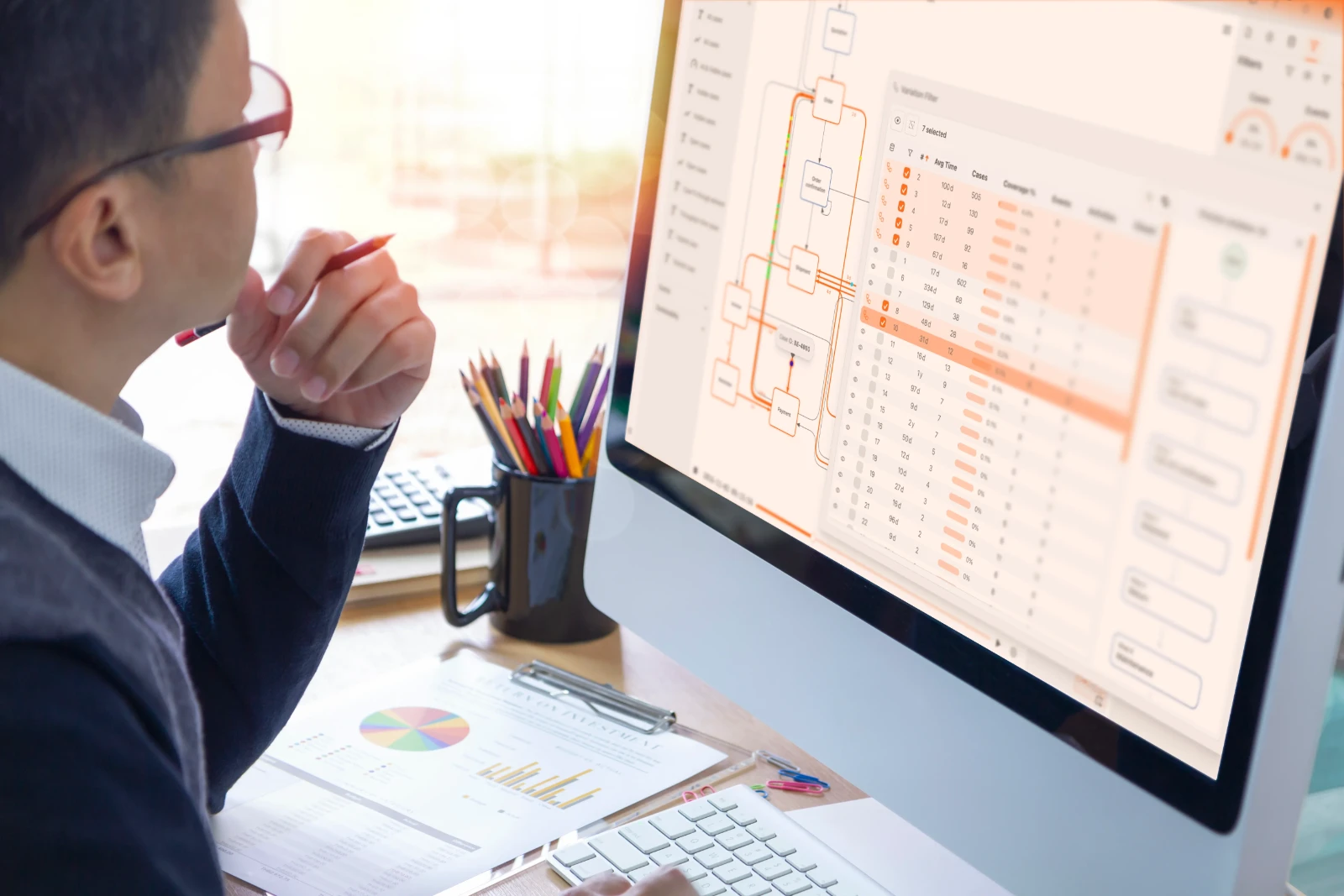
Optimize Your Employee Lifecycle Efficiency in ADP Workforce Now
Our platform helps you uncover bottlenecks and inefficiencies that hinder your organization's processes. You can precisely track key operational journeys, pinpointing where delays occur or resources are misallocated. This allows you to streamline operations, enhance overall efficiency, and ensure robust compliance across all stages.
Download our pre-configured data template and address common challenges to reach your efficiency goals. Follow our six-step improvement plan and consult the Data Template Guide to transform your operations.
Show detailed description
Why Optimize Your Hire to Retire - Employee Lifecycle in ADP Workforce Now?
The journey of an employee, from their very first interaction as a candidate to their final day with your organization, is a complex sequence of events known as the Hire to Retire - Employee Lifecycle. When managed efficiently, this lifecycle fosters a positive employee experience, ensures compliance, and significantly reduces operational costs. However, inefficiencies within this critical process, especially when managed across a comprehensive platform like ADP Workforce Now, can lead to substantial challenges. Delays in hiring directly impact productivity and revenue generation, a poor onboarding experience can result in early attrition, and inefficient offboarding processes can pose compliance risks or data security concerns. Understanding and optimizing the end-to-end flow of your employee's journey is not just about HR efficiency, it is about building a robust, resilient organization that attracts and retains top talent while mitigating risks.
How Process Mining Uncovers Hidden Opportunities in the Employee Journey
Process mining offers a revolutionary approach to understanding and improving your Hire to Retire - Employee Lifecycle within ADP Workforce Now. Instead of relying on subjective interviews or static reports, process mining uses the actual event log data generated by your ADP Workforce Now system. This data, which meticulously records every activity and timestamp, allows you to reconstruct the real employee journey as it happened. You gain an objective, data-driven visualization of your entire Hire to Retire process, from job requisition creation to final offboarding tasks. This powerful analysis capability enables you to pinpoint precisely where and why bottlenecks occur, identify process deviations, and measure the true cycle time of each stage. For instance, you can clearly see if a particular department consistently experiences longer hiring times, or if specific steps in the payroll setup process are causing delays for new hires. By visualizing these actual process flows, process mining helps you move beyond assumptions, providing concrete insights into how to improve Hire to Retire - Employee Lifecycle efficiency.
Key Improvement Areas Across the Employee Lifecycle
Applying process mining to your ADP Workforce Now data illuminates several critical areas for improvement within the Hire to Retire - Employee Lifecycle:
- Recruitment and Onboarding Optimization: Identify delays in candidate sourcing, interview scheduling, or background checks. By analyzing the flow, you can pinpoint the root causes of prolonged time-to-hire, leading to faster talent acquisition. You can also evaluate the effectiveness of your onboarding sequence, ensuring all essential tasks, like IT setup or training assignment, are completed promptly and compliantly.
- Career Progression and Performance Management: Streamline internal processes for promotions, role changes, or performance reviews. Discover if approvals are consistently stalled at a particular management level or if specific review cycles take significantly longer than others. This insight helps in optimizing career development paths and ensuring fair, timely performance evaluations.
- Efficient Offboarding and Compliance: Analyze the offboarding process to ensure all necessary steps, from exit interviews to asset retrieval and system access revocation, are completed in a timely and compliant manner. This reduces potential legal risks, enhances data security, and ensures a respectful departure experience.
By leveraging process mining, you gain the clarity needed to address these specific challenges, ultimately enhancing your ability to reduce Hire to Retire - Employee Lifecycle cycle time.
Measurable Outcomes from Process Optimization
Optimizing your Hire to Retire - Employee Lifecycle through process mining delivers tangible, measurable benefits:
- Reduced Cycle Times: Experience significantly faster hiring processes, quicker internal transfers, and more efficient offboarding procedures. This directly contributes to operational agility and faster resource allocation.
- Cost Savings: Lower recruitment costs by reducing the time positions remain vacant, decrease administrative overhead associated with manual follow-ups, and mitigate the costs of early employee turnover.
- Enhanced Compliance: Ensure consistent adherence to regulatory requirements and internal policies across all stages of the employee journey, minimizing risks associated with non-compliance.
- Improved Employee Experience: A streamlined and transparent employee lifecycle leads to higher satisfaction, better engagement, and stronger talent retention, as employees experience smoother transitions and more efficient HR support.
Getting Started with Optimizing Your Employee Lifecycle
Understanding the complexities of your Hire to Retire - Employee Lifecycle in ADP Workforce Now is the first step toward significant improvements. Process mining offers a clear path to achieving these enhancements, empowering you with the data-driven insights necessary to make informed decisions. By visually mapping your actual processes and identifying inefficiencies, you are well-equipped to drive meaningful process optimization. Explore how to leverage these insights to transform your HR operations, making them more efficient, compliant, and employee-centric.
The 6-Step Improvement Path for Hire to Retire - Employee Lifecycle
Download Your Template
What to do
Obtain the pre-configured Excel template tailored for Hire to Retire data. This template ensures your data from ADP Workforce Now is structured correctly for analysis.
Why it matters
A standardized data structure is crucial for accurate process mining. It prevents errors and ensures a smooth, efficient data ingestion process into ProcessMind.
Expected outcome
A ready-to-fill Excel template for your Hire to Retire process data, ensuring compatibility with ProcessMind.
Export Your H2R Data
What to do
Extract 3-6 months of historical Hire to Retire data from ADP Workforce Now, focusing on employee lifecycle activities. Populate the downloaded template with this real data.
Why it matters
Historical data provides a comprehensive view of past process executions, revealing recurring patterns, bottlenecks, and potential compliance issues in your employee lifecycle.
Expected outcome
A populated Excel template containing relevant historical data, ready for secure upload and analysis.
Upload Your Dataset
What to do
Securely upload your completed Hire to Retire data template to ProcessMind. The platform will automatically begin processing and preparing your data for analysis.
Why it matters
Efficient data ingestion is the gateway to actionable insights. ProcessMind handles the complexities, allowing you to quickly move to discovery without manual data manipulation.
Expected outcome
Your Hire to Retire process data is successfully ingested and automatically prepared for detailed analysis.
Analyze Your H2R Process
What to do
Explore the auto-generated dashboards and insights specific to your Hire to Retire process in ProcessMind. Leverage AI-driven recommendations to pinpoint improvement areas.
Why it matters
Understanding bottlenecks in hiring, onboarding, or offboarding directly impacts employee satisfaction and operational costs. Identify root causes quickly.
Expected outcome
Clear visualizations of your employee lifecycle, identified bottlenecks, and data-backed recommendations for improvement.
Implement H2R Changes
What to do
Prioritize and implement the identified improvement opportunities in your ADP Workforce Now configurations or HR workflows. Focus on tangible, impactful actions.
Why it matters
Translating insights into action improves employee experience, streamlines HR operations, and ensures compliance across the entire Hire to Retire journey.
Expected outcome
Actionable changes initiated within your HR systems and processes, directly addressing the identified inefficiencies.
Monitor H2R Progress
What to do
Periodically re-upload updated Hire to Retire data from ADP Workforce Now to ProcessMind to track the impact of your implemented changes over time.
Why it matters
Continuous monitoring ensures sustained process health, allowing you to measure KPI improvements, confirm ROI, and adapt to evolving business needs.
Expected outcome
Quantifiable improvements in H2R KPIs, confirmation of ROI, and a clear understanding of ongoing process performance.
YOUR DISCOVERIES
Uncover Key Insights in Your Employee Lifecycle
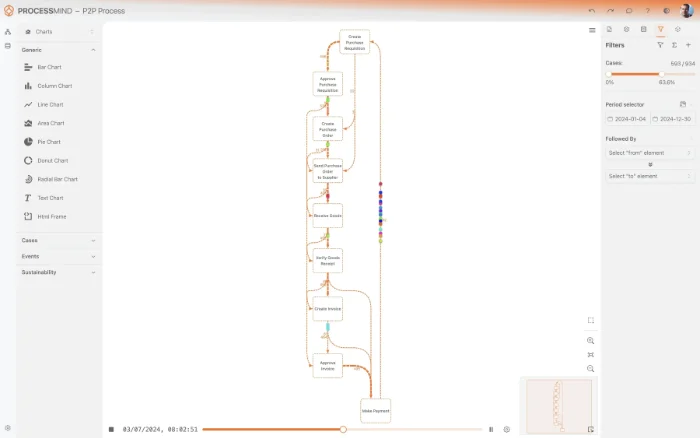
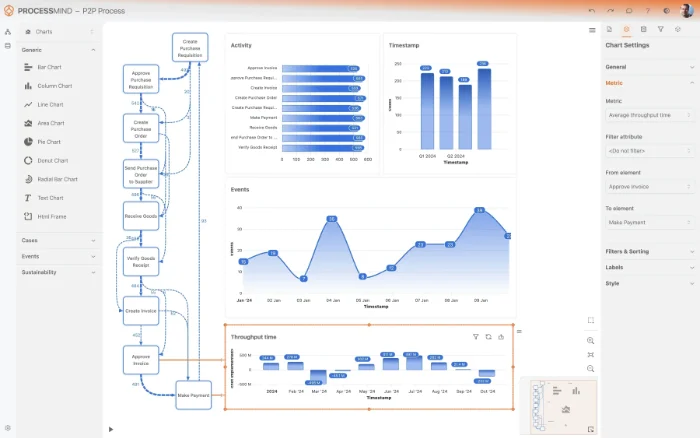
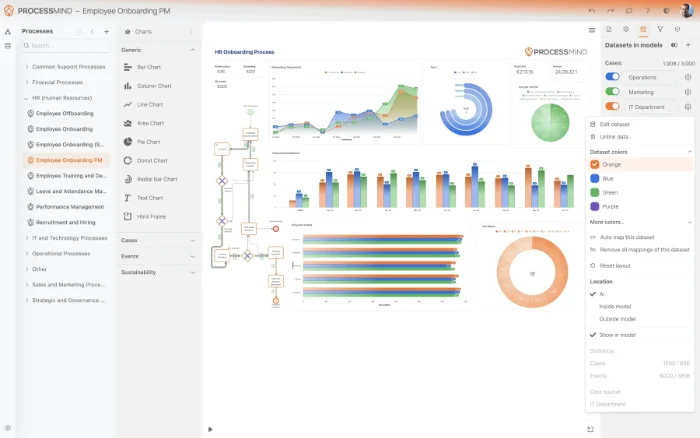
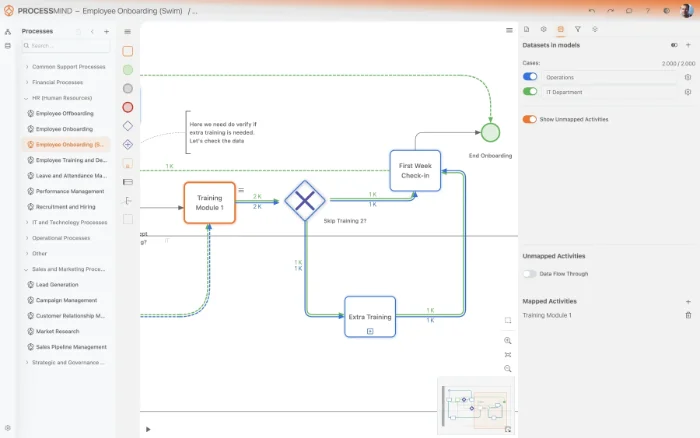
- Visualize end-to-end employee journeys
- Pinpoint hiring delays and bottlenecks
- Optimize onboarding and offboarding steps
- Ensure ADP Workforce Now compliance
TYPICAL OUTCOMES
Achieving a Streamlined Employee Lifecycle
These outcomes illustrate how optimizing the Hire to Retire process, through data-driven insights from ADP Workforce Now, leads to measurable improvements in efficiency and employee experience.
Average reduction in recruitment cycle
By identifying and eliminating bottlenecks in the hiring process, organizations can significantly shorten the time it takes to fill open positions, improving operational efficiency.
Reduction in new hire setup time
Process mining helps streamline the initial employee setup and critical onboarding tasks, ensuring new hires are productive sooner and experience a smoother welcome.
Increase in critical HR task completion
Ensure timely completion of background checks, payroll setup, and mandatory training by monitoring adherence to SLAs and regulatory requirements across all employee lifecycle stages.
Reduction in employee attrition, first year
Pinpoint issues in recruitment or early career support that lead to employees leaving within their first 6-12 months, improving retention and reducing replacement costs.
Reduced cycle time for evaluations
Optimize the performance review process by identifying delays and inefficiencies, leading to quicker feedback cycles and more timely development opportunities for employees.
Results vary based on process complexity, data quality, and specific organizational goals. These figures represent typical improvements observed across various implementations.
Recommended Data
FAQs
Frequently asked questions
Process mining helps visualize the actual journey of employees, from hiring to offboarding, revealing deviations and inefficiencies. It can pinpoint bottlenecks in time-to-fill, slow onboarding, and compliance gaps, providing data-driven insights for targeted improvements. This analysis empowers you to optimize the complete employee lifecycle.
You primarily need event logs that include an Employee ID as a case identifier, an activity name describing each step, and a timestamp for when each activity occurred. Relevant data might include hiring stages, onboarding tasks, performance reviews, promotions, and offboarding actions, ensuring a comprehensive view of the lifecycle.
Data can often be extracted using standard reporting tools or custom queries within ADP Workforce Now, or via API integrations if available and configured. The key is to obtain event-level data with timestamps and unique identifiers for each employee. Your IT team or an integration specialist usually assists with this process.
Initial setup, including data extraction and model generation, can typically take a few weeks, depending on data availability and complexity. Within 4-6 weeks, you should have a foundational process map and initial insights into major bottlenecks and deviations in your Hire to Retire process, highlighting key areas for improvement.
Yes, by mapping actual process flows, process mining can highlight instances where compliance steps are missed or delayed, and identify patterns leading to early attrition. For example, it can show if specific onboarding paths correlate with higher turnover, allowing you to implement preventative measures and enhance employee retention strategies.
While some technical expertise for data extraction and initial setup is beneficial, modern process mining tools are designed for business users. Many platforms offer intuitive interfaces and pre-built connectors, reducing the need for deep technical skills for ongoing analysis. Training is usually provided by the tool vendor to ensure successful adoption.
You can expect a reduction in time-to-fill, faster and more consistent onboarding, improved regulatory compliance, and decreased early employee turnover. Additionally, you will gain better visibility into HR operations, enabling more efficient performance management and internal talent mobility within your organization.
It is common for real-world data to have inconsistencies. Process mining tools include robust data preparation and cleansing capabilities to handle such issues. The initial analysis often helps identify data quality problems, allowing for systematic improvements to your data capture processes within ADP Workforce Now.
No, process mining goes beyond standard reporting by visually mapping the actual sequence of events and uncovering how processes truly execute, including hidden variations and deviations. It provides diagnostic insights into why certain metrics are the way they are, rather than just what they are, offering deeper operational understanding.
Optimize Your Hire to Retire Employee Lifecycle Now
Gain 30% faster cycle times and enhance your ADP employee lifecycle.
No credit card required, start optimizing today.