Improve Your Payroll Processing

Select a process
Choose a process to continue working in your connected workspace.
Optimize Payroll Processing in ADP Workforce Now
Our platform helps you identify hidden bottlenecks and manual workarounds that slow down your financial cycles. By analyzing your actual workflows, you can uncover the root causes of payment delays and compliance risks. This visibility allows you to implement targeted improvements that increase overall accuracy and efficiency.
Download our pre-configured data template and address common challenges to reach your efficiency goals. Follow our six-step improvement plan and consult the Data Template Guide to transform your operations.
Show detailed description
Why optimize Payroll Processing
In the world of human resources and finance, payroll processing is often the most visible measure of operational health. When it works, it is invisible, but when it fails, the consequences ripple through an entire organization. Managing this process within ADP Workforce Now requires balancing strict deadlines with complex regulatory requirements across various jurisdictions. For many companies, the cost of inefficiency goes beyond late payments. It includes the administrative burden of manual data entry, the risk of non-compliance fines, and the erosion of trust within the workforce. Optimizing this cycle is not just about speed, it is about creating a resilient system that can scale without adding proportional overhead. By focusing on process optimization, you move from a reactive stance... where you are constantly fixing errors... to a proactive one where the system is designed for maximum accuracy and minimal friction.
How process mining helps in ADP Workforce Now
Traditional auditing usually looks at a snapshot of payroll data, which often misses the underlying behavioral patterns that cause delays. Process mining changes this by extracting the digital footprints left behind in ADP Workforce Now. By connecting every timestamp from initial time sheet submission to the final tax filing, you gain a transparent view of the actual workflow. This allows you to see where payroll records sit idle, which departments frequently miss approval deadlines, and where manual interventions are most common. Instead of guessing why a pay cycle takes five days instead of three, you can pinpoint the specific bottlenecks that disrupt the flow. This level of transparency makes it possible to distinguish between systemic issues in the ADP configuration and behavioral issues within the team.
Key improvement areas for payroll efficiency
Streamlining the Approval Chain
One of the most common improvement areas involves the bridge between time tracking and payroll initialization. If time sheets are consistently rejected or require manual adjustment before the gross pay calculation, the entire downstream process suffers. Process mining reveals if these corrections are due to user error, system configuration issues, or ambiguous policies. By identifying which pay groups or cost centers have the highest rates of rework, you can target specific training or process changes where they will have the most impact.
Reducing Manual Interventions
Manual data corrections are the enemy of payroll accuracy. Every time a specialist has to manually override a calculation or re-enter data from an external source, the risk of error increases. By analyzing the frequency of activities like data correction performed or incentive data imported, you can identify opportunities for automation or better integration. Eliminating these manual touchpoints not only speeds up the cycle time but also allows your payroll team to focus on higher-value activities like strategic reporting and compliance auditing.
Enhancing Compliance and Audit Readiness
The audit exception phase is often the most stressful part of the cycle. By analyzing how often exceptions are flagged and how long they take to resolve, organizations can refine their pre-calculation checks to catch errors earlier in the cycle. This proactive approach reduces the stress of the final preview period and minimizes the need for costly off-cycle payments. Furthermore, having a complete, data-driven map of the process ensures that you have a clear audit trail for every pay record.
Expected outcomes of process optimization
The outcomes of a successful payroll optimization project are multifaceted. First, there is a significant reduction in cycle time. By streamlining the path from time sheet approval to bank transfer file generation, you can shorten the processing window, giving your team more buffer for complex cases. Second, accuracy improves as manual touchpoints are replaced with automated or standardized steps. This leads to a lower rate of payroll reversals and corrections, which directly correlates to higher employee satisfaction. Finally, compliance becomes a byproduct of the process rather than a frantic end-of-cycle hurdle. With every step documented and analyzed, you have a continuous audit trail that ensures tax filings and benefit deductions are handled correctly every time.
Getting started with your data
Moving toward a more efficient payroll operation starts with a willingness to look at the data objectively. By using this process mining approach for ADP Workforce Now, you are moving beyond anecdotal evidence and toward a data-driven strategy. The insights gathered here will provide the foundation for targeted training, system reconfigurations, or even policy changes that fundamentally improve how your organization compensates its most valuable asset, its people. Start by visualizing your current flow, and you will quickly see the path to a more efficient, accurate, and compliant payroll cycle.
The 6-Step Improvement Path for Payroll Processing
Download the Template
What to do
Obtain the specialized Excel template designed for ADP Workforce Now payroll records to ensure your data matches the required process mining schema.
Why it matters
Using a standardized structure prevents data mapping errors and accelerates the transition from raw payroll logs to actionable process maps.
Expected outcome
A ready to use data template for your ADP payroll information.
Export Your Data
What to do
Extract 3 to 6 months of historical payroll transaction data from ADP Workforce Now, covering time tracking, approvals, and final disbursements.
Why it matters
Historical data provides a representative sample of your payroll cycle, highlighting seasonal trends, manual overrides, and recurring bottlenecks.
Expected outcome
A completed dataset containing several months of payroll processing history.
Upload Your Dataset
What to do
Securely upload your populated Excel template to the ProcessMind platform for automated processing and initial process discovery.
Why it matters
Centralizing your payroll data in a secure environment allows the AI engine to reconstruct the end to end journey of every pay record.
Expected outcome
A successfully imported dataset ready for deep process analysis.
Analyze Your Process
What to do
Review the auto generated dashboards to identify delays in time sheet approvals or frequent manual corrections within your ADP workflows.
Why it matters
Visualizing the actual flow reveals hidden compliance risks and efficiency leaks that traditional payroll reports often overlook.
Expected outcome
Clear visibility into bottlenecks and identified process deviations.
Implement Improvements
What to do
Prioritize identified issues like slow approval loops or high error rates and adjust your ADP configurations or internal payroll policies.
Why it matters
Taking targeted action based on data ensures that your optimization efforts directly lead to faster processing and fewer payment errors.
Expected outcome
A set of implemented process changes targeting your biggest payroll friction points.
Monitor Your Process
What to do
Regularly upload new payroll cycles to track the impact of your changes and ensure that compliance levels remain high over time.
Why it matters
Continuous monitoring prevents process drift and confirms that your improvements are delivering sustained value and cost savings.
Expected outcome
Ongoing performance tracking and confirmation of ROI for payroll improvements.
YOUR PAYROLL INSIGHTS
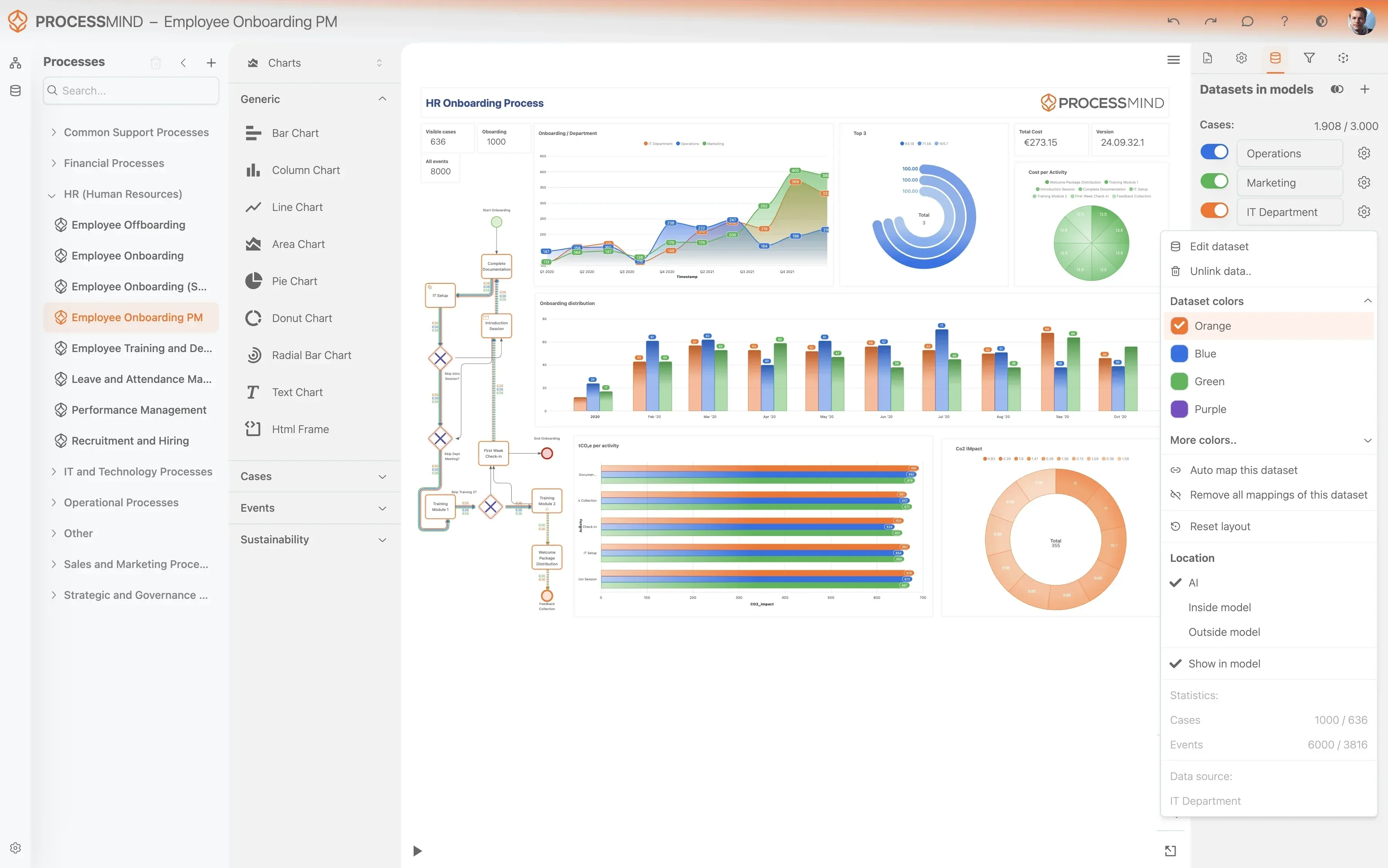
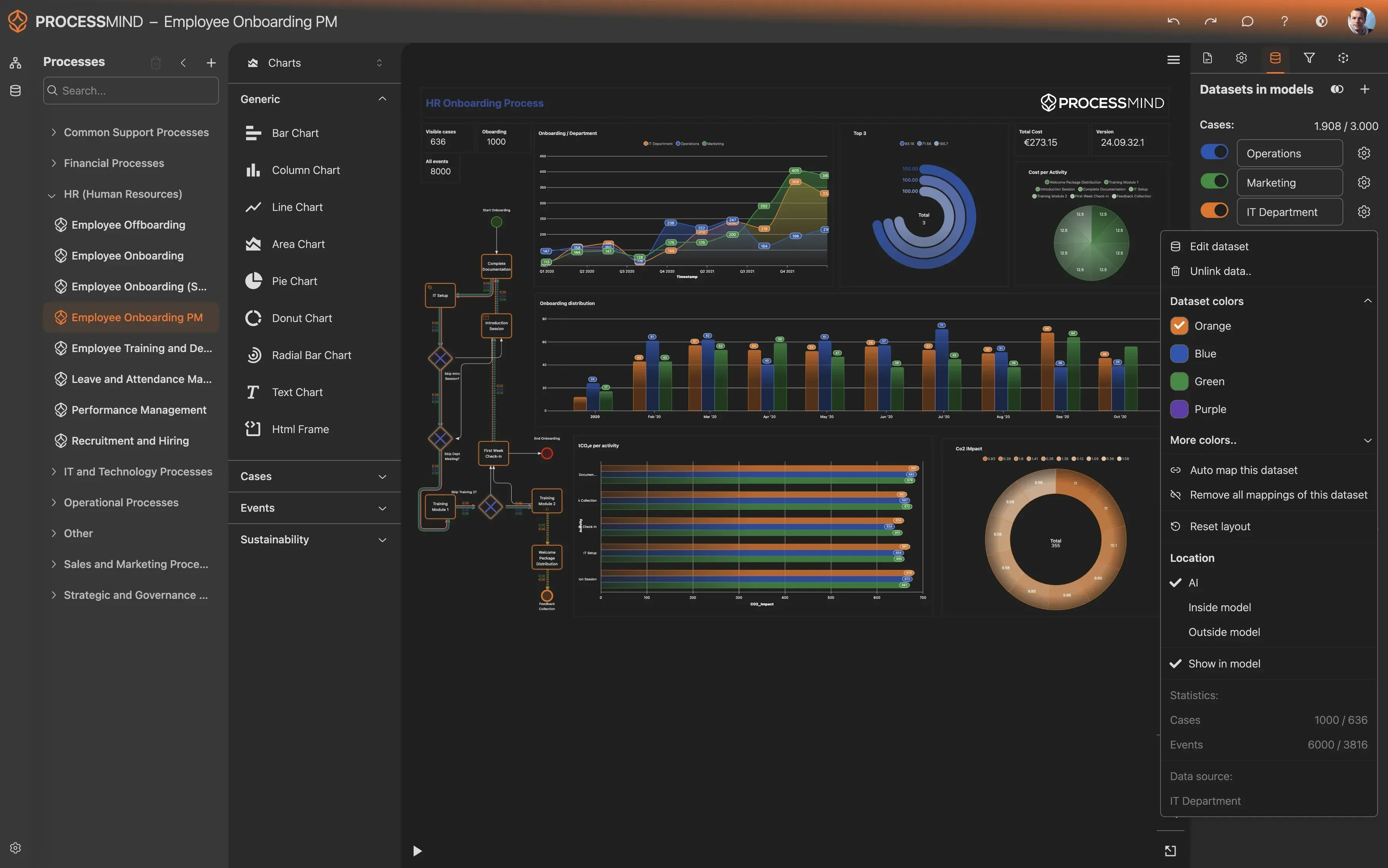
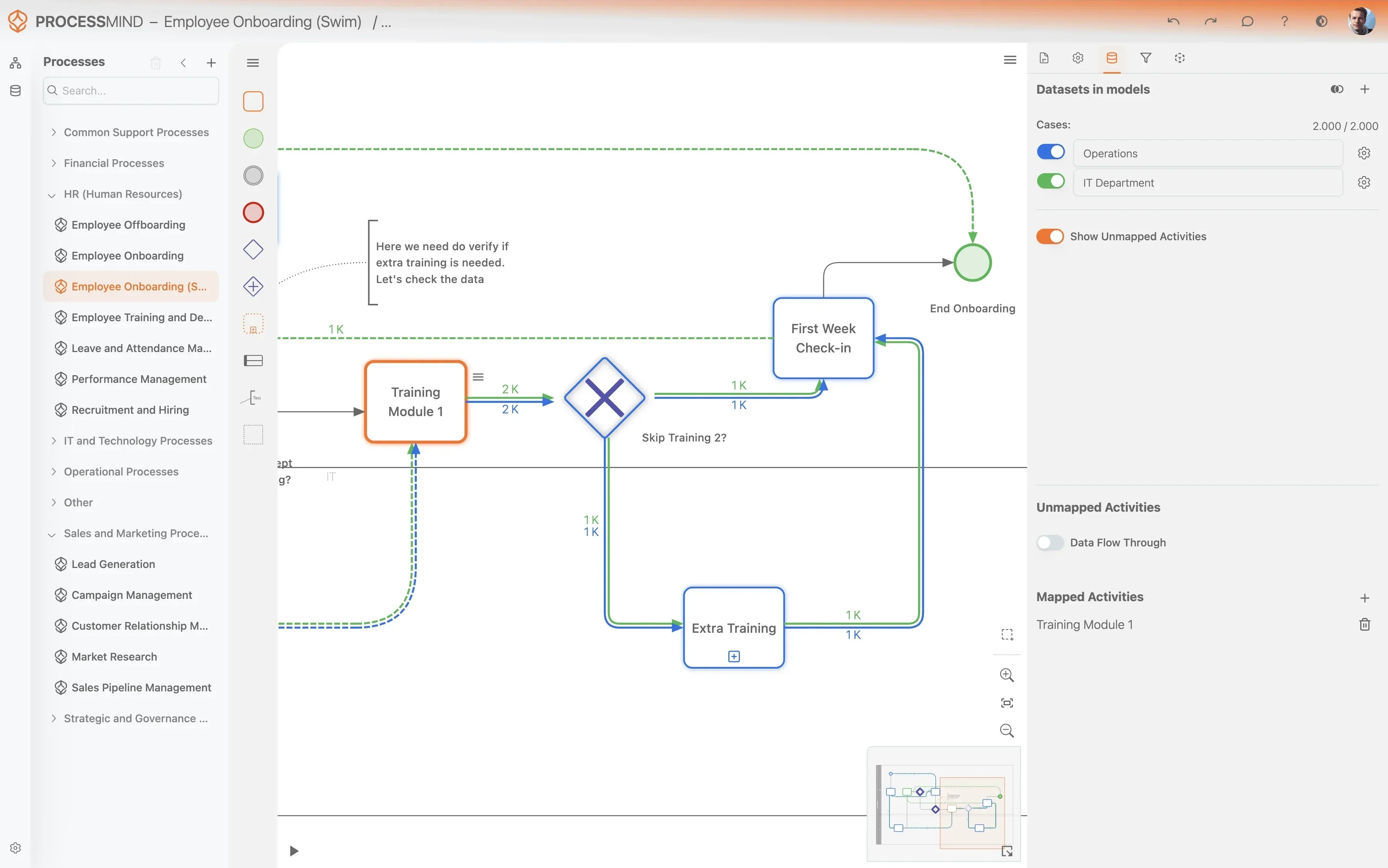
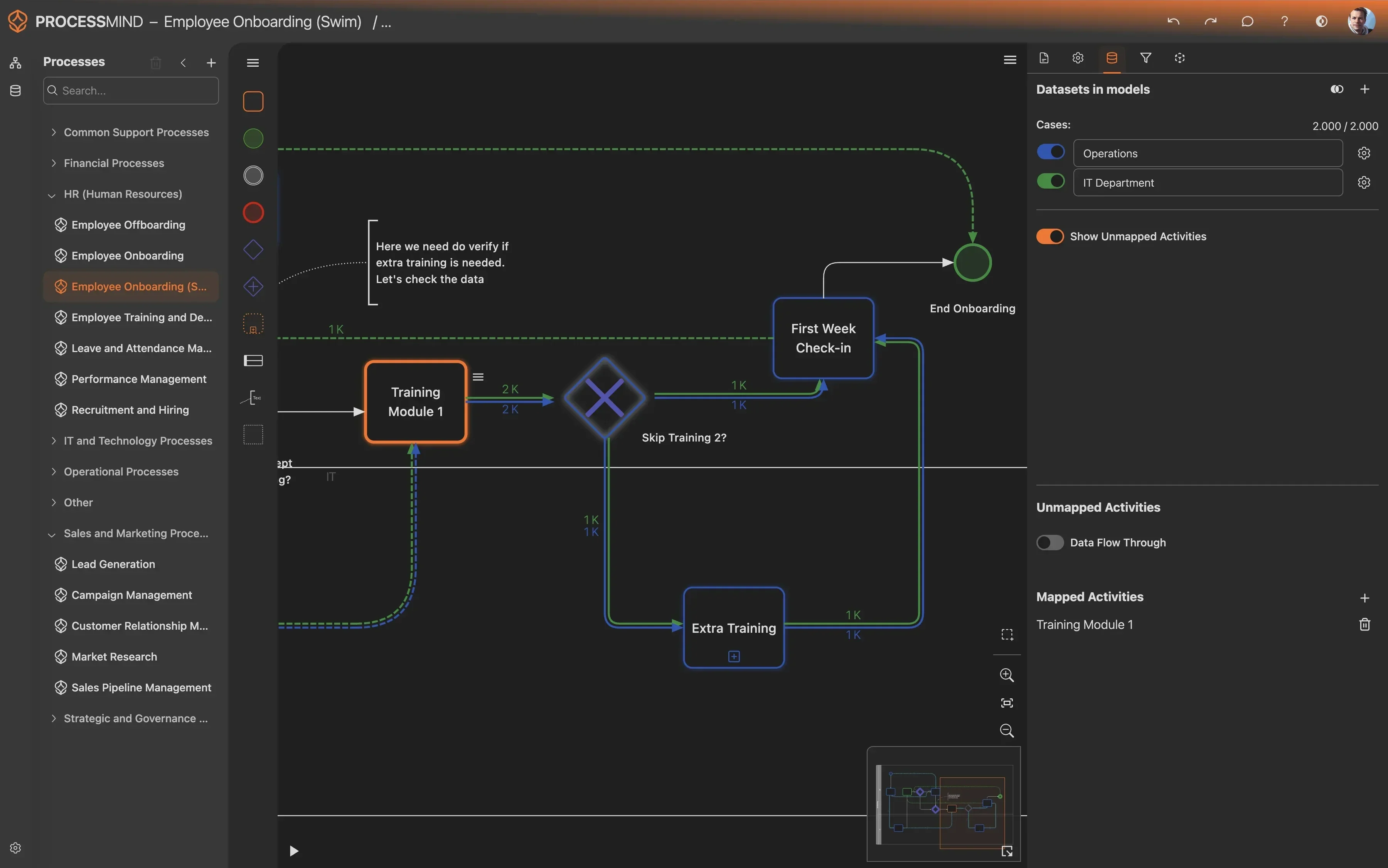
Unlock Full Visibility into Your Payroll Workflows
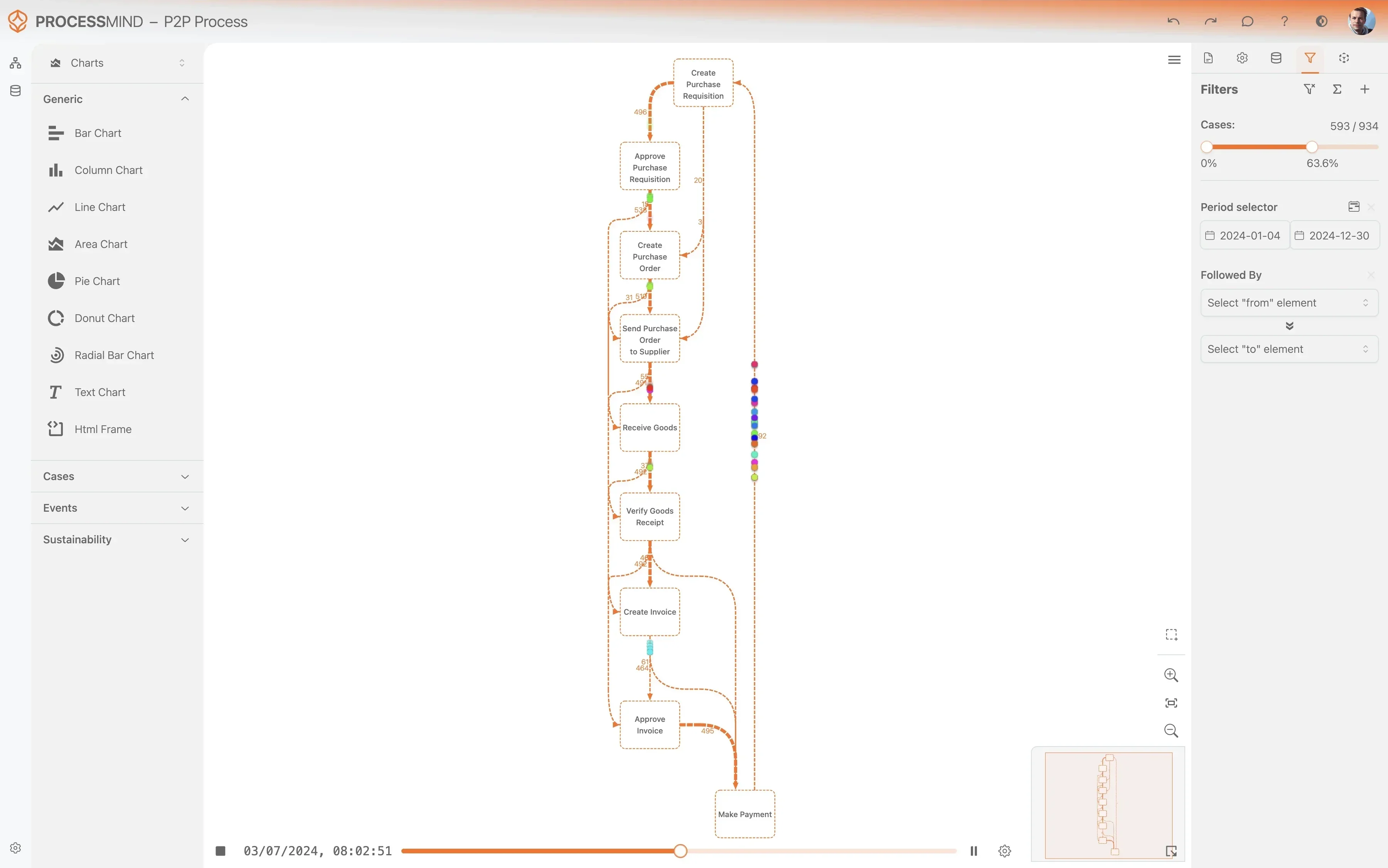
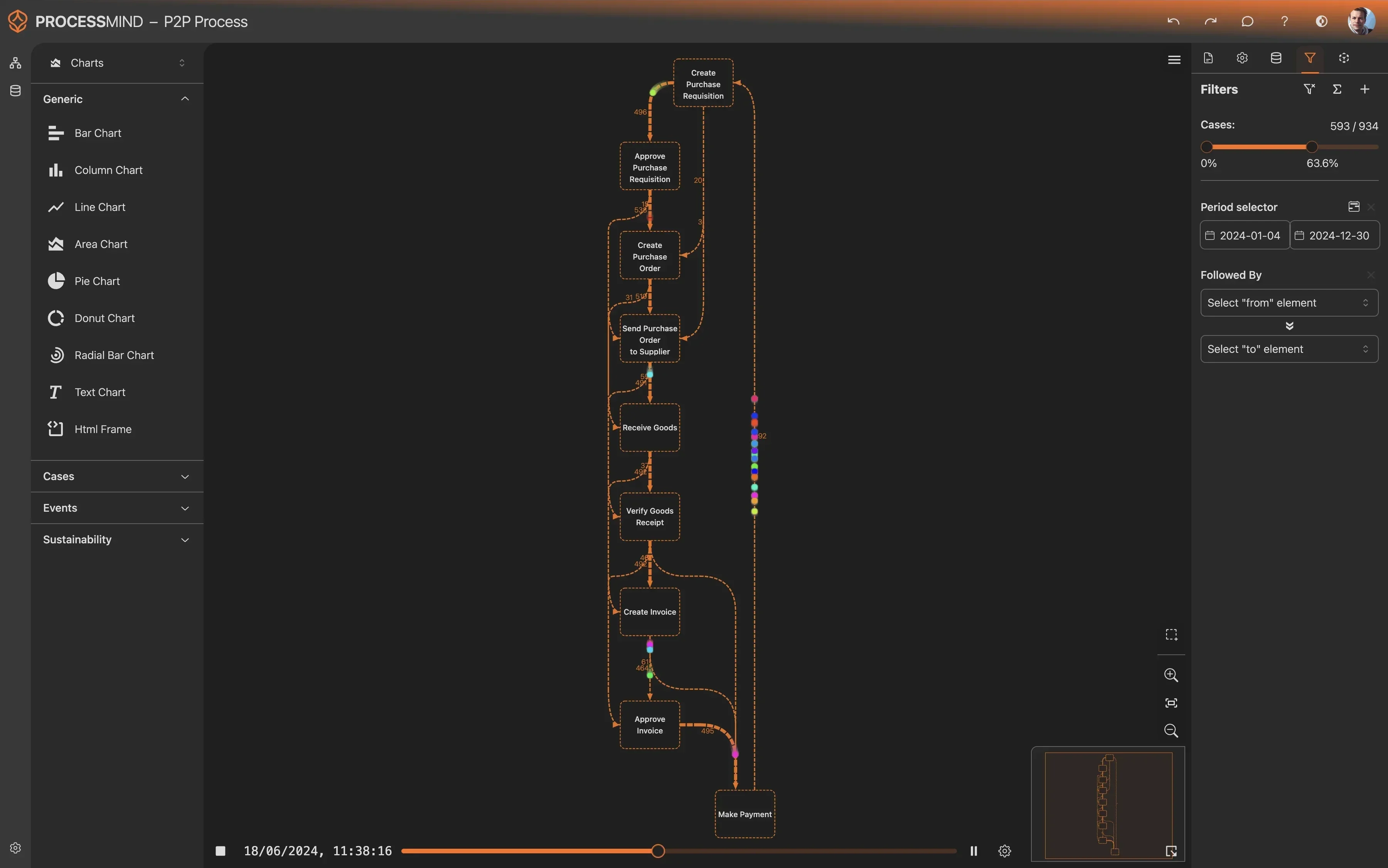
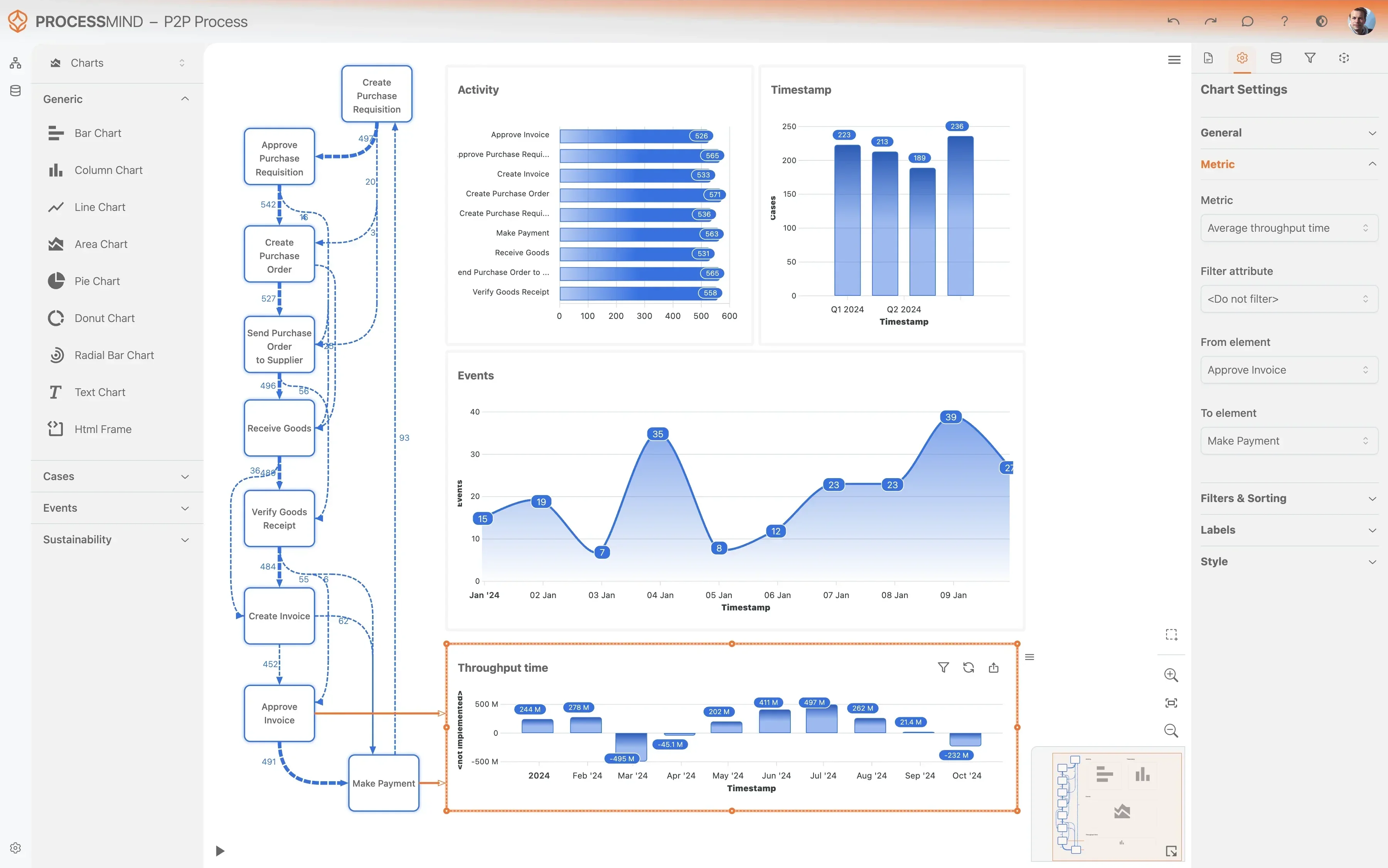
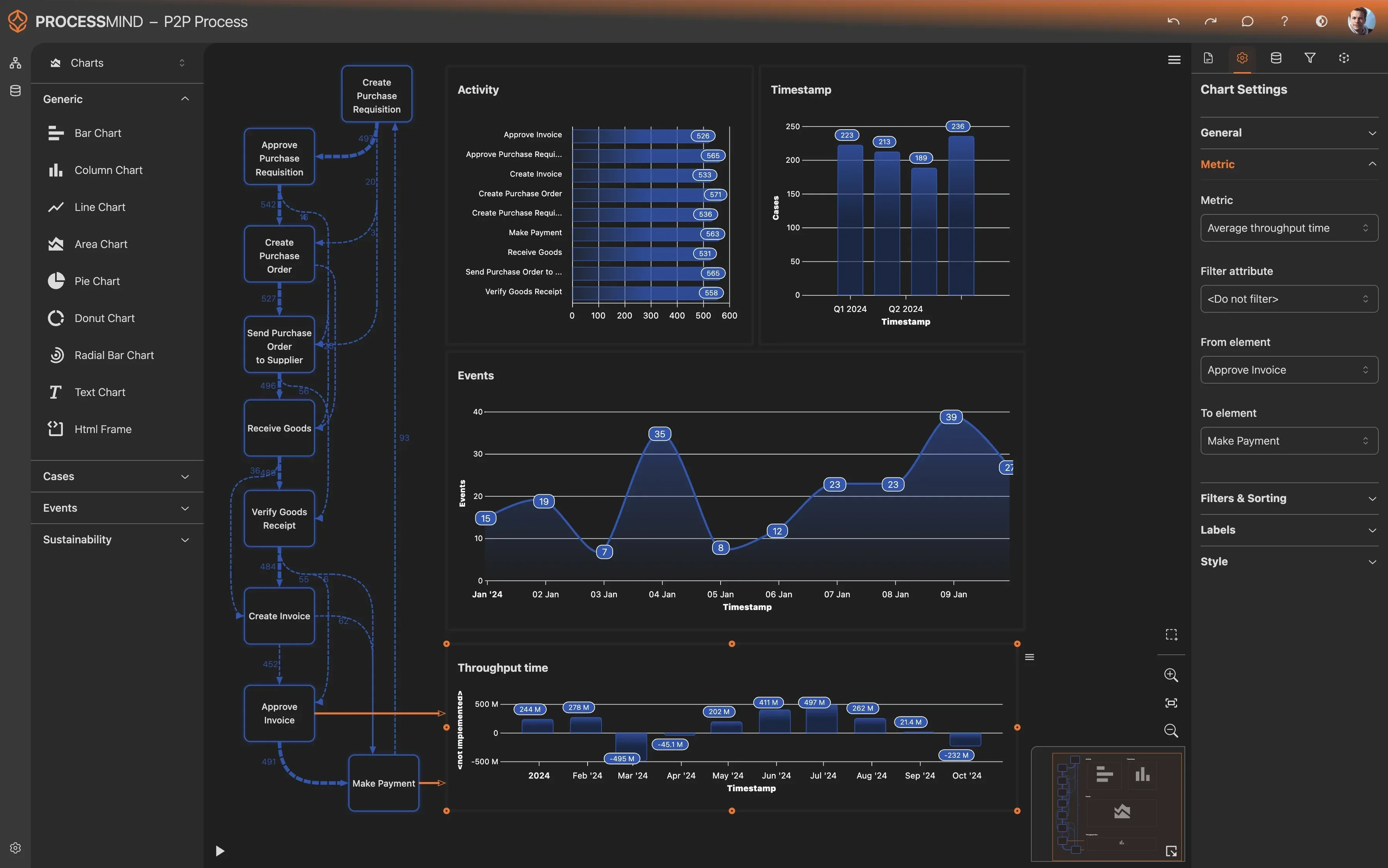
- Map your end to end payroll process flow
- Identify specific causes of payment delays
- Locate manual workarounds and data errors
- Measure performance against target deadlines
PROVEN OUTCOMES
Optimizing Payroll Performance in ADP Workforce Now
Our process mining analysis identifies hidden inefficiencies within the ADP Workforce Now ecosystem, enabling finance teams to streamline payroll record validation and reduce manual rework. These metrics reflect the typical efficiency gains realized by organizations through data-driven process optimization.
Reduction in approval lead time
Streamlining the approval flow between submission and sign-off prevents downstream bottlenecks and ensures payments are processed on schedule.
Increase in touchless records
Eliminating manual data corrections and audit exceptions allows more payroll records to flow to execution without any human intervention.
Faster tax filing completion
Accelerating the time between payment execution and statutory filing helps organizations avoid penalties and maintain reliable regulatory standing.
Decrease in preview loops
Minimizing repetitive payroll result previews reduces administrative overhead and prevents delays caused by late-stage data changes.
Shorter publication lead time
Closing the gap between payment and pay slip availability improves employee transparency and reduces the volume of inquiries to the HR department.
Decrease in adjustments
Reducing retrospective adjustments through better initial data validation saves payroll specialists significant time during subsequent pay cycles.
Individual results vary based on process complexity and data quality. These figures represent typical improvements observed across various payroll implementations.
Recommended Data
FAQs
Frequently asked questions
Process mining analyzes the event logs within ADP Workforce Now to map every step of your payroll cycle. It highlights where bottlenecks occur, such as slow timesheet approvals or repetitive preview cycles, allowing you to target specific areas for automation or policy changes.
You need to extract event logs that include a unique Payroll Record ID, activity timestamps, and the specific actions performed. This typically involves connecting to the ADP API or exporting system logs that capture status changes from timesheet submission to final bank transfer generation.
Yes, the technology tracks the sequence of events leading up to adjustments and identifies patterns or common data entry points where errors originate. By visualizing these rework loops, teams can standardize audit flag resolutions and synchronize incentive data earlier in the process.
While many organizations start with a retrospective audit of past cycles, you can set up continuous monitoring through API integrations. This allows you to receive alerts when a specific department lags in processing times or when an unusual volume of manual interventions occurs before the payroll is finalized.
Data privacy is maintained by pseudonymizing sensitive fields like social security numbers or individual pay rates before the data is analyzed. The focus of process mining is on the timestamps and status changes of the Payroll Record rather than the personal details of the individual employees.
Most organizations can expect to see an initial process map within two to four weeks after the data is successfully connected. Once the baseline is established, specific opportunities to reduce manual rework and accelerate bank transfer generation become visible immediately.
No, process mining works by reading the existing audit trails and logs already generated by ADP Workforce Now. You do not need to change how your payroll team operates to begin the analysis, though you may choose to update configurations later based on the findings.
By providing a complete, transparent view of every action taken within a payroll cycle, process mining acts as a digital audit trail. It ensures that all audit exceptions are handled according to protocol and provides proof of compliance for tax filing and benefit deduction verifications.
Fix Payroll Processing Delays in ADP Workforce Now Today
Reduce cycle time by 30% and stop manual data corrections
No credit card required. Setup takes minutes.