Improve Your Production Planning

Select a process
Choose a process to continue working in your connected workspace.
Optimize Production Planning in Plex Smart Manufacturing
Production planning often encounters issues like unexpected bottlenecks and inefficient resource allocation. Our platform helps you uncover these hidden inefficiencies and provides insights to streamline your workflows. By visualizing your process, you can ensure material availability and transform planning from reactive to proactively optimized.
Download our pre-configured data template and address common challenges to reach your efficiency goals. Follow our six-step improvement plan and consult the Data Template Guide to transform your operations.
Show detailed description
Why Optimizing Your Production Planning in Plex Smart Manufacturing Matters
Production Planning is the essential nervous system of any manufacturing operation, orchestrating everything from raw materials to finished products. In a dynamic environment powered by advanced systems like Plex Smart Manufacturing, efficient planning is not just a goal, it is a strategic imperative. Inefficiencies in this critical process can cascade throughout your entire supply chain, leading to significant business impacts. Imagine the ripple effect of a single bottleneck: delayed production orders, increased inventory holding costs, missed delivery dates, unhappy customers, and ultimately, a direct hit to your bottom line. These inefficiencies can manifest as wasted resources, including machine time, labor hours, and costly materials. Identifying the precise points of friction and understanding their root causes within your extensive Plex Smart Manufacturing data is incredibly challenging with traditional methods, often relying on guesswork and reactive measures.
How Process Mining Unlocks Production Planning Efficiency in Plex
Process mining offers a revolutionary approach to understanding and improving your Production Planning within Plex Smart Manufacturing. By extracting event data from your Plex system, it reconstructs the entire journey of every production order, from “Demand Forecast Received” to “Production Performance Analyzed”. This comprehensive, end-to-end perspective allows you to see your process as it actually runs, not just how you think it runs. For each Production Order, you gain unparalleled visibility into activity sequences, timings, and resource allocations. This empowers you to identify critical bottlenecks, such as persistent delays during “Capacity Requirements Planned” or extended waiting times before “Material Requirements Planned”. Process mining goes beyond mere identification, enabling deep root cause analysis to uncover why these issues occur. Is a specific product code consistently facing delays? Is a particular production plant or line experiencing unexpected holdups? Are certain planners consistently encountering challenges? You can analyze variations from your ideal process flow, detect rework loops, or spot deviations in “Schedule Adherence Monitored” activities. This analytical power ensures that your production plans are not only created but also executed with maximum efficiency, leveraging the rich data housed within your Plex Smart Manufacturing platform.
Key Improvement Areas in Production Planning
By applying process mining to your Plex Smart Manufacturing data, you unlock several critical areas for improvement within Production Planning:
- Reduce Production Planning Cycle Time: Pinpoint activities that add unnecessary duration to your production orders. Identify specific steps where delays consistently occur, enabling targeted interventions to streamline your planning and execution phases. This directly addresses how to reduce Production Planning cycle time, leading to faster throughput.
- Optimize Resource Allocation: Gain insights into how effectively your “Production Line” and human “Planner” resources are utilized. Discover instances of over-allocation, under-utilization, or imbalanced workloads that affect the “Planned Quantity” and “Production Priority”.
- Enhance Material Availability and Readiness: Analyze the impact of “Material Availability Status” on your production schedule. Identify planning flaws or dependencies that lead to delays in “Production Started” due to material shortages, ensuring your materials are always available when needed.
- Standardize and Harmonize Processes: Uncover unexpected variations in process execution across different “Production Plant” locations or different shifts. Use these insights to establish and enforce best practices, ensuring consistent and compliant operations.
- Proactive Bottleneck Resolution: Shift from reactive problem-solving to proactively identifying potential slowdowns before they impact your overall “Production Status”. For example, you can identify patterns that lead to delays in “Production Plan Reviewed” or “Production Plan Adjusted”, allowing for pre-emptive action.
Expected Outcomes and Measurable Benefits
The implementation of process mining for Production Planning in Plex Smart Manufacturing delivers tangible, measurable benefits across your organization:
- Significant Time Savings: Reduce overall Production Planning cycle time and improve lead times, leading to faster order fulfillment.
- Cost Reductions: Lower inventory carrying costs, minimize waste from expired or obsolete materials, and optimize labor expenditure by eliminating idle time and rework.
- Increased Throughput: Boost your production output and manufacturing capacity without necessarily increasing physical resources.
- Improved Customer Satisfaction: Meet delivery promises more consistently, enhancing customer trust and loyalty.
- Enhanced Decision-Making: Equip your planning teams with data-driven insights for strategic adjustments, capacity planning, and operational improvements.
- Stronger Compliance: Ensure better adherence to internal production policies, regulatory requirements, and agreed-upon service level agreements.
Start Your Journey to Optimized Production Planning
Embracing process mining for Production Planning in Plex Smart Manufacturing is a clear path to operational excellence. It transforms complex event data into easily digestible, actionable insights, making process optimization accessible and achievable. Leverage this powerful approach to identify inefficiencies, streamline workflows, and ensure your production plans are executed with precision, driving your manufacturing success.
The 6-Step Improvement Path for Production Planning
Download the Template
What to do
Get the ProcessMind Excel template, designed to capture relevant data from your Plex Smart Manufacturing system for Production Planning.
Why it matters
This ensures your data is structured correctly for efficient analysis, preventing data inconsistencies and speeding up the import process.
Expected outcome
A pre-formatted Excel template ready to guide your data extraction from Plex.
Export Your Data
What to do
Extract 3-6 months of historical production planning data, including activities and attributes, directly from your Plex Smart Manufacturing platform. Populate the downloaded template.
Why it matters
Historical data provides a solid foundation for discovering actual process flows and identifying recurring patterns and inefficiencies in your planning.
Expected outcome
A comprehensive dataset within the template, accurately reflecting your past production planning operations.
Upload Your Dataset
What to do
Securely upload your completed Excel template to ProcessMind. Our platform automatically processes and prepares your production planning data for analysis.
Why it matters
This crucial step transforms raw data into an actionable format, enabling ProcessMind to generate visual process maps and insightful analytics swiftly.
Expected outcome
Your Plex Smart Manufacturing production planning data securely imported and ready for automated process mapping.
Analyze Your Process
What to do
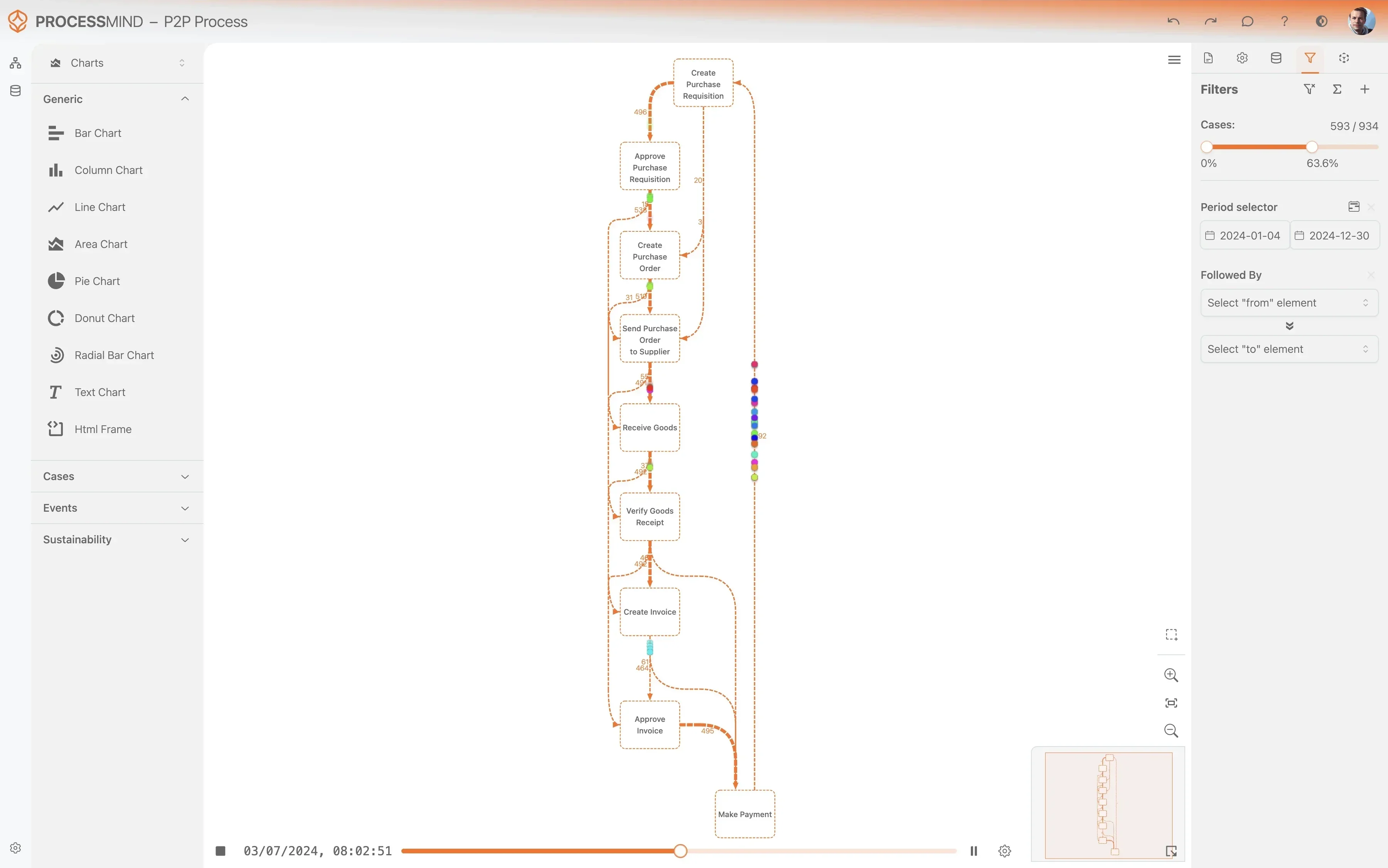
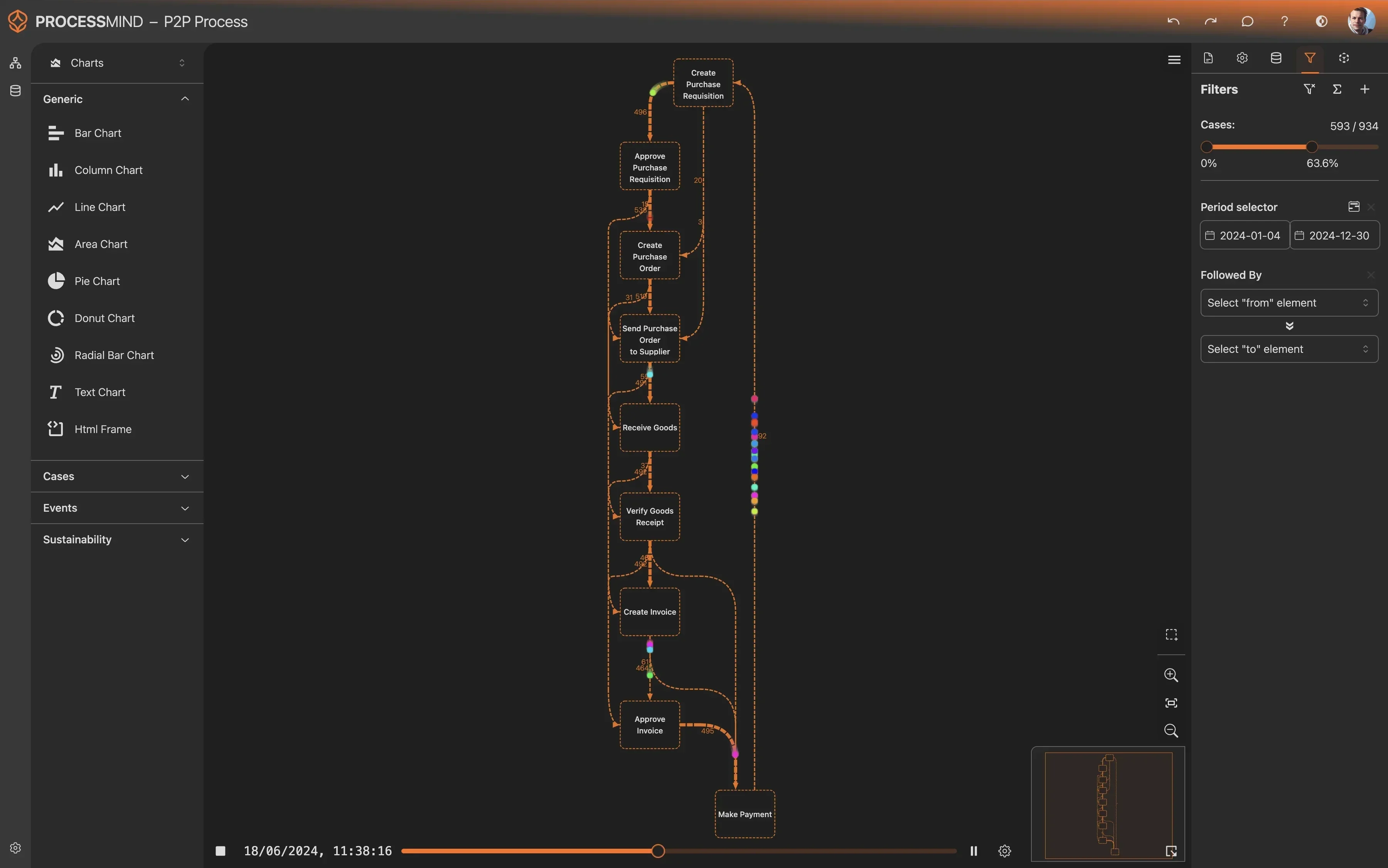
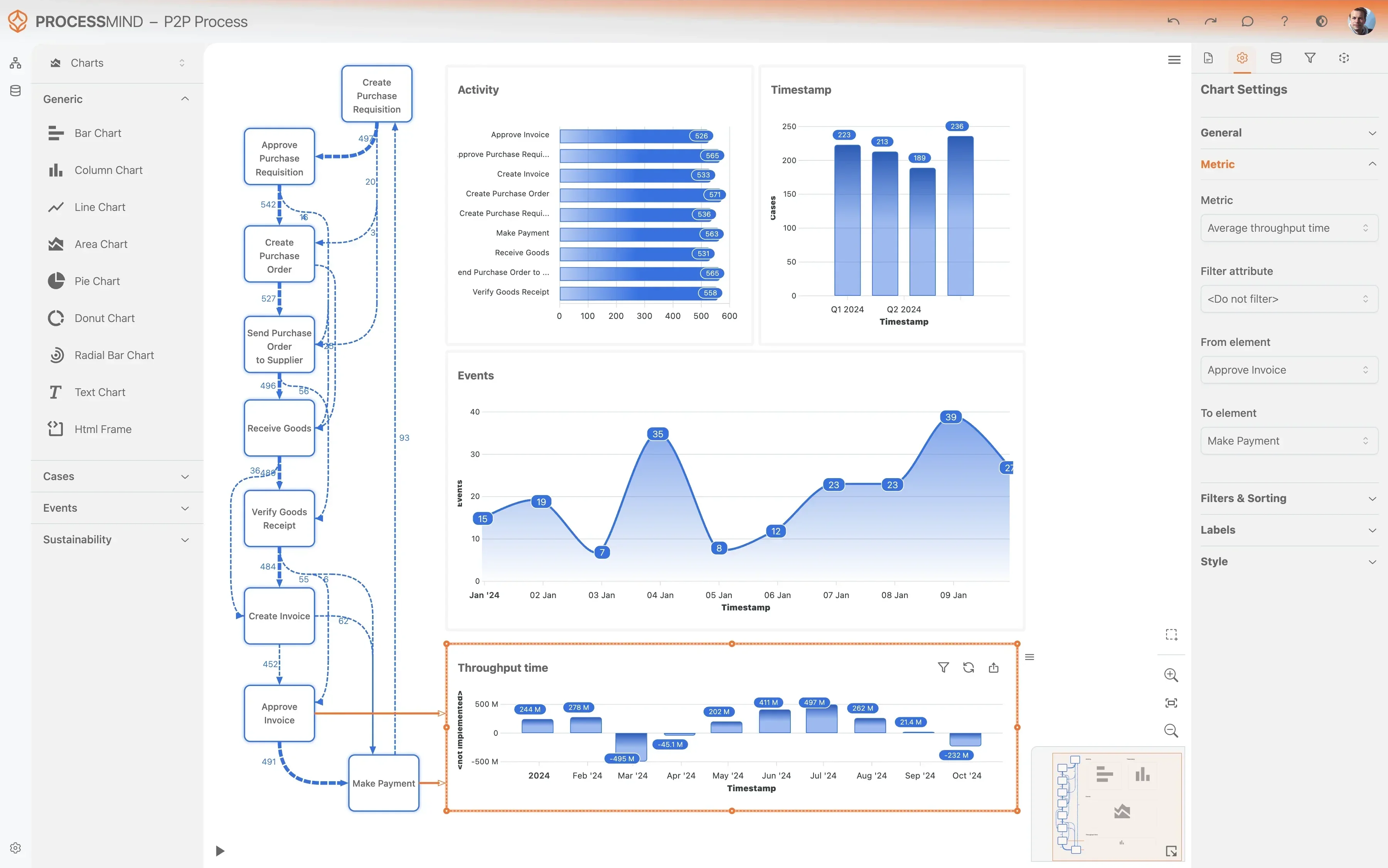
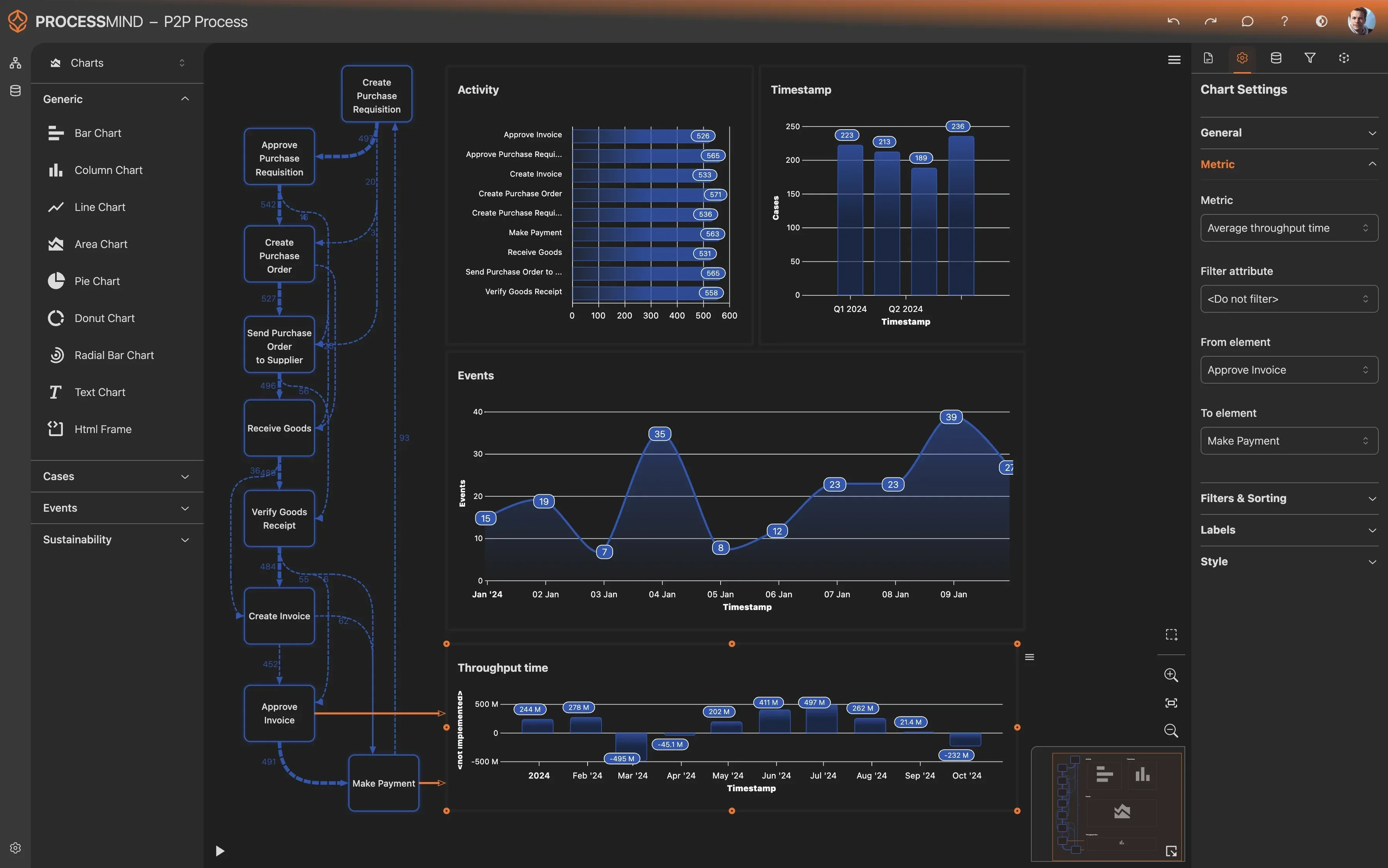
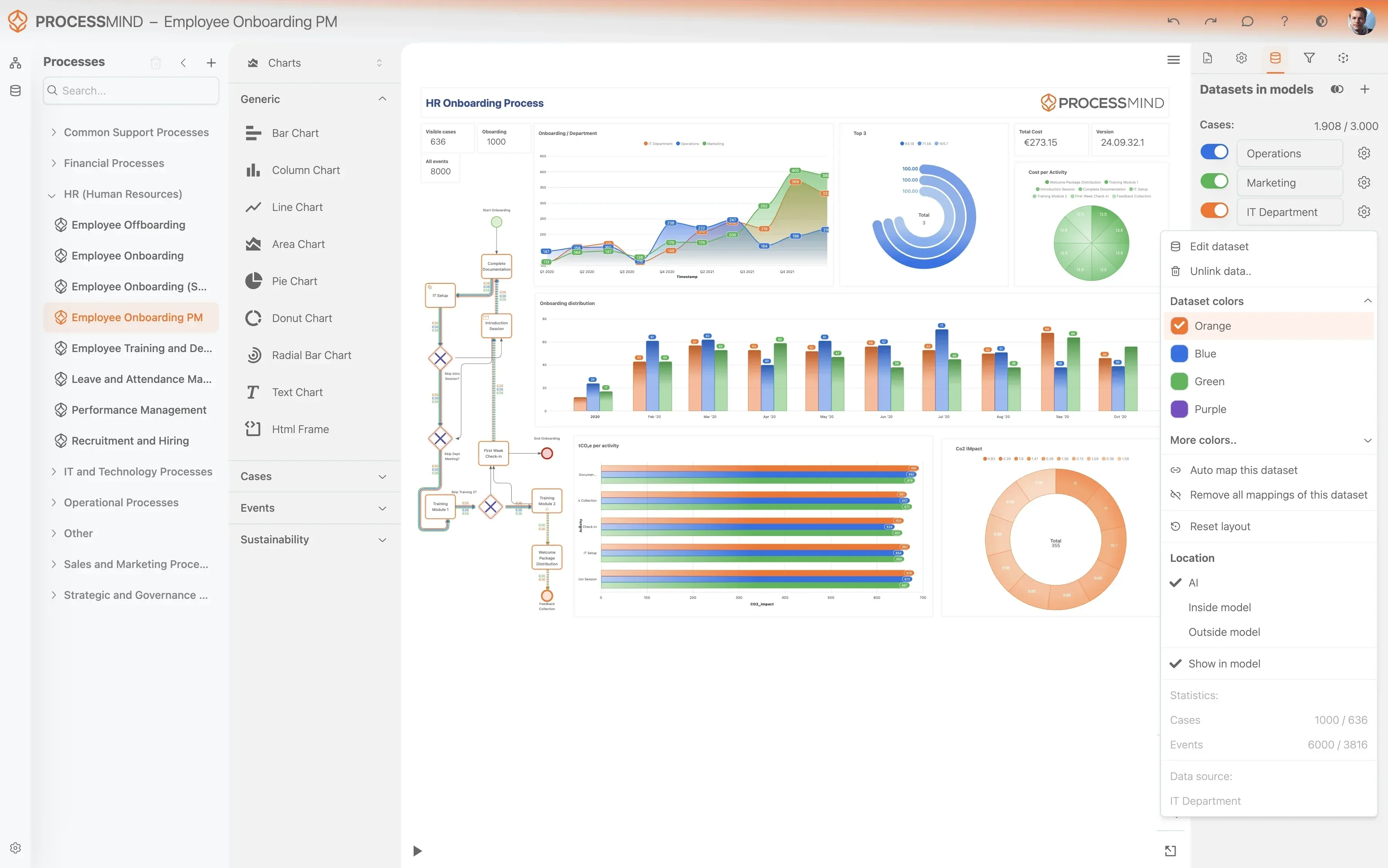
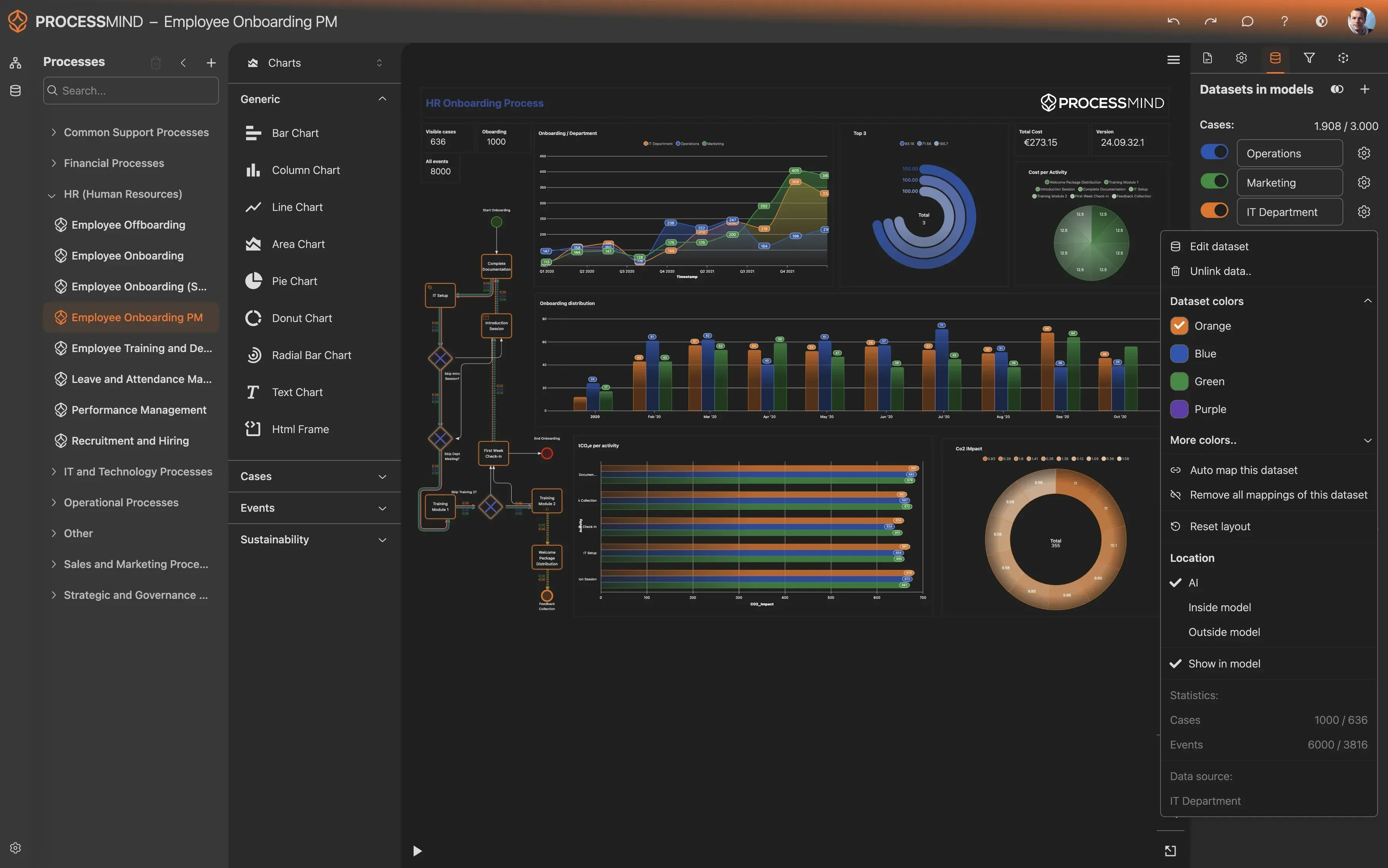
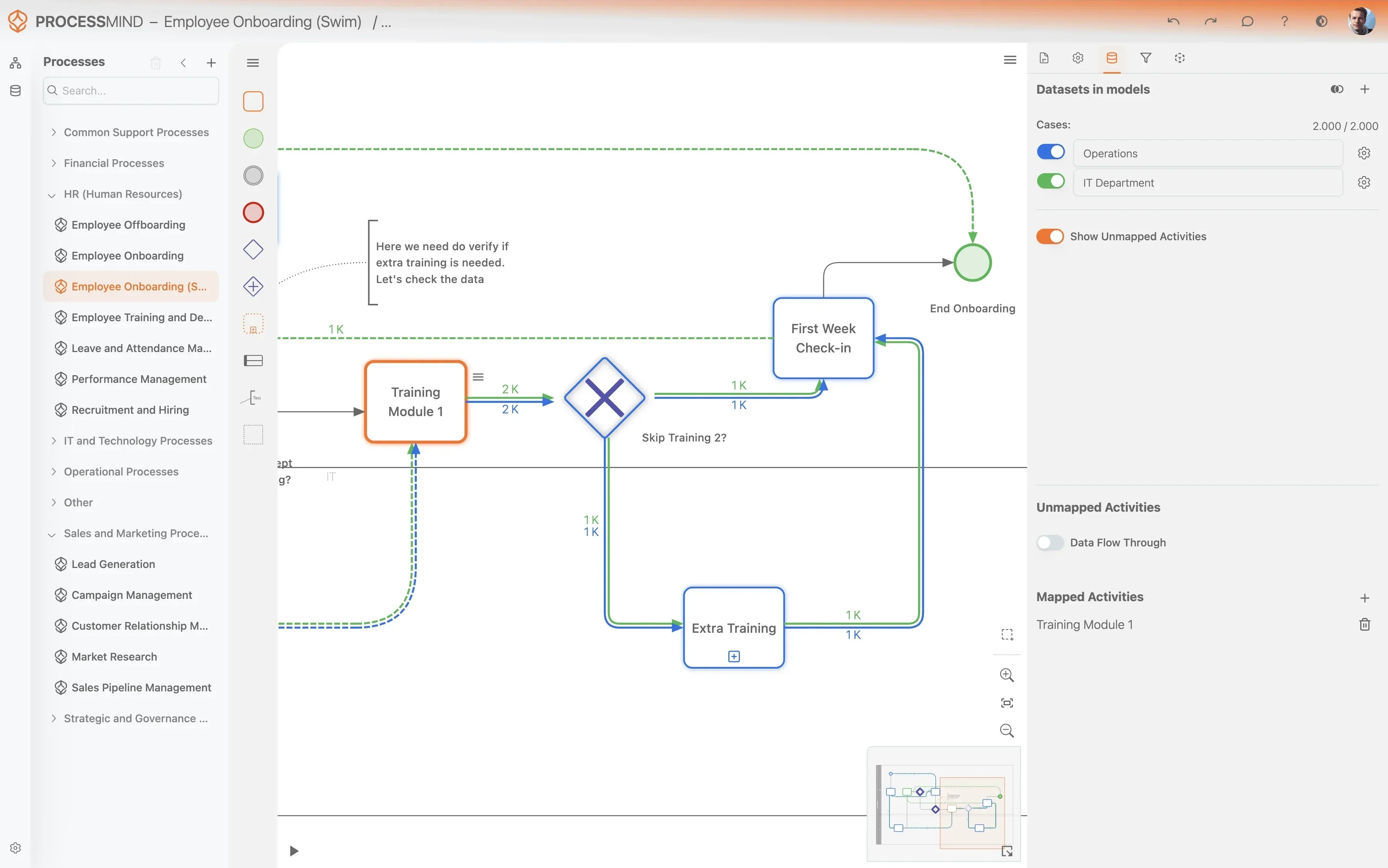
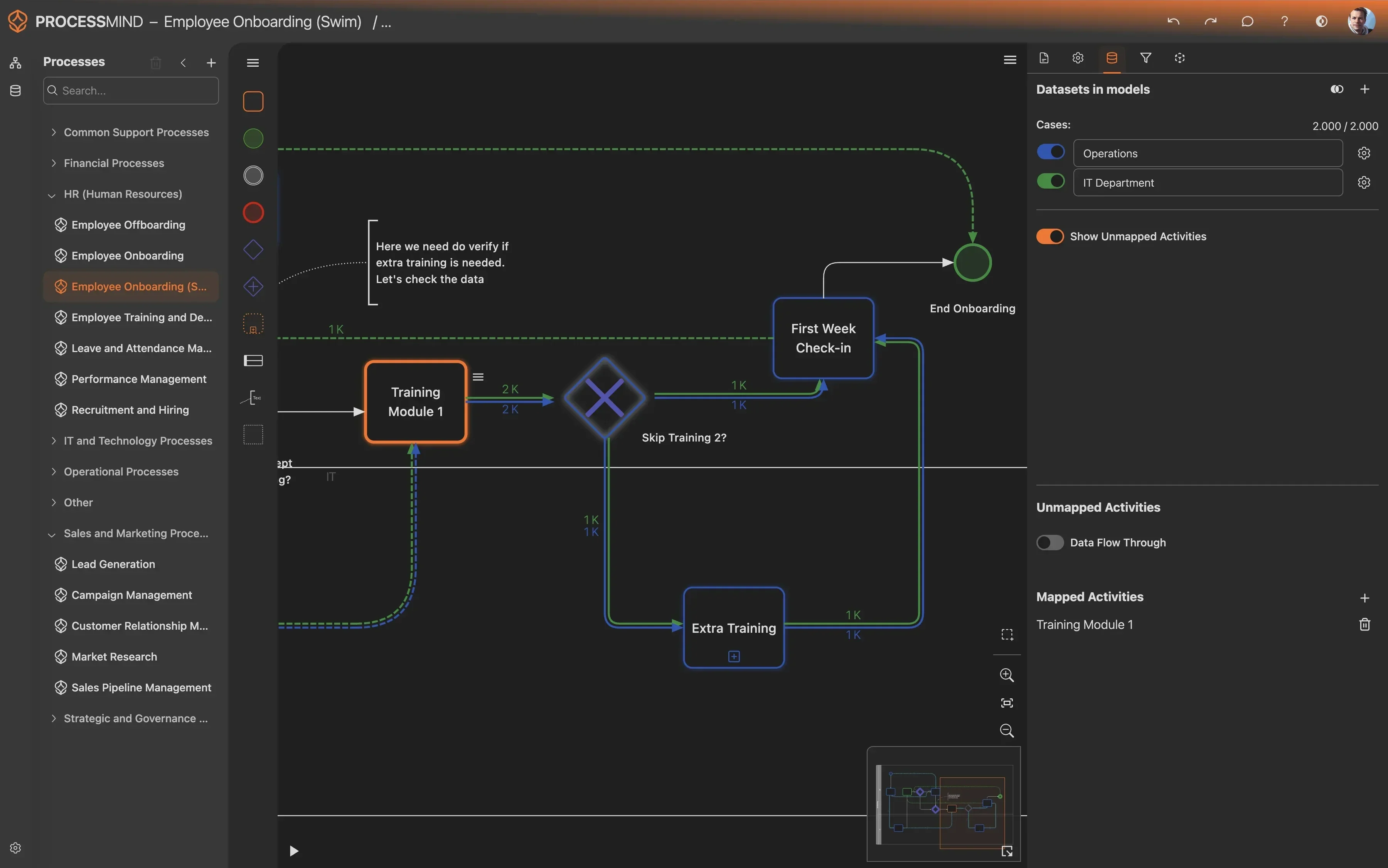
Explore the auto-generated dashboards and interactive process maps within ProcessMind to visualize your Production Planning flow. Leverage AI-driven recommendations.
Why it matters
Gain deep insights into bottlenecks, deviations, and rework loops within your Plex-managed production planning, revealing hidden inefficiencies and compliance issues.
Expected outcome
Clear understanding of your Production Planning's actual execution, with data-backed insights and actionable improvement opportunities.
Implement Improvements
What to do
Prioritize the identified optimization opportunities, such as streamlining scheduling or enhancing resource allocation, and implement changes directly within Plex Smart Manufacturing.
Why it matters
Translating insights into action improves efficiency, reduces lead times, optimizes resource utilization, and ensures better adherence to production targets.
Expected outcome
Targeted process changes in Plex, aimed at eliminating bottlenecks and improving the overall effectiveness of production planning.
Monitor Your Process
What to do
Periodically re-export updated production planning data from Plex Smart Manufacturing and upload it to ProcessMind to track the impact of your changes.
Why it matters
Continuous monitoring ensures that improvements are sustained, allows for quick identification of new issues, and drives ongoing operational excellence.
Expected outcome
Quantifiable improvements in KPIs like lead time and schedule adherence, demonstrating the tangible benefits of your optimization efforts.
TYPICAL OUTCOMES
Achieving Operational Excellence in Production Planning
These outcomes demonstrate the significant improvements organizations typically achieve by applying process mining to their Production Planning processes, leveraging data from Plex Smart Manufacturing to identify and eliminate inefficiencies.
Average reduction in end-to-end production time
By identifying and removing process delays, organizations significantly cut the time from demand forecast to order completion, improving responsiveness.
Increase in on-time production order completion
Process mining reveals root causes of schedule deviations, enabling proactive adjustments that lead to more reliable production delivery and better customer satisfaction.
Reduction in production delays due to material issues
Pinpointing the exact impact of material shortages on production flows allows for better inventory management and proactive supply chain coordination, reducing costly disruptions.
Average reduction in production plan approval time
Streamlining the approval workflow for production plans eliminates bottlenecks in decision-making, leading to quicker plan execution and increased agility.
Decrease in costly production adjustments
Uncovering the causes of rework and rerouting after production starts helps in refining initial planning and execution steps, saving significant time and resources.
Improved alignment between demand and planned quantities
By reducing the variance between initial demand forecasts and planned production quantities, organizations achieve more accurate planning, minimizing over or under-production.
Results vary based on process complexity and data quality. These figures represent typical improvements observed across implementations.
Recommended Data
FAQs
Frequently asked questions
Process mining analyzes event logs from your Plex Smart Manufacturing system to visualize the actual flow of your production planning process. It uncovers how planning activities are executed, revealing deviations, bottlenecks, and rework. This data-driven approach helps identify opportunities for efficiency gains and improved adherence to planned processes.
By reconstructing the end-to-end process from event data, process mining tools can visually highlight paths that take longer or involve frequent rework. It identifies specific activities or decision points where work piles up, leading to delays and impaired output. This allows you to pinpoint the exact locations and causes of scheduling bottlenecks.
You primarily need event logs detailing activities, timestamps, and the case identifier, which is the Production Order in this context. Key data includes start and end times for each planning step, the resource performing the activity, and any relevant status changes. This information allows for a complete reconstruction of each production order's journey.
The initial setup and data extraction can take a few weeks, depending on data availability and system complexity. Analyzing the extracted data and generating initial insights typically takes another 2-4 weeks. Full implementation, including iterative analysis and validation with subject matter experts, might extend over a few months.
Process mining helps eliminate production process bottlenecks and significantly reduce overall production order lead times. It provides clear insights to increase production schedule adherence and optimize production resource utilization. Ultimately, this leads to more efficient operations and better decision-making in manufacturing.
Yes, by accurately mapping actual process execution against planned schedules, process mining exposes where and why deviations occur. It highlights activities that contribute most to excessive lead times, allowing for targeted improvements. This data empowers teams to adjust processes and improve adherence.
While process mining tools automate much of the analysis, a basic understanding of data extraction from Plex Smart Manufacturing is beneficial. Expertise in process analysis and interpreting process models is also valuable. Our solutions often come with expert support to guide your team through the process.
Process mining reveals patterns of delays linked to material shortages or inefficient resource allocation. By visualizing the impact of these issues on lead times and production flow, it provides actionable insights. This enables proactive measures to ensure material availability and balance workloads across resources effectively.
Direct real-time integration for automated process changes is complex and usually not the primary goal. However, insights gained from process mining can inform configurations, workflow adjustments, and master data updates within Plex. The analysis provides concrete recommendations for improving your existing system and processes.
Optimize Production Planning: Reduce Cycle Time Now
Uncover inefficiencies and reduce production cycle time by 30% quickly.
No credit card needed. Start your 14-day free trial.