Improve Your Employee Onboarding

Select a process
Choose a process to continue working in your connected workspace.
Streamline Employee Onboarding with Process Mining
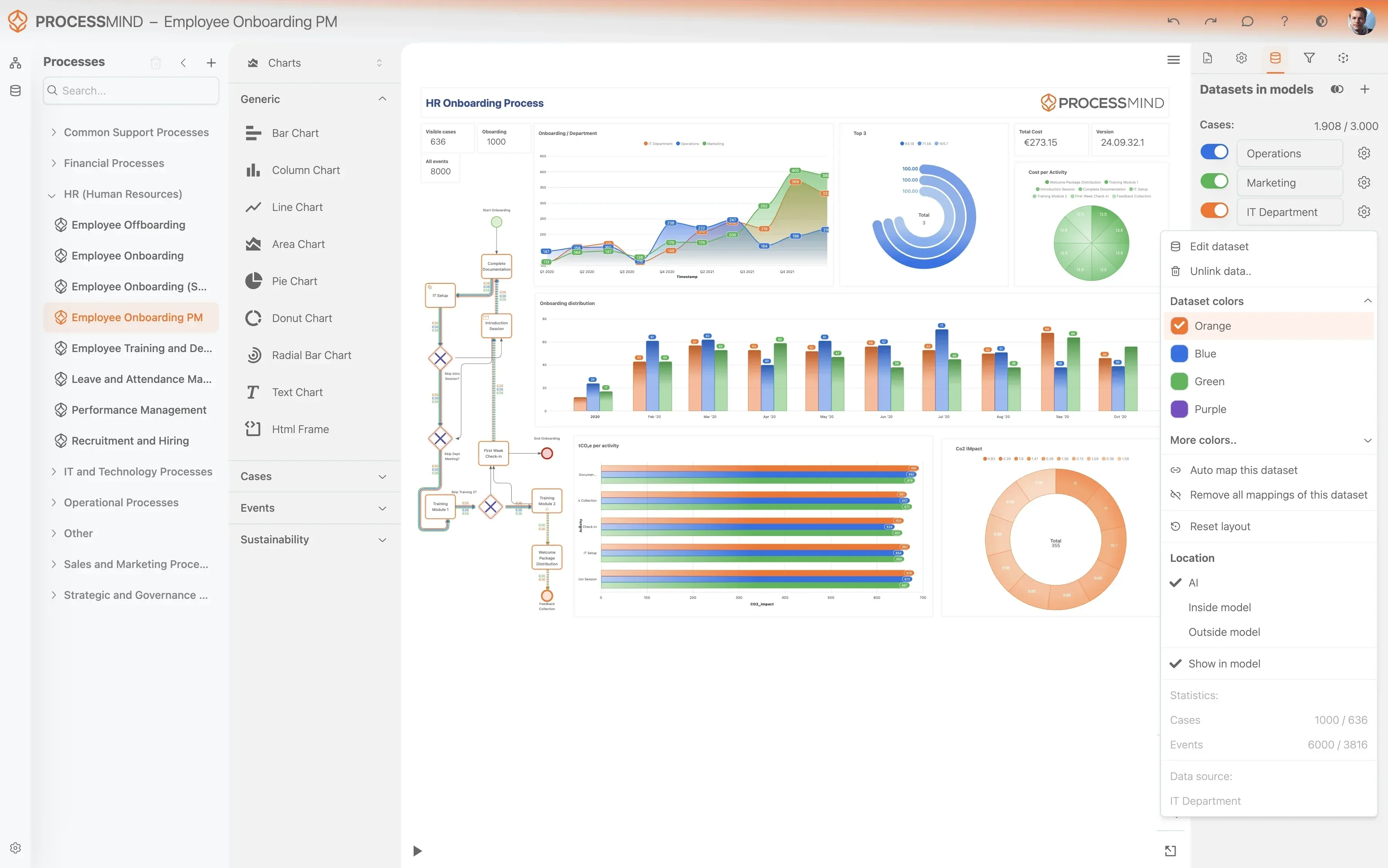
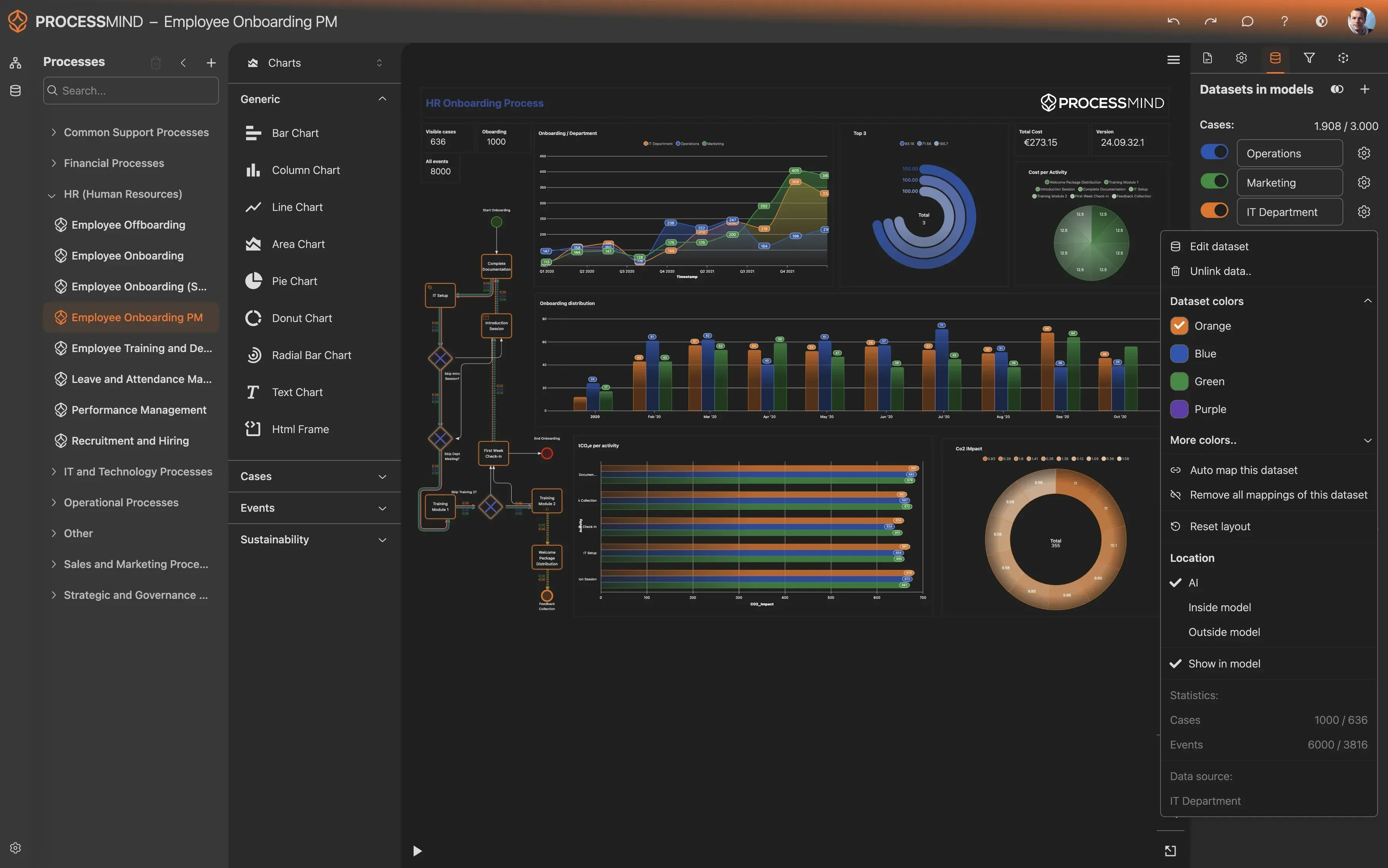
ProcessMind helps you uncover hidden bottlenecks and delays in your employee onboarding process. Pinpoint where new hires get stuck, identify redundant steps, and understand the root causes of prolonged onboarding times. By analyzing your data, ProcessMind reveals opportunities to streamline operations and enhance the new employee experience.
Download our pre-configured data template and address common challenges to reach your efficiency goals. Follow our six-step improvement plan and consult the Data Template Guide to transform your operations.
Show detailed description
The employee onboarding journey is a critical first impression and a complex sequence of activities that often spans multiple departments and systems. While designed to be smooth, the reality can be fraught with hidden delays, compliance risks, and inefficiencies. Process mining offers a transformative approach, allowing you to objectively analyze your entire employee onboarding process, from the initial offer acceptance to the crucial 30-day check-in. By extracting event logs from your existing systems, ProcessMind constructs a comprehensive, data-driven map of how your onboarding truly unfolds, regardless of which HR, ERP, or other source system you currently use. This reveals the actual pathways new hires take, highlighting unexpected deviations, manual workarounds, and forgotten steps that impact efficiency and employee experience.
Organizations commonly struggle with disjointed onboarding experiences, largely due to data residing in separate systems, manual handoffs between teams, and a lack of real-time visibility into process bottlenecks. This can lead to compliance gaps, inconsistent new hire experiences, and slower time to productivity. ProcessMind transcends these challenges by providing a unified view of your end-to-end onboarding journey. It identifies the root causes of delays, pinpoints non-compliant activities, and uncovers opportunities for automation across various stages, such as document collection, access provisioning, training assignments, and introductory meetings. Analyzing your onboarding with ProcessMind means you can move beyond anecdotal evidence, making data-driven decisions that enhance efficiency, improve compliance, and significantly boost new hire satisfaction.
With ProcessMind, you gain the power to optimize every facet of your employee onboarding. Visualize the most frequent and variant paths, identify where new hires get stuck, and understand the impact of specific activities on overall onboarding duration. You can benchmark different regional or departmental onboarding processes, comparing their effectiveness and identifying best practices. Our platform helps you to eliminate redundant tasks, streamline approvals, and ensure a consistent, positive experience for every new employee, ultimately accelerating their integration into your company culture and their contribution to your business goals. These insights are available whether your data resides in one primary system or is distributed across several, allowing for a truly holistic analysis.
Getting started with optimizing your employee onboarding process is straightforward. ProcessMind is designed to integrate seamlessly with your existing data landscape. Simply prepare your event log data according to our provided data template, which guides you through extracting the necessary information, such as the Onboarding Case identifier, activity names, and timestamps, from your system or systems. Upload your data, and within minutes, you will begin to uncover the hidden truths within your onboarding process, empowering you to build a more efficient, compliant, and welcoming experience for all your future talent.
The 6-Step Improvement Path for Employee Onboarding
Connect & Discover Data
What to do
Extract event log data from your system, including activity names, timestamps, and case identifiers like "Onboarding Case". Ensure all relevant onboarding steps are captured.
Why it matters
This data forms the objective foundation for understanding the actual process flow, revealing how onboarding truly happens.
Expected outcome
A comprehensive, validated dataset ready for analysis, reflecting all activities and variants of the process.
Map Your Process
What to do
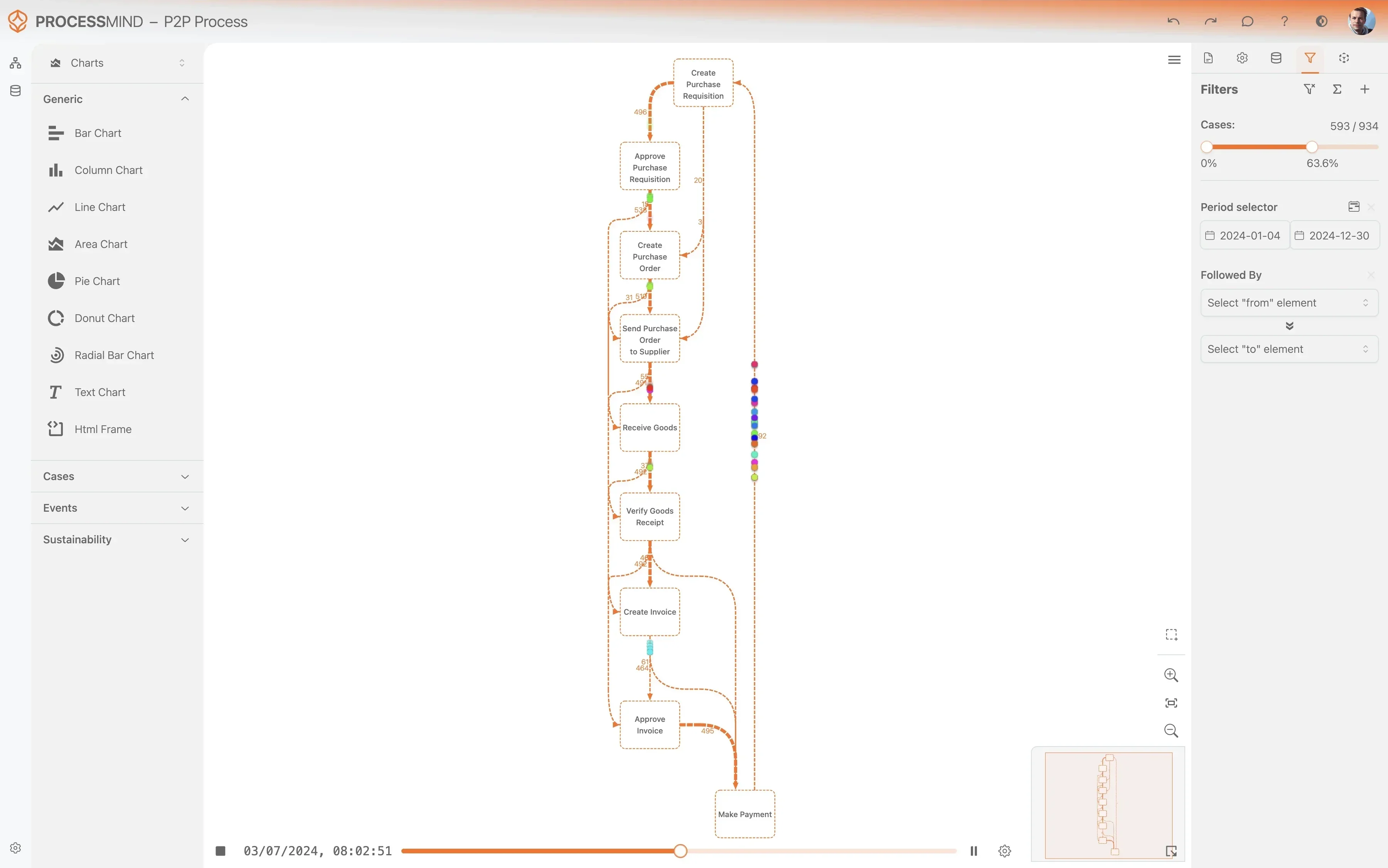
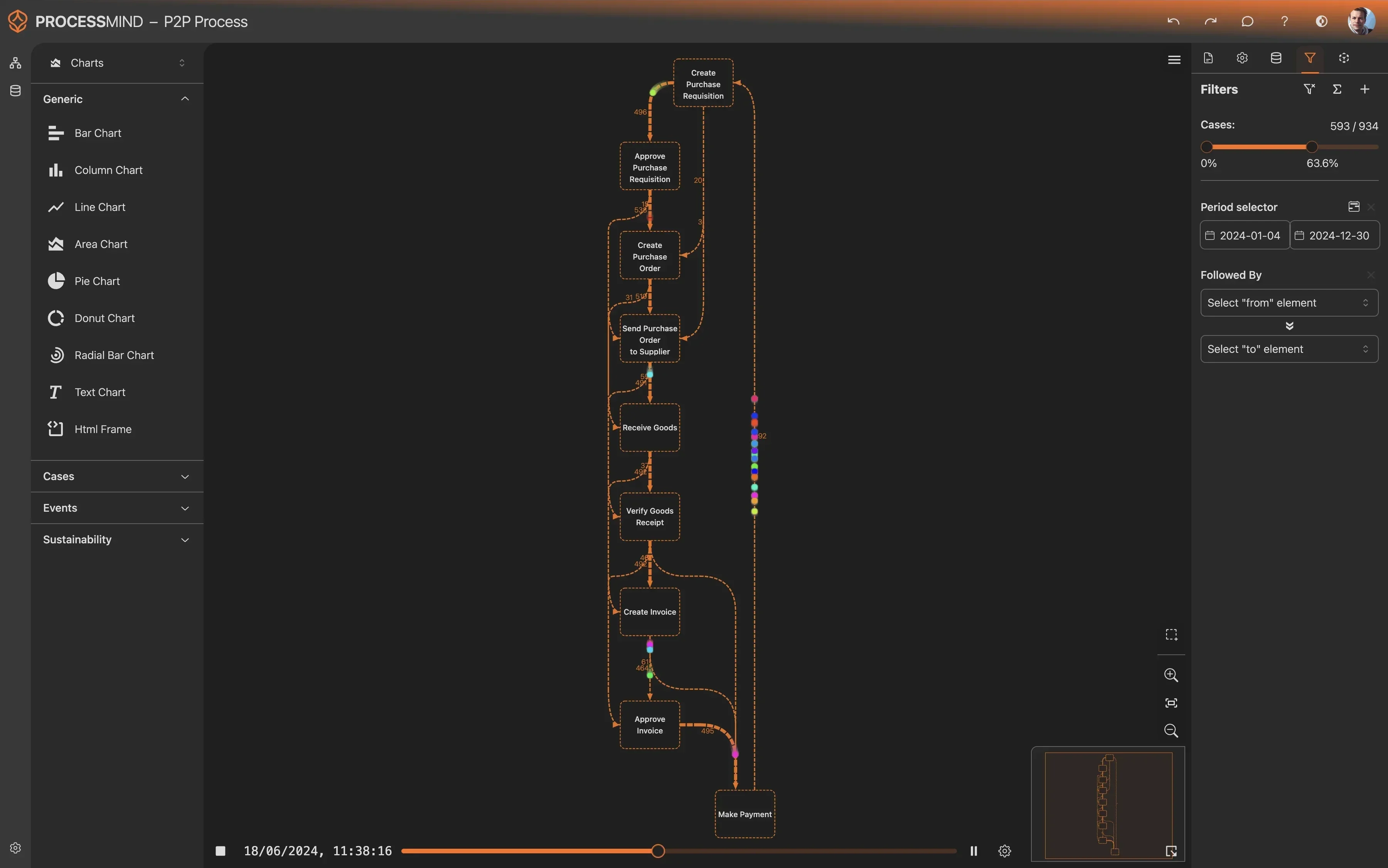
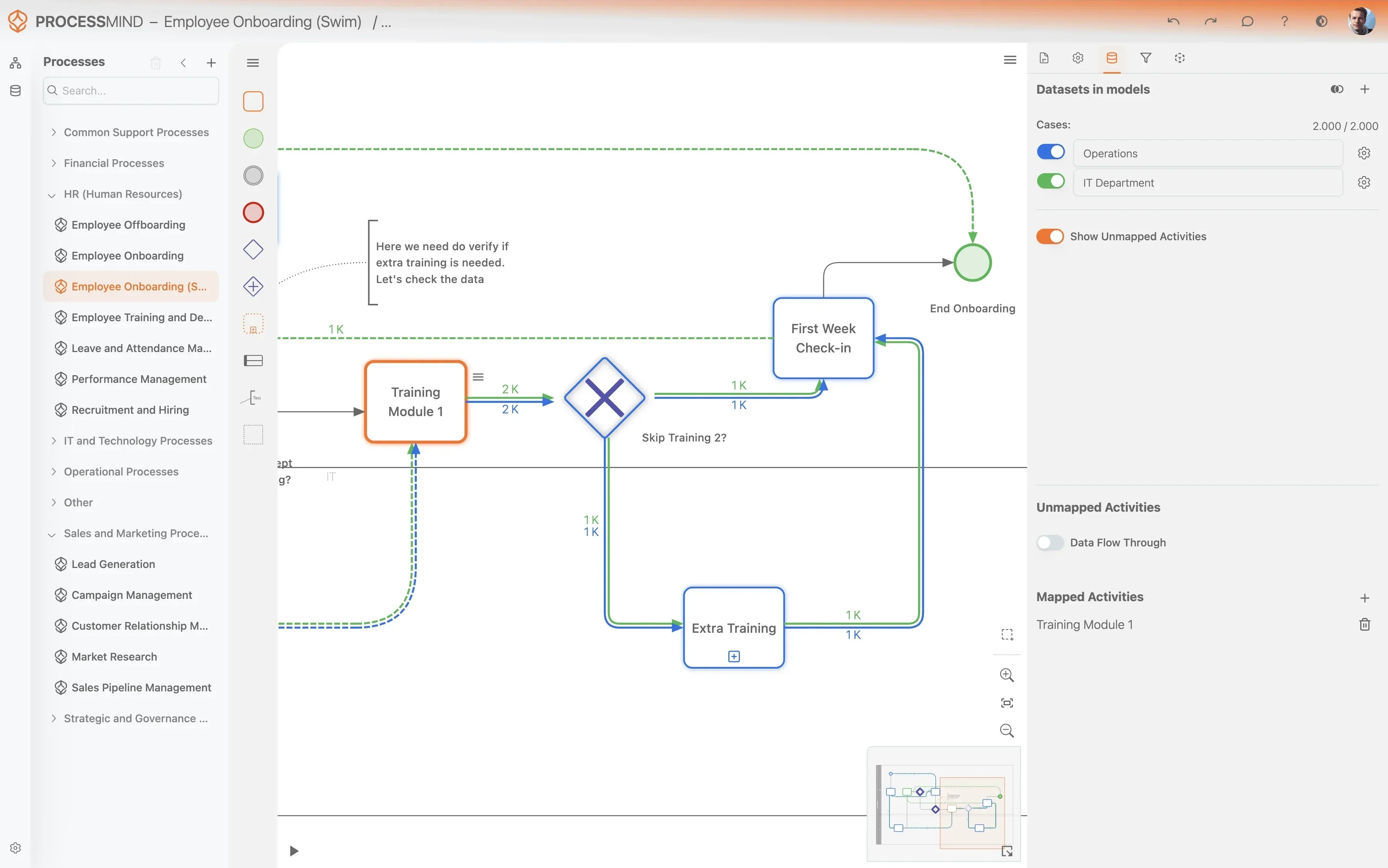
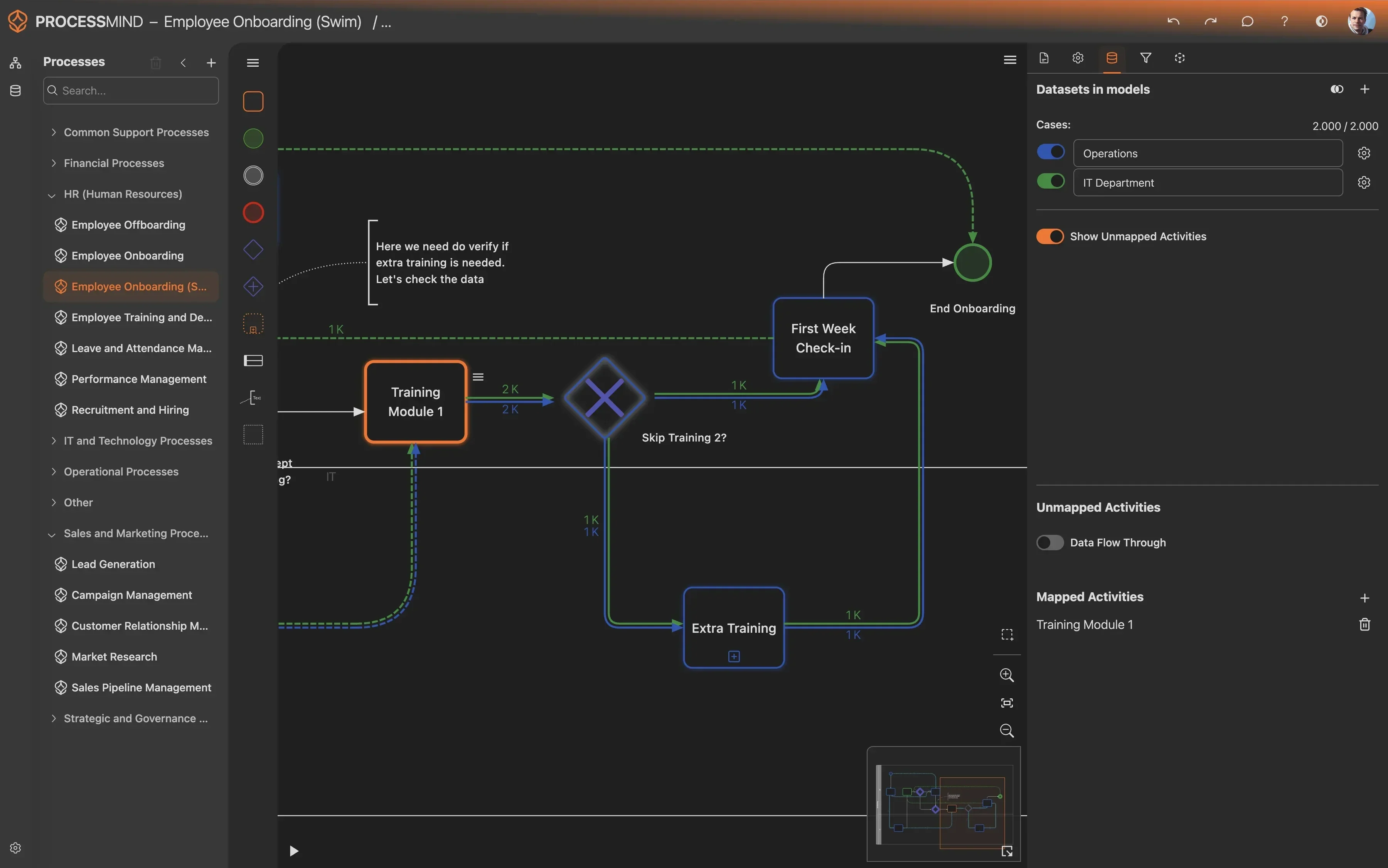
Visualize the end-to-end journey of employee onboarding using your discovered data, including all common paths and deviations.
Why it matters
A visual map reveals the actual process flows, highlighting hidden steps, rework loops, and non-standard variants.
Expected outcome
A clear, visual representation of your employee onboarding process, showing all activity flows and variations.
Identify Bottlenecks
What to do
Pinpoint specific activities or transitions within the onboarding process where significant delays or handoff issues commonly occur.
Why it matters
Locating these choke points allows you to focus improvement efforts on the areas that will yield the most significant impact.
Expected outcome
Clearly identified stages or activities within the process causing significant delays, rework, or resource contention.
Analyze Root Causes
What to do
Investigate the underlying reasons for identified bottlenecks, such as resource constraints, manual errors, or system integration issues.
Why it matters
Understanding the "why" behind inefficiencies is crucial for developing effective solutions that prevent recurrence and ensure sustainable improvements.
Expected outcome
A comprehensive understanding of the root factors contributing to process inefficiencies and delays.
Design Improvements
What to do
Develop concrete strategies and actionable plans to eliminate identified root causes and streamline the process, considering automation or re-sequencing.
Why it matters
Well-designed improvements lead to a more efficient, compliant, and positive employee onboarding experience for new hires.
Expected outcome
A detailed plan outlining specific changes to optimize the employee onboarding process, ready for implementation.
Monitor & Iterate
What to do
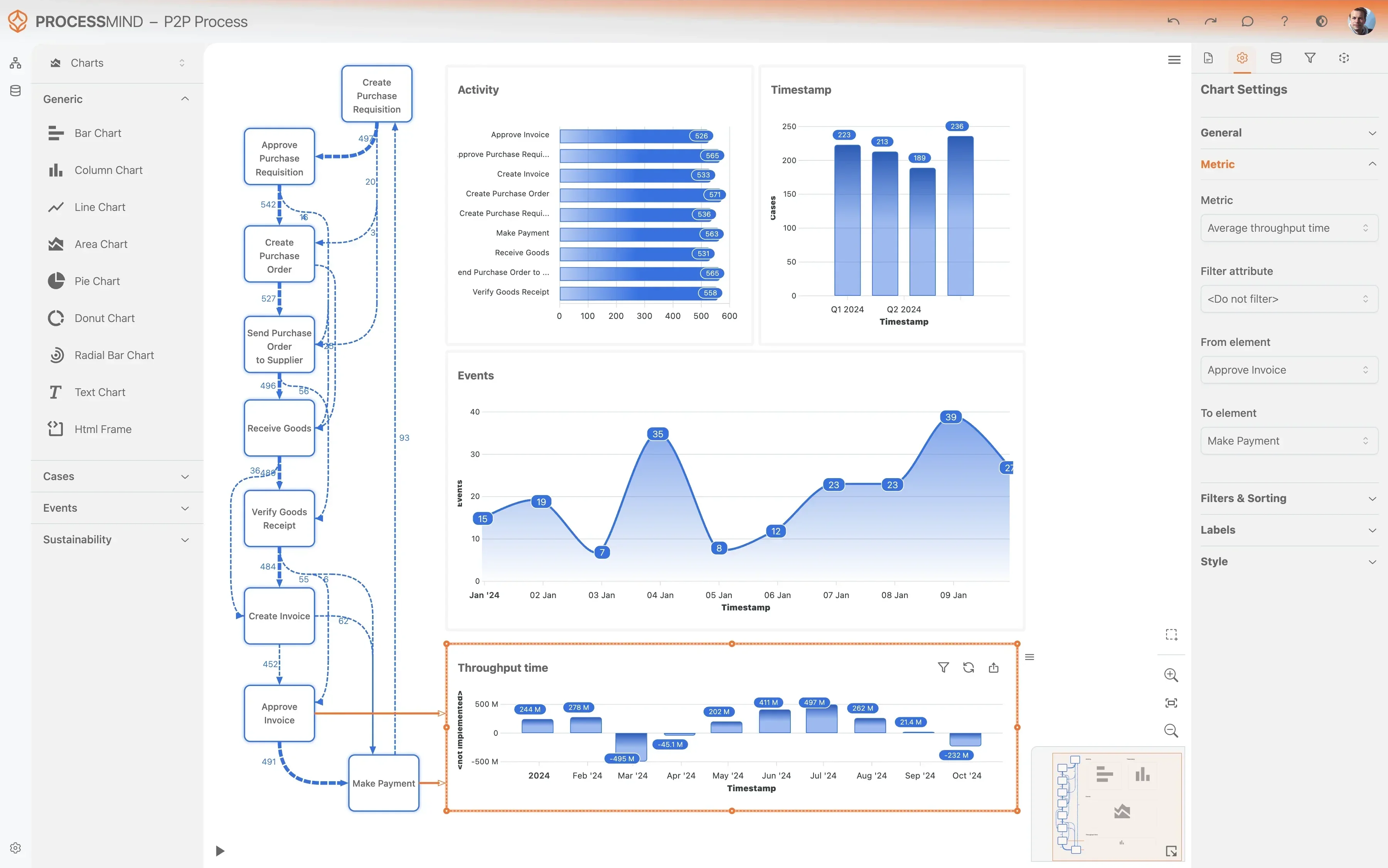
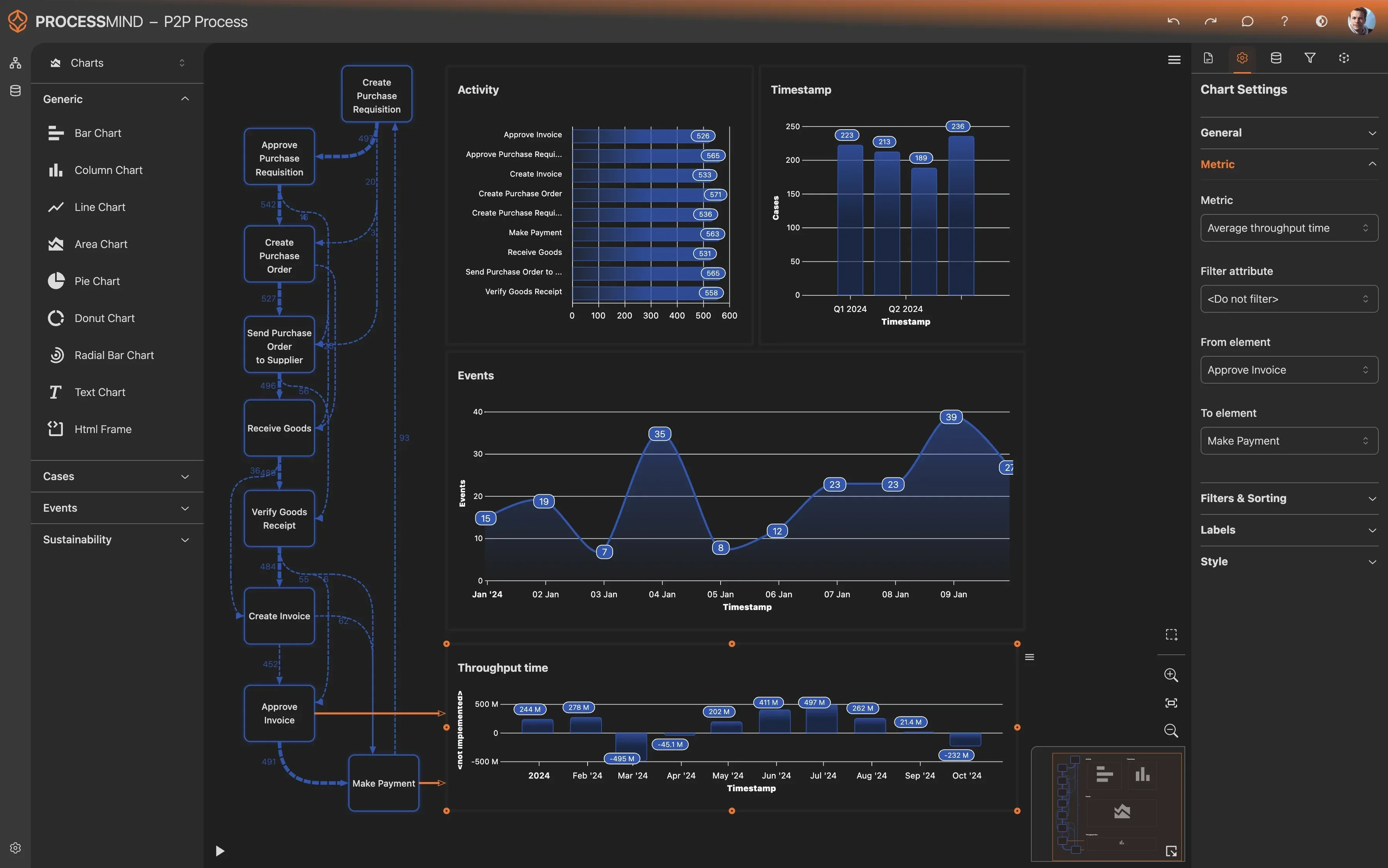
Continuously track key performance indicators, like onboarding cycle time, and the impact of implemented changes, making adjustments as needed.
Why it matters
Ongoing monitoring ensures sustained improvements, adapts the process to evolving business needs, and identifies new areas for optimization.
Expected outcome
A continuously optimized, high-performing employee onboarding process with sustained improvements over time.
TYPICAL OUTCOMES
What Organizations Achieve in Employee Onboarding
These outcomes illustrate the tangible benefits organizations can realize by applying process mining to their Employee Onboarding processes. By identifying bottlenecks and areas for optimization, companies can significantly enhance efficiency and employee experience.
Average reduction in end-to-end process
By pinpointing and removing bottlenecks across the onboarding journey, organizations can significantly shorten the overall time from offer acceptance to full integration, getting new hires productive sooner.
Improvement in mandatory task completion
Ensure all critical onboarding activities, like mandatory training and documentation, are completed on time and according to policy, reducing risks and improving governance.
Reduction in redundant tasks and data issues
Identify and eliminate the root causes of rework, such as manual data entry errors or incomplete documentation, leading to a smoother, more efficient, and error-free onboarding process.
Time saved in IT and equipment delivery
Streamline the process of provisioning IT accounts, equipment, and workspace setup, ensuring new hires have everything they need to start working efficiently from their very first day.
Increase in consistent onboarding paths
Identify and converge uncontrolled process variants into a consistent, high-quality onboarding journey for every new employee, improving predictability and governance across the organization.
Results vary based on process complexity and data quality. These figures represent typical improvements observed across implementations.
Recommended Data
For customized data recommendations, choose your specific process.
FAQs
Frequently asked questions
Process mining helps visualize the actual flow of your onboarding activities, identifying bottlenecks like prolonged pre-hire steps or slow resource setup. It uncovers variations and inefficiencies that extend cycle times, allowing you to streamline the entire new hire journey. This leads to a more consistent and efficient onboarding experience for everyone.
You will need event log data that includes a case identifier, an activity name, and a timestamp for each step. For Employee Onboarding, the case identifier would be the unique new hire ID, with activities representing tasks like "HR paperwork completed" or "IT setup initiated." This data allows the tool to reconstruct the exact process flow.
You can expect significant improvements such as accelerated new hire time-to-productivity, streamlined resource provisioning, and enhanced real-time visibility into onboarding progress. This leads to reduced operational costs, improved early new hire retention, and a more standardized, efficient onboarding experience overall. These outcomes directly impact new hire productivity and satisfaction.
The initial setup and data extraction from your source system can vary depending on system access and data volume, often taking a few days to a couple of weeks. Once the data is loaded, you can usually generate initial process maps and identify key bottlenecks within a few hours to days. Deeper analysis and actionable insights develop over subsequent weeks.
Yes, process mining provides clear visibility into the actual completion rates of mandatory activities, identifying instances where steps are missed or not completed on time. It can highlight process deviations from the ideal compliant path, allowing you to enforce standardization and ensure all new hires complete necessary tasks, reducing compliance risks.
The primary technical requirement is the ability to extract event data from your source system in a structured format, usually CSV or through an API. You will also need a process mining platform, which can be cloud-based or on-premise, to ingest and analyze this data. Basic data manipulation skills might be useful for preparing the event log, but many modern tools are user-friendly.
Process mining excels at precisely these scenarios. It maps all actual process variations, no matter how complex, instead of relying on idealized models. This allows you to understand which variations lead to successful outcomes and which introduce inefficiencies, helping you standardize and reduce rework across your onboarding journeys.
Yes, process mining excels at identifying frequently occurring manual activities and reworks within your onboarding workflow. By visualizing the actual process, it highlights specific steps that are prone to human error or inefficiency, making them prime candidates for automation. This helps prioritize where to implement digital solutions.
No, process mining is designed to be non-intrusive. It analyzes historical data exported from your operational system, rather than directly interacting with your live environment. This ensures your ongoing processes remain unaffected during the analysis.
Optimize Employee Onboarding Now with Process Mining
Discover inefficiencies and create a seamless onboarding experience fast.
No credit card required. Setup in 5 minutes.