Improve Your Purchase to Pay - Purchase Order

Optimize Your Purchase Order Process in SAP Ariba for Peak Efficiency
Inefficient processing can lead to delayed deliveries and higher operational costs. Our platform helps you pinpoint exact inefficiencies in your workflow. Discover how to enhance responsiveness, optimize resource allocation, and ensure timely fulfillment across your operations.
Download our pre-configured data template and address common challenges to reach your efficiency goals. Follow our six-step improvement plan and consult the Data Template Guide to transform your operations.
Show detailed description
Why Optimize Your Purchase to Pay - Purchase Order Process in SAP Ariba?
In today's fast-paced business environment, an efficient Purchase to Pay, P2P, process is critical for operational success and financial health. Specifically, managing Purchase Orders, POs, within a robust system like SAP Ariba can become complex. While SAP Ariba provides powerful tools, organizations often face hidden inefficiencies, leading to delayed procurement, increased operational costs, strained supplier relationships, and even production disruptions. Understanding the true lifecycle of your Purchase Orders, from initial requisition to goods receipt, is paramount. Without this clarity, identifying the root causes of delays and non-compliance becomes a guessing game, impacting everything from inventory levels to cash flow.
Inefficiencies in the Purchase Order process are not just minor inconveniences; they directly affect your bottom line. Slow approval cycles can mean missed delivery dates, leading to expedited shipping costs or stockouts. Rework due to incorrect orders or approvals consumes valuable staff time. Poor visibility into order statuses makes it difficult to manage expectations with internal stakeholders and external suppliers. Optimizing this core process in SAP Ariba is about transforming these challenges into opportunities for strategic advantage, ensuring timely fulfillment and maximizing the value of your procurement spend.
Unlocking Deeper Insights with Process Mining for Purchase Orders
Process mining offers a revolutionary approach to understanding and improving your Purchase Order process. Instead of relying on assumptions or anecdotal evidence, it uses event logs from your SAP Ariba system to reconstruct the actual flow of every individual Purchase Order. This means you can visualize the complete, end-to-end journey of each PO, revealing how work truly gets done, not just how it's supposed to happen.
This data-driven perspective is invaluable for identifying bottlenecks, discovering hidden reworks, and pinpointing deviations from standard operating procedures. You can precisely see where Purchase Orders spend the most time, which approval steps cause delays, and whether certain vendors or departments consistently experience specific issues. Process mining moves beyond high-level reports, providing granular insights into cycle time variations, the prevalence of manual interventions, and the specific paths Purchase Orders take, including all their detours and rework loops. This allows you to answer critical questions such as "how to reduce Purchase to Pay - Purchase Order cycle time" by identifying the exact steps that need improvement.
Key Improvement Areas in Your SAP Ariba Purchase Order Workflow
Applying process mining to your SAP Ariba Purchase Order process illuminates several key areas for strategic improvement:
- Cycle Time Reduction: Pinpoint the precise stages where Purchase Orders experience the longest delays. Is it during the Purchase Requisition approval, the Purchase Order drafting phase, vendor confirmation, or goods receipt posting? Understanding these specific hold-ups allows you to target interventions effectively, drastically reducing overall cycle time.
- Bottleneck Resolution: Identify specific resources, such as individual approvers or departments, that consistently become chokepoints in the process. This insight enables targeted training, resource allocation, or workflow adjustments to alleviate pressure points.
- Compliance and Anomaly Detection: Uncover instances where Purchase Orders deviate from established policies or regulatory requirements. This includes unauthorized changes to orders after approval, orders bypassing necessary approval steps, or unusual patterns in goods receipt postings. Maintaining high compliance is crucial for governance and risk management.
- Automation Opportunities: Discover repetitive, manual tasks that consume significant resources. Process mining can highlight areas ripe for automation, such as automated notifications, data validation, or routing based on predefined rules, improving efficiency within SAP Ariba.
- Supplier Performance Evaluation: Analyze actual lead times and responsiveness of different vendors based on when Purchase Orders are confirmed and goods received. This data empowers better strategic sourcing decisions and strengthens supplier relationships.
Realizing Tangible Outcomes Through Process Optimization
Optimizing your Purchase to Pay - Purchase Order process with process mining yields significant and measurable benefits:
- Reduced Operational Costs: By eliminating rework, reducing manual effort, and improving efficiency, you lower the administrative overhead associated with processing Purchase Orders. Better inventory management also reduces carrying costs and avoids costly expedited orders.
- Enhanced Efficiency and Speed: Achieve faster turnaround times from the initial Purchase Requisition to the final goods or services receipt. This directly translates to quicker fulfillment of internal needs and improved responsiveness across your organization.
- Improved Compliance and Risk Management: Proactively identify and rectify non-compliant processes, ensuring greater adherence to procurement policies, internal controls, and external regulations, thereby mitigating financial and reputational risks.
- Stronger Supplier Relationships: Transparent and efficient Purchase Order processing leads to smoother interactions with your suppliers, fostering trust and potentially unlocking better terms or services.
- Increased Stakeholder Satisfaction: Internal requesters benefit from faster delivery of goods and services, while finance teams gain better visibility and control over expenditures.
Starting Your Journey to Optimized Purchase Orders
Embarking on the journey to optimize your Purchase to Pay - Purchase Order process in SAP Ariba might seem daunting, but with the right tools and approach, it's an accessible and highly rewarding endeavor. By leveraging process mining, you gain an unprecedented, data-driven understanding of your procurement operations. You don't need to be a process mining expert to start; structured analysis can guide you through identifying key areas for improvement. Begin by exploring how process mining can illuminate the hidden inefficiencies in your SAP Ariba Purchase Order flow and transform your procurement landscape for peak efficiency.
The 6-Step Improvement Path for Purchase to Pay - Purchase Order
Download Your Template
What to do
Access the pre-built Excel template designed for Purchase to Pay - Purchase Order data. This ensures your data has the correct structure for analysis.
Why it matters
A standardized data format is crucial for accurate process mapping and analysis, preventing data import errors and accelerating insights.
Expected outcome
A ready-to-fill Excel template for Purchase Order data.
Export Your P2P Data
What to do
Extract 3-6 months of historical Purchase Order data from SAP Ariba. Populate the downloaded template with actual process event logs and attributes.
Why it matters
Historical data provides a realistic view of past performance, revealing recurring issues and opportunities for process optimization and efficiency gains.
Expected outcome
A populated data template with your organization's historical Purchase Order events from SAP Ariba.
Upload Your Data
What to do
Securely upload your filled data template to ProcessMind. The platform will automatically begin processing your Purchase Order data.
Why it matters
A streamlined upload process ensures quick access to powerful analytics without complex data engineering, saving time and effort.
Expected outcome
Your Purchase Order dataset uploaded and ready for automated analysis within ProcessMind.
Analyze Your P2P Flow
What to do
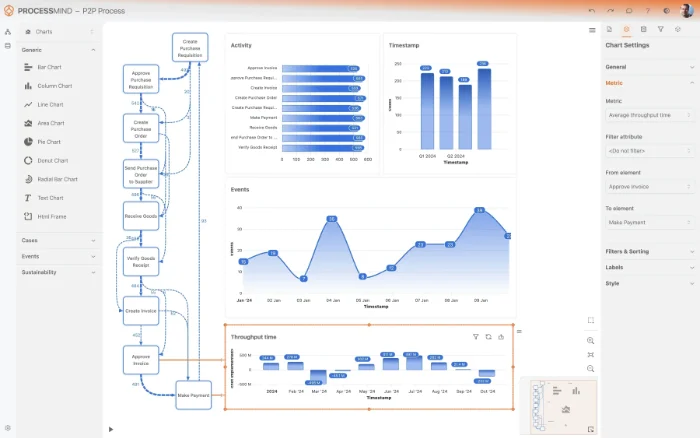
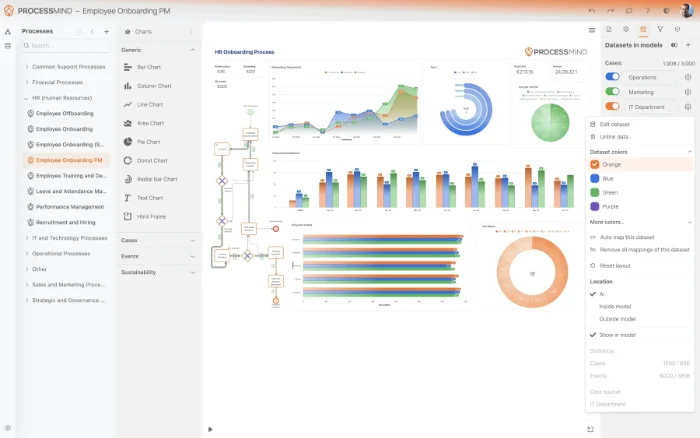
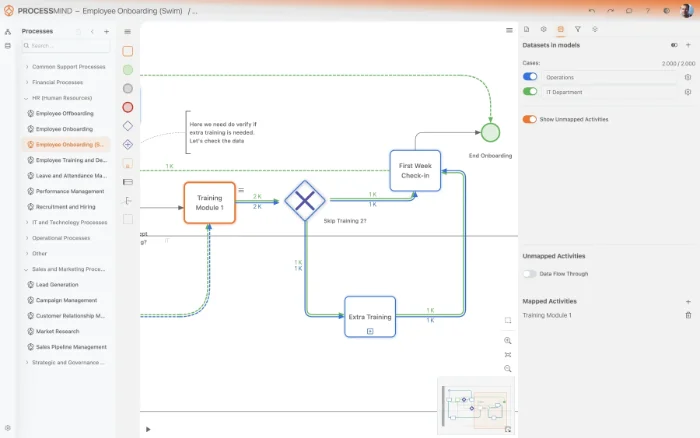
Explore interactive dashboards and visualize your end-to-end Purchase Order process. Leverage AI-driven insights to pinpoint bottlenecks and deviations.
Why it matters
Understanding the true process flow uncovers inefficiencies, non-compliance, and rework in Purchase Order processing, enabling data-driven decisions.
Expected outcome
A clear visualization of your Purchase Order process and key areas for improvement identified.
Implement Actions
What to do
Prioritize and act on the identified opportunities. For SAP Ariba, this might involve adjusting approval workflows or automating routine tasks.
Why it matters
Translating insights into action directly improves process performance, reduces cycle times, and optimizes resource allocation for Purchase Orders.
Expected outcome
Concrete changes implemented within your SAP Ariba Purchase Order process based on analytical findings.
Monitor Progress Continuously
What to do
Periodically re-upload fresh Purchase Order data to track the impact of your changes and measure improvements in key performance indicators.
Why it matters
Continuous monitoring ensures sustained improvements and adapts the process to new challenges, fostering a culture of ongoing optimization.
Expected outcome
Ongoing tracking of Purchase Order process KPIs, demonstrating the value and effectiveness of your implemented changes.
WHAT YOU WILL GET
Uncover SAP Ariba PO Process Inefficiencies
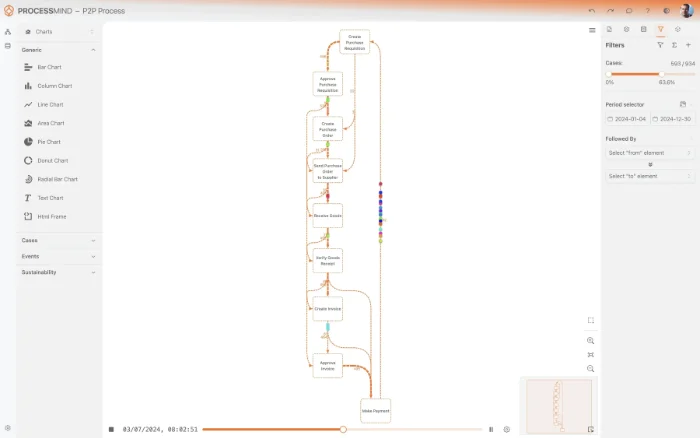
- Visualize end-to-end PO flow in SAP Ariba
- Identify exact delays in approval cycles
- Spot non-compliant purchase orders
- Optimize goods receipt and invoice processing
PROVEN IMPACT
Quantifiable Improvements for Your P2P Process
Our process mining solution, applied to Purchase Order processes within SAP Ariba, uncovers inefficiencies and bottlenecks. By providing data-driven insights, organizations can streamline operations, reduce cycle times, and optimize spending.
Average reduction in approval time
Accelerate your Purchase Order approval process by identifying and eliminating bottlenecks in multi-step workflows. This significantly reduces lead times for critical purchases.
Overall processing time decrease
Streamline the entire Purchase Order lifecycle, from requisition to payment, by uncovering hidden delays and inefficient handoffs. This boosts overall operational speed.
Increase in compliant POs
Improve your Purchase Order compliance by ensuring more POs are approved without changes or rework on the first attempt. This reinforces adherence to purchasing policies.
Reduction in change rate
Reduce the number of Purchase Orders that require amendments after initial creation or approval. This indicates better upfront requirement gathering and process adherence, saving rework costs.
Faster goods receipt postings
Enhance the speed and accuracy of goods and service receipt postings within your system. This improves inventory management and payment processing, reducing delays.
Decrease in rework instances
Identify and eliminate instances where Purchase Orders re-enter a previous status or require re-approval. This significantly reduces manual effort and operational costs.
Results vary based on process complexity, existing system configurations, and data quality. The figures presented reflect common improvements observed in SAP Ariba Purchase Order implementations.
Recommended Data
FAQs
Frequently asked questions
Process mining provides a data-driven X-ray of your actual Purchase Order flow, identifying bottlenecks, non-compliant activities, and inefficiencies like excessive approval cycle times. It reveals where the process deviates from the ideal path, highlighting areas for optimization and automation. By understanding the true process, organizations can implement targeted improvements that lead to significant gains in efficiency and compliance.
To analyze your Purchase Order process, process mining primarily requires event log data. This typically includes a case identifier, such as the Purchase Order number, an activity name, like 'PO Created' or 'PO Approved', and a precise timestamp for each activity. Additional attributes like vendor, amount, approver, or department can be included to provide richer insights and context for analysis.
Expected benefits include significantly reduced Purchase Order approval and overall cycle times, enhanced adherence to compliance regulations, and a noticeable decrease in Purchase Order amendment rates. You can also expect more streamlined requisition-to-PO conversions, improved visibility into goods receipt postings, and greater opportunities for task automation. Ultimately, process mining leads to a more efficient, compliant, and transparent Purchase to Pay process.
Yes, process mining excels at identifying the underlying root causes, not just the symptoms, of Purchase Order bottlenecks. By correlating process deviations with specific attributes, such as particular approver groups, order types, or departmental variations, it can pinpoint why certain steps take longer. This granular insight allows for targeted interventions that resolve the core issues, leading to lasting process improvements.
Many modern process mining platforms offer pre-built connectors or straightforward integration capabilities for widely used procurement systems like SAP Ariba. The complexity often lies less in the technical connection and more in the initial data mapping, transformation, and ensuring the quality and completeness of the extracted event log. Once configured, data extraction and analysis can be highly automated.
Data extraction from SAP Ariba for process mining can typically be done through several methods. These often include utilizing standard SAP Ariba reporting tools, leveraging APIs for direct data access, or exporting data into formats like CSV or Excel for conversion into an event log. Working with your IT team and process mining vendor will determine the most efficient and secure extraction strategy for your specific setup.
The initial setup and first insights for Purchase Order process mining can typically be achieved within a few weeks to a couple of months, depending on the complexity of your data landscape and the readiness of your data. This timeframe covers data extraction, modeling, and the initial analysis phase. The real value, however, comes from continuous monitoring and iterative improvements based on ongoing insights.
Optimize Your Purchase to Pay - Purchase Order Today!
Reduce cycle time by 30% and eliminate bottlenecks in SAP Ariba.
No credit card needed. Set up your free trial in minutes.