Improve Your Purchase to Pay - Requisition

Select a process
Choose a process to continue working in your connected workspace.
Optimize Coupa Purchase Requisitions for Faster Approvals
Streamlining your procurement process is critical for efficient operations. Our platform helps you pinpoint bottlenecks in requisition creation and approval, ensuring compliance and faster request fulfillment. Discover how to transform your workflow and achieve significant time and cost savings by identifying hidden inefficiencies.
Download our pre-configured data template and address common challenges to reach your efficiency goals. Follow our six-step improvement plan and consult the Data Template Guide to transform your operations.
Show detailed description
Why Optimize Purchase to Pay - Requisition in Coupa?
The Purchase to Pay, P2P, Requisition process is the foundational step for all organizational spending, converting a business need into an official request. In a system like Coupa, an inefficient requisition process can cascade into significant delays, increased costs, and frustrated stakeholders throughout the entire procurement lifecycle. Slow approvals mean delayed projects, missed early payment discounts, and a backlog of administrative tasks. Beyond just speed, the quality and compliance of requisitions directly impact downstream activities such as purchase order generation, goods receipt, and invoice processing. Understanding and optimizing this initial phase is critical for achieving true end-to-end P2P efficiency and ensuring that your Coupa investment delivers maximum value. By focusing on the requisition stage, you can prevent issues from propagating, ensuring smoother operations and better financial control.
How Process Mining Transforms Coupa Requisition Analysis
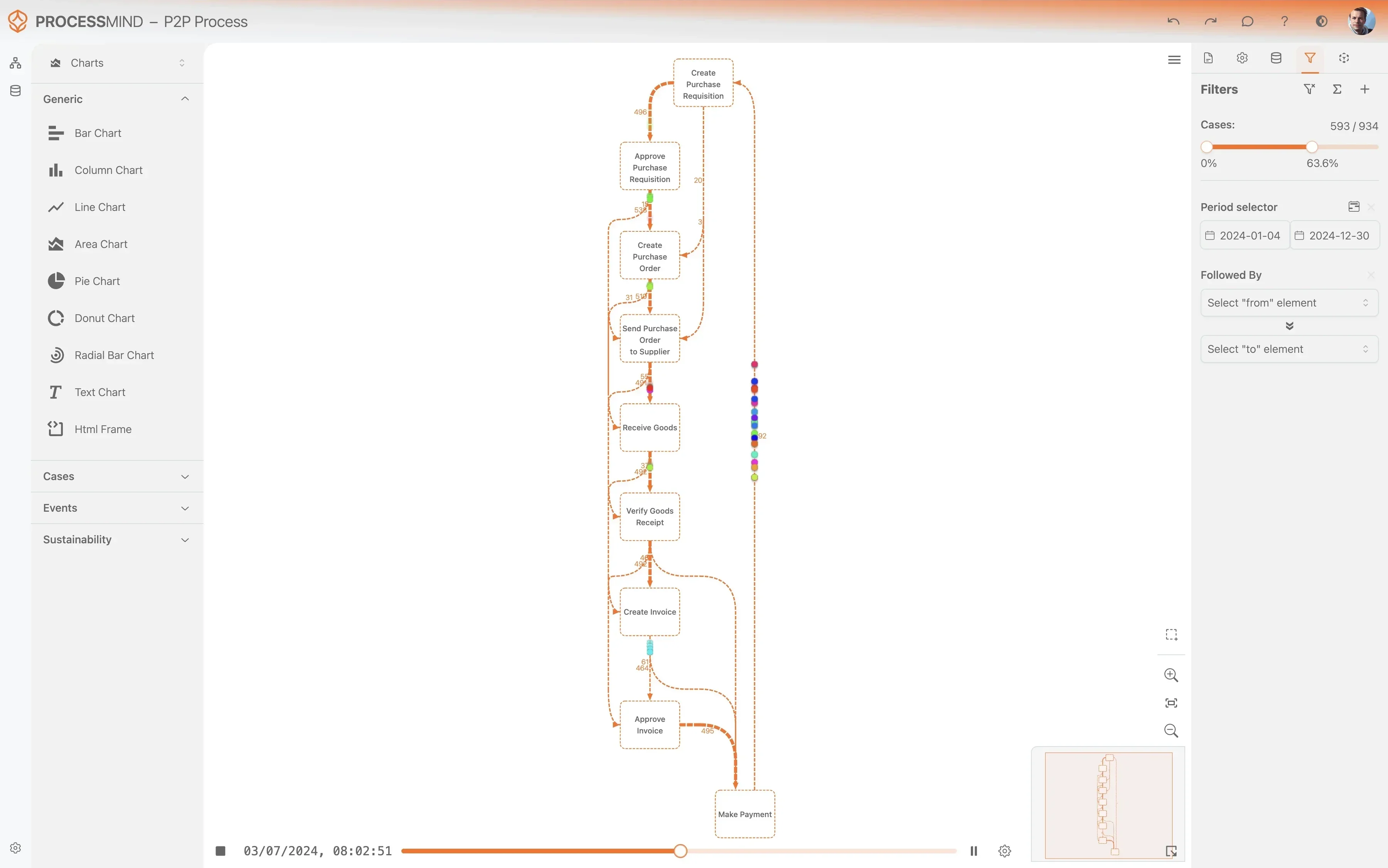
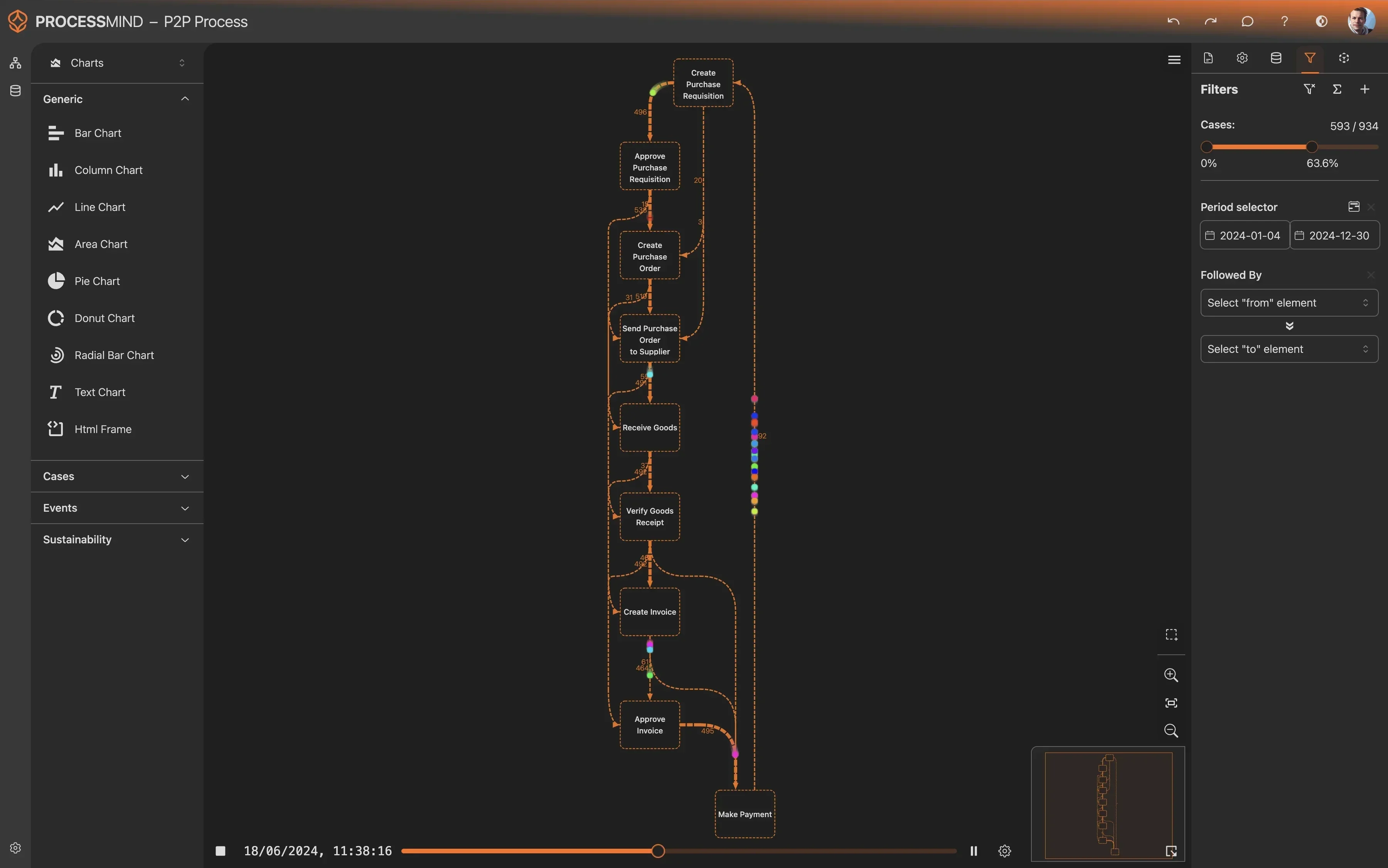
Process mining offers a powerful, data-driven approach to understanding the true flow of your Purchase to Pay - Requisition process within Coupa. Unlike traditional analysis methods, which rely on interviews or documented procedures, process mining extracts event data directly from your Coupa system logs. This allows you to visualize the actual journey of every purchase requisition, from its creation to its final disposition, whether approved, rejected, or withdrawn. You can precisely identify where bottlenecks occur, such as specific approval steps that consistently cause delays, or areas where requisitions are frequently amended, indicating potential issues with initial data quality or user training. Process mining helps uncover hidden rework loops, non-compliant process variations, and opportunities for automation, providing actionable insights derived from real operational data.
Key Areas for Improvement in Your Requisition Process
Applying process mining to your Coupa Purchase to Pay - Requisition data reveals several critical areas for targeted improvement:
- Approval Workflow Optimization: Pinpoint which approval steps or specific approvers are contributing to the longest cycle times. Identify if requisitions are getting stuck in a particular department or if certain requisition types consistently face longer approval queues. This insight helps you redesign approval paths for efficiency, such as consolidating steps or reassigning responsibilities.
- Rework and Amendment Reduction: Analyze why requisitions are frequently amended after submission. Is it due to incomplete initial information, changing requirements, or misunderstandings of purchasing policies? Reducing these rework loops significantly shortens the overall requisition cycle time and improves data accuracy.
- Compliance and Policy Adherence: Detect deviations from your standard purchasing policies and approval matrix. Process mining can highlight instances where requisitions bypass standard procedures or where approvals are granted outside established limits, enabling proactive intervention and enforcement of governance.
- Automation Opportunities: Identify routine, low-risk requisitions that follow a consistent, simple path and could potentially be automated, freeing up human approvers for more complex requests. This also helps reduce manual effort and accelerate the process for common items.
Expected Outcomes: Measurable Benefits
By leveraging process mining to optimize your Purchase to Pay - Requisition process in Coupa, you can expect significant, measurable improvements:
- Reduced Cycle Time: Achieve substantial reductions in the average time it takes for a requisition to be approved, from submission to the creation of a purchase order, leading to faster procurement and project execution. Our customers typically see 20-40% reduction in lead times.
- Increased Efficiency: Minimize manual touchpoints and rework, freeing up your procurement team and requesters to focus on higher-value activities. This directly translates to cost savings and improved operational throughput.
- Enhanced Compliance: Ensure that all requisitions adhere strictly to company policies and regulatory requirements, reducing audit risks and increasing transparency across your P2P process.
- Improved Requester Satisfaction: A smoother, faster requisition process leads to happier employees and better internal customer service, making procurement a more supportive function within your organization.
Getting Started with Requisition Process Optimization
Embarking on the journey to optimize your Coupa Purchase to Pay - Requisition process with process mining doesn't require extensive technical expertise. Our specialized content and tools are designed to guide you through the analysis, helping you transform raw Coupa data into actionable insights quickly. You can start identifying critical bottlenecks and non-compliant behaviors almost immediately, paving the way for targeted improvements that yield real, quantifiable results. Embrace a data-driven approach to procurement and unlock the full potential of your Coupa investment.
The 6-Step Improvement Path for Purchase to Pay - Requisition
Download the Template
What to do
Get the tailored Excel template for analyzing your Purchase Requisition process in Coupa, ensuring you capture all necessary data points for effective analysis.
Why it matters
A structured template ensures all critical data is collected correctly from Coupa, setting the foundation for accurate and comprehensive process analysis.
Expected outcome
A ready-to-use data template specific to Coupa Purchase Requisitions, guiding your data extraction.
Export Your Data
What to do
Extract 3-6 months of historical Purchase Requisition data directly from Coupa, utilizing its reporting features, and populate the downloaded template.
Why it matters
Accessing a substantial historical dataset from Coupa reveals recurring patterns, common bottlenecks, and areas for efficiency gains in your requisition process.
Expected outcome
A completed Excel template populated with your recent historical Purchase Requisition data from Coupa.
Upload Your Dataset
What to do
Securely upload your filled data template to ProcessMind, initiating an automatic and thorough analysis of your Coupa Purchase Requisition process.
Why it matters
Swiftly turning raw data into an analyzable format bypasses complex manual data processing, allowing you to quickly visualize your process.
Expected outcome
Your Purchase Requisition data is securely uploaded and ready for an automated process analysis in ProcessMind.
Analyze Your Process
What to do
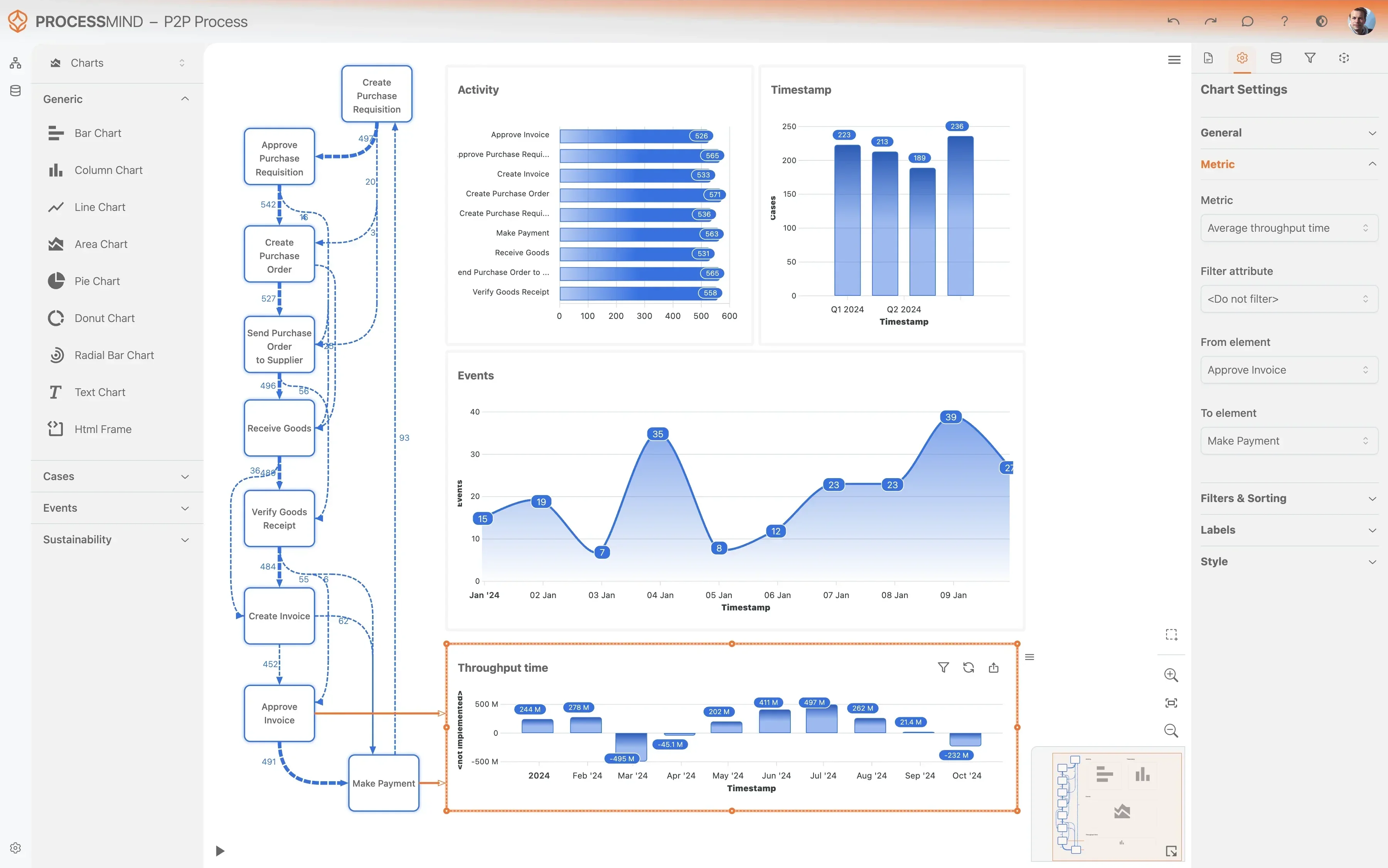
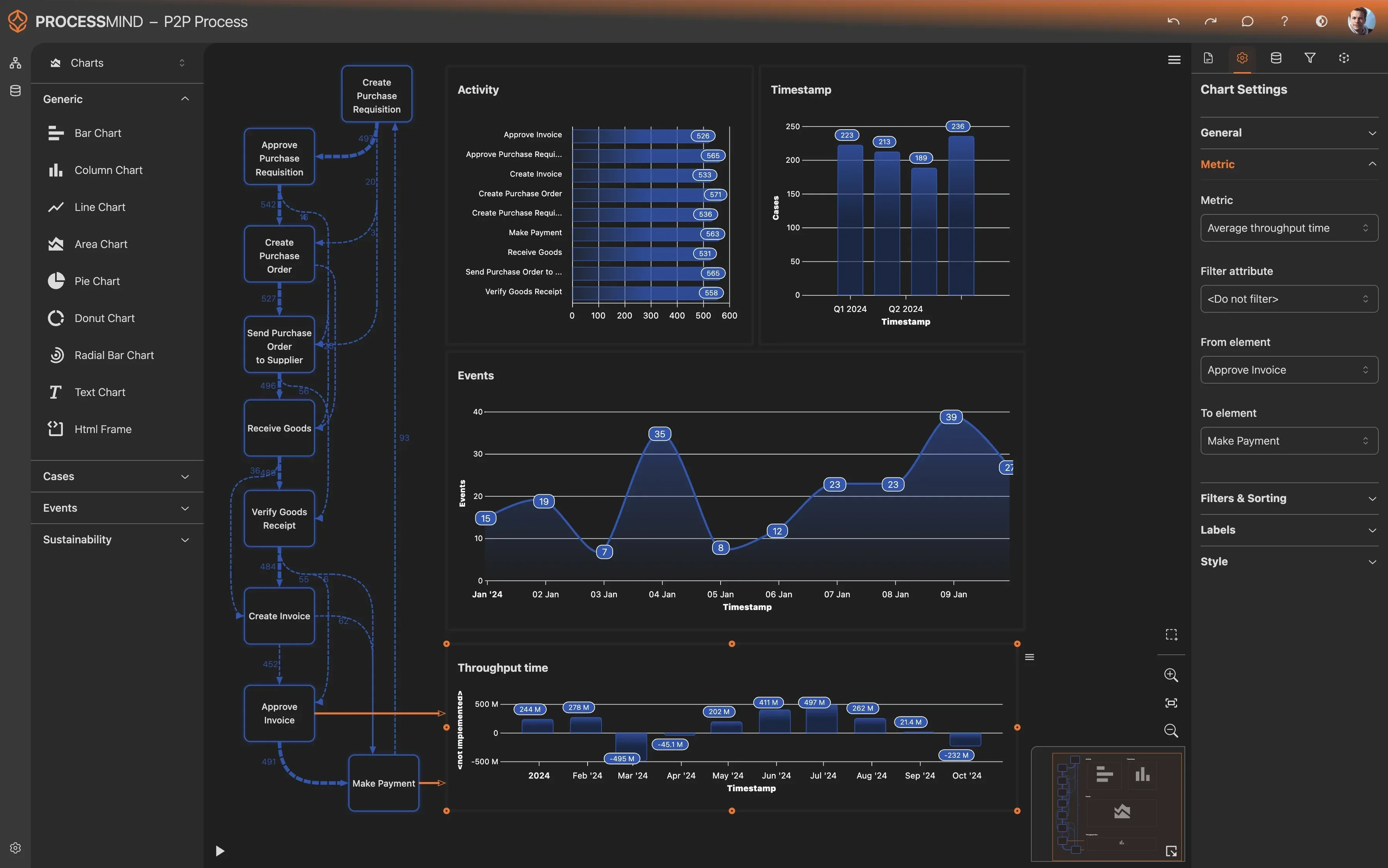
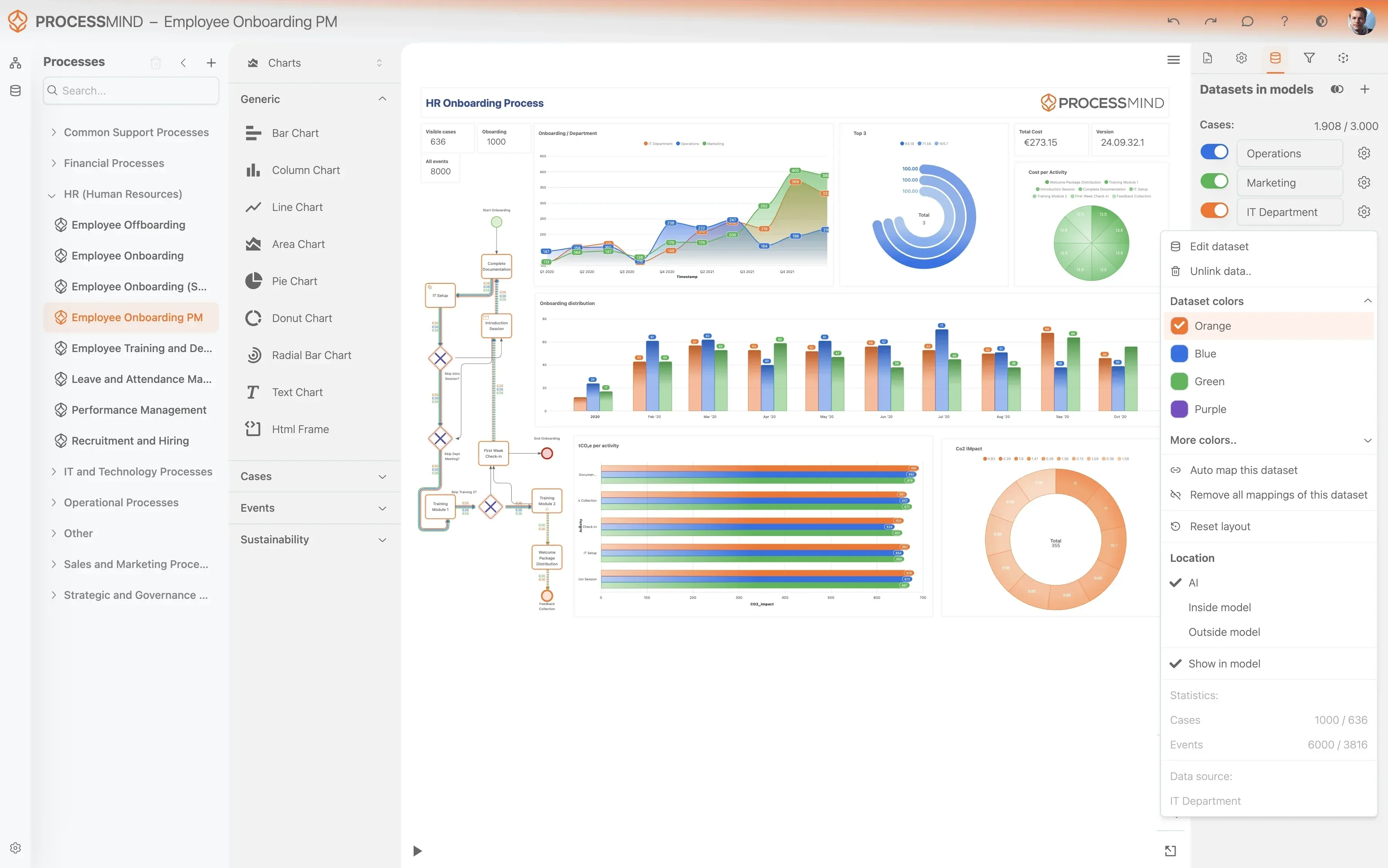
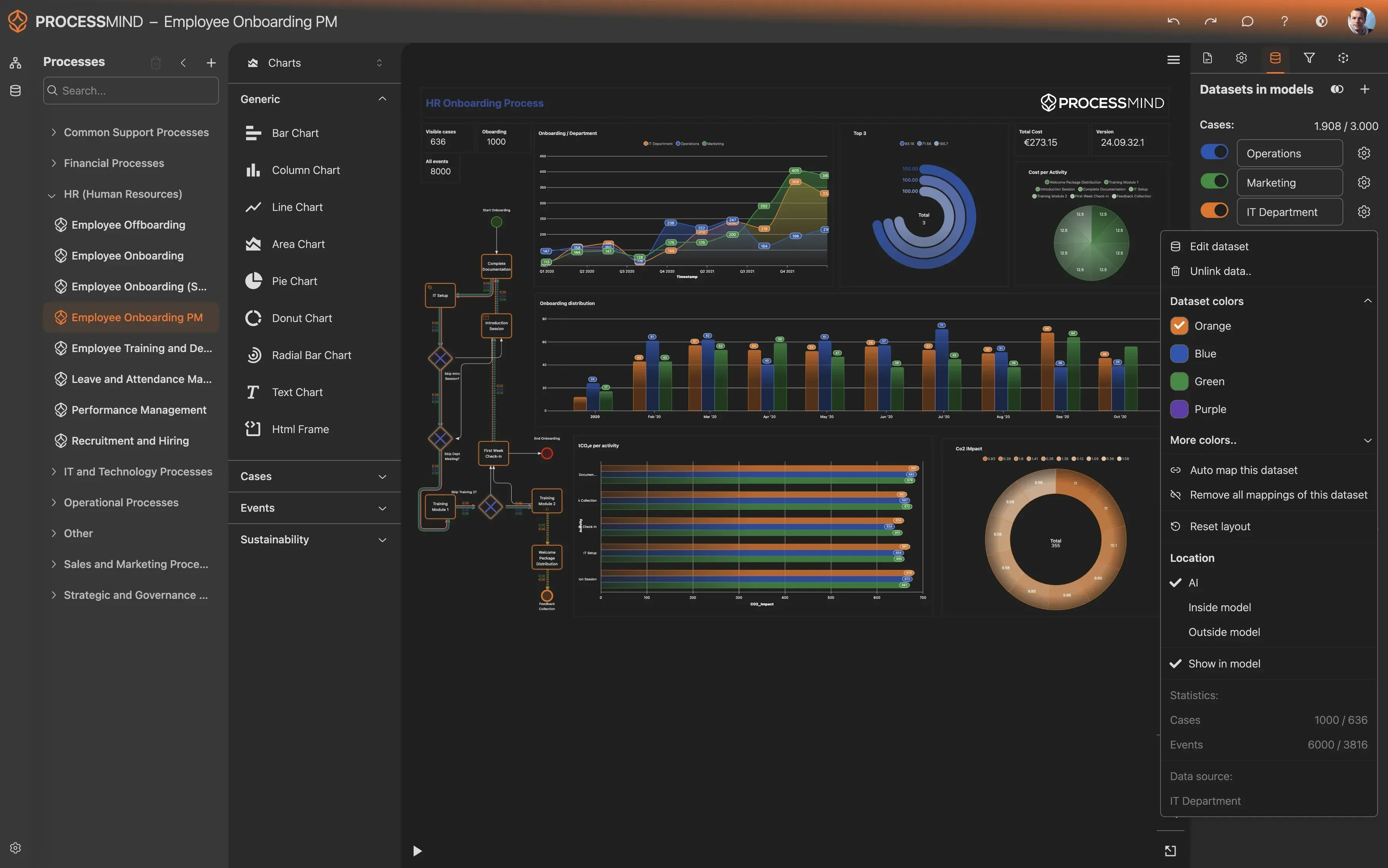
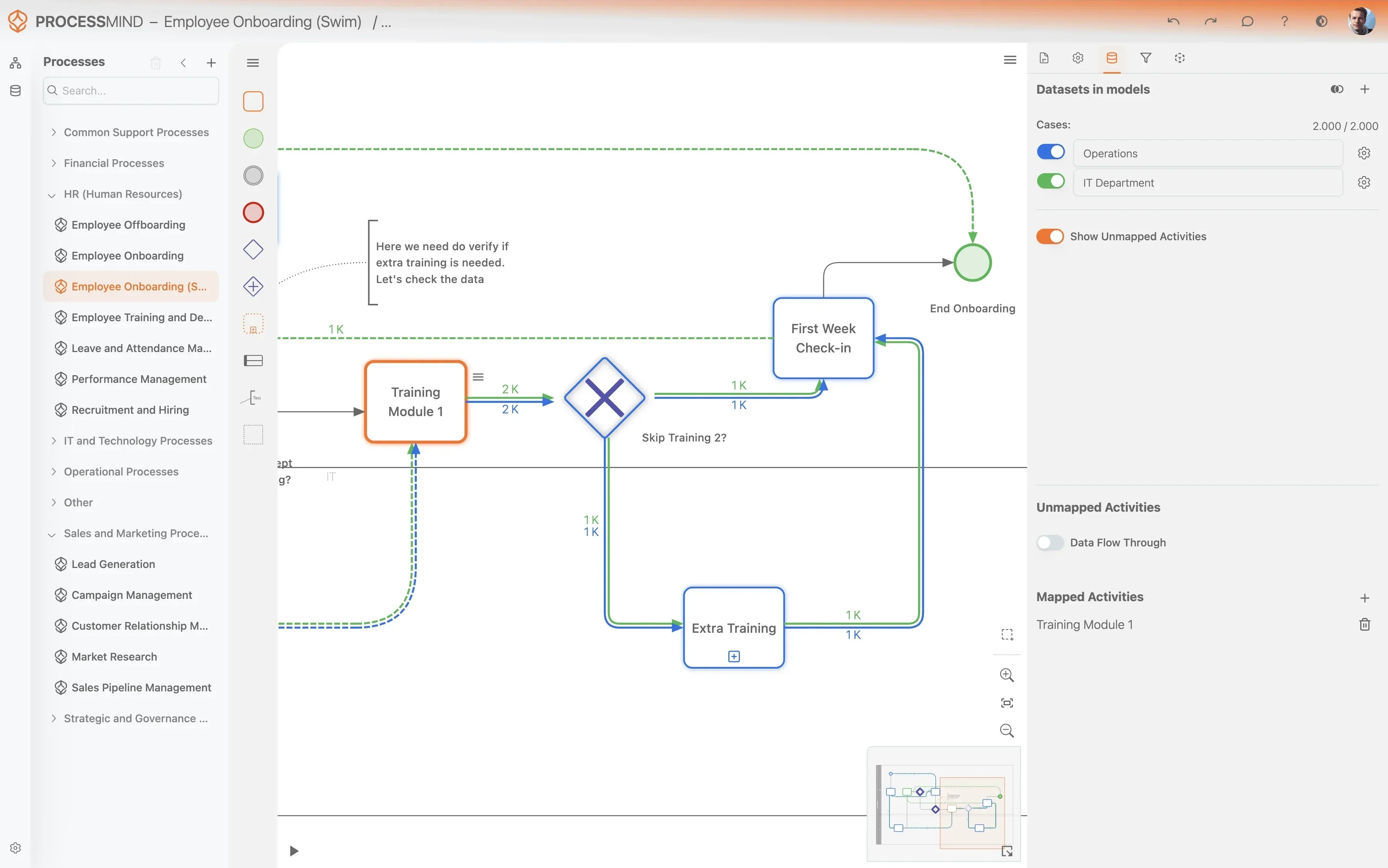
Explore auto-generated dashboards, process maps, and AI-driven recommendations specific to your Coupa Purchase Requisition workflow in ProcessMind.
Why it matters
Gaining immediate visibility into end-to-end process flows helps pinpoint inefficiencies, compliance gaps, and root causes of delays in requisitions.
Expected outcome
A clear understanding of your Purchase Requisition process performance, with identified bottlenecks and optimization opportunities.
Implement Improvements
What to do
Prioritize and implement actionable insights derived from the analysis, such as streamlining approval workflows or optimizing requisition forms in Coupa.
Why it matters
Translating data-driven insights into concrete actions directly improves efficiency, reduces cycle times, and enhances compliance for requisitions.
Expected outcome
Measurable process changes implemented in Coupa based on data-backed recommendations, improving requisition handling.
Monitor Your Process
What to do
Periodically re-upload updated Purchase Requisition data from Coupa to ProcessMind to continuously track the impact of your improvements over time.
Why it matters
Ongoing monitoring ensures that implemented changes yield desired results and allows for continuous refinement, sustaining efficiency gains.
Expected outcome
A consistent view of your Purchase Requisition process performance, demonstrating improved KPIs and sustained efficiency.
TYPICAL RESULTS
Achieving Excellence in Purchase Requisition
These outcomes illustrate the potential for significant improvements when applying process mining to your Purchase to Pay, Requisition process in Coupa, achieved by identifying and eliminating bottlenecks and inefficiencies.
Average reduction in approval time
By identifying and removing key bottlenecks, organizations can significantly cut the time it takes for a requisition to gain final approval, accelerating the entire procurement process.
Decrease in rejections and amendments
Improving initial requisition quality and clarifying requirements leads to a noticeable drop in rejected or amended requisitions, saving considerable time and effort in the Purchase to Pay process.
Increased compliance with purchasing rules
Process mining uncovers hidden deviations from predefined approval workflows, enabling organizations to better enforce policies and significantly reduce compliance risks within requisition handling.
Faster processing through critical stages
Identifying and resolving critical bottlenecks in approval queues ensures requisitions move through the process more swiftly, reducing costly delays and improving overall efficiency.
Better visibility for strategic decisions
Gaining deeper insights into process variations and root causes helps standardize requisition processing, making lead times more predictable for better planning and resource allocation.
Savings from automated tasks
Automating manual checks and approval steps, identified as ripe for optimization through process mining, significantly reduces human effort and administrative overhead in requisition processing.
Results vary based on process complexity, data quality, and specific organizational goals. The figures presented here represent typical improvements observed across various implementations.
Recommended Data
FAQs
Frequently asked questions
Process mining maps the actual flow of your requisition process, identifying all variations and deviations from the ideal path. It highlights bottlenecks, compliance issues, and areas with excessive manual work, providing an objective view of how requisitions are handled in Coupa. This allows for data-driven decisions to streamline operations and reduce inefficiencies.
By visualizing every step and its duration, process mining precisely pinpoints where delays occur in the approval cycle. It can identify specific approvers, departments, or routing complexities that prolong approval times. This insight enables targeted interventions to optimize workflows and accelerate requisition processing.
To begin, you typically need event logs from Coupa containing the Purchase Requisition ID as the case identifier, activity names or statuses, and corresponding timestamps. Additional attributes like approver, requisition value, or department can enrich the analysis. This core data set allows us to reconstruct the complete process flow.
Coupa typically offers various methods for data extraction, including standard reports, APIs, or direct database access, depending on your setup and access permissions. The complexity varies, but it is generally manageable for IT teams or with vendor support. We can guide you on the specific data points required for effective analysis.
Process mining can lead to significant improvements, such as reduced requisition approval cycle times, lower amendment and rejection rates, and increased compliance with purchasing policies. You can also expect more streamlined approval routing and better visibility into real-time requisition status. These benefits translate into cost savings and operational efficiency.
Yes, absolutely. Process mining visualizes the entire process flow and automatically calculates the time spent at each step, including specific approval stages. It highlights exactly where requisitions get stuck or experience undue delays, allowing you to identify and address critical bottlenecks effectively. This makes it clear which approval steps need optimization.
Initial insights can often be generated within a few weeks of successful data extraction and ingestion. Comprehensive analysis and actionable recommendations usually follow within 4-8 weeks. The speed depends on data quality, the complexity of your Coupa setup, and the specific goals of the analysis.
No, process mining typically does not require any additional software installation within your Coupa environment. It operates by analyzing historical event log data extracted from Coupa. The analysis is performed on a separate process mining platform, ensuring no disruption to your existing Coupa operations.
Process mining is scalable and can benefit organizations of all sizes. While larger companies may have more complex processes, smaller operations can also gain significant value by identifying inefficiencies and optimizing their core processes. The key is having sufficient event data to analyze, regardless of company size.
The primary prerequisite is access to your Coupa system to extract the necessary event log data. This often involves collaboration with your IT team or Coupa administrator to set up data export routines. Beyond data access, no specific infrastructure changes are usually required within your Coupa environment itself.
Optimize Coupa P2P Requisitions, Reduce Cycle Time Today
Pinpoint inefficiencies and reduce your P2P requisition cycle time by 30%.
No credit card required. Optimize in minutes.