Improve Your KYC Customer Onboarding

Select a process
Choose a process to continue working in your connected workspace.
Streamline KYC Onboarding for Greater Efficiency and Compliance
Inefficient KYC customer onboarding can lead to significant delays, increased costs, and compliance risks. ProcessMind helps you uncover hidden bottlenecks, reworks, and deviations across your entire process, regardless of your source system. By analyzing your data, this platform identifies areas for improvement, enabling you to streamline operations and enhance the customer experience.
Download our pre-configured data template and address common challenges to reach your efficiency goals. Follow our six-step improvement plan and consult the Data Template Guide to transform your operations.
Show detailed description
Uncover the complete, end-to-end reality of your KYC customer onboarding process with ProcessMind. From the very first touchpoint of application submission to the final activation of a new customer's account, our advanced platform provides an unparalleled, objective view of every single step and interaction. You'll gain crucial visibility into where bottlenecks consistently impede progress, identify precise instances of non-compliance that could expose your organization to significant risks, and pinpoint deep-seated operational inefficiencies that silently drain resources and extend timelines. This deep dive into your actual workflow is made possible by seamlessly integrating and analyzing event data from any of your diverse source systems, offering a truly comprehensive understanding of how work truly flows across your enterprise, beyond what any single system alone can show.
The KYC onboarding journey is notoriously complex and often plagued by common challenges that severely hinder both speed and accuracy. Many organizations struggle with painfully prolonged approval times, an excessive number of manual handoffs between various departments and teams, and frustratingly redundant data entry across different internal tools, leading to errors and delays. These systemic issues not only create frustrating, drawn-out experiences for new customers, potentially leading to abandonment, but also significantly elevate the risk of human error and regulatory compliance breaches. Fragmented data, dispersed and isolated across your myriad of internal systems, makes it incredibly difficult to obtain a holistic, unified view of the entire process, ultimately resulting in extended processing times and ballooning operational costs. ProcessMind is designed to illuminate these specific pain points, showing you the exact pathways and their impact on your business outcomes, regardless of the underlying technology stack.
By proactively leveraging ProcessMind for the detailed analysis of your KYC customer onboarding process, you unlock a multitude of transformative benefits that directly impact your bottom line and customer satisfaction. You can achieve significantly faster customer approvals, dramatically enhancing the new customer experience and substantially reducing potential churn rates. Our platform empowers your teams to make truly data-driven decisions by precisely identifying the root causes of delays, rework loops, and compliance deviations, rather than relying on anecdotal evidence or assumptions. This clarity allows you to optimize your workflow design, strategically reallocate resources to high-impact areas, and ensure consistent, proactive adherence to all relevant regulatory requirements. The ultimate result is a significantly more efficient, robustly compliant, and distinctly customer-centric onboarding process that directly contributes to your organization's competitive edge and long-term success, turning a previous challenge into a strategic advantage.
Getting started with ProcessMind for your comprehensive KYC customer onboarding analysis is designed to be straightforward and seamless, regardless of your existing IT landscape or the complexity of your current systems. Our platform is built to be welcoming and inclusive of all systems, whether you're utilizing a legacy ERP, a cutting-edge CRM, a specialized compliance application, or a unique combination of all these and more. To begin uncovering powerful, actionable insights into your onboarding performance, simply refer to our user-friendly data template. This comprehensive guide will meticulously walk you through the process of extracting and mapping your relevant event log data from your various source systems, ensuring a smooth and accurate connection to ProcessMind. Take the first step today to transform your complex KYC onboarding process from a persistent operational challenge into a clear, measurable, and highly efficient competitive advantage, driving better customer outcomes and stronger compliance.
The 6-Step Improvement Path for KYC Onboarding
Connect & Discover Data
What to do
Integrate event logs from your KYC Customer Onboarding systems. Capture relevant activities, timestamps, and case IDs to form a complete process history for analysis.
Why it matters
Comprehensive data collection is crucial for an accurate and unbiased view of your process. Without it, insights will be incomplete, leading to misguided improvement efforts.
Expected outcome
A unified, granular dataset representing all KYC onboarding activities, ready for detailed visualization and analysis.
Map Your Process Flow
What to do
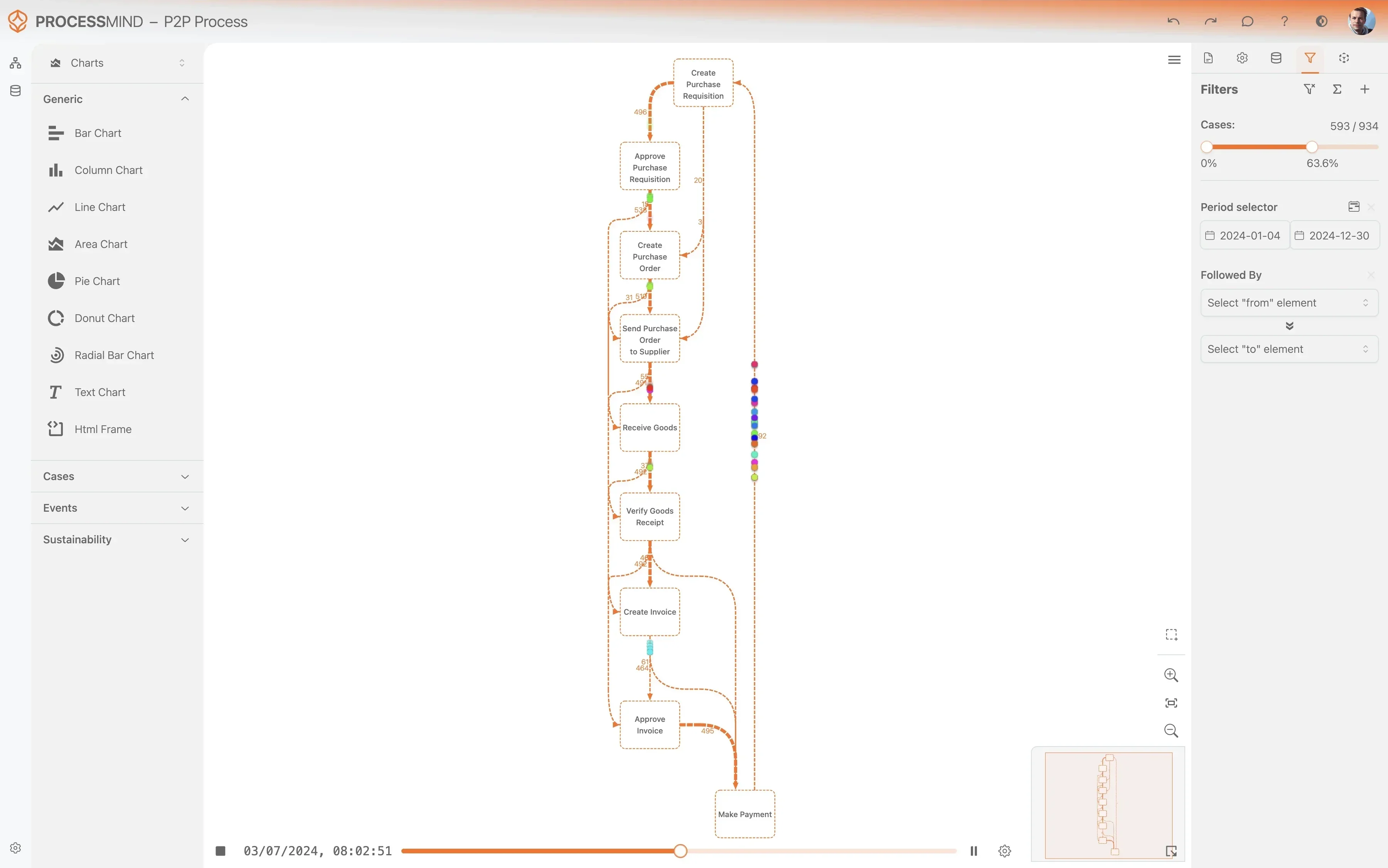
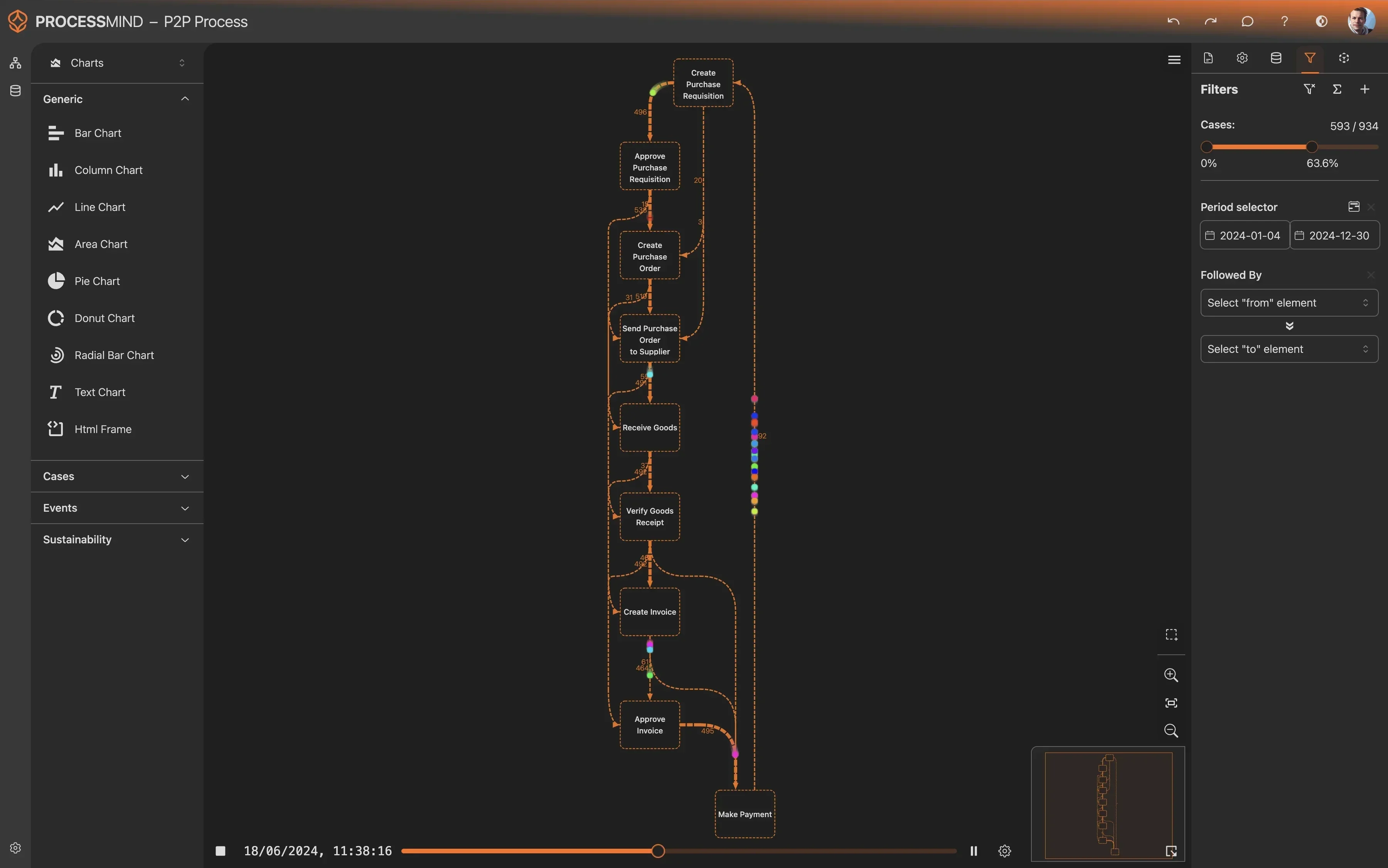
Generate a visual map of the entire KYC Customer Onboarding journey. Identify all variations, reworks, and parallel paths within the actual process.
Why it matters
A visual process map reveals the true as-is state, exposing hidden complexities and deviations from the intended design that impact efficiency and compliance.
Expected outcome
A clear, interactive process map showing all executed paths, frequencies, and average durations of activities.
Identify Bottlenecks
What to do
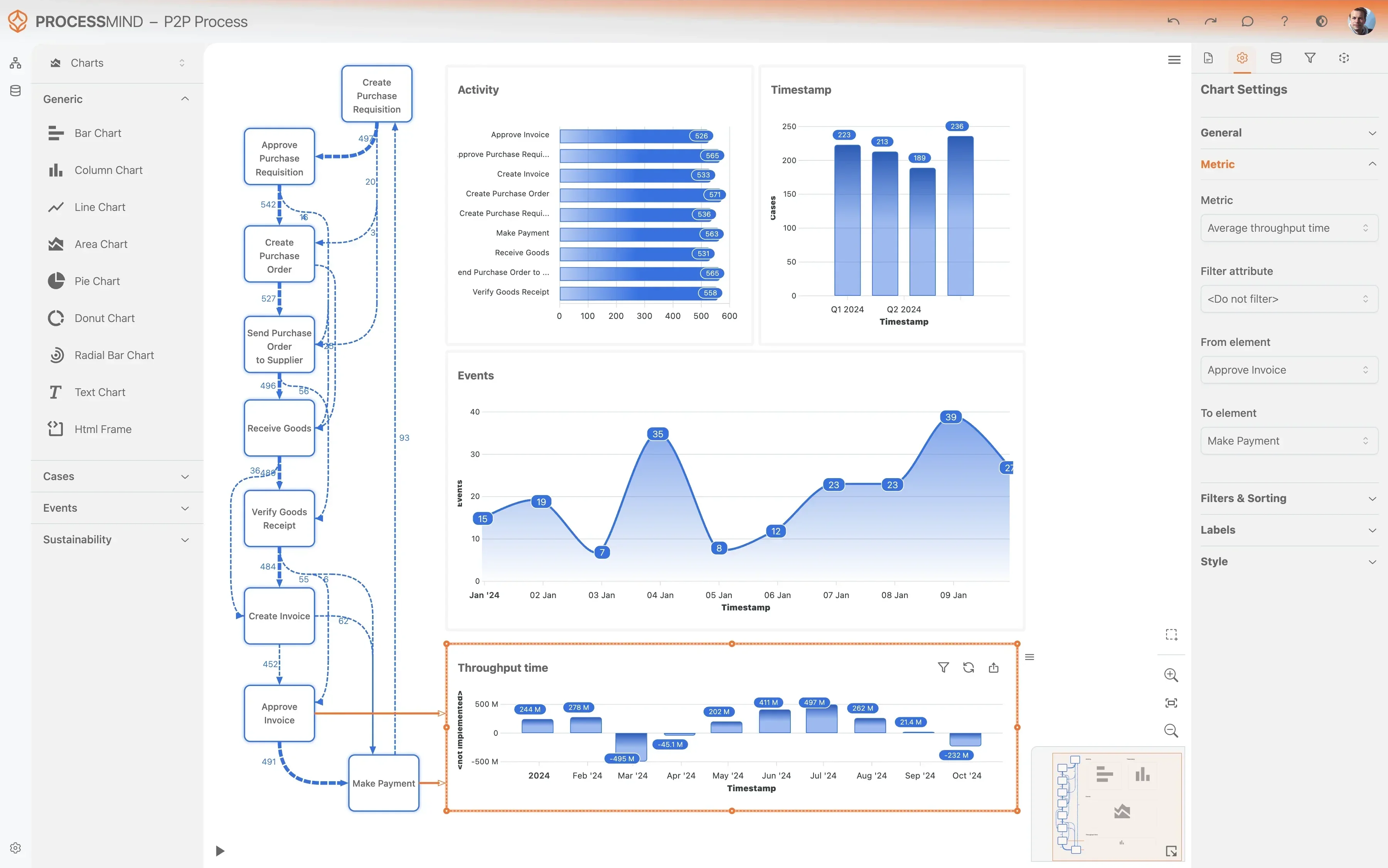
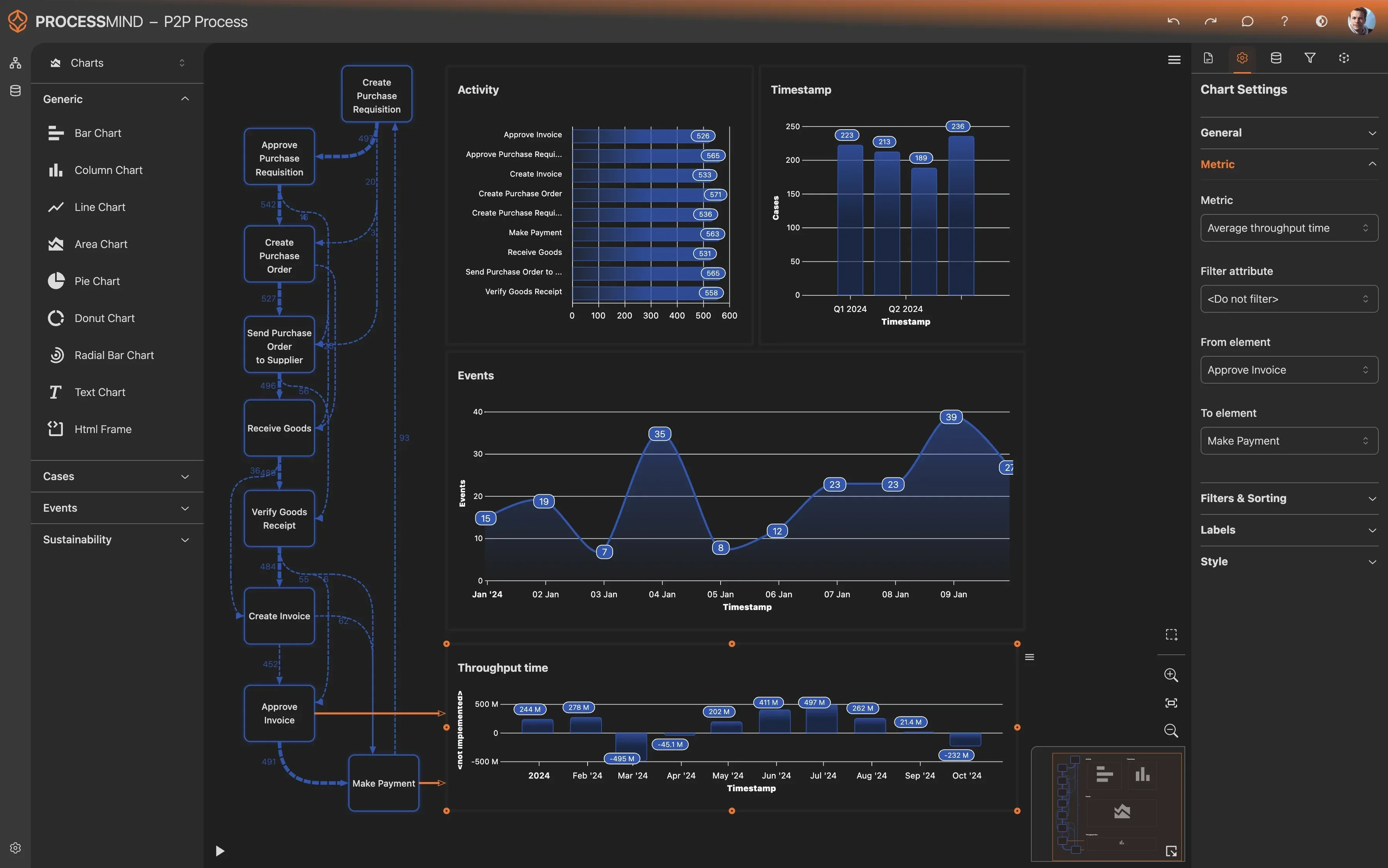
Pinpoint specific activities or transitions with significant delays. Use duration analysis to highlight long wait times, reworks, and loops that impede progress.
Why it matters
Bottlenecks directly contribute to extended onboarding times, poor customer experience, and increased operational costs. Identify them for targeted intervention.
Expected outcome
A prioritized list of critical bottlenecks and their locations, quantified by their impact on lead time.
Analyze Root Causes
What to do
Deep dive into identified bottlenecks to understand underlying causes. Analyze attribute data, resource allocation, and case characteristics associated with delays.
Why it matters
Addressing symptoms without understanding root causes leads to temporary fixes. Thorough root cause analysis ensures sustainable improvements.
Expected outcome
Clear understanding of why bottlenecks occur, including contributing factors such as missing documents, manual reviews, or system issues.
Design Process Improvements
What to do
Based on root cause analysis, design targeted improvements. This may involve process standardization, automation, or resource re-allocation within your system.
Why it matters
Proactive design ensures strategic, data-driven changes, resolving impactful issues and leading to tangible benefits.
Expected outcome
A detailed plan outlining specific process changes, automation initiatives, or policy adjustments for KYC optimization.
Monitor & Iterate Progress
What to do
Implement improvements and continuously monitor their impact. Establish KPIs to track changes and iterate on solutions as needed for ongoing optimization.
Why it matters
Process improvement is an ongoing journey. Continuous monitoring ensures benefits are realized and sustained, allowing agile adaptation to new challenges.
Expected outcome
Sustained improvement in KYC onboarding KPIs, such as reduced cycle time, lower rework rates, and enhanced compliance.
TYPICAL OUTCOMES
Tangible Results for Your KYC Onboarding
Our process mining solution identifies critical bottlenecks and inefficiencies within your KYC customer onboarding journey, leading to measurable improvements in speed, compliance, and customer satisfaction.
Average reduction in end-to-end time
Identify and eliminate bottlenecks, significantly shortening the time from application submission to customer completion, improving initial customer experience.
Decrease in invalid applications and repeated steps
Pinpoint the root causes of application rejections and unnecessary rework, leading to a higher first-pass yield and improved process efficiency.
Increase in cases meeting service targets
Understand the reasons for missed Service Level Agreements, enabling targeted improvements to ensure more onboarding cases are completed on time, boosting compliance and trust.
Reduction in requests for additional customer data
Identify systemic issues that lead to multiple requests for additional customer information, streamlining the application process and enhancing the overall customer experience.
Faster processing of regulatory checks
Identify bottlenecks and inefficiencies within critical compliance review processes, significantly reducing the time spent on regulatory checks without compromising integrity.
Enhanced efficiency in workload allocation
Analyze resource allocation and workload patterns to identify underutilized or overstretched areas, enabling better distribution and reducing operational costs.
Actual results may vary depending on the complexity of your KYC process, data quality, and specific organizational goals. The outcomes presented here reflect common improvements experienced by organizations utilizing process mining for KYC.
Recommended Data
For customized data recommendations, choose your specific process.
FAQs
Frequently asked questions
Process mining analyzes event data from your systems to visualize the actual customer onboarding journey, identifying deviations from the ideal path. It helps uncover bottlenecks, rework loops, and non-compliant steps that extend cycle times and increase costs. By providing a data-driven overview, you can pinpoint exact areas for improvement.
To perform process mining effectively, you primarily need event log data from your source systems. This includes a case identifier, usually the Customer Application ID, an activity name for each step performed, and a timestamp for when each activity occurred. Including resource information or other relevant attributes can further enrich the analysis.
You can expect significant improvements, including a reduction in customer onboarding cycle times, minimized application rework, and enhanced customer satisfaction. Process mining also leads to better resource allocation, lower operational costs, and increased transparency into your process health. Ultimately, it strengthens your ability to meet internal SLAs and regulatory requirements.
Initial insights and a baseline process model can often be generated within weeks, depending on data availability and quality. Significant improvement recommendations and a clear understanding of bottlenecks usually emerge within one to three months. The actual implementation of changes and the realization of sustained improvements will then follow, requiring ongoing monitoring.
Yes, process mining significantly enhances KYC compliance by visualizing all process variants and identifying any deviations from defined regulatory workflows. It helps highlight instances of non-adherence, such as skipped steps or unauthorized shortcuts. This ensures that all necessary checks and approvals are consistently executed, providing an auditable trail for regulators.
Data extraction typically involves querying your system's underlying database, utilizing its reporting functionalities, or through API integrations. The goal is to obtain event logs in a structured format, often CSV or XES, which can then be ingested by process mining software. Secure data transfer methods are always prioritized during this process.
While process mining tools are becoming more user-friendly, some technical skills are beneficial, particularly for data extraction, transformation, and initial model setup. Many organizations start with a small team or engage expert consultants to guide the initial implementation. Over time, internal staff can be trained to manage and leverage the insights independently.
No, process mining is generally non-disruptive to live operations as it primarily uses historical data. Data extraction can be performed in the background or during off-peak hours. The analysis and insights generation occur separately from your operational systems, allowing your teams to continue their work without interruption.
Data quality is a common concern in any data analysis initiative. Process mining tools are designed to handle real-world data imperfections through robust data cleansing and transformation techniques. An initial data assessment will identify any major issues and outline practical solutions to ensure effective analysis.
Optimize KYC Onboarding Now, Gain Efficiency
Works with any system. Uncover insights and boost compliance in days.
No credit card required. See value quickly.