Improve Your Incident Management

Optimize Incident Management in Freshservice for Faster Resolution
Incident management often faces challenges like slow resolution times and repeated issues. Our platform helps you quickly identify where delays occur and why, revealing hidden bottlenecks in your processes. Pinpoint the root causes of inefficiencies and understand how to streamline workflows effectively. This allows you to improve service delivery and boost user satisfaction.
Download our pre-configured data template and address common challenges to reach your efficiency goals. Follow our six-step improvement plan and consult the Data Template Guide to transform your operations.
Show detailed description
Why Optimizing Incident Management is Crucial
Effective Incident Management is the backbone of reliable IT services, directly impacting user productivity, operational costs, and customer satisfaction. In today's fast-paced digital environment, any delay in resolving incidents, whether minor or critical, can lead to significant business disruption. Extended downtime, repeated manual efforts, and a cascade of productivity losses are direct consequences of inefficient incident processes. When incidents in Freshservice, or any other system, are not handled with optimal efficiency, organizations face increased operational costs, potential SLA breaches, and a decline in user trust. Understanding the true flow of your Freshservice Incident Management process is the first step towards mitigating these risks and ensuring your services remain robust and dependable.
How Process Mining Transforms Incident Resolution in Freshservice
Process mining offers a unique, data-driven lens into your existing Freshservice Incident Management workflows, revealing the 'as-is' process rather than theoretical ideal states. By analyzing event logs from Freshservice, process mining reconstructs the complete journey of every incident, from its initial report to its final closure. This comprehensive view allows you to identify precisely where incidents get stuck, where unnecessary reworks occur, and which steps introduce bottlenecks that extend resolution cycle time.
For example, you can visually trace how incidents are categorized and prioritized, observe the actual number of transfers between support groups, and pinpoint if certain diagnosis steps are repeatedly performed without progress. This capability is invaluable for uncovering hidden inefficiencies, such as frequent reassignments, prolonged waiting times for user confirmation, or deviations from standard operating procedures. Process mining helps you answer critical questions like: "What causes the long tail of resolution times for high-priority incidents in Freshservice?" or "Why do incidents involving specific services consistently exceed their SLA targets?" This granular insight empowers you to move beyond assumptions and base your improvement efforts on concrete, empirical evidence derived directly from your Freshservice data.
Key Areas for Improvement in Your Incident Management Process
With the insights gained from process mining, you can target specific areas within your Freshservice Incident Management for optimization. Typical improvement opportunities include:
- Streamlining Incident Categorization and Prioritization: Identifying if initial classification is often incorrect, leading to re-categorization and delays.
- Reducing Unnecessary Transfers and Escalations: Pinpointing incidents that are frequently bounced between teams, suggesting a need for better training, knowledge sharing, or revised assignment rules.
- Optimizing Diagnosis and Resolution Workflows: Uncovering steps that take too long, or where agents repeatedly restart diagnostic processes, indicating gaps in knowledge bases or standardized procedures.
- Improving Knowledge Base Utilization: Detecting incidents where solutions are repeatedly
The 6-Step Improvement Path for Incident Management
Download the Template
What to do
Access the pre-configured Excel template for Incident Management. This template ensures you collect all necessary data points to accurately map your Freshservice incident flows.
Why it matters
Having the correct data structure from the start is crucial for accurate analysis and prevents rework, ensuring your insights are reliable.
Expected outcome
A ready-to-use data template, perfectly structured for your Incident Management process.
Export Your Data
What to do
Extract 3-6 months of historical incident data directly from your Freshservice system. Populate the downloaded template with your real-world incident records.
Why it matters
Leveraging historical data provides a comprehensive view of past performance, revealing trends and recurrent issues that need attention.
Expected outcome
A populated Excel template containing a rich history of your Incident Management data.
Upload Your Dataset
What to do
Securely upload your completed Excel template to the ProcessMind platform. Our system will automatically process and prepare your data for analysis.
Why it matters
Effortlessly transform raw data into a structured format, enabling rapid generation of actionable process insights without manual effort.
Expected outcome
Your incident data securely processed and ready for visualization and in-depth analysis.
Analyze Your Process
What to do
Explore interactive dashboards and auto-generated process maps derived from your Freshservice data. Identify bottlenecks, deviations, and root causes with AI-driven insights.
Why it matters
Gain deep visibility into your Incident Management process, pinpointing inefficiencies and compliance gaps that hinder fast resolution and user satisfaction.
Expected outcome
A clear understanding of your current process state, identifying key areas for improvement in incident handling.
Implement Improvements
What to do
Prioritize and act on the identified opportunities, such as streamlining approval workflows or automating routine tasks within Freshservice.
Why it matters
Translating insights into action directly addresses process pain points, leading to more efficient incident resolution and better resource utilization.
Expected outcome
Tangible changes in your Incident Management workflows, directly addressing identified inefficiencies and improving performance.
Monitor Your Process
What to do
Periodically re-upload fresh incident data from Freshservice to track the impact of your implemented changes and measure KPI improvements.
Why it matters
Continuous monitoring ensures that improvements are sustained and allows for agile adjustments, driving ongoing operational excellence and higher user satisfaction.
Expected outcome
Quantifiable evidence of improved incident resolution times, SLA adherence, and overall process efficiency over time.
WHAT YOU WILL GET
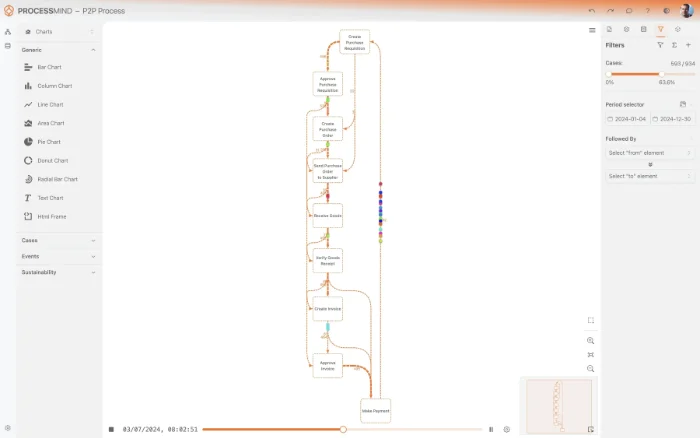
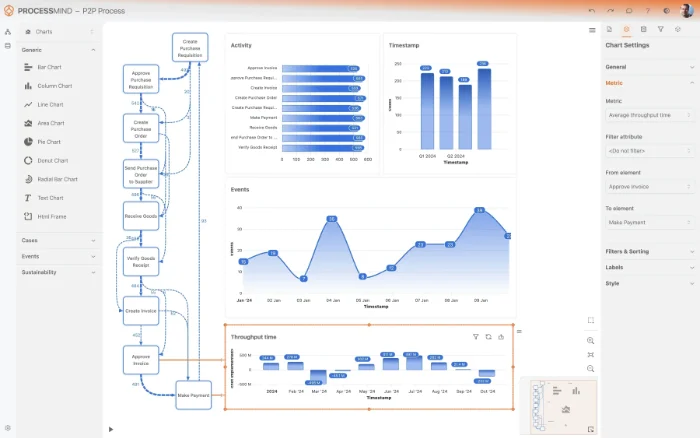
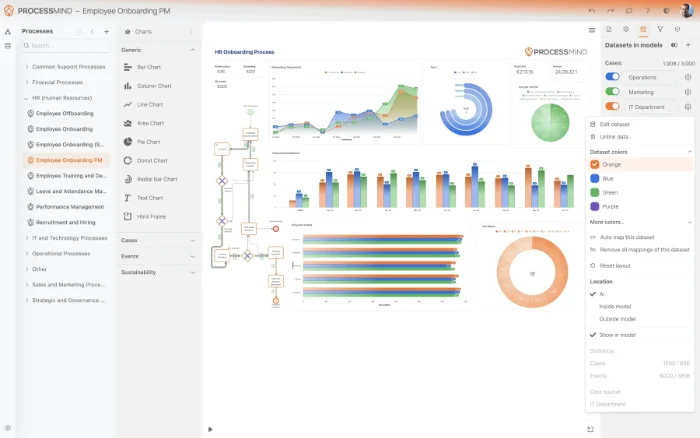
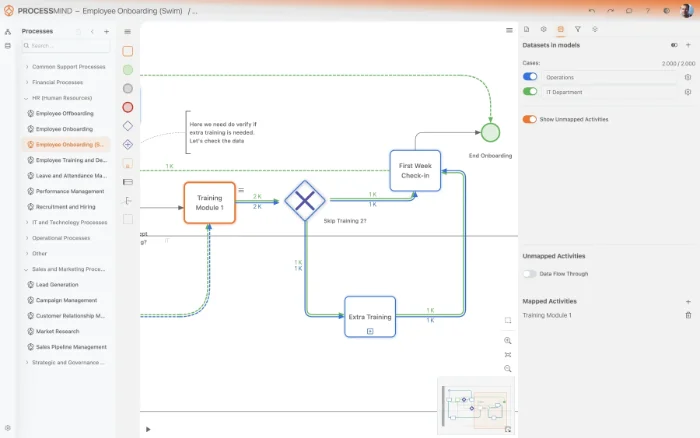
Uncover Critical Incident Management Insights
- Visualize end-to-end incident workflows
- Identify Freshservice bottleneck areas
- Spot root causes of SLA breaches
- Discover paths to quicker incident resolution
TYPICAL OUTCOMES
Elevating Your Incident Management with Process Mining
Process mining, applied to your Freshservice Incident Management data, reveals bottlenecks and inefficiencies, transforming how you resolve issues. These outcomes illustrate the practical improvements organizations typically achieve.
Avg. time for high-priority incidents
Reduce the average time it takes to resolve critical incidents, ensuring minimal disruption to business operations and services. This improves customer satisfaction and system uptime.
Improvement in meeting service targets
Achieve higher compliance with Service Level Agreements by identifying and removing bottlenecks that cause missed deadlines. This enhances customer trust and avoids penalties.
Fewer transfers between teams or agents
Minimize the number of times an incident is transferred between support groups, leading to faster resolution and reduced operational costs. This improves agent efficiency and consistency.
Decrease in initial miscategorizations
Improve the accuracy of initial incident categorization, ensuring incidents are routed correctly from the start and reducing delays in resolution. This leads to better insights and resource allocation.
Fewer incidents reopened post-resolution
Reduce the percentage of incidents that are reopened after initial closure, indicating more robust and accurate first-time resolutions. This improves user satisfaction and reduces agent rework.
Overall reduction in operational spend
Optimize resource utilization and reduce unnecessary manual efforts across the incident management lifecycle. This directly translates to significant cost savings for your organization.
Results vary based on an organization's specific process complexity, data quality, and existing operational efficiency. The figures presented reflect common improvements observed across various implementations.
Recommended Data
FAQs
Frequently asked questions
Process mining identifies bottlenecks, non-compliance, and inefficiencies in your incident lifecycle, from creation to resolution. It helps visualize the actual process flow, pinpointing areas like long resolution times, frequent reassignments, or delays for optimization. This leads to a clearer understanding of how incidents are truly managed. By revealing deviations from expected paths, it allows for targeted improvements and better service delivery.
You will typically need incident logs that include a case identifier, such as Incident ID, activity descriptions, and timestamps for each step an incident takes. Additionally, attributes like agent, assignment group, incident categorization, and priority can enrich your analysis significantly. Ensuring the data is complete and accurate is crucial for deriving meaningful insights.
You can expect accelerated critical incident resolution, improved service level agreement compliance, and streamlined incident handoffs. Process mining helps achieve more accurate incident categorization, enhanced root cause analysis, and standardized incident escalation. Ultimately, these improvements lead to reduced incident management costs and a better user experience.
Yes, process mining can precisely trace the paths incidents take, revealing specific activities or sequences that lead to SLA breaches. It highlights where delays occur, such as multiple reassignments, prolonged wait times, or unapproved workarounds. This allows you to identify the root causes of SLA misses and implement targeted interventions for improvement.
The initial step involves identifying and extracting relevant event log data from your Freshservice instance. This typically includes incident IDs, corresponding activity timestamps, and clear activity descriptions for each step. Ensuring the quality and completeness of this extracted data is paramount for an accurate and insightful process analysis.
No, process mining is beneficial for organizations of any size looking to optimize their processes, regardless of complexity. Even smaller teams can gain significant, actionable insights into their incident management performance. It helps identify areas for efficiency gains and process adherence that might otherwise remain unseen.
Initial insights and discovery of process bottlenecks can often be gained within a few weeks after successful data extraction and model setup. Deeper analysis, implementation of improvements, and measuring their impact may take a few months. The timeline largely depends on the complexity of your specific incident management process and available resources.
Beyond your Freshservice data, you will need a process mining tool, which can be either cloud-based or an on-premise solution. Most modern tools offer user-friendly interfaces, so specific coding skills are not typically required for their operation. However, some initial data transformation or scripting might be necessary to prepare your raw Freshservice data for analysis.
By analyzing individual incident handling patterns, process mining can highlight variations in agent performance and adherence to standard operating procedures. It helps identify best practices from high-performing agents and pinpoint specific areas where others might need training or clearer process guidance. This enables targeted coaching and consistent service delivery.
Stop SLA Breaches: Optimize Incident Management Today
Join companies reducing MTTR by 35% and preventing costly SLA breaches.
Free 14-day trial, no credit card required.