Improve Your Record to Report - Journal Entry

Select a process
Choose a process to continue working in your connected workspace.
Optimize Record to Report Journal Entries in SAP S/4HANA
Journal entries are crucial for accurate financial reporting, but often suffer from hidden bottlenecks and compliance risks. Our platform helps you pinpoint delays, streamline approvals, and enhance data accuracy. Discover how to transform your process and achieve operational excellence by identifying inefficiencies.
Download our pre-configured data template and address common challenges to reach your efficiency goals. Follow our six-step improvement plan and consult the Data Template Guide to transform your operations.
Show detailed description
Why Optimize Record to Report - Journal Entry?
The Record to Report, R2R, Journal Entry process is a cornerstone of financial operations, directly impacting the accuracy and timeliness of your financial reporting. In SAP S/4HANA environments, inefficient journal entry processing can lead to a cascade of negative effects: extended financial close cycles, inaccurate financial statements, increased audit risks, and unnecessary operational costs. Each manual touchpoint, approval delay, or correction cycle consumes valuable time and resources, hindering your ability to make timely, data-driven decisions. Optimizing this critical process is not just about reducing costs; it's about building a more resilient, accurate, and agile financial function capable of supporting strategic growth.
Without a clear understanding of your actual process flow, hidden bottlenecks, and compliance gaps can persist, leading to rework and frustration for your accounting teams. Understanding the true end-to-end journey of every journal entry, from creation to final reconciliation within SAP S/4HANA, is essential for identifying meaningful opportunities for improvement. This detailed analysis allows organizations to move beyond anecdotal evidence and pinpoint the precise areas where efficiency can be enhanced and risks mitigated.
How Process Mining Delivers Insights for Journal Entry
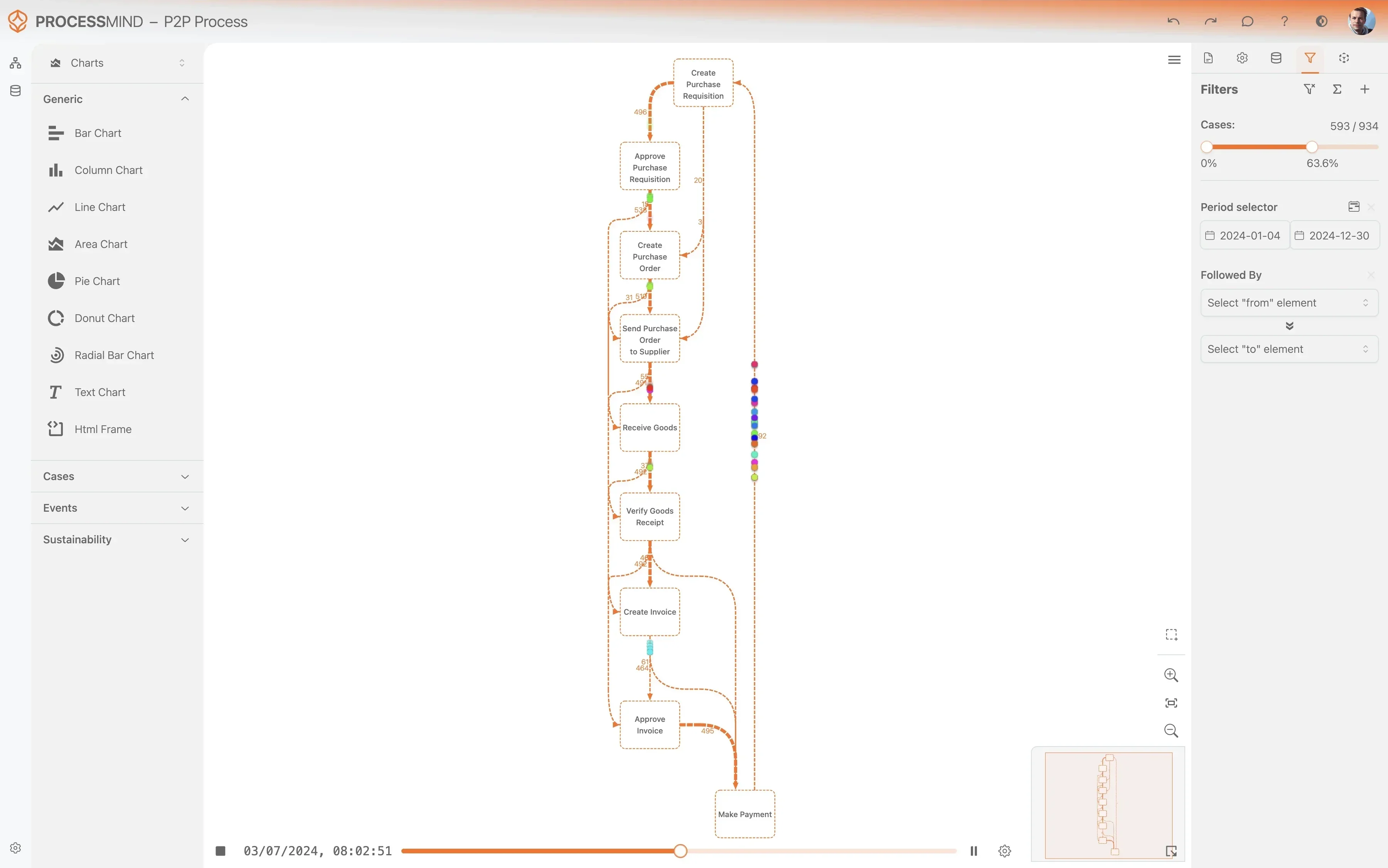
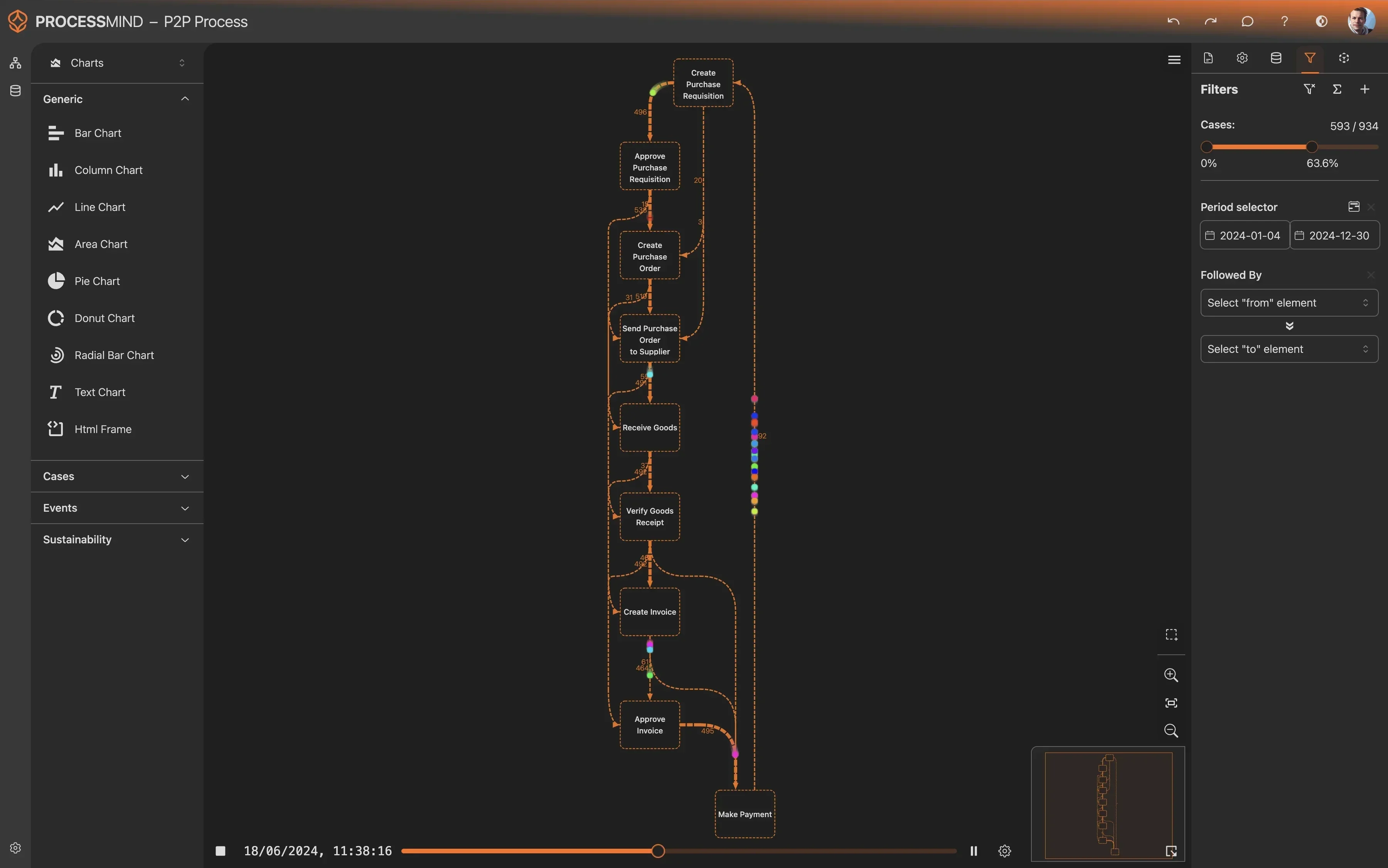
Process mining offers a powerful, data-driven approach to dissecting and understanding your Record to Report - Journal Entry process. By leveraging event logs from your SAP S/4HANA system, including tables like BKPF, BSEG, ACDOCA, FAGLFLEXA, and GLT0, process mining reconstructs the exact sequence of activities for every Journal Entry ID. This comprehensive view reveals the actual process flows, not just the theoretical ones, allowing you to visualize every step from "Journal Entry Created" to "Journal Entry Posted" and "Journal Entry Reconciled."
This analytical power enables you to identify where journal entries get stuck, whether it's in a specific review stage, awaiting approval, or encountering frequent rejections. You can precisely measure the cycle time for each activity and for the entire journal entry lifecycle, benchmarking performance and tracking improvements over time. By analyzing attributes such as Journal Entry Type, Company Code, Created By User, and Amount, process mining uncovers the root causes of delays and non-compliance. For instance, you can discover if certain journal entry types consistently face longer approval times or if specific users are overwhelmed with review tasks, impacting your ability to reduce Record to Report - Journal Entry cycle time.
Key Improvement Areas Identified Through Process Mining
Process mining insights illuminate critical areas for Record to Report - Journal Entry optimization:
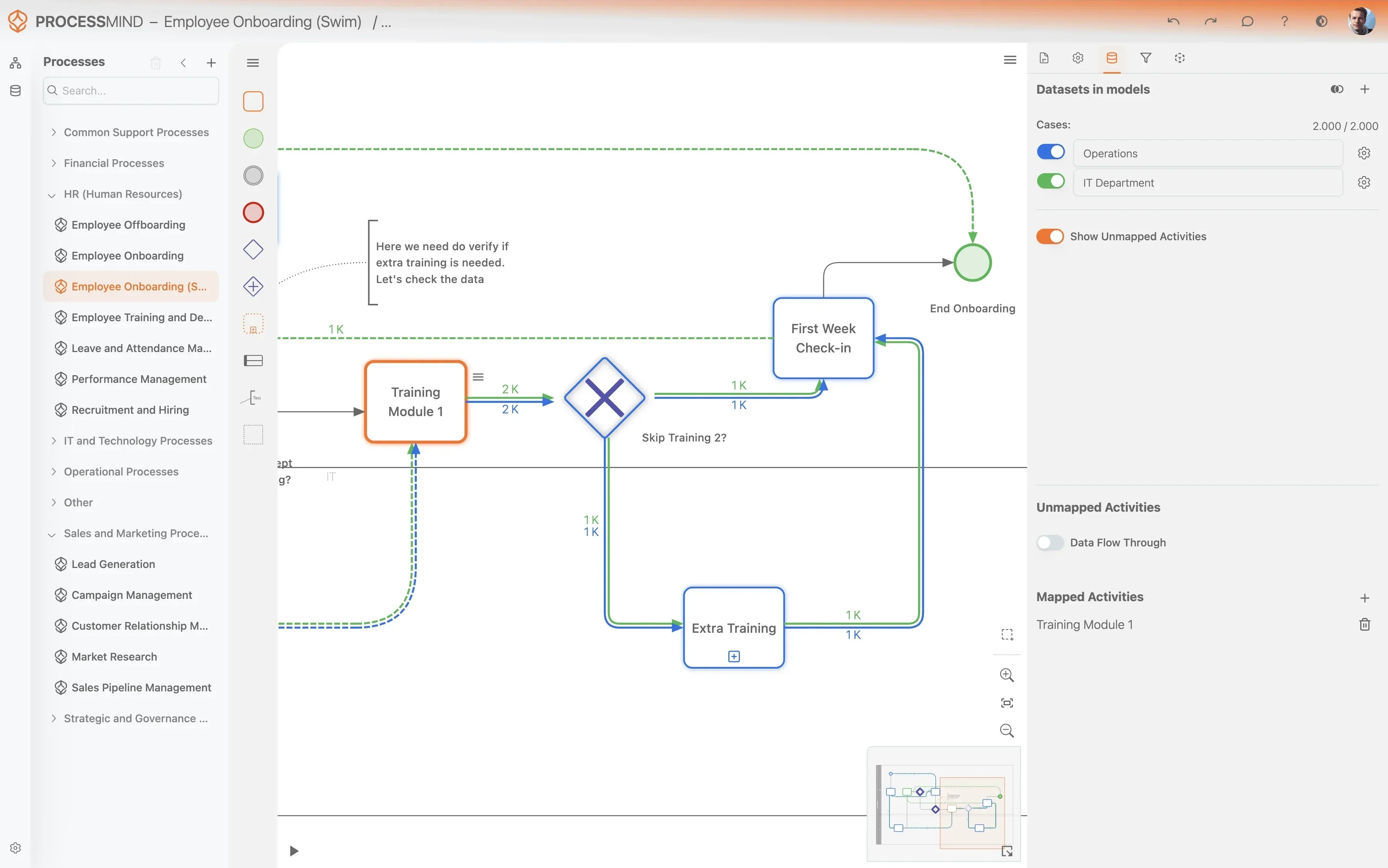
- Streamlined Approval Workflows: By mapping actual approval paths, you can identify unnecessary loops, bottlenecks caused by single points of failure, or opportunities for parallel approvals. This allows you to redesign workflows within SAP S/4HANA to accelerate throughput without compromising internal controls.
- Reduced Rework and Corrections: Analyze why journal entries are frequently rejected or require corrections. Is it due to insufficient supporting documentation, unclear submission guidelines, or data entry errors? Addressing these root causes directly reduces manual effort and improves data quality.
- Enhanced Compliance and Controls: Visualize deviations from standard operating procedures or compliance policies, such as unauthorized changes or bypassing of approval steps. This helps reinforce segregation of duties and strengthens internal controls within your SAP S/4HANA environment.
- Optimized Resource Allocation: Understand the workload distribution across your accounting teams. Identify if certain individuals or departments are bottlenecks, allowing for better resource planning and potential automation of repetitive tasks.
- Faster Posting and Reconciliation: Pinpoint delays between journal entry creation and final posting or reconciliation, and investigate their causes to accelerate your financial close.
Expected Outcomes of Journal Entry Optimization
Optimizing your Record to Report - Journal Entry process with process mining in SAP S/4HANA delivers tangible, measurable benefits:
- Significant Reduction in Financial Close Cycle Time: Accelerate your monthly, quarterly, and annual closing processes by eliminating delays in journal entry processing.
- Improved Accuracy and Data Quality: Minimize errors, reduce the need for manual corrections, and enhance the reliability of your financial data, leading to more accurate financial statements.
- Stronger Compliance and Reduced Audit Risk: Ensure consistent adherence to internal policies and external regulations, making audit processes smoother and more efficient.
- Increased Operational Efficiency: Free up valuable accounting team resources from repetitive, manual tasks, allowing them to focus on more strategic activities.
- Cost Savings: Reduce operational costs associated with rework, manual intervention, and extended processing times.
Ultimately, a more efficient and accurate Record to Report - Journal Entry process empowers your organization with greater financial transparency and agility.
Getting Started with Record to Report - Journal Entry Optimization
Embarking on your Record to Report - Journal Entry optimization journey with process mining is straightforward. By leveraging your existing SAP S/4HANA data, you can quickly gain deep, actionable insights into your current processes. This approach provides a clear roadmap for how to improve Record to Report - Journal Entry performance, turning data into strategic decisions. Start transforming your financial operations today and unlock the full potential of your SAP S/4HANA investment.
The 6-Step Improvement Path for Record to Report - Journal Entry
Download the Template
What to do
Obtain the pre-configured Excel template tailored for SAP S/4HANA Journal Entry data extraction to ensure proper structuring of your process data.
Why it matters
Using the correct template ensures your data is uniformly structured, making it compatible with ProcessMind for accurate and efficient analysis.
Expected outcome
A ready-to-use data template with the correct column headers and format for your Journal Entry data.
Export Your Data
What to do
Extract 3-6 months of historical Journal Entry data from SAP S/4HANA, specifically from tables like BKPF, BSEG, and ACDOCA, then populate the provided template.
Why it matters
Comprehensive historical data provides a robust foundation for uncovering patterns, inefficiencies, and compliance risks within your Journal Entry process.
Expected outcome
A populated Excel template containing relevant Journal Entry process data from your SAP S/4HANA system.
Upload Your Dataset
What to do
Upload the completed Journal Entry data template to ProcessMind's secure platform. The system will automatically begin processing your data for analysis.
Why it matters
Seamless and secure data ingestion is crucial for quickly moving from raw data to actionable insights without manual processing delays.
Expected outcome
Your Journal Entry process data successfully loaded into ProcessMind, ready for automated analysis and visualization.
Analyze Your Process
What to do
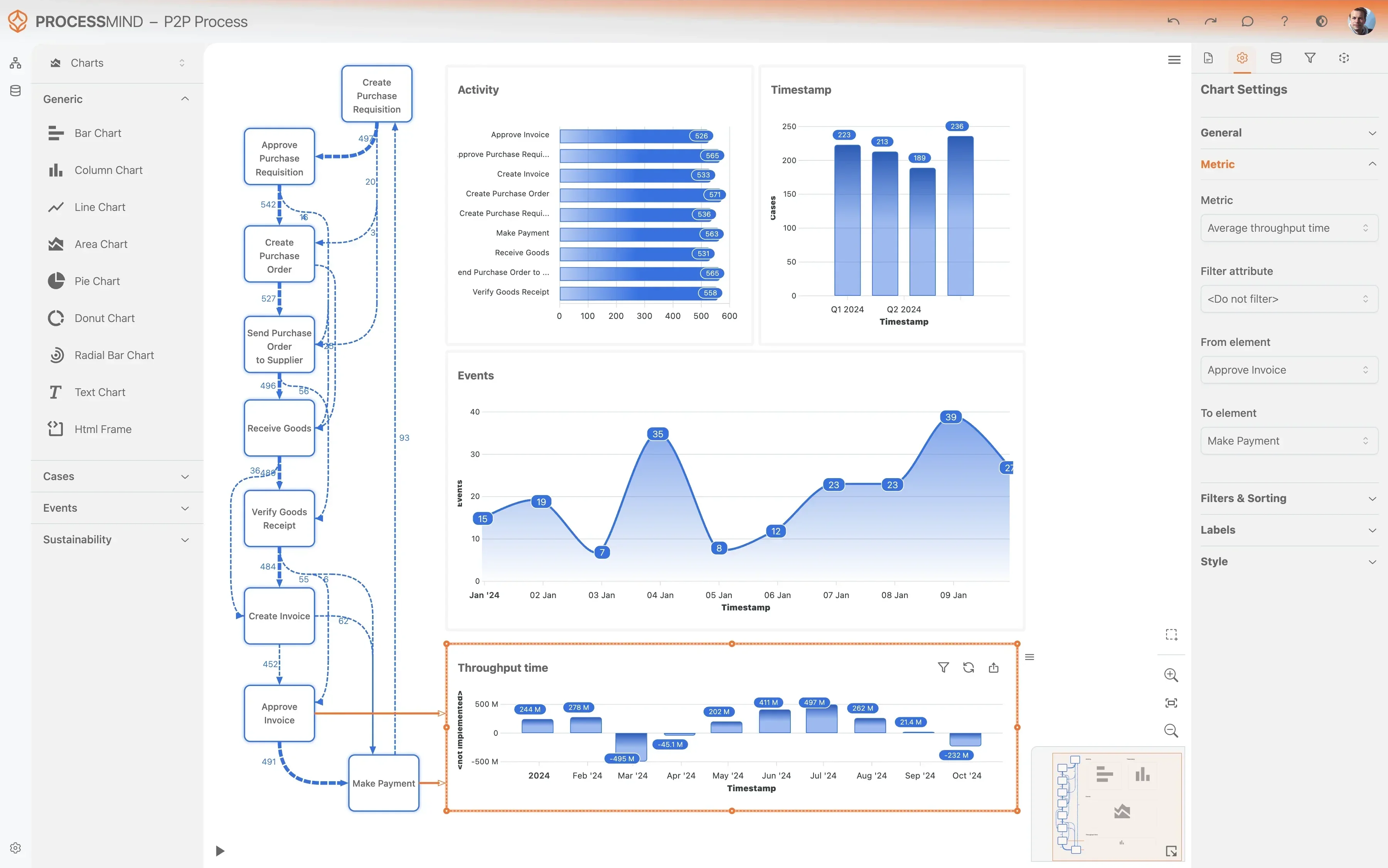
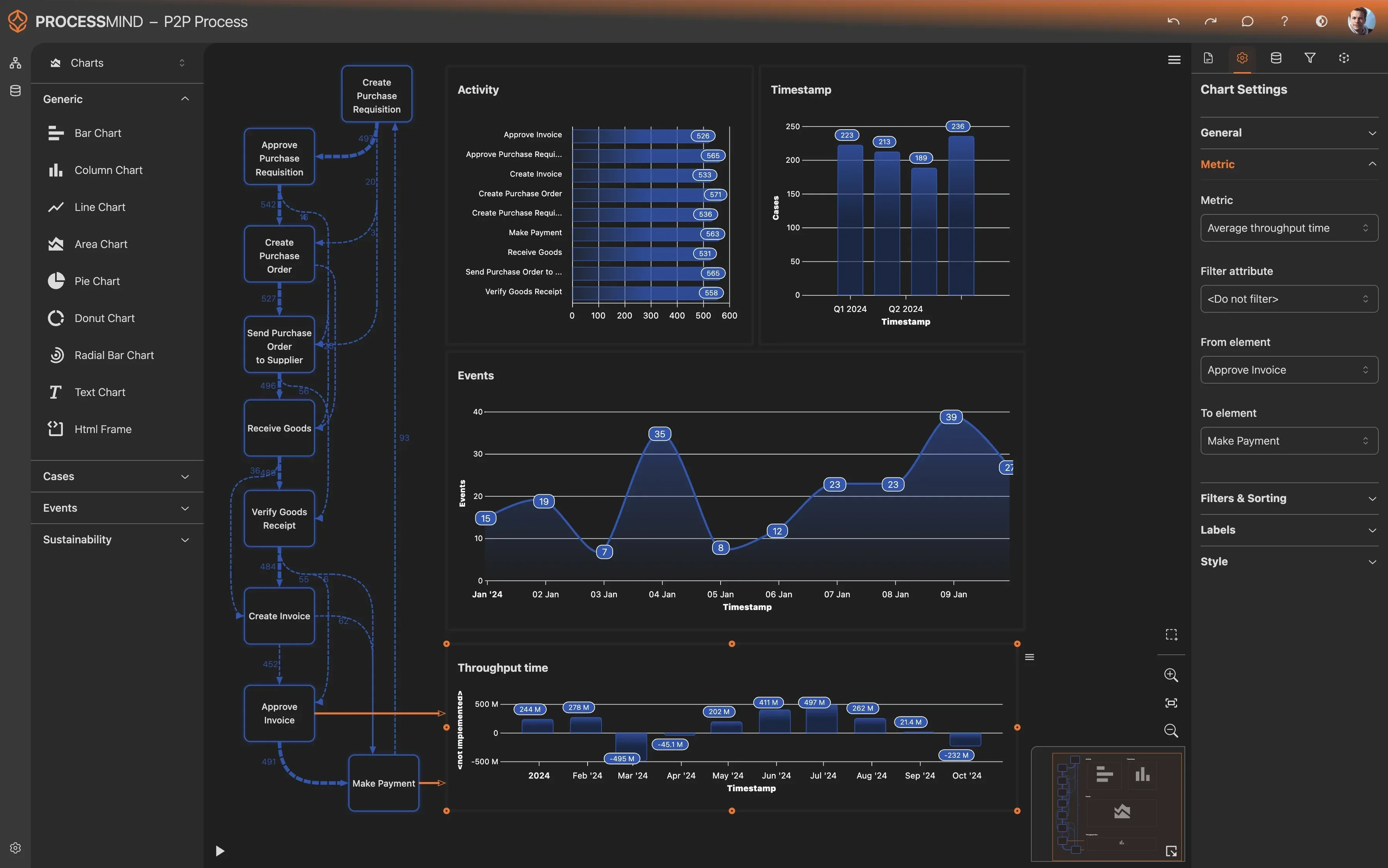
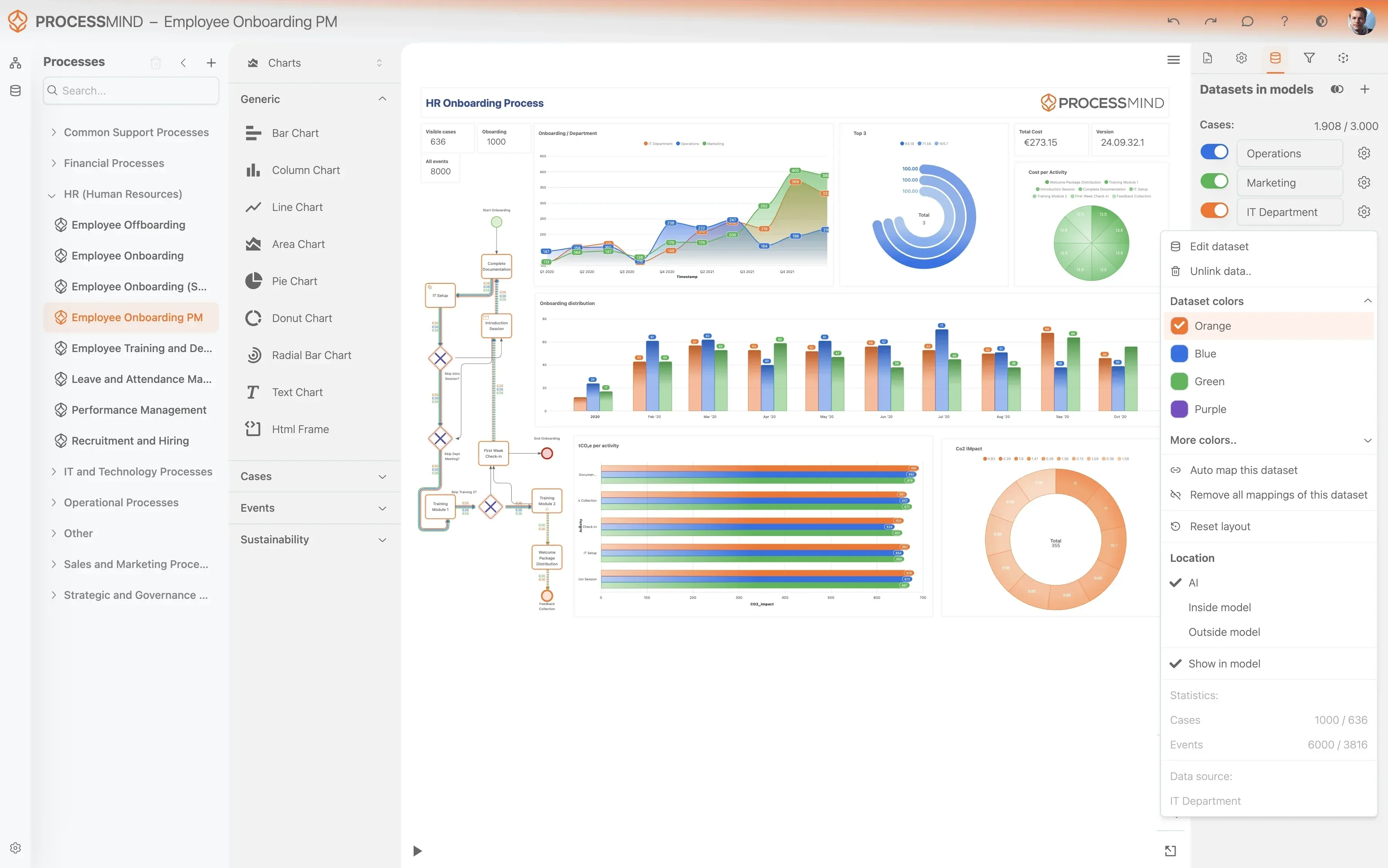
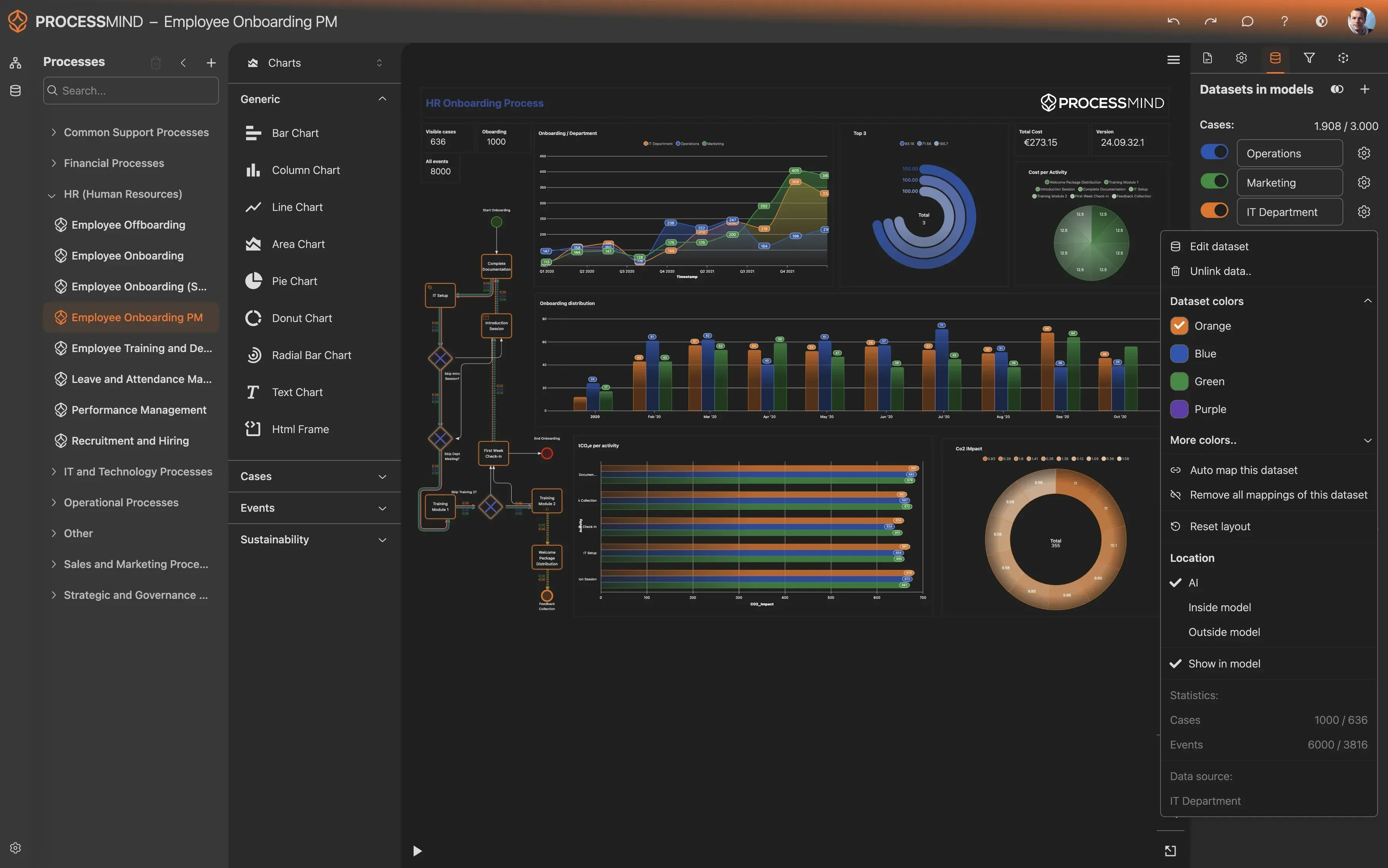
Explore the auto-generated dashboards, process maps, and performance metrics. Review AI-driven recommendations to pinpoint bottlenecks and deviations in Journal Entry.
Why it matters
Understanding the actual flow and performance helps identify critical areas for improvement, such as slow approvals or frequent rework, improving efficiency and compliance.
Expected outcome
A clear understanding of your Journal Entry process's current state, including bottlenecks, compliance gaps, and improvement opportunities.
Implement Improvements
What to do
Prioritize and implement the identified improvement opportunities. Focus on actions that streamline Journal Entry creation, review, approval, and posting in SAP S/4HANA.
Why it matters
Translating insights into action is where real value is created, leading to faster Journal Entry cycles, reduced errors, and better resource utilization.
Expected outcome
Key process bottlenecks addressed, resulting in optimized workflows and more efficient handling of Journal Entries within SAP S/4HANA.
Monitor Your Process
What to do
Periodically re-upload updated Journal Entry data to ProcessMind. This allows you to continuously track the impact of your changes and measure KPI improvements.
Why it matters
Continuous monitoring ensures sustained process health, allowing you to adapt to new challenges and maintain peak operational efficiency in Record to Report.
Expected outcome
Ongoing visibility into Journal Entry process performance, quantifiable KPI improvements, and early detection of new inefficiencies.
TYPICAL OUTCOMES
Driving Efficiency and Compliance in Journal Entry
These outcomes highlight the significant efficiency gains and compliance improvements organizations experience by leveraging process mining to optimize their Record to Report Journal Entry operations within SAP S/4HANA.
Average reduction in approval time
Streamline the approval process for journal entries by identifying and removing bottlenecks. This leads to faster financial closes and improved operational efficiency.
Fewer journal entries rejected
Identify root causes of journal entry rejections, such as incorrect data or missing documentation. Reducing rejections saves significant rework effort and accelerates posting.
Faster end-to-end processing
Optimize the entire journal entry lifecycle, from creation to final posting, by uncovering hidden delays and inefficiencies. This ensures financial data is available sooner for analysis.
Higher adherence to standards
Monitor and enforce adherence to predefined journal entry workflows and regulatory requirements. This reduces audit risks and ensures data integrity across all entries.
Reduced manual posting effort
Identify manual steps in the journal entry process that are ripe for automation, such as data entry or repetitive approvals. This frees up resources and reduces human error.
Lower error correction costs
Pinpoint the causes of journal entry reversals, indicating errors or control weaknesses in the posting process. Minimizing reversals improves financial data accuracy and reduces reprocessing costs.
Results vary based on process complexity and data quality. These figures represent typical improvements observed across implementations.
Recommended Data
FAQs
Frequently asked questions
Process mining analyzes your actual Journal Entry process data from SAP S/4HANA to visualize workflows and identify deviations. It helps pinpoint bottlenecks like excessive approval times, frequent rejections, and manual interventions. This visibility allows for data-driven optimization to enhance efficiency, ensure compliance, and streamline the entire record to report cycle.
To begin, you primarily need event log data related to Journal Entry ID, activity names, and timestamps from your SAP S/4HANA system. This data helps reconstruct the complete lifecycle of each journal entry. We can guide you through identifying the relevant tables and fields, such as BKPF for header data and BSEG for line items, for extraction.
You can expect to uncover the true current state of your Journal Entry process, identifying specific inefficiencies and compliance gaps. Typical outcomes include reduced approval cycle times, lower rejection rates, and increased automation of manual steps. These insights enable targeted improvements, leading to tangible cost savings and improved financial reporting accuracy.
You will typically need secure read-only access to specific tables within your SAP S/4HANA instance. Many process mining solutions offer standard connectors, such as direct database connections, RFC, or OData services, to facilitate data extraction. Minimal IT overhead is usually required after the initial setup for ongoing data synchronization.
Process mining provides the factual basis for improvement by highlighting where and why inefficiencies occur. The insights gained enable you to design and simulate new, optimized workflows within the tool. You can then use the platform to continuously monitor the impact of implemented changes, ensuring they achieve the desired results and prevent process regression.
While initial data extraction requires some technical understanding of SAP S/4HANA, the analysis tools themselves are designed for user-friendliness. Many platforms offer pre-built connectors and templates for common SAP processes. We simplify the setup process to help you quickly gain insights without extensive, bespoke configuration efforts.
Yes, process mining is highly effective in pinpointing the root causes of specific problems like frequent rejections. By analyzing the paths entries take and the activities leading to rejection, you can identify patterns, common errors, or specific approvers involved. This data empowers you to implement targeted training or workflow adjustments, significantly reducing rejections.
Data security is a top priority throughout the process mining lifecycle. Tools typically operate with read-only access to your SAP S/4HANA system, ensuring no changes are made to your live data. Data can be anonymized or pseudonymized during extraction and storage, ensuring compliance with data privacy regulations and maintaining confidentiality.
The time to ROI varies depending on the scale and complexity of your process, but significant improvements can often be identified within weeks of initial data analysis. Rapid insights into bottlenecks and deviations allow for quick wins and targeted interventions. Longer-term, continuous monitoring sustains these improvements, delivering ongoing value through efficiency gains and compliance adherence.
Streamline Record to Report Journal Entry for Peak Efficiency
Transform your process and reduce Record to Report journal entry cycle time by 30%.
No credit card required. Setup in minutes.