Improve Your Revenue Cycle Management

Select a process
Choose a process to continue working in your connected workspace.
Optimize Revenue Cycle Management in R1 RCM
Many organizations struggle with hidden inefficiencies and compliance risks within their revenue cycle processes. Our platform helps you precisely track critical events and uncover bottlenecks from initial service delivery to final payment. This enables you to implement targeted improvements, optimize cash flow, and enhance overall financial performance.
Download our pre-configured data template and address common challenges to reach your efficiency goals. Follow our six-step improvement plan and consult the Data Template Guide to transform your operations.
Show detailed description
Why Optimize Revenue Cycle Management for Your Organization?
Revenue Cycle Management, or RCM, is the lifeblood of any healthcare provider or organization leveraging systems like R1 RCM. It encompasses every administrative and clinical step, from patient registration and service delivery to final payment collection. Inefficiencies within RCM directly impact your financial health, leading to delayed cash flow, increased operational costs, compliance risks, and ultimately, a detrimental effect on your organization's sustainability. Without a clear, data-driven understanding of your RCM process, identifying where money is lost, where delays occur, or where manual effort is unnecessarily high becomes an exercise in guesswork, potentially costing millions in missed revenue and inflated expenses.
Optimizing your RCM means more than just collecting payments faster, it's about ensuring billing accuracy, minimizing claim denials, streamlining patient financial interactions, and maintaining regulatory compliance. Given the complexities of modern healthcare billing and the intricate workflows within sophisticated RCM platforms like R1 RCM, a robust analytical approach is not just beneficial, it is essential for sustained financial performance and operational excellence.
How Process Mining Unlocks RCM Efficiency in R1 RCM
Process mining offers a powerful lens to view and understand the complete journey of a billing event within your R1 RCM system. Instead of relying on assumptions or aggregated reports, process mining reconstructs the actual paths taken by each billing event from start to finish, mapping every activity from initial service order to final account closure. This end-to-end perspective, focused on your 'Billing Event' as the central case identifier, reveals precisely how your RCM processes operate in reality.
By analyzing event logs from your R1 RCM data, process mining can visualize the full process flow, highlighting variations, deviations, and rework loops that are often invisible in traditional reporting. It allows you to pinpoint exact bottlenecks, understand the root causes of payment delays, identify areas of non-compliance, and quantify the impact of different process paths on cycle time and financial outcomes. This granular insight empowers you to move beyond symptoms and address the underlying inefficiencies within your RCM.
Key Improvement Areas Discovered Through Process Mining
Applying process mining to your R1 RCM data provides actionable insights across several critical areas:
- Charge Capture and Billing Accuracy: Discover exactly where charges are delayed or dropped, leading to underbilling or lost revenue. Identify patterns in inaccurate billing that result in claim denials or rejections, pinpointing specific service types or departments that consistently face issues.
- Invoice Processing and Dispute Resolution: Track the exact cycle time from invoice generation to payment or dispute. Uncover why certain invoices get stuck, why disputes arise, and the efficiency with which these disputes are resolved and re-issued. This helps you understand the effectiveness of your dispute management processes and reduce payment hold-ups.
- Payment Velocity and Collection Efforts: Analyze the factors contributing to slower payment collection, differentiating between payer delays and internal process issues. Determine if collection activities are initiated prematurely or if certain steps in your RCM lead to unnecessary collection efforts, thereby optimizing resource allocation.
- Compliance Adherence and Risk Mitigation: Verify if all RCM activities adhere to internal policies and external regulatory requirements. Process mining can highlight deviations that could lead to penalties or audits, allowing you to proactively strengthen your compliance framework.
Realizing Tangible Outcomes for Your Organization
The strategic application of process mining to your R1 RCM data yields measurable and significant benefits:
- Reduced Revenue Cycle Time: Shorten the time it takes from service delivery to final payment, directly improving your organization's cash flow and financial liquidity. By eliminating process bottlenecks and rework, you can significantly accelerate payment posting.
- Increased Revenue and Cash Flow: Identify and recover lost revenue due to inefficient charge capture or unresolved disputes. Faster processing and reduced denials mean more money in your accounts, quicker.
- Lower Operational Costs: Streamline workflows, reduce manual interventions, and optimize staff allocation in billing and collections. Minimizing rework and improving first-pass resolution rates directly translates to cost savings.
- Enhanced Compliance and Reduced Risk: Proactively identify and address process deviations that could expose your organization to compliance risks, ensuring adherence to healthcare regulations and reducing the likelihood of costly penalties.
- Improved Patient/Customer Experience: A more efficient and accurate billing process leads to fewer billing inquiries, less confusion, and a more positive financial experience for your patients or clients.
Embarking on Your RCM Optimization Journey
Optimizing Revenue Cycle Management in a system as comprehensive as R1 RCM can seem daunting. However, with process mining, you gain unprecedented clarity into the intricate workings of your RCM, making the journey of improvement systematic and data-driven. By focusing on your 'Billing Event' and tracing its journey through your R1 RCM, you can precisely identify where to intervene for maximum impact. Start exploring the possibilities of how to improve Revenue Cycle Management and how to reduce Revenue Cycle Management cycle time within your organization today, transforming your financial operations with insightful process optimization.
The 6-Step Improvement Path for Revenue Cycle Management
Download the Template
What to do
Get the RCM-specific Excel template for ProcessMind. This ensures you have the correct structure for extracting your R1 RCM data.
Why it matters
Using the right template prevents data inconsistencies and ensures all necessary information for RCM analysis is captured effectively.
Expected outcome
A ready-to-fill Excel template tailored for your Revenue Cycle Management data.
Export Your RCM Data
What to do
Extract 3-6 months of historical billing event data from your R1 RCM system. Populate the downloaded ProcessMind template with your real process data.
Why it matters
Comprehensive historical data provides a robust foundation for identifying recurring issues and understanding the full scope of your RCM process.
Expected outcome
A complete dataset covering several months of RCM operations, prepared for analysis.
Upload Your RCM Dataset
What to do
Securely upload your populated RCM data template to ProcessMind. The platform will automatically process and prepare your data for analysis.
Why it matters
Fast and secure data ingestion allows for quick setup, reducing manual effort and ensuring data integrity for your RCM process analysis.
Expected outcome
Your RCM data is securely processed and ready within ProcessMind for immediate exploration.
Analyze Your RCM Process
What to do
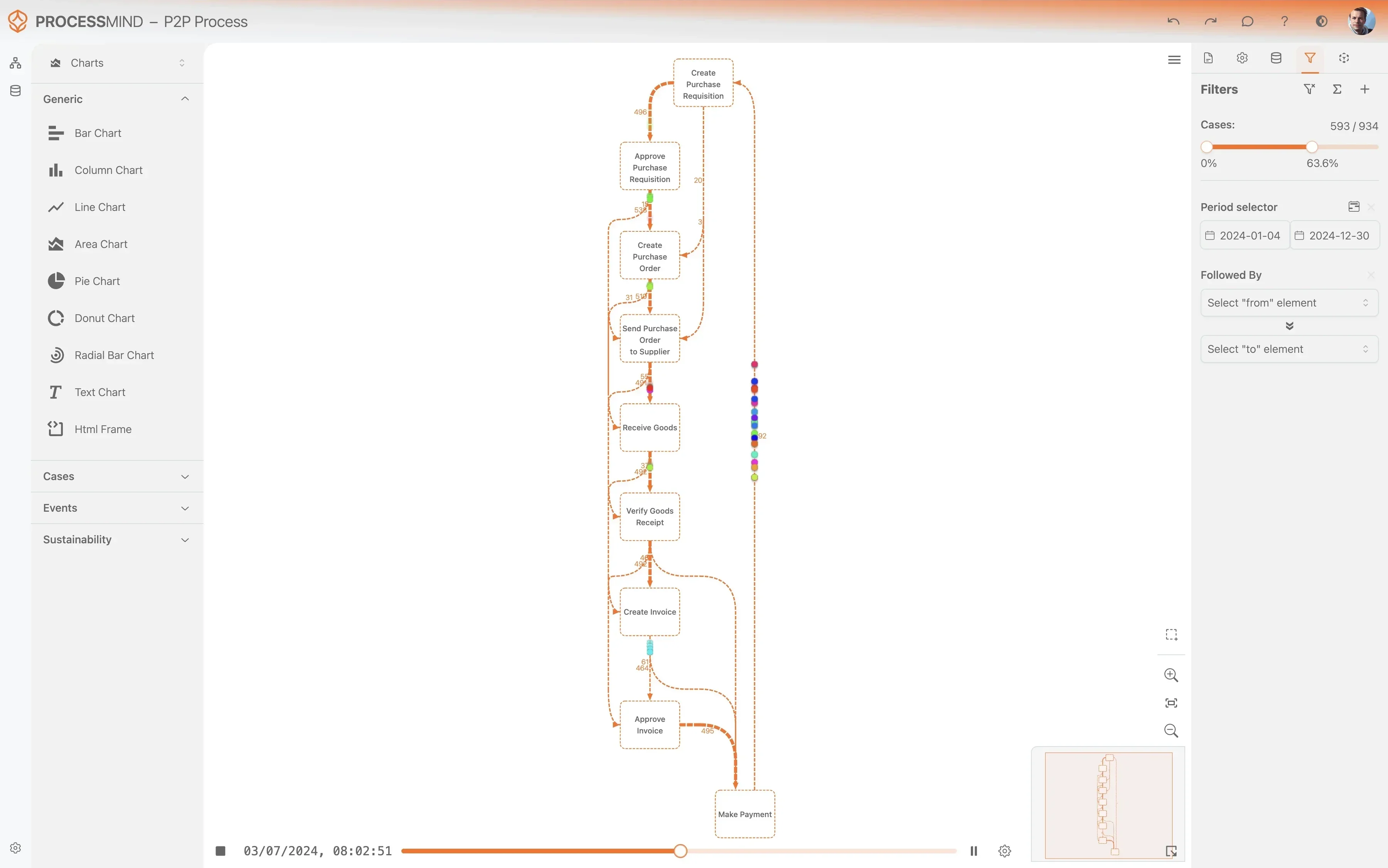
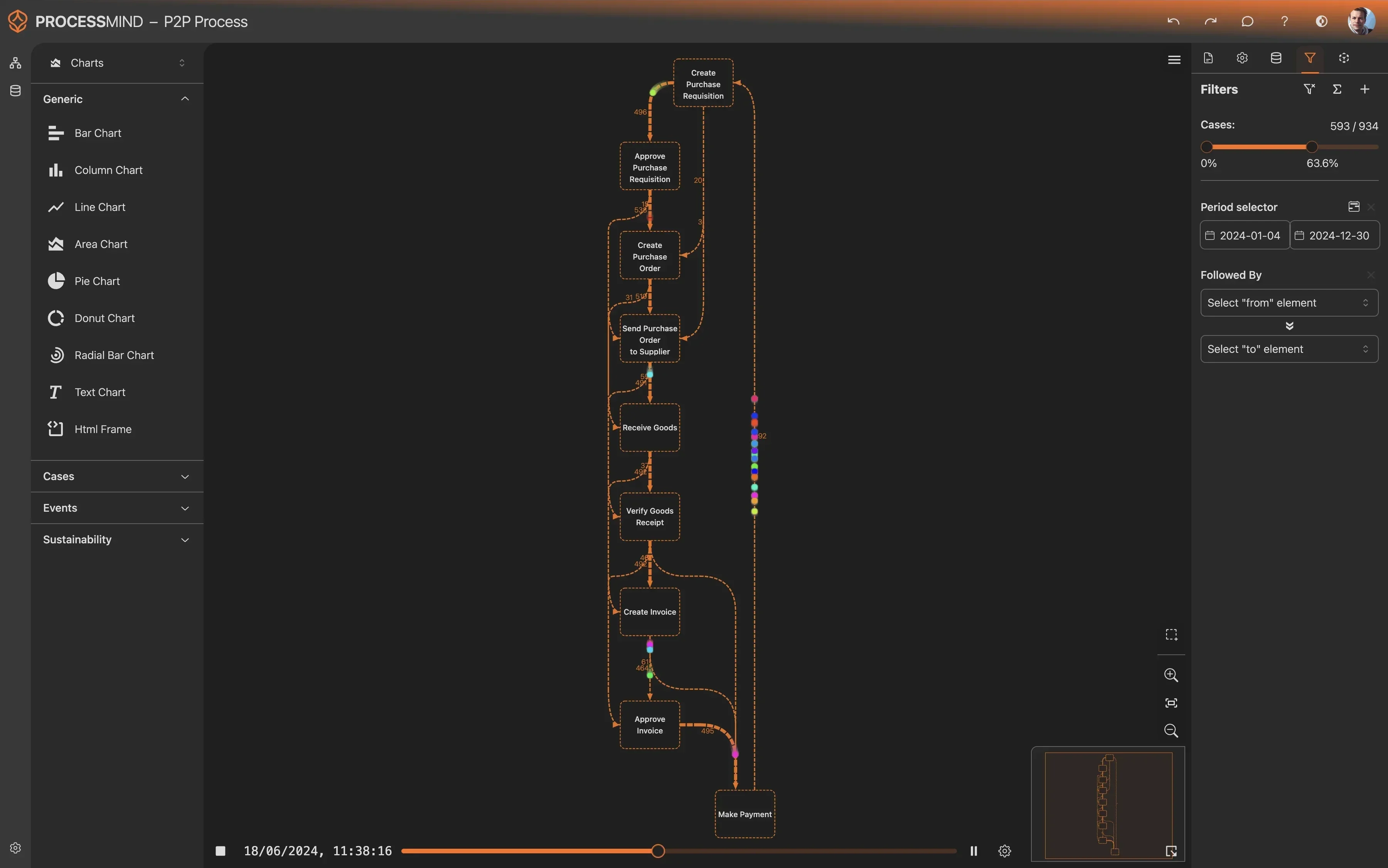
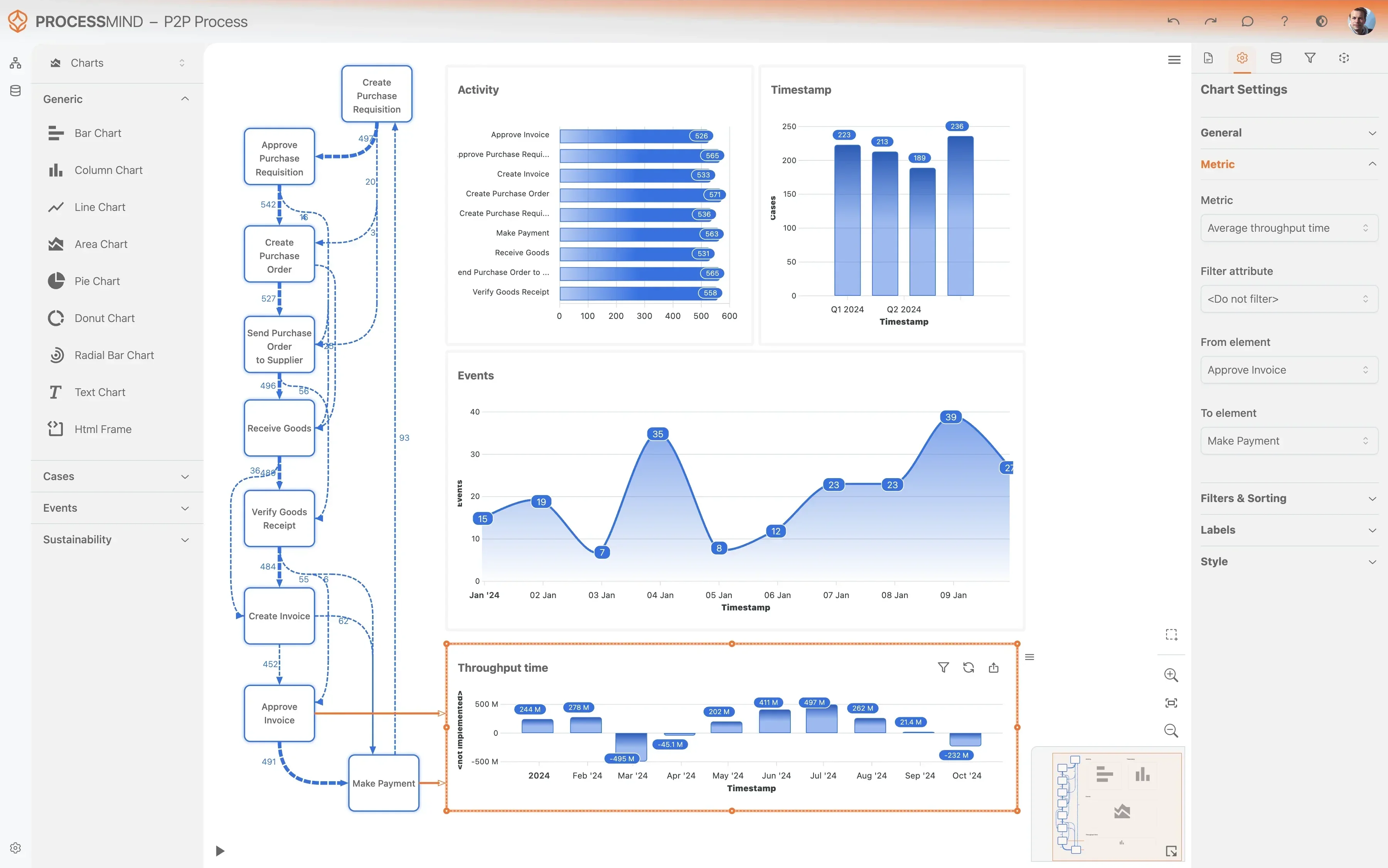
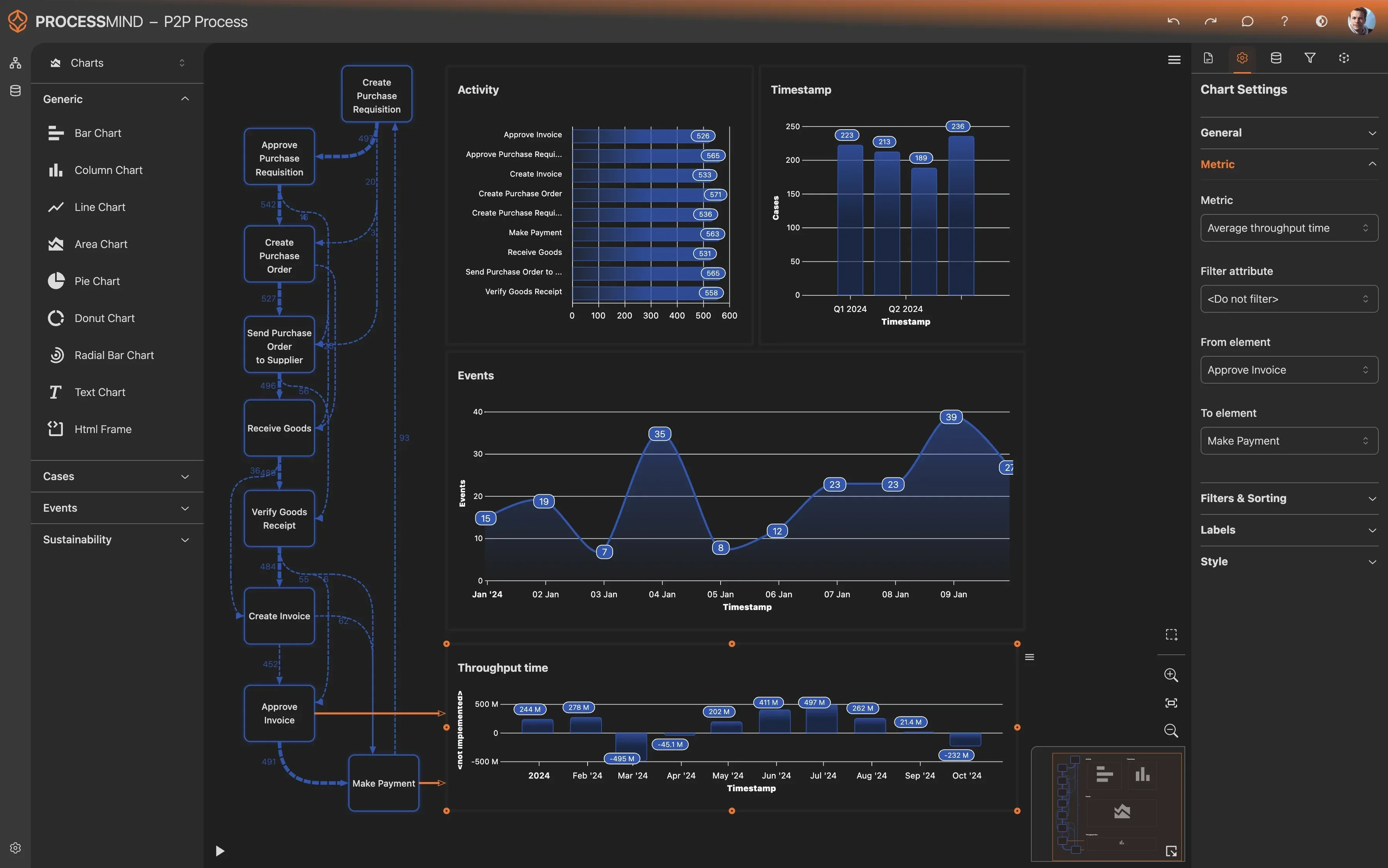
Explore the auto-generated dashboards, process maps, and insights for your Revenue Cycle. Leverage AI-driven recommendations to pinpoint bottlenecks and inefficiencies.
Why it matters
Visualizing the actual RCM process flow and receiving AI insights helps uncover hidden delays, compliance risks, and areas for cash flow improvement.
Expected outcome
A clear understanding of your RCM process performance, identified bottlenecks, and data-backed opportunities.
Implement RCM Improvements
What to do
Prioritize and implement identified optimization opportunities, focusing on areas like billing accuracy, payment velocity, or dispute resolution in R1 RCM.
Why it matters
Acting on insights translates directly into tangible operational improvements, leading to reduced denied claims and faster payment cycles.
Expected outcome
Concrete changes in your R1 RCM operations, addressing key inefficiencies and improving financial performance.
Monitor RCM Performance
What to do
Periodically re-upload updated R1 RCM data to ProcessMind to track the impact of your changes. Continuously measure KPI improvements over time.
Why it matters
Ongoing monitoring ensures that improvements are sustained, new issues are quickly identified, and your RCM process remains optimized for efficiency.
Expected outcome
Continuous optimization and measurable improvements in your Revenue Cycle Management KPIs, ensuring long-term success.
WHAT YOU WILL GET
Uncover Revenue Cycle Blockages and Boost Cash Flow
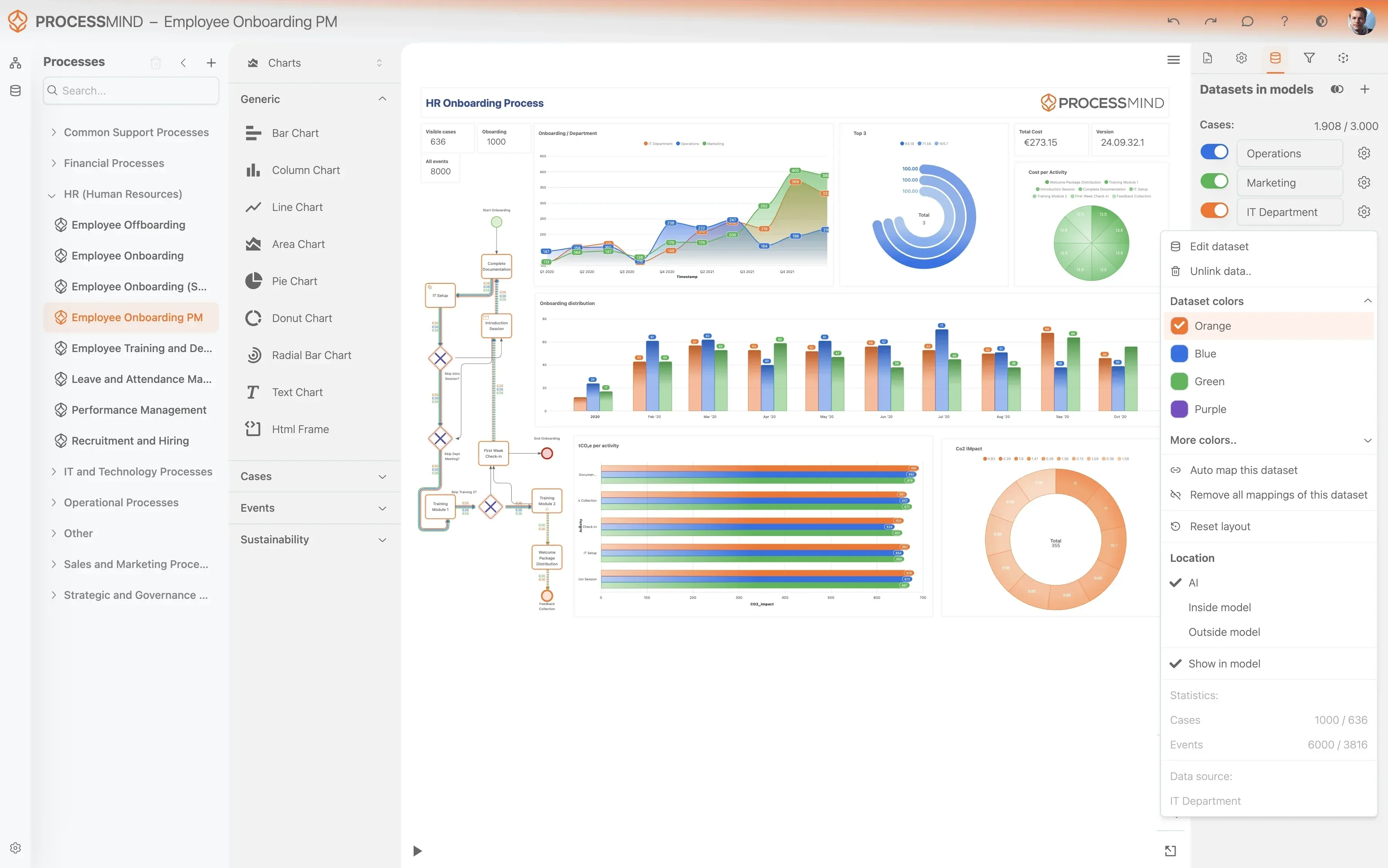
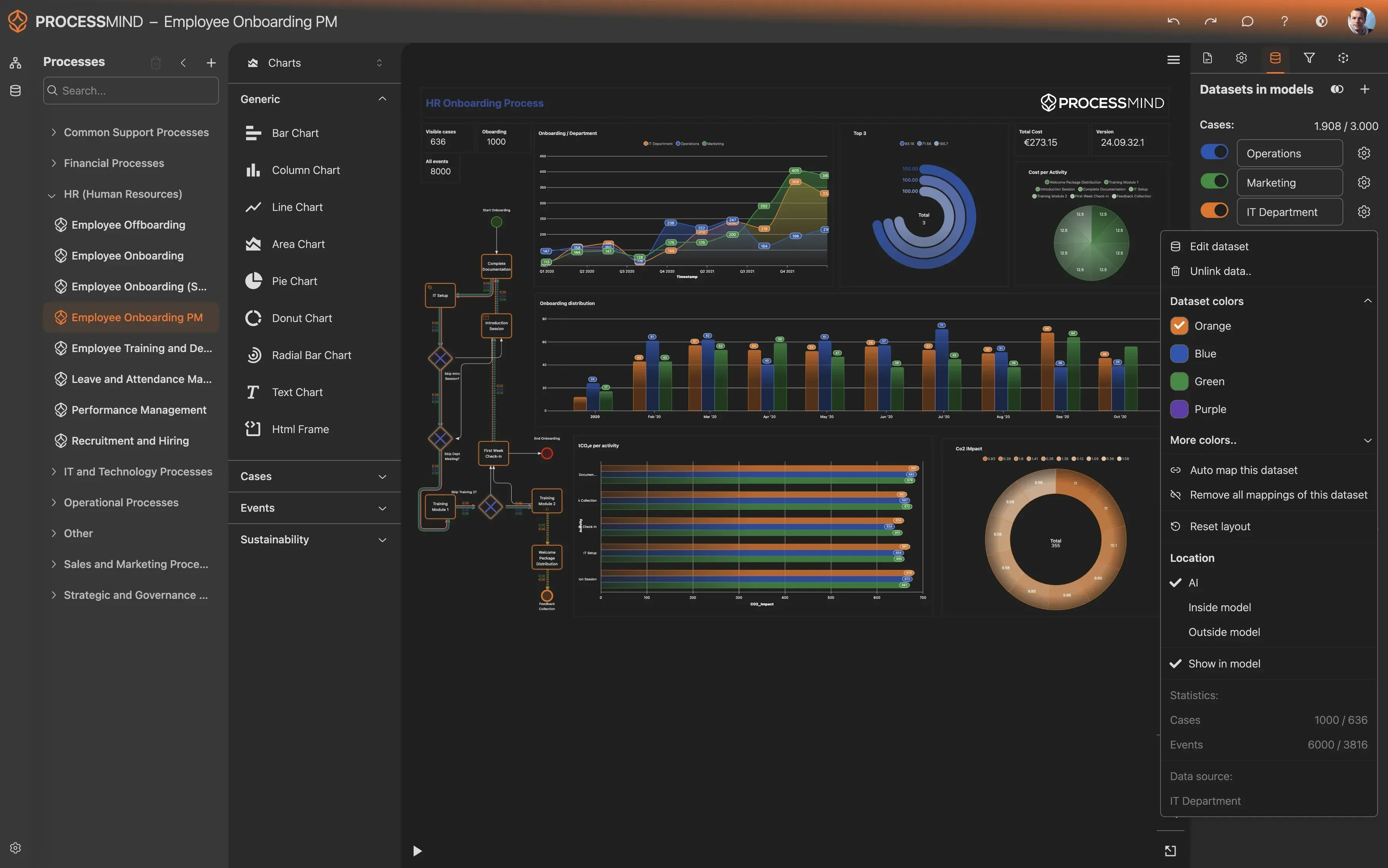
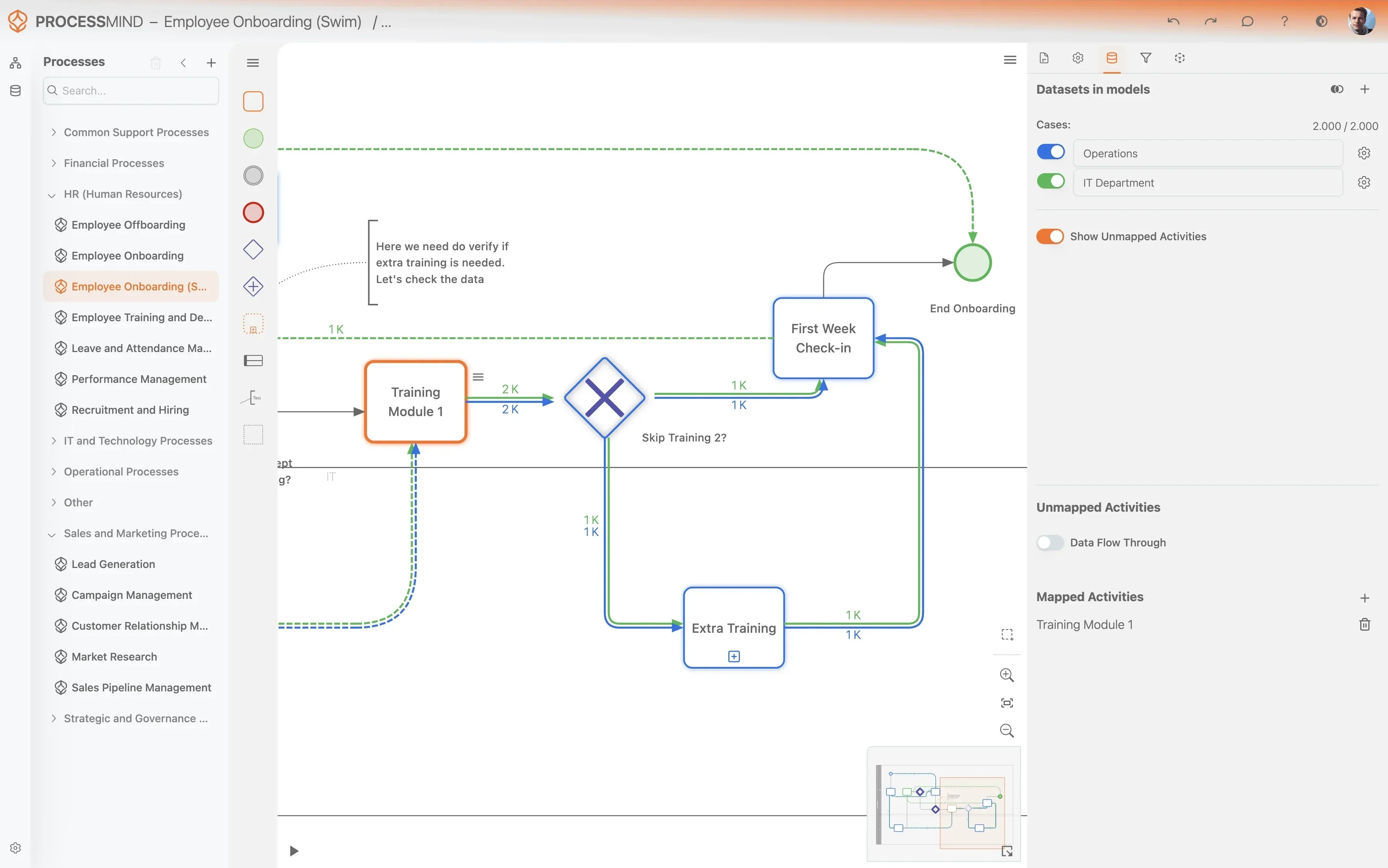
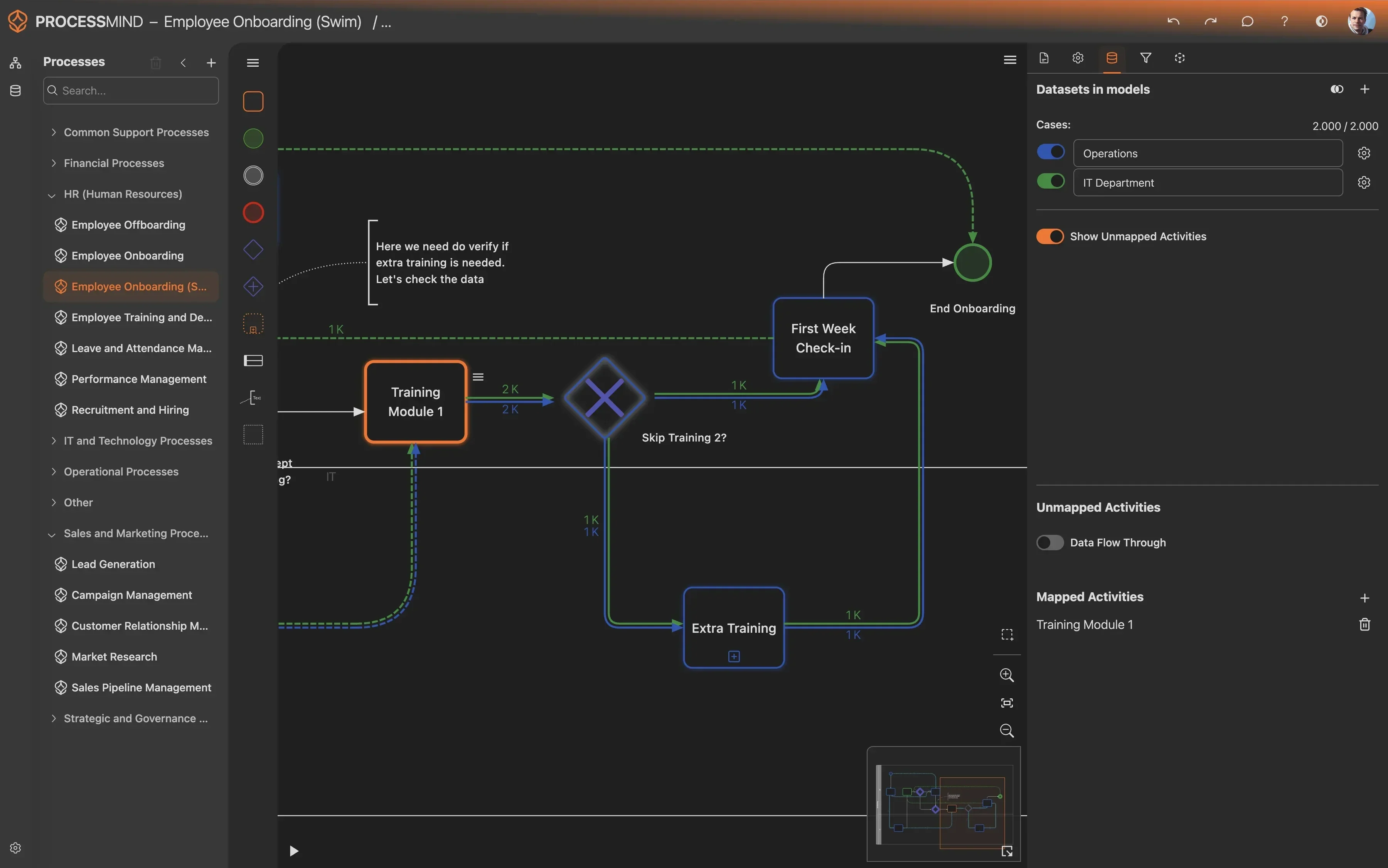
- Visualize end-to-end RCM process flow
- Identify payment delays and denial root causes
- Pinpoint compliance risks in billing
- Track cash flow improvements in real-time
TYPICAL OUTCOMES
Transforming Revenue Cycle Performance
These outcomes represent the measurable improvements organizations achieve in their Revenue Cycle Management processes, especially within R1 RCM, by leveraging process intelligence to optimize billing events and financial flows.
Reduction in average time
Accelerate your cash flow by significantly reducing the time it takes to generate invoices from charge capture, improving operational efficiency.
Decrease in dispute frequency
Identify and resolve root causes of billing errors and unclear invoices, leading to a substantial decrease in the rate of invoice disputes.
Higher adherence to regulations
Ensure your billing processes consistently meet regulatory requirements, reducing the risk of penalties and improving financial integrity.
Overall cycle time reduction
Streamline the entire revenue cycle from service provision to final payment posting, drastically cutting down the end-to-end time and accelerating revenue realization.
Reduction in adjustment volume
Pinpoint inefficiencies causing rework and corrections, leading to a significant reduction in the number of account adjustments and improving billing accuracy.
Results can vary significantly based on the complexity of your RCM processes, the quality of your R1 RCM data, and the specific initiatives undertaken. The figures shared reflect common improvements observed across our client engagements.
Recommended Data
FAQs
Frequently asked questions
Process mining visualizes the actual flow of your RCM processes, identifying bottlenecks like invoice generation delays or slow payment posting. It uncovers deviations from standard procedures and provides data-driven insights to optimize your financial operations. This leads to faster cash flow and reduced rework.
To perform process mining, you primarily need event logs from R1 RCM related to your billing events. Key data points include a case identifier like 'Billing Event ID', an activity name representing each step, and a timestamp for when each activity occurred. Additional attributes, such as patient demographics or claim details, can enrich the analysis.
You can expect to accelerate invoice generation, reduce invoice dispute frequency, and streamline payment posting times. Process mining also helps ensure billing compliance and minimizes costly account adjustments. Overall, it shortens service-to-payment cycles and enhances operational efficiency.
Initial setup, including data extraction and model creation, often takes a few weeks, depending on data availability and complexity. Once the model is established, you can typically see actionable insights and identify key improvement areas within the first month of analysis. Continuous monitoring then provides ongoing optimization opportunities.
Yes, process mining is excellent for pinpointing the root causes of problems like invoice generation delays by showing where processes stall. It can also identify patterns leading to frequent invoice disputes, allowing you to implement targeted improvements. By visualizing the actual process, you gain clarity on specific bottlenecks.
While specialized process mining software is essential, much of the initial technical effort focuses on data extraction and transformation from R1 RCM. Many process mining platforms offer user-friendly interfaces, but having someone with data analysis or business process knowledge on your team will maximize the insights derived.
Generally, yes. Most R1 RCM systems allow data extraction in formats like CSV or SQL, which are compatible with process mining tools. The primary challenge is transforming the raw R1 RCM data into the required event log format, which includes a case ID, activity name, and timestamp for each event.
No, process mining complements existing RCM reporting and analytics tools rather than replacing them. While traditional reports show "what" happened, process mining explains "why" it happened by revealing the actual process flow and variations. It provides deeper, actionable insights for process improvement.
Process mining can automatically detect deviations from predefined compliance rules or standard operating procedures. By comparing actual process execution against ideal compliant paths, it highlights instances of non-compliance, such as unauthorized adjustments or missed verification steps. This allows for proactive intervention and remediation.
Optimize Your R1 RCM Now: Boost Revenue Cycle Efficiency
Eliminate RCM bottlenecks, reduce cycle time by 30%, and boost cash flow.
No credit card needed, get started in minutes.