Improve Your Warehouse Management

Select a process
Choose a process to continue working in your connected workspace.
Optimize Warehouse Management in Manhattan SCALE
Inefficient warehouse management can lead to bottlenecks, resource waste, and compliance problems. Our platform helps you pinpoint exact friction points within your operations, from goods receipt to shipment. This allows you to make data-driven improvements, enhance material flow, and boost overall warehouse efficiency.
Download our pre-configured data template and address common challenges to reach your efficiency goals. Follow our six-step improvement plan and consult the Data Template Guide to transform your operations.
Show detailed description
Why Optimize Your Warehouse Management in Manhattan SCALE?
Efficient Warehouse Management is the backbone of successful supply chain operations. In the complex environment of Manhattan SCALE, however, inefficiencies can easily accumulate, leading to significant business challenges. Delays in goods receipt, bottlenecks in putaway, suboptimal picking routes, and errors during packing or shipment all contribute to increased operational costs, extended order fulfillment times, and ultimately, diminished customer satisfaction. Without a clear, data-driven understanding of your actual process flows, identifying and resolving these issues becomes a daunting task. Continuous process optimization within your Manhattan SCALE WMS is not just an advantage, it is a necessity for maintaining competitiveness, controlling costs, and ensuring reliable service delivery in today's fast-paced market.
How Process Mining Unlocks Efficiency in Manhattan SCALE
Process mining offers a revolutionary approach to understanding and improving your Warehouse Management operations within Manhattan SCALE. By analyzing event logs from your system, it constructs an objective, data-driven visualization of every single warehouse order's journey, from its creation to its final dispatch. This capability allows you to move beyond assumptions and subjective observations, revealing the actual paths your goods take, the precise durations of each activity, and the exact points where delays occur. You can identify hidden variations in your processes, uncover deviations from standard operating procedures, and pinpoint resource contention that might be slowing down your entire operation. This end-to-end perspective helps you understand how different activities, like quality inspection, putaway, picking, or loading, interact and influence the overall cycle time, providing the insights needed for targeted process optimization.
Key Areas for Warehouse Process Improvement
Leveraging process mining on your Manhattan SCALE data empowers you to target specific areas for significant improvement:
- Bottleneck Identification and Resolution: Discover exactly where and why delays occur, whether it is an overloaded receiving dock, an inefficient putaway strategy, a specific picking zone, or a congested packing station. Understanding these bottlenecks is the first step to effective process optimization.
- Cycle Time Reduction: Analyze the time taken for each stage, from inbound delivery notification to shipment dispatched. Identify activities with unexpectedly long durations and implement changes to reduce the overall Warehouse Management cycle time.
- Resource Utilization Optimization: Gain insight into how your labor, equipment, and storage space are being utilized. Identify opportunities to reallocate resources, balance workloads, and improve throughput without additional investment.
- Compliance and Error Reduction: Monitor process adherence to standard operating procedures. Detect instances where goods are mishandled, picking errors occur, or non-standard routes are taken, improving overall accuracy and regulatory compliance.
- Throughput Enhancement: By streamlining processes and resolving bottlenecks, you can significantly increase the volume of warehouse orders processed per day, enhancing your operational capacity.
Achieving Measurable Outcomes
Implementing process improvements identified through process mining in your Manhattan SCALE environment leads to tangible, measurable benefits:
- Reduced Operational Costs: Optimize labor deployment, minimize equipment idle time, and reduce errors that lead to rework, all contributing to lower per-unit processing costs.
- Faster Order Fulfillment: Significantly decrease the average cycle time for warehouse orders, enabling quicker delivery to customers and improving service level agreements.
- Enhanced Inventory Accuracy: By reducing errors in putaway and picking, you gain a more reliable view of your stock levels, minimizing discrepancies and improving planning.
- Improved Customer Satisfaction: Timely and accurate order fulfillment directly translates to happier customers and stronger business relationships.
- Better Strategic Planning: With a deep understanding of your actual process performance, you can make more informed decisions regarding staffing, equipment investment, and warehouse layout.
Start Your Warehouse Optimization Journey Today
Unlocking the full potential of your Warehouse Management in Manhattan SCALE begins with understanding your processes as they truly happen. By embracing process mining, you gain the clarity and data-driven insights necessary to transform your operations. Move beyond guesswork and proactively identify opportunities to reduce Warehouse Management cycle time, eliminate bottlenecks, and drive continuous improvement. Begin your journey towards a more efficient, cost-effective, and compliant warehouse today.
The 6-Step Improvement Path for Warehouse Management
Download the Template
What to do
Access the pre-built ProcessMind Excel template tailored for Warehouse Management data from Manhattan SCALE. This template ensures you capture all necessary event log information.
Why it matters
A structured template simplifies data preparation, ensuring consistency and accuracy. It guides you to extract the right information for effective analysis.
Expected outcome
A ready-to-use Excel template, pre-configured for your Manhattan SCALE warehouse management data.
Export Your Manhattan SCALE Data
What to do
Extract 3-6 months of historical warehouse management data, including activities like picking, packing, and shipping, directly from your Manhattan SCALE system. Populate the downloaded template with this information.
Why it matters
Comprehensive historical data provides a realistic view of your current processes, enabling ProcessMind to identify actual bottlenecks and inefficiencies.
Expected outcome
A populated Excel template with 3-6 months of your Manhattan SCALE warehouse process data, ready for upload.
Upload Your Data to ProcessMind
What to do
Securely upload your completed Excel template to the ProcessMind platform. Our system will automatically process and validate your Manhattan SCALE data for analysis.
Why it matters
The platform performs automated data ingestion and validation, saving time and ensuring data quality before analysis begins.
Expected outcome
Your Manhattan SCALE warehouse process data securely stored and processed within ProcessMind, ready for visualization.
Analyze Your Warehouse Process
What to do
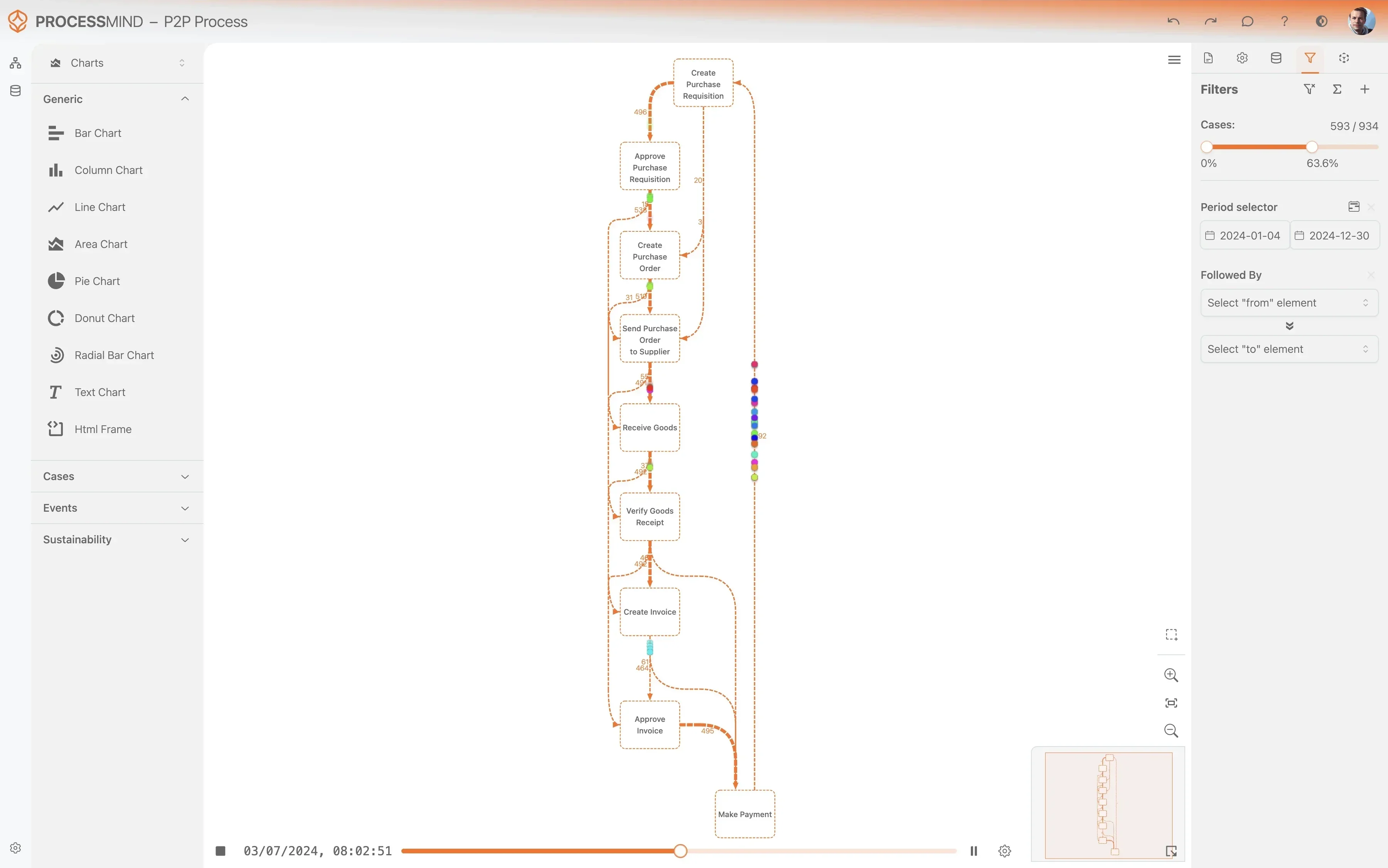
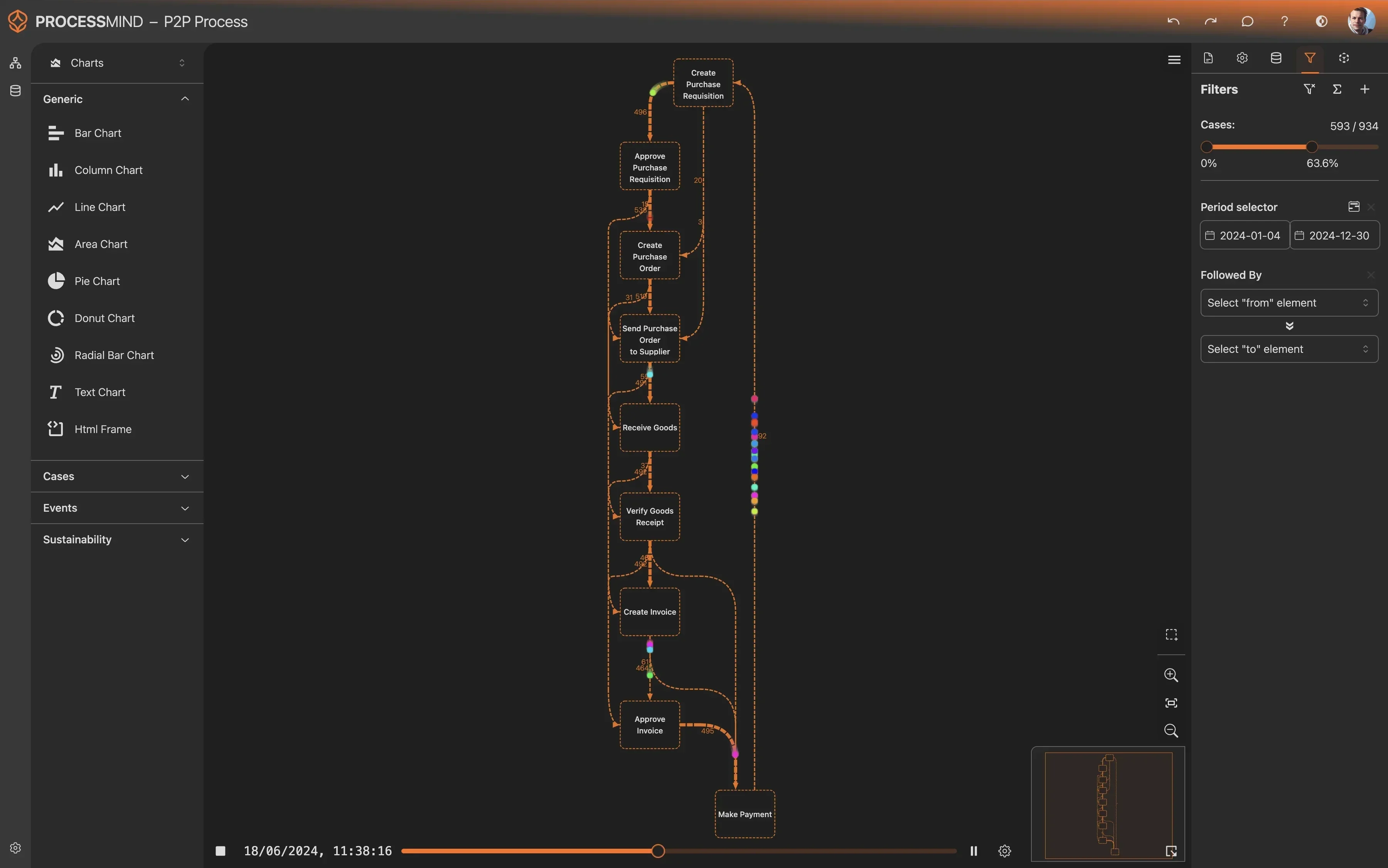
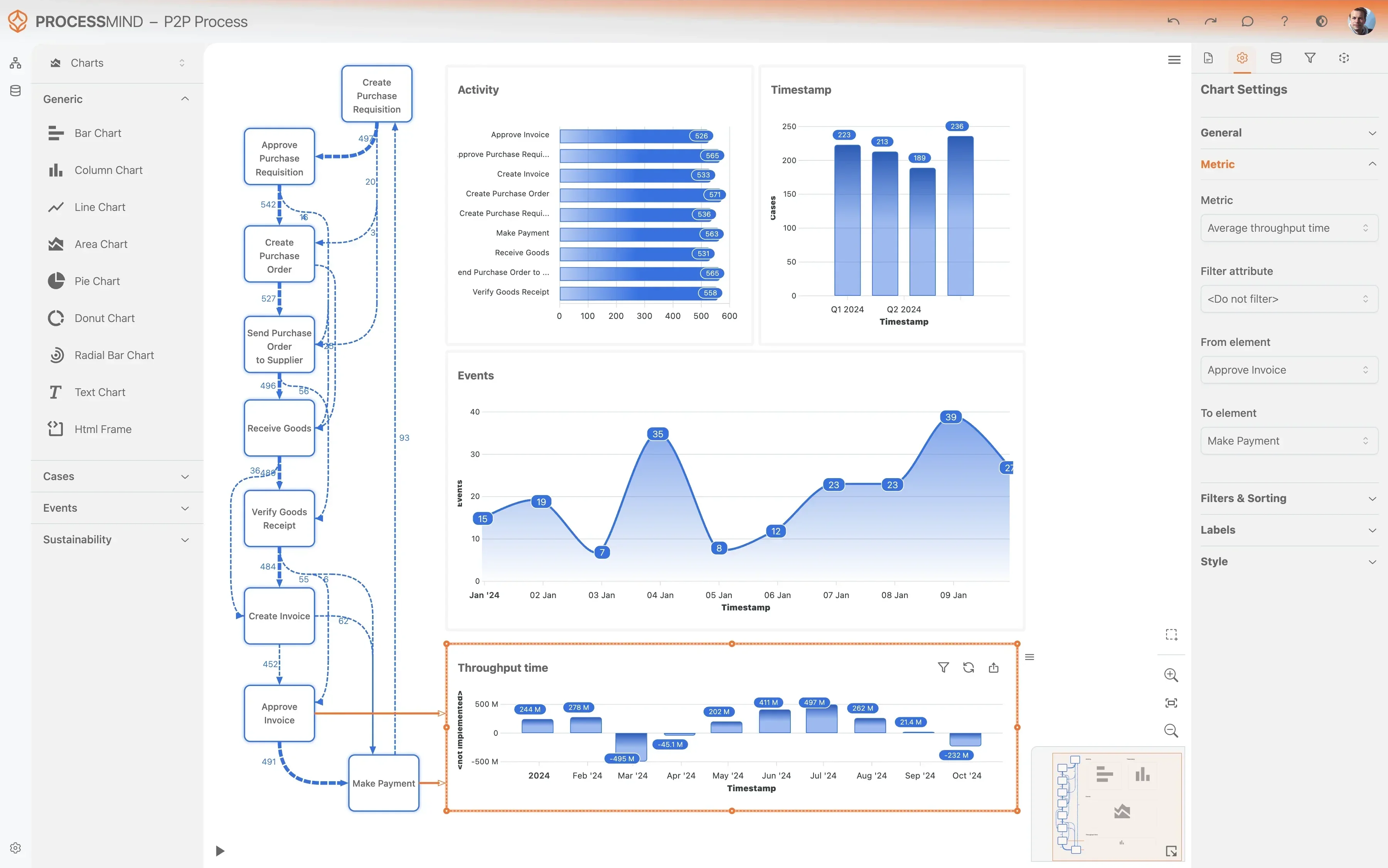
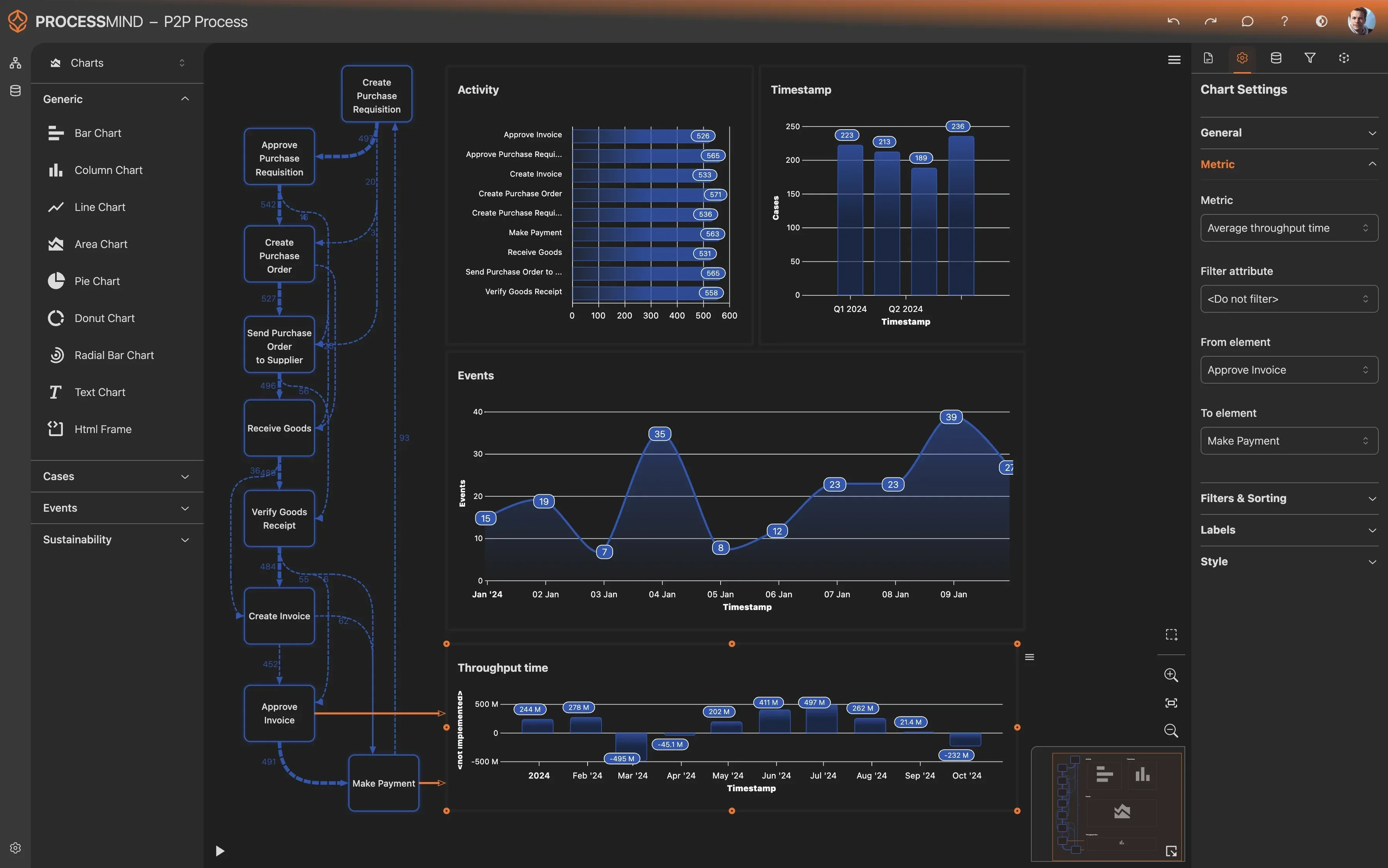
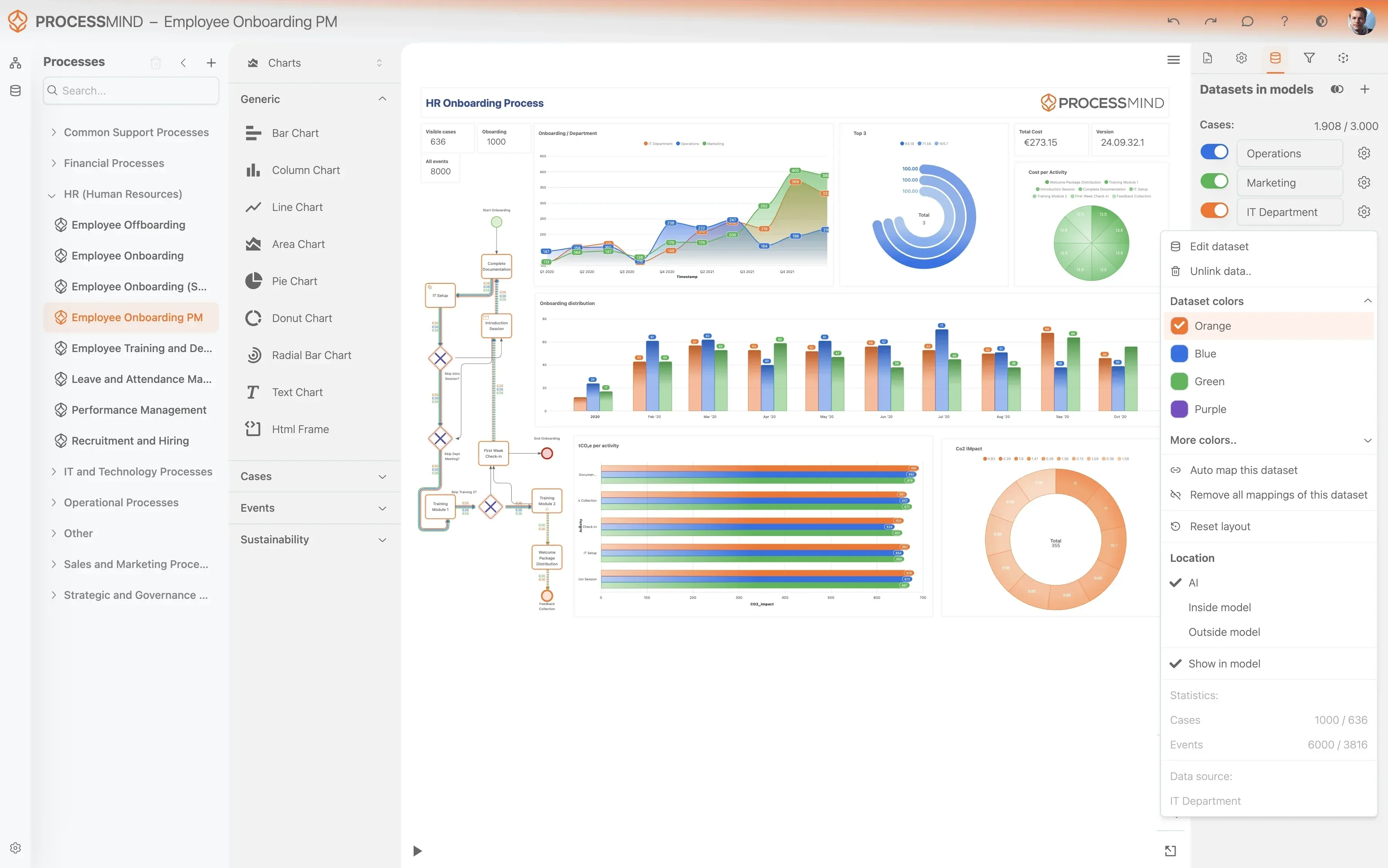
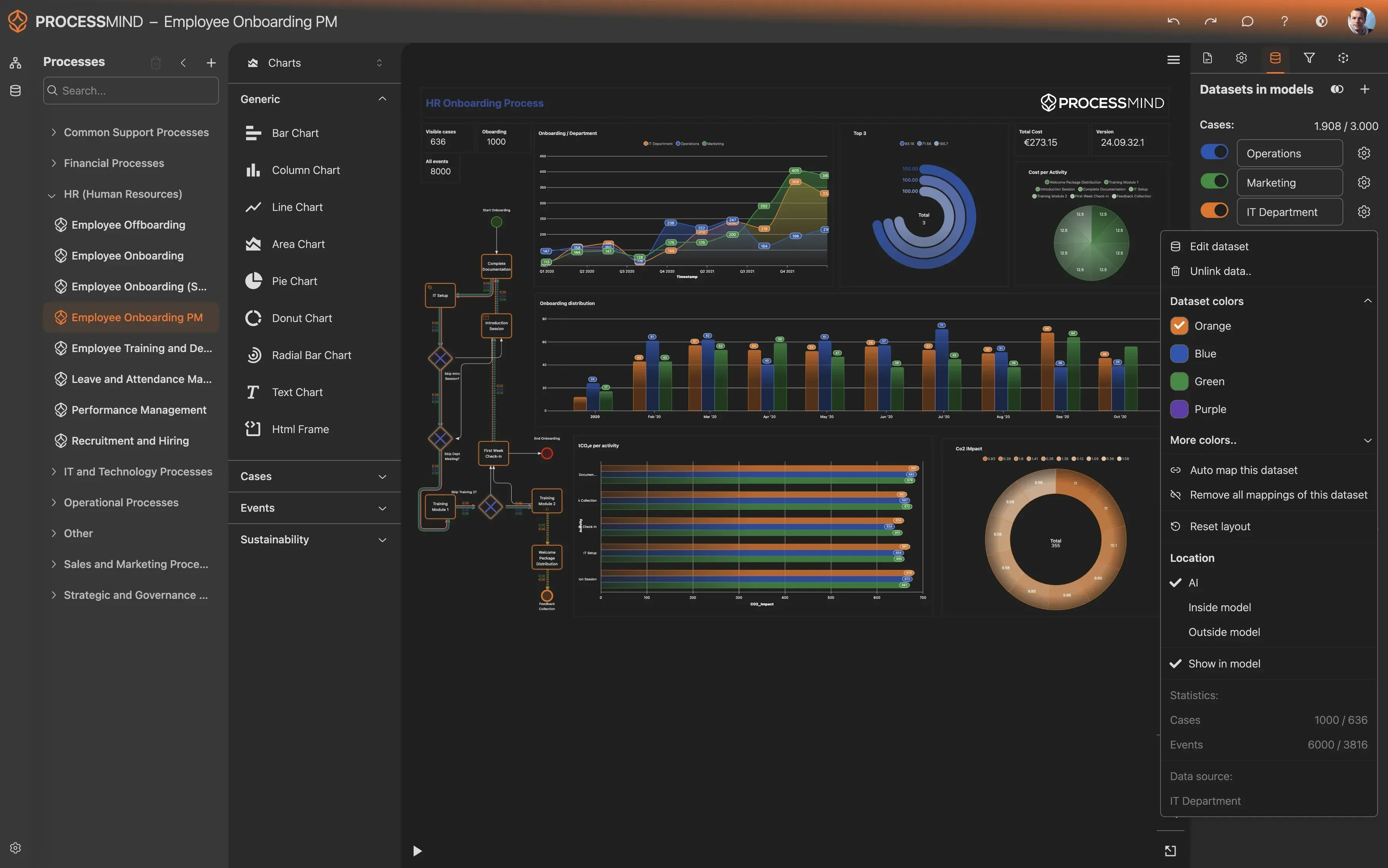
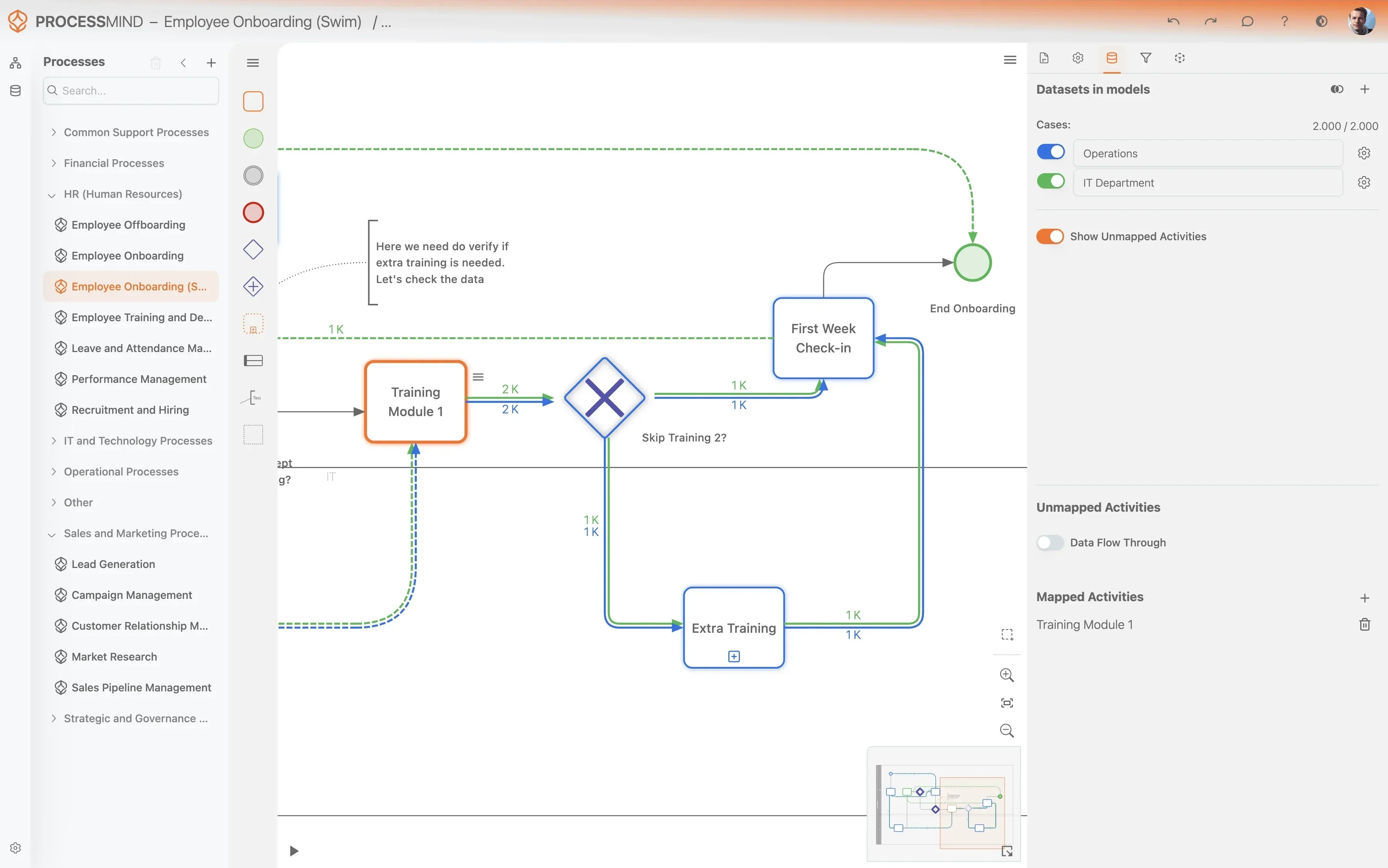
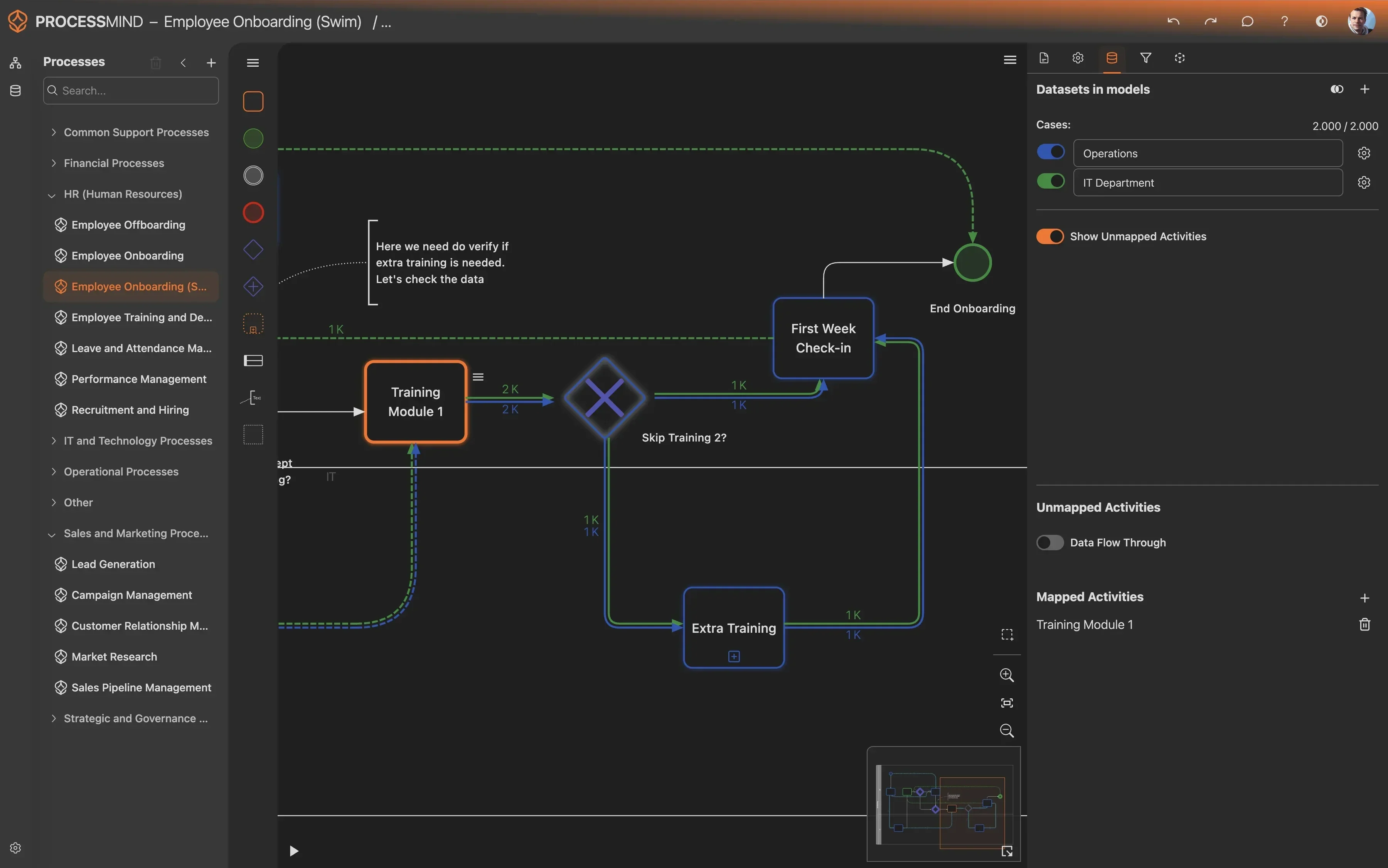
Explore the auto-generated dashboards and process maps that visualize your Manhattan SCALE warehouse operations. Leverage AI-driven insights to uncover hidden patterns and deviations.
Why it matters
Gain immediate clarity on process flows, identify bottlenecks in putaway or picking, and understand compliance issues with data-driven insights.
Expected outcome
Clear visualizations of your Manhattan SCALE process, highlighting inefficiencies and AI-recommended areas for improvement.
Implement Targeted Improvements
What to do
Prioritize the opportunities identified by ProcessMind, such as optimizing picking routes or reducing packing delays, and implement these changes within your Manhattan SCALE environment.
Why it matters
Acting on data-backed insights ensures that improvement efforts are focused on the most impactful areas, leading to measurable operational gains.
Expected outcome
Strategic changes implemented in your Manhattan SCALE warehouse processes, addressing identified inefficiencies.
Monitor and Optimize Continuously
What to do
Periodically re-upload new data from Manhattan SCALE to ProcessMind to track the impact of your implemented changes and monitor key performance indicators over time.
Why it matters
Continuous monitoring ensures that improvements are sustained and allows for ongoing optimization, adapting to new challenges and maintaining efficiency.
Expected outcome
Sustained process improvements, measured KPI enhancements, and a clear path for further optimization of your Manhattan SCALE warehouse.
TYPICAL OUTCOMES
Real-World Improvements in Warehouse Operations
These outcomes highlight the measurable benefits organizations commonly realize by optimizing their Warehouse Management processes. By analyzing granular process data from Manhattan SCALE, businesses gain clear insights to eliminate inefficiencies and drive significant operational enhancements.
Average reduction in end-to-end time
Reduce the total time from order creation to dispatch, improving customer satisfaction and inventory turnover. Identify and eliminate bottlenecks that delay order completion.
Increase in meeting promised delivery dates
Boost your ability to meet requested shipment dates, leading to higher customer satisfaction and fewer penalties. Pinpoint recurring reasons for missed deadlines.
Decrease in repeated picking activities
Minimize costly picking errors and associated reworks, reducing operational expenses and improving inventory accuracy. Identify root causes of frequent picking mistakes.
Reduction in receipt to putaway lead time
Accelerate the process of moving received goods into storage, making inventory available faster and optimizing warehouse space utilization. Eliminate delays in inbound processing.
Increase in adherence to optimal flows
Ensure material handling follows standardized, efficient paths, reducing unnecessary movements and improving operational predictability. Drive adherence to best practices.
Individual results can vary based on factors such as process complexity, data quality, and the specific scope of optimization efforts. The figures presented represent typical improvements observed in similar process mining implementations.
Recommended Data
FAQs
Frequently asked questions
Process mining analyzes event logs from Manhattan SCALE to visualize the actual flow of warehouse operations. It helps identify bottlenecks in goods receipt, picking, packing, and shipping, revealing deviations from standard processes. This insight allows for data-driven decisions to optimize resource allocation and reduce fulfillment cycles.
To begin, we need event log data containing a case identifier, an activity name, and a timestamp for each event. For warehouse management, the Warehouse Order ID often serves as the case identifier. Relevant activities include putaway, picking, packing, and shipping events, along with their precise timestamps.
You can expect significant improvements in key areas like reduced order fulfillment time and minimized picking and packing errors. Process mining helps optimize putaway and storage flows, accelerate goods receipt, and streamline packing and staging. Ultimately, this leads to increased on-time shipment rates and better resource utilization.
Initial data extraction and model setup can typically be completed within a few weeks, depending on data availability and system access. The first set of actionable insights often emerges within 4-6 weeks after data ingestion. Continuous monitoring provides ongoing optimization opportunities over time.
The primary requirement is access to your Manhattan SCALE database or data warehouse to extract event log data. While specific process mining tools may have their own platform requirements, a stable data connection and appropriate permissions for data extraction are essential. Minimal disruption to your live system is typically involved.
Process mining is largely non-invasive, primarily requiring read-only access to historical data. It runs independently of your live Manhattan SCALE system, so there is minimal to no disruption to daily operations. Initial IT involvement is mainly for data extraction setup, with ongoing needs being low.
Yes, process mining excels at identifying deviations from standard or prescribed process flows. It can highlight instances of non-adherence to quality control steps or unexpected material flow paths. This allows you to pinpoint where compliance issues occur and take corrective actions.
By analyzing timestamps between process activities, process mining can precisely measure the duration of each step and the waiting times between them. It visually highlights areas where work accumulates or processes stall, such as excessive delays at packing or staging, or slow goods receipt processing. This pinpoints exact bottleneck locations.
Achieve Peak Warehouse Efficiency, Start Free Today
Eliminate picking errors and hit 99.5% inventory accuracy with ease.
No credit card required. Start free in minutes.