Improve Your Incident Management

Streamline Incident Management for Faster Resolution
ProcessMind helps you uncover hidden bottlenecks and rework loops within your incident management workflow. Easily identify where delays occur, resources are misallocated, and where processes diverge from the ideal path. By analyzing your data, we provide insights that lead to faster resolutions and improved service quality. Get a clear picture of how your system truly operates.
Download our pre-configured data template and address common challenges to reach your efficiency goals. Follow our six-step improvement plan and consult the Data Template Guide to transform your operations.
Show detailed description
Process mining for Incident Management offers an unparalleled, comprehensive view of your entire resolution workflow, from the initial report to final closure. It transcends the limitations of traditional reporting, diving deep into the actual execution paths of your incidents, regardless of your ERP or source system. By meticulously analyzing event logs, ProcessMind illuminates hidden delays, identifies unexpected rework loops, and uncovers compliance deviations that might otherwise go unnoticed. You will gain clarity on the true sequence of events, pinpointing exact bottlenecks that slow down resolution and revealing variations in how different incident types or teams are handled. This deep insight empowers you to understand the actual behavior of your incident management process, providing a factual basis for optimization instead of relying on assumptions. You will discover exactly where inefficiencies lie and how they impact your service delivery, enabling targeted improvements that truly streamline operations.
Many organizations grapple with common challenges in their Incident Management processes, such as prolonged mean time to resolution, frequent recurring incidents, inconsistent handling procedures across teams, and a general lack of end-to-end visibility. These issues directly impact customer satisfaction, escalate operational costs, and can even expose organizations to compliance risks. ProcessMind tackles these challenges head-on by providing an objective, data-driven map of your process as it truly unfolds. It visualizes every step, every hand-off, and every decision point, revealing the root causes behind slow resolutions and identifying patterns in incidents that often lead to customer frustration. Whether your incidents originate from a ticketing system, a CRM, or any other source system, ProcessMind extracts the critical information to show you where your process deviates from the ideal path, helping you transform reactive responses into proactive problem-solving strategies.
Analyzing your Incident Management process with ProcessMind delivers tangible, transformative benefits. You can achieve significantly faster incident resolution times, leading directly to enhanced customer satisfaction and loyalty. By eliminating rework and optimizing resource allocation, your operational costs will naturally decrease. ProcessMind also strengthens your compliance posture by highlighting deviations from standard operating procedures and regulatory requirements, allowing you to implement corrective actions promptly. Beyond efficiency gains, you will foster a culture of continuous improvement, making data-driven decisions based on factual evidence rather than anecdotal observations. This enables your teams to work smarter, not harder, improving service quality and organizational agility, regardless of the specific tools or platforms your teams currently use. The insights gained are universally applicable, helping you elevate your incident management to a strategic advantage.
Embarking on your journey to optimized Incident Management with ProcessMind is straightforward. We understand that data resides in various systems, which is why our platform is designed for seamless data ingestion from any source system. To help you get started quickly and effectively, we provide a comprehensive data template outlining the key event log fields required, such as Incident ID, Activity, Timestamp, and Resource. This template guides you through preparing your data, ensuring that you capture the essential information needed to generate a precise and insightful process model. Our goal is to make the power of process mining accessible, allowing you to quickly unlock the potential within your existing Incident Management data and begin transforming your operations without extensive integration efforts or system overhauls.
The 6-Step Improvement Path for Incident Management
Connect & Discover
What to do
Gather incident data from your system, ensuring all relevant event logs and case identifiers are included. Prepare the data for analysis by standardizing formats and identifying key activities.
Why it matters
This foundational step ensures you have a complete and accurate view of your incident management process, allowing for reliable analysis. Without quality data, insights are flawed.
Expected outcome
A clean, comprehensive dataset ready for process mining, accurately reflecting all incident activities and their sequence.
Map Your Process
What to do
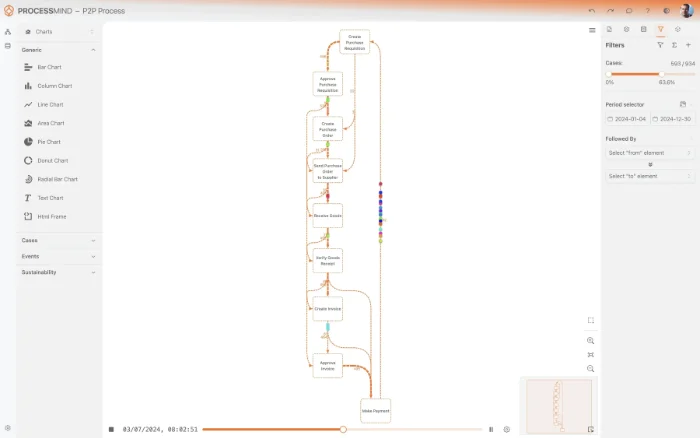
Visualize the end-to-end incident management process using the collected data. Identify all possible paths, reworks, and deviations from the ideal flow.
Why it matters
Understanding the actual process, not just the documented one, is crucial for identifying inefficiencies and compliance gaps. It provides a baseline for future improvements.
Expected outcome
A clear, visual representation of your incident management process, highlighting the main paths and common variations.
Identify Bottlenecks
What to do
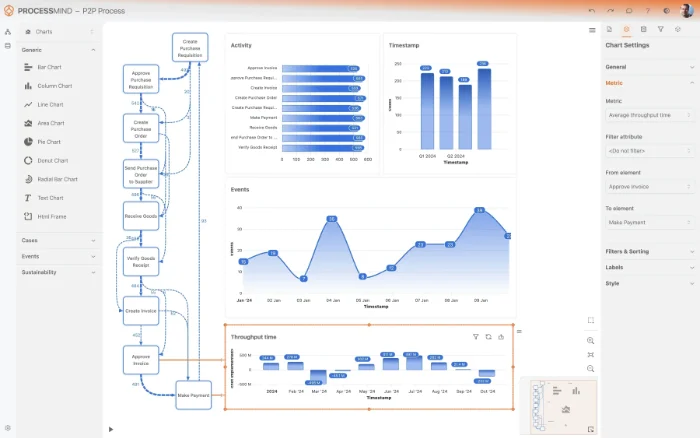
Analyze the process map to pinpoint stages where incidents frequently get stuck or experience excessive delays. Focus on activity durations and waiting times.
Why it matters
Bottlenecks directly impact resolution times and SLAs, leading to user dissatisfaction and increased operational costs. Addressing them improves efficiency.
Expected outcome
A prioritized list of specific process steps or transitions identified as major bottlenecks, with quantified delay metrics.
Analyze Root Causes
What to do
Investigate the underlying reasons for the identified bottlenecks and deviations. Use attributes like incident type, assignee, or system involved to find patterns.
Why it matters
Fixing symptoms without addressing root causes leads to recurring problems. This step ensures sustainable improvements by tackling the core issues affecting performance.
Expected outcome
A comprehensive understanding of the factors contributing to process inefficiencies, enabling targeted and effective improvement strategies.
Design Improvements
What to do
Based on root cause analysis, propose concrete actions and process changes to eliminate bottlenecks, reduce rework, and improve overall flow. Prioritize feasible solutions.
Why it matters
This step translates insights into actionable strategies. Well-designed improvements lead to faster resolution, better resource utilization, and enhanced user satisfaction.
Expected outcome
A detailed plan outlining specific process changes, automation opportunities, or training initiatives to optimize incident management.
Monitor & Iterate
What to do
Implement the designed improvements and continuously track key performance indicators to assess their impact. Use new data to refine and further optimize the process.
Why it matters
Process improvement is an ongoing journey. Monitoring ensures that changes yield desired results and allows for continuous adaptation to evolving operational needs.
Expected outcome
Sustained process efficiency and performance gains, with a framework for continuous optimization and agile response to new challenges.
WHAT YOU WILL GET
Discover the Real Story of Your Incident Management
- Visualize your actual process flow
- Identify bottlenecks and delays
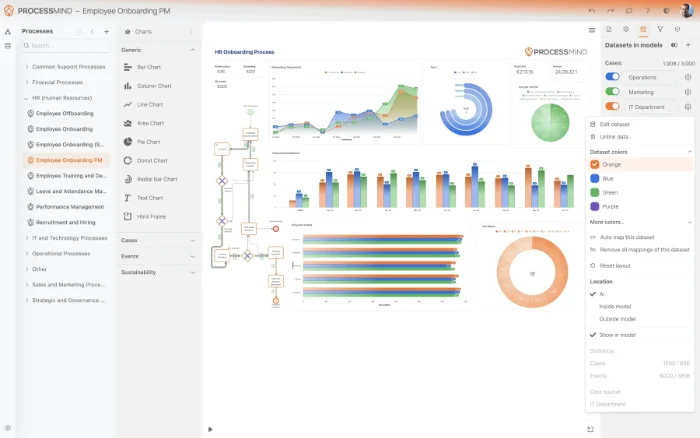
- Optimize resource allocation
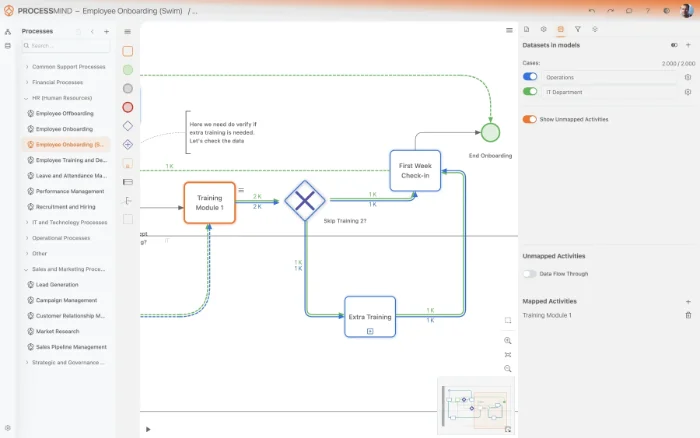
- Improve overall process efficiency
TYPICAL OUTCOMES
Achieve Smarter Incident Resolution
These outcomes represent the measurable improvements organizations typically achieve by applying process mining to their incident management workflows. By identifying bottlenecks, deviations, and rework, process mining enables targeted optimizations that enhance efficiency and service delivery.
Average time reduction
By pinpointing and eliminating process bottlenecks, organizations significantly decrease the time required to resolve incidents, leading to quicker service restoration and improved user satisfaction.
Decrease in non-compliant incidents
Identifying the root causes of service level agreement breaches allows for targeted interventions, ensuring adherence to commitments and minimizing negative business impact.
Reduction in inefficient transfers
Process analysis reveals unnecessary reassignments and rework loops, enabling organizations to streamline workflows, reduce operational costs, and accelerate incident resolution.
Higher compliance to standard steps
By visualizing actual process flows against predefined standards, organizations can identify and rectify deviations, ensuring all incidents are handled consistently and according to established guidelines.
Decrease in reopened incidents
Understanding why incidents are reopened helps to improve initial diagnoses and fixes, significantly reducing the need for rework and improving overall user satisfaction.
Decrease in repeat incidents
Identifying patterns and root causes of repeat incidents allows for permanent fixes, reducing the overall volume of recurring problems and freeing up resources.
Results vary based on the specific incident management process complexity, data quality, and organizational context. These figures illustrate the typical improvements observed across implementations.
Recommended Data
For customized data recommendations, choose your specific process.
FAQs
Frequently asked questions
Process mining visualizes the actual flow of your incident management, revealing bottlenecks like frequent SLA breaches or prolonged resolution times. It identifies deviations from standard procedures, excessive handoffs, and inaccurate categorizations that hinder efficiency. By providing data-driven insights into your real processes, it helps you optimize resolution paths and enhance overall service delivery.
You will primarily need incident activity logs, including a case identifier such as Incident ID, activity type, timestamp of each event, and the user or system responsible. Additional attributes like incident priority, category, and assignment group are valuable for richer analysis. This core data allows process mining tools to reconstruct the complete journey of every incident.
Initial discovery and high-level insights can often be generated within a few weeks after data extraction and preparation are complete. Comprehensive analyses, leading to specific optimization opportunities and actionable recommendations, typically emerge within 1 to 3 months. The speed depends on your data readiness and project scope.
Beyond the ability to extract historical incident data from your source system, you will need access to a process mining software platform. Expertise in data engineering for extraction and transformation, along with process analysis skills, are essential to effectively interpret the findings and drive improvements. Secure data handling and privacy compliance are also critical.
Traditional reporting provides static, aggregated views of metrics, often based on predefined assumptions about the process. Process mining, conversely, visually reconstructs the complete, actual process flow directly from event logs. It uncovers hidden variations, unexpected paths, and true bottlenecks that reports cannot reveal, showing how and why things happened.
Yes, absolutely. Process mining precisely maps out every reassignment and pinpoints exactly where incidents get stuck or are incorrectly routed, leading to delays and potential SLA breaches. By visualizing these inefficiencies, you can identify root causes like unclear roles, skill gaps, or flawed escalation paths. This enables targeted interventions to streamline the process.
No, process mining is a non-intrusive analytical approach. It operates by analyzing historical data exports from your system, meaning it does not require any modifications to your live production system, configurations, or ongoing incident management processes. This ensures minimal disruption to your operations.
Yes, process mining can effectively identify patterns of recurring incidents and highlight processes that frequently lead to the same issues. By visualizing the common paths and activities, it assists in pinpointing potential root causes that contribute to these repeated problems. While it provides the evidence, your experts determine the underlying causes.
No, process mining is beneficial for organizations of any size looking to optimize their processes, regardless of complexity. Even smaller teams can gain significant, actionable insights into their incident management performance. It helps identify areas for efficiency gains and process adherence that might otherwise remain unseen.
By identifying and eliminating inefficiencies like rework, excessive handoffs, and prolonged resolution times, process mining directly reduces the manual effort and resources spent on each incident. This optimization translates into lower operational costs, allowing your teams to handle more incidents effectively or reallocate resources. It drives significant economic benefits.
Resolve Incidents Faster, Start Your Transformation Now
Pinpoint bottlenecks, reduce downtime, and boost team efficiency.
No credit card required, setup in 5 minutes