Improve Your Record to Report - Period Close & Reconciliation

Select a process
Choose a process to continue working in your connected workspace.
Optimize BlackLine Record-to-Report Period Close
Complex financial processes often hide inefficiencies that lead to delays and compliance risks. Our platform provides a clear path to uncover these hidden bottlenecks, helping you analyze specific areas of slowness and ensure accurate reporting. Discover how to streamline your operations and accelerate your financial close.
Download our pre-configured data template and address common challenges to reach your efficiency goals. Follow our six-step improvement plan and consult the Data Template Guide to transform your operations.
Show detailed description
Why Optimize Record to Report - Period Close & Reconciliation?
The Record to Report, or R2R, Period Close & Reconciliation process is the backbone of financial reporting for any organization. It encompasses a series of critical activities, from initiating the close to generating and approving financial statements. Even with advanced systems like BlackLine, which automates many aspects of the financial close, organizations often face challenges that hinder efficiency, accuracy, and compliance.
Inefficiencies in this process can lead to significant business impacts, including delayed financial statements, inaccurate reporting, and increased compliance risks. A drawn-out close cycle means delayed insights for strategic decision-making, while manual interventions and rework inflate operational costs, often resulting in increased overtime and potential penalties for missed deadlines. The cost of an inefficient financial close extends beyond monetary figures, impacting stakeholder confidence and the overall agility of your finance function. Understanding how to improve Record to Report - Period Close & Reconciliation is crucial for maintaining financial health and operational excellence.
How Process Mining Enhances R2R Period Close Analysis
Process mining offers a powerful, data-driven approach to dissecting and understanding the true execution of your Record to Report - Period Close & Reconciliation process within BlackLine. Unlike traditional methods that rely on interviews or assumptions, process mining leverages event logs from your BlackLine modules, such as Account Reconciliation, Journal Entry, and Close Management, to reconstruct the actual end-to-end process flow for each financial period.
This perspective, centered on the Financial Period as the case identifier, allows you to track every activity from "Period Close Initiated" to "Period Close Completed." You can visually map the exact sequence of activities, identify deviations from your ideal process, and pinpoint precisely where delays or rework occur. Process mining makes it possible to analyze cycle times for each step, from "Balance Sheet Account Reconciliation Started" to "Reconciliation Reviewed & Approved," providing granular insights into bottlenecks. By analyzing these data points, you can uncover hidden inefficiencies, validate compliance with internal controls, and gain a transparent view of your financial close operations, ultimately helping you to reduce Record to Report - Period Close & Reconciliation cycle time.
Key Improvement Areas Identified Through Process Mining
Applying process mining to your BlackLine Record to Report process can illuminate several critical areas for improvement:
- Bottlenecks in Reconciliation and Approval: Identify specific accounts, departments, or reconciliation categories that consistently cause delays in the "Reconciliation Reviewed & Approved" step. This could highlight training needs, resource allocation issues, or process complexities that need simplification.
- Rework and Adjustment Loops: Uncover instances where "Adjusting Journal Entries Posted" frequently follows a reconciliation, or where "Balance Sheet Account Reconciliation Started" is repeated for the same period. These loops often indicate underlying data quality problems, inconsistent source data collection, or issues with initial transaction posting that process mining can trace back to their origin.
- Compliance Gaps and Deviations: Verify that all required steps, such as specific approvals or intercompany reconciliations, are performed in the correct sequence and within policy guidelines. Process mining can flag non-compliant paths or activities that bypass critical controls.
- Optimizing Resource Allocation: By understanding the actual effort and time spent on various activities, you can reallocate resources more effectively, ensuring that high-volume or complex reconciliations receive appropriate attention without causing delays elsewhere.
Expected Outcomes: Measurable Benefits for Your Finance Team
The insights gained from process mining the Record to Report - Period Close & Reconciliation process in BlackLine translate into tangible, measurable benefits:
- Reduced Period Close Cycle Time: Significantly accelerate your financial close, enabling faster delivery of financial statements and strategic insights.
- Improved Accuracy and Data Quality: Minimize errors and the need for post-close adjustments, leading to more reliable financial reports and reduced audit effort.
- Enhanced Compliance and Risk Mitigation: Strengthen internal controls, ensure adherence to regulatory requirements, and reduce the risk of financial misstatements.
- Cost Savings and Increased Efficiency: Optimize resource utilization, reduce overtime costs, and free up finance professionals to focus on higher-value activities.
- Maximized BlackLine ROI: Ensure you are fully leveraging your BlackLine investment by streamlining the processes that rely on its powerful close automation capabilities.
Getting Started with Your R2R Process Optimization
Embarking on the journey to optimize your Record to Report - Period Close & Reconciliation process with process mining can seem complex, but the path to greater efficiency is clear. By analyzing the complete process flow, from source data collection to final financial statement approval, you can identify and eliminate inefficiencies, ensuring your financial close is not just faster, but also more accurate and compliant. Leverage the power of your BlackLine data to unlock true process excellence and transform your financial operations.
The 6-Step Improvement Path for Record to Report - Period Close & Reconciliation
Download the Template
What to do
Get the ProcessMind Excel template tailored for Record to Report processes. This ensures your BlackLine data is structured correctly for analysis.
Why it matters
A standardized template simplifies data preparation, making it easier to extract and organize information from BlackLine effectively for accurate analysis.
Expected outcome
A ready-to-use Excel template to guide your data extraction from BlackLine.
Export Your Data
What to do
Extract 3-6 months of historical period close and reconciliation data from BlackLine. Populate the downloaded template with actual activities, statuses, and timelines.
Why it matters
Using real historical data from BlackLine provides an authentic view of your past process performance, crucial for identifying genuine inefficiencies and compliance gaps.
Expected outcome
Your BlackLine period close data, structured in the ProcessMind template, ready for upload.
Upload Your Dataset
What to do
Securely upload your populated data template to ProcessMind. The system will automatically process and prepare it for analysis.
Why it matters
Fast and secure data upload means you quickly move from data collection to insight generation, accelerating your journey towards process optimization.
Expected outcome
Your BlackLine process data successfully imported and prepared for automated analysis.
Analyze Your Process
What to do
Explore the auto-generated dashboards and insights specific to your BlackLine period close process. Leverage AI-driven recommendations to pinpoint bottlenecks.
Why it matters
Gain deep visibility into cycle times, reconciliation delays, and approval workflows. Understand where your BlackLine process deviates from best practices.
Expected outcome
A clear understanding of your BlackLine period close bottlenecks, inefficiencies, and improvement opportunities.
Implement Improvements
What to do
Prioritize and act on the identified optimization opportunities, such as streamlining reconciliation steps or automating specific tasks within BlackLine.
Why it matters
Translating insights into action leads to tangible benefits, including faster closes, reduced manual effort, and enhanced data accuracy in BlackLine.
Expected outcome
Initiated actions and changes within your BlackLine process to resolve identified inefficiencies.
Monitor Your Process
What to do
Periodically re-upload updated BlackLine data to ProcessMind. This allows you to track the impact of your changes and measure KPI improvements.
Why it matters
Continuous monitoring ensures sustained efficiency gains, confirms the effectiveness of your BlackLine process adjustments, and supports ongoing compliance.
Expected outcome
Quantifiable improvements in period close cycle times, reconciliation efficiency, and financial reporting accuracy.
WHAT YOU WILL GET
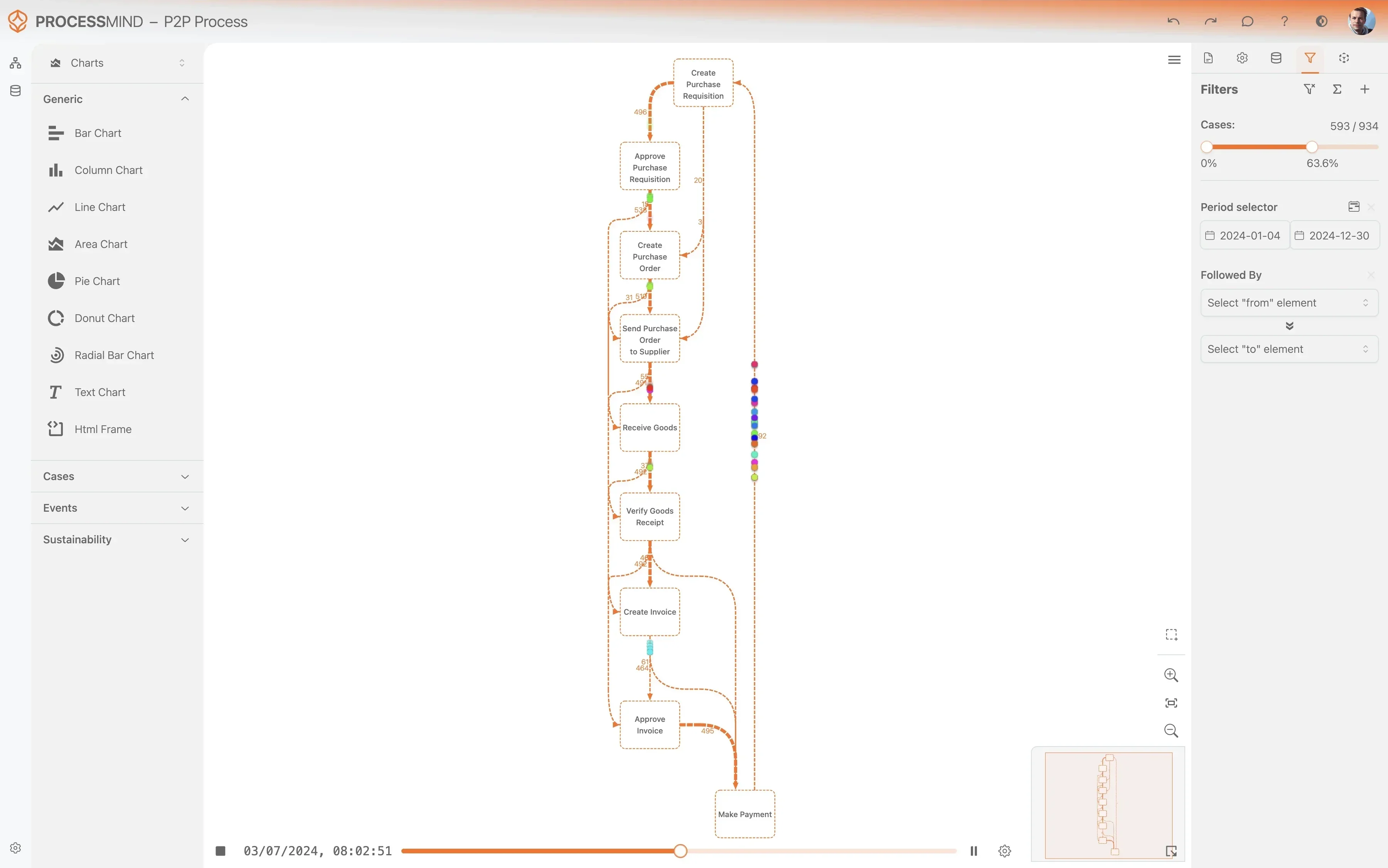
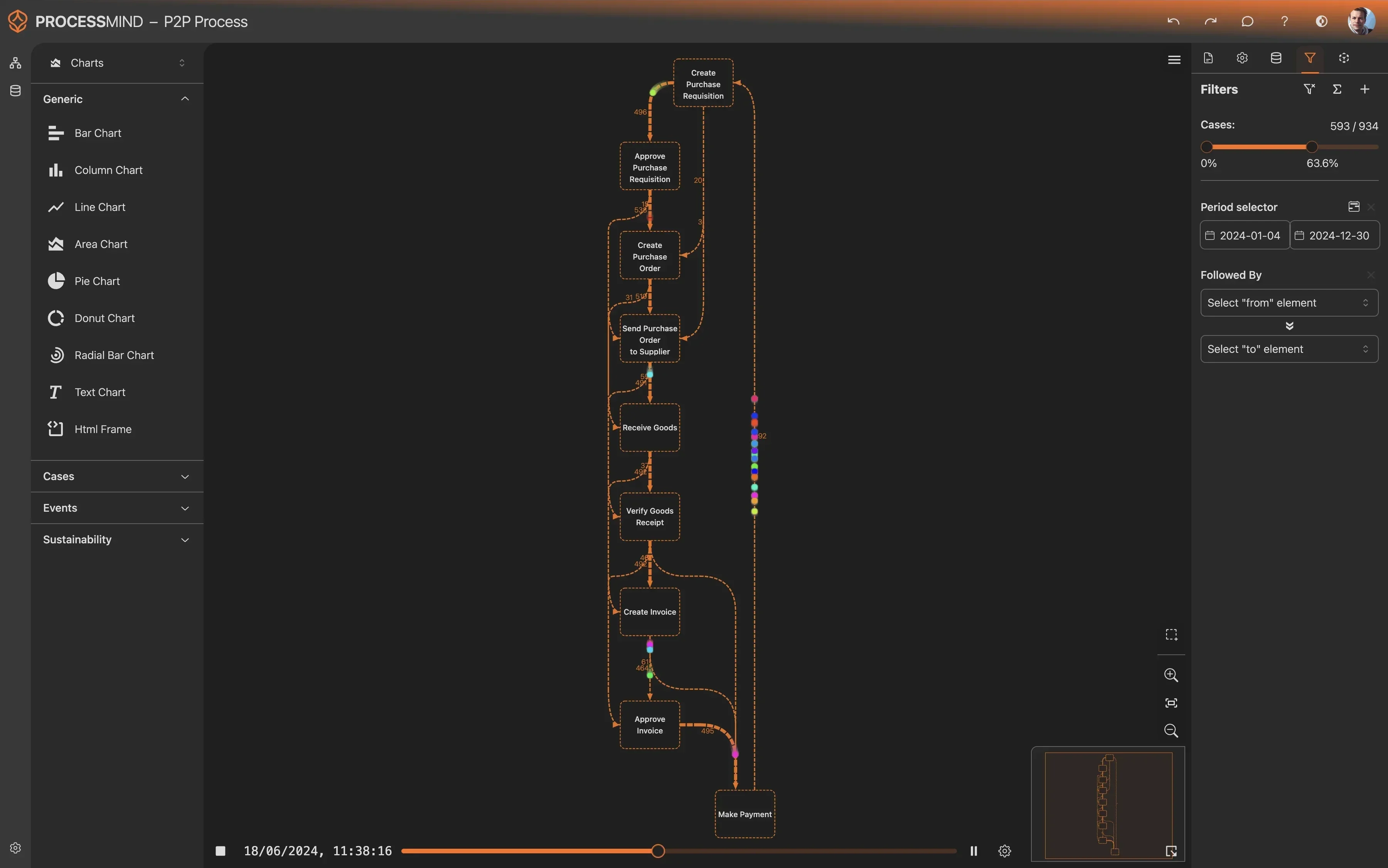
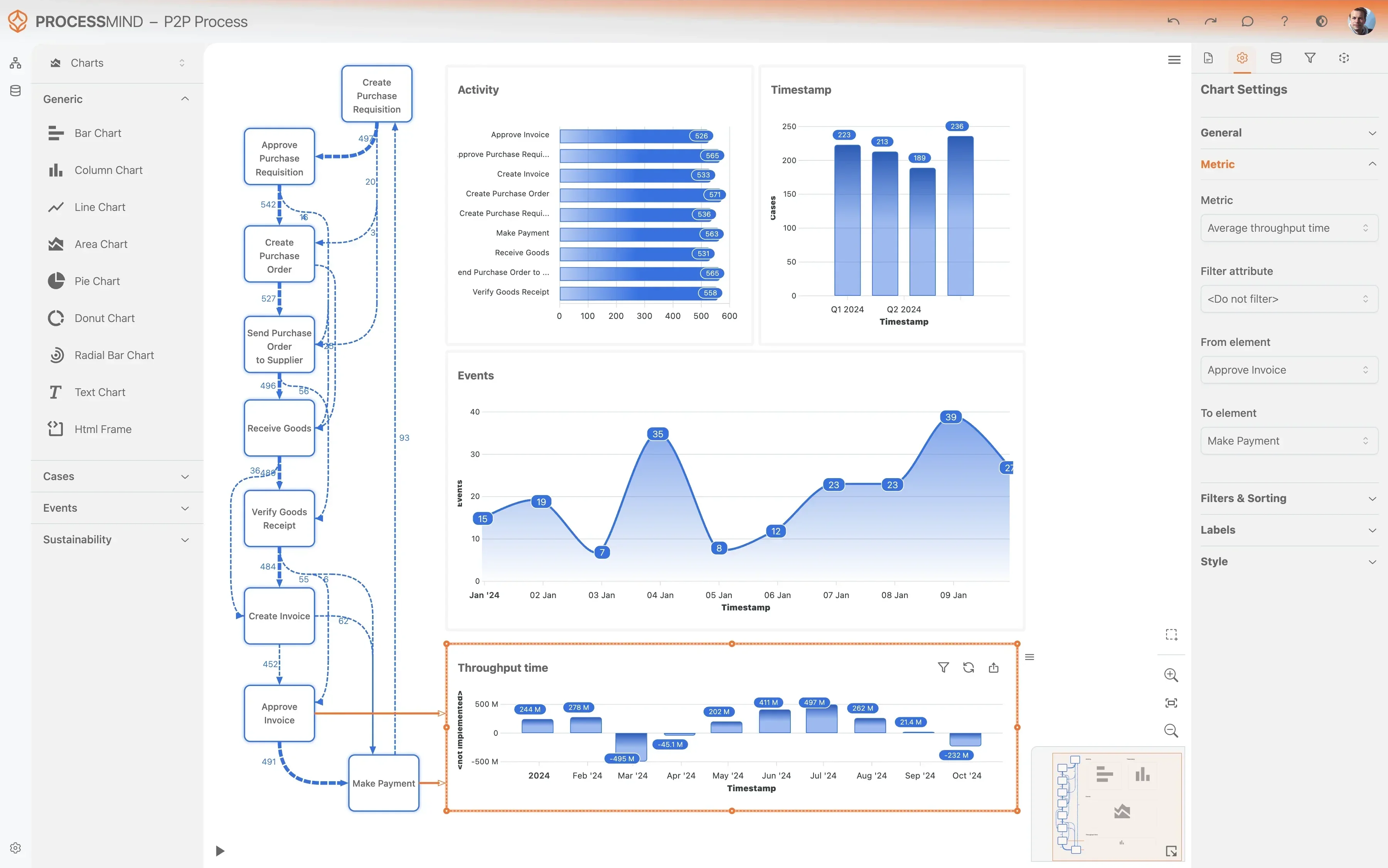
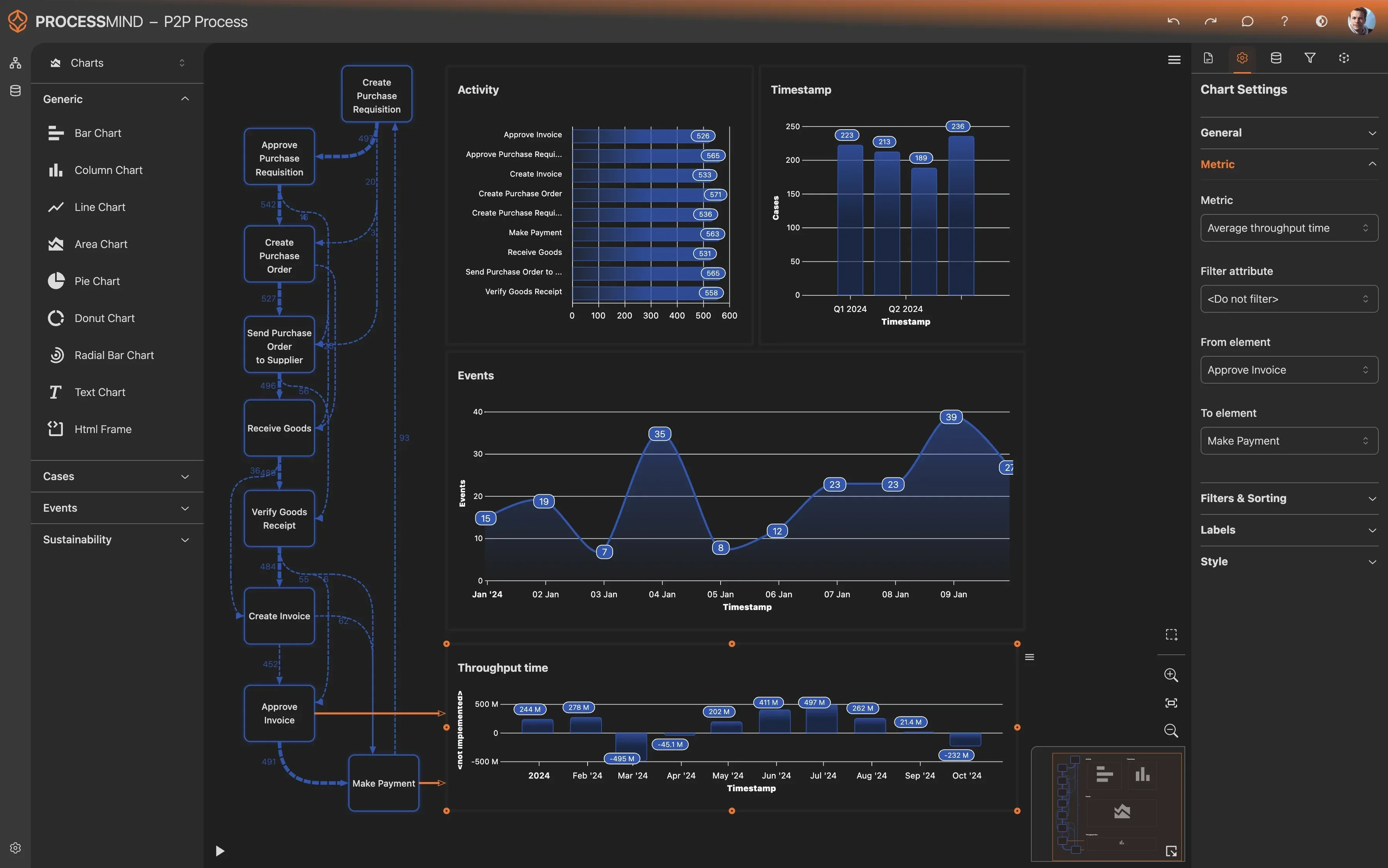
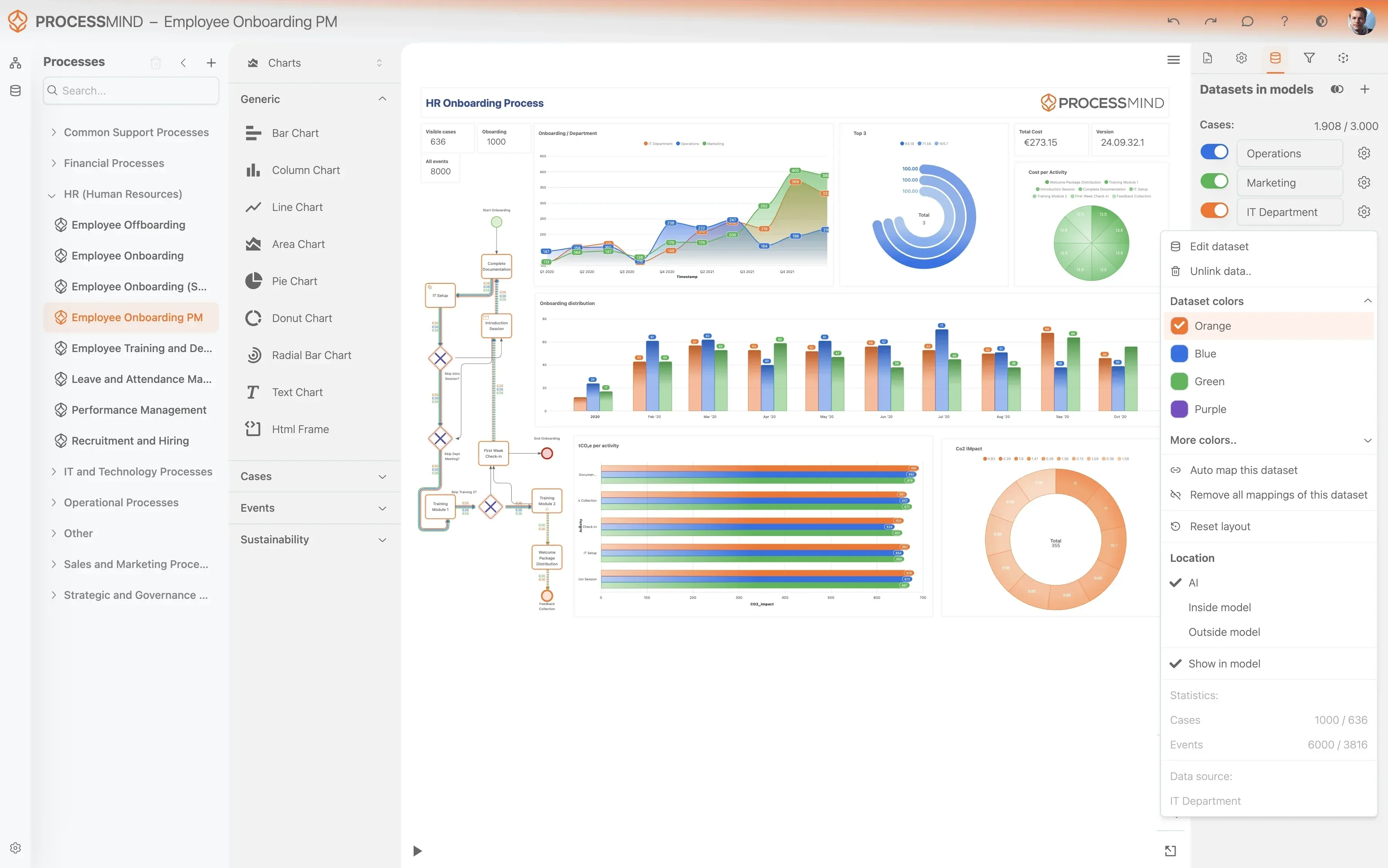
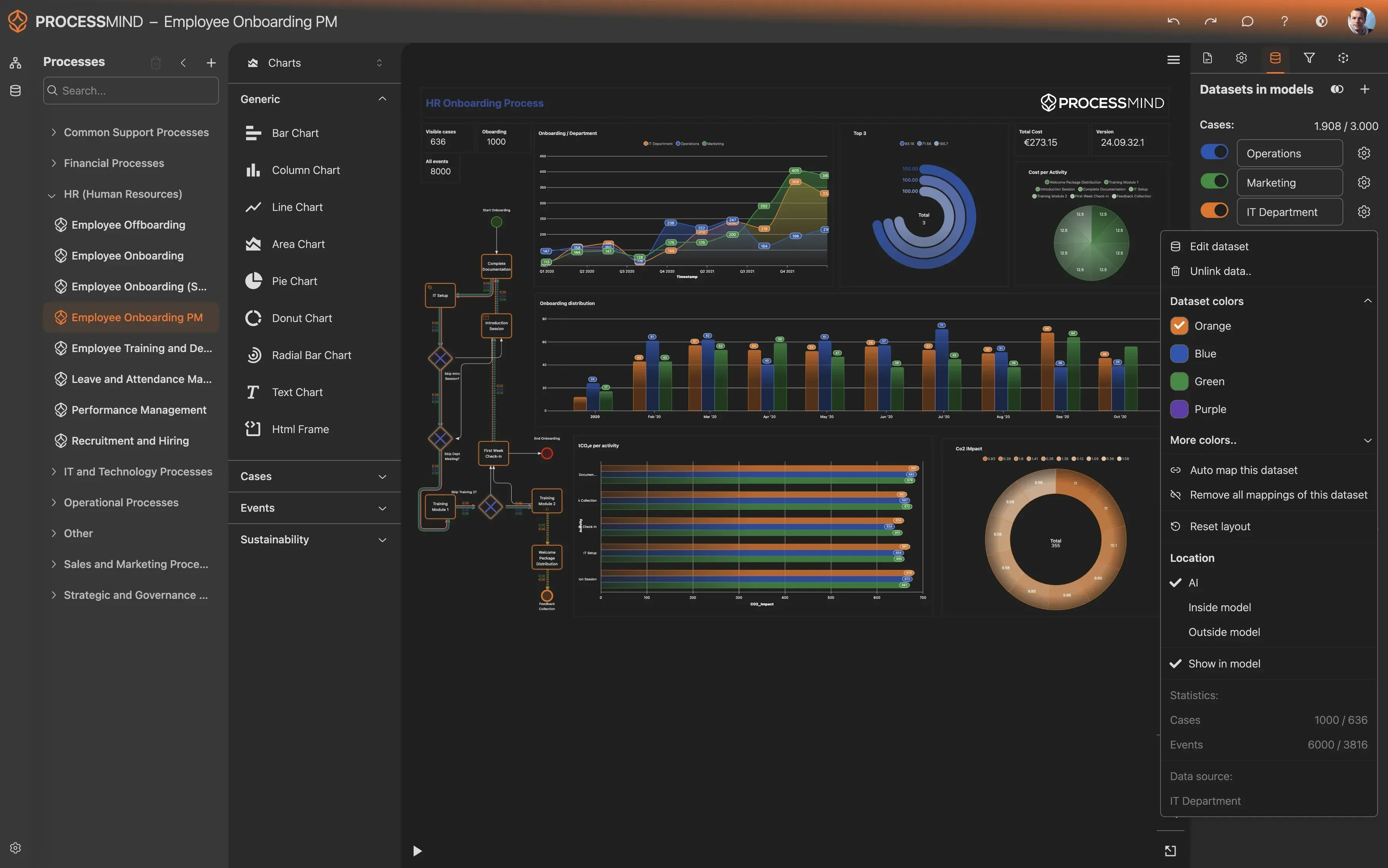
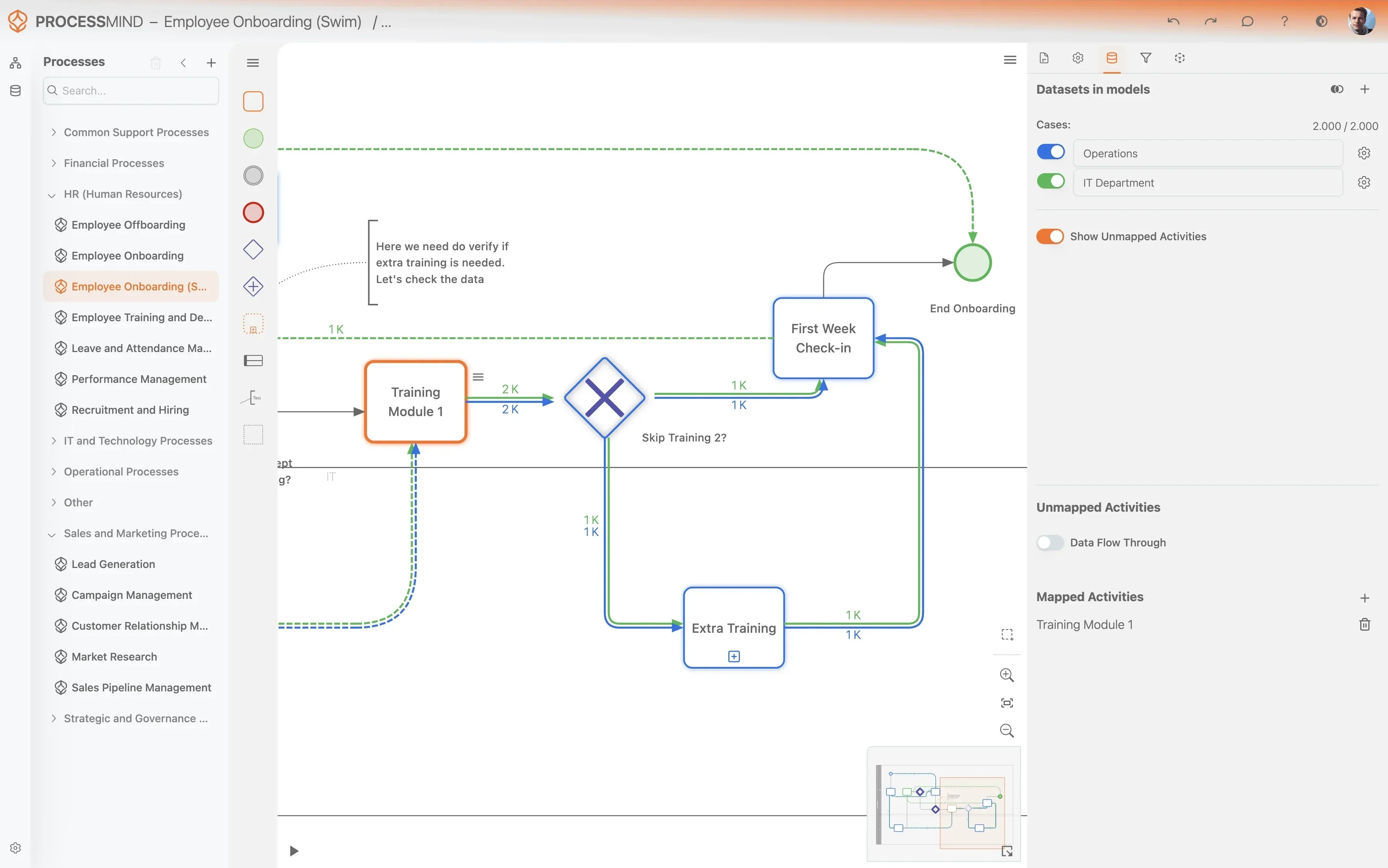
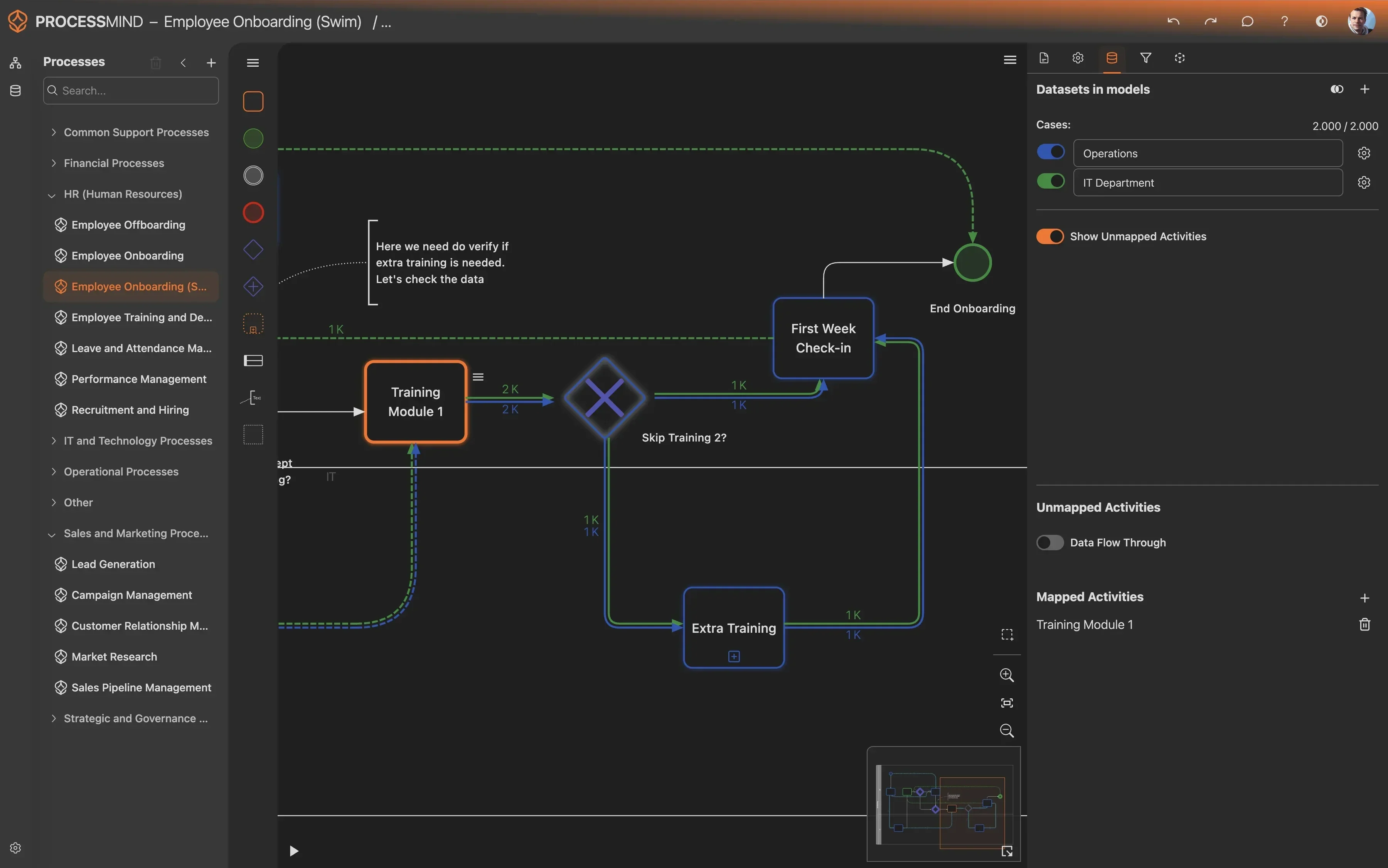
Discover Your BlackLine R2R Close Bottlenecks
- Visualize BlackLine R2R close workflow
- Pinpoint reconciliation bottlenecks
- Analyze adjustment and journal delays
- Achieve faster, compliant financial close
TYPICAL OUTCOMES
Achieving Excellence in Record to Report
These outcomes represent the measurable improvements organizations typically achieve by applying process mining to their Record to Report, Period Close, and Reconciliation processes within BlackLine. By identifying bottlenecks, standardizing tasks, and enhancing automation, companies significantly improve efficiency and accuracy.
Average reduction in end-to-end close time
Process mining identifies and eliminates bottlenecks, significantly shortening the overall time required to complete the financial close. This accelerates reporting cycles and improves business agility.
Reduction in manual journal entries
By pinpointing the root causes of manual adjustments, organizations can reduce the need for manual intervention, improving data quality and reducing operational effort and cost.
Increase in periods meeting deadlines
Gain clear visibility into close activities, proactively address delays, and ensure a higher percentage of financial periods are completed by their target deadlines, enhancing regulatory compliance.
Average reduction in reconciliation approval time
Process mining reveals bottlenecks in the reconciliation approval workflow, allowing for targeted improvements that speed up review and sign-off processes, reducing overall close duration.
Increase in adherence to standard process
Understand deviations from the ideal close process, enabling standardization efforts that improve process predictability, reduce errors, and ensure consistent execution across all financial periods.
Results vary based on process complexity and data quality. These figures represent typical improvements observed across implementations.
Recommended Data
FAQs
Frequently asked questions
Process mining visualizes your actual R2R process flow, identifying deviations, bottlenecks, and manual inefficiencies. It reveals exactly where delays occur in period close, reconciliations, and journal adjustments, allowing for targeted improvements. This leads to faster close cycles and improved compliance.
To accurately map your Record to Report process, we typically require event logs containing case IDs, activity names, and timestamps for each step. For BlackLine, this would involve data related to task completion, reconciliation status changes, and journal entry postings. The more detailed the event data, the richer the insights.
After data extraction and initial setup, which can take a few weeks depending on data availability, initial process maps and bottleneck analyses can often be generated within weeks. Significant insights into process deviations and delay root causes are usually visible within the first 1-2 months. This allows for rapid identification of improvement areas.
You can expect to accelerate period close cycle times, reduce manual journal adjustments, and streamline reconciliation processes. Process mining enhances real-time visibility into close status and helps ensure compliance with reporting deadlines. It also significantly reduces operational costs by identifying and automating manual tasks.
While some initial IT support may be beneficial for data extraction from BlackLine, most modern process mining tools are designed for business users. The platform handles complex data modeling and visualization, empowering finance teams to analyze their own processes without extensive IT dependency for ongoing use. We provide guidance on data requirements.
Extracting event data from BlackLine typically involves using its reporting features or API capabilities to gather activity logs. The complexity depends on the specific data points needed and your system's configuration. We can provide templates and best practices to simplify this extraction process.
Yes, process mining precisely identifies where intercompany reconciliation steps cause delays and analyzes the actual time spent on these activities. It can also visualize workload distribution across teams or individuals, highlighting imbalances and opportunities to optimize resource allocation. This leads to more efficient team performance.
No, process mining complements your existing BlackLine reporting and analytics by providing a different, deeper perspective. While BlackLine offers valuable insights into compliance and account reconciliation, process mining focuses on the actual end-to-end flow of activities, revealing hidden inefficiencies and root causes of delays that traditional reports might miss. It provides actionable insights for process transformation.
Optimize Your Record to Report - Period Close & Reconciliation Now
Reduce cycle time by 30% and ensure accurate financial reporting.
No credit card required