Improve Your Expense Management

Select a process
Choose a process to continue working in your connected workspace.
Optimize SAP Concur Expense Management
Inefficiencies in expense management often lead to approval delays, policy violations, or audit challenges. Our platform identifies exact pain points within your process, from submission to reimbursement. This allows you to streamline operations, enhance compliance, and improve employee satisfaction.
Download our pre-configured data template and address common challenges to reach your efficiency goals. Follow our six-step improvement plan and consult the Data Template Guide to transform your operations.
Show detailed description
Why Optimize Your Expense Management in SAP Concur?
Managing expenses is a critical business function, but it often becomes a source of frustration, inefficiency, and hidden costs. While SAP Concur is a market-leading system designed to streamline this process, the actual execution within your organization can deviate significantly from the ideal. Unoptimized expense management can lead to delayed reimbursements, impacting employee satisfaction, increasing administrative overhead, and exposing your company to compliance risks and potential audit issues. Understanding the true flow of your expense reports, from initial submission to final reimbursement and accounting, is crucial for maintaining financial health and operational excellence.
Inefficiencies in your SAP Concur expense process aren't always obvious. They manifest as longer cycle times for approvals, frequent manual interventions, policy violations, and reworks, all of which contribute to higher operational costs and a less-than-ideal employee experience. Optimizing this process is not just about cutting costs, it's about creating a transparent, efficient, and compliant system that supports your workforce and strengthens your financial controls.
Unlocking Efficiency with Process Mining for SAP Concur Expenses
Process mining offers a powerful, data-driven approach to understand and improve your SAP Concur Expense Management. Instead of relying on assumptions or anecdotal evidence, process mining uses the event logs generated by your SAP Concur system to reconstruct the actual journey of every expense report. This provides an objective, end-to-end view, showing you precisely what happens, when it happens, and by whom.
By analyzing your SAP Concur data, process mining can visually map out every path an expense report takes, from "Expense Report Created" to "Accounting Posted." This allows you to easily identify common deviations from your intended process, discover where bottlenecks truly lie, and measure the exact time spent in each activity. For example, you can see if certain departments or approvers consistently cause delays, or if specific expense categories are more prone to being sent back for revision. This level of granular insight is essential for understanding how to improve Expense Management effectively.
Key Areas for Process Improvement
Leveraging process mining on your SAP Concur data can highlight several critical areas for targeted improvement, helping you to truly streamline operations:
- Streamlining Approval Workflows: Identify specific stages, such as "Manager Review Pending" or "Finance Review Pending," that contribute most to approval delays. Analyze why these stages are slow, whether it's due to workload, system configuration, or a need for clearer policies. This insight is key to reducing overall expense report cycle time.
- Enhancing Policy Compliance: Detect patterns where "Policy Check Performed" frequently results in a "Policy Violation Flag" or where reports are "Sent Back for Revision." Understanding these root causes can lead to better employee training, clearer policy communication, or adjustments to your SAP Concur configuration to prevent violations proactively.
- Reducing Rework and Exceptions: Pinpoint where expense reports are repeatedly sent back for revision or rejection. By analyzing the reasons behind these exceptions, you can implement changes to reduce manual effort, improve data quality, and accelerate processing.
- Optimizing Reimbursement Velocity: Ensure that once an expense report is approved, "Reimbursement Executed" happens efficiently. Any delays here directly impact employee satisfaction and can highlight issues in your financial operations or integration with banking systems.
Tangible Outcomes of Expense Process Optimization
By applying process mining to your SAP Concur Expense Management, you can expect measurable improvements across your organization:
- Reduced Cycle Times: Significantly decrease the time from expense report submission to final reimbursement, enhancing employee satisfaction and productivity.
- Cost Savings: Minimize administrative effort, reduce rework, and avoid potential fines or audit complications by ensuring higher compliance.
- Enhanced Compliance and Risk Management: Proactively identify and address policy violations, strengthening your internal controls and reducing financial risk.
- Improved Employee Experience: Create a more transparent and efficient expense reporting process, leading to happier employees and less frustration.
- Better Resource Utilization: Free up finance and management teams from chasing approvals or correcting errors, allowing them to focus on more strategic tasks.
Begin Your SAP Concur Expense Transformation
Optimizing your Expense Management process in SAP Concur doesn't have to be a daunting task. With process mining, you gain clear, data-driven insights that show you exactly where and how to improve. By focusing on the real execution of your process, you can make informed decisions to reduce bottlenecks, ensure compliance, and enhance efficiency across your organization. Take the first step towards a more streamlined and effective expense management future.
The 6-Step Improvement Path for Expense Management
Download the Template
What to do
Obtain the ProcessMind Excel template specifically designed for SAP Concur Expense Management. This template ensures your data is structured correctly for analysis.
Why it matters
Using the right template prevents data import errors and ensures all necessary information is captured from your SAP Concur system, setting a solid foundation for analysis.
Expected outcome
A structured Excel template, ready to be populated with your SAP Concur expense data.
Export Your Data
What to do
Extract 3-6 months of historical expense report data from SAP Concur, typically using standard reporting tools. Populate the downloaded template with this real-world data.
Why it matters
Historical data provides a comprehensive view of past performance, enabling the identification of recurring patterns, bottlenecks, and compliance issues within your expense process.
Expected outcome
A completed ProcessMind template containing recent, accurate expense management data from SAP Concur.
Upload Your Dataset
What to do
Securely upload your populated ProcessMind template to the ProcessMind platform. The system will automatically begin processing and analyzing your expense management data.
Why it matters
Effortless data ingestion means quick access to insights, eliminating manual setup and allowing you to focus on improvement rather than data preparation.
Expected outcome
Your SAP Concur expense data securely loaded and ready for automated process discovery and analysis.
Analyze Your Process
What to do
Explore the auto-generated dashboards and insights, visualizing your end-to-end expense management process. Leverage AI-driven recommendations to pinpoint inefficiencies and compliance gaps.
Why it matters
Gaining a clear, visual understanding of your expense workflows helps identify approval bottlenecks, policy deviations, and areas for significant efficiency gains and cost savings.
Expected outcome
A detailed, visual understanding of your SAP Concur expense process with actionable insights and specific improvement recommendations.
Implement Improvements
What to do
Prioritize the identified opportunities from your analysis, focusing on areas like approval workflow optimization or policy adherence in SAP Concur. Take concrete action based on insights.
Why it matters
Translating insights into action directly addresses inefficiencies, leading to faster expense processing, reduced operational costs, and enhanced policy compliance across the organization.
Expected outcome
Tangible changes implemented within your SAP Concur expense management process, targeting identified bottlenecks and compliance issues.
Monitor Your Process
What to do
Periodically re-upload updated SAP Concur expense data to ProcessMind. Continuously track key performance indicators to measure the impact of your implemented changes over time.
Why it matters
Ongoing monitoring ensures sustained improvements, identifies new issues proactively, and allows for continuous refinement of your expense management strategies, maximizing ROI.
Expected outcome
A system for continuous performance tracking, verifying the positive impact of changes and ensuring long-term optimization of expense management.
WHAT YOU WILL GET
Uncover Your SAP Concur Expense Process Reality
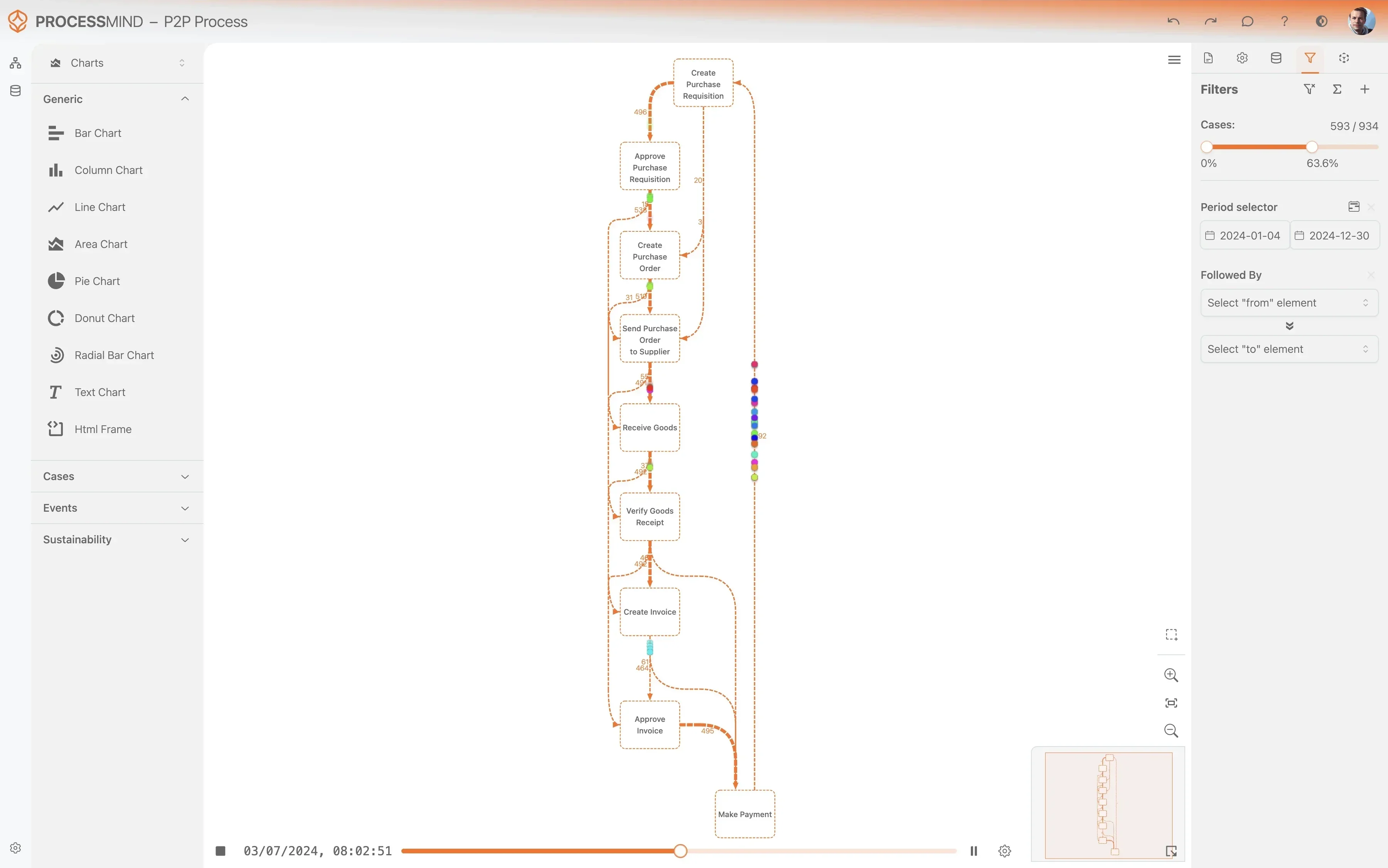
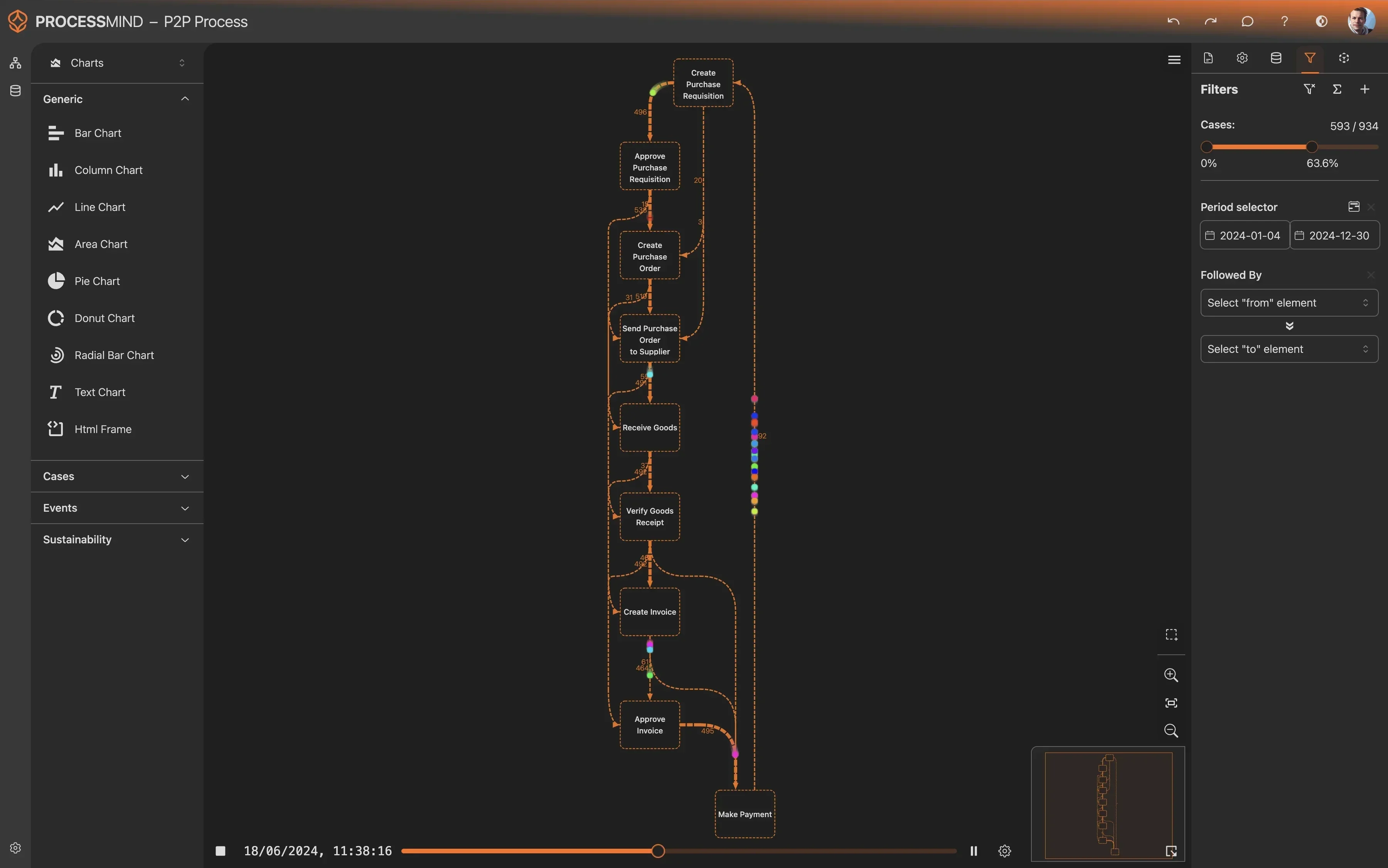
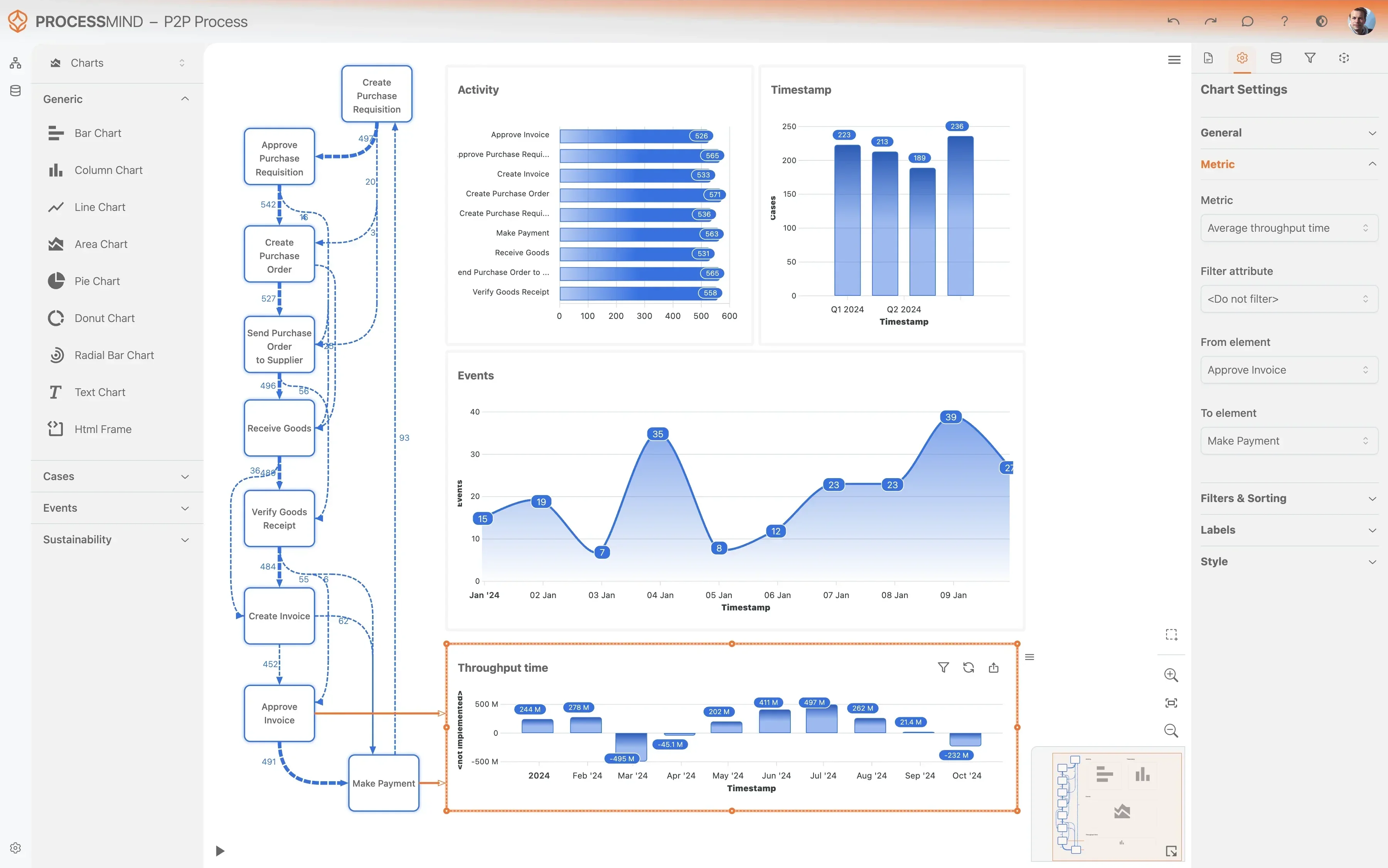
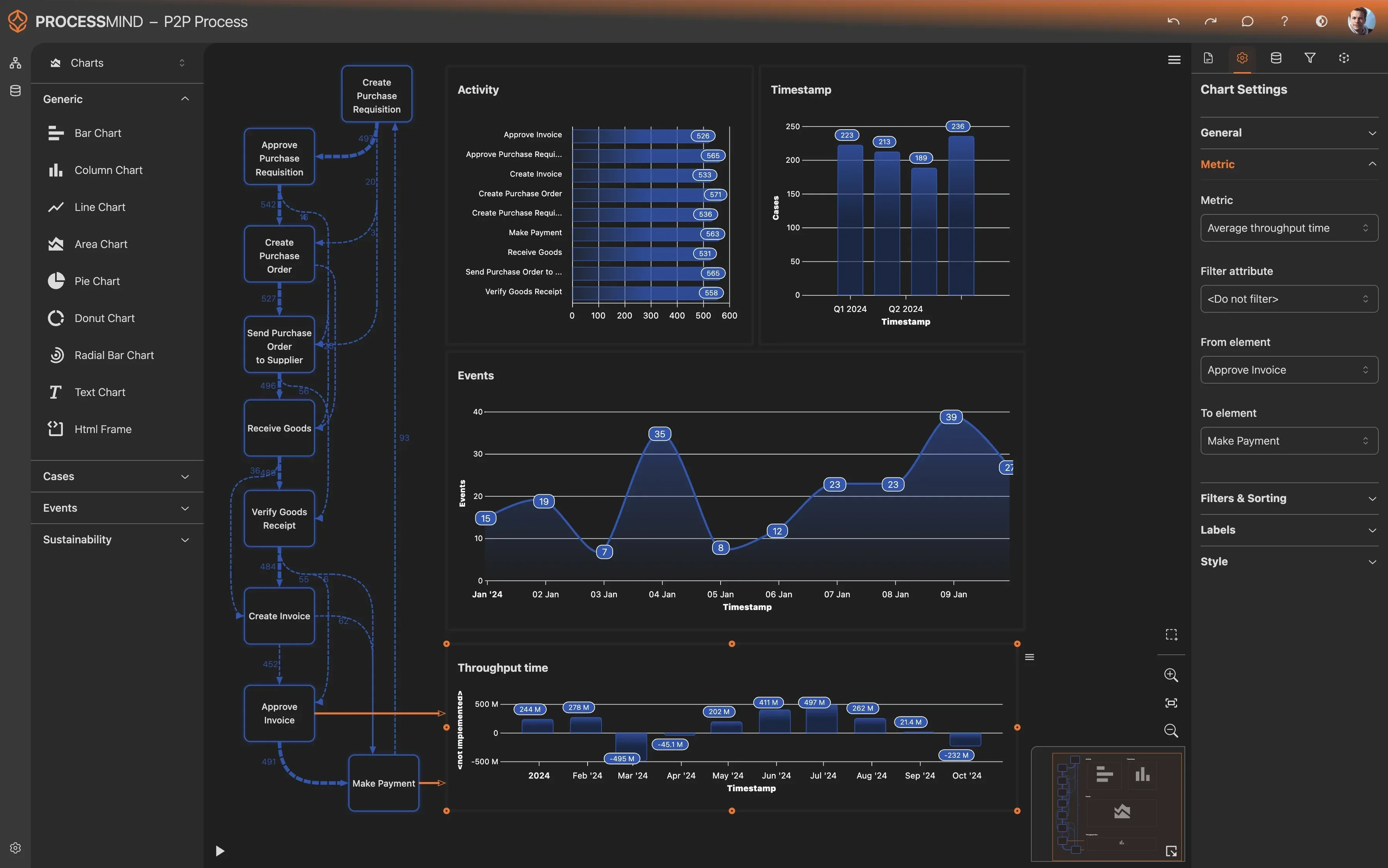
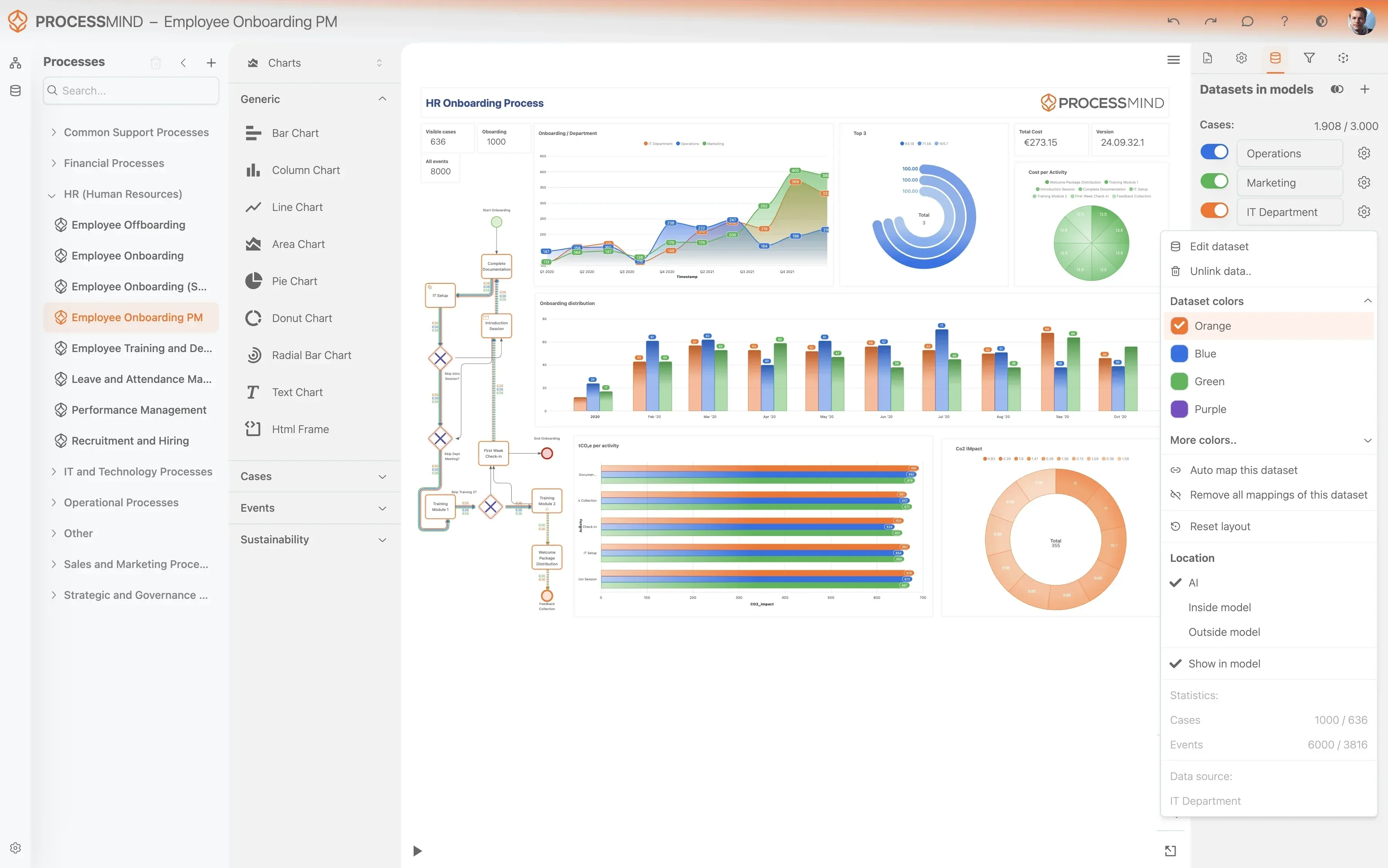
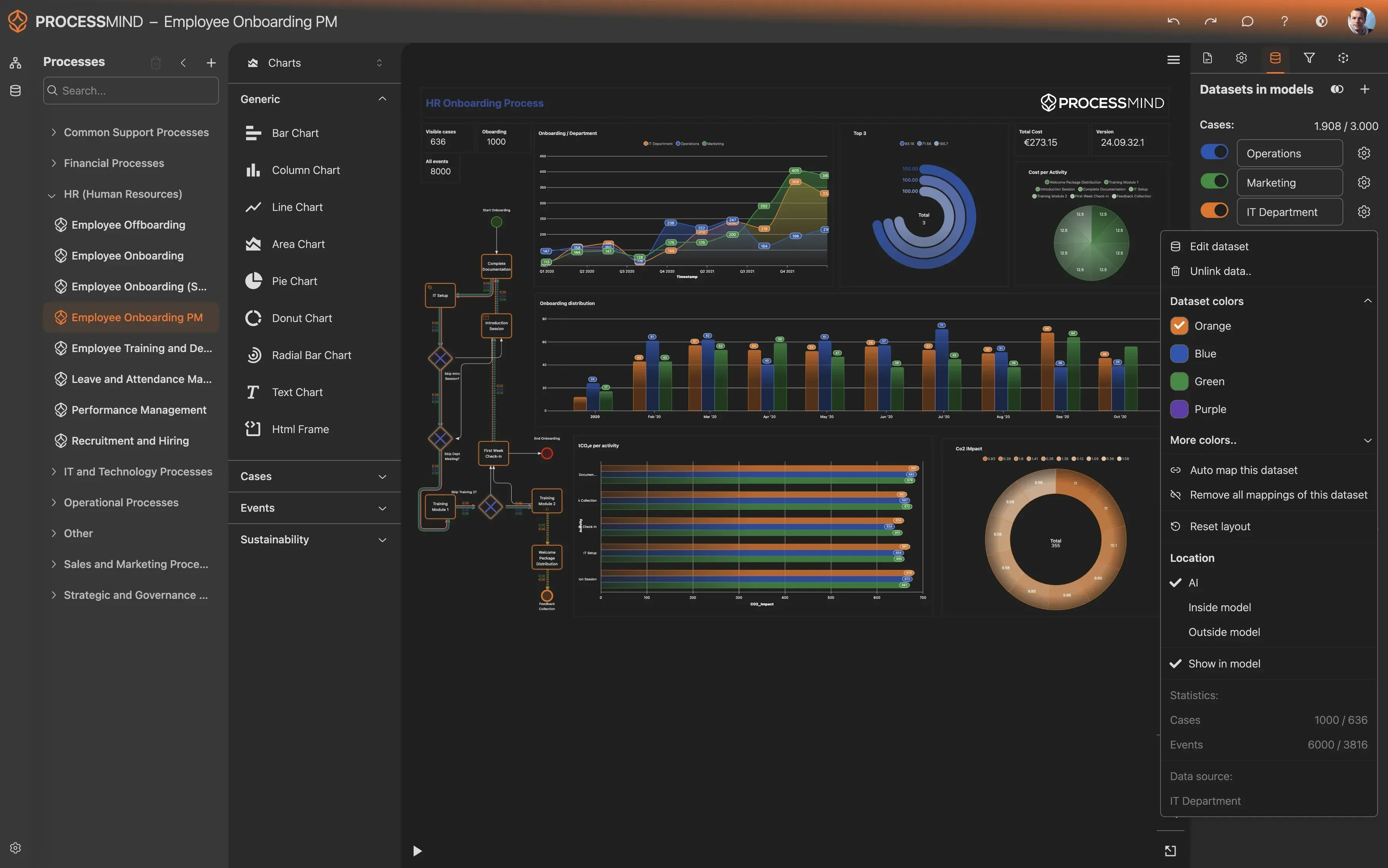
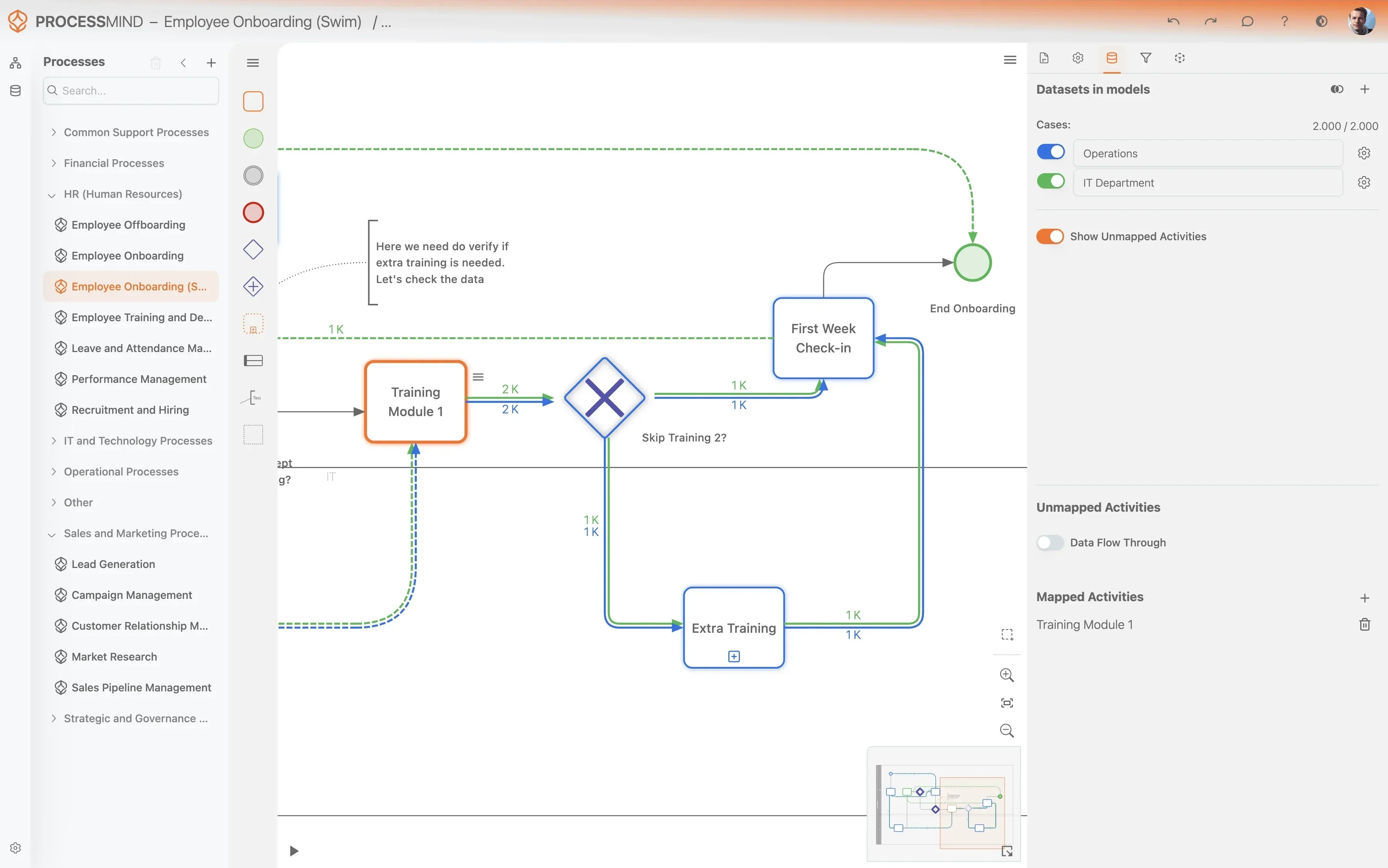
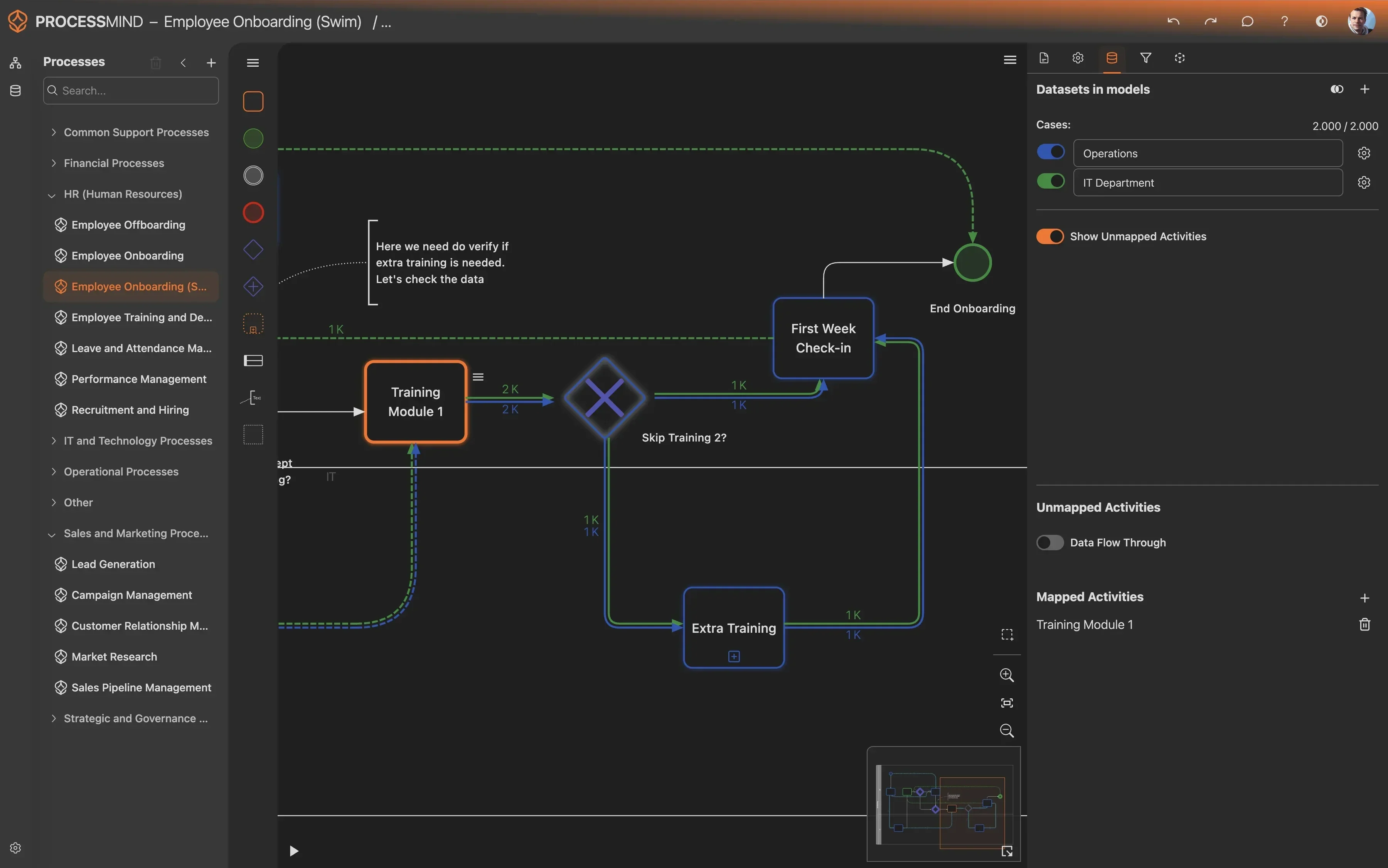
- Visualize end-to-end expense process flows
- Pinpoint exact bottlenecks in approvals
- Detect policy violations and compliance gaps
- Reduce reimbursement cycle times
TYPICAL OUTCOMES
Tangible Benefits of Optimized Expense Management
These outcomes illustrate the measurable improvements organizations can achieve in their Expense Management process using process mining. By analyzing SAP Concur data, we pinpoint inefficiencies and identify opportunities for optimization, leading to significant gains.
Average reduction in approval time
Streamline the review process to significantly cut down the time it takes for expense reports to get final finance approval, speeding up overall operations.
Decrease in policy violation rate
Identify and address root causes of non-compliance, leading to fewer policy violations and reduced financial risk across all expense reports.
Lowering expense report rework rate
Minimize instances where expense reports are sent back for revisions by managers or finance, improving data quality and reducing manual effort.
Shorter reimbursement execution time
Accelerate the time from final approval to actual reimbursement execution, leading to improved employee satisfaction and better cash flow management.
Higher adherence to standard paths
Gain clear visibility into process deviations and increase the percentage of expense reports that follow the predefined, standard approval and processing paths.
Average decrease in manual review
Identify bottlenecks and automate repetitive tasks within the finance review process, significantly reducing the average time spent on each expense report.
Results vary based on process complexity, data quality, and the specific improvements implemented. These figures represent typical gains observed across a range of process mining initiatives.
Recommended Data
FAQs
Frequently asked questions
Process mining visualizes the actual flow of your expense reports, revealing bottlenecks in approvals and deviations from policy. It helps identify root causes for inefficiencies like frequent rejections or delayed reimbursements. This leads to accelerated approval cycles and improved policy compliance.
You will primarily need event logs from SAP Concur. This includes the Expense Report ID as the case identifier, activity names, and timestamps for each step. Additional attributes like submitter, approver, amount, and expense type enhance the depth of analysis.
You can expect to see the complete end-to-end process, including all variations and hidden rework loops. Insights include identifying specific approval bottlenecks, non-compliant routing paths, and areas with high manual effort. This allows for targeted improvements to reduce processing costs and accelerate accounting postings.
The initial setup, including data extraction and connection to a process mining tool, can take a few weeks. After that, basic process maps and initial insights can be generated within days. Deeper analysis and root cause identification typically follow in the subsequent weeks.
Yes, absolutely. By visualizing where and why expense reports are frequently sent back, process mining identifies common errors or policy interpretation issues. It can highlight recurring policy violations, enabling you to implement targeted training or stricter controls to improve compliance and reduce rework.
Extracting data from SAP Concur typically involves using its standard reporting capabilities or API access for larger datasets. While straightforward for basic reports, custom data extraction may require some technical expertise. Data cleansing and transformation are often necessary steps before analysis.
The main challenge can be ensuring the extracted data is in the correct event log format, with clear case IDs, activities, and timestamps. Mapping specific SAP Concur fields to the process mining schema might require some data transformation expertise. Most modern process mining tools offer robust connectors or flexible import options.
Measurable improvements, such as reduced cycle times or lower processing costs, can often be observed within 3-6 months after implementing the identified recommendations. The speed of improvement depends on the complexity of changes and organizational adoption. Continuous monitoring helps track ongoing progress.
Unlock Efficiency: Start Optimizing Expense Management Now
Discover how to reduce expense cycle time by 30% and enhance compliance.
No credit card needed. Start optimizing in minutes.