Improve Your Customer Service

Select a process
Choose a process to continue working in your connected workspace.
Optimize Genesys Cloud CX Customer Service
The platform helps uncover hidden inefficiencies and inconsistent experiences in your processes. Identify exact process bottlenecks, understand agent performance, and guide practical improvements. Start optimizing your service delivery and delighting customers today.
Download our pre-configured data template and address common challenges to reach your efficiency goals. Follow our six-step improvement plan and consult the Data Template Guide to transform your operations.
Show detailed description
Understanding the Need for Customer Service Optimization
Customer Service is the backbone of any successful business, directly impacting customer loyalty, brand reputation, and ultimately, your bottom line. In a dynamic environment like Genesys Cloud CX, managing a high volume of diverse customer interactions can introduce complexities that lead to inefficiencies. Without clear visibility into the entire service journey, organizations often struggle with identifying why service requests take too long, where agents might be bottlenecked, or if critical compliance standards are consistently met. These hidden issues can lead to increased operational costs, agent burnout, and, most importantly, a degraded customer experience. Optimizing your Customer Service process is not just about cost reduction, it is about delivering exceptional value, fostering long-term customer relationships, and ensuring your service operations run as smoothly and efficiently as possible.
How Process Mining Illuminates Your Genesys Cloud CX Operations
Process mining offers a powerful, data-driven approach to unraveling the intricacies of your Customer Service process within Genesys Cloud CX. By extracting event logs from your Genesys Cloud CX system, process mining reconstructs the actual, end-to-end journey of every Service Request. This means you can visualize precisely how customers interact with your contact center, from the initial Customer Contact Initiated event through to the Service Request Closed activity. This comprehensive view allows you to:
- Pinpoint Bottlenecks: Easily identify stages in the customer service process where Service Requests accumulate or experience significant delays. Is it during Request Categorization and Prioritization, or perhaps when awaiting Information Requested from Customer? You will see the exact points of friction.
- Analyze Cycle Times: Measure the precise duration of each stage and the overall Customer Service cycle time, helping you understand how long it takes to resolve different types of Service Requests and where delays contribute most to extended resolution times.
- Uncover Process Deviations: Compare actual process flows against your ideal or standard operating procedures. Discover instances where Service Requests are routed unexpectedly, undergo unnecessary escalations, or deviate from the planned path, impacting efficiency and compliance.
- Assess Agent Performance and Workload: Understand how individual agents or teams handle Service Requests. Identify best practices that can be replicated, as well as areas where additional training or resource reallocation could improve agent efficiency and reduce an uneven workload.
Key Areas for Customer Service Improvement
With insights from process mining, you can target specific areas for significant improvement within your Genesys Cloud CX Customer Service operations:
- Streamline Request Routing: Optimize how Service Request Types are assigned to agents or queues, ensuring the right agent receives the right request at the right time, minimizing transfers and reducing handling time.
- Enhance First Contact Resolution (FCR): Identify common reasons for multiple interactions or escalations, allowing you to empower agents with better tools, knowledge bases, or training to resolve issues on the first contact.
- Optimize Escalation Paths: Analyze when and why Internal Escalation is Triggered. Refine your escalation protocols to ensure complex issues are resolved efficiently without unnecessary delays.
- Improve Customer Communication: Understand the impact of activities like Initial Customer Acknowledgment Sent and Information Requested from Customer on overall resolution time and customer satisfaction. Standardize and automate communications where beneficial.
- Meet Service Level Agreements (SLAs): Proactively identify Service Requests at risk of breaching SLA Target Resolution Time and implement corrective actions, ensuring consistent service delivery and avoiding penalties.
Measurable Outcomes of Optimization
By leveraging process mining to optimize your Customer Service in Genesys Cloud CX, you can expect tangible, measurable benefits:
- Reduced Operational Costs: By eliminating inefficiencies, streamlining workflows, and optimizing agent resource allocation, you can significantly lower your cost per Service Request.
- Faster Resolution Times: Cut down the average Customer Service cycle time, leading to quicker problem resolution and improved customer satisfaction.
- Higher Customer Satisfaction (CSAT): A more efficient and consistent service experience directly translates to happier customers and stronger loyalty.
- Improved Agent Productivity and Morale: Empower agents with clearer processes and reduced frustration, leading to higher job satisfaction and lower turnover.
- Enhanced Compliance: Ensure that all Service Requests adhere to regulatory requirements and internal policies, reducing risk and improving accountability.
Getting Started with Your Optimization Journey
Transforming your Customer Service operations in Genesys Cloud CX does not require deep technical expertise. By applying process mining, you gain a clear, evidence-based roadmap for improvement. You can move beyond guesswork and make data-driven decisions that lead to real, impactful changes. Begin your journey to a more efficient, compliant, and customer-centric service delivery model today, and unlock the full potential of your Genesys Cloud CX investment. Your customers and your team will thank you for it.
The 6-Step Improvement Path for Customer Service
Download the Template
What to do
Obtain the specialized Excel template designed for Customer Service process data. This template ensures your Genesys Cloud CX data is structured correctly for analysis.
Why it matters
A standardized data structure is crucial for accurate and efficient process mining, laying the foundation for reliable insights and avoiding data import errors.
Expected outcome
A pre-formatted Excel template ready to receive your Customer Service process data.
Export Your Data
What to do
Extract 3-6 months of historical Customer Service interaction data from Genesys Cloud CX, leveraging its reporting and analytics features. Populate the downloaded template with this raw data.
Why it matters
Analyzing historical data reveals recurring patterns, bottlenecks, and deviations, providing a true picture of past performance and areas ripe for improvement.
Expected outcome
A completed Excel template populated with your Genesys Cloud CX customer service historical data.
Upload Your Dataset
What to do
Securely upload your filled data template to ProcessMind. The system will automatically process and prepare your Customer Service data for in-depth analysis.
Why it matters
A swift and secure upload process ensures your valuable data is quickly transformed into an actionable format, enabling immediate access to process insights.
Expected outcome
Your Customer Service data successfully ingested and ready for process mining analysis in ProcessMind.
Analyze Your Process
What to do
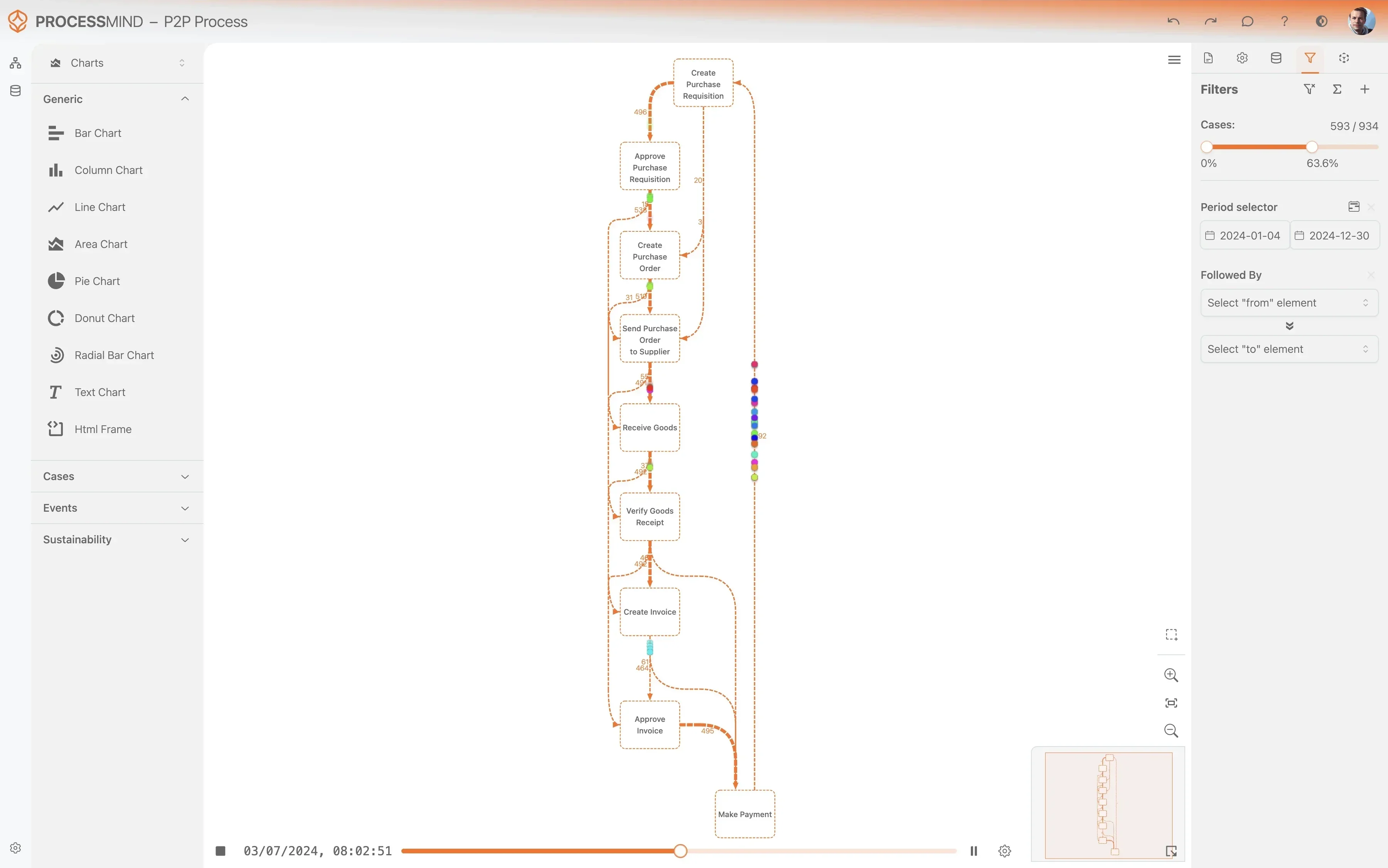
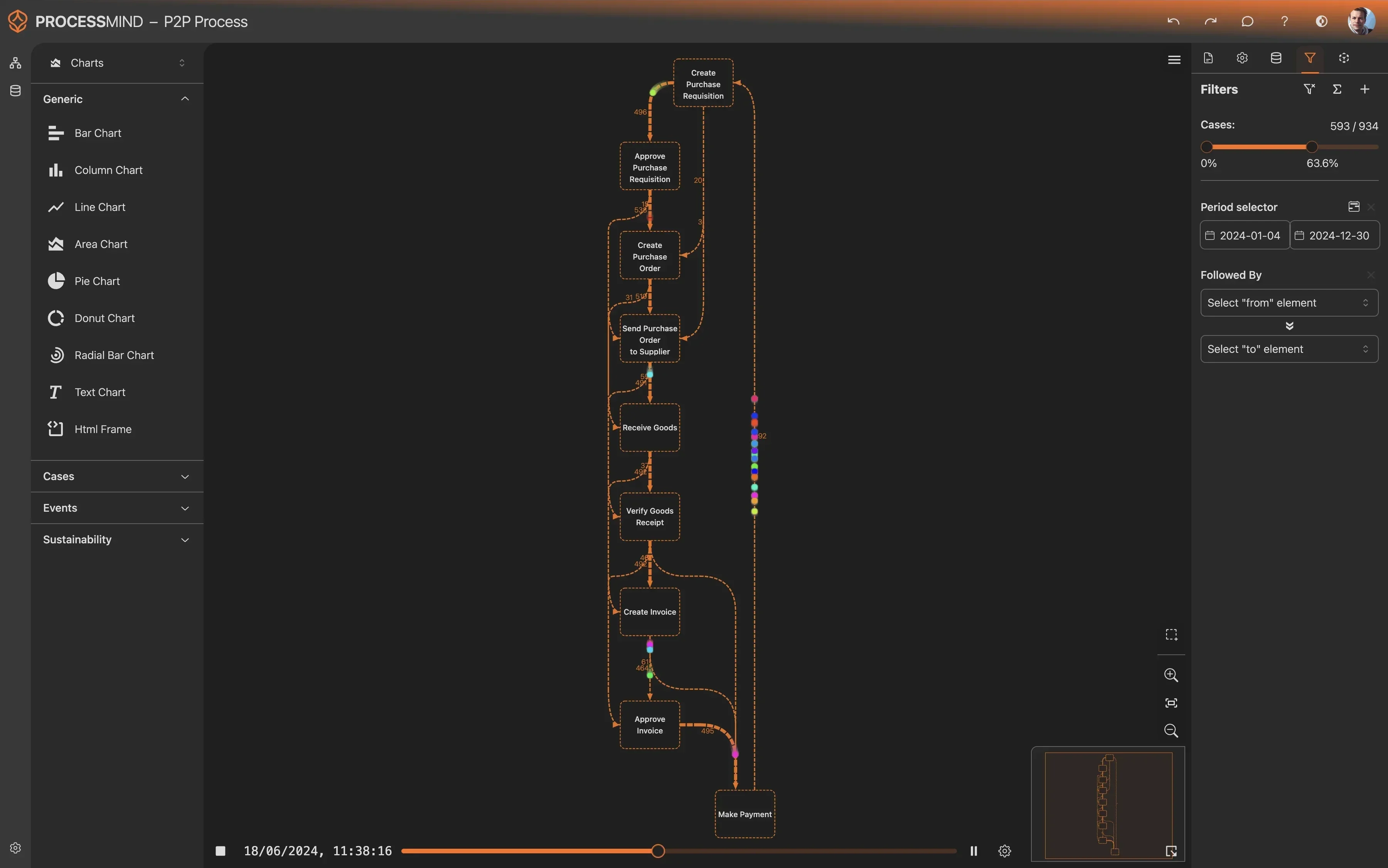
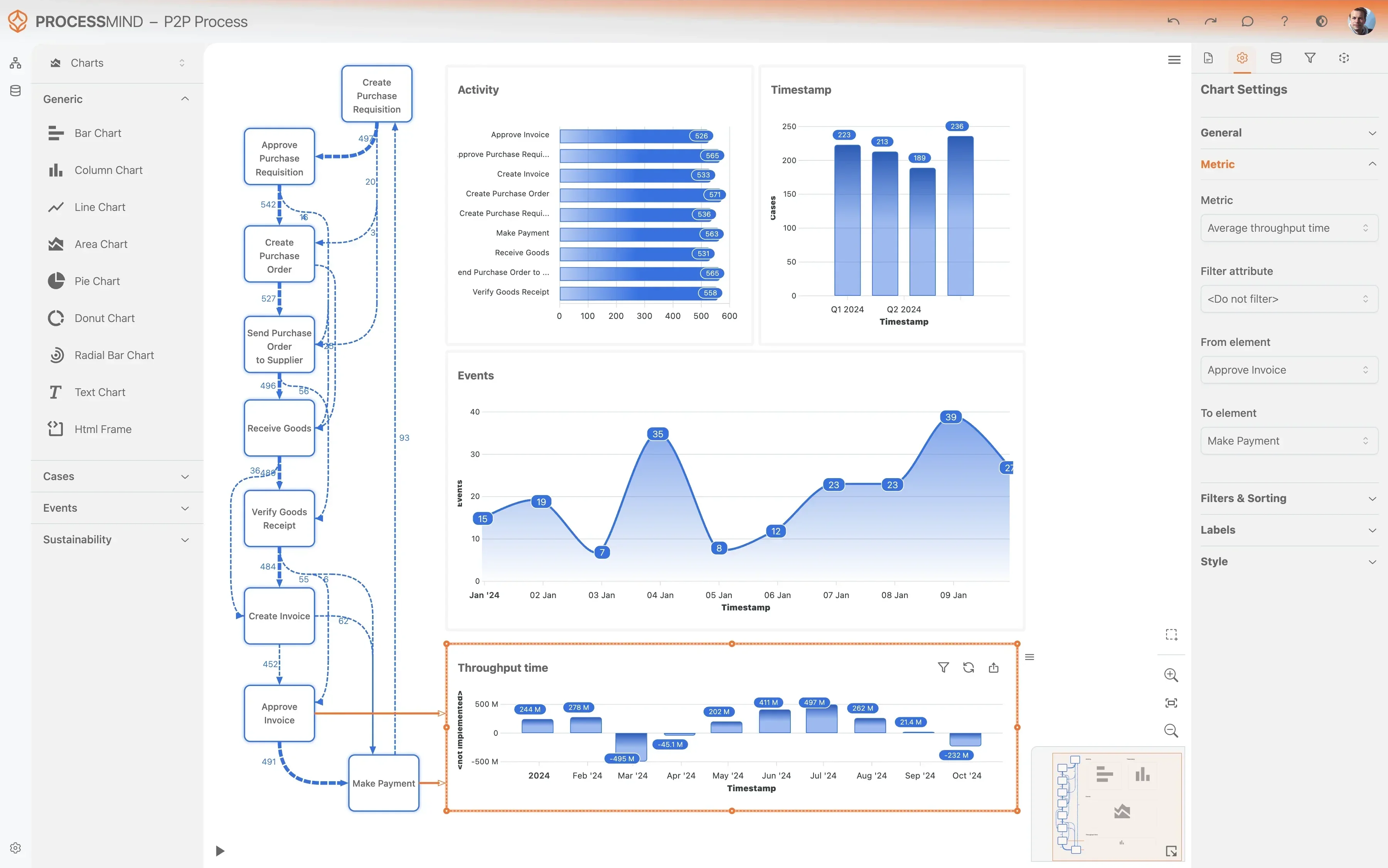
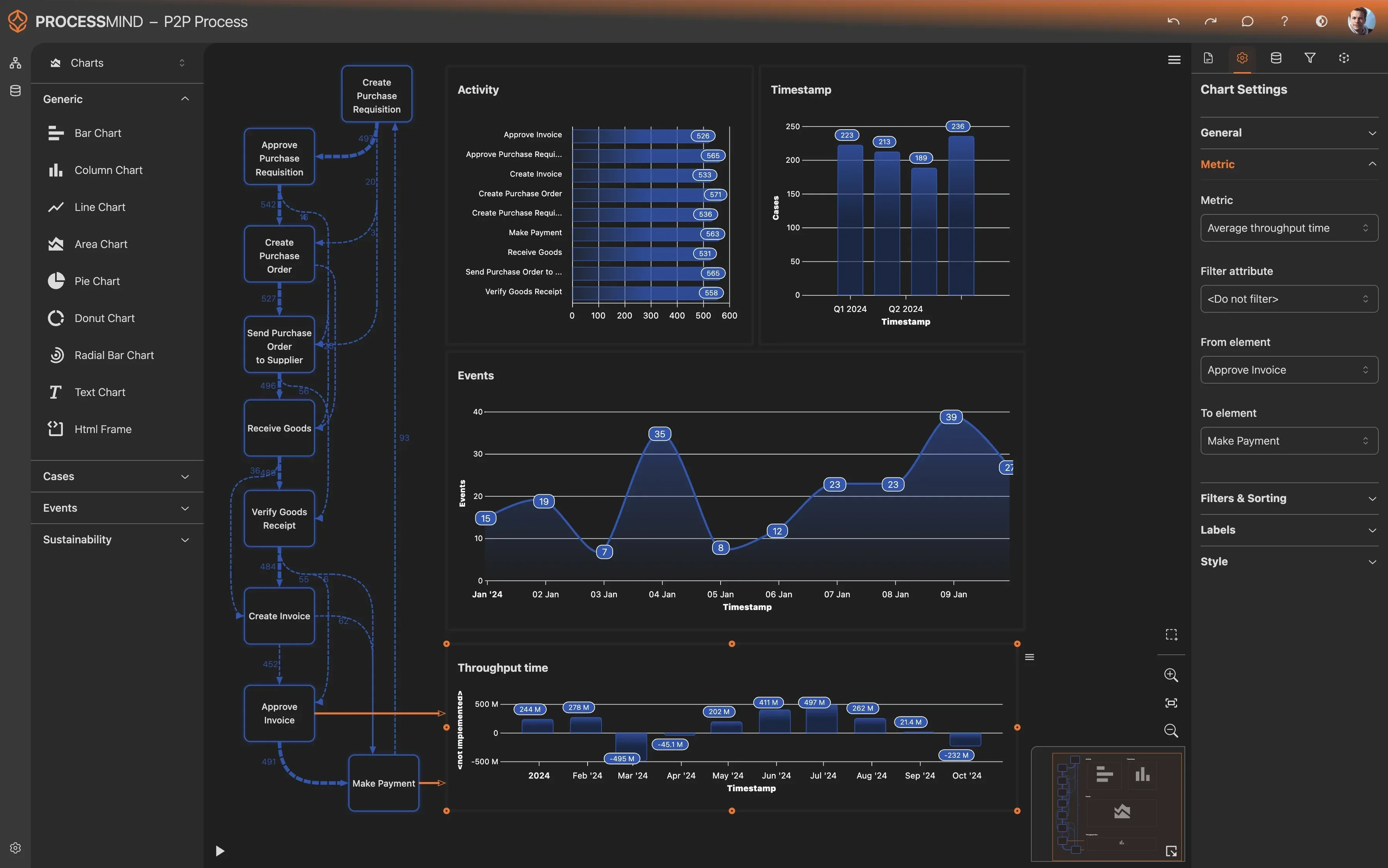
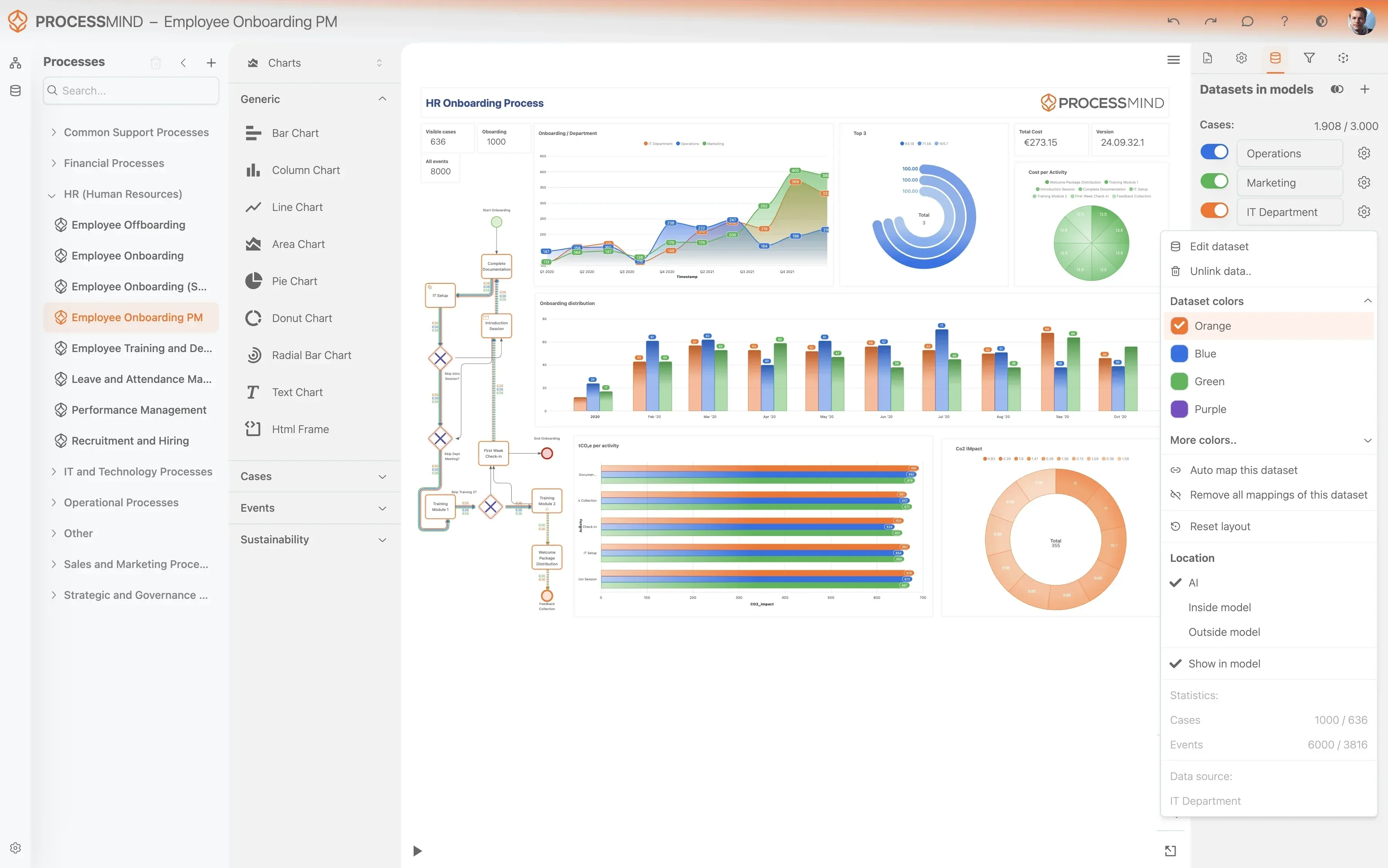
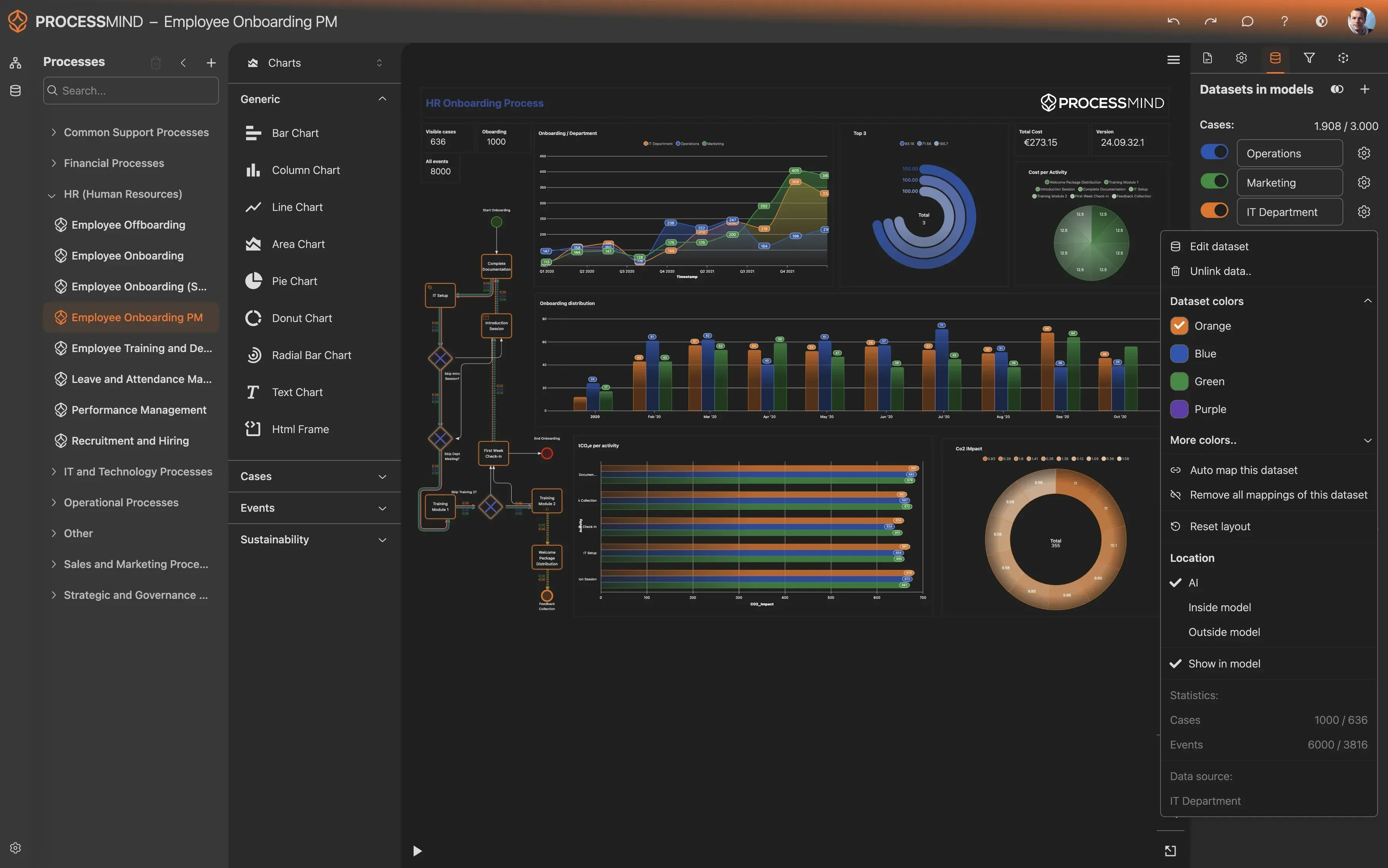
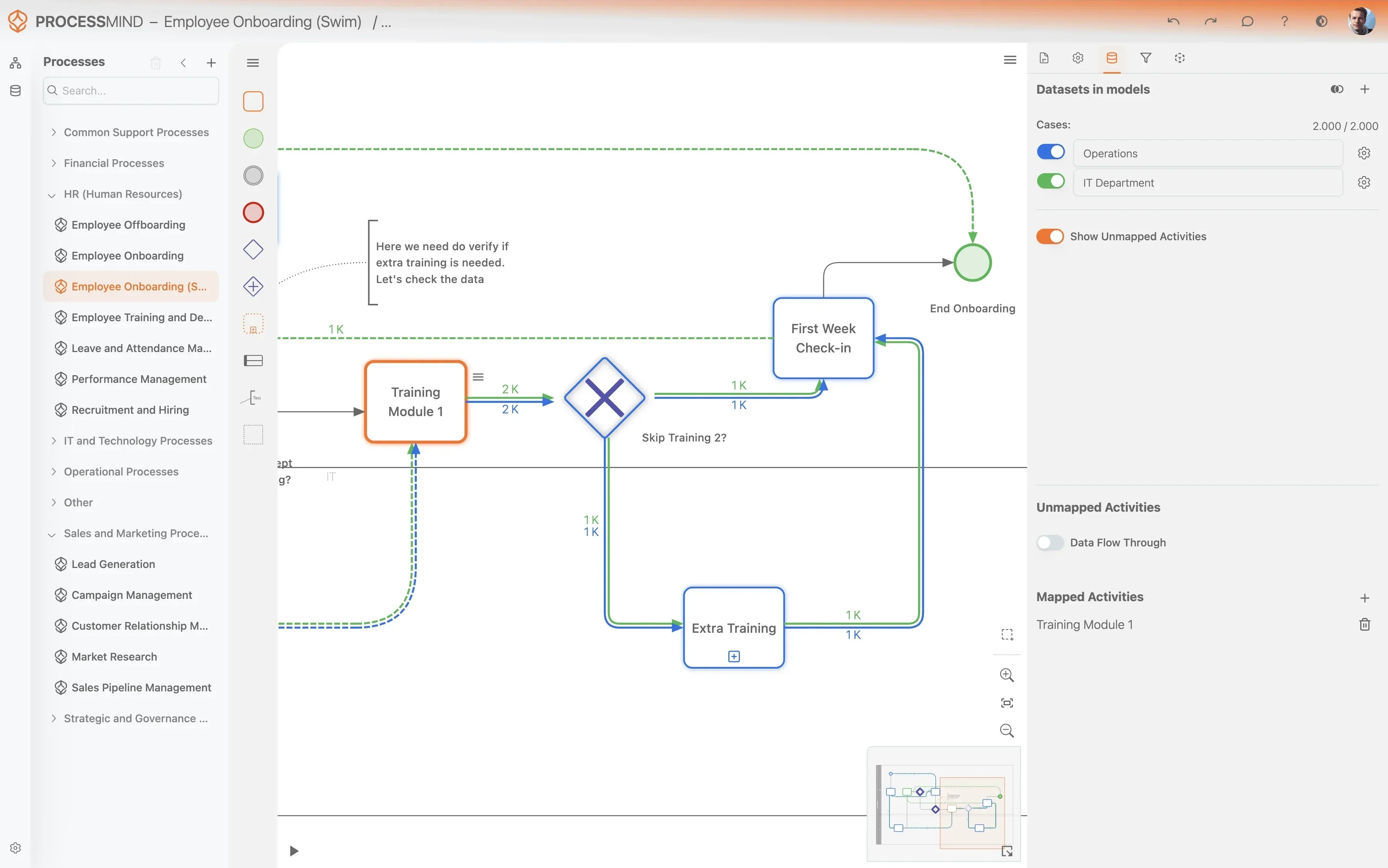
Explore the auto-generated dashboards, process maps, and performance metrics in ProcessMind. Utilize AI-driven recommendations to pinpoint specific improvement opportunities in your Genesys Cloud CX service flow.
Why it matters
Visualizing the end-to-end customer service journey helps uncover hidden inefficiencies, compliance gaps, and root causes of delays or poor customer experiences.
Expected outcome
A clear understanding of your Customer Service process bottlenecks and actionable, data-backed insights for optimization.
Implement Improvements
What to do
Prioritize the identified improvement opportunities based on their potential impact on customer satisfaction and operational efficiency. Take concrete actions to modify your Genesys Cloud CX workflows or agent training.
Why it matters
Translating insights into action directly improves service delivery, reduces operational costs, and enhances the overall customer experience by addressing pain points.
Expected outcome
Specific changes implemented in your Customer Service operations, targeting identified inefficiencies and pain points.
Monitor Your Process
What to do
Periodically re-upload fresh data from Genesys Cloud CX into ProcessMind. Continuously track key performance indicators to measure the impact of your implemented improvements over time.
Why it matters
Ongoing monitoring ensures that improvements are sustained, new issues are identified promptly, and your Customer Service process continues to evolve and optimize.
Expected outcome
A continuous feedback loop with measurable KPI improvements and sustained efficiency in your Customer Service operations.
TYPICAL OUTCOMES
Elevating Customer Service Performance
These outcomes represent the measurable improvements organizations typically achieve by optimizing their Customer Service processes, driven by insights from Genesys Cloud CX data and Service Request cases.
Average reduction in service request resolution time
By identifying and eliminating process bottlenecks, organizations significantly reduce the time it takes to resolve customer service requests, leading to quicker service delivery. This directly enhances customer satisfaction and frees up agent capacity.
Increase in first contact resolution rate
Process mining helps pinpoint root causes for repeated contacts, enabling targeted improvements that increase the percentage of issues resolved during the initial customer interaction. This improves efficiency and customer experience.
Decrease in internal escalation volume
By understanding why and when escalations occur, businesses can equip agents with better tools, training, or information, reducing the need for costly internal handoffs. This streamlines processes and reduces operational overhead.
Improvement in Service Level Agreement adherence
Process mining provides clear insights into deviations that cause SLA breaches, allowing organizations to optimize workflows and resource allocation to consistently meet service commitments. This builds customer trust and avoids penalties.
Decrease in average customer queue wait time
Identifying and resolving bottlenecks in service queues ensures customers spend less time waiting for assistance, leading to a smoother and more satisfying service experience. This directly improves customer perception and operational flow.
Results vary based on the specific complexities of your customer service operations and the quality of your Genesys Cloud CX data. The figures shared represent typical improvements observed across various implementations.
Recommended Data
FAQs
Frequently asked questions
Process mining analyzes your Genesys Cloud CX interaction data to reveal the actual customer service journey. It identifies bottlenecks, deviations from standard processes, and areas of inefficiency. This understanding helps you streamline workflows and enhance customer satisfaction.
To perform process mining, you primarily need event logs detailing service request interactions. This includes case identifiers, timestamps for each activity, and activity names, like "Contact Initiated," "Agent Assigned," "Request Escalated," or "Case Resolved." Relevant attributes, such as agent ID, queue, and channel, are also valuable.
Genesys Cloud CX offers various methods for data extraction, including its robust API, data export features, or third-party data integration tools. Typically, you would export interaction details, agent activity logs, and queue performance data. Our team can guide you through the optimal extraction strategy for your specific setup.
The initial data extraction and model setup can take a few weeks, depending on data volume and complexity. Once the model is built, initial insights and opportunities for improvement often emerge within a few days to a week. Continuous monitoring provides ongoing optimization opportunities.
Yes, absolutely. Process mining visualizes the exact paths service requests take, highlighting specific activities or agents that cause delays or frequent escalations. By identifying these root causes, you can implement targeted improvements to shorten resolution times and minimize internal hand-offs.
While process mining offers a deeper, flow-based analysis that differs from traditional reporting, its insights can complement your existing Genesys Cloud CX reports. Process mining identifies why certain metrics are trending, providing actionable root causes rather than just showing performance indicators. The derived insights can then inform strategic changes visible in your regular reports.
You will primarily need access to your Genesys Cloud CX system, along with an understanding of its data structure, to facilitate the initial data extraction. While process mining tools handle complex analysis, basic data management and IT support for secure data transfer are beneficial. No advanced coding knowledge is typically required from your end users.
Process mining meticulously maps customer journeys and agent activities, revealing patterns that lead to re-contacts or multiple interactions for a single issue. It can highlight common customer intents that are not adequately resolved on the first contact, or identify agents who consistently achieve higher first-contact resolution rates, allowing for best practice sharing and targeted training.
Yes, process mining can trace the full lifecycle of customer interactions across different channels within Genesys Cloud CX. It highlights instances where customers switch channels unnecessarily, or where certain channels lead to longer resolution times or higher escalations. This allows you to optimize channel routing and agent skill assignments.
End Repeat Contacts: Boost Customer Service Today!
Improve CSAT and achieve 80% first-contact resolution with ease.
No credit card required, activate your trial in minutes.