Improve Your Purchase to Pay - Requisition

Your 6-step guide to optimize Purchase Requisition in Oracle Fusion.
Improve Your Purchase to Pay - Requisition

Optimize Purchase Requisition in Oracle Fusion for Efficiency

Delays in requisition creation and approval can severely impact procurement efficiency and compliance. Our platform helps you pinpoint critical bottlenecks and understand complex approval workflows. You can then implement targeted improvements to streamline your processes and ensure timely actions. Discover how to optimize your requisition process today.

Download our pre-configured data template and address common challenges to reach your efficiency goals. Follow our six-step improvement plan and consult the Data Template Guide to transform your operations.

Show detailed description

Why Optimize Purchase to Pay - Requisition in Oracle Fusion Financials?

The purchase requisition is the foundational step in your organization's procurement cycle. Inefficiencies at this stage within Oracle Fusion Financials can ripple throughout the entire Purchase to Pay process, leading to significant delays, increased costs, and frustrated stakeholders. A slow or convoluted requisition process can mean project timelines are missed, critical supplies are delayed, and opportunities for early payment discounts are lost. Furthermore, a lack of visibility into your requisition workflows can compromise compliance with internal purchasing policies and external regulations, creating audit risks and potential financial penalties.

Optimizing your Purchase to Pay - Requisition process is not just about speed, it is about ensuring that every request for goods or services moves through the system efficiently, compliantly, and transparently. For organizations utilizing Oracle Fusion Financials, understanding the true journey of a requisition, from its 'Requisition Created' status to 'Requisition Approved' or 'Purchase Order Created from Requisition', is paramount. This deep dive into the actual process execution uncovers the hidden complexities and bottlenecks that traditional reporting often misses.

How Process Mining Enhances Requisition Improvement

Process mining offers a revolutionary approach to understanding and improving your Purchase to Pay - Requisition process in Oracle Fusion Financials. Instead of relying on assumptions or anecdotal evidence, process mining uses event logs from your Oracle Fusion system to reconstruct the exact path each purchase requisition has taken. This provides a data-driven visualization of your process, highlighting every activity, from 'Requisition Submitted' to 'Approval Step 1 Rejected' and beyond, along with its precise timing.

By analyzing this rich data, you can visually identify common process variations, pinpoint bottlenecks, and quantify the impact of rework loops. For instance, you can see if certain 'Requisition Type' entries consistently get stuck at 'Approval Step 2 Started', or if specific departments experience extended 'Requisition Cycle Time' due to frequent 'Requisition Amended' activities. Process mining brings transparency to the otherwise opaque journey of your requisitions, helping you understand not just what happened, but why and where improvements are most needed.

Key Areas for Requisition Process Improvement

With process mining, you gain specific insights into where to focus your improvement efforts for Purchase to Pay - Requisition within Oracle Fusion Financials. Typical improvement areas include:

  • Reducing Approval Cycle Time: Identify specific approval steps or individual approvers that cause delays. You can analyze average approval times for different requisition types, departments, or even estimated amounts, allowing you to streamline workflows or redistribute approval loads.
  • Minimizing Rework and Rejections: Understand the root causes behind requisitions being 'Requisition Amended' or 'Requisition Rejected'. This could involve clarifying requirements at the 'Requisition Created' stage, improving user training, or refining approval criteria to reduce back-and-forth.
  • Enhancing Compliance: Detect deviations from standard approval paths or policies. Process mining can highlight instances where requisitions bypass required steps or are approved outside established protocols, enabling you to enforce stricter compliance and improve auditability.
  • Streamlining Workflow Design: Evaluate the effectiveness of your existing approval workflows in Oracle Fusion Financials. You might discover overly complex paths that can be simplified, or opportunities to automate approvals for low-value, routine requisitions.
  • Improving User Experience: By making the requisition process smoother and faster, you enhance satisfaction for requesters and procurement teams alike, freeing up valuable time for more strategic tasks.

Achieving Measurable Outcomes

The insights gained from optimizing your Purchase to Pay - Requisition process in Oracle Fusion Financials translate into tangible benefits. You can expect a significant reduction in overall 'Requisition Cycle Time', leading to faster procurement and better support for business operations. This efficiency also results in cost savings by minimizing manual intervention, reducing errors, and capitalizing on timely purchases. Improved compliance ensures your organization operates within established guidelines, mitigating risk. Ultimately, a streamlined requisition process contributes to a more efficient, agile, and cost-effective Purchase to Pay ecosystem.

Getting Started with Requisition Process Optimization

Take the initiative to transform your Purchase to Pay - Requisition process in Oracle Fusion Financials. By leveraging process mining, you equip yourself with the tools to move beyond guesswork and implement data-driven improvements. Start your journey towards a more efficient, compliant, and transparent requisition workflow today. Understanding the true flow of your requisitions is the first step towards unlocking their full potential.

Purchase to Pay - Requisition Requisition Management Procurement Workflow Approval Process P2P Efficiency Compliance Auditing Requisition Bottlenecks Finance Department Procurement Team Spending Control

Common Problems & Challenges

Identify which challenges are impacting you

Delays in getting purchase requisitions approved directly impact procurement timelines, leading to missed delivery dates and potentially higher costs from expedited shipping or lost early payment discounts. This slow pace within the Purchase to Pay - Requisition process can strain vendor relationships and hinder operational agility.ProcessMind analyzes the exact duration spent at each approval step in Oracle Fusion Financials, identifying specific approvers or departments that cause bottlenecks. By visualizing the approval workflow, you can pinpoint where requisitions get stuck, enabling targeted interventions to streamline the approval process.

Frequent amendments to purchase requisitions, often occurring after submission, introduce significant rework and extend the overall cycle time for the Purchase to Pay - Requisition process. Each change requires re-evaluation and potentially re-approval, leading to delays and increased administrative overhead.ProcessMind maps all "Requisition Amended" activities and their preceding events, revealing common reasons for changes, such as incorrect data entry or unclear initial requests. This insight allows organizations using Oracle Fusion Financials to address root causes, improve initial requisition quality, and reduce costly rework.

Requisitions that deviate from established purchasing policies or approval matrices can lead to compliance risks, unauthorized spending, and audit findings within the Purchase to Pay - Requisition process. Such non-compliance undermines financial controls and increases organizational exposure to risk.ProcessMind automatically detects requisitions that follow non-standard approval paths or bypass required steps, even within complex Oracle Fusion Financials configurations. By comparing actual flows against defined rules, it highlights compliance gaps, enabling proactive measures to enforce policy adherence and strengthen internal controls.

A lack of clear, real-time visibility into the current status of purchase requisitions creates uncertainty for requesters and procurement teams alike. This often leads to manual follow-ups, redundant inquiries, and an inability to accurately predict procurement timelines, impacting overall efficiency.ProcessMind provides a comprehensive, end-to-end view of every requisition's journey, from "Requisition Created" to "Purchase Order Created from Requisition" within Oracle Fusion Financials. This transparency empowers users to track progress, anticipate delays, and communicate accurate statuses without manual investigation, improving planning and coordination.

A high percentage of rejected purchase requisitions signifies inefficiencies, misunderstandings, or systemic issues within the initial request or approval stages of the Purchase to Pay - Requisition process. Each rejection necessitates rework, consumes valuable time, and delays essential purchases.ProcessMind identifies the specific stages and reasons for requisition rejections, whether at "Approval Step 1 Rejected" or later, within Oracle Fusion Financials. By analyzing patterns associated with "Requester," "Department," or "Approval Workflow Path," it uncovers common causes of rejections, allowing for targeted training or process adjustments.

Variations in how purchase requisitions are handled across different departments, requesters, or item categories can lead to inconsistent outcomes, inefficiencies, and difficulties in enforcing standard operating procedures. This lack of standardization impacts the predictability and control of the Purchase to Pay - Requisition process.ProcessMind visualizes all actual process variants within Oracle Fusion Financials, highlighting deviations from the ideal path based on attributes like "Department" or "Requisition Type." This analysis exposes where and why inconsistencies occur, enabling organizations to standardize practices and enforce best-in-class processes uniformly.

Specific stages or individuals within the requisition approval workflow frequently become bottlenecks, causing accumulating delays for numerous purchase requests. Identifying these precise choke points is crucial for improving the flow and speed of the Purchase to Pay - Requisition process.ProcessMind precisely pinpoints where requisitions stall, analyzing dwell times between "Approval Step Started" and "Approved" events for each step in Oracle Fusion Financials. It identifies the slowest approvers or stages, allowing you to reallocate resources, reconfigure workflows, or provide additional training to alleviate these critical bottlenecks.

The total time from when a purchase requisition is created until a corresponding purchase order is generated can be excessively long, leading to delays in acquiring goods and services. This extended cycle impacts project timelines and operational efficiency within the broader Purchase to Pay process.ProcessMind calculates the end-to-end cycle time from "Requisition Created" to "Purchase Order Created from Requisition" for every requisition in Oracle Fusion Financials. By breaking down this duration into individual activity times, it reveals which segments contribute most to the overall delay, guiding efforts to shorten the process.

Despite automation tools in systems like Oracle Fusion Financials, many Purchase to Pay - Requisition processes still involve excessive manual data entry, checks, or interventions. These manual steps are prone to errors, increase processing time, and inflate operational costs.ProcessMind identifies activities that frequently involve human intervention, such as repetitive "Requisition Amended" events or manual follow-ups indicated by long idle times. By mapping these manual hotspots, it uncovers opportunities for further automation or process redesign, reducing manual effort and improving accuracy.

The creation of purchase requisitions by unauthorized personnel or for unapproved purposes poses a significant risk of maverick spending and budget overruns. Such instances undermine financial governance and can be difficult to track without clear visibility into the Purchase to Pay - Requisition process.ProcessMind analyzes the "Requester," "Department," and "Cost Center" attributes against the actual "Requisition Created" and "Approved/Rejected" activities in Oracle Fusion Financials. It can highlight requisitions initiated or approved outside of established roles or budgetary limits, providing immediate flags for potential unauthorized activity.

Discrepancies between the "Required By Date" on a requisition and the actual approval or purchase order creation date can lead to urgent requests becoming overdue. This misalignment impacts planning, creates stress, and can result in rush orders or missed operational deadlines.ProcessMind compares the "Creation Date" and "Required By Date" with the actual timestamps of "Requisition Approved" or "Purchase Order Created from Requisition" events in Oracle Fusion Financials. This analysis identifies where actual lead times consistently exceed requirements, revealing systemic issues that prevent timely fulfillment.

Even after a purchase requisition has been fully approved, there can be significant delays before the actual purchase order is created. This gap stalls the procurement process, preventing goods or services from being ordered in a timely manner and impacting downstream operations.ProcessMind measures the time elapsed between the "Requisition Approved" event and the "Purchase Order Created from Requisition" event within Oracle Fusion Financials. This insight pinpoints any lag in the transition from approval to actual purchasing, helping identify whether system integration issues or manual handoffs are causing the delay.

Typical Goals

Define what success looks like

Reducing the time it takes for purchase requisitions to get approved directly impacts procurement speed and efficiency. Faster approvals mean quicker acquisition of goods and services, preventing operational delays and ensuring projects stay on schedule within Oracle Fusion Financials. This ultimately leads to improved vendor relationships and better utilization of working capital for Purchase to Pay - Requisition.ProcessMind uncovers the specific stages and individuals causing approval bottlenecks, identifying deviations from standard paths and opportunities for parallel approvals. It quantifies delay points, allowing for targeted workflow reconfigurations and automation within your Purchase to Pay - Requisition process, potentially cutting approval times by 20-30%.

Frequent amendments to purchase requisitions introduce rework, extend processing times, and often indicate initial data inaccuracies or unclear requirements. Minimizing these changes ensures requisitions are "right the first time," reducing administrative burden and accelerating the overall Purchase to Pay - Requisition process in Oracle Fusion Financials.ProcessMind visualizes all amendment loops and identifies their root causes, such as missing information from specific requesters or late changes in requirements. By pinpointing problematic patterns and user behaviors, organizations can implement better upfront training, improve form design, or introduce stricter data validation rules to decrease amendment frequency by up to 40%.

Adhering to purchasing policies is crucial for governance, risk management, and financial control. Non-compliant requisitions can lead to unauthorized spending, audit issues, and legal risks. Achieving full compliance in the Purchase to Pay - Requisition process within Oracle Fusion Financials safeguards organizational assets and integrity.ProcessMind automatically detects every instance where a requisition deviates from predefined rules, such as spending limits, required approvals, or preferred vendor usage. It highlights non-compliant paths and activities, allowing for immediate corrective actions and process redesign to enforce compliance consistently, virtually eliminating policy breaches.

High rejection rates for purchase requisitions result in significant rework, frustration for requesters, and delays in obtaining necessary resources. Reducing these rejections indicates better upstream quality in requisition creation and clearer approval criteria in Oracle Fusion Financials, making the Purchase to Pay - Requisition process more efficient.ProcessMind analyzes the reasons behind rejections by correlating rejection events with specific attributes, activities, and approvers. It identifies common failure points and provides insights into why requisitions are rejected, enabling targeted improvements in training, policy communication, or workflow adjustments to reduce rejections by 15-25%.

Inefficient approval workflows, characterized by unnecessary steps or redundant checks, slow down the entire Purchase to Pay - Requisition process. Streamlining these workflows in Oracle Fusion Financials means faster processing, less manual intervention, and a more agile procurement function, directly impacting operational speed.ProcessMind maps out all actual approval paths, revealing hidden loops, unnecessary handoffs, and non-value-added steps that add latency to Purchase to Pay - Requisition. It quantifies the impact of each inefficiency, guiding organizations to redesign workflows for optimal performance and potentially reducing approval time by identifying parallelization opportunities.

The duration from an approved purchase requisition to the creation of its corresponding purchase order is a critical indicator of procurement efficiency. Accelerating this cycle means faster order fulfillment, improved supplier relationships, and reduced lead times for goods and services in Oracle Fusion Financials.ProcessMind precisely measures the elapsed time between requisition approval and PO creation, identifying specific delays in the handoff or subsequent processing steps within the Purchase to Pay - Requisition process. By uncovering bottlenecks and resource constraints in this critical transition, it enables targeted interventions to speed up PO generation significantly.

Inconsistent processing paths for purchase requisitions lead to unpredictable outcomes, varied cycle times, and challenges in enforcing policies. Standardizing these paths across Oracle Fusion Financials ensures uniformity, predictability, and easier adherence to best practices in the Purchase to Pay - Requisition process.ProcessMind visualizes all existing process variants, highlighting deviations from the ideal or expected flow. It identifies where and why inconsistencies occur, allowing organizations to enforce standardized procedures, consolidate redundant paths, and reduce process variability by 30-50%, leading to more predictable outcomes.

Excessive manual steps in the Purchase to Pay - Requisition process, such as data entry or status tracking, are prone to errors and consume valuable staff time. Automating these tasks within Oracle Fusion Financials frees up resources for more strategic activities and improves data accuracy.ProcessMind pinpoints activities that are frequently performed manually and identifies opportunities for automation, such as auto-approval for low-value items or automatic data population. It quantifies the time and cost savings from potential automation initiatives, guiding implementation of RPA or system configurations to reduce manual effort by 20-40%.

Unauthorized purchase requisitions pose a significant risk of uncontrolled spending and fraud, undermining financial governance. Eliminating these instances is paramount for maintaining budget control and ensuring that all procurement activities align with organizational policies in Oracle Fusion Financials.ProcessMind identifies all requisitions that bypass standard creation and approval protocols or originate from unauthorized sources within the Purchase to Pay - Requisition process. It traces these rogue paths back to their origin, enabling organizations to implement stricter access controls, system configurations, and monitoring to prevent future occurrences.

Poor visibility into the current status of purchase requisitions causes frustration for requesters, leads to frequent inquiries, and can delay decision-making. Enhancing transparency ensures all stakeholders have real-time access to information, improving communication and overall process satisfaction in Oracle Fusion Financials.ProcessMind provides a clear, end-to-end view of every Purchase to Pay - Requisition case, showing its exact stage, current owner, and any pending actions. It allows users to track the lifecycle in detail, identify where requisitions are held up, and empowers proactive communication, thereby reducing "where is my requisition?" inquiries by over 50%.

Misalignment between the requested "required-by" dates and actual delivery timelines can lead to stockouts, project delays, or expedited shipping costs. Improving this alignment ensures realistic expectations and optimized inventory management throughout the Purchase to Pay - Requisition cycle within Oracle Fusion Financials.ProcessMind analyzes the accuracy of "required-by" dates by comparing them against actual PO creation and delivery times, identifying patterns of consistent over- or underestimation by specific requesters or departments. This insight allows for better forecasting, requester training, or adjustments to lead time calculations, leading to more realistic planning.

The 6-Step Improvement Path for Purchase to Pay - Requisition

1

Download the Template

What to do

Get the Excel template designed for Purchase to Pay Requisition analysis. This template ensures your Oracle Fusion Financials data is structured correctly for efficient processing.

Why it matters

Using the right template prevents data inconsistencies and ensures accurate analysis from the start, laying a solid foundation for discovering improvement opportunities.

Expected outcome

A ready-to-use Excel template tailored for your Purchase to Pay Requisition data.

WHAT YOU WILL GET

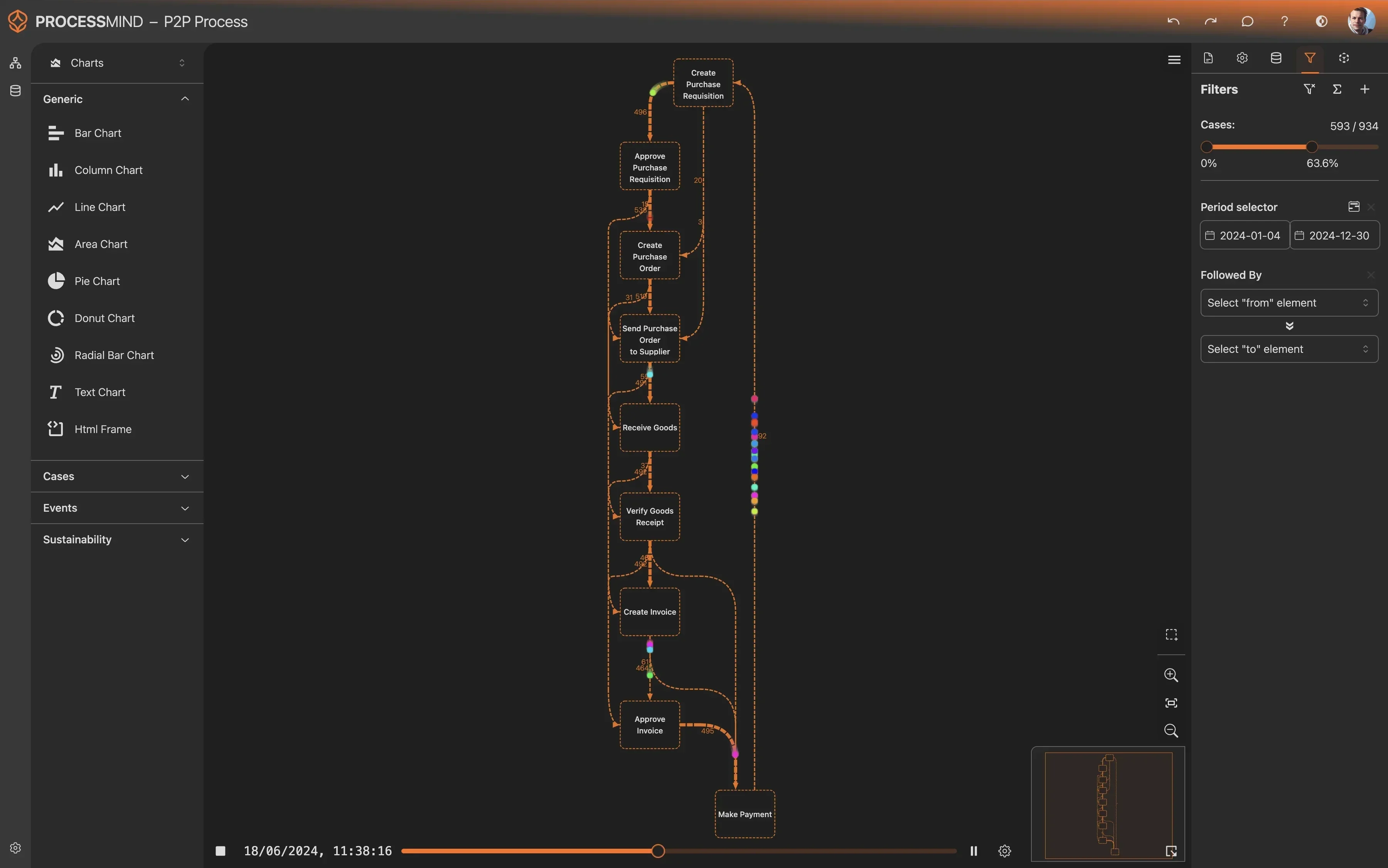
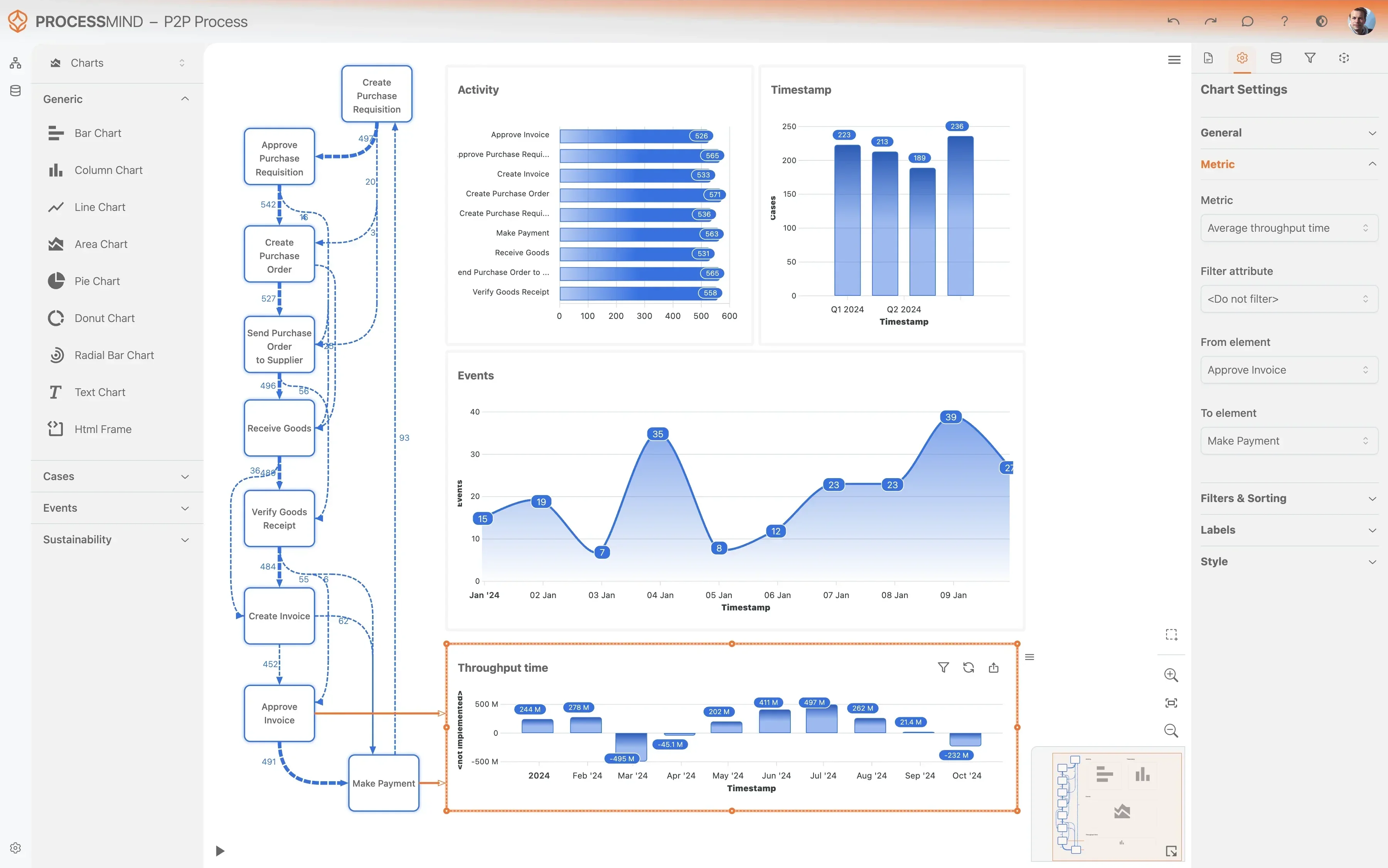
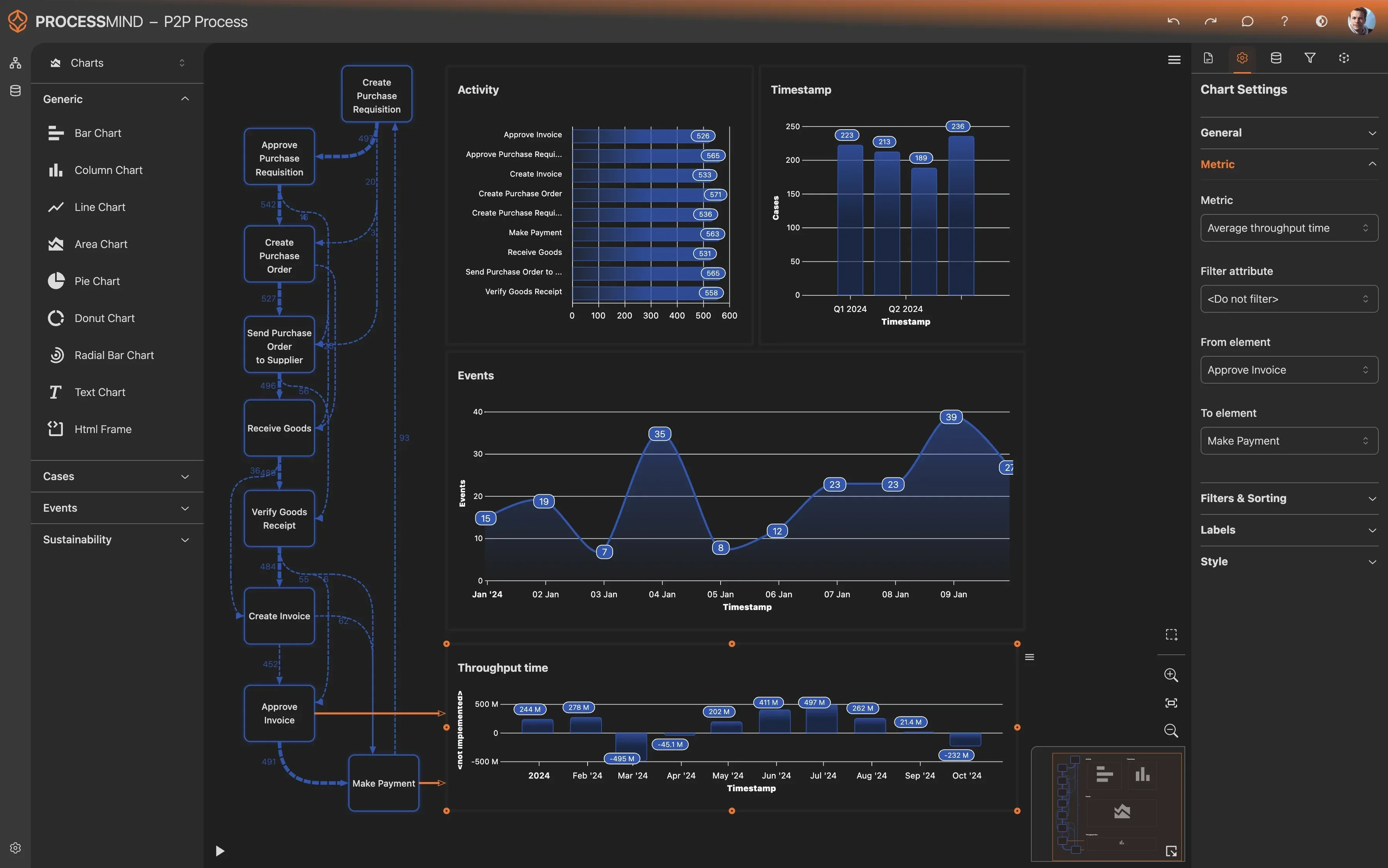
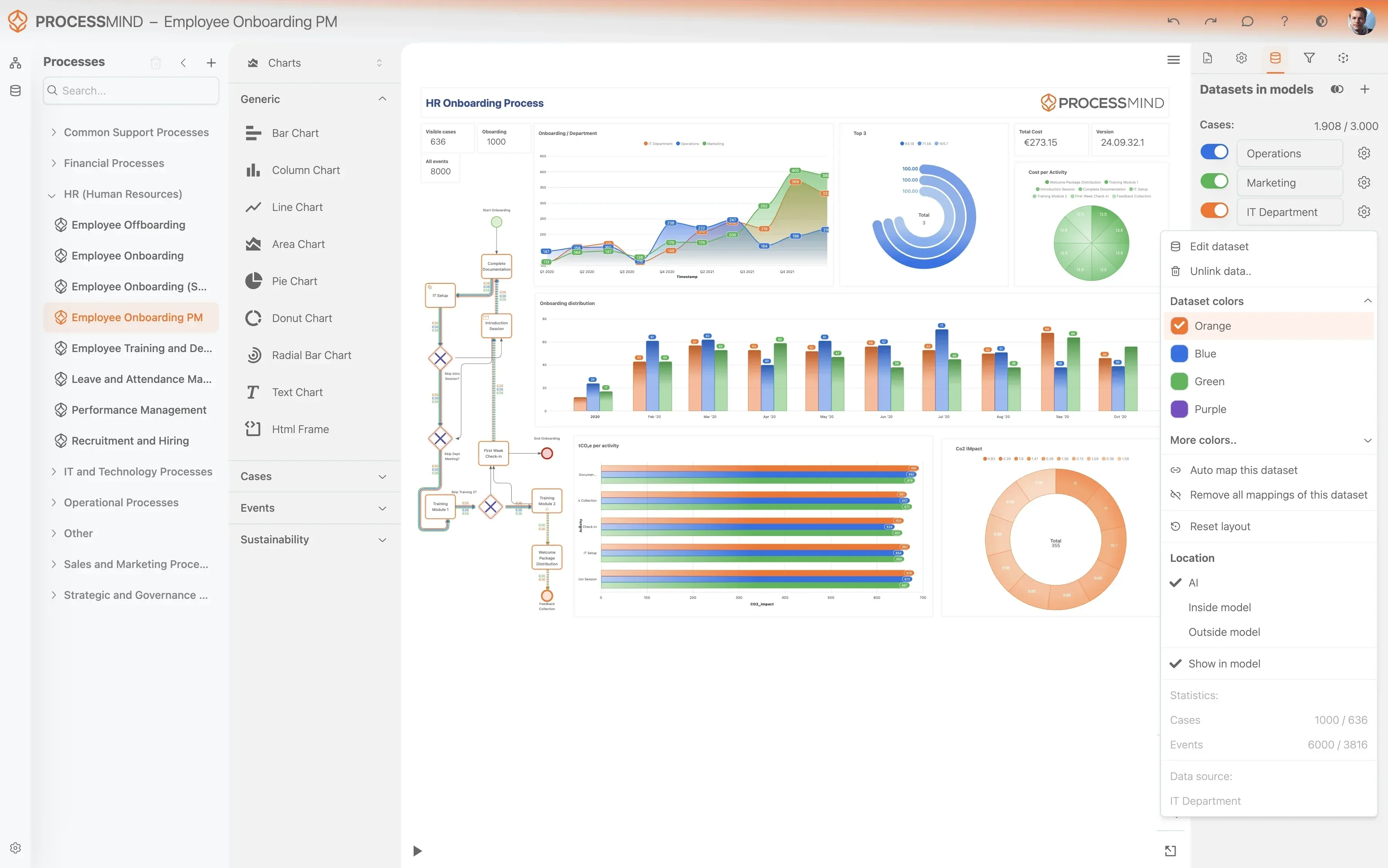
Uncover the Truth in Your Purchase Requisition Process

ProcessMind transforms your raw Oracle Fusion data into vivid visualizations and actionable insights. Pinpoint delays and inefficiencies in your Purchase to Pay requisition workflow.
  • Visualize end-to-end requisition process flow
  • Identify exact delays in approval steps
  • Optimize approval paths for faster processing
  • Benchmark requisition cycles across departments
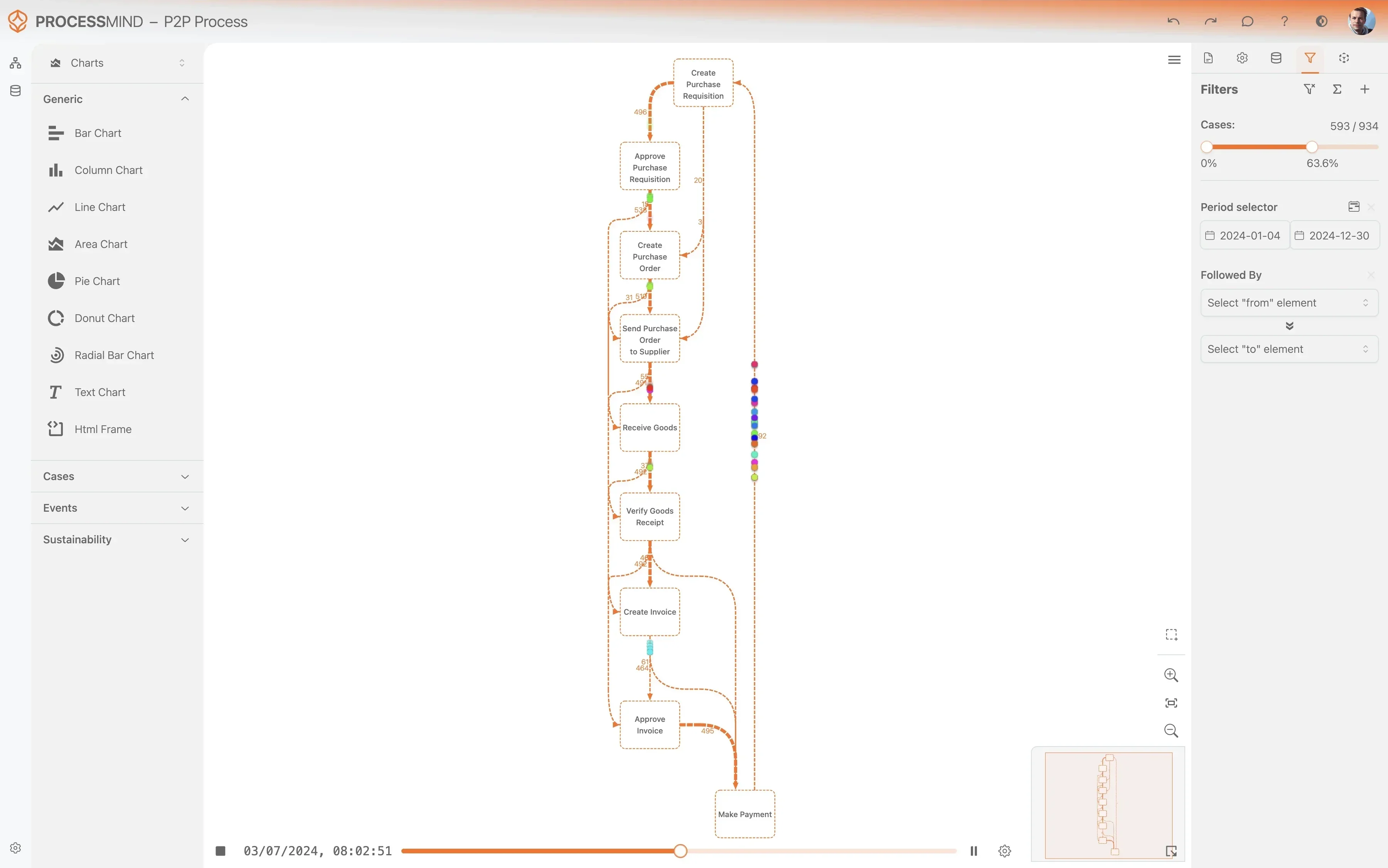
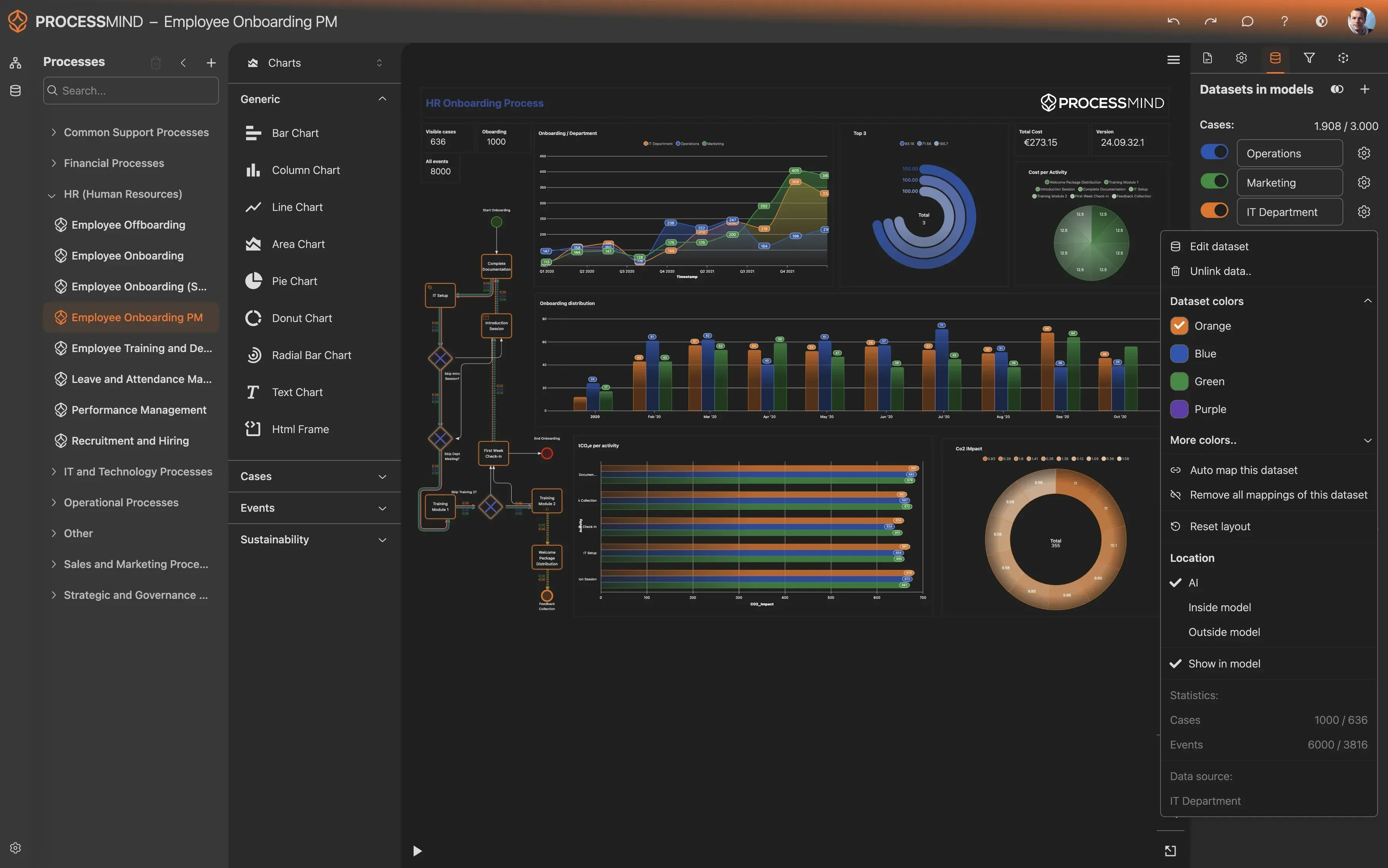
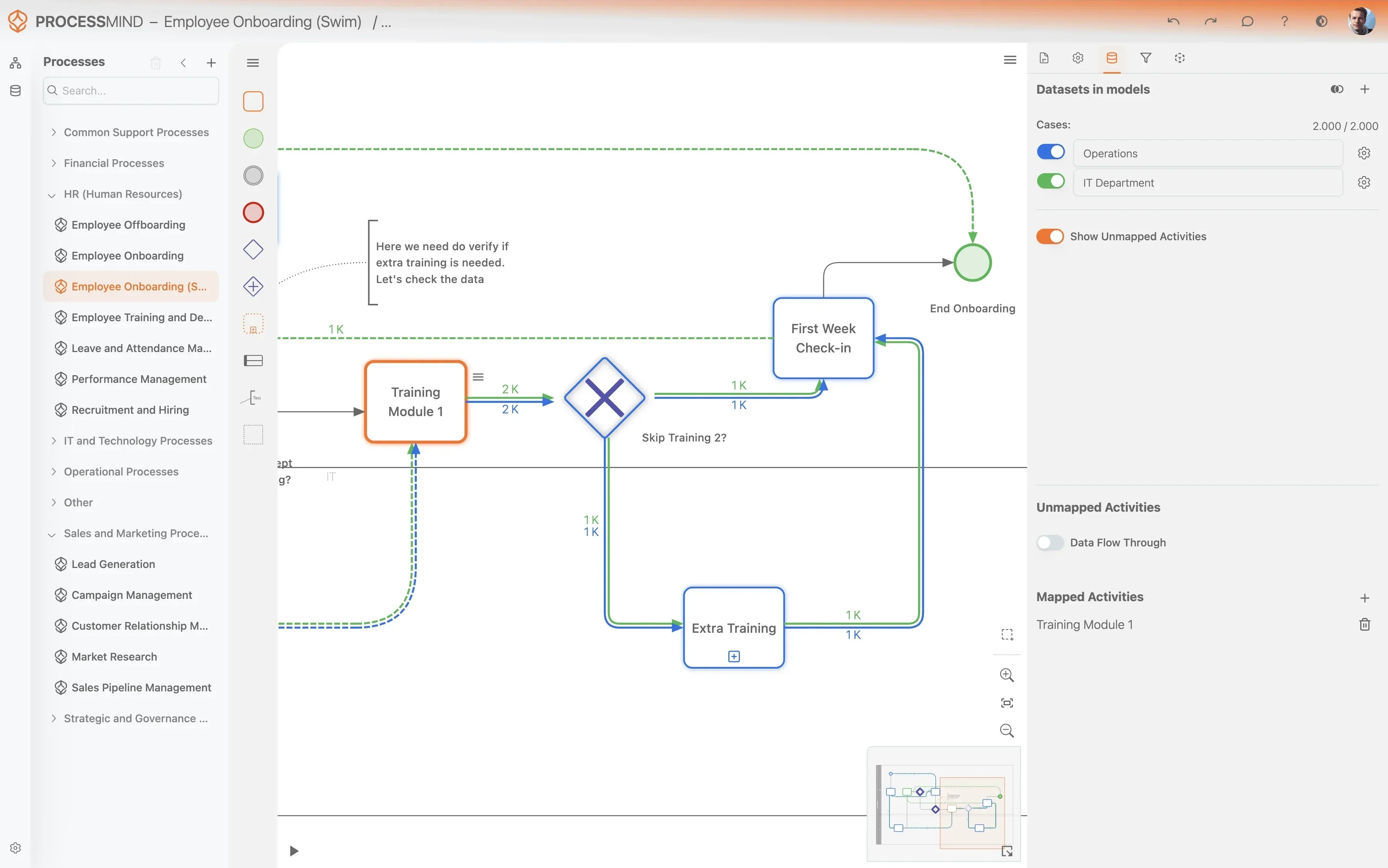
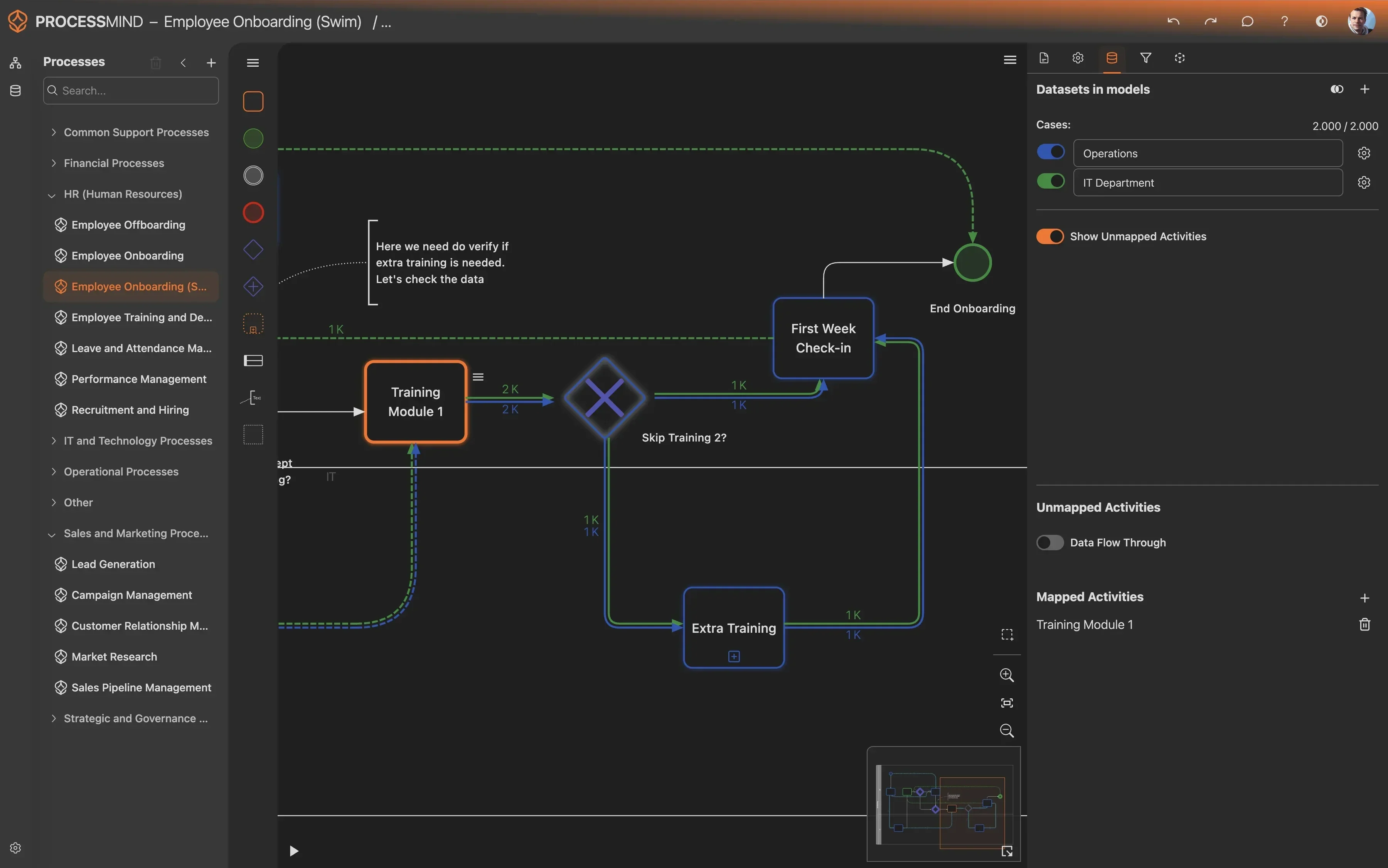
Discover your actual process flow
Identify bottlenecks and delays
Analyze process variants
Design your optimized process

TYPICAL OUTCOMES

Key Improvements in Purchase to Pay Requisitions

This section highlights the common benefits and efficiencies gained when optimizing the Purchase Requisition process within Oracle Fusion Financials, driven by data-driven insights.

0 % faster
Faster Approval Cycles

Average Requisition Approval Time

Identify and eliminate bottlenecks in approval workflows, significantly cutting down the time it takes for requisitions to get approved. This ensures faster procurement and better operational agility.

0 % reduction
Fewer Requisition Rejections

Decrease in Requisition Rejection Rate

Understand the root causes of requisition rejections, such as policy non-conformance or budget issues, and implement changes to reduce rework and delays. This improves first-pass approval rates.

0 % uplift
Enhanced Policy Compliance

Higher Requisition Conformance Index

Gain full visibility into actual approval paths versus defined policies, ensuring all requisitions adhere to organizational rules and preventing unauthorized spending. This strengthens governance.

0 % increase
More Straight-Through

Higher Straight-Through Requisition Rate

Identify opportunities to process requisitions from creation to approval without manual intervention, amendments, or rejections. This drives efficiency and reduces manual effort.

0 % decrease
Minimized Amendments

Reduction in Requisition Amendment Rate

Pinpoint why requisitions are frequently amended, addressing issues like unclear requirements or data entry errors to reduce back-and-forth cycles. This accelerates overall processing.

Results vary based on process complexity and data quality. These figures represent typical improvements observed across implementations.

FAQs

Frequently asked questions

Process mining analyzes event logs from Oracle Fusion Financials to visualize the actual flow of your Purchase Requisition process. It identifies inefficiencies like slow approval cycles, frequent amendments, and non-compliant requisitions, providing data-driven insights for targeted improvements.

To begin, you typically need event logs related to your Purchase Requisition IDs. Key data points include the Purchase Requisition ID itself, activity name or status, timestamp of the activity, and the user or system performing the activity. Additional attributes like requisition value or approver details can enrich the analysis.

After successful data extraction and initial processing, basic insights can often be generated within a few days or weeks, depending on data quality and volume. Deeper analysis, including root cause investigations and advanced process discovery, may take longer as you refine your questions and explore specific areas.

Yes, absolutely. Process mining precisely maps out all approval paths and identifies where delays occur within your Oracle Fusion Financials workflows. By highlighting specific bottlenecks and non-standard routes, it provides the evidence needed to streamline processes and significantly reduce overall cycle times.

The primary technical requirement is access to your Oracle Fusion Financials database or an equivalent data export mechanism to retrieve event logs. The process mining tool itself typically runs as a cloud service or on a dedicated server, requiring connectivity to your data source for ingestion.

Process mining allows you to define desired process models or compliance rules, then compares every actual requisition path against these standards. It automatically flags any deviation, such as requisitions bypassing required approvals or unauthorized creations, ensuring complete policy adherence.

Data extraction from Oracle Fusion Financials typically involves standard reporting or API access, which your IT team can facilitate. While initial setup requires understanding your system's data model, it is a well-defined process, and many process mining tools offer connectors or guidance for common ERP systems.

Beyond cycle time, you can expect to uncover opportunities to minimize requisition amendments, decrease rejection rates, and standardize inconsistent processing paths. It also helps in automating manual tasks and improving the overall requisition-to-PO cycle.

Process mining reconstructs the complete journey of each Purchase Requisition ID, visualizing its exact status and path taken through the Oracle Fusion Financials system. This end-to-end view clarifies where any requisition currently stands, who is responsible for the next step, and potential future delays.

Achieve 30% Faster Purchase to Pay - Requisition

Streamline your Oracle P2P Requisition and reduce cycle time by 30%.

Start Your Free Trial

No credit card required, set up in minutes.