Improve Your Expense Management

Select a process
Choose a process to continue working in your connected workspace.
Optimize Brex Expense Management for Faster Reimbursements
Expense management can hide inefficiencies leading to delays and compliance risks. We help you precisely pinpoint bottlenecks in your expense approval workflows and guide you toward practical improvements. Discover how to streamline operations, reduce costs, and enhance employee satisfaction.
Download our pre-configured data template and address common challenges to reach your efficiency goals. Follow our six-step improvement plan and consult the Data Template Guide to transform your operations.
Show detailed description
Why Optimizing Your Brex Expense Management Process Matters
Expense management is a critical business function that directly impacts financial health, employee satisfaction, and compliance. Even with advanced platforms like Brex, which streamline corporate cards, expense, and bill pay, hidden inefficiencies can emerge in your Expense Management workflows. Manual checks, delays in approvals, and frequent rework can lead to significant operational costs, frustrate employees waiting for reimbursements, and expose your organization to compliance risks. Understanding the actual flow of your expense reports, from creation to final accounting, is essential for identifying these costly issues.
Without a clear, data-driven view, organizations often rely on anecdotal evidence or static reports, which only show fragments of the overall process. This makes it challenging to pinpoint the root causes of delays or policy violations. An inefficient Expense Management process in Brex not only burdens finance teams with extra work but also impacts cash flow and can diminish trust among employees. Optimizing how you manage expenses is not just about cutting costs, it is about enhancing the entire employee experience and ensuring financial accuracy.
How Process Mining Unlocks Brex Expense Management Efficiency
Process mining offers a revolutionary approach to improving your Expense Management in Brex. Instead of relying on assumptions, process mining uses event log data, such as records of activities performed within Brex, to reconstruct the actual end-to-end process. By analyzing the sequence and timing of events, like "Expense Report Created," "Manager Review Pending," and "Reimbursement Executed," you gain unparalleled visibility into your operations.
This powerful analytical capability allows you to precisely identify bottlenecks in your expense approval workflows. You can see exactly where an expense report's journey consistently stalls, whether it is a specific manager, a particular expense category, or a stage like "Policy Check Performed." Process mining helps you discover unexpected process variations, common rework loops where reports are repeatedly sent back for revision, and compliance gaps. It provides a data-driven answer to the question, "how to improve Expense Management?" by showing you the real-world performance and variations, enabling targeted process optimization efforts.
Key Areas for Improving Your Expense Management Cycle Time
Applying process mining to your Brex expense data reveals numerous opportunities for improvement. One primary focus is reducing the overall expense report cycle time, from submission to reimbursement. By visualizing the actual paths expense reports take, you can uncover common inefficiencies, such as:
- Approval Bottlenecks: Identify specific individuals or departments that consistently cause delays in manager or finance approval steps. Understanding these bottlenecks is key to reducing overall cycle time.
- Rework and Revisions: Analyze instances where expense reports are frequently sent back for revision, such as from "Finance Rejected" to "Expense Report Sent Back for Revision." This helps pinpoint common errors, missing information, or policy adherence issues.
- Policy Compliance: Detect deviations from standard approval paths or instances where policy checks are bypassed or delayed, ensuring better adherence and audit readiness.
- Automated Opportunities: Identify manual steps that are candidates for automation within or outside of Brex, further streamlining the process and reducing human error.
By focusing on these areas, you can directly influence how to reduce Expense Management cycle time, making the process smoother and more predictable for everyone involved.
Expected Outcomes of Your Process Optimization Efforts
Optimizing your Expense Management process in Brex through process mining yields significant, measurable benefits. You can expect to see:
- Reduced Reimbursement Cycle Time: Accelerate the time it takes for employees to get reimbursed, improving satisfaction and reducing inquiries to finance.
- Lower Operational Costs: Minimize the time and resources spent on managing, approving, and auditing expense reports, allowing finance teams to focus on higher-value tasks.
- Enhanced Compliance: Ensure consistent adherence to company expense policies and regulatory requirements, reducing financial risks and improving audit outcomes.
- Increased Employee Satisfaction: A faster, more transparent, and predictable expense process significantly improves the employee experience, fostering greater trust and morale.
- Improved Cash Flow Management: Better visibility into upcoming reimbursements and streamlined processing can lead to more predictable cash flow planning.
These tangible outcomes demonstrate the direct business value of understanding and improving your expense workflows, moving beyond just tracking expenses to proactively optimizing the entire process.
Getting Started with Brex Expense Management Optimization
Embarking on the journey to optimize your Expense Management in Brex is more accessible than you might think. By leveraging process mining, you transform raw data into actionable insights, providing a clear roadmap for improvements. This data-driven approach removes the guesswork, enabling you to make informed decisions that lead to tangible results, benefiting your employees, your finance team, and your bottom line. Take the first step towards a more efficient, compliant, and employee-friendly expense management system today.
The 6-Step Improvement Path for Expense Management
Download the Template
What to do
Get the pre-formatted Excel template designed for expense management data. This ensures your data from Brex is structured correctly for analysis.
Why it matters
A standardized data structure is crucial for accurate and efficient process analysis, laying the groundwork for reliable insights.
Expected outcome
A ready-to-fill Excel template for your Brex expense data.
Export Your Brex Data
What to do
Export 3-6 months of historical expense report data from Brex, focusing on transaction details, approval flows, and reimbursement status. Fill the template with this data.
Why it matters
Analyzing recent, comprehensive data from Brex reveals current process inefficiencies and compliance gaps, providing a realistic view of operations.
Expected outcome
Your expense management data organized and ready in the template.
Upload Your Dataset
What to do
Upload your completed Excel template to ProcessMind via our secure portal. Our system will automatically process and prepare your data for analysis.
Why it matters
Seamless data ingestion enables quick access to powerful analytics without manual setup, accelerating your journey to process optimization.
Expected outcome
Your expense management process visualized and ready for deep analysis.
Analyze Your Expense Process
What to do
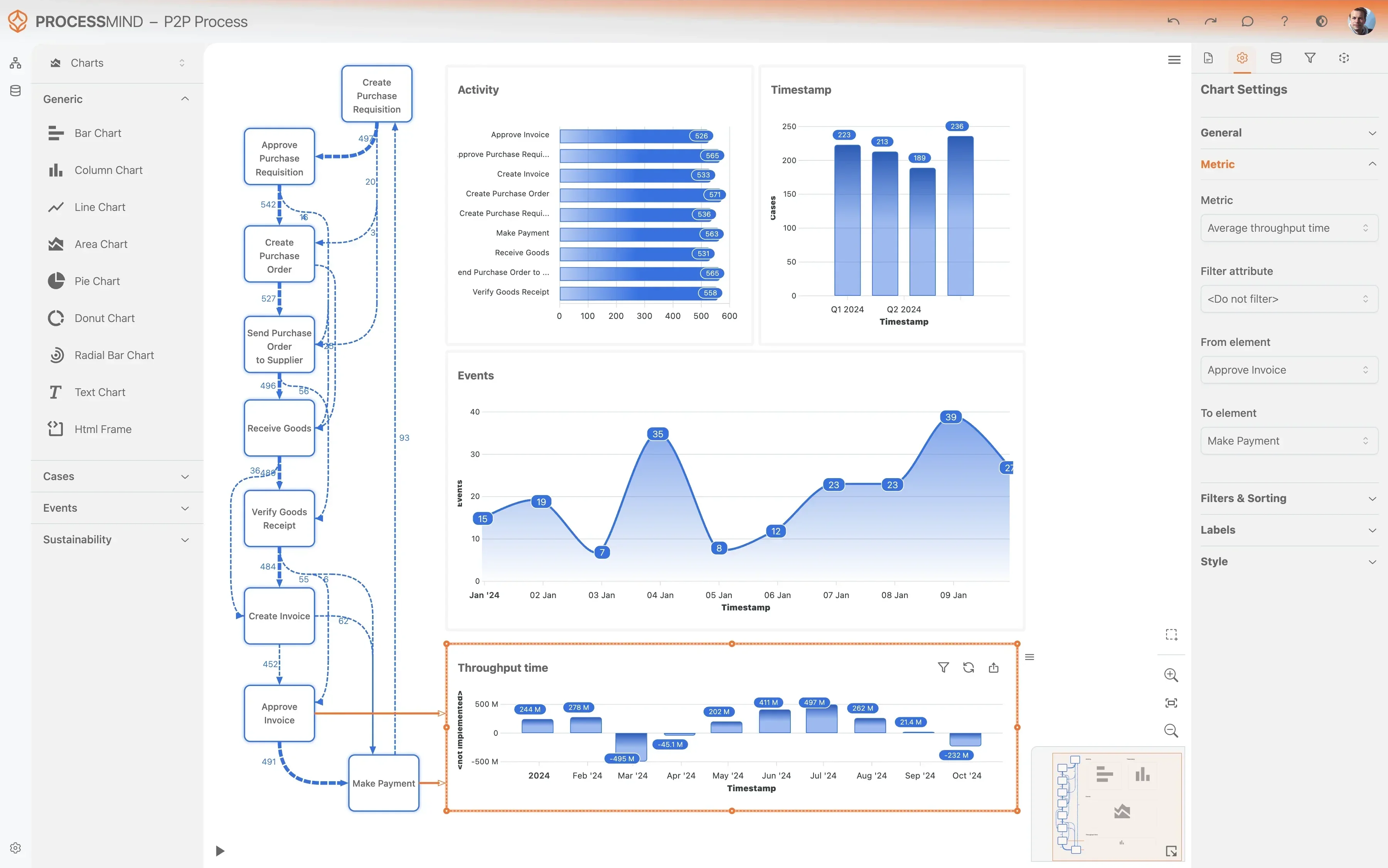
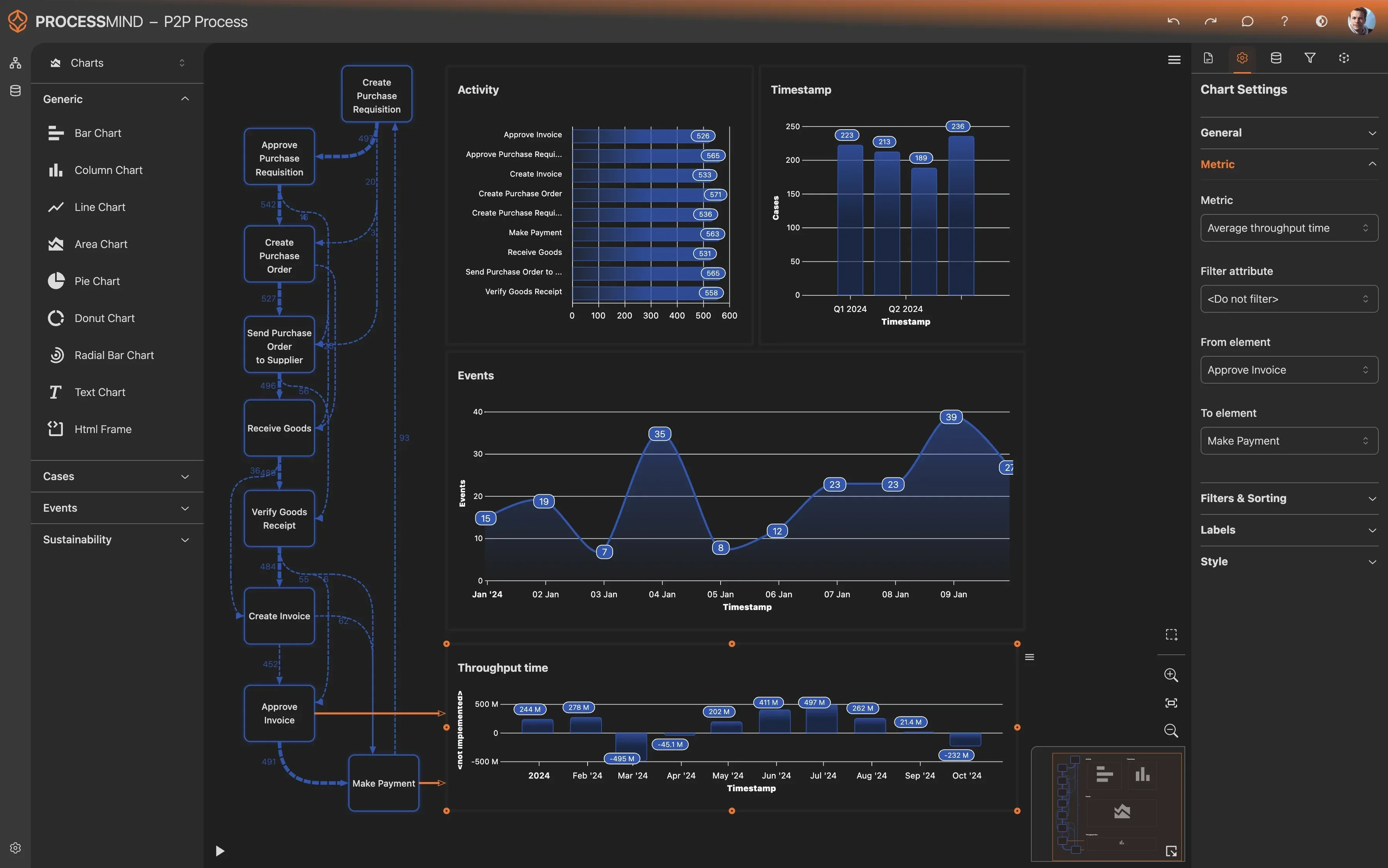
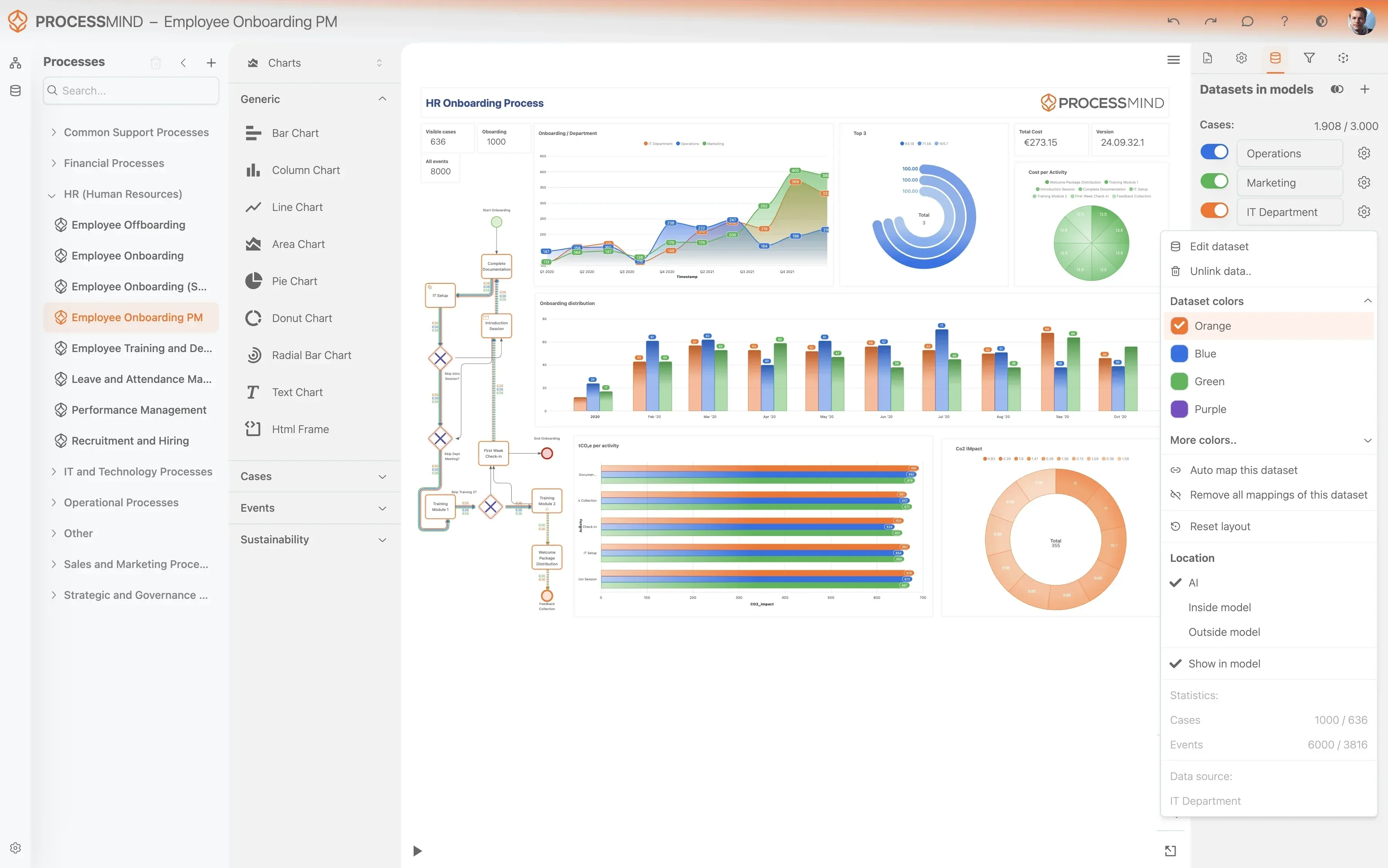
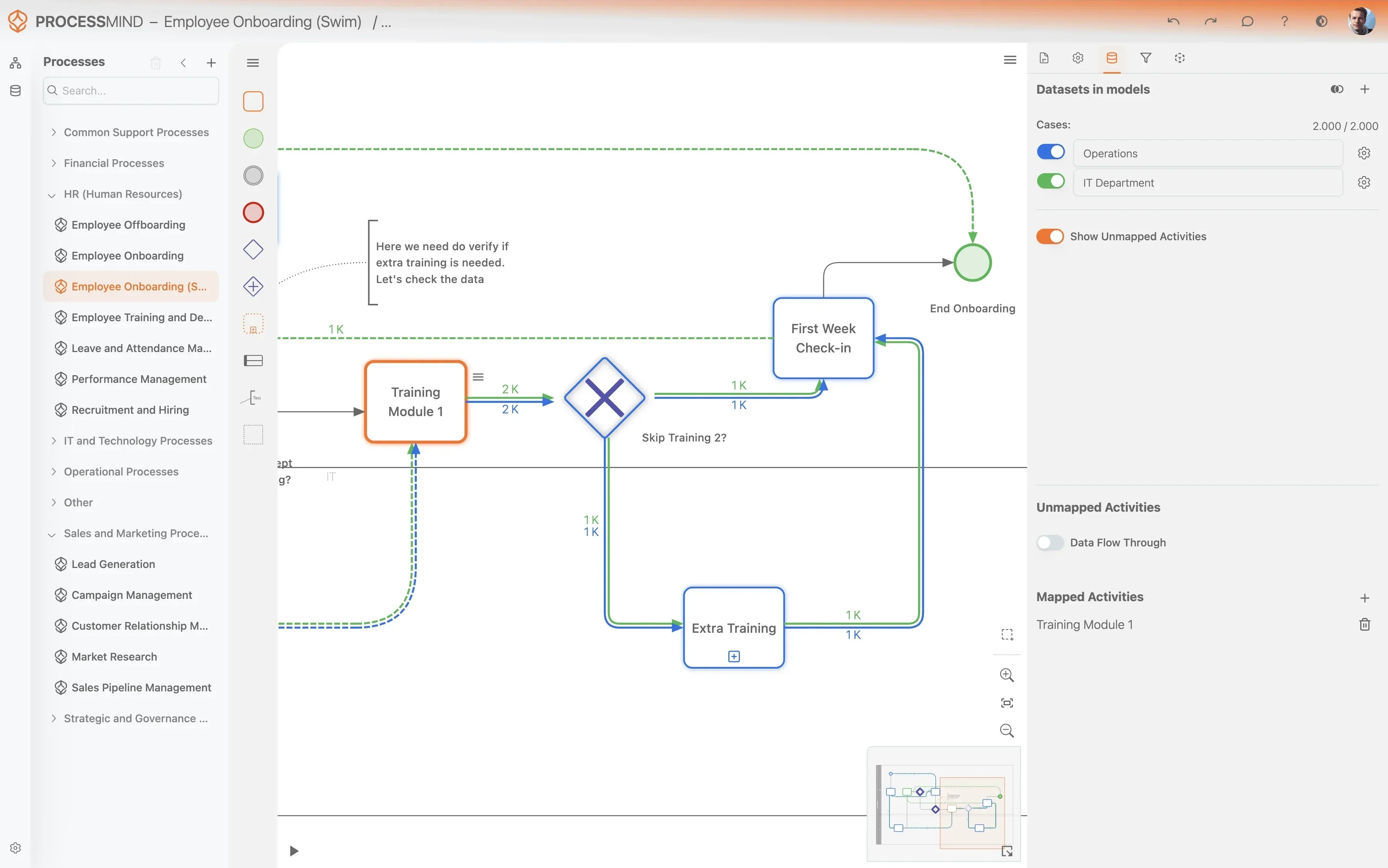
Explore auto-generated dashboards and process maps to visualize your Brex expense workflows. Identify bottlenecks in approvals, policy violations, and inefficiencies.
Why it matters
Visualizing the actual process uncovers hidden delays and non-compliance, allowing you to pinpoint specific areas needing urgent attention.
Expected outcome
Clear insights into approval bottlenecks, compliance issues, and areas for efficiency gains.
Implement Key Improvements
What to do
Prioritize AI-driven recommendations and implement changes within Brex, such as refining approval hierarchies or automating policy checks based on insights.
Why it matters
Taking targeted action based on data leads to measurable improvements in efficiency, compliance, and employee satisfaction, optimizing Brex usage.
Expected outcome
Optimized expense approval workflows and reduced policy violations in Brex.
Monitor Your Brex Process
What to do
Periodically re-upload updated data from Brex to track the impact of your changes. Continuously measure key performance indicators over time.
Why it matters
Ongoing monitoring ensures sustained process health, allowing you to adapt to new challenges and continuously refine your expense management strategy.
Expected outcome
Sustained improvements in expense processing speed, cost control, and compliance.
YOUR DISCOVERIES
Uncover Brex Expense Flow Secrets for Rapid Reimbursements
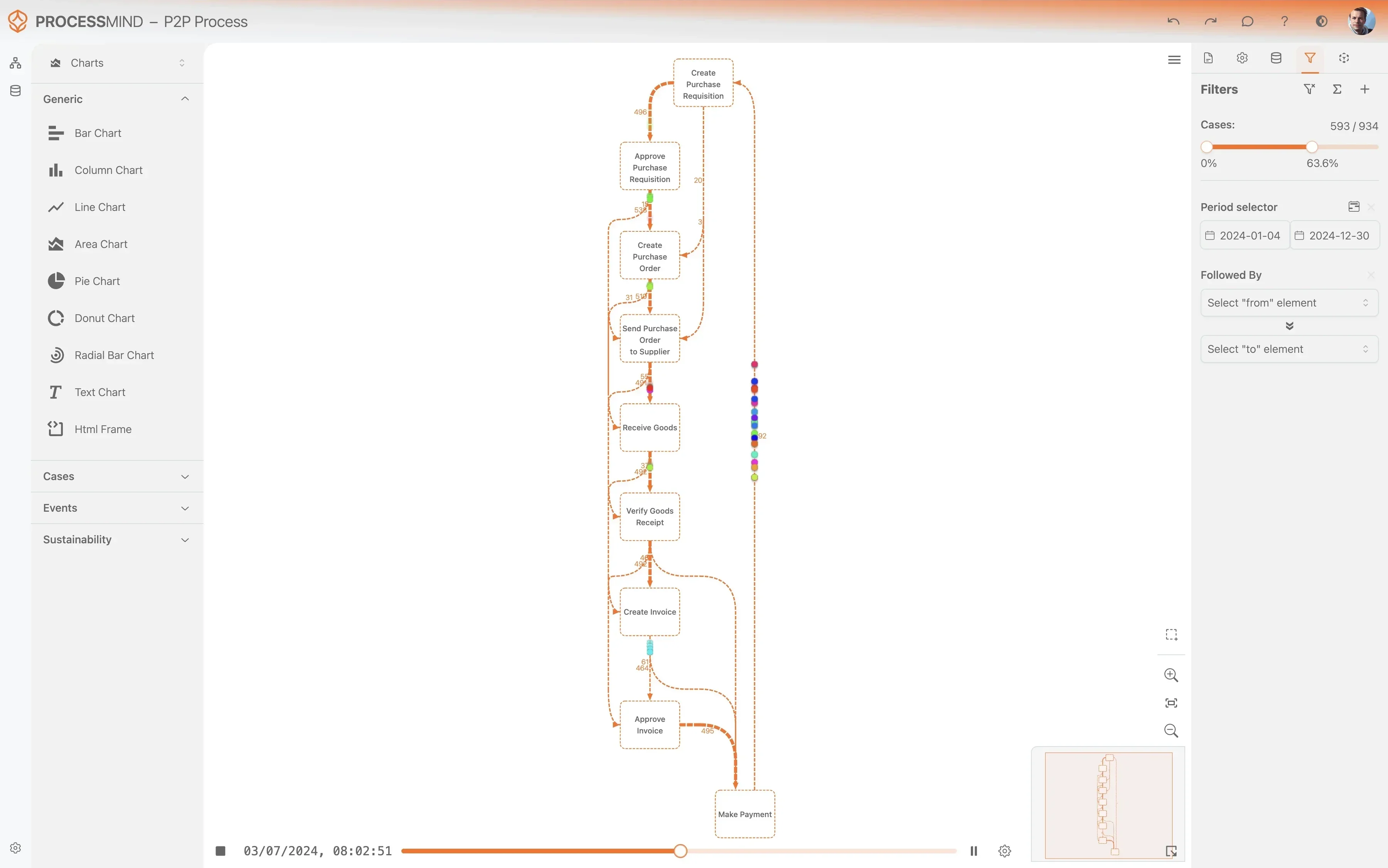
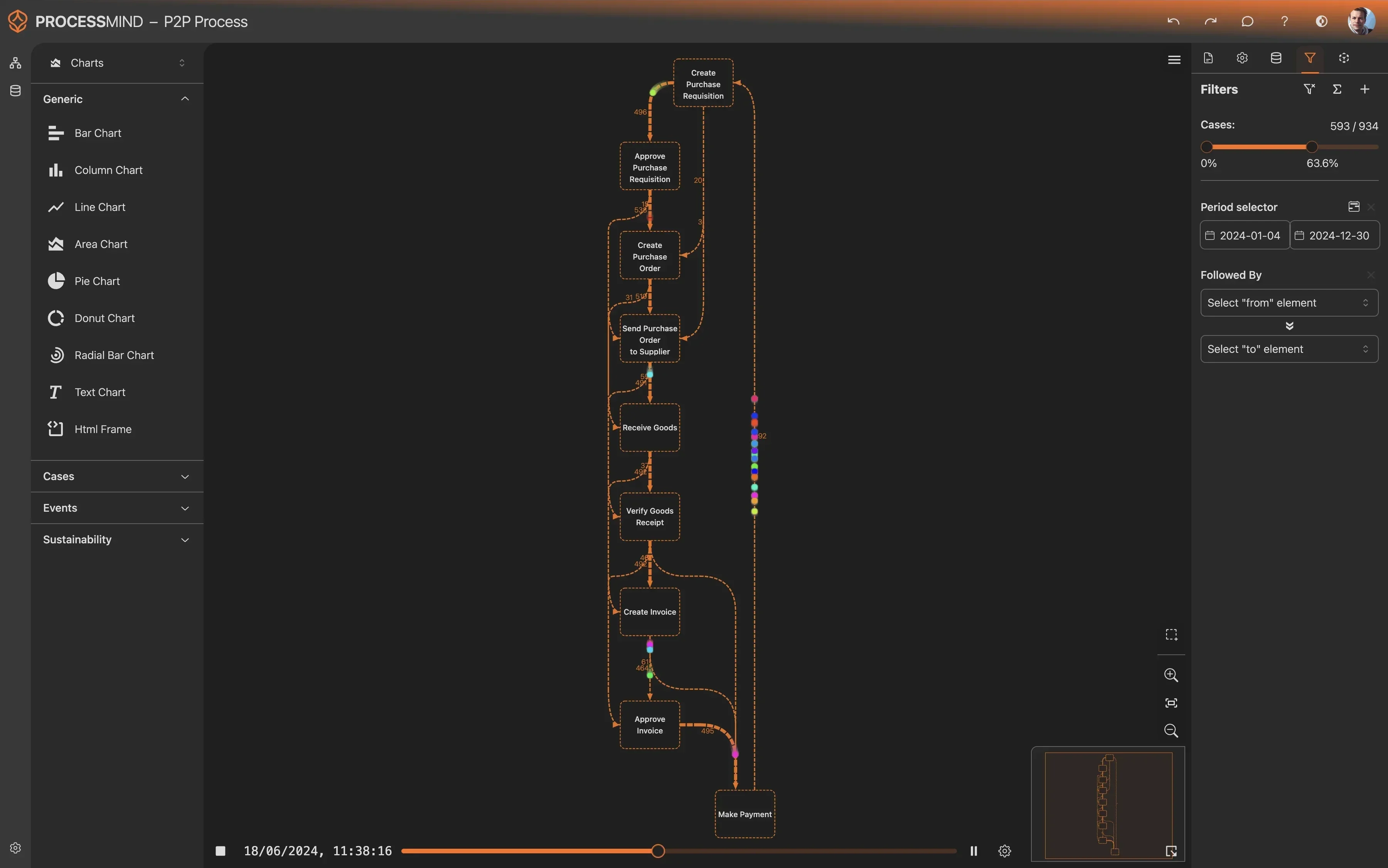
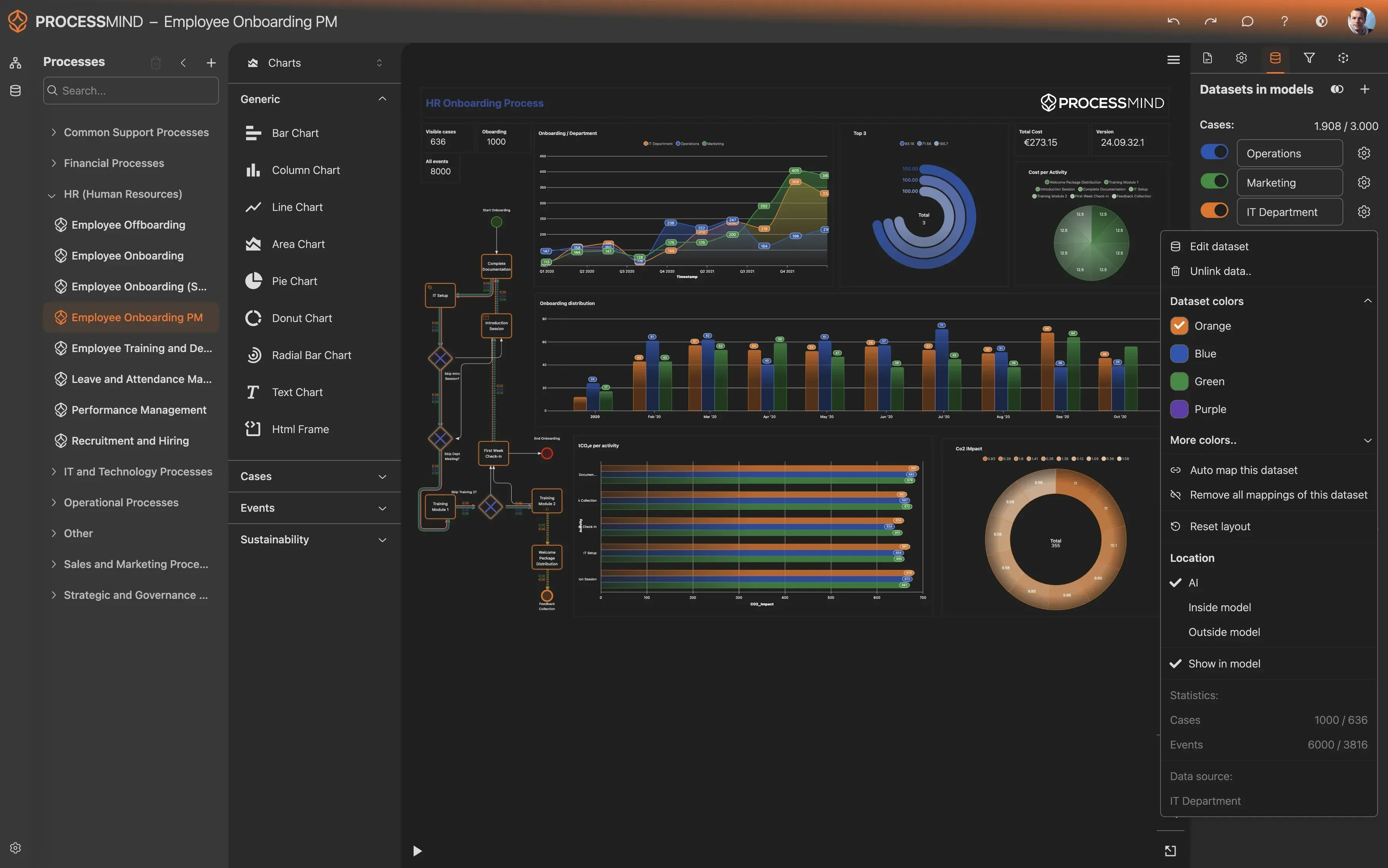
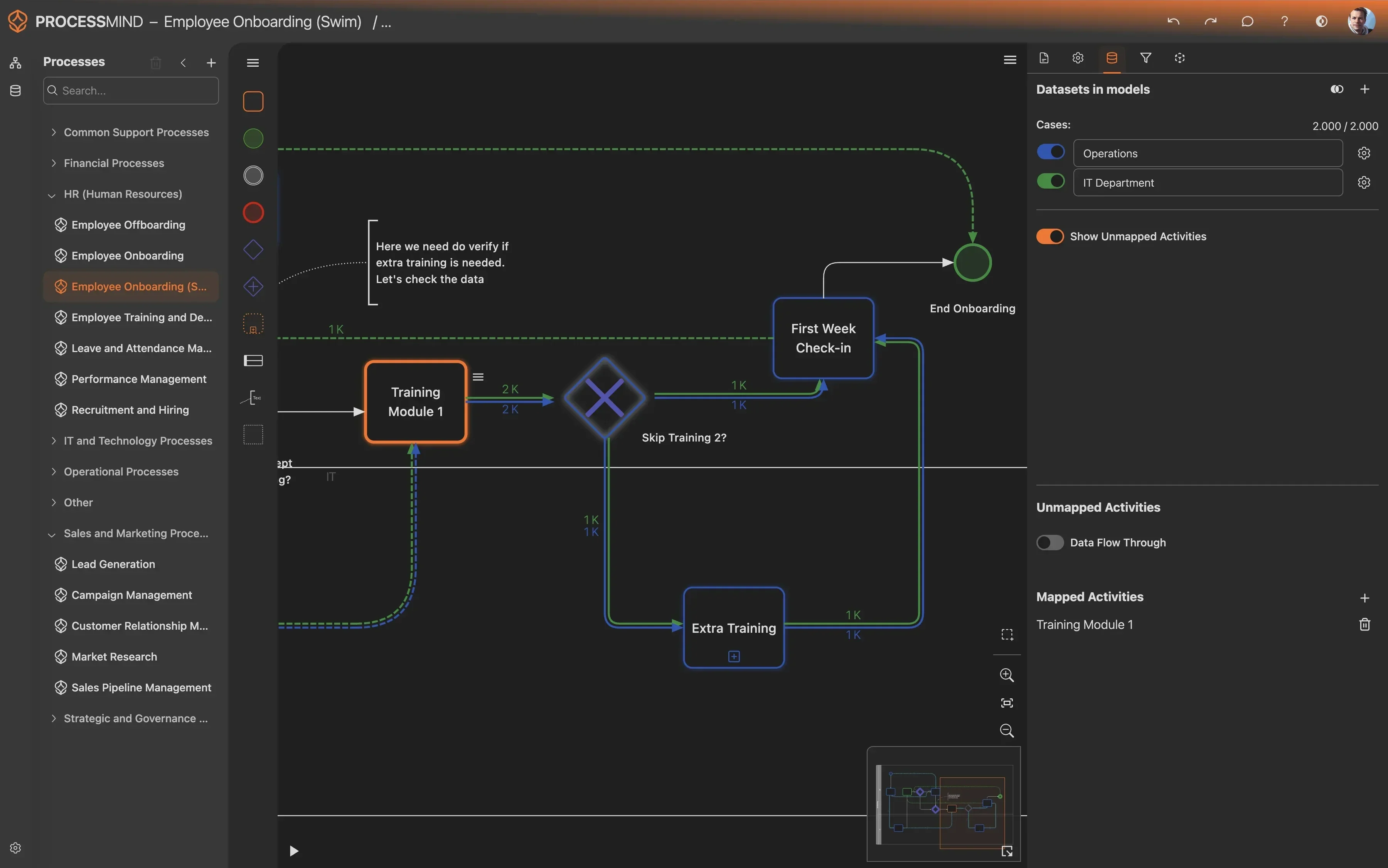
- Visualize actual Brex expense approval paths
- Identify exact workflow bottlenecks and delays
- Pinpoint non-compliant expense submissions
- Optimize for faster reimbursements and lower costs
TYPICAL OUTCOMES
What Organizations Achieve in Expense Management
By leveraging process mining on your Brex expense data, organizations gain clear insights into spending patterns, identify bottlenecks, and pinpoint opportunities to streamline workflows. These insights lead to significant improvements in efficiency, cost control, and policy compliance.
Reduction in end-to-end processing time
Employees receive their reimbursements much quicker, improving satisfaction and reducing financial strain. This is achieved by identifying and eliminating bottlenecks in the approval and payout stages.
Decrease in non-compliant or erroneous reports
Fewer expense reports are rejected, saving time for both employees and approvers by reducing rework and ensuring submissions meet policy guidelines from the start.
Fewer policy violations detected
The proportion of expense reports violating company policy significantly decreases, strengthening internal controls and ensuring better financial governance. This improves overall compliance and reduces risk.
Simplified approval workflows
Approval processes become less complex, removing unnecessary steps and reducing the average time managers spend reviewing reports. This makes the process more efficient for all involved.
Decrease in reports sent back for revision
Fewer expense reports require revisions, leading to substantial savings in operational costs and time previously spent on correcting errors and resubmissions.
Results vary based on the complexity of your expense process, current automation levels, and data quality. These figures represent typical improvements observed across various implementations.
Recommended Data
FAQs
Frequently asked questions
Process mining analyzes your Brex transaction logs to visualize the actual flow of expense reports. It identifies bottlenecks, uncovers deviations from policy, and pinpoints areas like long approval cycles or frequent rejections. This insight allows you to optimize workflows and reduce processing costs.
Process mining can reveal exact steps causing delays in approvals and reimbursements, identify approvers with heavy workloads, and highlight inconsistent policy application. It also helps pinpoint root causes for high rejection rates and unnecessary re-routing, improving overall efficiency and compliance.
You primarily need event log data that includes a case identifier, typically the Expense Report ID, an activity name for each step, and a timestamp for when each activity occurred. This data allows the process mining tool to reconstruct the complete journey of every expense report.
You can expect accelerated expense report approvals, a lower rejection rate, and more consistent policy enforcement. Process mining helps optimize workflows, leading to reduced processing costs and fortified audit compliance readiness. Ultimately, it delivers a more efficient and transparent expense management process.
Data extraction from Brex typically involves utilizing its reporting features or API access to obtain detailed logs of expense report activities. You'll need to identify fields corresponding to the expense report ID, activity name, and timestamp for each event. Consulting Brex documentation or support can provide specific extraction methods.
Initial insights can often be generated within a few days to weeks, depending on data availability and complexity. The time primarily involves data extraction, cleaning, and loading into a process mining tool. Subsequent analysis and identifying actionable recommendations will then follow.
While specialized process mining software is required, no deep coding skills are typically needed for analysis once the data is prepared. Familiarity with data analysis concepts and understanding your Brex expense process are beneficial. Some tools offer intuitive interfaces for business users.
No, process mining is a non-invasive analytical technique. It works by analyzing historical data exports from Brex, so it does not interfere with your live expense management system or ongoing user activities. The analysis happens independently, providing insights without operational disruption.
Optimize Your Brex Expense Management Today
Reduce approval cycle time by 30% and boost employee satisfaction.
No credit card required. Setup in minutes.