Improve Your Inventory Management

Select a process
Choose a process to continue working in your connected workspace.
Optimize Inventory Management in SAP S/4HANA
Inventory management often faces challenges like inefficient storage, delayed movements, and inaccurate stock counts. Our platform helps you pinpoint bottlenecks across your inventory lifecycle. You can optimize storage utilization, minimize stockouts, and enhance order fulfillment.
Download our pre-configured data template and address common challenges to reach your efficiency goals. Follow our six-step improvement plan and consult the Data Template Guide to transform your operations.
Show detailed description
Why Optimizing Inventory Management is Crucial for Your Business
Effective Inventory Management is the backbone of efficient operations, directly impacting profitability, customer satisfaction, and supply chain resilience. In a dynamic business environment, inefficiencies in how you manage inventory within your SAP S/4HANA system can lead to substantial hidden costs, including excessive carrying costs, obsolescence, and expedited shipping fees. More critically, inaccurate stock levels or delayed movements can result in stockouts, disrupting production schedules and failing to meet customer demands, ultimately damaging your brand reputation.
Your SAP S/4HANA system provides a robust platform for transactional recording, but understanding the actual end-to-end flow of inventory, identifying bottlenecks, and uncovering deviations from standard processes requires a deeper analytical approach. Simply tracking inventory levels is not enough; you need insights into the time taken for put-away, the efficiency of internal transfers, and the causes of inventory discrepancies. This deeper understanding is essential for organizations aiming to reduce Inventory Management cycle time and optimize their entire inventory footprint.
How Process Mining Illuminates Your Inventory Processes
Process mining offers a powerful lens to analyze and improve Inventory Management by transforming raw event data from your SAP S/4HANA system into actionable insights. By leveraging the rich transactional data residing in tables like MATDOC, MARD, MCHB, MSEG, and MKPF, process mining reconstructs the complete lifecycle of each Inventory Batch/Lot. This comprehensive perspective tracks every movement and status change, from Goods Receipt to final Goods Issue or Scrap.
Unlike traditional reporting or business intelligence tools, process mining doesn't just show you what happened; it visualizes how it happened, revealing the actual process flow, including all variations and deviations. You can precisely measure cycle times for key activities, identify common reworks, and pinpoint where human intervention or system delays create bottlenecks. This allows you to answer critical questions such as: What is the average lead time from Goods Receipt to Put-away Completion? How often do inventory counts lead to significant adjustments? Which specific warehouse locations or SKU categories experience the most internal movements or discrepancies? This capability empowers you to precisely identify where and how to improve Inventory Management within your SAP S/4HANA environment.
Key Improvement Areas Uncovered by Process Mining
Process mining for Inventory Management in SAP S/4HANA helps you target several critical areas for improvement:
- Put-away Efficiency: Analyze the time elapsed between Goods Receipt Recorded and Put-away Completed. Identify common delays and their root causes, whether they are resource constraints, inefficient routing, or system-related hold-ups, enabling faster stock availability.
- Internal Logistics and Transfer Optimization: Visualize internal stock movements, including Stock Moved Internally activities. Uncover unnecessary transfers, long transit times between storage bins or warehouses, and opportunities to streamline internal logistics for reduced handling costs and faster access.
- Inventory Accuracy and Adjustment Prevention: Track the frequency and magnitude of Inventory Discrepancy Adjusted events. Understand the preceding activities or conditions that often lead to these adjustments, allowing you to implement preventative measures to maintain higher inventory accuracy.
- Order Fulfillment Bottlenecks: Analyze the efficiency of Picking Initiated, Picking Completed, and Packing Completed activities. Identify delays that impact outbound logistics and customer delivery times, directly contributing to a faster and more reliable order fulfillment process.
- Compliance and Quality Control: Ensure adherence to quality inspection processes following Goods Receipt. Identify instances where items bypass necessary checks or where quality inspection processes themselves are a source of delay, ensuring product quality and regulatory compliance.
Expected Outcomes: Measurable Benefits for Your Business
By applying process mining to your SAP S/4HANA Inventory Management data, you can expect to achieve significant, measurable benefits:
- Reduced Carrying Costs: Optimize storage utilization and minimize excess inventory by identifying and eliminating process inefficiencies that lead to overstocking or slow-moving items. This directly reduces the capital tied up in inventory.
- Faster Inventory Cycle Times: Drastically reduce the overall time an item spends in your warehouse, from receipt to issue, through targeted process optimization efforts. This improves inventory turnover and cash flow.
- Enhanced Operational Efficiency: Streamline put-away, internal transfers, and picking processes, leading to fewer manual errors, reduced labor costs, and higher throughput.
- Improved Inventory Accuracy: Gain real-time visibility into discrepancies and their causes, enabling proactive measures to ensure stock accuracy, which is vital for effective planning and preventing stockouts.
- Boosted Customer Satisfaction: Ensure faster and more reliable order fulfillment by optimizing internal logistics and reducing delays, directly contributing to higher service levels and customer loyalty.
- Stronger Compliance: Ensure all inventory-related processes, such as quality inspections or hazardous material handling, consistently adhere to internal policies and external regulations.
Getting Started with Inventory Management Process Improvement
Unlocking these benefits starts with understanding your actual processes. Our process mining approach offers a structured yet flexible way to connect to your SAP S/4HANA data, visualize your Inventory Management processes, and pinpoint actionable insights without requiring extensive process mining expertise. You can begin transforming your inventory operations and realizing these tangible improvements sooner than you think, leveraging your existing SAP S/4HANA investments more effectively. Start exploring how to improve Inventory Management today. Make data-driven decisions that reduce Inventory Management cycle time and drive efficiency across your entire supply chain.¨
The 6-Step Improvement Path for Inventory Management
Download the Template
What to do
Access the pre-configured Excel template tailored for SAP S/4HANA Inventory Management data. This template provides the correct structure for your raw process data.
Why it matters
Using a standardized template ensures data consistency and accuracy, which is crucial for reliable process analysis and identifying improvement areas.
Expected outcome
A ready-to-use data extraction template, perfectly aligned with SAP S/4HANA Inventory Management.
Export Your Data
What to do
Extract 3-6 months of historical inventory transaction data from your SAP S/4HANA system. Populate the downloaded template with actual process data from tables like MATDOC, MARD, MCHB, MSEG, and MKPF.
Why it matters
Historical data provides a comprehensive view of past inventory movements, allowing for deep analysis of trends, bottlenecks, and compliance issues over time.
Expected outcome
A complete dataset, filled with your SAP S/4HANA inventory transaction history, ready for upload.
Upload Your Dataset
What to do
Securely upload your populated Excel template to ProcessMind. The system will automatically ingest and prepare your SAP S/4HANA inventory data for analysis.
Why it matters
Effortless data ingestion streamlines the analysis process, quickly transforming raw data into actionable insights without complex manual transformations.
Expected outcome
Your inventory management data successfully loaded and processed, ready for visualization and discovery.
Analyze Your Process
What to do
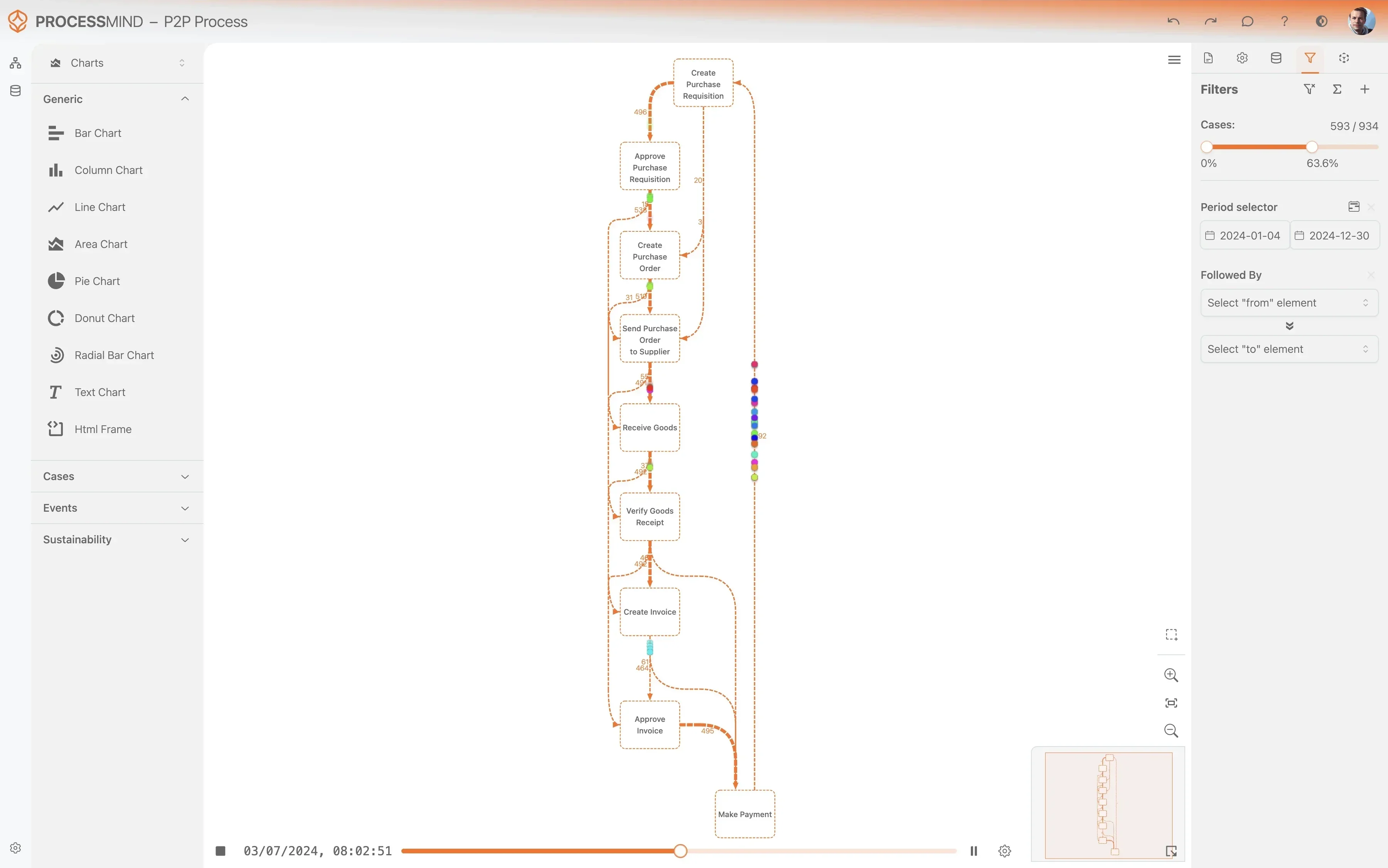
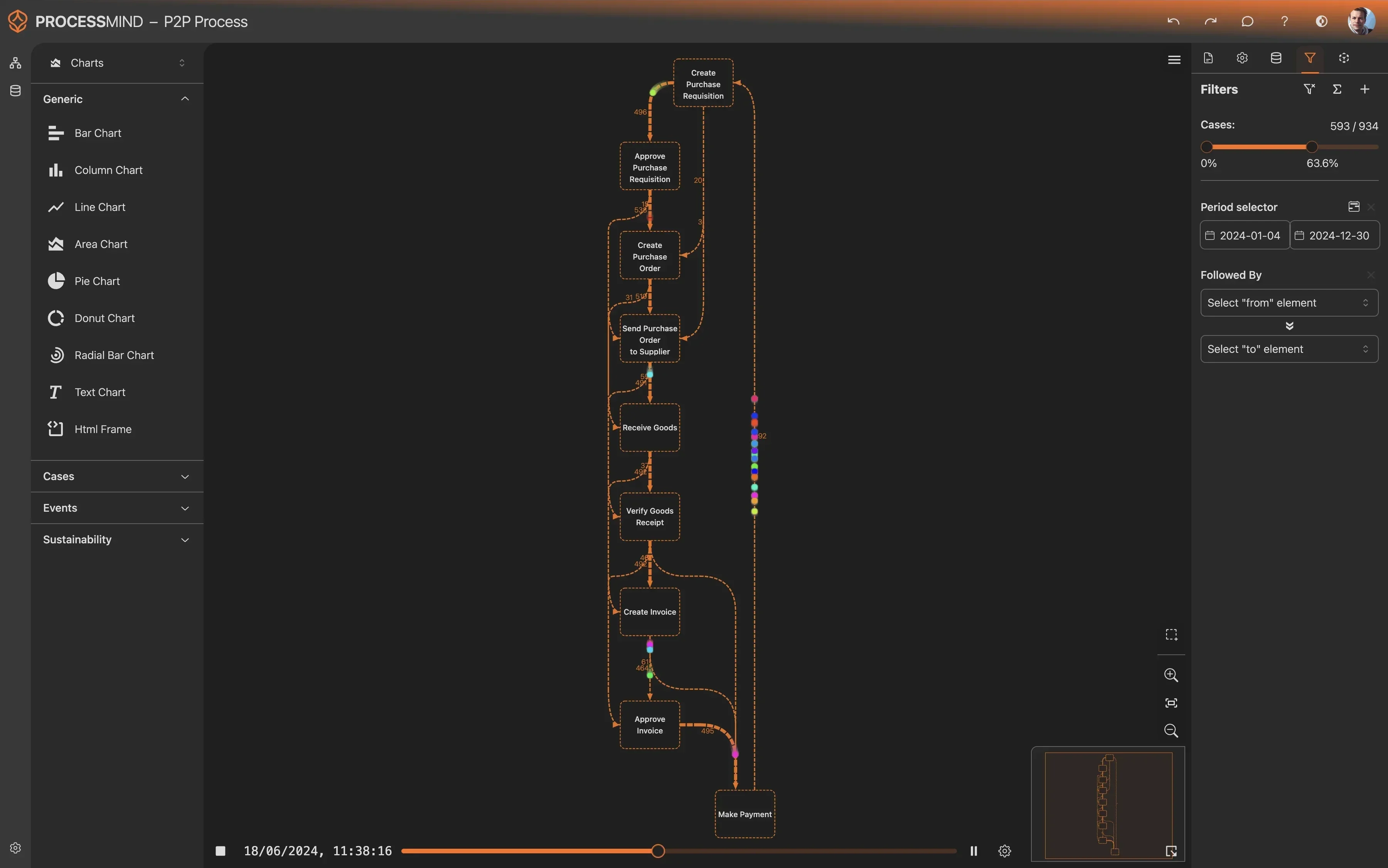
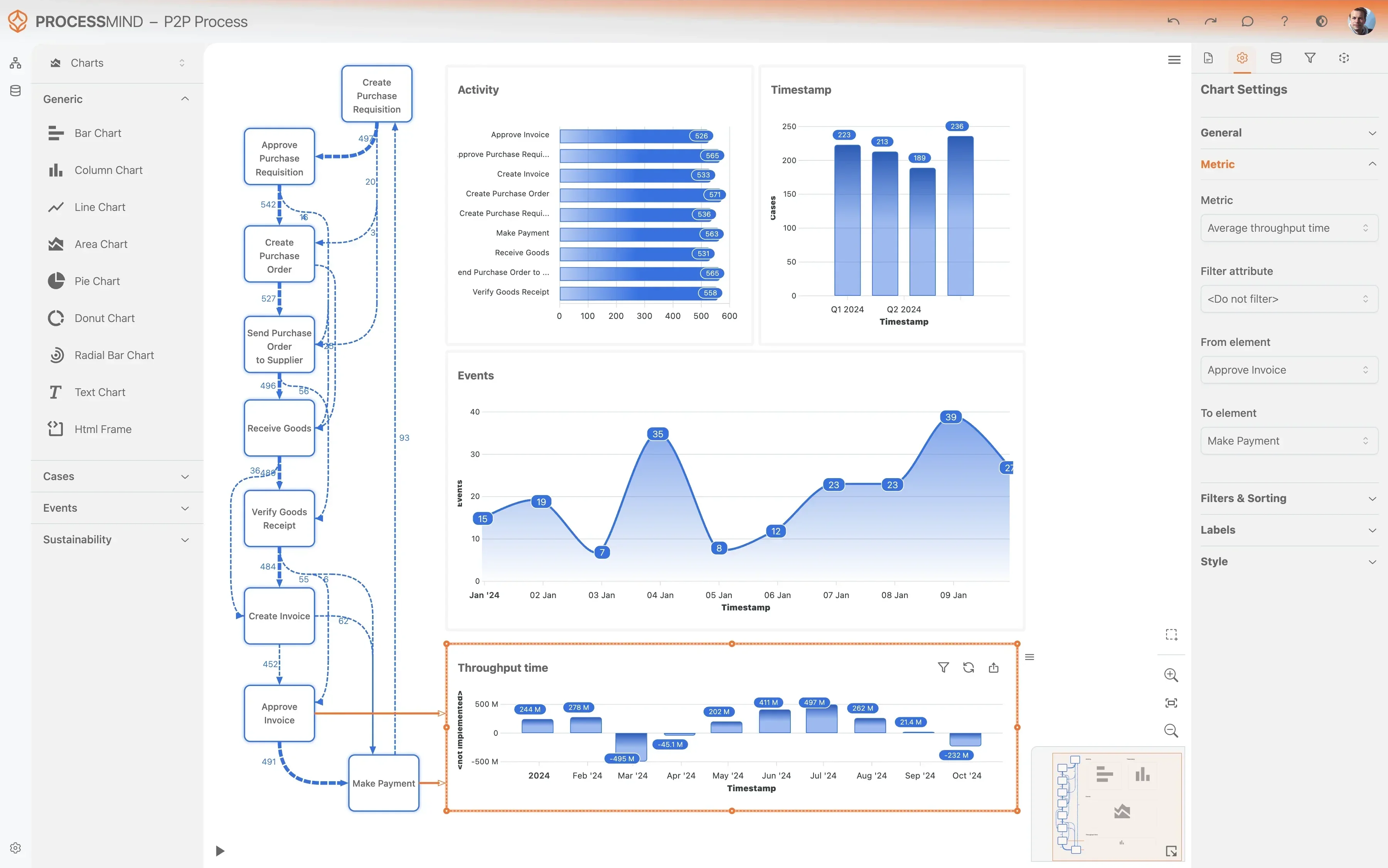
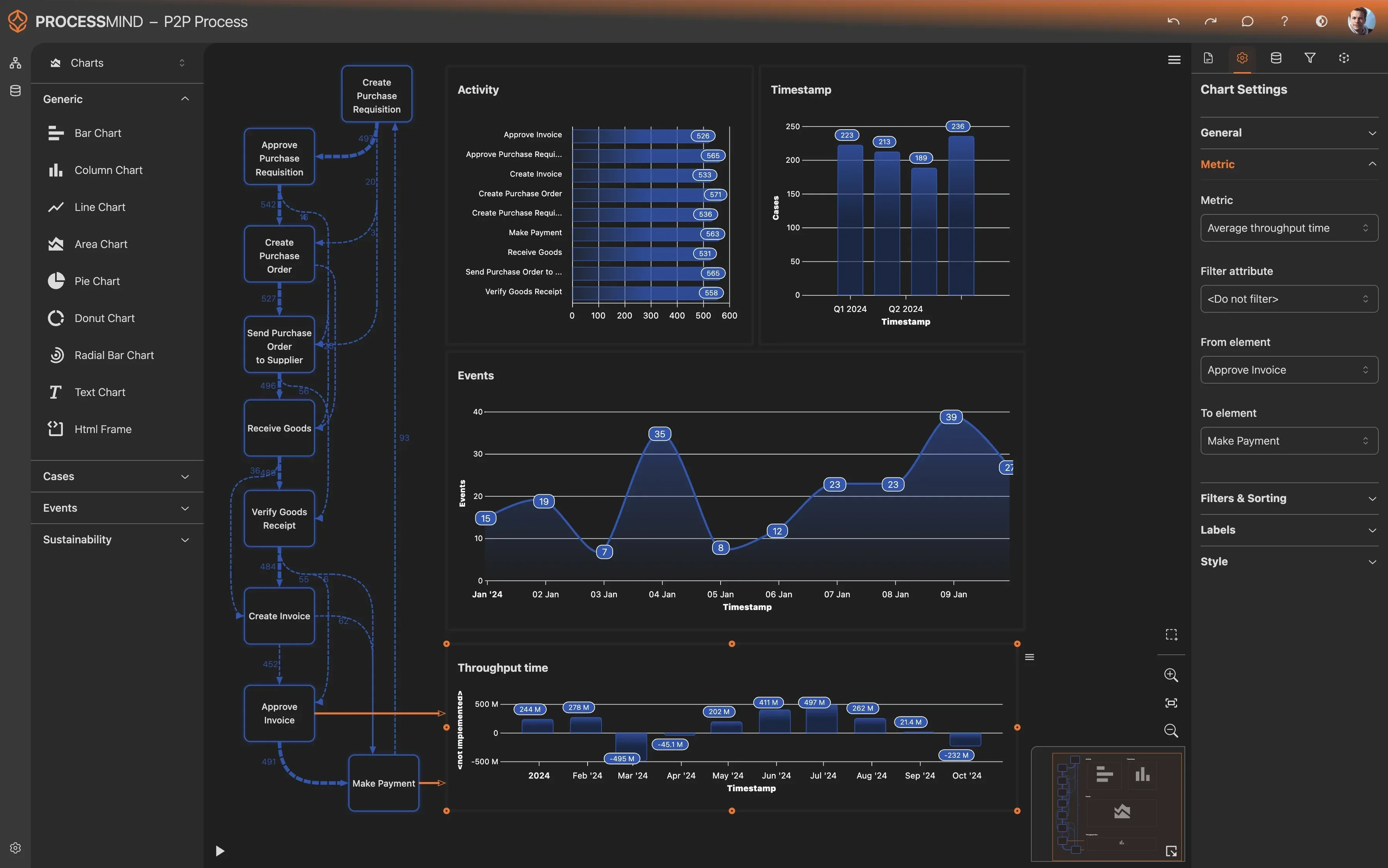
Explore auto-generated dashboards and interactive process maps highlighting your Inventory Management flow. Leverage AI-driven recommendations to pinpoint inefficiencies like slow put-away or high discrepancy rates.
Why it matters
Gain deep visibility into your end-to-end inventory lifecycle, uncover hidden bottlenecks, and identify root causes affecting stock levels and fulfillment.
Expected outcome
Clear understanding of inventory process variations, compliance gaps, and specific areas for optimization.
Implement Improvements
What to do
Prioritize and implement the identified optimization opportunities, such as streamlining goods receipt, optimizing internal transfers, or refining inventory count procedures in SAP S/4HANA.
Why it matters
Acting on data-driven insights directly translates to tangible improvements, including reduced carrying costs, minimized stockouts, and enhanced operational efficiency.
Expected outcome
Initiated changes within your SAP S/4HANA inventory processes aimed at boosting performance and accuracy.
Monitor Your Process
What to do
Periodically re-upload updated SAP S/4HANA inventory data to track the impact of your implemented changes. Continuously evaluate key performance indicators.
Why it matters
Ongoing monitoring ensures sustained improvements, allowing you to measure the effectiveness of your optimizations and adapt quickly to new challenges, maintaining compliance.
Expected outcome
Quantifiable proof of improved inventory management KPIs, with a clear demonstration of ROI from your efforts.
WHAT YOU WILL GET
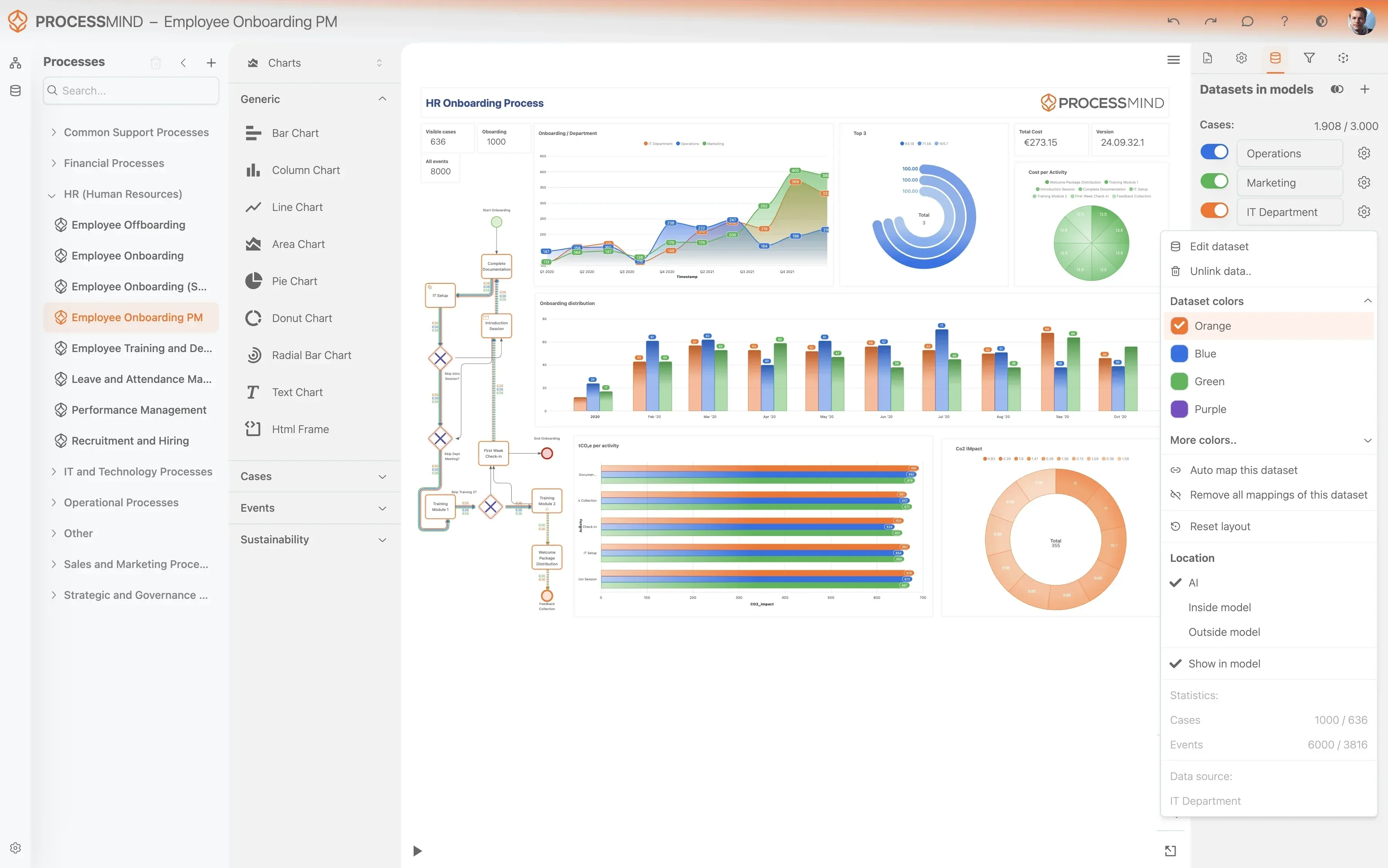
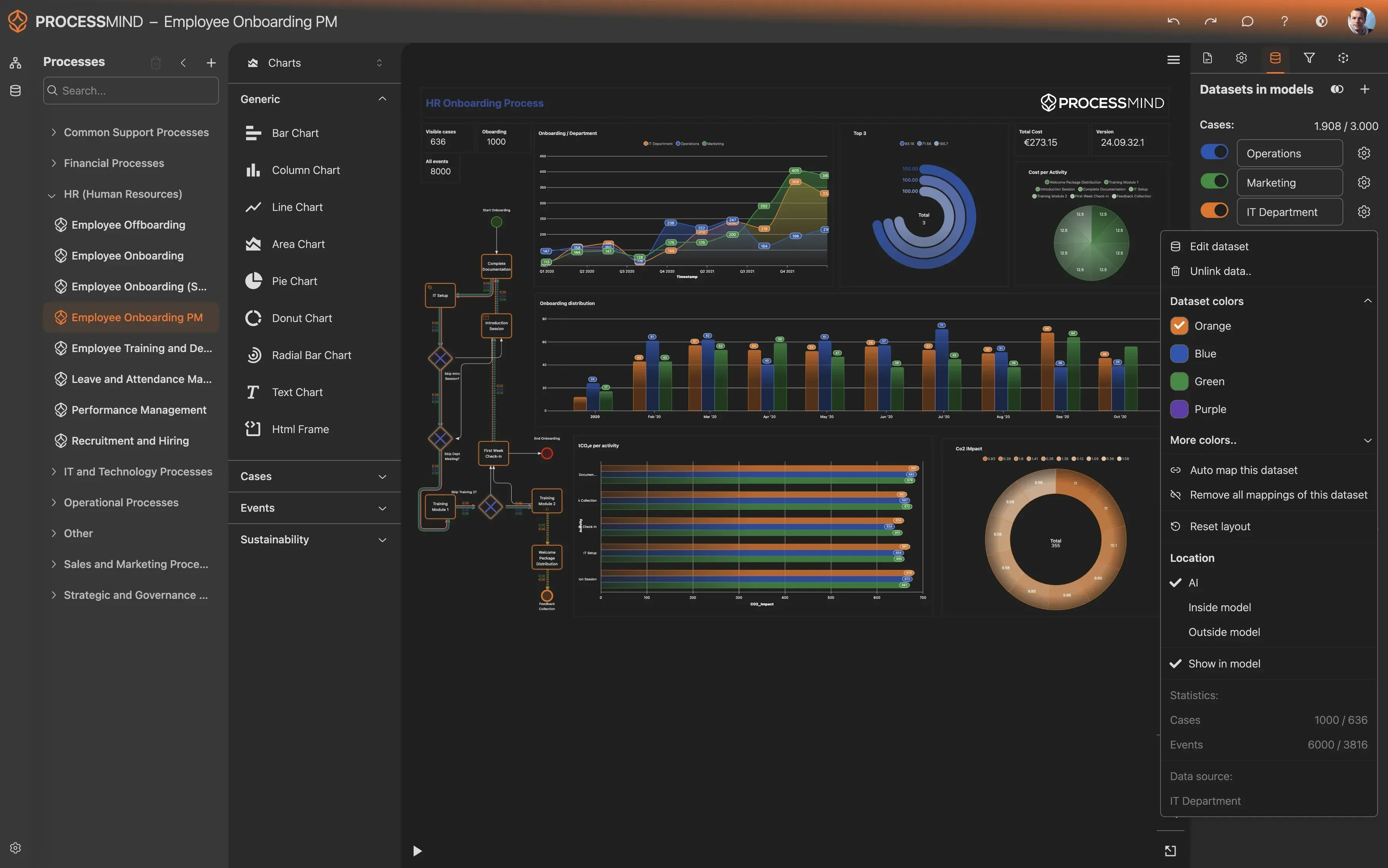
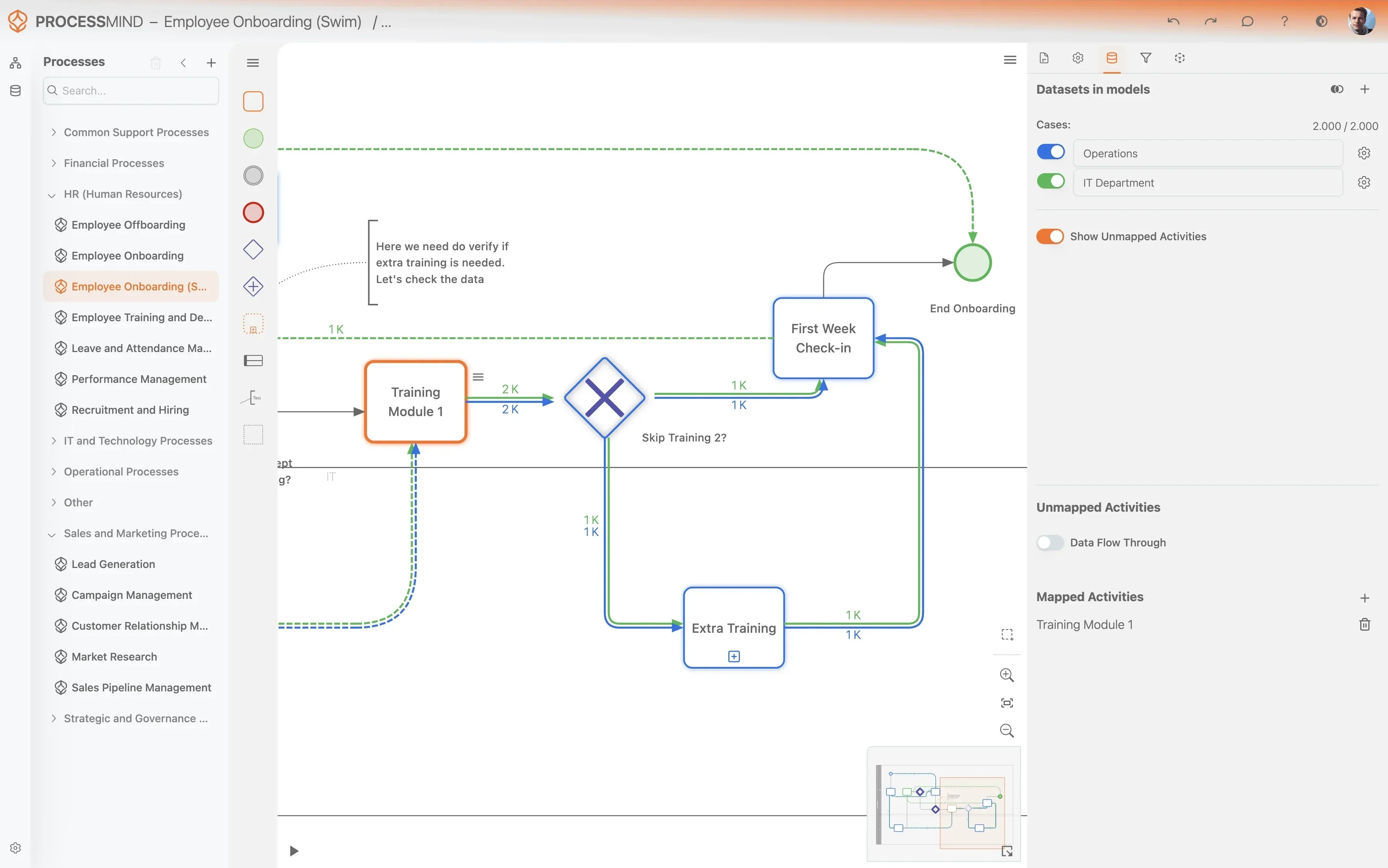
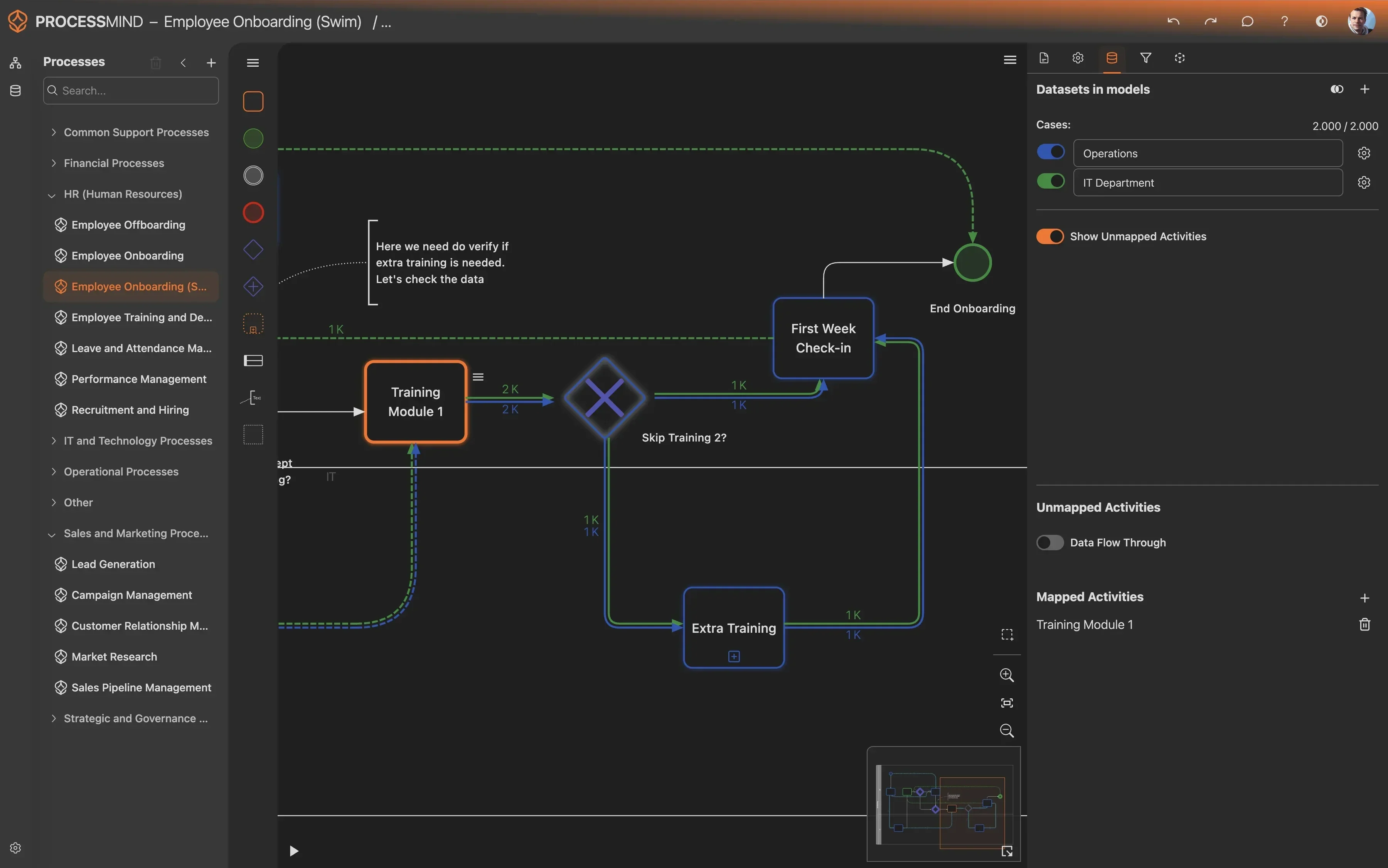
Uncover Inventory Inefficiencies in SAP S/4HANA
- Visualize actual inventory movement flows
- Pinpoint inefficient put-away processes
- Uncover root causes of stockouts
- Optimize storage utilization with data
TYPICAL OUTCOMES
Optimizing Inventory Operations with Process Mining
By analyzing your SAP S/4HANA inventory batch and lot data, process mining reveals critical bottlenecks and inefficiencies. These insights lead to significant improvements in key inventory management metrics.
Average reduction in put-away time
Process mining reveals bottlenecks in put-away, allowing for optimized warehouse flows and faster stock availability for sales.
Decrease in inventory data corrections
By identifying root causes of inventory discrepancies, organizations can reduce the need for costly and error-prone manual adjustments.
Shorter order-to-delivery lead time
Optimizing picking and goods issue processes leads to faster order fulfillment, significantly boosting customer satisfaction and operational efficiency.
Reduction in scrapped/disposed inventory
Process mining helps pinpoint issues leading to obsolete or expired stock, minimizing waste and reducing carrying costs.
Improvement in inventory record reliability
By understanding discrepancy sources, businesses can improve the reliability of their inventory data, leading to better planning and fewer stockouts.
Results vary based on process complexity and data quality. These figures represent typical improvements observed across implementations.
Recommended Data
FAQs
Frequently asked questions
Process mining reveals the actual flow of your inventory operations by analyzing system logs from SAP S/4HANA. It identifies critical bottlenecks like slow put-away or delayed internal transfers, uncovering inefficiencies that lead to problems such as stockouts or high inventory costs. This allows you to pinpoint exactly where the process deviates from the ideal path and understand the root causes.
To perform process mining, you need an event log, which consists of all relevant activities related to your inventory. Key data points include a case identifier, for example, the Inventory Batch/Lot, the activity performed, and a timestamp for each action. This data is typically extracted from various tables within SAP S/4HANA that record material movements, goods issues, receipts, and quality inspections.
The initial setup, including data extraction from SAP S/4HANA and the creation of your first process model, can typically range from a few weeks to a couple of months. This timeline depends on the complexity of your existing data infrastructure and the specific scope of the inventory processes you wish to analyze. Once set up, subsequent analyses are much faster.
You can expect tangible improvements such as accelerated put-away completion times, reduced internal stock transfer delays, and enhanced inventory accuracy. Process mining also helps to improve order fulfillment cycle times, minimize obsolete and expired stock, and optimize warehouse storage utilization. These optimizations lead to significant cost savings and operational efficiency.
Process mining typically works by extracting historical transaction data from SAP S/4HANA, not by directly integrating with its real-time operational processes. The analysis is performed on this extracted data to identify patterns and deviations. While not real-time operational integration, some solutions offer continuous data ingestion for near real-time monitoring and insights.
Yes, process mining is highly effective at identifying the underlying causes of recurring manual adjustments. By visualizing the actual process flow and comparing it to the ideal path, it can uncover specific deviations, missing automated steps, or training gaps that necessitate human intervention. This data-driven insight allows for targeted corrective actions to reduce manual effort.
Process mining provides an extremely granular view, tracking individual inventory batches or lots, specific movement types, and user actions through their complete lifecycle. This allows you to analyze specific paths that lead to delays, identify which steps are performed out of order, and even pinpoint individual material documents that deviate from the standard process. This depth of insight is crucial for precise optimization.
Process mining can be used for both one-time in-depth analyses and continuous process monitoring. After an initial analysis identifies key areas for improvement, you can implement changes and then use process mining to continuously track the impact of those changes. This enables ongoing optimization and ensures your inventory processes remain efficient over time.
Optimize Your Inventory Management in SAP S/4HANA
Pinpoint inefficiencies, reduce cycle time by 30%, and save costs.
No credit card required • Set up in minutes