Improve Your Accounts Receivable

Select a process
Choose a process to continue working in your connected workspace.
Optimize Accounts Receivable in SAP ECC for Faster Cash Flow
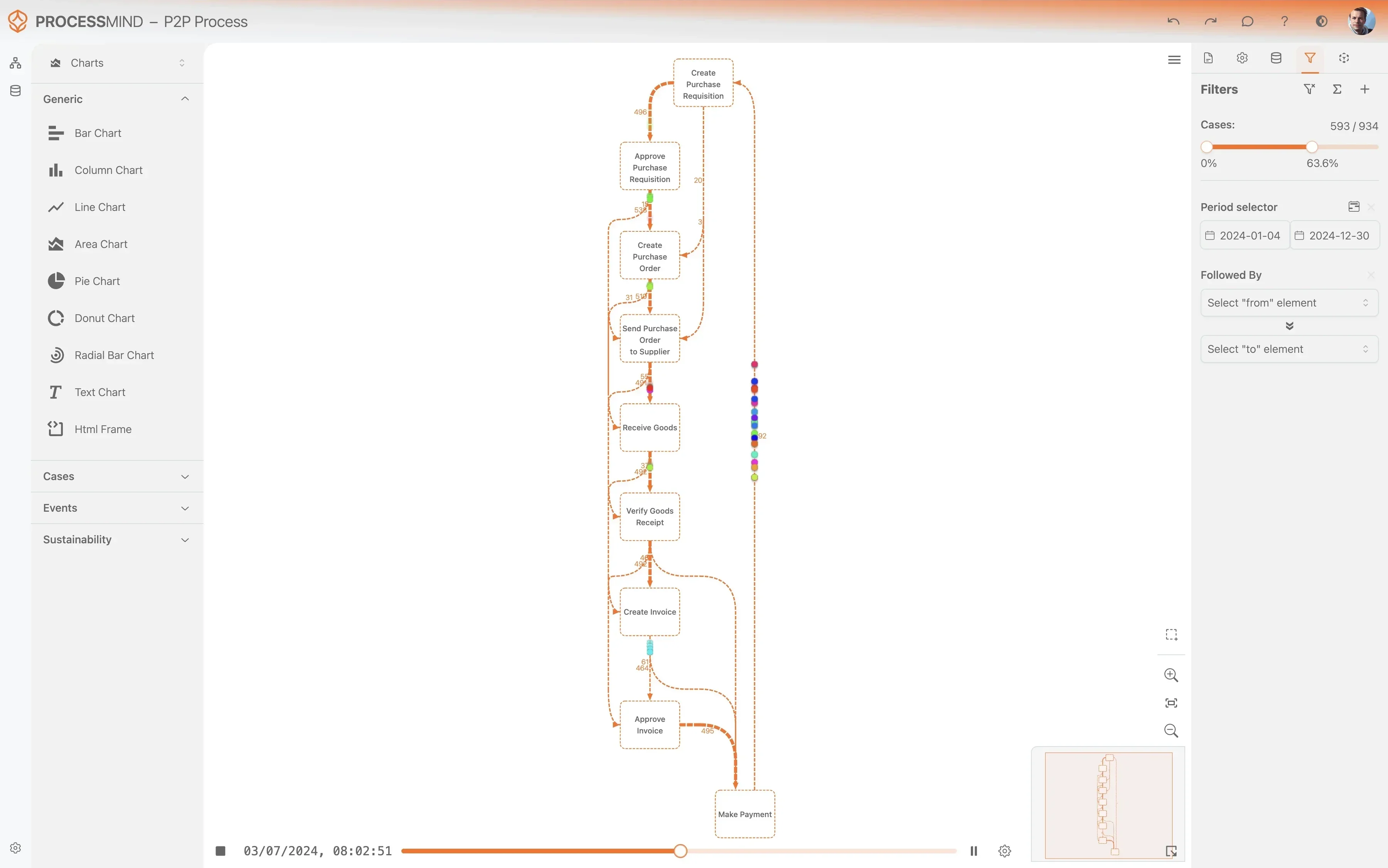
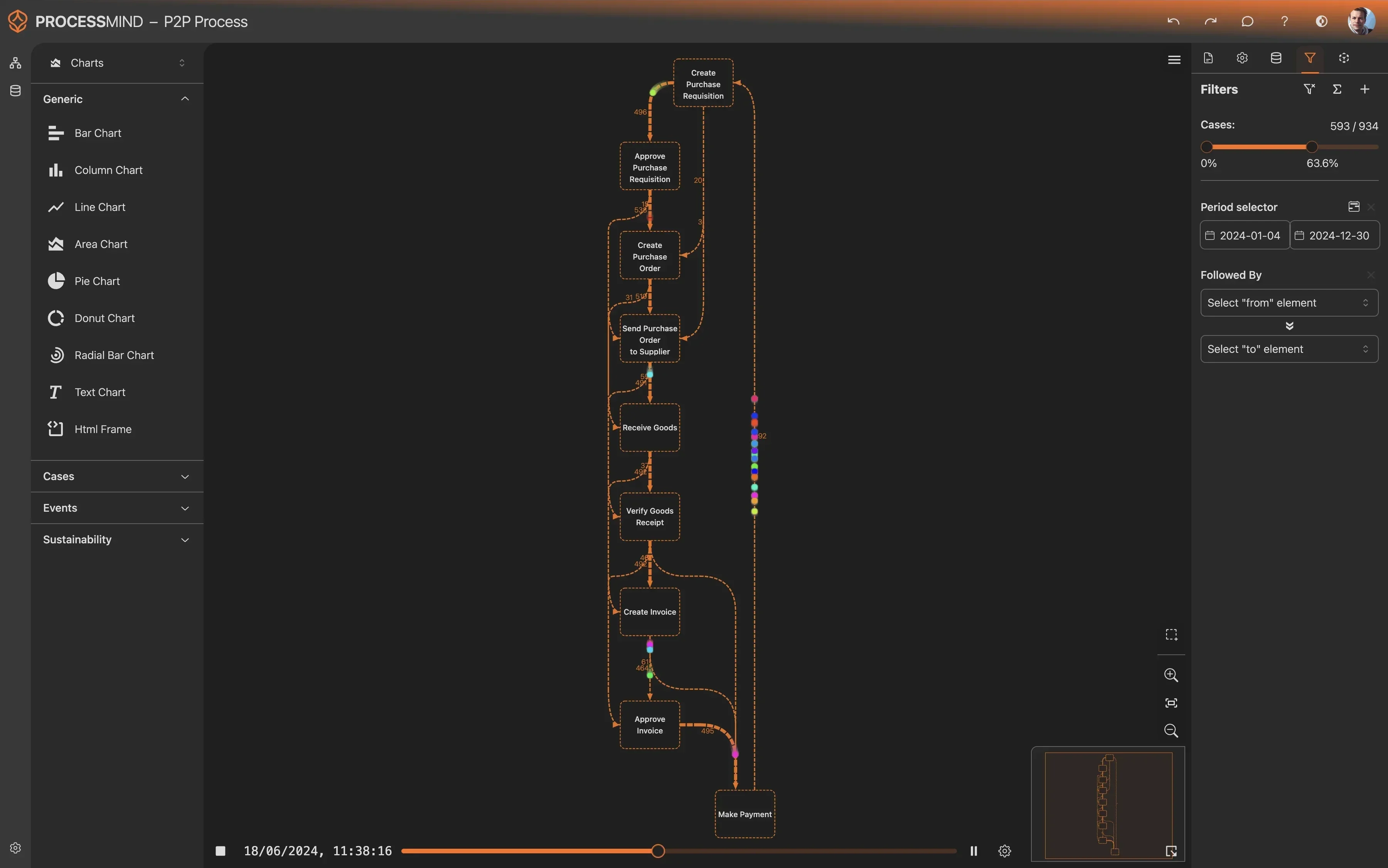
Our platform helps you uncover hidden bottlenecks that slow down your financial operations. You can easily pinpoint where payment delays occur and identify manual rework that increases processing times. By visualizing the entire flow, you gain the clarity needed to streamline operations and enhance overall performance.
Download our pre-configured data template and address common challenges to reach your efficiency goals. Follow our six-step improvement plan and consult the Data Template Guide to transform your operations.
Show detailed description
The Strategic Importance of Accounts Receivable Optimization
Optimizing Accounts Receivable is about more than just collecting money. It is about the lifeblood of your organization, which is liquidity. When your processes in SAP ECC are inefficient, you are effectively providing interest free loans to your customers at your own expense. This inefficiency increases your cost of capital and limits your ability to reinvest in growth. By focusing on process optimization, you move beyond simple accounting and into the realm of strategic financial management. A streamlined AR process ensures that your organization remains agile, allowing you to navigate market fluctuations with a healthy cash reserve. Furthermore, reducing the friction in your billing and collection cycles improves the overall customer experience, as it leads to fewer errors, more transparent communications, and faster resolution of financial discrepancies.
Transforming Raw SAP Data into Process Intelligence
Process mining bridges the gap between the static records in your SAP ECC system and the dynamic reality of your daily operations. By extracting data from core financial tables like BKPF and BSEG, you can reconstruct the actual history of every single invoice from its creation to its final clearing. This allows you to see the process as it really happens, not just how it was designed in a training manual. You can pinpoint exactly where bottlenecks occur, such as when an invoice sits in a pending status for weeks or when a dispute causes a complete halt in the payment cycle. This level of transparency is the first step toward reducing your Accounts Receivable cycle time because it moves the conversation from anecdotal evidence to hard, data-driven facts. You no longer have to guess why certain customers pay late, you can see the exact path their invoices take and where the delays originate.
Targeted Areas for Structural Improvement
One of the most common improvement areas involves the handling of dispute cases. In many organizations, a minor dispute can stall an entire payment, even if only a small portion of the invoice total is contested. Process mining allows you to identify these patterns and implement automated workflows to handle exceptions more efficiently. Another key area is the effectiveness of your collection strategies and payment reminders. Are your reminders actually prompting action, or are they being ignored until a human agent calls? By analyzing the timing and impact of automated reminders, you can refine your approach to prioritize high value or high risk accounts. This targeted method ensures your collection agents are spending their time on the tasks that provide the highest return on effort. Additionally, identifying the root causes of frequent credit memos or partial payments can help you fix upstream issues in sales or delivery that are causing payment delays.
Measuring the Value of Modernized Collections
When you successfully apply process mining to your AR department, the outcomes are measurable and significant. You will likely see a meaningful reduction in Days Sales Outstanding, often referred to as DSO, which directly improves your cash position. Additionally, you can lower the administrative cost of collections by reducing the number of manual touches required for each invoice. Improved compliance is another major benefit, as the system provides a clear, auditable trail of every action taken from billing to clearing. This level of oversight ensures that internal controls are followed and that financial reporting is accurate, which is critical for meeting regulatory requirements. Ultimately, the goal is to increase your Collection Effectiveness Index by ensuring that your team is focused on the right accounts at the right time, using the most effective methods available.
Embarking on Your AR Transformation Journey
Getting started with process mining for Accounts Receivable does not require a massive overhaul of your IT infrastructure. By utilizing the data already residing in your SAP ECC environment, specifically within the FI-GL and FI-AR modules, you can begin to uncover insights almost immediately. The journey begins with a willingness to look at your data with a fresh perspective and a commitment to continuous improvement. The goal is to move from a reactive stance, where you are constantly chasing late payments, to a proactive one, where you anticipate delays before they impact your bottom line. As you explore the various paths and patterns within your AR data, you will find that the path to a more efficient and profitable financial operation is well within your reach. Start by analyzing your most common process variations and you will quickly see where the greatest opportunities for optimization reside.
The 6-Step Improvement Path for Accounts Receivable
Download the Template
What to do
Obtain the Excel template designed for SAP ECC financial tables like BKPF and BSEG to align your data structure with our analysis engine.
Why it matters
Using a standardized format ensures that your invoice lifecycle and clearing activities are mapped correctly for immediate discovery.
Expected outcome
A ready to use data template tailored for SAP financial records
Export Your Data
What to do
Extract 3 to 6 months of historical AR data from your SAP ECC system, specifically focusing on invoice headers and line items.
Why it matters
Historical data provides the necessary volume to identify patterns in payment behavior and common causes for collection delays.
Expected outcome
A comprehensive dataset of your recent customer financial interactions
Upload Your Dataset
What to do
Securely upload your completed data file to the ProcessMind platform for automated processing and process map generation.
Why it matters
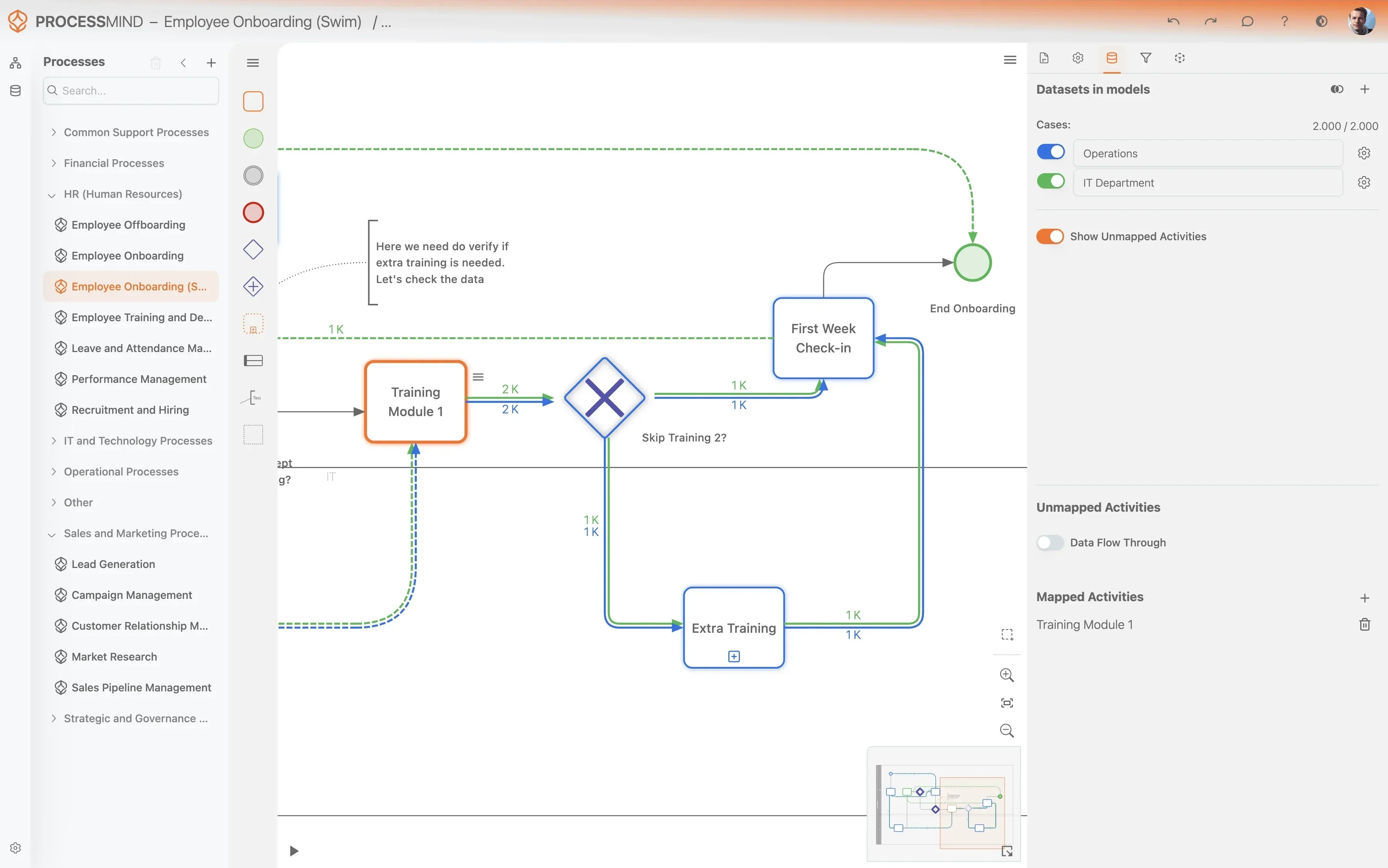
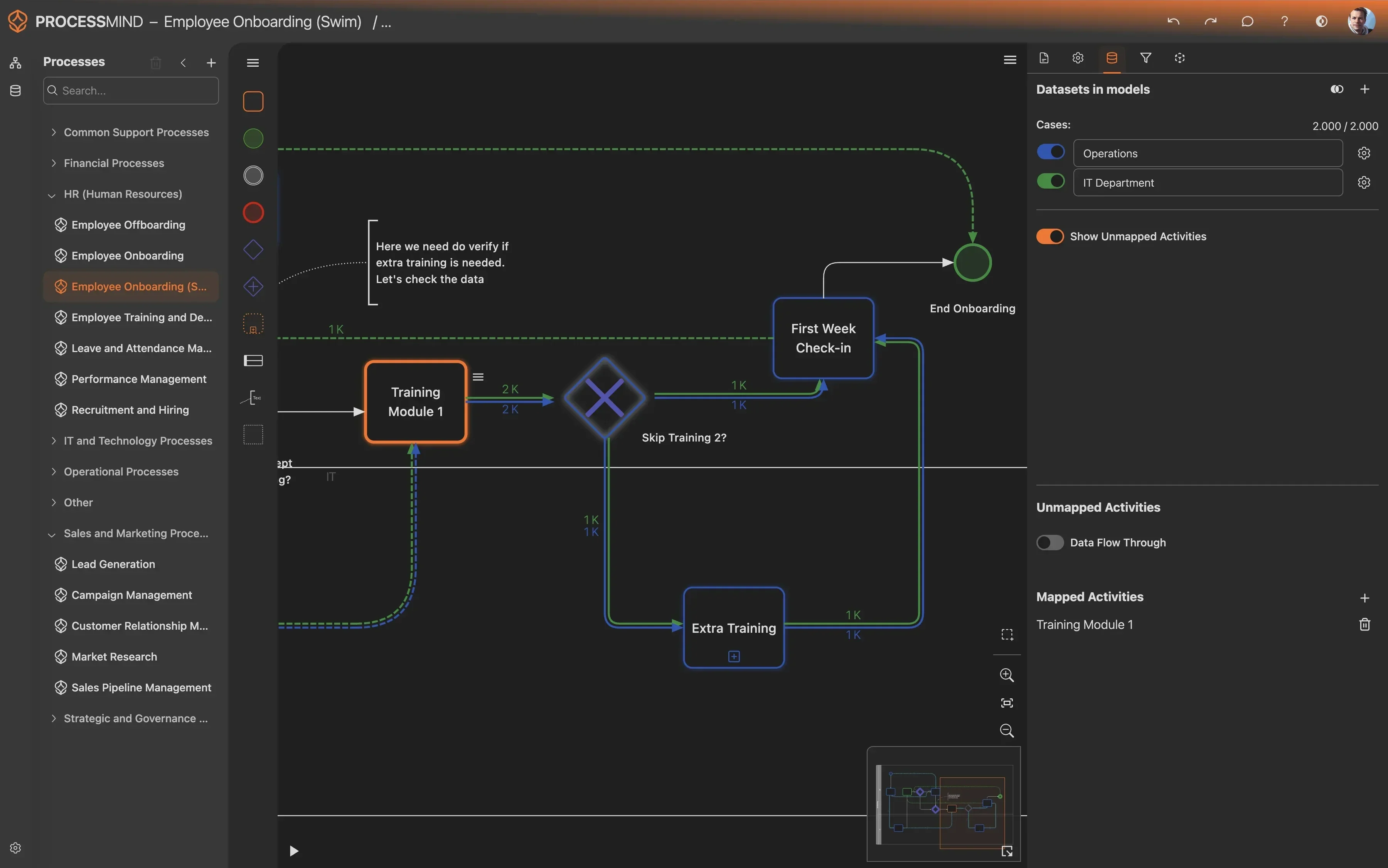
Our engine transforms raw SAP tables into a visual end to end representation of your credit to cash cycle.
Expected outcome
A processed digital twin of your Accounts Receivable flow
Analyze Your Process
What to do
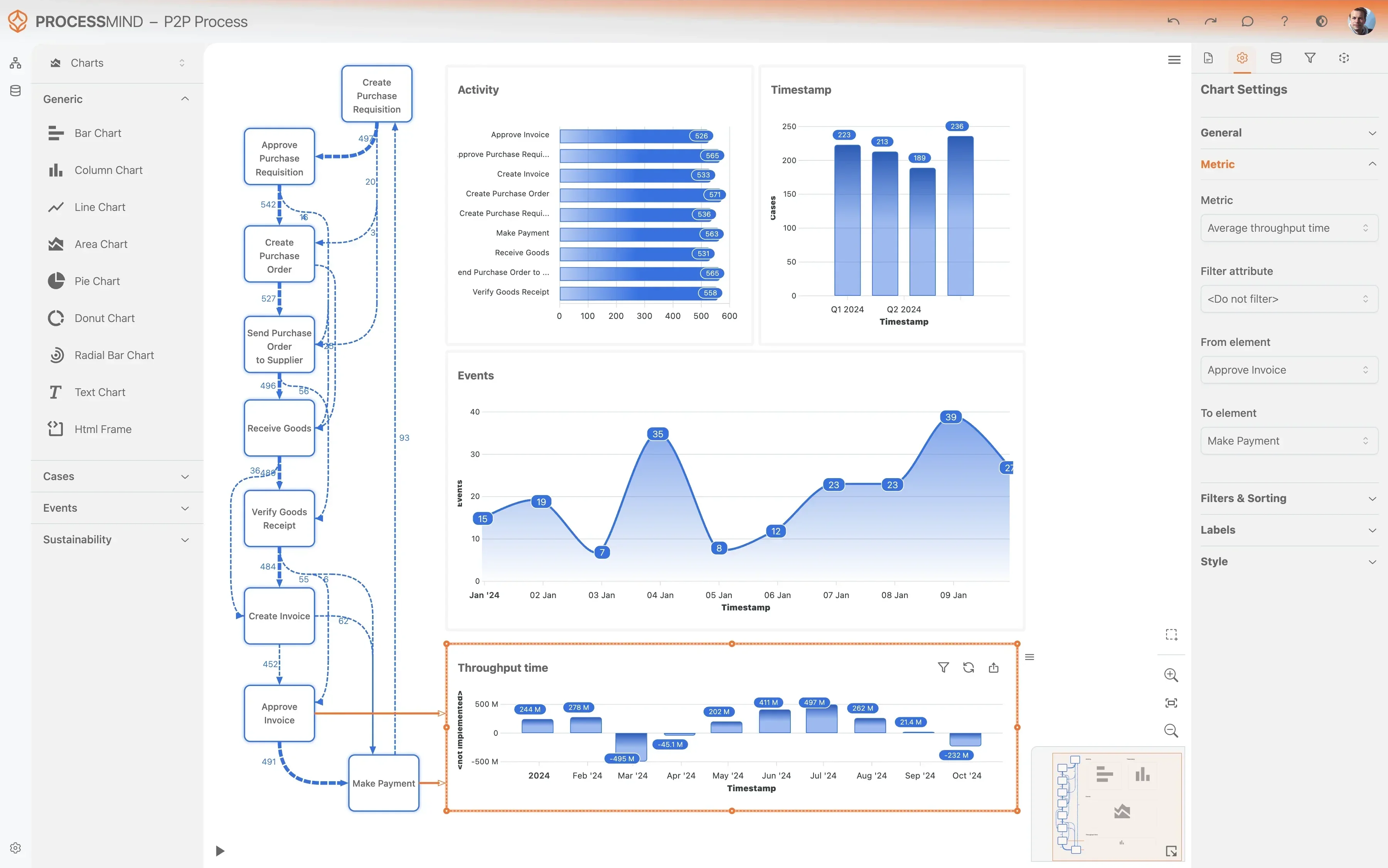
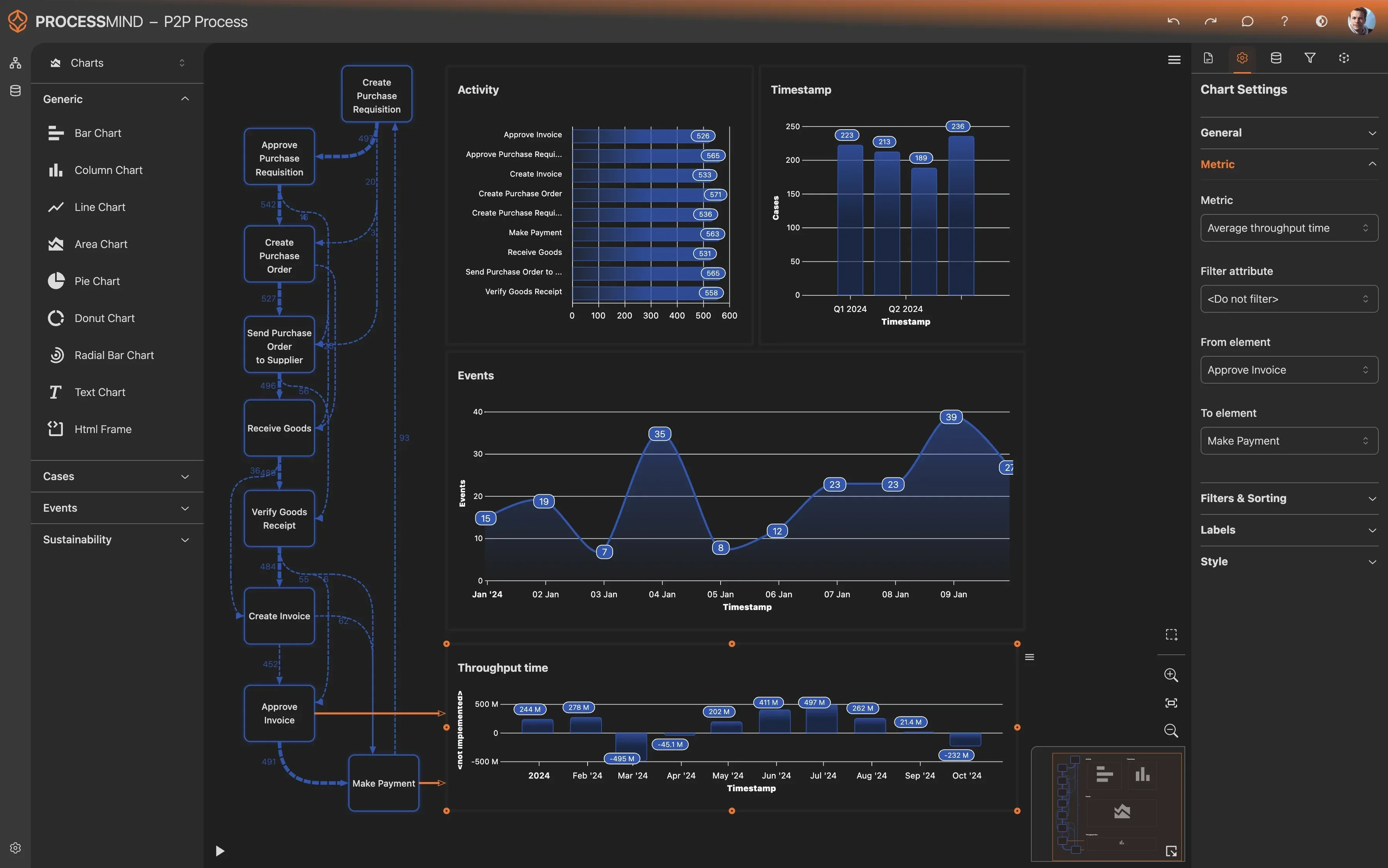
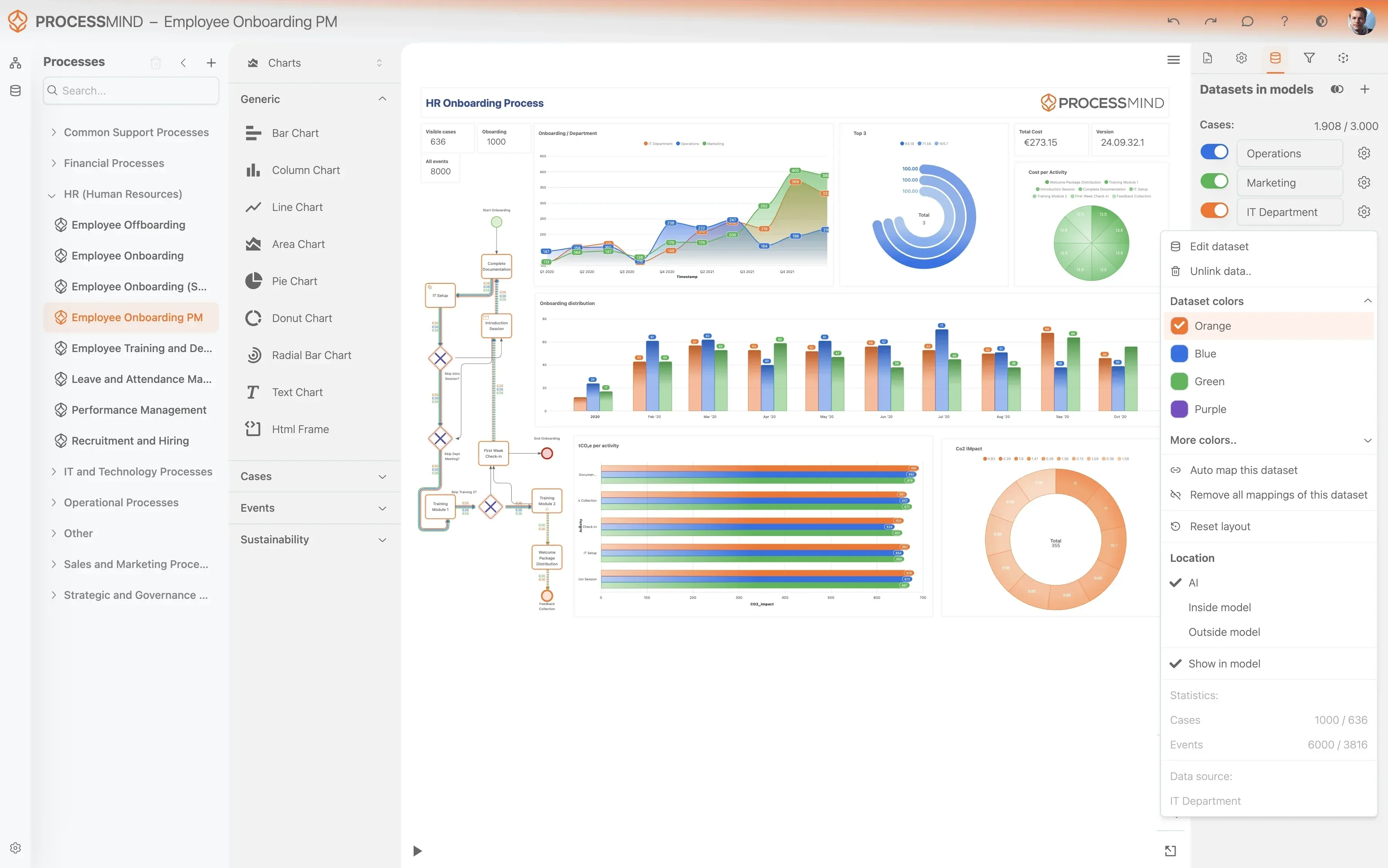
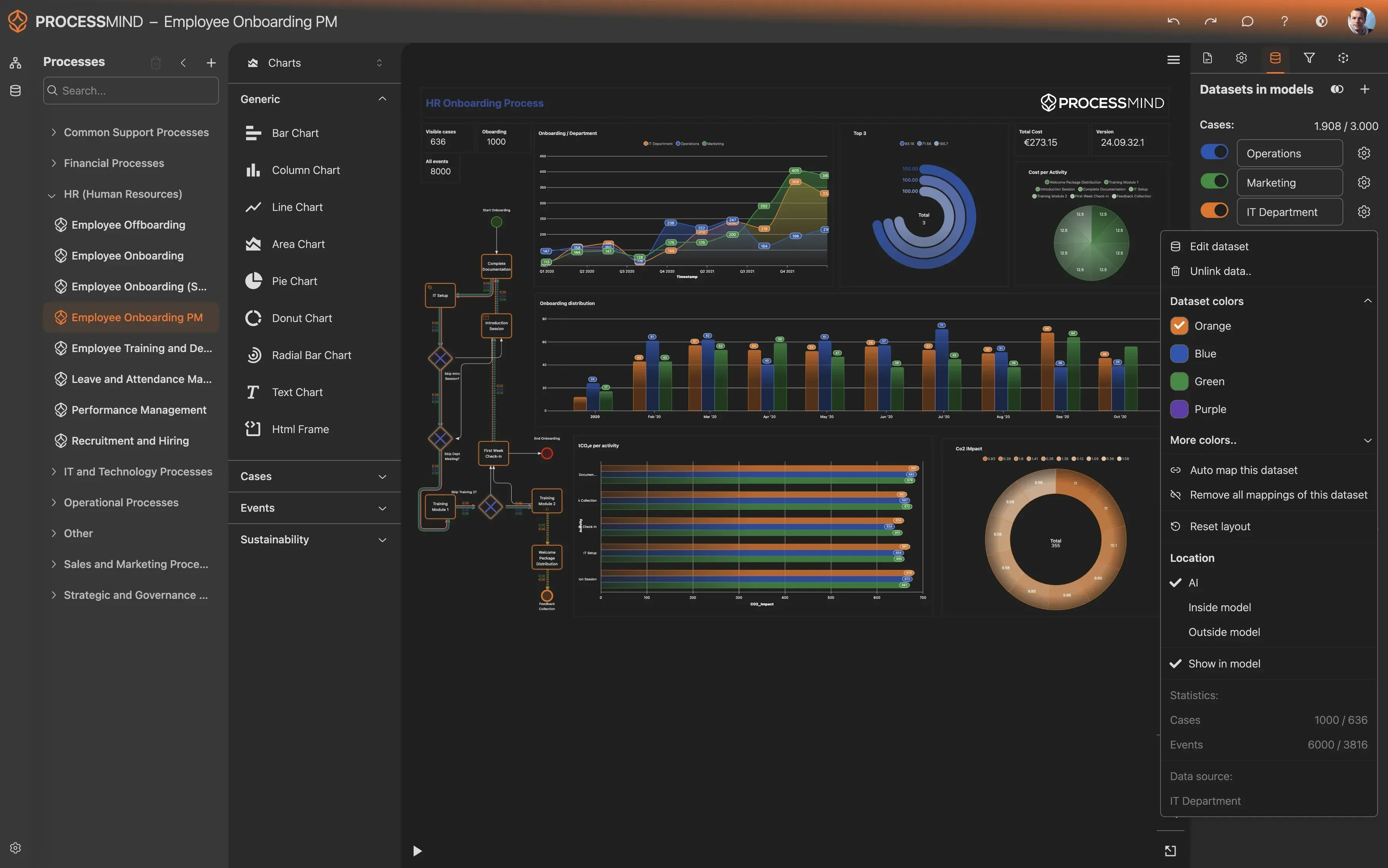
Use AI powered dashboards to pinpoint bottlenecks in dispute resolution and identify deviations from your standard credit terms.
Why it matters
Understanding where cash flow stalls allows you to prioritize high value interventions that reduce days sales outstanding.
Expected outcome
Data backed insights into process inefficiencies and root causes
Implement Improvements
What to do
Execute targeted changes such as automating payment reminders or streamlining dispute workflows based on your analysis findings.
Why it matters
Translating insights into action directly impacts your working capital by accelerating the time from billing to bank clearing.
Expected outcome
Optimized workflows and reduced friction in customer payments
Monitor Your Process
What to do
Regularly upload new data extracts from SAP to track the effectiveness of your changes and ensure compliance with financial policies.
Why it matters
Continuous monitoring prevents process drift and helps sustain gains in collection efficiency over the long term.
Expected outcome
Real time visibility into performance trends and KPI improvements
PROVEN OUTCOMES
Transformation Benchmarks for SAP Accounts Receivable
By visualizing the end to end journey of every Invoice Number within SAP ECC, teams identify hidden bottlenecks and streamline their global collections. These metrics reflect the operational excellence achieved when process transparency is applied to the credit to cash cycle.
Average reduction in collection time
Streamlining the invoice to clearing cycle helps organizations unlock working capital by reducing the time invoices remain unpaid.
Increase in touchless payments
Improving bank statement processing rules allows for higher rates of automatic reconciliation without manual intervention from finance teams.
Reduction in case handling time
Identifying bottlenecks in internal communication and evidence gathering allows teams to resolve invoice disputes much more efficiently.
Reduction in billing corrections
Minimizing errors in original invoices reduces the need for costly credit memo issuance and administrative overhead.
Growth in early payment incentives
Optimizing credit terms and dispatch speed ensures customers pay within discount eligibility periods, improving cash flow predictability.
Individual outcomes vary based on organizational complexity and data quality. These figures represent typical improvements observed across process mining implementations for SAP finance modules.
Recommended Data
FAQs
Frequently asked questions
Process mining visualizes the actual flow of invoices from creation to final payment by extracting event logs from SAP ECC. It identifies hidden bottlenecks, such as delays in dispute resolution or manual intervention in cash application, that contribute to high Days Sales Outstanding.
Data extraction typically involves connecting to your SAP instance via a dedicated connector or using ETL tools to pull specific tables. Most implementations focus on standard accounting modules, ensuring that the data transfer is secure and adheres to corporate governance standards.
The analysis primarily relies on header and item level data from tables like BKPF and BSEG, along with customer master data from KNA1. Additionally, change logs from tables CDHDR and CDPOS are used to track specific status updates and modifications throughout the invoice lifecycle.
Yes, it highlights exactly where delays occur in the collection cycle, such as dispatch lags or slow internal approval steps. By addressing these specific friction points, organizations can accelerate cash collection and improve their overall liquidity position.
Process mining tracks every step of a dispute, including the time taken to identify a discrepancy and the final resolution path. This visibility helps managers standardize how disputes are handled, which reduces the time capital is tied up in unresolved claims.
Most organizations see their first process maps within four to six weeks after initial data extraction is completed. This rapid turnaround allows teams to identify quick wins, such as automating repetitive manual cash applications, early in the project lifecycle.
The invoice number serves as a unique anchor that connects various events, such as billing, payment receipt, and clearing, across different SAP modules. Using this identifier ensures a complete end to end view of the financial transaction without duplicating records.
The mining engine identifies instances where payments do not match invoice amounts and tracks the subsequent manual adjustments or follow up activities. This helps teams understand the root causes of unmatched payments and refine their automated matching logic.
Optimize Accounts Receivable and fix cash flow gaps today
Reduce your DSO by 15 to 20 days and accelerate SAP ECC payments.
No credit card required, setup takes minutes