Improve Your Revenue Cycle Management

Select a process
Choose a process to continue working in your connected workspace.
Streamline Revenue Cycle Management Across Any System
ProcessMind helps you uncover hidden inefficiencies, bottlenecks, and compliance risks within your Revenue Cycle Management processes. By analyzing your data, it reveals areas of rework, delays, and non-standard deviations that impact your financial performance. Optimize your operations, reduce costs, and accelerate cash flow regardless of your underlying system or data source.
Download our pre-configured data template and address common challenges to reach your efficiency goals. Follow our six-step improvement plan and consult the Data Template Guide to transform your operations.
Show detailed description
Elevate your financial performance and operational efficiency with ProcessMind's advanced process mining for Revenue Cycle Management (RCM). This powerful solution provides an unparalleled, end-to-end visualization and analysis of every single step within your RCM process, from the initial service request to the final account closure. By focusing on the "Billing Event" as a central case identifier, we help you trace the complete journey of each revenue stream. Our platform meticulously uncovers hidden inefficiencies, identifies critical compliance gaps, and pinpoints opportunities to optimize cash flow across your entire RCM workflow, regardless of the specific underlying source system your organization utilizes. Gain deep, actionable insights that transcend traditional reporting, revealing the true operational landscape of your revenue cycle.
The complexities of Revenue Cycle Management often lead to significant challenges that can hinder financial health. Organizations frequently grapple with delayed payments, a high volume of denied claims, manual errors that lead to rework, and a persistent lack of clear visibility into process bottlenecks. Compliance risks, often stemming from inconsistent practices or deviations from standard operating procedures, further complicate the landscape. These pervasive issues exist irrespective of the advanced capabilities of your specific ERP or financial management system. Standard reports can tell you what happened, but process mining with ProcessMind reveals why it happened and where in your system it is occurring, allowing you to move beyond surface-level symptoms to address the root causes of these widespread RCM pain points.
ProcessMind empowers your team to transform these challenges into opportunities. By leveraging our intelligent analytics, you can accurately identify the root causes of payment delays, significantly improve billing accuracy, and accelerate cash collection cycles. Our platform helps you to proactively reduce claim denials, leading to a substantial improvement in your bottom line. Beyond financial gains, enhancing your RCM process also contributes directly to improved patient satisfaction, ensuring a smoother experience from service initiation to payment. Moreover, ProcessMind facilitates robust regulatory compliance by highlighting process deviations that could pose risks. The ability to compare different process variants, benchmark performance against best practices, and simulate the impact of proposed improvements means you can make data-driven decisions that deliver tangible, lasting results. This holistic view and optimization capability are fully accessible, whether your data originates from your current system, your ERP, or any other source system.
Getting started with optimizing your Revenue Cycle Management process through ProcessMind is straightforward and designed for rapid implementation. Our intuitive data template guides you through the process of mapping your RCM data, ensuring a seamless integration of your operational information into our analytics engine. This structured approach allows you to quickly transform raw data into a dynamic, visual representation of your RCM processes. Begin your journey toward enhanced financial performance and operational excellence today by leveraging ProcessMind to unlock the full potential of your revenue cycle, irrespective of your current technological infrastructure.
The 6-Step Path to Optimize Your Revenue Cycle Management
Connect & Discover Data
What to do
Connect your RCM data from various sources like your ERP, billing system, and EMR to a process mining platform. This initial phase involves extracting event logs and configuring them for analysis.
Why it matters
Aggregating data provides a comprehensive view of your entire revenue cycle, revealing the actual process flow and helping you baseline current performance metrics.
Expected outcome
A complete, accurate dataset imported and ready for process visualization and initial analysis across all relevant systems.
Map Your RCM Process
What to do
Visualize your end-to-end revenue cycle based on the connected data. This includes identifying all activities, their sequence, and variants, from service initiation to payment posting.
Why it matters
A visual process map clarifies how work truly flows, highlighting deviations from the ideal path and common rework loops that impact efficiency.
Expected outcome
A clear, data-driven visual representation of your actual revenue cycle process, including all major variants and their frequencies.
Identify Bottlenecks
What to do
Pinpoint specific activities or transitions within your RCM process where delays frequently occur or where cases get stuck, leading to extended cycle times.
Why it matters
Locating bottlenecks allows you to focus improvement efforts on areas that have the most significant negative impact on revenue realization and patient satisfaction.
Expected outcome
A prioritized list of identified process bottlenecks, quantified by their impact on cycle time and resource utilization.
Analyze Root Causes
What to do
Deeply investigate the underlying reasons for identified bottlenecks and deviations. This involves analyzing process attributes, resource allocation, and specific case characteristics.
Why it matters
Understanding the root causes, rather than just the symptoms, ensures that your improvement initiatives address the fundamental problems, leading to sustainable change.
Expected outcome
A clear understanding of the causal factors contributing to process inefficiencies, supported by data-driven insights.
Design Process Improvements
What to do
Develop concrete strategies and actions to eliminate or mitigate the identified root causes. This may involve redesigning workflows, automating tasks, or improving data quality.
Why it matters
Well-designed improvements lead to more efficient processes, reduced costs, faster cash collection, and improved compliance, directly impacting your bottom line.
Expected outcome
A structured plan outlining specific process changes, automation opportunities, and policy adjustments designed to optimize your revenue cycle.
Monitor & Iterate
What to do
Continuously track the performance of your RCM process after implementing changes. Use key performance indicators to assess effectiveness and identify new areas for optimization.
Why it matters
Ongoing monitoring ensures that improvements are sustained, new issues are promptly identified, and your RCM process continuously adapts to evolving business needs.
Expected outcome
A dynamic monitoring framework in place, providing real-time insights into process performance and enabling continuous, data-driven optimization.
WHAT YOU WILL GET
Discover Untapped Potential in Revenue Cycle Management
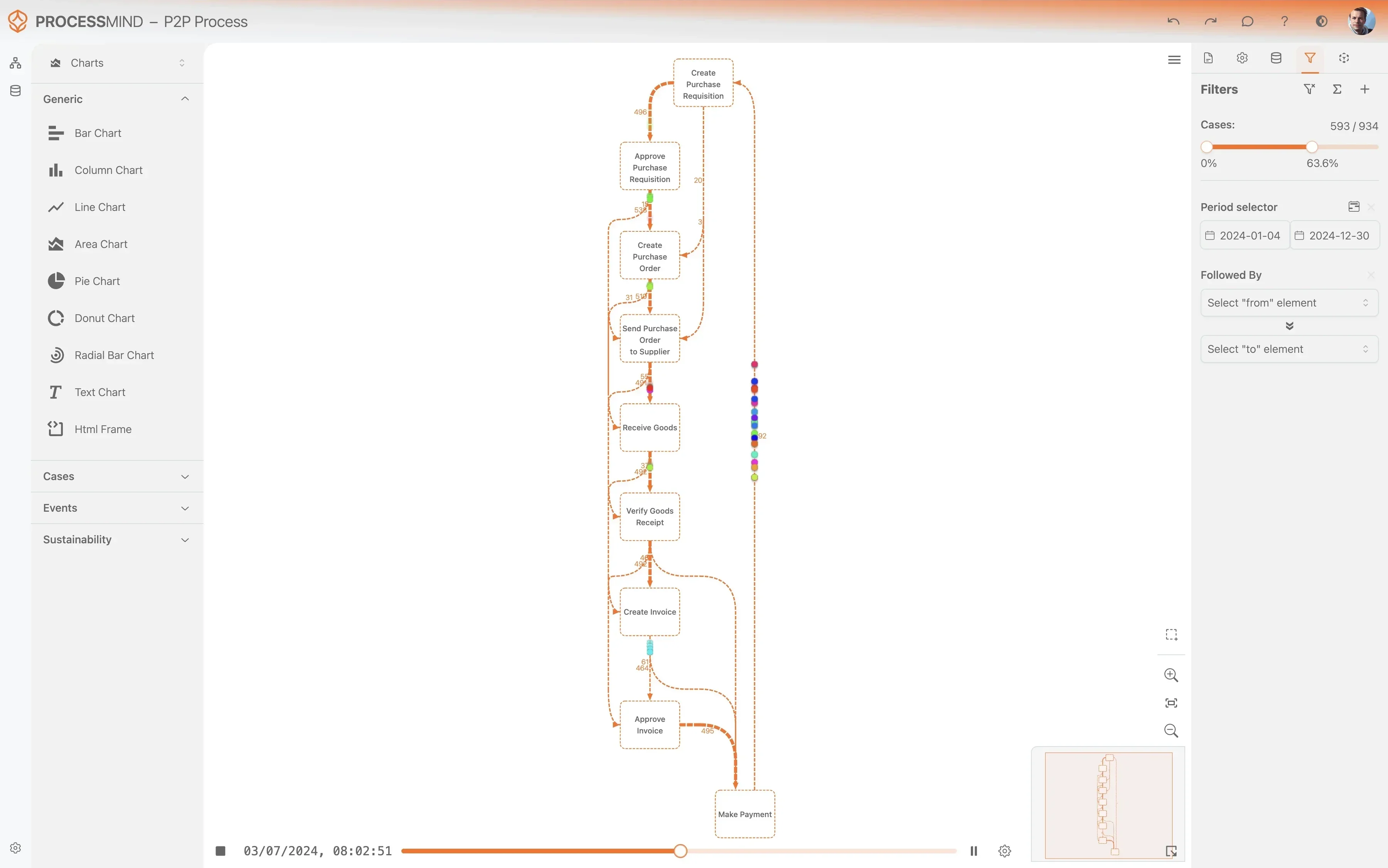
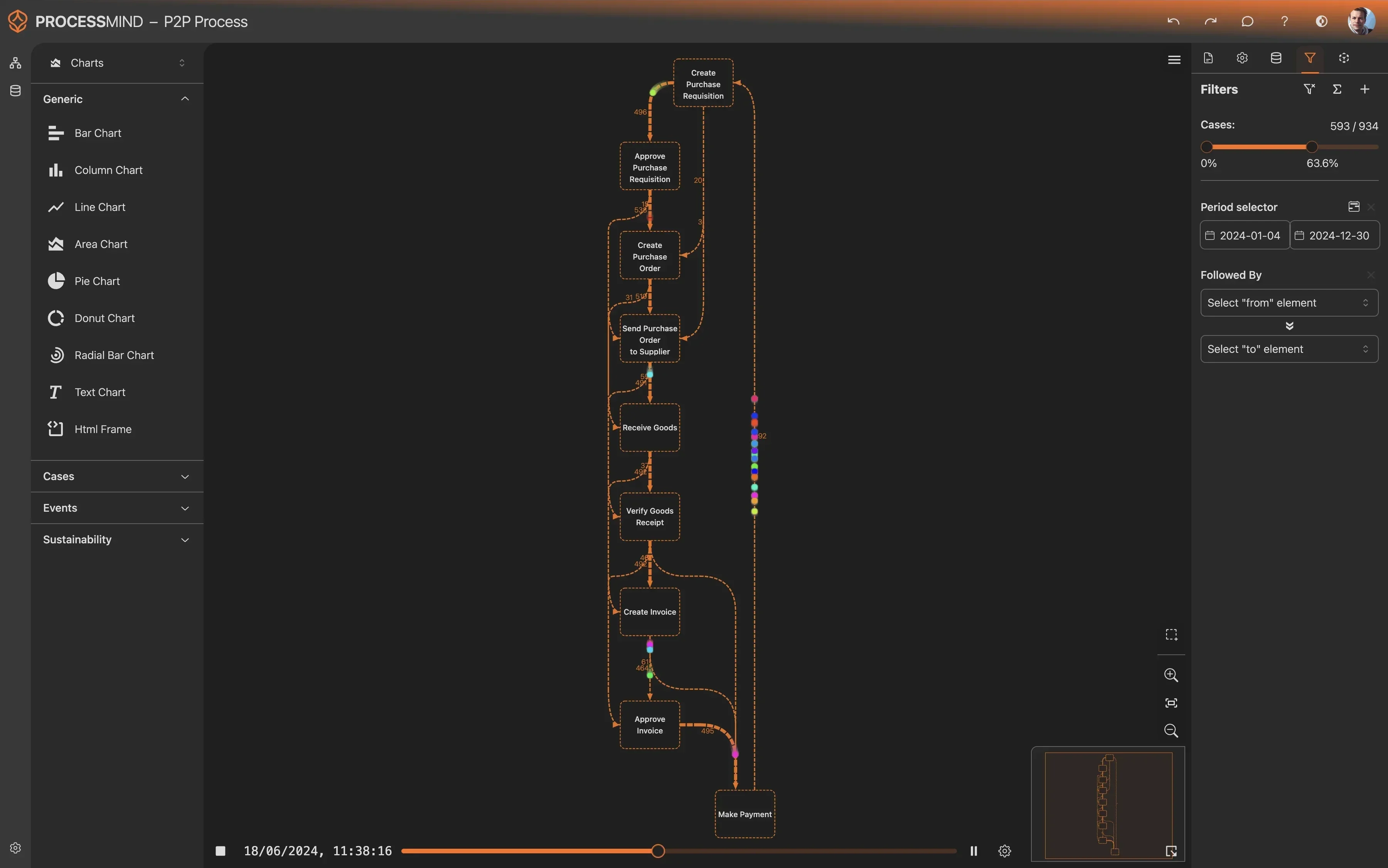
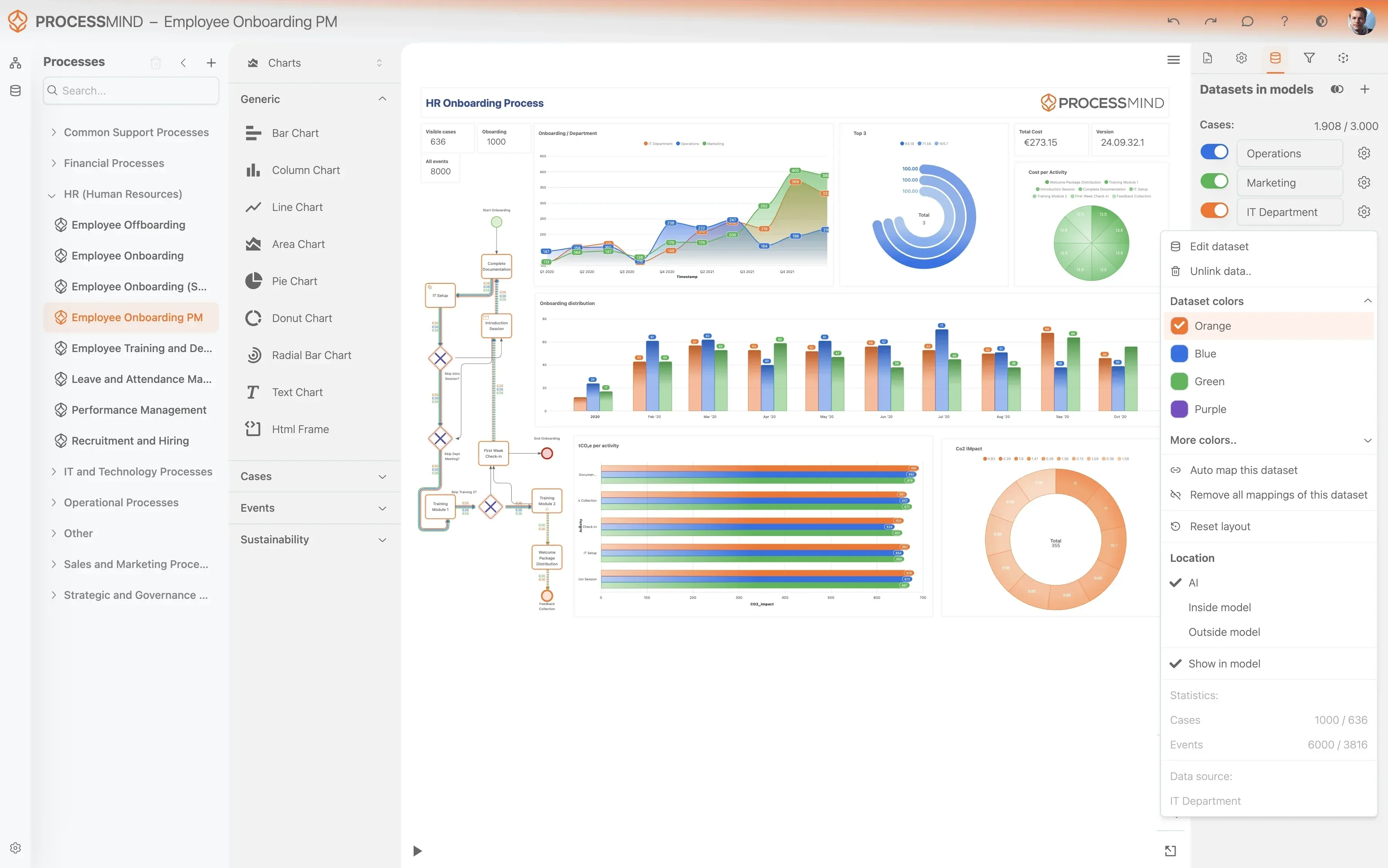
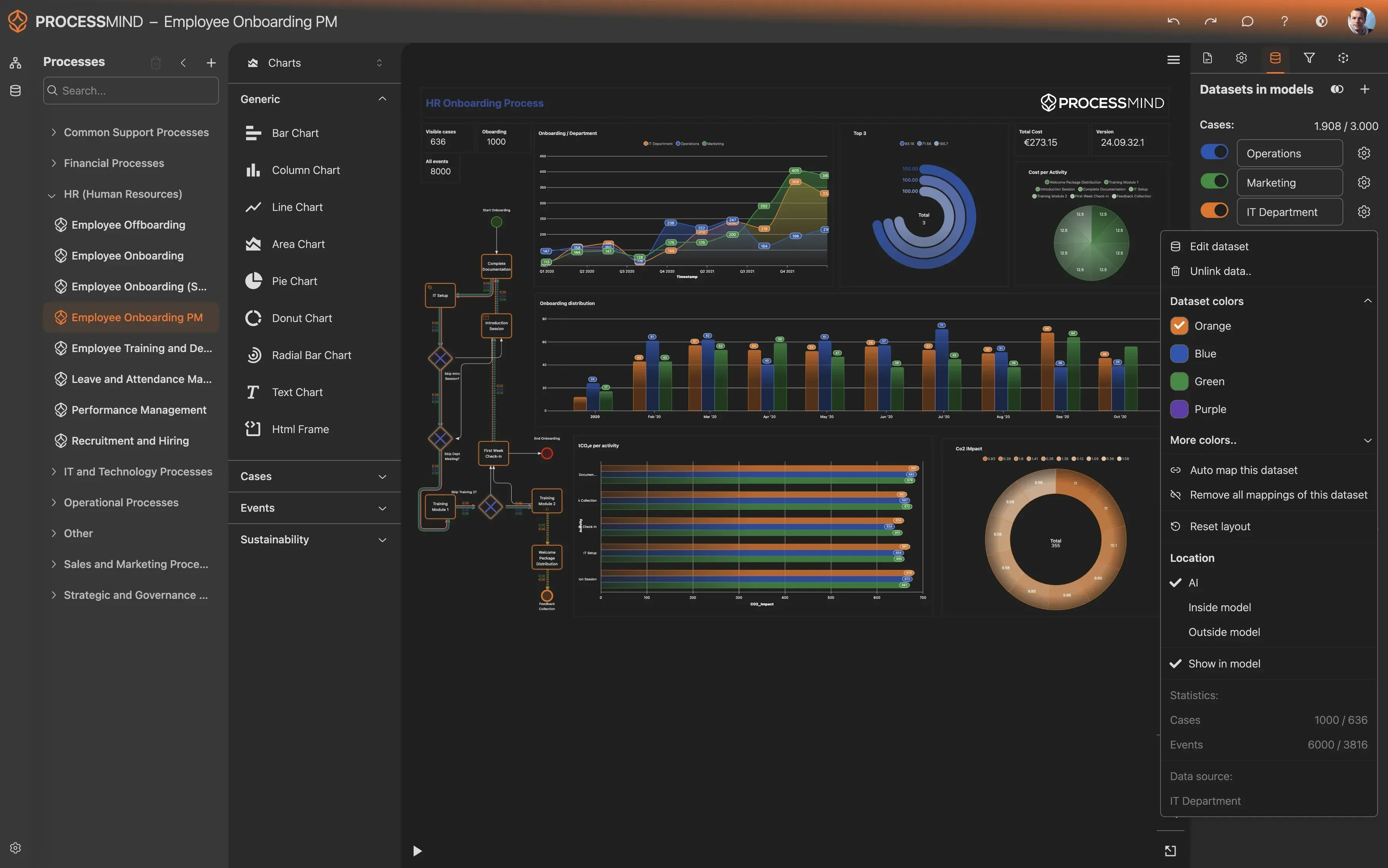
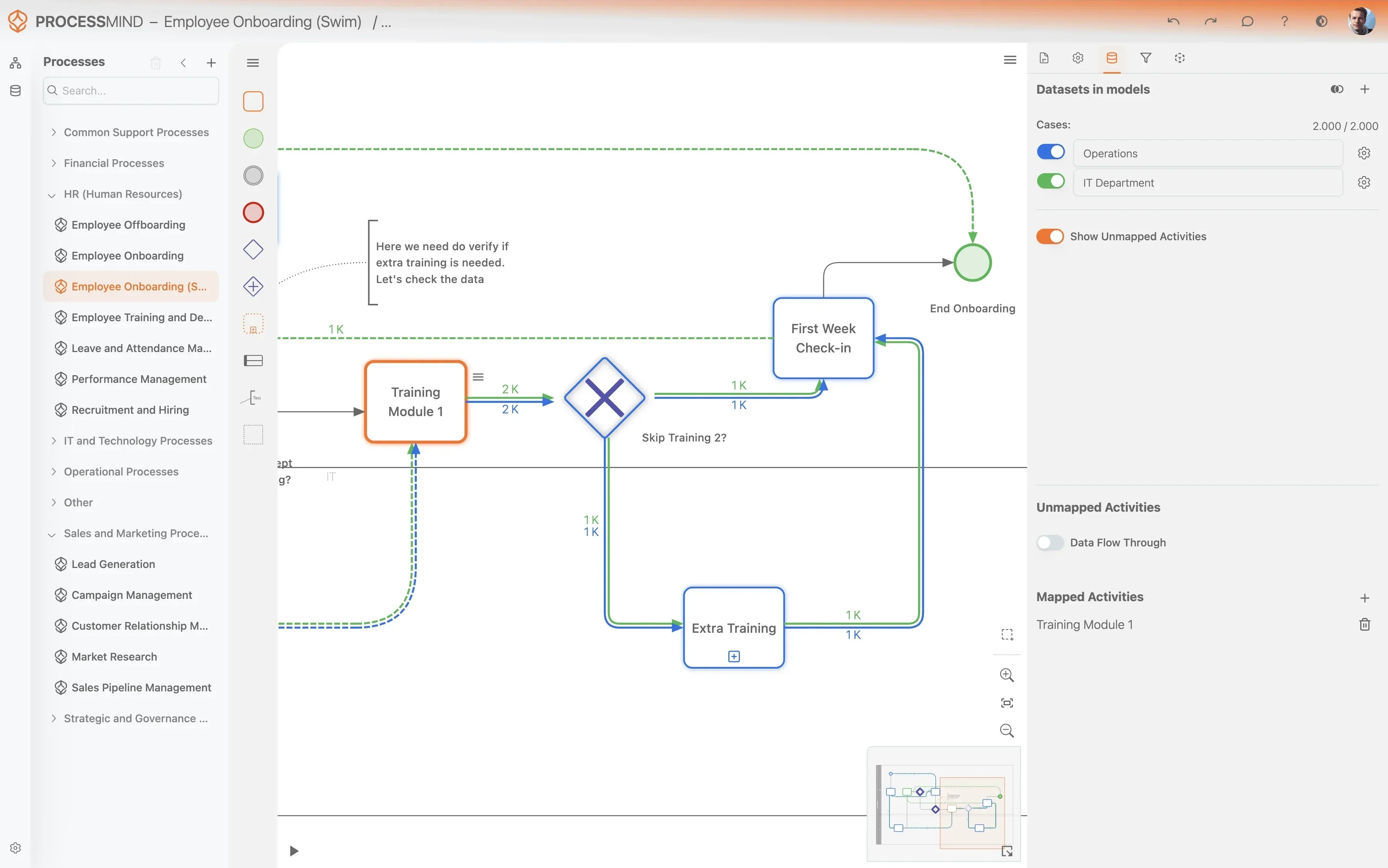
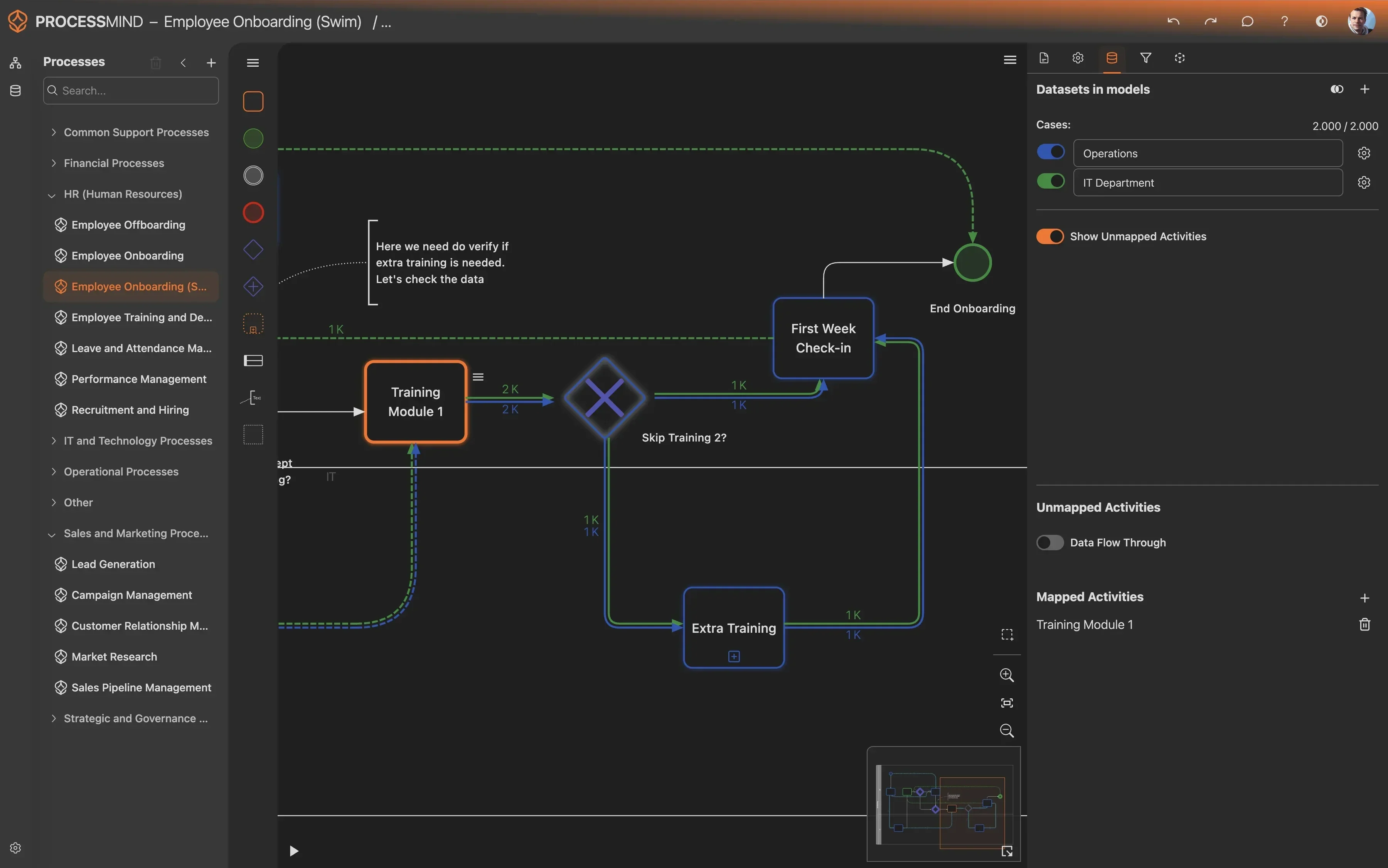
- Visualize end-to-end RCM process flows
- Pinpoint delays and compliance risks
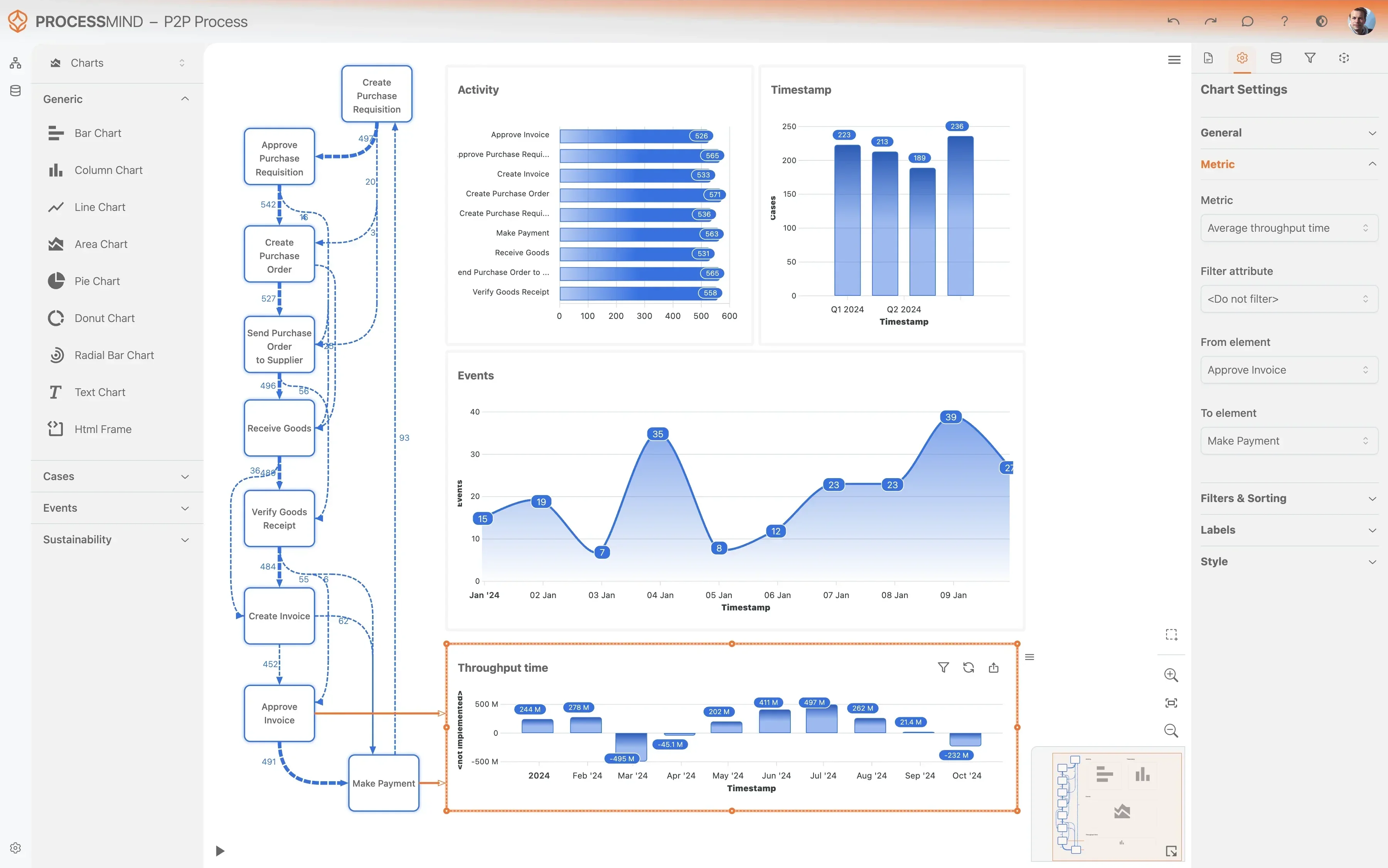
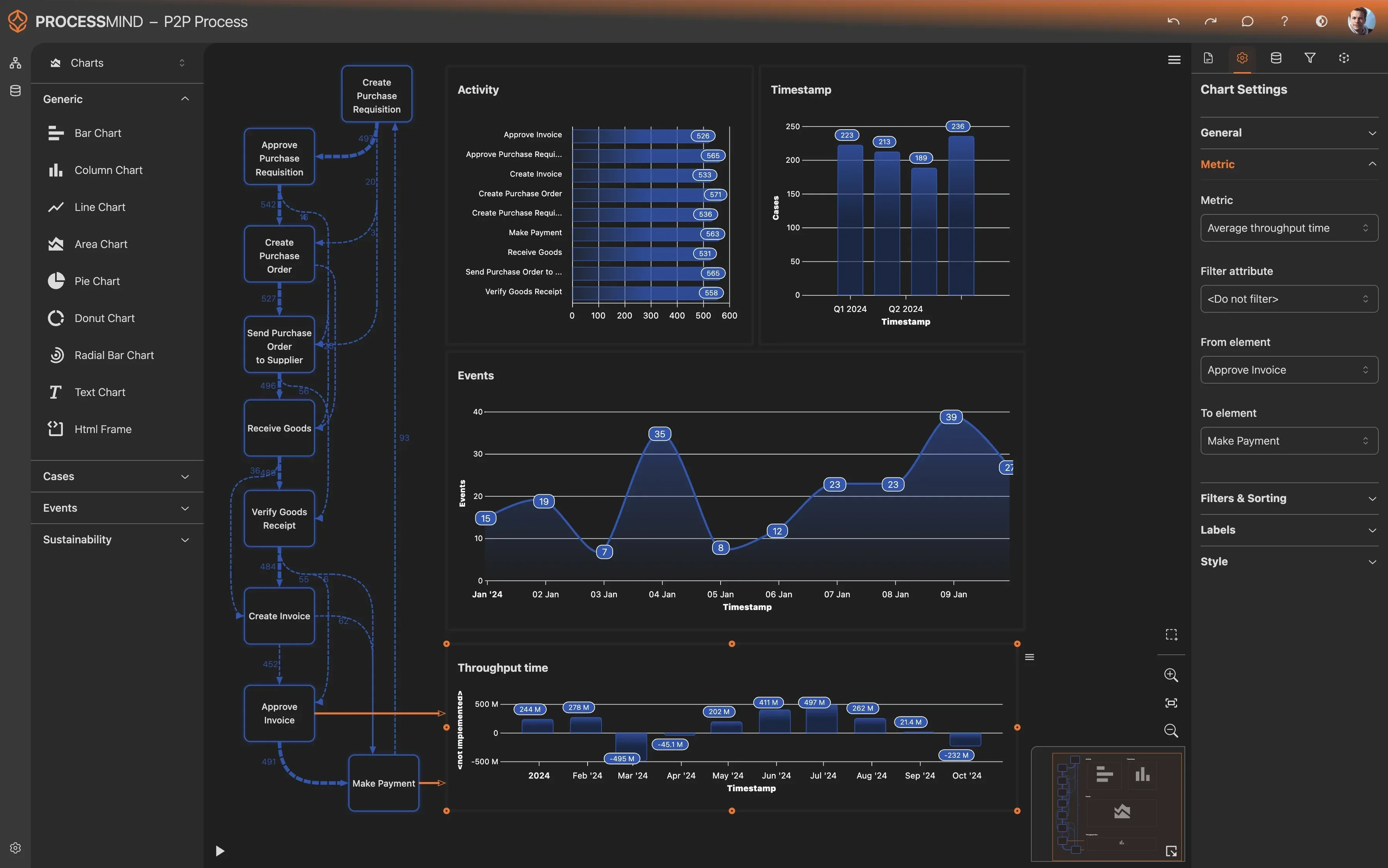
- Optimize payment processing and collection
- Enhance patient experience and satisfaction
TYPICAL OUTCOMES
What Organizations Achieve in Revenue Cycle Management
These outcomes illustrate the significant financial and operational improvements achieved by optimizing your Revenue Cycle Management processes. By identifying and eliminating bottlenecks within billing events, organizations can realize faster payments and reduced operational costs.
Average reduction in end-to-end processing
By identifying and removing bottlenecks across the revenue cycle, organizations can significantly shorten the time from service delivery to final payment, improving cash flow.
Decrease in claim denials and invoice disputes
Process mining pinpoints the root causes of claim denials and invoice disputes, allowing for proactive measures to reduce their frequency and associated revenue loss.
Reduction in billing errors and account corrections
By identifying the sources of errors and inefficiencies, organizations can significantly reduce manual rework, unnecessary account adjustments, and associated operational costs.
Improvement in adherence to standards
Process mining provides full visibility into process deviations, enabling organizations to enforce standard operating procedures and regulatory requirements, minimizing compliance risks.
Average reduction in resolution time
Streamlining the dispute resolution workflow through process insights leads to a significant reduction in the time taken to resolve outstanding claims and invoices, improving cash flow.
Results vary based on the specific complexities of your revenue cycle and the quality of available data. The figures presented represent common improvements observed across various implementations.
Recommended Data
For customized data recommendations, choose your specific process.
FAQs
Frequently asked questions
Process mining visualizes your complete RCM process flow, from charge capture to account closure. It identifies bottlenecks, such as slow invoicing or frequent payment disputes, enabling targeted improvements to accelerate cash flow and reduce revenue erosion. This leads to better financial performance and operational efficiency.
You will primarily need event logs detailing your billing events from your source system. This includes a case identifier, typically a Billing Event ID, along with activity names, and corresponding timestamps for each step. This data allows the process mining tool to reconstruct the actual process flow.
Initial setup, including data extraction and model creation, can range from a few weeks to a couple of months, depending on data complexity and availability. You can often see the main process flows and obvious bottlenecks within the first month after data ingestion.
Yes, process mining utilizes dedicated software platforms designed to analyze event logs. While your source system provides the data, you will need a process mining tool and someone with analytical skills to interpret the results and translate them into actionable insights for your RCM operations.
Absolutely. Process mining allows you to visualize every actual process path, comparing them against defined compliance rules and standard operating procedures. This helps quickly identify deviations and non-compliant process instances, enabling proactive correction and risk mitigation.
Process mining precisely maps out every step of your RCM process, highlighting where delays occur and claim denials frequently happen. By visualizing deviations from optimal paths, it provides actionable insights to streamline workflows and implement targeted interventions. This allows you to address common problems directly and effectively.
Data extraction typically involves querying relevant tables in your source system's database, utilizing existing reporting tools, or through APIs. The goal is to collect event logs in a structured format, usually CSV, SQL, or a direct database connection, which can then be fed into the process mining software.
Process mining is a non-invasive analytical technique. It works by analyzing historical data, so it does not directly interfere with your live RCM operations. The primary effort involves initial data extraction and ongoing data refreshes, which can often be automated.
A "billing event" acts as the case identifier, representing a single instance of a revenue cycle process. This could be the journey of a specific patient charge, a claim, or an entire encounter. Each billing event has a unique identifier and a sequence of activities with timestamps, allowing its complete lifecycle to be tracked and analyzed from start to finish.
No, process mining complements existing RCM reporting and analytics tools rather than replacing them. While traditional reports show "what" happened, process mining explains "why" it happened by revealing the actual process flow and variations. It provides deeper, actionable insights for process improvement.
Transform Your Revenue Cycle Management Now
Gain insights, reduce denials, and accelerate cash flow across all systems.
No credit card required • Get started in minutes