Improve Your Customer Service

Select a process
Choose a process to continue working in your connected workspace.
Optimize Freshdesk Customer Service to Improve Satisfaction
Customer service processes often face challenges like lengthy resolution times and inconsistent agent performance. Our platform helps you precisely pinpoint where service requests encounter delays. We guide you through practical steps to streamline operations, enhance agent efficiency, and elevate customer satisfaction.
Download our pre-configured data template and address common challenges to reach your efficiency goals. Follow our six-step improvement plan and consult the Data Template Guide to transform your operations.
Show detailed description
Why Optimize Customer Service in Freshdesk?
Customer Service is the heart of any successful business, yet it often harbors inefficiencies that silently erode customer satisfaction and inflate operational costs. In a system like Freshdesk, where countless interactions happen daily, bottlenecks can hide in plain sight, leading to delayed resolutions, frustrated customers, and overworked agents. When service requests languish, your brand reputation suffers, and the potential for customer churn increases. Understanding the true journey of a service request, from its initiation to its resolution, is crucial for maintaining competitive advantage and fostering lasting customer loyalty. Optimizing your Customer Service in Freshdesk is not just about fixing problems, it is about transforming your service delivery into a seamless, efficient, and customer-centric operation.
How Process Mining Unlocks Freshdesk Customer Service Insights
Process mining offers a revolutionary approach to understanding and improving your Freshdesk Customer Service. Instead of relying on assumptions or aggregated reports, process mining uses the event logs generated within Freshdesk to reconstruct the actual journey of every service request. It visually maps out every step a ticket takes, from "Customer Contact Initiated" and "Service Request Created," through various agent assignments, "Internal Escalation Triggered," and ultimately to "Service Request Resolved" and "Service Request Closed." This comprehensive view immediately highlights where the process deviates from the ideal path, identifies frequently skipped steps, and exposes hidden rework loops. You gain unparalleled visibility into your process flow, allowing you to see precisely where delays occur, understand the root causes of long cycle times, and identify areas for significant process optimization.
Key Improvement Areas in Freshdesk Customer Service
With process mining, you can pinpoint specific areas for enhancement within your Freshdesk environment:
- Bottleneck Identification: Easily visualize where service requests get stuck. Is it a particular agent, a specific department handoff, or perhaps waiting for "Information Requested from Customer"? By identifying these choke points, you can implement targeted solutions, helping you to reduce Customer Service cycle time.
- Cycle Time Reduction: Analyze the time spent in each activity and transition. Uncover opportunities to streamline processes, automate repetitive tasks, and eliminate unnecessary steps to significantly reduce the overall time to resolution for service requests.
- SLA Compliance and Adherence: Monitor whether your Service Level Agreements, SLA Target Resolution Time, are consistently met. Process mining reveals specific cases and reasons for SLA breaches, allowing you to proactively address systemic issues rather than reacting to individual failures.
- Agent Performance and Workload Balancing: Understand agent efficiency, identifying those who consistently resolve issues faster or encounter more escalations. This insight supports targeted training, improves resource allocation, and helps balance agent workloads effectively.
- Root Cause Analysis for Escalations: Trace the exact sequences of events that lead to internal escalations, like "Internal Escalation Triggered." Discover common preceding activities or conditions that contribute to complex or unresolved issues.
Expected Outcomes: Tangible Benefits for Your Freshdesk Operations
Implementing process optimization driven by process mining in Freshdesk yields clear, measurable benefits:
- Reduced Resolution Times: Significantly decrease the average time it takes to resolve customer service requests, leading to higher customer satisfaction.
- Increased Operational Efficiency: Streamline workflows, eliminate redundant steps, and optimize resource allocation, leading to lower operational costs.
- Enhanced Customer Satisfaction: Provide faster, more consistent, and higher-quality service, improving Customer Sentiment and fostering loyalty.
- Improved SLA Adherence: Proactively meet and exceed your Service Level Agreements, bolstering trust and reliability.
- Greater Process Transparency: Gain a comprehensive, objective understanding of your Customer Service process, empowering data-driven decision-making and continuous improvement initiatives.
Getting Started with Process Mining for Freshdesk Customer Service
Ready to transform your Customer Service operations? Our platform makes it straightforward to connect your Freshdesk data and begin your process mining journey. With intuitive visualizations and powerful analytical tools, you do not need to be a data scientist to uncover critical insights. Start today to gain a clearer picture of your service processes, identify improvement opportunities, and provide an unparalleled customer experience.
The 6-Step Improvement Path for Customer Service
Download Your Template
What to do
Access the pre-designed Excel template tailored for Customer Service data. This template provides the optimal structure to organize your Freshdesk ticket information effectively.
Why it matters
Using the correct data structure from the start ensures accurate analysis, preventing rework and setting a strong foundation for meaningful insights into your service operations.
Expected outcome
A ready-to-use data template, perfectly structured for your Freshdesk customer service data extraction and analysis.
Export Your Freshdesk Data
What to do
Extract 3-6 months of historical customer service data from Freshdesk. Use Freshdesk's reporting features to export tickets, contacts, and SLA info, then populate the template.
Why it matters
Comprehensive historical data is crucial for identifying recurring issues, understanding trends, and establishing a baseline for measuring future improvements in your service delivery.
Expected outcome
A populated data template containing several months of your Freshdesk customer service history, ready for upload.
Upload Your Data
What to do
Securely upload your completed data template to ProcessMind. Our system automatically processes your Freshdesk data, preparing it for in-depth process analysis.
Why it matters
Effortless and secure data ingestion means you can quickly move from data collection to insight generation, minimizing manual effort and ensuring data integrity for analysis.
Expected outcome
Your Freshdesk customer service data successfully uploaded and processed, ready for visualization and discovery of improvement areas.
Analyze Your Service Flow
What to do
Explore auto-generated dashboards and process maps from your Freshdesk data. Use AI-driven recommendations to pinpoint bottlenecks and deviations in your service workflow.
Why it matters
Visualizing your end-to-end service process reveals inefficiencies, compliance gaps, and areas where agent effort or customer wait times are excessive, improving satisfaction.
Expected outcome
Clear understanding of your service process performance, with identified bottlenecks and actionable AI-driven suggestions.
Implement Changes
What to do
Prioritize and implement identified opportunities to optimize your service process. Update Freshdesk automation rules, agent workflows, or SLA configurations.
Why it matters
Acting on insights directly translates to improved response times, higher resolution rates, and enhanced customer satisfaction, boosting your team's efficiency and morale.
Expected outcome
Action plan for process optimization implemented, leading to measurable improvements in your Freshdesk customer service operations.
Monitor Progress
What to do
Periodically re-upload updated Freshdesk data to track the impact of your changes. Continuously measure key performance indicators, ensuring sustained improvements.
Why it matters
Ongoing monitoring ensures that improvements are sustained and allows for continuous refinement, adapting to evolving customer needs and maintaining peak service efficiency.
Expected outcome
Continuous visibility into your customer service process, with documented KPI improvements and adaptability.
WHAT YOU WILL GET
Pinpoint Delays in Freshdesk, Delight Customers
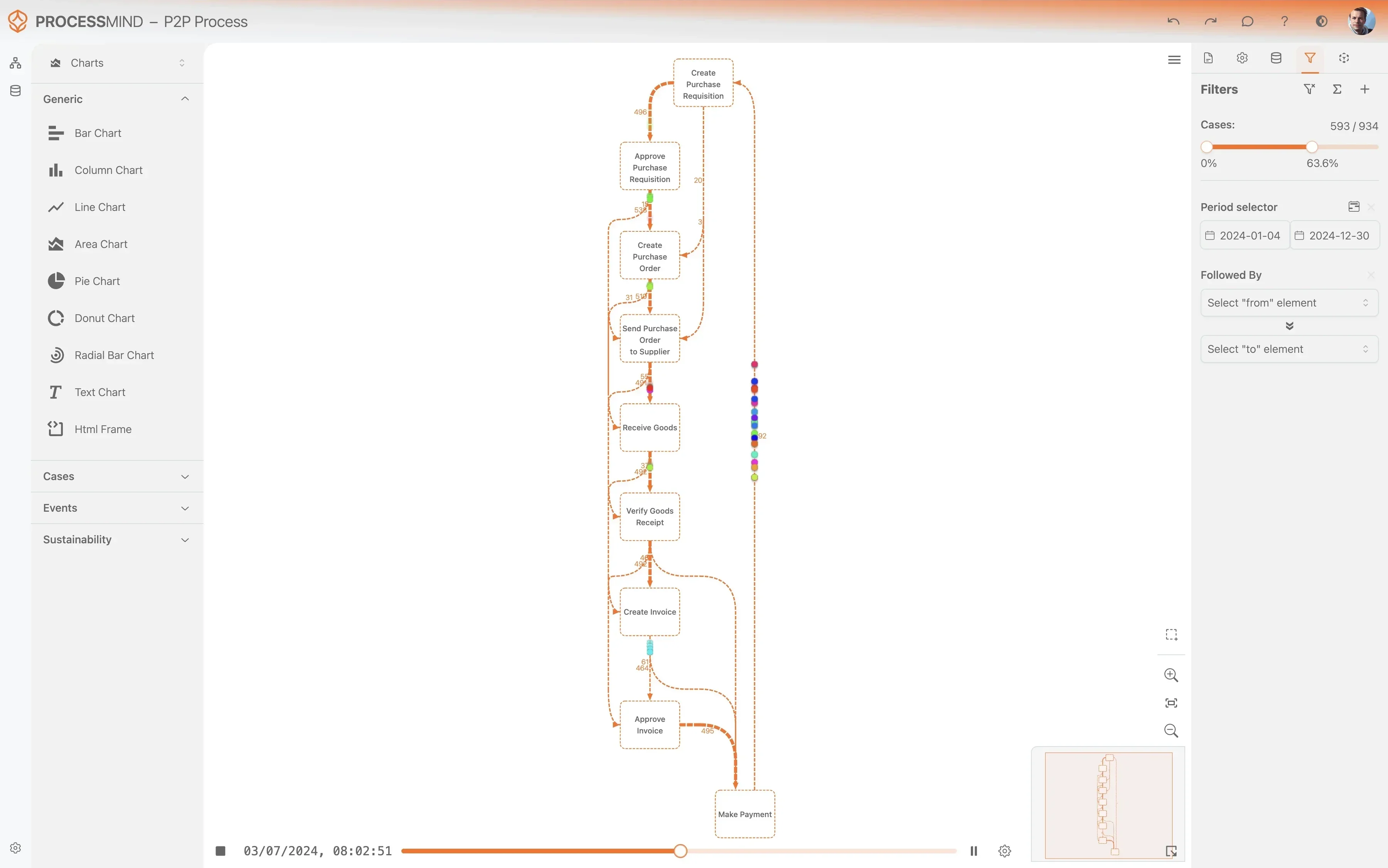
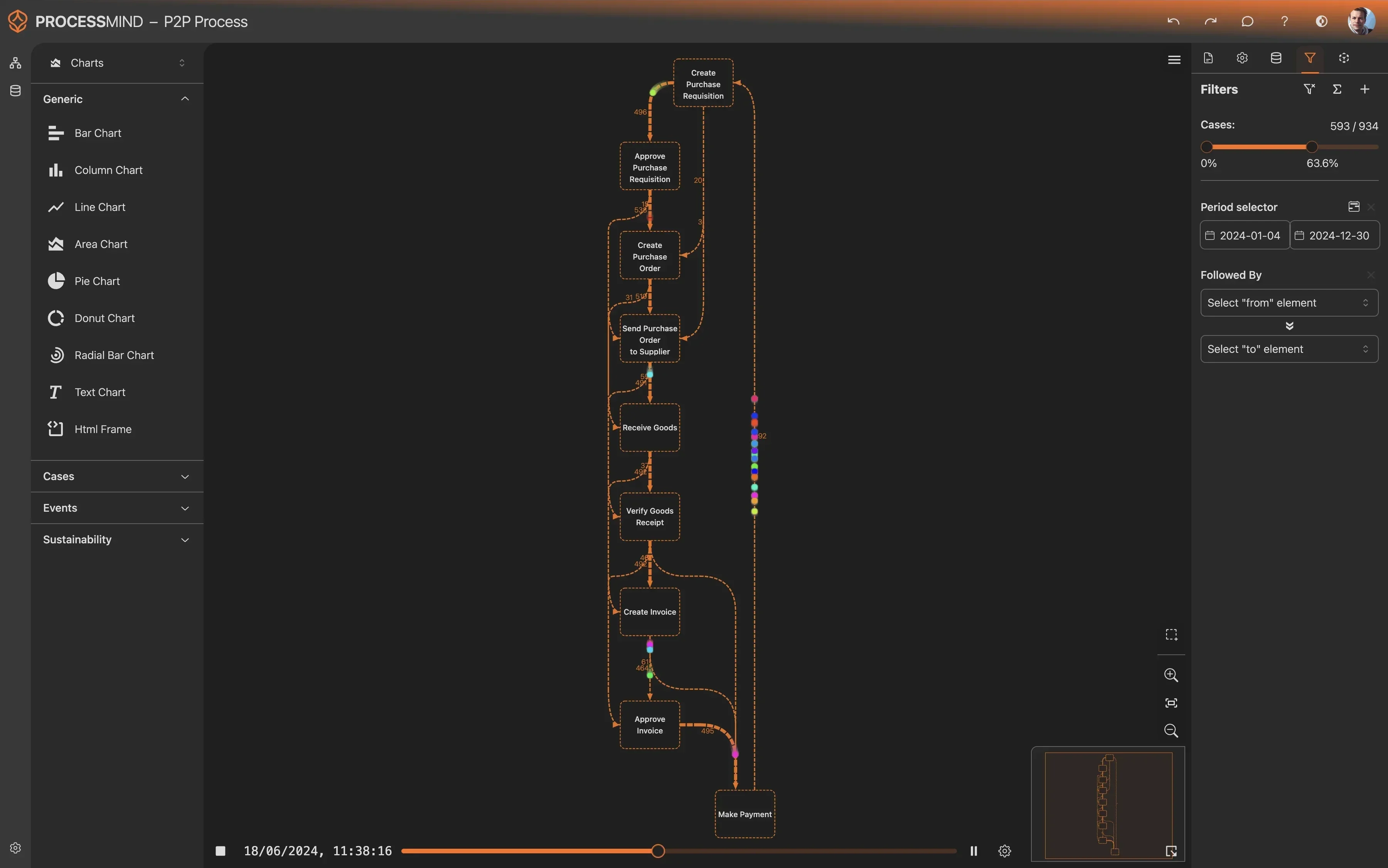
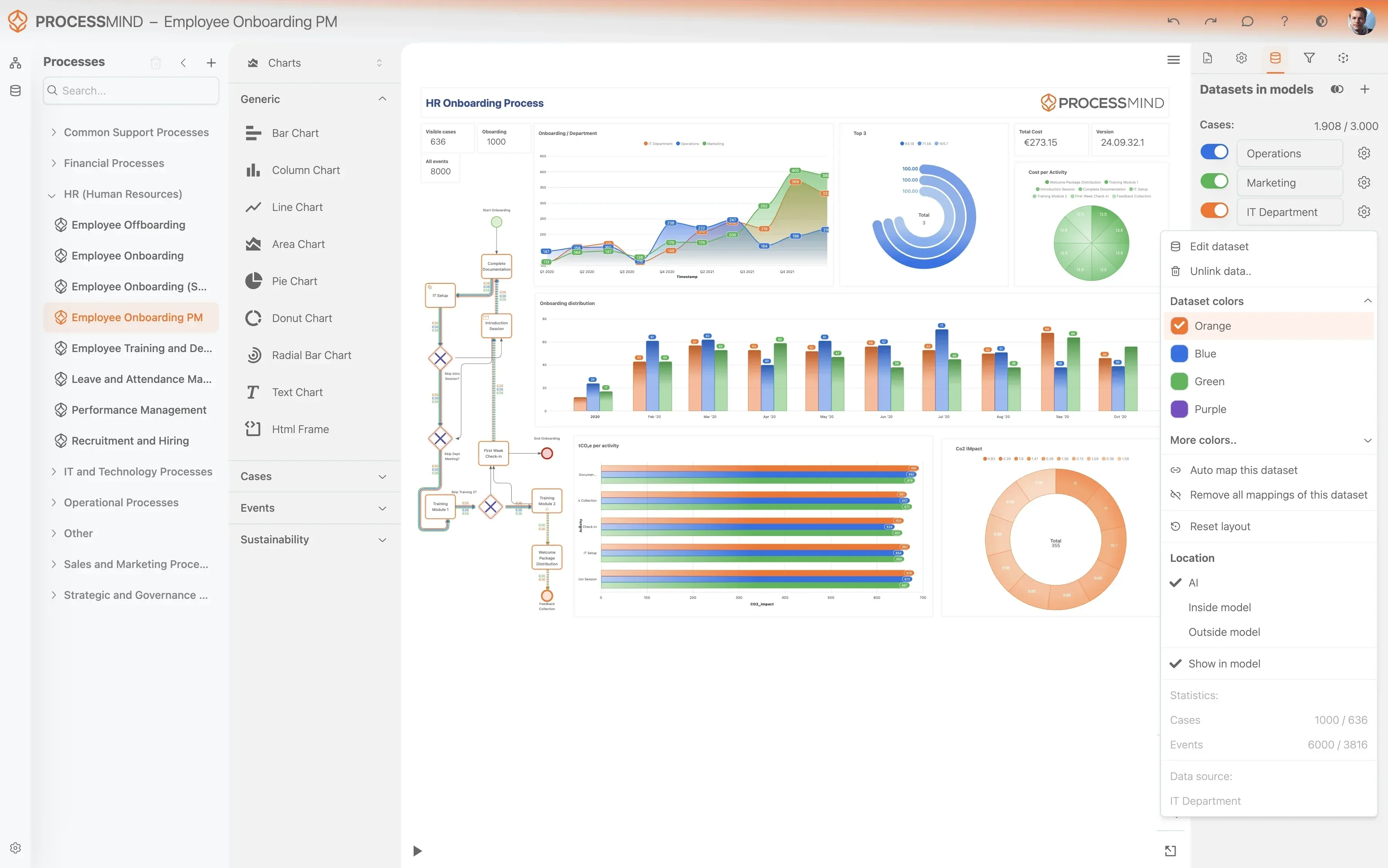
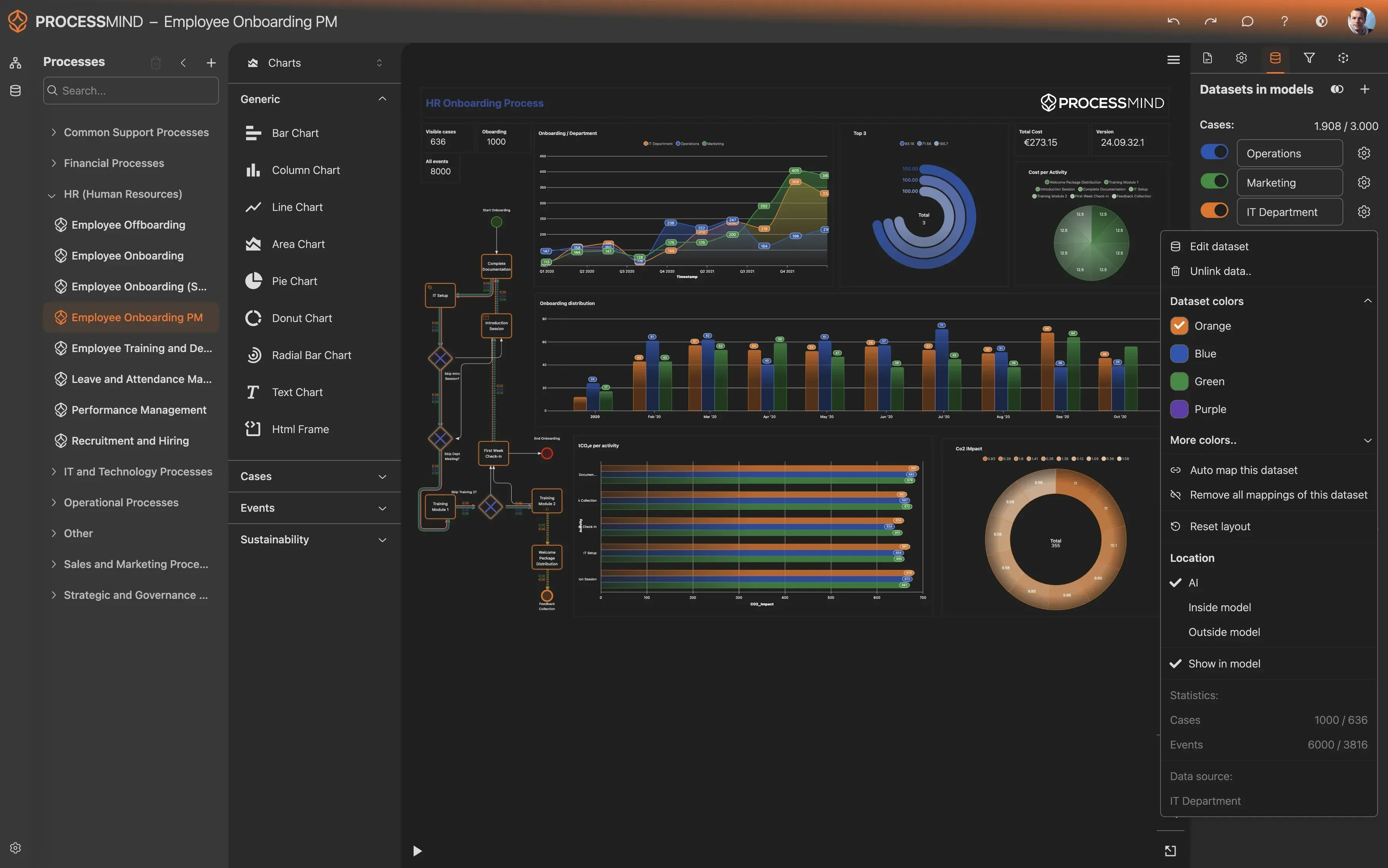
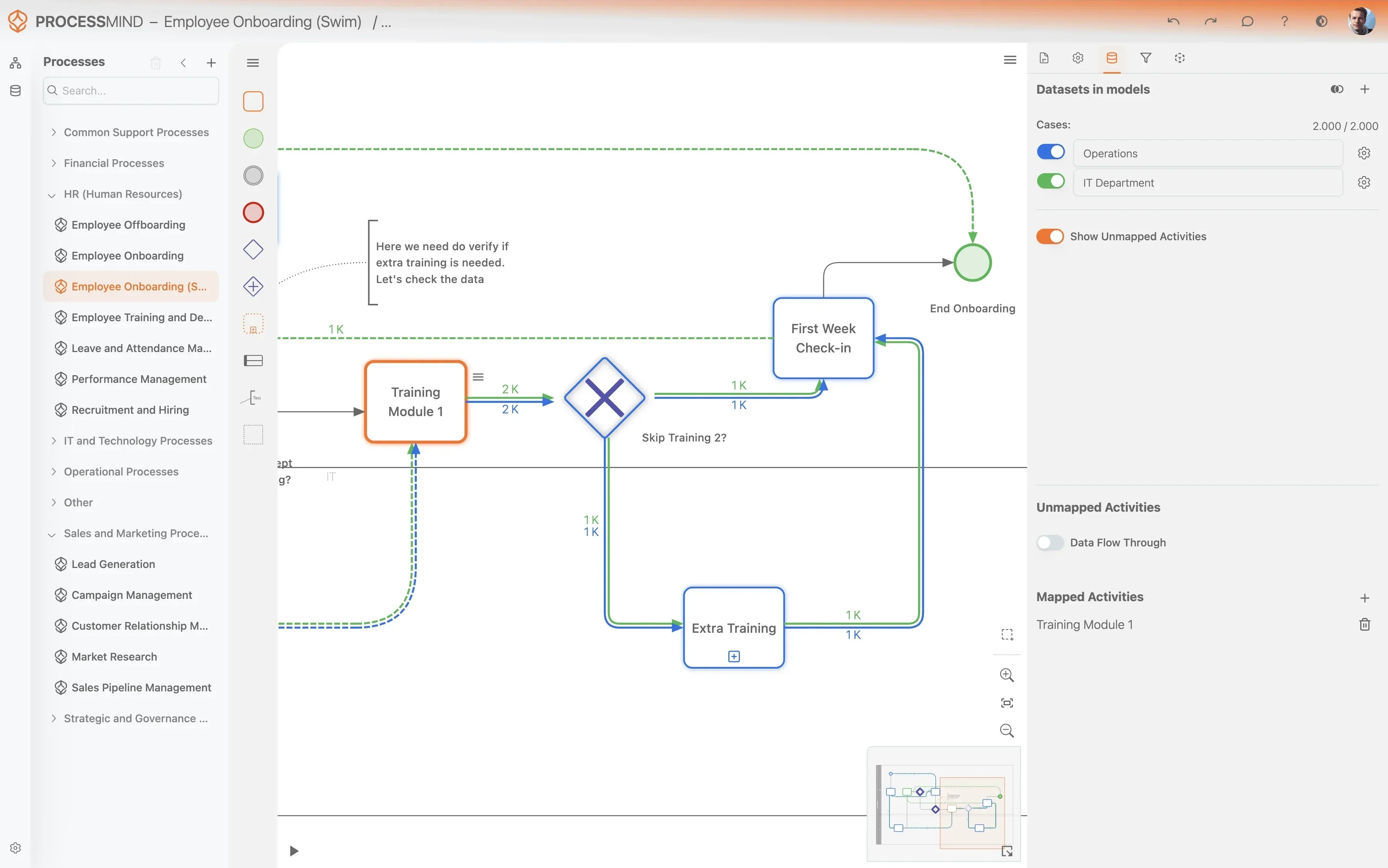
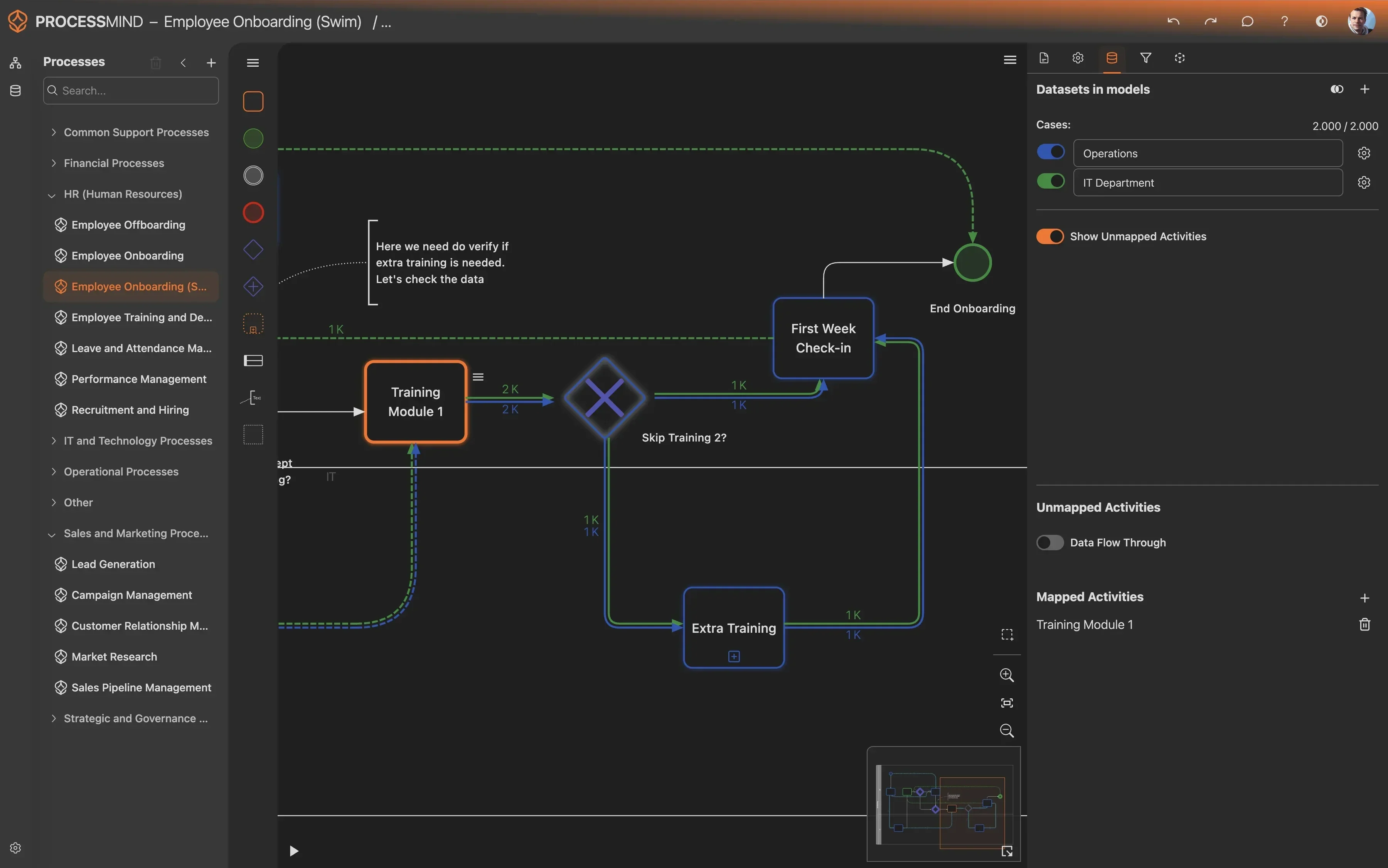
- Visualize actual service request paths
- Pinpoint Freshdesk service bottlenecks
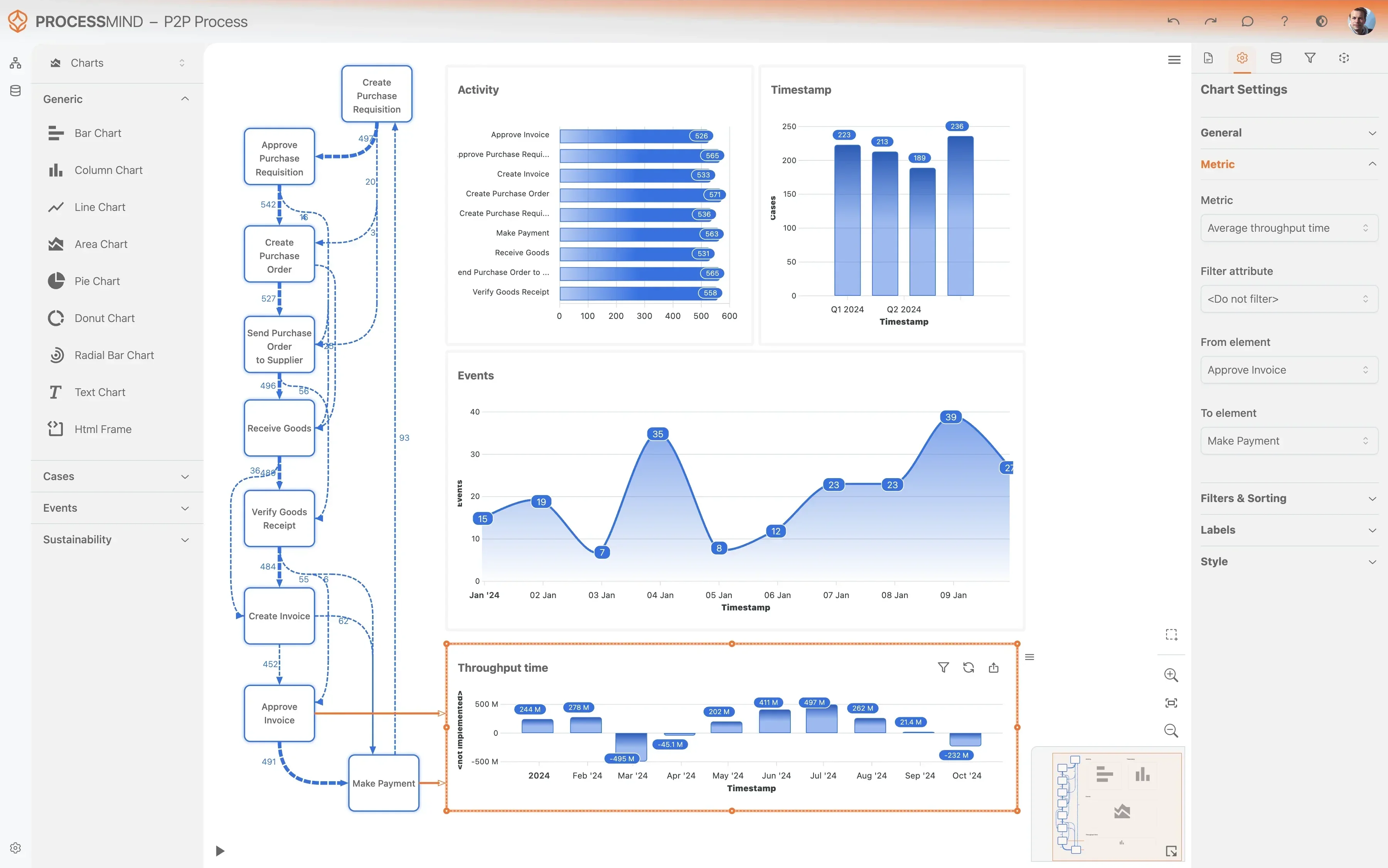
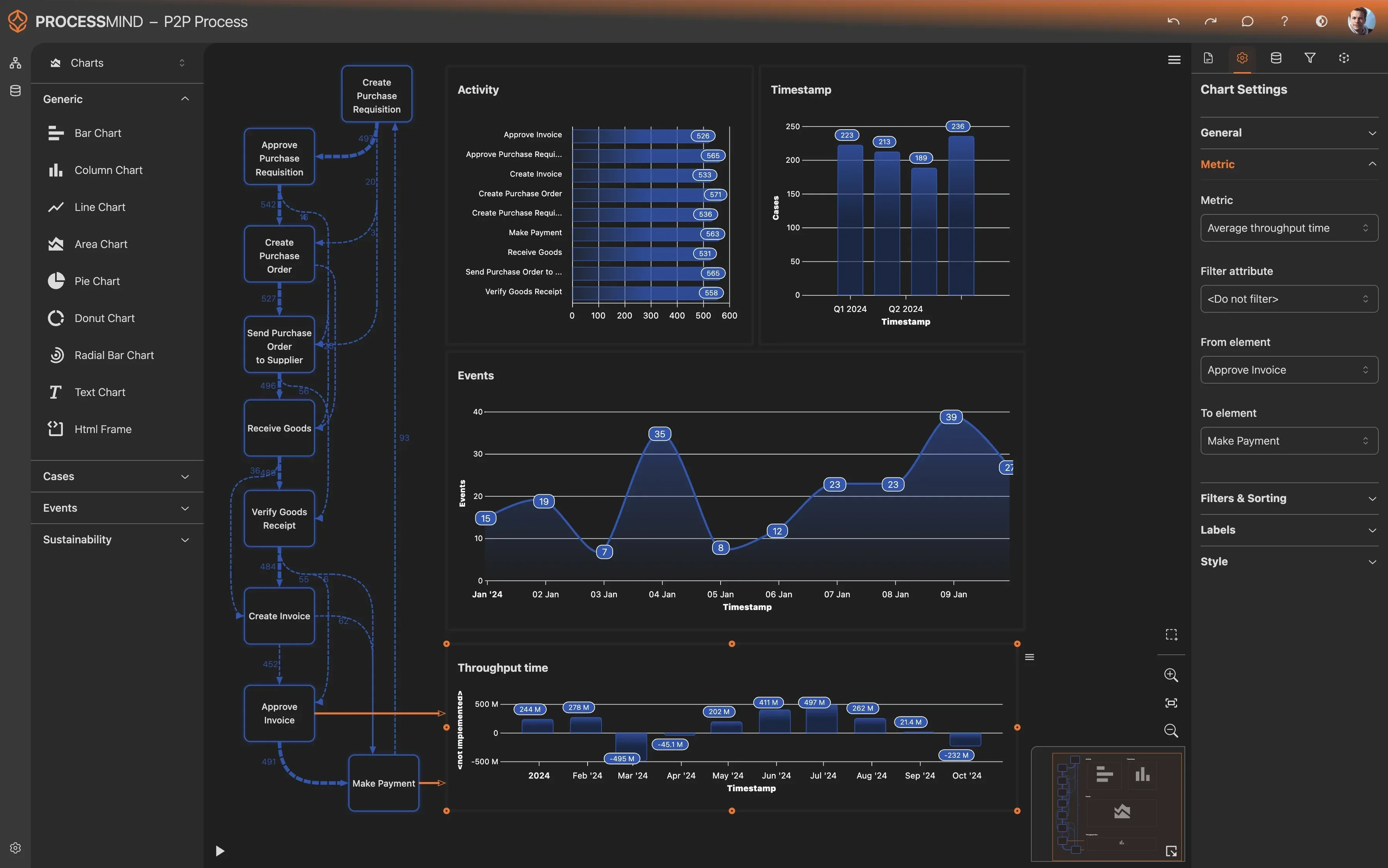
- Analyze agent performance consistently
- Optimize resolution times for satisfaction
TYPICAL OUTCOMES
Achieving Superior Customer Service
These outcomes highlight the significant improvements organizations typically realize by applying process mining to their Customer Service workflows, identifying bottlenecks and optimizing service request handling in systems like Freshdesk.
Average reduction in resolution duration
By identifying and eliminating bottlenecks, organizations significantly cut the time it takes to resolve customer service requests, leading to quicker service delivery. This directly improves customer experience and operational efficiency.
Reduction in follow-up interactions
Process mining reveals root causes for tickets being reopened, allowing businesses to implement lasting solutions. This reduces redundant work for agents and provides customers with definitive answers the first time.
Improved compliance with service targets
Gain clear insights into processes causing SLA breaches and implement targeted changes to ensure more requests are resolved within agreed-upon times. This builds customer trust and avoids penalties.
Streamlined service request handling
By understanding the patterns leading to escalations and transfers, organizations can empower first-contact resolution. This reduces operational costs and improves the customer journey by minimizing handoffs.
Reduced variability in resolution times
Identify best practices from top-performing agents and areas where others struggle, enabling targeted training and process adjustments. This leads to more uniform and reliable service delivery across the team.
Results vary based on process complexity, data quality, and specific organizational context. The figures presented illustrate common improvements observed across various customer service implementations.
Recommended Data
FAQs
Frequently asked questions
Process mining analyzes your Freshdesk data, like service request details and agent actions, to show the actual flow of work. It helps identify bottlenecks, common deviations, and areas contributing to excessive resolution times or frequent ticket re-opening. This visual insight allows you to pinpoint inefficiencies and understand their root causes.
You primarily need data that includes a case identifier, activity names, and corresponding timestamps. For Freshdesk, this translates to service request IDs, status changes, agent assignments, escalations, and their exact times. Additional attributes, such as agent name, customer segment, or ticket category, enrich the analysis.
Freshdesk offers various methods for data extraction, including its API, report generation features, or direct database access for enterprise plans. The best approach depends on your Freshdesk setup and the volume of data. We can guide you through selecting the most efficient and secure method for your specific environment.
Initial insights can often be generated within a few weeks after data extraction and preparation are complete. The time frame depends on data complexity and cleanliness. However, continuous monitoring and deeper analysis provide ongoing optimization opportunities over time.
You can expect to see improvements in key metrics like reduced service request resolution times and decreased ticket re-opening rates. Process mining also helps enhance Service Level Agreement compliance, standardize agent performance, and optimize communication channel use. These improvements lead to increased customer satisfaction and operational efficiency.
The initial setup involves defining your process scope and extracting the correct data, which requires some technical understanding. However, once the data connectors are established, process mining tools automate much of the analysis. We provide support and expertise to streamline this implementation for your Freshdesk environment.
No, process mining is a non-invasive analytical method. It works by analyzing historical data exported from Freshdesk, so it does not interfere with live operations or agent workflows. The analysis happens independently, providing insights without impacting service delivery.
You will need a process mining software solution, which can be cloud-based or on-premise, and a method for data extraction, typically via Freshdesk APIs or reports. Basic data cleaning and transformation skills are also beneficial to prepare the data for analysis. Our team can help assess your specific technical landscape.
Optimize Freshdesk Customer Service Today
Achieve 80% first-contact resolution and delight your customers.
No credit card required, setup in minutes