Improve Your Record to Report - Journal Entry

Your 6-step guide to optimize Oracle Fusion Journal Entry
Improve Your Record to Report - Journal Entry

Optimize Oracle Fusion Journal Entry for Faster Record to Report

The Journal Entry process can often suffer from delays in approvals and reconciliation, impacting your financial closing cycle. Our platform helps you precisely pinpoint inefficiencies and compliance risks within your operations. By understanding these bottlenecks, you can streamline your financial processes, enhance accuracy, and accelerate your overall Record to Report cycle.

Download our pre-configured data template and address common challenges to reach your efficiency goals. Follow our six-step improvement plan and consult the Data Template Guide to transform your operations.

Show detailed description

Why Optimize Record to Report - Journal Entry in Oracle Fusion Financials

The Journal Entry process is a foundational element of the Record to Report, R2R, cycle, directly impacting financial accuracy, regulatory compliance, and the speed of your financial close. Within complex environments like Oracle Fusion Financials, managing journal entries can present significant challenges. Manual processes, a multitude of approval steps, and potential rework loops often lead to delays, errors, and increased operational costs. These inefficiencies not only strain your accounting team but can also delay critical financial reporting, impacting strategic decision-making and potentially leading to non-compliance penalties.

Without clear visibility into the actual execution of your journal entry processes, identifying the root causes of these problems remains a daunting task. This often results in a reactive approach, addressing symptoms rather than the underlying systemic issues. True process optimization for Record to Report - Journal Entry in Oracle Fusion Financials requires a data-driven approach to uncover precisely where the process falters, allowing you to implement targeted improvements that yield measurable benefits.

How Process Mining Unlocks Journal Entry Efficiency

Process mining offers a powerful, objective lens to analyze the complete lifecycle of every journal entry within your Oracle Fusion Financials system. By connecting directly to your system's audit logs and transaction data, process mining reconstructs the real process flow as it happens, rather than relying on assumed process maps. This means you gain a precise understanding of each step, from

Record to Report - Journal Entry journal processing financial close accounting efficiency compliance reporting financial accuracy R2R cycle finance operations

Common Problems & Challenges

Identify which challenges are impacting you

Delays in journal entry approval directly impact the financial close cycle, leading to extended reporting times and potential non-compliance with reporting deadlines. This can cause significant operational friction and hinder timely financial decision-making.ProcessMind analyzes the "Journal Entry Submitted for Review" and "Journal Entry Approved" activities within Oracle Fusion Financials to map actual approval times and identify specific bottlenecks, pinpointing users or teams causing delays and suggesting process re-engineering.

A high volume of journal entries being rejected, requiring correction and resubmission, indicates underlying issues in data quality, initial entry accuracy, or unclear approval criteria. This rework consumes valuable accounting staff time and prolongs the Record to Report cycle.ProcessMind leverages the "Journal Entry Rejected" and "Journal Entry Corrected and Resubmitted" activities to quantify rework loops. It uncovers root causes, such as specific entry types or users with high rejection rates, enabling targeted training or system improvements in Oracle Fusion Financials.

Variability in the time it takes for approved journal entries to be posted to the ledger can disrupt the financial close calendar and lead to unexpected delays in financial reporting. This inconsistency makes it challenging to forecast resource needs and adhere to strict closing schedules.ProcessMind tracks the elapsed time between "Journal Entry Approved" and "Journal Entry Posted" activities, identifying patterns and causes for delays. By analyzing the end-to-end flow of Record to Report - Journal Entry, it helps standardize posting processes within Oracle Fusion Financials.

When journal entries bypass required review or approval steps, or follow non-standard paths, it introduces compliance risks, reduces control, and can lead to errors. Such deviations undermine the integrity of the Record to Report process and may result in audit findings.ProcessMind visualizes all actual paths taken by journal entries, highlighting unauthorized or inefficient routes that deviate from the intended process flow. This insight allows organizations to enforce compliance and streamline their Oracle Fusion Financials journal entry workflow.

Certain individuals or departments might consistently be choke points in the journal entry workflow, leading to accumulating backlogs and extended cycle times for financial transactions. Identifying these specific bottlenecks is crucial for improving overall process efficiency.ProcessMind analyzes activities like "Journal Entry Reviewed" or "Journal Entry Approved" against user attributes, quantifying individual workload and identifying overloaded or inefficient participants. This helps optimize resource allocation within Oracle Fusion Financials' Record to Report - Journal Entry process.

Prolonged reconciliation times for journal entries can delay the finalization of accounts, impacting the accuracy of financial statements and extending the overall Record to Report cycle. This can create a ripple effect, slowing down subsequent financial activities.ProcessMind tracks the lifecycle of journal entries through to "Journal Entry Reconciled," pinpointing delays and identifying specific types of entries or sources that contribute to reconciliation challenges. It helps optimize this critical step in Oracle Fusion Financials.

Many steps in the journal entry process, though repetitive, are still executed manually, leading to higher labor costs, increased error rates, and slower processing. Identifying these manual touchpoints is key to leveraging automation for greater efficiency and accuracy.ProcessMind maps the entire Record to Report - Journal Entry process, revealing activities that are frequently performed manually and could be automated. It helps organizations prioritize automation initiatives within Oracle Fusion Financials to reduce human intervention.

Without a clear, real-time understanding of where each journal entry stands in its lifecycle, management struggles to identify pending items, predict completion times, or proactively address delays. This lack of transparency impacts financial planning and control.ProcessMind provides an x-ray view of every "Journal Entry ID," showing its exact status and path taken, from "Journal Entry Created" to "Journal Entry Posted." This enhanced visibility empowers better oversight and decision-making for Record to Report - Journal Entry in Oracle Fusion Financials.

The overall time from the creation of a journal entry to its final posting and reconciliation can be excessively long, tying up working capital and delaying critical financial insights. This extended cycle time impacts the agility and responsiveness of the finance function.ProcessMind measures the total lead time for each "Journal Entry ID," from "Journal Entry Created" to "Journal Entry Reconciled," identifying specific sub-processes or stages that contribute most to the delays. It helps streamline the entire Record to Report - Journal Entry flow in Oracle Fusion Financials.

The process of reversing incorrect or erroneous journal entries can be cumbersome and time-consuming, leading to delayed financial adjustments and potential inaccuracies in reporting periods. Inefficient reversals contribute to a less agile financial close.ProcessMind analyzes the "Journal Entry Reversal Processed" activity, examining its frequency, the path taken, and associated delays. It helps identify opportunities to simplify and accelerate the reversal process, improving data integrity in Oracle Fusion Financials.

An inefficient journal entry process, characterized by rework, manual steps, and long cycle times, directly translates into a higher operational cost per entry. This impacts the overall profitability and efficiency of the finance department.ProcessMind quantifies the activities involved in each "Journal Entry ID" lifecycle, allowing organizations to associate costs with specific process steps, rework, and delays. This provides a clear path to reduce the overall cost of the Record to Report - Journal Entry process within Oracle Fusion Financials.

Typical Goals

Define what success looks like

This goal aims to significantly decrease the time journals spend awaiting approval, accelerating the Record to Report cycle. Faster approvals mean quicker financial closing and more agile decision-making, reducing operational bottlenecks in Oracle Fusion Financials.ProcessMind identifies where journal entries are delayed and highlights specific approvers or steps causing bottlenecks. By analyzing processing times and wait states for "Journal Entry Submitted for Review" and "Journal Entry Approved" activities, we provide actionable insights to streamline the approval workflow.

Reducing the percentage of rejected journal entries improves financial data quality and reduces rework, enhancing efficiency in the Record to Report process. Fewer rejections mean less time spent correcting and resubmitting, leading to a smoother financial close.ProcessMind maps the "Journal Entry Rejected" activity back to preceding steps and attributes, revealing common reasons for rejections. By analyzing rejection patterns and the "Journal Entry Corrected and Resubmitted" path, organizations can implement targeted training or process changes to improve accuracy before submission.

Achieving predictable posting of journal entries is critical for accurate and timely financial reporting within Oracle Fusion Financials. This goal ensures that entries are posted consistently, meeting deadlines and supporting robust financial close processes.ProcessMind visualizes the complete end-to-end flow from "Journal Entry Created" to "Journal Entry Posted", identifying variations and delays. By tracking time spent between key activities and using the "Posting Date" attribute, we highlight factors influencing posting predictability, allowing for proactive interventions.

Standardizing the Record to Report - Journal Entry process reduces errors, improves compliance, and enhances operational efficiency. Adherence to defined procedures in Oracle Fusion Financials ensures consistency and auditability across all financial transactions.ProcessMind discovers all actual process variants from "Journal Entry Created" to "Journal Entry Posted", comparing them against a defined standard model. It pinpoints exactly where and why deviations occur, helping identify non-compliant steps and users, thereby enabling stricter process enforcement.

Removing bottlenecks caused by specific users or departments accelerates the entire Record to Report process, ensuring a smooth and efficient workflow. This prevents delays and distributes responsibilities more evenly, optimizing resource utilization in Oracle Fusion Financials.ProcessMind leverages the "Created By User" and "Approved By User" attributes to identify individual users or roles contributing to extended cycle times. It visualizes workload distribution and identifies queues at specific points in the "Journal Entry Reviewed" or "Journal Entry Approved" stages, enabling re-allocation.

Faster reconciliation of journal entries minimizes outstanding items and improves the accuracy of financial statements, critical for a timely Record to Report close. This goal directly contributes to better financial control and reduced risk within Oracle Fusion Financials.ProcessMind tracks the duration and paths leading to the "Journal Entry Reconciled" activity. By analyzing pre-reconciliation steps and identifying delays or rework related to "Posting Verified", we uncover root causes for slow reconciliation, guiding targeted improvements.

Increasing automation in the Record to Report - Journal Entry process reduces manual effort, minimizes human error, and frees up finance personnel for higher-value tasks. This goal drives efficiency and cost savings within Oracle Fusion Financials.ProcessMind identifies manual activities like "Supporting Documentation Attached" or "Posting Verified" that could be automated. By mapping actual human interactions and system activities, it highlights opportunities for robotic process automation (RPA) or system configuration enhancements.

Providing clear, real-time visibility into the status of all journal entries improves transparency and allows finance teams to proactively manage the Record to Report cycle. This reduces uncertainty and improves coordination, especially during month-end close in Oracle Fusion Financials.ProcessMind reconstructs the precise journey of every "Journal Entry ID" through its various activities, providing an accurate, event-level status. It visualizes actual progress, highlighting entries stuck in intermediate states and offering a reliable single source of truth for current status.

Decreasing the overall time it takes for a journal entry to complete its full lifecycle significantly improves the agility of the Record to Report process. This goal ensures quicker financial cycles and allows for more responsive business operations in Oracle Fusion Financials.ProcessMind provides a comprehensive, visual map of the entire "Journal Entry ID" lifecycle, from "Journal Entry Created" to "Journal Entry Posted" and "Journal Entry Reconciled". It accurately measures the total cycle time and identifies the longest paths and activities contributing to extended durations.

Expediting and simplifying the journal entry reversal process minimizes financial risk and improves the integrity of financial records. This ensures that corrections are applied quickly and efficiently, maintaining accuracy in the Oracle Fusion Financials ledger.ProcessMind analyzes the "Journal Entry Reversal Processed" activity, mapping out the preceding steps and identifying complexity or delays. It uncovers inefficient paths and unnecessary steps in the reversal workflow, enabling redesign for greater speed and simplicity.

Reducing the cost associated with processing each journal entry directly impacts the bottom line and improves the financial efficiency of the Record to Report function. This goal drives significant operational savings within Oracle Fusion Financials.ProcessMind identifies inefficient process steps, rework, and bottlenecks that contribute to higher operational costs. By correlating activity durations and frequencies with resource consumption, it pinpoints areas for process optimization and automation to achieve cost reduction.

The 6-Step Improvement Path for Record to Report - Journal Entry

1

Download the Template

What to do

Obtain the pre-built Excel template designed for Journal Entry processes. This template provides the correct structure for your Oracle Fusion Financials data, ensuring compatibility.

Why it matters

Having the right data structure from the start is crucial for accurate analysis. It streamlines data preparation and prevents errors in subsequent process mining.

Expected outcome

A standardized Excel template ready to receive your Oracle Fusion Financials Journal Entry data.

WHAT YOU WILL GET

Uncover Journal Entry Bottlenecks, Boost R2R Speed

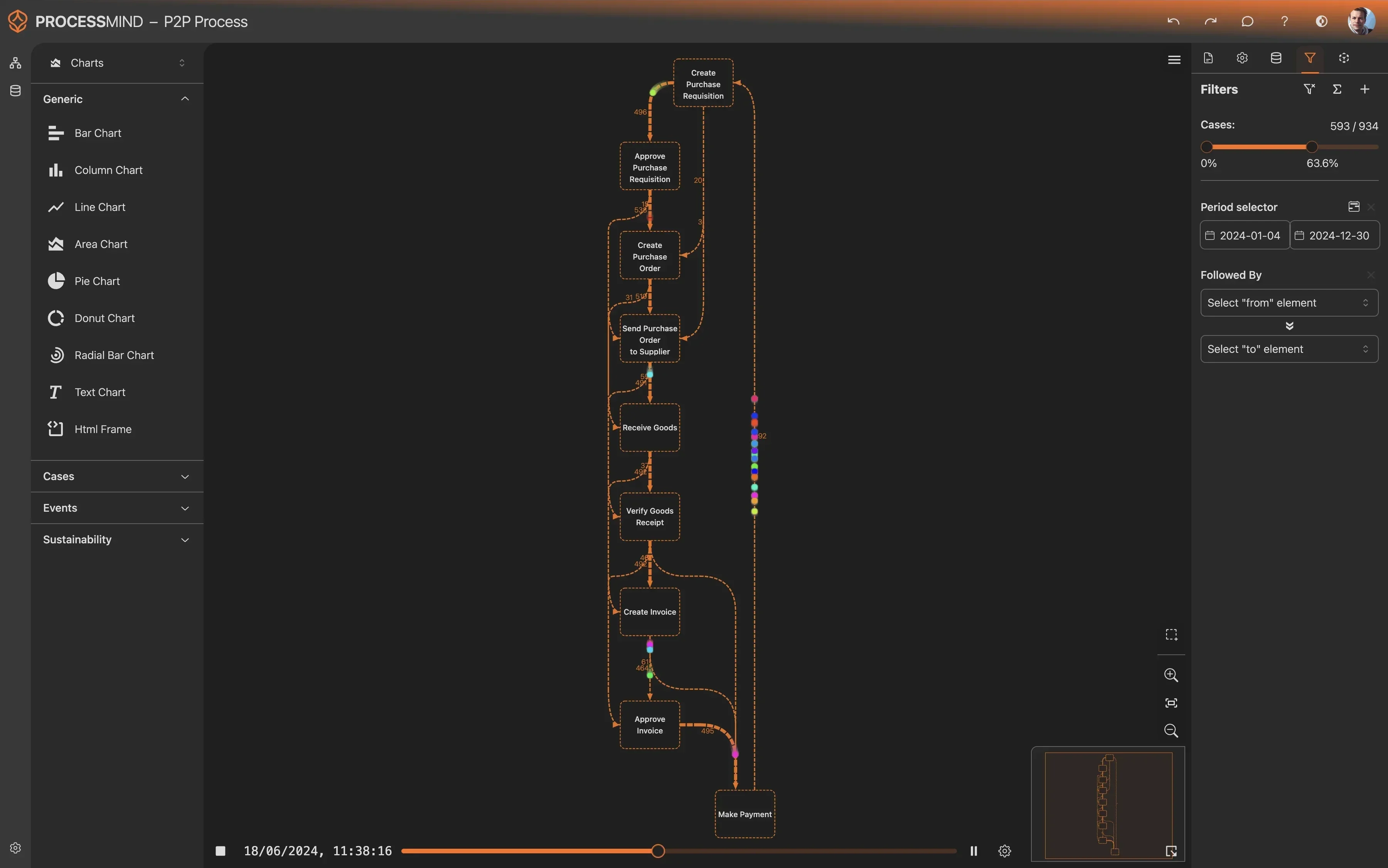
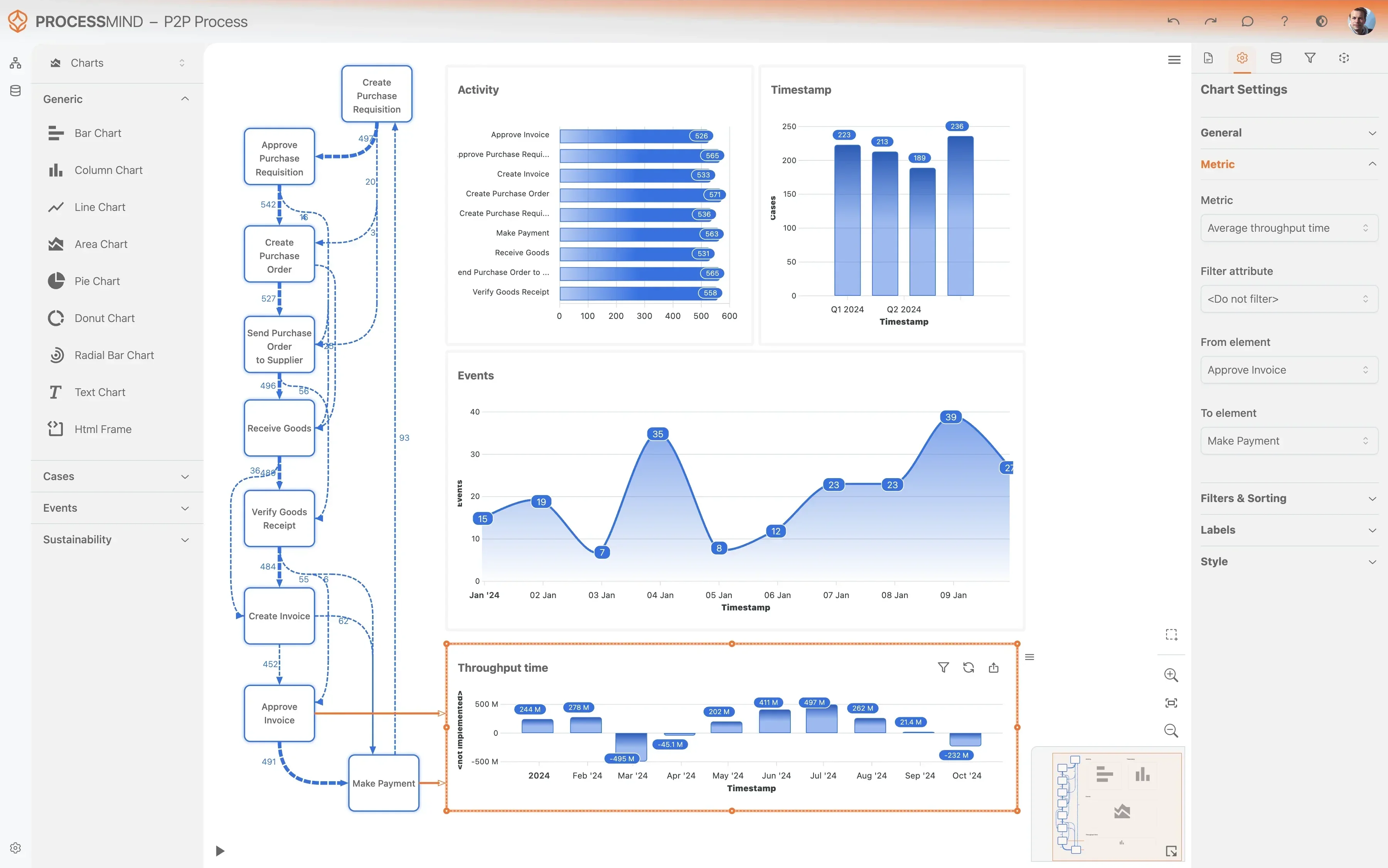
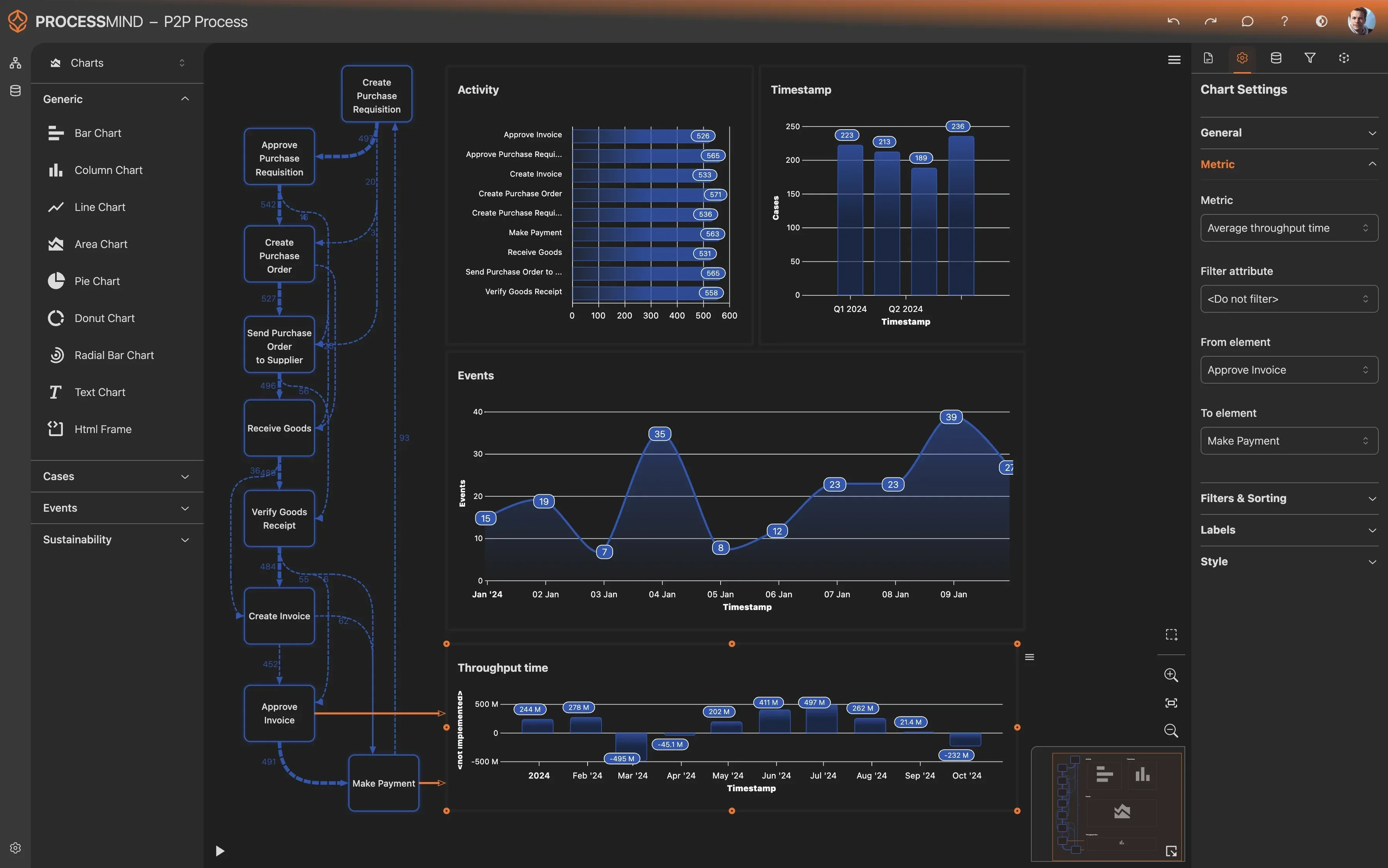
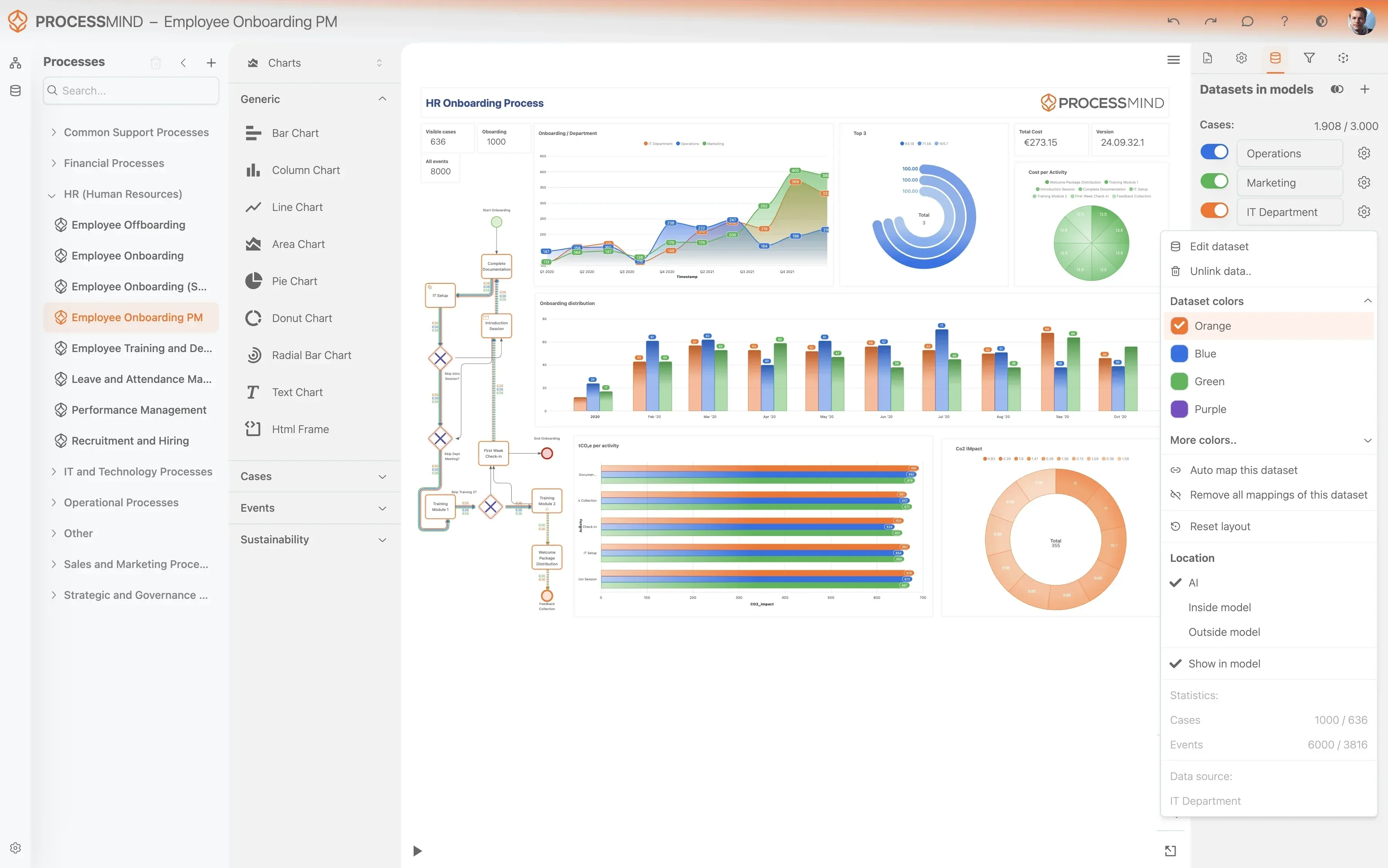
ProcessMind visualizes your actual Journal Entry process, revealing precise inefficiencies and compliance risks. Gain clear insights to streamline your Oracle Fusion financial operations.
  • Map actual Journal Entry approval paths
  • Pinpoint approval and reconciliation delays
  • Uncover compliance risks in financial entries
  • Accelerate Record to Report cycle time
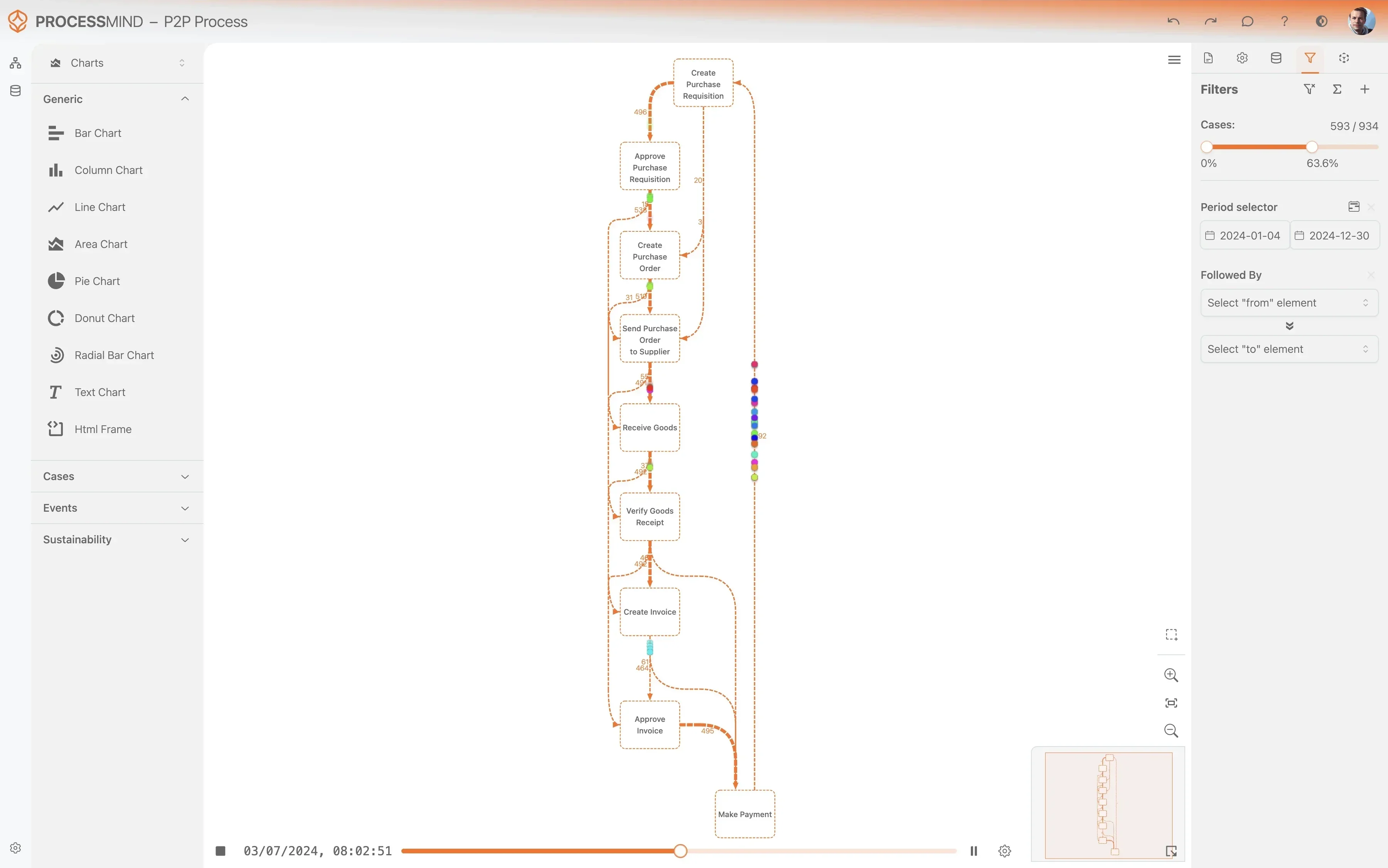
Discover your actual process flow
Identify bottlenecks and delays
Analyze process variants
Design your optimized process

TYPICAL OUTCOMES

Achieving Efficiency in Journal Entry Processing

Process mining on your Record to Report - Journal Entry process, especially within Oracle Fusion Financials, reveals bottlenecks and inefficiencies. The outcomes below illustrate the measurable improvements organizations typically achieve by optimizing these critical financial workflows.

0 %
Faster Journal Approval

Reduction in average approval time

Streamline your approval workflows and remove bottlenecks to significantly speed up the review and approval of journal entries, ensuring timely financial reporting.

0 %
Fewer Journal Rejections

Decrease in entry rejection rate

By understanding common rejection reasons, organizations can improve upfront data quality and reduce the overall number of journal entries requiring corrections and resubmissions.

0 %
Higher On-Time Posting

Percentage of journals posted on time

Ensure a greater number of journal entries are posted by their target dates, improving reporting accuracy and adherence to financial close schedules.

0 %
Shorter End-to-End Process

Reduction in total processing time

Gain full visibility into the entire journal entry lifecycle, from creation to reconciliation, to identify and eliminate delays, significantly reducing overall cycle time.

0 p.p.
Greater Process Conformance

Higher adherence to standard process

Analyze process deviations and non-standard paths to guide users towards the optimal process, improving consistency and reducing manual errors and rework.

0 %
Increased Automation

More journal entry steps automated

Identify activities suitable for automation, such as repetitive data entry or rule-based approvals, to free up resources and improve processing speed and accuracy.

Results vary based on the specific complexities of your Journal Entry process and the quality of your Oracle Fusion Financials data. The figures presented reflect typical improvements observed across various implementations.

FAQs

Frequently asked questions

Process mining visualizes the actual flow of your journal entries, identifying hidden bottlenecks like slow approvals or frequent rejections. It helps pinpoint deviations from standard procedures and highlights areas where automation can be increased. This leads to faster processing, improved compliance, and reduced operational costs.

You primarily need event logs detailing each step a journal entry takes, including activity names, timestamps, and the Journal Entry ID as a case identifier. Additionally, attributes like approver, rejection reason, or entry type are valuable. This data is typically found in relevant transaction and audit tables within Oracle Fusion Financials.

Data extraction can be performed using standard Oracle reporting tools, SQL queries, or specialized connectors. The goal is to collect historical event data in a structured format, often CSV or a database table, containing the case ID, activity, and timestamp. Ensuring data quality and completeness during this stage is crucial for accurate analysis.

You can expect a significant reduction in journal entry approval times, a lower rejection rate, and more predictable posting schedules. Process mining helps achieve higher process conformance and balance workload, ultimately leading to a shorter end-to-end processing time and lower cost per entry. For example, some organizations achieve a 15-30% reduction in processing time.

The initial setup, including data extraction and model configuration, can often be completed within a few weeks, depending on data availability and complexity. You can typically start seeing actionable insights and identifying bottlenecks within the first month. Continuous monitoring then provides ongoing optimization opportunities.

No, process mining complements existing reporting tools by providing a holistic, end-to-end view of the process flow, rather than just metrics on individual steps. While Oracle reports show what happened, process mining reveals why it happened and how different steps interact. It adds a layer of diagnostic and prescriptive analytics.

Basic SQL knowledge is helpful for data extraction and preparation from Oracle Fusion Financials. Familiarity with data analysis concepts and process understanding is also beneficial. Many modern process mining tools offer user-friendly interfaces, reducing the need for deep technical programming skills for analysis itself.

Yes, by analyzing event logs that include user IDs, process mining can highlight individuals or groups whose actions, or lack thereof, significantly impact process duration or lead to deviations. This allows for targeted training, workload rebalancing, or process re-design. However, the focus should always be on process improvement, not individual blame.

Accelerate Your Record to Report - Journal Entry Today

Reduce Journal Entry cycle time by 30% and streamline financial operations.

Start Your Free Trial

No credit card required, activate your trial now.