Improve Your Change Management

Select a process
Choose a process to continue working in your connected workspace.
Optimize Freshservice Change Management for Faster Deployments
Process inefficiencies can lead to significant delays, compliance issues, and increased risks. Our platform helps you precisely identify bottlenecks across your initiatives, from initial request to final closure. Discover opportunities to streamline approvals, reduce deployment risks, and enhance overall operational stability.
Download our pre-configured data template and address common challenges to reach your efficiency goals. Follow our six-step improvement plan and consult the Data Template Guide to transform your operations.
Show detailed description
Why Optimizing Change Management is Crucial for Your Organization
Change Management is a foundational ITIL process, essential for ensuring the stability and integrity of your services and systems. In platforms like Freshservice, it provides a structured approach to implementing necessary alterations, from minor patches to major infrastructure overhauls. However, even with a robust system in place, the inherent complexities of coordinating multiple stakeholders, assessing risks, and securing approvals can lead to significant inefficiencies.
Ineffective Change Management processes often manifest as prolonged change cycle times, costly rework, failed deployments, and increased operational risks. These issues not only strain your IT teams but can also delay the delivery of critical business value, impact service availability, and even lead to non-compliance with regulatory standards. Understanding the true flow of your change requests in Freshservice, beyond what is merely documented, is the first step toward transforming these challenges into opportunities for improvement.
How Process Mining Illuminates Your Freshservice Change Management Workflow
Process mining offers a powerful, data-driven lens to analyze your Change Management process within Freshservice. By extracting event logs, typically tied to the "Change Request ID," process mining tools reconstruct the actual, end-to-end journey of every change initiative. This unique capability allows you to move beyond assumptions and see precisely how changes are initiated, reviewed, approved, implemented, and closed.
Unlike traditional reporting, which often presents aggregated metrics, process mining visualizes the complete process flow, including all deviations and rework loops. You can identify the exact pathways your changes take, detect where delays accumulate, and pinpoint specific activities or handovers that act as bottlenecks. This deep dive into your Freshservice data reveals the true state of your Change Management, highlighting inefficiencies that might otherwise remain hidden beneath a seemingly standard workflow. It provides an objective basis for understanding process performance and identifying improvement opportunities, allowing you to answer critical questions about your process's efficiency and compliance.
Key Improvement Areas Uncovered by Process Mining
Applying process mining to your Freshservice Change Management data can unlock significant improvements across several critical dimensions:
- Pinpoint Bottlenecks and Delays: Discover precisely where change requests get stuck. Is it in the initial risk assessment, during a specific approval phase, or within the implementation and testing stages? Process mining shows you the exact activities and transitions that consume the most time, enabling you to target improvements effectively and reduce overall cycle time.
- Enhance Compliance and Risk Management: Visualize all executed process paths to identify instances where changes deviate from your documented policies. Detect skipped approval steps, unauthorized modifications, or changes that bypass required reviews. This insight is crucial for maintaining audit readiness and ensuring that all changes adhere to your organization's risk framework.
- Reduce Rework and Waste: Identify common rework loops, where changes are frequently rejected and sent back for further review or modification. Understanding the root causes of these loops, whether it is insufficient initial information, unclear requirements, or repeated errors, allows you to implement preventative measures.
- Optimize Resource Allocation: Analyze the workload distribution across different teams or individuals involved in the change process. This helps in understanding if certain groups are consistently overloaded, leading to delays, or if resources are underutilized, providing data to optimize team structures and task assignments.
Realizing Tangible Outcomes from Optimized Change Management
The insights gained from process mining your Freshservice Change Management process translate directly into measurable business benefits. By addressing identified inefficiencies, you can expect to:
- Accelerate Service Delivery: Significantly reduce the average change cycle time, enabling faster deployment of critical updates, new features, and bug fixes. This speeds up your organization's ability to adapt and deliver value.
- Boost Service Reliability and Stability: Minimize the risk of failed changes and post-implementation incidents by enforcing consistent, compliant processes. This leads to fewer service disruptions and a more stable IT environment.
- Strengthen Compliance Posture: Proactively identify and rectify process gaps before they become audit findings or lead to compliance breaches. This ensures your Change Management aligns with internal policies and external regulations.
- Generate Cost Savings: Reduce operational costs associated with rework, extended change cycles, and inefficient resource utilization. Every minute saved in the change process contributes to more efficient operations.
- Enable Data-Driven Decision Making: Equip your teams with concrete, empirical data to make informed decisions about process improvements, rather than relying on intuition or anecdotal evidence. This fosters a culture of continuous optimization.
Getting Started with Your Freshservice Change Management Optimization Journey
Optimizing Change Management in Freshservice using process mining is a strategic investment in your organization's efficiency and reliability. By leveraging your existing data, you can uncover the true dynamics of your change processes and implement targeted improvements that deliver substantial and lasting benefits. Embrace this data-driven approach to transform your Change Management from a potential bottleneck into a streamlined, reliable engine for progress. This is how you move from merely managing changes to mastering them.
The 6-Step Improvement Path for Change Management
Download the Template
What to do
Access the pre-configured Excel template for Change Management. This template provides the optimal structure for your Freshservice data, ensuring accurate analysis.
Why it matters
Using the correct template simplifies data preparation and ensures all essential information for thorough process analysis is captured effectively.
Expected outcome
A ready-to-use Excel template tailored for Change Management data from Freshservice.
Export Your Data
What to do
Extract 3-6 months of historical Change Management data directly from Freshservice. Populate the downloaded template with your real process data.
Why it matters
Analyzing historical data provides a realistic view of your current Change Management process, revealing actual bottlenecks and performance trends.
Expected outcome
A populated Excel template containing your Freshservice Change Management history, ready for upload.
Upload Your Dataset
What to do
Securely upload your completed Change Management data template to ProcessMind. The system will automatically begin processing your information.
Why it matters
This step initiates the automated analysis, transforming raw data into actionable insights without manual effort or complex configurations.
Expected outcome
Your Change Management data securely processed and prepared for in-depth process mining analysis.
Analyze Your Process
What to do
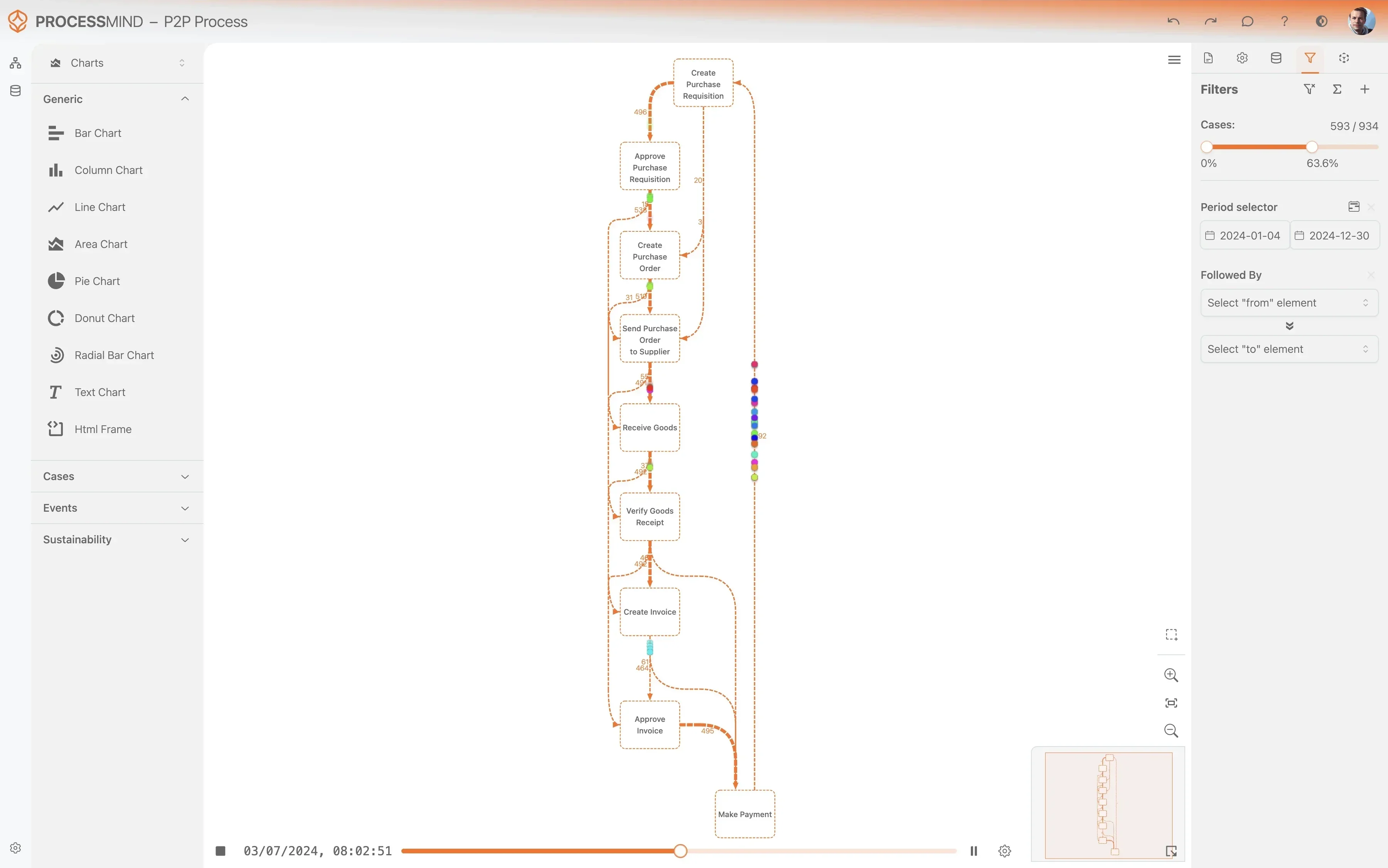
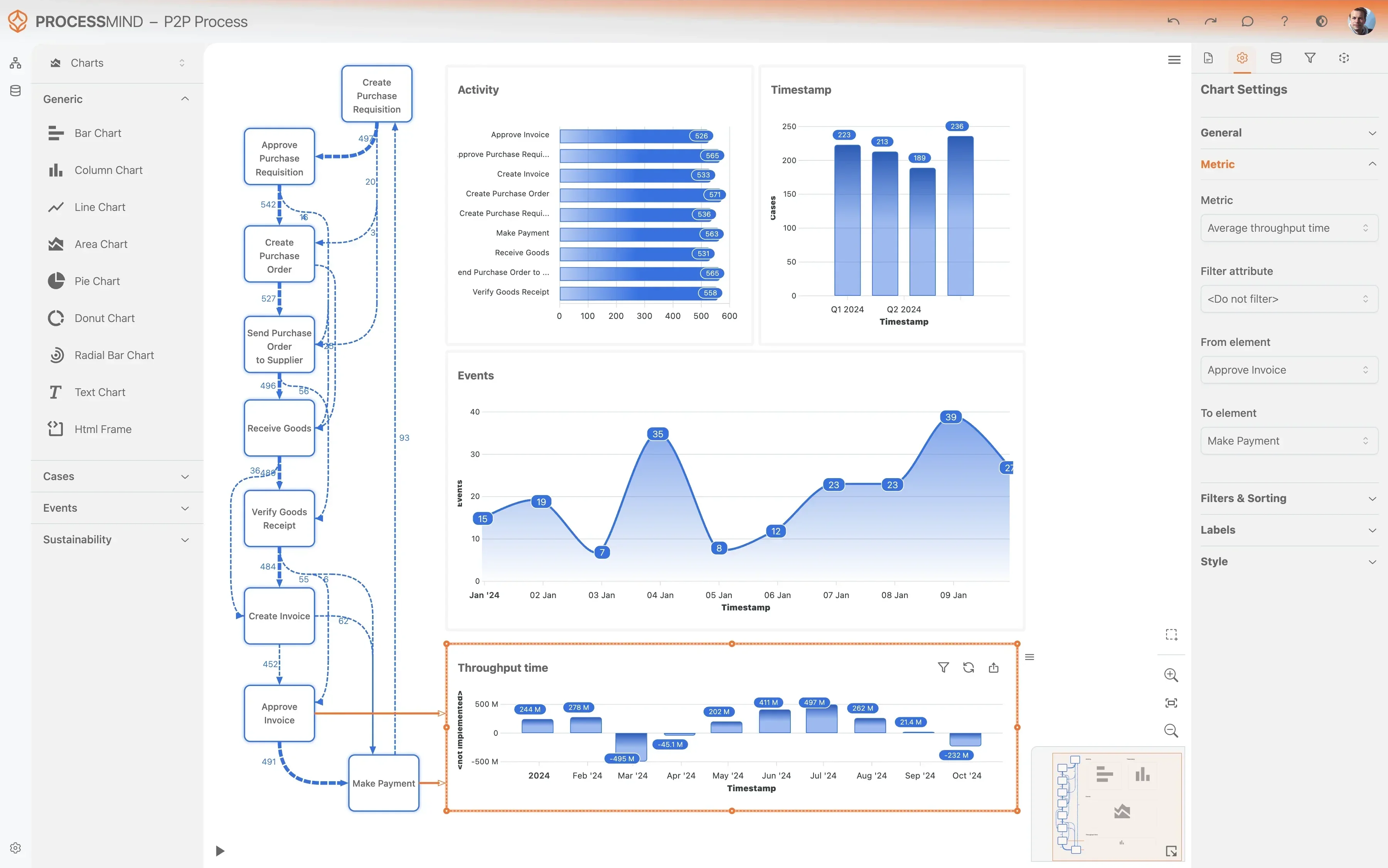
Explore the auto-generated dashboards and interactive process maps. Utilize AI-driven recommendations to identify key areas for improvement in your Change Management.
Why it matters
Gain deep visibility into your Change Management workflow, pinpointing inefficiencies, compliance issues, and approval delays impacting service stability.
Expected outcome
Clear understanding of Change Management bottlenecks, compliance gaps, and actionable insights for optimization.
Implement Improvements
What to do
Prioritize the identified opportunities and begin implementing changes within your Freshservice Change Management configurations and operational procedures.
Why it matters
Acting on insights directly leads to tangible process improvements, such as faster change approvals and reduced implementation risks, enhancing service delivery.
Expected outcome
Optimized Change Management processes with reduced cycle times, improved compliance, and fewer implementation errors.
Monitor Your Process
What to do
Periodically re-upload updated Change Management data from Freshservice to track the impact of your changes and measure key performance indicators over time.
Why it matters
Continuous monitoring ensures sustained improvements, allowing you to adapt to new challenges and maintain an efficient, compliant Change Management process.
Expected outcome
Ongoing visibility into Change Management performance, validating improvements and identifying needs for further adjustments.
TYPICAL OUTCOMES
Realizing Measurable Improvements in Change Management
These outcomes illustrate the tangible benefits organizations typically experience by applying process mining to their Freshservice Change Management processes. By analyzing real-time data, companies gain actionable insights to streamline changes, reduce risks, and enhance compliance.
Average reduction in approval time
Identify and eliminate bottlenecks in the approval process, significantly speeding up how quickly changes are authorized. This ensures critical deployments are not delayed.
Increase in adherence to standard steps
Ensure all change requests follow the mandated sequence of activities, minimizing deviations that could lead to risks or compliance breaches. This strengthens governance.
Reduction in re-submissions and re-reviews
Pinpoint root causes of rework, such as incomplete requests or unclear criteria, reducing the need to repeat steps and improving process quality. This saves time and effort.
Increase in changes meeting target dates
Gain insights into factors causing SLA breaches, allowing for targeted improvements in planning and execution to ensure more changes are delivered on time.
Decrease in incidents after change
Analyze the connection between change processes and post-implementation problems, identifying weaknesses in testing or implementation that lead to service disruptions.
Average reduction in total cycle time
Streamline the entire change lifecycle, from request creation to closure, by identifying and eliminating idle times and unnecessary steps. This accelerates value delivery.
The actual results may vary depending on your specific Change Management process complexity, data quality, and organizational context. The figures presented here reflect the typical improvements observed by organizations leveraging process mining.
Recommended Data
FAQs
Frequently asked questions
Process mining visualizes your actual change workflows, revealing how changes are executed, not just how they are designed. It can identify bottlenecks, process deviations, and specific areas causing delays, like slow approval cycles or inconsistent risk assessments. This granular view helps pinpoint exact points for improvement.
To perform process mining, you typically need to export historical change request data from Freshservice. This includes event logs containing change request ID, activity, for example 'Change Created' or 'Approval Requested', and a timestamp for each event. Exporting data via Freshservice's API or data export features is the standard approach.
Process mining helps accelerate change approval cycles, reduce rework, and ensure better compliance with your defined processes. You can expect to shorten implementation durations, improve SLA adherence, and minimize post-implementation issues by uncovering root causes of inefficiencies. This leads to more controlled and efficient change execution.
You will need access to a process mining tool, either cloud-based or on-premises, and the ability to extract data from Freshservice, often involving API knowledge or integration tools. Data preparation skills are beneficial to ensure the event log is correctly formatted. No deep coding knowledge is typically required for using the tools themselves.
Yes, process mining can highlight deviations from standard operating procedures or regulatory requirements. By visualizing every change path, you can identify instances where controls were bypassed, specific steps were missed, or approval chains were incomplete. This allows you to proactively address compliance gaps and enforce stricter adherence.
Initial setup and data extraction can vary depending on data volume and complexity, but insights can often be generated within a few weeks once the data is clean and prepared. The speed depends on data quality and the specific analysis goals, with ongoing monitoring providing continuous improvements. Results can be seen rapidly, but continuous use offers the most benefit.
While more historical data generally leads to richer insights, process mining can still provide value with a few months of data, depending on your change volume. The key is having a sufficient number of completed change requests to observe recurring patterns and variations. The quality of the data, especially timestamps and activity types, is more critical than sheer volume.
Yes, if your Freshservice data includes a field identifying the change type, process mining tools can filter and analyze these categories separately. This allows you to compare the efficiency and compliance of standard, normal, and emergency changes. You can then identify specific areas for optimization tailored to each change category.
Stop Failed Changes: Elevate Freshservice Management Now
Achieve 95% change success, eliminate Freshservice disruptions and delays.
No credit card required. Get started in minutes.