Improve Your Record to Report - Period Close & Reconciliation

Select a process
Choose a process to continue working in your connected workspace.
Optimize Workiva Record to Report for a Faster Period Close
Process inefficiencies can hinder your financial reporting cycle, leading to delays and accuracy challenges. Our platform helps you pinpoint bottlenecks across your operations. Easily identify areas where reconciliation processes can be streamlined and accelerate your period close for greater efficiency and compliance.
Download our pre-configured data template and address common challenges to reach your efficiency goals. Follow our six-step improvement plan and consult the Data Template Guide to transform your operations.
Show detailed description
Why Optimize Your Record to Report - Period Close & Reconciliation?
The Record to Report, R2R, Period Close and Reconciliation process is a cornerstone of financial operations, directly impacting an organization's ability to generate accurate, timely financial statements. While platforms like Workiva significantly streamline various aspects of financial reporting and compliance, the underlying process can still harbor inefficiencies, manual dependencies, and hidden bottlenecks. Delays in closing periods or inaccuracies in reconciliations not only strain finance teams but can also lead to missed reporting deadlines, compliance risks, and a lack of confidence in financial data. The cost of an inefficient R2R cycle extends beyond labor, affecting strategic decision-making and investor relations.
Optimizing your Record to Report - Period Close and Reconciliation is not merely about speeding things up, it is about enhancing the reliability and integrity of your financial reporting. It involves understanding the true flow of activities from the initiation of a period close to its final completion, including all steps related to data collection, transaction posting, accruals, intercompany reconciliations, balance sheet and profit & loss account reconciliations, adjustments, and final approvals. By gaining deep insights into these intricate sequences, you can identify precisely where the process falters and implement targeted improvements that yield significant benefits.
How Process Mining Transforms Workiva R2R Operations
Process mining offers a powerful, data-driven approach to dissecting and understanding the actual execution of your Record to Report - Period Close and Reconciliation process within Workiva. Instead of relying on anecdotal evidence or static process maps, process mining uses event logs from your Workiva environment and integrated systems to reconstruct the complete journey of each financial period's close. This end-to-end view provides unparalleled visibility into the entire lifecycle, from the moment the period close is initiated until financial statements are approved and the period is completed.
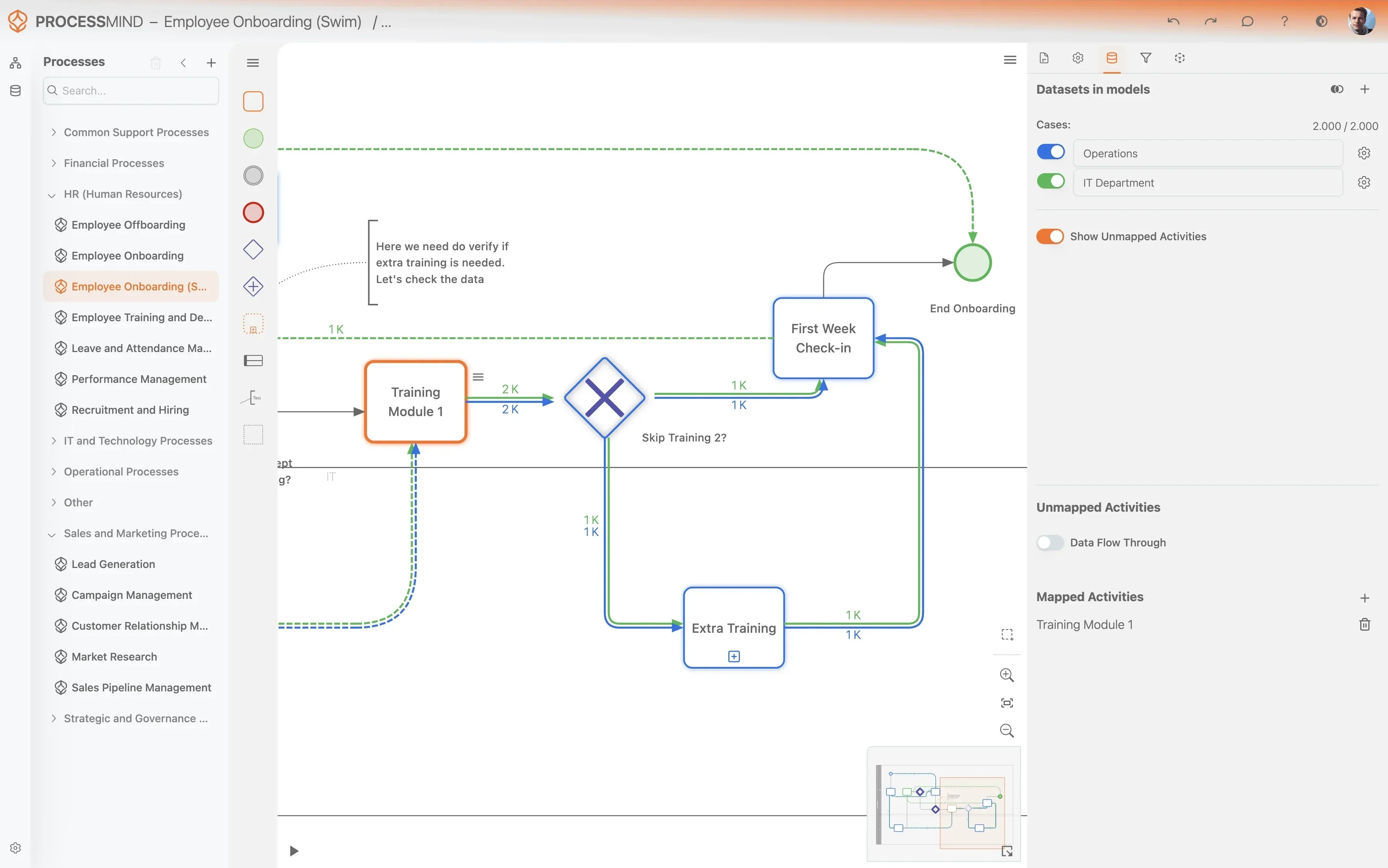
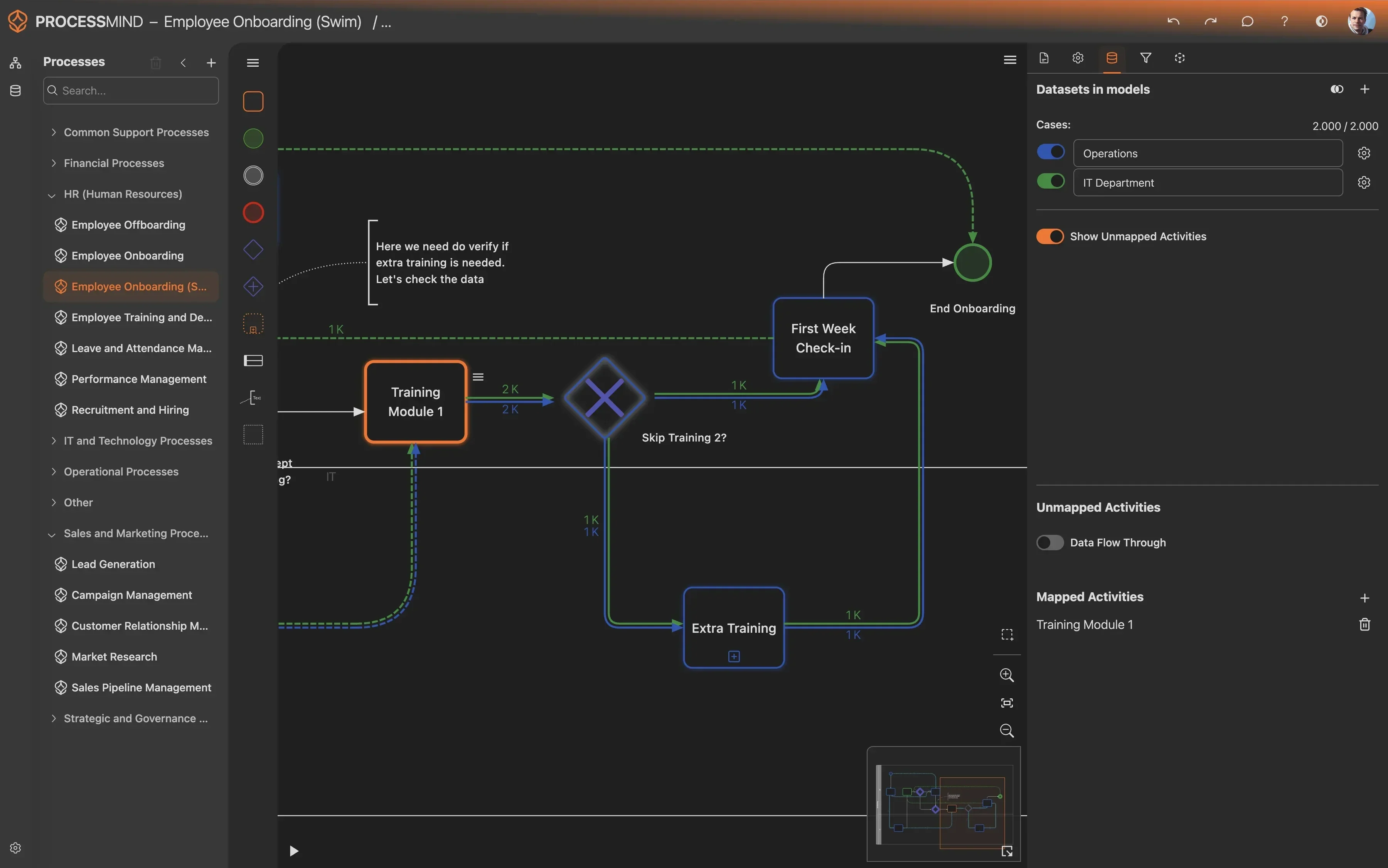
By tracking activities for each financial period, which serves as your case identifier, process mining can pinpoint specific areas of delay. It allows you to analyze actual cycle times for critical activities like 'Balance Sheet Account Reconciliation Started' or 'Reconciliation Reviewed & Approved'. You can discover how often certain activities are repeated, indicating rework, or identify deviations from your standardized process. For instance, you might uncover that 'Adjusting Journal Entries Posted' frequently occurs after 'Financial Statements Generated', suggesting a need for earlier intervention. This capability is crucial for identifying bottlenecks in reconciliation and adjustment processes, which often impede a swift close, and for ensuring all steps comply with established financial reporting standards.
Key Improvement Areas Identified Through Process Mining
Applying process mining to your Workiva-driven Record to Report - Period Close and Reconciliation process highlights several key areas ripe for improvement:
- Accelerating Reconciliation: Identify accounts, reconciliation categories, or specific departments experiencing the longest reconciliation cycles. Uncover root causes for delays, such as missing source data, multiple review iterations, or late submission of supporting documents. This insight allows you to streamline these critical steps, reducing the overall period close cycle time.
- Optimizing Adjusting Journal Entries: Analyze the timing, frequency, and nature of adjusting journal entries. Process mining can reveal if adjustments are being made too late in the cycle, causing rework, or if specific types of adjustments are consistently problematic. This enables proactive management and potentially earlier intervention.
- Streamlining Review and Approval Cycles: Pinpoint bottlenecks in the review and approval stages for reconciliations and financial statements. Understand why certain reviews take longer or involve more stakeholders than necessary, allowing you to optimize workflows and reduce approval cycle times.
- Enhancing Compliance and Audit Readiness: By visualizing the actual process flow, you can verify adherence to internal controls and regulatory requirements. Identify instances where activities are skipped or performed out of sequence, flagging potential compliance risks and strengthening your audit trail.
Expected Outcomes and Measurable Benefits
By leveraging process mining to optimize your Record to Report - Period Close and Reconciliation in Workiva, you can expect a range of tangible benefits:
- Reduced Financial Close Cycle Time: Significantly shorten the time required to complete each financial close, accelerating financial statement generation and improving responsiveness.
- Enhanced Accuracy and Reliability: Minimize errors and the need for post-close adjustments by identifying and addressing root causes of inaccuracies earlier in the process, leading to more reliable financial reports.
- Improved Resource Allocation: Gain a clear understanding of where resources are being consumed inefficiently, allowing for better allocation of personnel and optimization of workload across departments.
- Strengthened Compliance: Ensure consistent adherence to internal policies and external regulations, reducing compliance risk and providing stronger audit defenses.
- Greater Visibility and Control: Achieve unparalleled transparency into your entire Record to Report process, enabling proactive management and continuous process improvement efforts.
Getting Started with Record to Report Period Close Optimization
Embrace a data-driven approach to transform your Record to Report - Period Close and Reconciliation process. By analyzing the complete flow of activities within Workiva, you can identify hidden inefficiencies, eliminate bottlenecks, and significantly improve your financial reporting cycle time and accuracy. Begin your journey toward a more efficient, compliant, and transparent financial close today.
The 6-Step Improvement Path for Record to Report - Period Close & Reconciliation
Download the Template
What to do
Get the pre-configured Excel template for your Record to Report process. This template ensures your Workiva data is structured correctly for optimal analysis and mapping.
Why it matters
Using the right data structure from the start is crucial for accurate process mapping and identifying meaningful insights in your period close activities.
Expected outcome
A standardized Excel template ready to be populated with your Workiva R2R data.
Export Your Workiva Data
What to do
Extract 3-6 months of historical period close and reconciliation data directly from your Workiva platform. Populate the downloaded template with this real-world operational data.
Why it matters
Historical data provides a comprehensive view of past performance, revealing recurring bottlenecks and compliance challenges within your Record to Report cycle.
Expected outcome
A populated Excel template containing your Workiva historical period close data.
Upload Your Dataset
What to do
Securely upload your filled Workiva data template to ProcessMind. Our platform automatically processes and prepares your data for in-depth analysis.
Why it matters
A quick and secure upload initiates the process mining engine, transforming raw data into actionable visual process flows without manual intervention.
Expected outcome
Your Workiva Record to Report data is securely uploaded and ready for automated analysis.
Analyze Your R2R Process
What to do
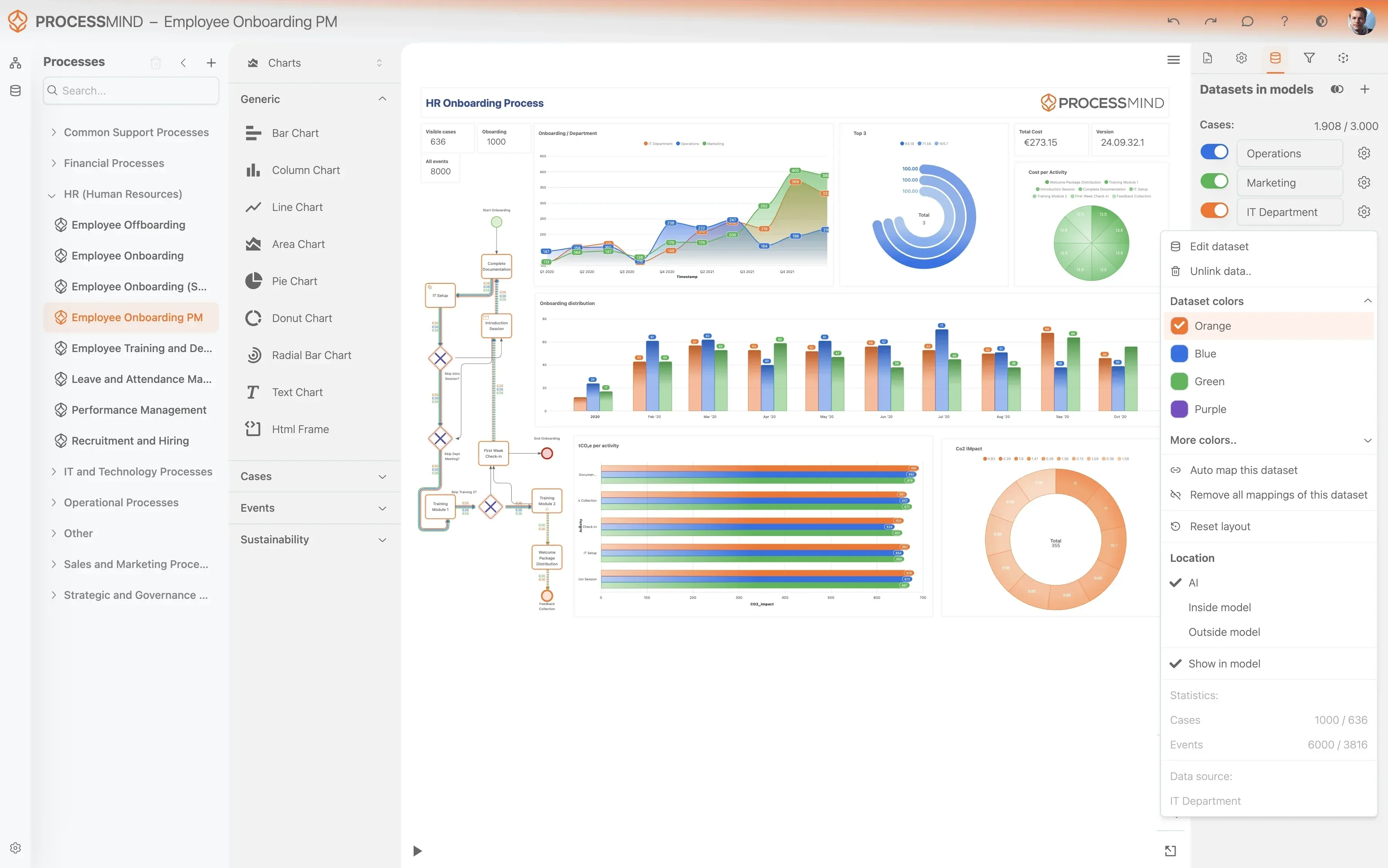
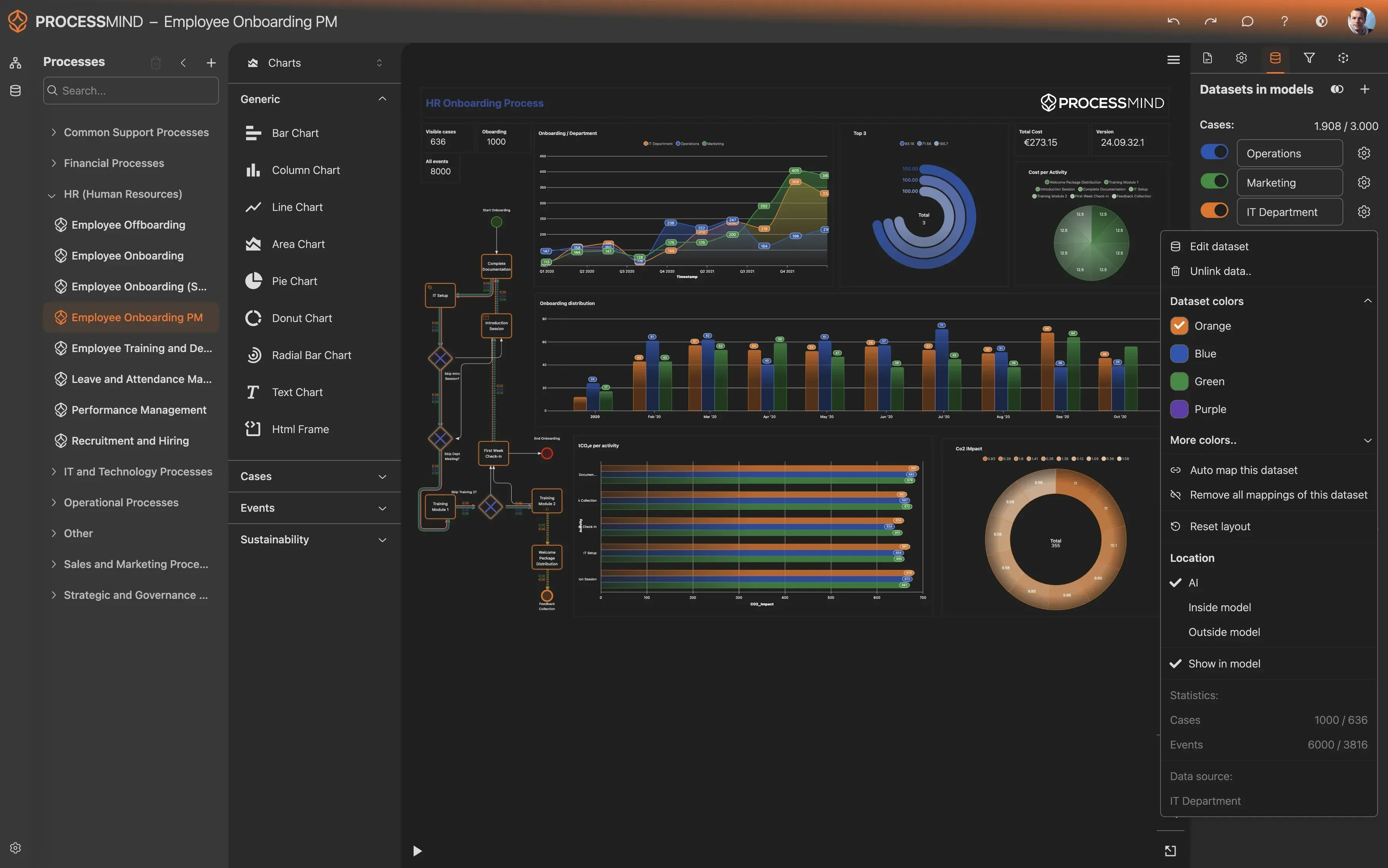
Explore the auto-generated dashboards and deep insights specific to your Workiva Period Close and Reconciliation process. Leverage AI-driven recommendations for optimization.
Why it matters
Visualizing your process flow uncovers hidden delays, compliance risks, and areas of inefficiency, enabling data-backed decision-making to streamline operations.
Expected outcome
Clear understanding of your R2R process bottlenecks, cycle times, and AI-powered improvement recommendations.
Implement R2R Improvements
What to do
Prioritize and implement the identified optimization opportunities within your Workiva Period Close and Reconciliation workflow. Take concrete action based on process insights.
Why it matters
Acting on insights directly translates to tangible improvements, such as faster period close cycles, reduced manual effort, and enhanced data accuracy in Workiva.
Expected outcome
Actionable changes applied to your Workiva Period Close and Reconciliation process.
Monitor R2R Progress
What to do
Periodically re-upload updated Workiva data to ProcessMind to continuously track the impact of your improvements and measure key performance indicator changes over time.
Why it matters
Continuous monitoring ensures sustained efficiency gains and allows for timely adjustments, maintaining peak performance in your financial reporting processes.
Expected outcome
Ongoing visibility into R2R process performance and measurable improvements in key financial reporting KPIs.
WHAT YOU WILL GET
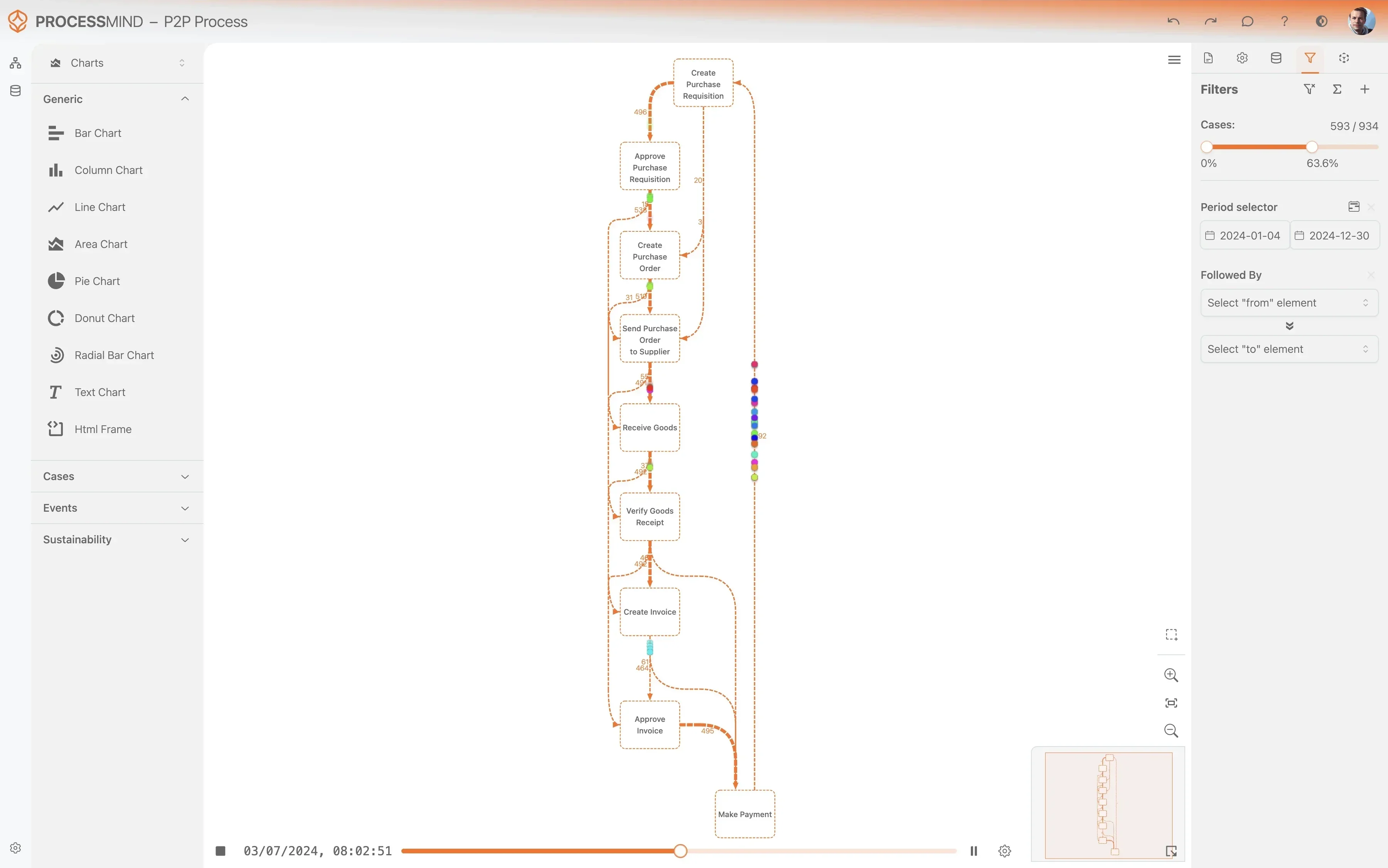
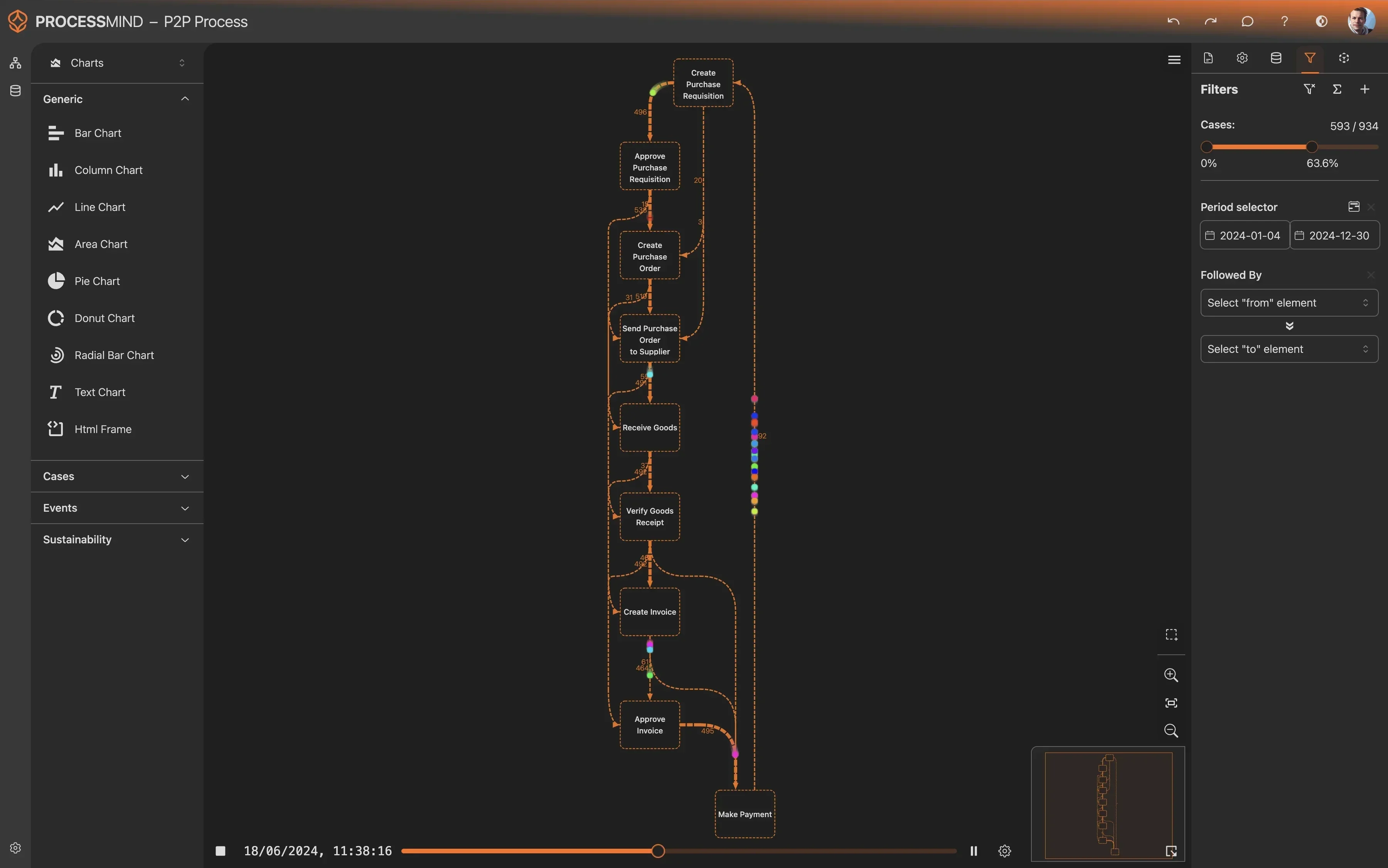
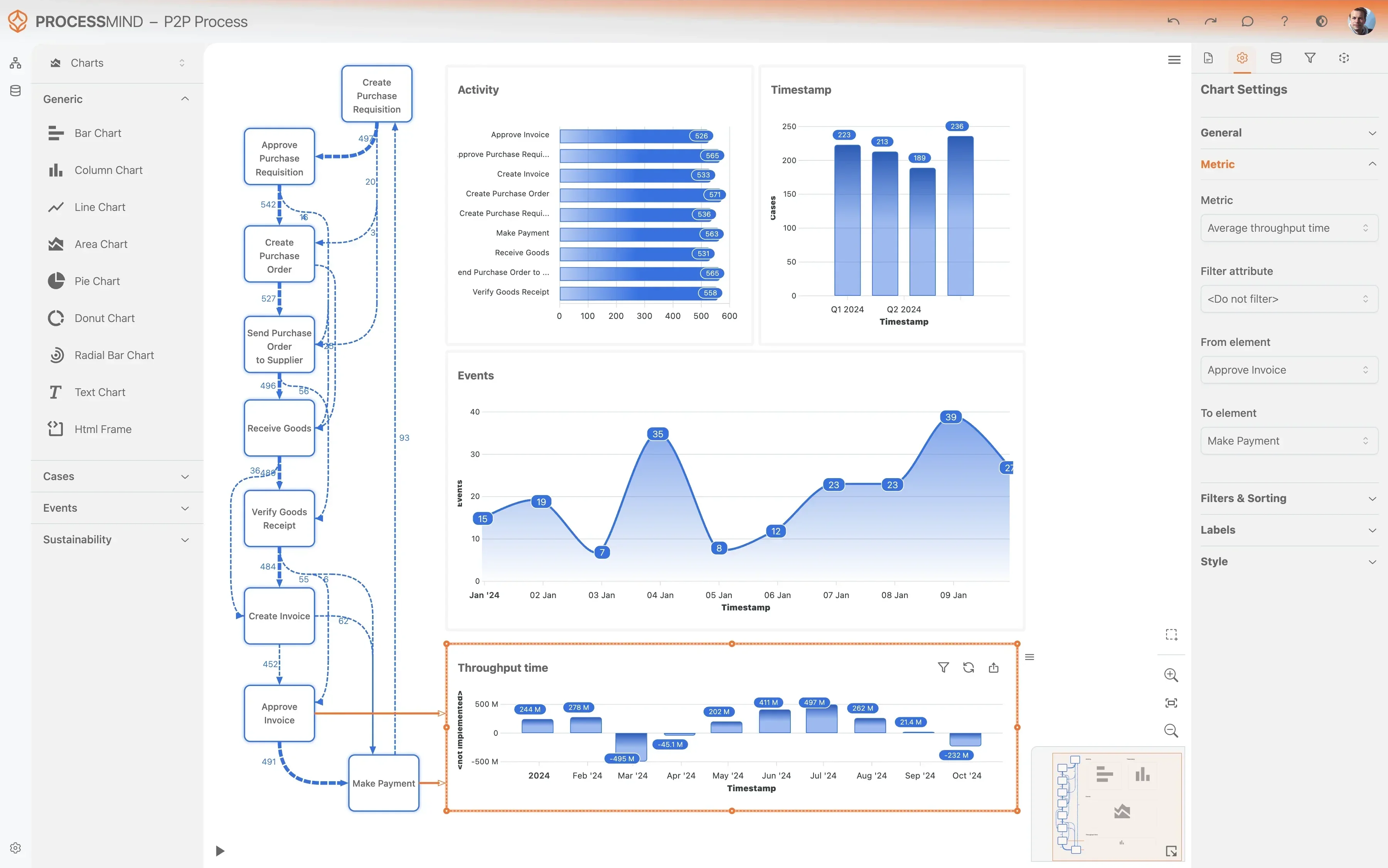
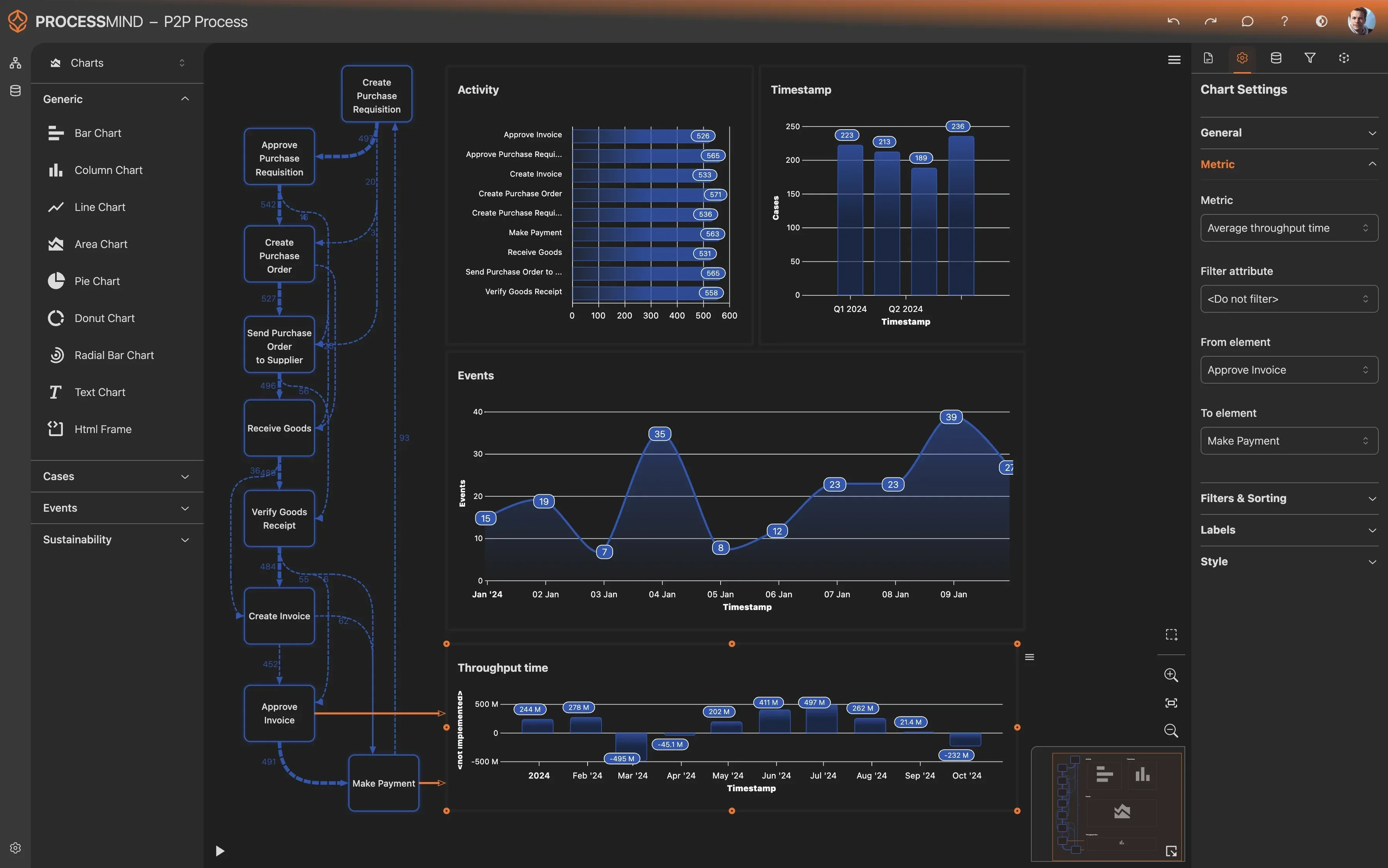
Unlock Faster Workiva Period Close & Reconciliation
- Pinpoint R2R bottlenecks and delays
- Streamline Workiva reconciliation steps
- Accelerate period close cycle times
- Ensure financial reporting compliance
TYPICAL OUTCOMES
Achieving Excellence in Record to Report with Workiva
These outcomes showcase the tangible benefits organizations can realize by applying process mining to their Record to Report, Period Close & Reconciliation processes. Leveraging data from Workiva, these improvements are achieved through identifying bottlenecks and optimizing workflows for enhanced financial close efficiency.
Reduction in end-to-end cycle time
Organizations typically reduce the total time required to complete the period close process, leading to more timely financial reporting and analysis.
Lower post-reconciliation adjustment rate
By improving reconciliation quality and data consistency, businesses see a significant drop in the number of manual adjustments needed after initial close, enhancing accuracy.
Fewer process variants across entities
Process mining helps identify and eliminate non-standard deviations in the close process, leading to greater consistency and easier scaling across the organization.
Increase in periods meeting deadlines
Organizations increase their ability to complete the financial close by the target date, ensuring regulatory compliance and timely stakeholder communication.
Reduced time for critical approvals
Bottlenecks in the review and approval stages of financial statements and reconciliations are identified and resolved, significantly speeding up final sign-off.
More equitable task distribution
Insights into activity volume variance by user allow for better resource allocation, reducing bottlenecks caused by uneven workload distribution and improving employee satisfaction.
Results can vary based on the specific complexity of your processes and the quality of your data. The figures presented here represent typical improvements observed across various implementations.
Recommended Data
FAQs
Frequently asked questions
Process mining analyzes your actual process execution data to visualize bottlenecks, identify root causes of delays, and uncover deviations from standard procedures. It provides an objective, data-driven view of your period close, highlighting areas for efficiency gains and compliance improvement.
By ingesting event log data from Workiva, process mining reconstructs the entire sequence of activities for each financial period. It then visualizes the flow, showing where tasks take longer than expected, where rework occurs, and which steps contribute most to extended cycle times. This helps pinpoint exact areas causing delays.
To perform process mining for Record to Report, you typically need event logs containing a case identifier, activity name, and timestamp. For Workiva, this means extracting data related to financial period actions, reconciliation statuses, task completions, and user interactions. Additional attributes like user, cost center, or document ID can enrich the analysis.
You can expect to accelerate your Period Close cycle time, streamline reconciliation workflows, and significantly reduce post-reconciliation adjustments. Process mining also helps standardize close processes across entities and improve compliance adherence. Ultimately, it leads to faster, more accurate financial statement generation.
Getting started often involves an initial data extraction and connection phase, which can take a few weeks depending on data availability and complexity. Once data is loaded, initial insights and process visualizations can be generated rapidly, often within days. Deeper analysis and actionable recommendations usually follow within 1-2 months.
Yes, process mining is highly effective in revealing variations in processes across different organizational units. By comparing the execution paths of similar activities across entities, it highlights where standardization is lacking and where best practices can be implemented. This helps ensure consistent and efficient close procedures company-wide.
The primary technical requirement is the ability to extract historical event log data from Workiva in a structured format, such as CSV or database tables. This data typically includes timestamps for each activity, a unique identifier for each financial period, and the activity's name. Integration methods usually involve API connections, direct database exports, or flat file uploads.
Process mining is a non-invasive analysis technique that uses existing historical data. It does not interfere with your live Workiva system or ongoing operations. Data extraction is typically a one-time setup or scheduled task, and the analysis occurs externally, ensuring no disruption to your daily period close activities.
Process mining identifies the root causes of adjustments by analyzing the process leading up to them. It can highlight where data inconsistencies originate, where approvals are missed, or where reconciliations are performed incorrectly. By addressing these upstream issues, the need for costly post-reconciliation adjustments is significantly reduced.
Absolutely. Process mining allows you to define and visualize your ideal compliance paths and then automatically compare these models against actual process executions. It can quickly flag instances where steps were skipped, unapproved deviations occurred, or required controls were not met, providing clear evidence for audits.
Optimize Record to Report Close & Reconciliation Now
Pinpoint bottlenecks, streamline, and cut your cycle time by 30%.
No credit card required