Improve Your Service Request Management

Select a process
Choose a process to continue working in your connected workspace.
Optimize Service Request Management in ServiceNow for Faster Resolution
Service request processes often suffer from hidden delays and unnecessary steps. Our platform uncovers these inefficiencies, showing you exactly where bottlenecks occur. By analyzing your process flow, you can identify opportunities for improvement. This leads to faster resolution times and increased satisfaction.
Download our pre-configured data template and address common challenges to reach your efficiency goals. Follow our six-step improvement plan and consult the Data Template Guide to transform your operations.
Show detailed description
Why Optimizing Service Request Management is Crucial
Service Request Management is a cornerstone of efficient IT and business operations, directly impacting user productivity and satisfaction. In many organizations, service requests handled through platforms like ServiceNow are the primary interface for employees and customers to access services, information, or support. However, these processes often suffer from hidden inefficiencies, leading to prolonged resolution times, increased operational costs, and frustrated users. Without a clear, end-to-end understanding of how requests flow, identifying the root causes of delays, rework, or non-compliance becomes a significant challenge. Delays in fulfilling a simple request can cascade into broader business disruptions, making the continuous improvement of this process essential for maintaining high service levels and operational excellence.
How Process Mining Illuminates Your ServiceNow Workflows
Process mining offers a revolutionary approach to understanding and improving your Service Request Management process within ServiceNow. Instead of relying on assumptions or anecdotal evidence, process mining uses the actual event logs generated by ServiceNow, particularly from tables like sc_request, sc_req_item, and sc_task, to reconstruct the complete journey of every service request. By treating each Service Request ID as a unique case identifier, it visualizes your process as it truly happens, not just as it is designed. This end-to-end view allows you to:
- Uncover Real Process Flows: See the most common paths requests take, along with all deviations, rework loops, and unexpected steps.
- Identify Bottlenecks: Pinpoint specific activities, teams, or approval stages where requests get stuck, causing significant delays and extending cycle times.
- Analyze Performance Metrics: Accurately measure key performance indicators like average resolution time, queue times, and SLA adherence for different service types or request categories.
- Detect Non-Compliance: Identify instances where requests bypass standard procedures or fail to meet internal guidelines, highlighting areas for improved governance.
This data-driven approach provides objective insights into where and why your Service Request Management process falls short, paving the way for targeted and effective improvements.
Key Areas for Process Improvement
Leveraging process mining insights, you can focus your improvement efforts on critical areas within your Service Request Management process. Common areas where organizations achieve significant gains include:
- Streamlining Request Intake: Optimizing the initial submission and triage phases to ensure requests are accurately categorized and routed from the start, reducing initial misdirection.
- Reducing Handoffs and Rework: Identifying unnecessary transfers between teams or repeated steps caused by insufficient information, leading to a more direct and efficient resolution path.
- Accelerating Approval Workflows: Analyzing approval bottlenecks, identifying slow approvers or complex approval chains that can be simplified or automated within ServiceNow.
- Optimizing Resource Allocation: Understanding which teams or agents are overloaded or underutilized, allowing for better distribution of workload and reduced queue times.
- Enhancing Automation Opportunities: Pinpointing repetitive manual tasks that are prime candidates for automation, freeing up agents to focus on more complex issues.
- Improving Vendor Engagement: If external vendors are involved, analyze the impact of their response times on overall service request cycle time.
By focusing on these specific areas, you can implement changes that have a measurable impact on your operational efficiency.
Expected Outcomes and Business Benefits
Implementing process optimization driven by process mining in Service Request Management yields tangible benefits across your organization. You can expect to:
- Significantly reduce service request cycle time: Faster resolution of requests, leading to quicker service delivery.
- Increase operational efficiency: By eliminating waste and streamlining workflows, your teams can handle more requests with the same or fewer resources.
- Improve SLA adherence: Consistently meet and exceed service level agreements, enhancing trust and reliability.
- Boost customer and employee satisfaction: A more efficient and transparent request process leads to happier users.
- Lower operational costs: Reduced manual effort, fewer escalations, and optimized resource utilization directly contribute to cost savings.
- Enable data-driven decision-making: Move beyond guesswork to make informed strategic decisions based on real process performance data, continuously improving how you manage service requests.
These outcomes collectively drive better service delivery and a more robust, responsive organization.
Embark on Your Improvement Journey
Understanding how to improve Service Request Management in ServiceNow begins with seeing your process clearly. This detailed analysis, driven by process mining, provides the necessary clarity to identify exactly where your process needs attention. By leveraging these insights, you can reduce Service Request Management cycle time, eliminate bottlenecks, and ensure your service delivery is as efficient and effective as possible. Start your journey towards a more optimized and customer-centric Service Request Management process today.
The 6-Step Improvement Path for Service Request Management
Download the Template
What to do
Access the pre-built Excel template specifically designed for Service Request Management data to ensure the correct structure for analysis.
Why it matters
A standardized template simplifies data preparation, ensuring all necessary information is captured consistently for accurate process analysis.
Expected outcome
A ready-to-fill Excel template for your ServiceNow Service Request Management data.
Export Your Data
What to do
Export 3-6 months of historical Service Request Management data directly from ServiceNow. Populate the provided template with this real-world information.
Why it matters
Using recent, comprehensive data provides a true picture of your current process performance and helps identify actual operational challenges.
Expected outcome
A completed data template filled with 3-6 months of your ServiceNow Service Request history.
Upload Your Dataset
What to do
Securely upload your populated data template to ProcessMind. The platform will automatically begin processing your Service Request Management data.
Why it matters
A quick upload allows ProcessMind to rapidly convert your raw data into an interactive process model, saving time and effort.
Expected outcome
Your ServiceNow Service Request Management data securely uploaded and processing for analysis.
Analyze Your Process
What to do
Explore the automatically generated dashboards and visual process maps to understand your Service Request Management flow. Review AI-driven recommendations.
Why it matters
Visualizing your process reveals hidden bottlenecks, compliance deviations, and inefficiencies that impact resolution times and customer satisfaction.
Expected outcome
Clear insights into your Service Request Management process performance, including bottlenecks and improvement areas.
Implement Improvements
What to do
Prioritize the most impactful improvement opportunities identified by ProcessMind and translate these insights into concrete actions within ServiceNow.
Why it matters
Acting on data-backed insights directly addresses root causes of inefficiency, leading to tangible enhancements in service delivery and resource use.
Expected outcome
Practical changes implemented within your ServiceNow Service Request Management process.
Monitor Your Process
What to do
Periodically re-upload fresh ServiceNow data to ProcessMind to continuously track the impact of your improvements and measure KPI changes over time.
Why it matters
Ongoing monitoring ensures that improvements are sustained, new issues are quickly identified, and the process remains optimized for peak performance.
Expected outcome
Sustained process efficiency and measurable improvements in Service Request Management KPIs.
WHAT YOU GET
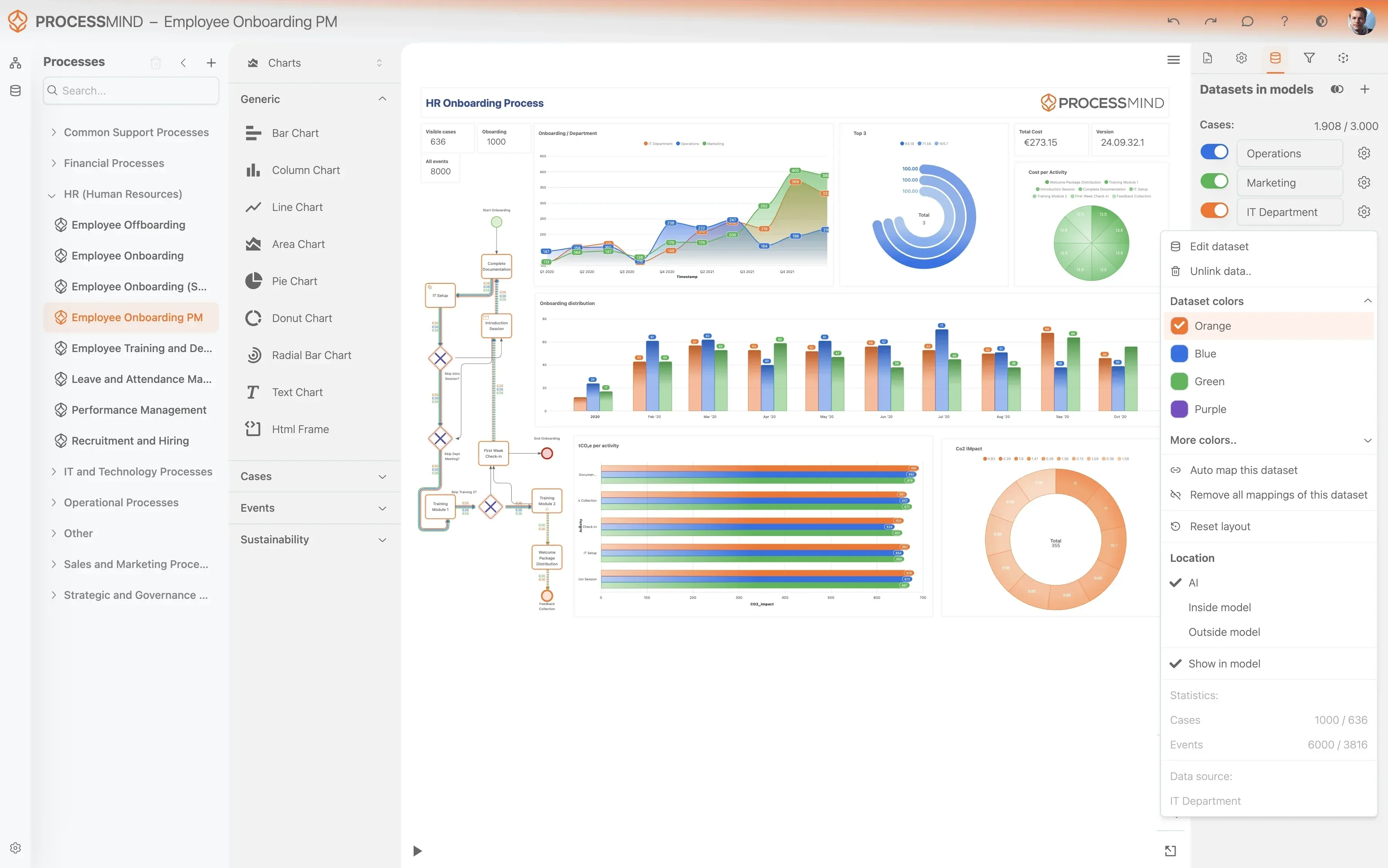
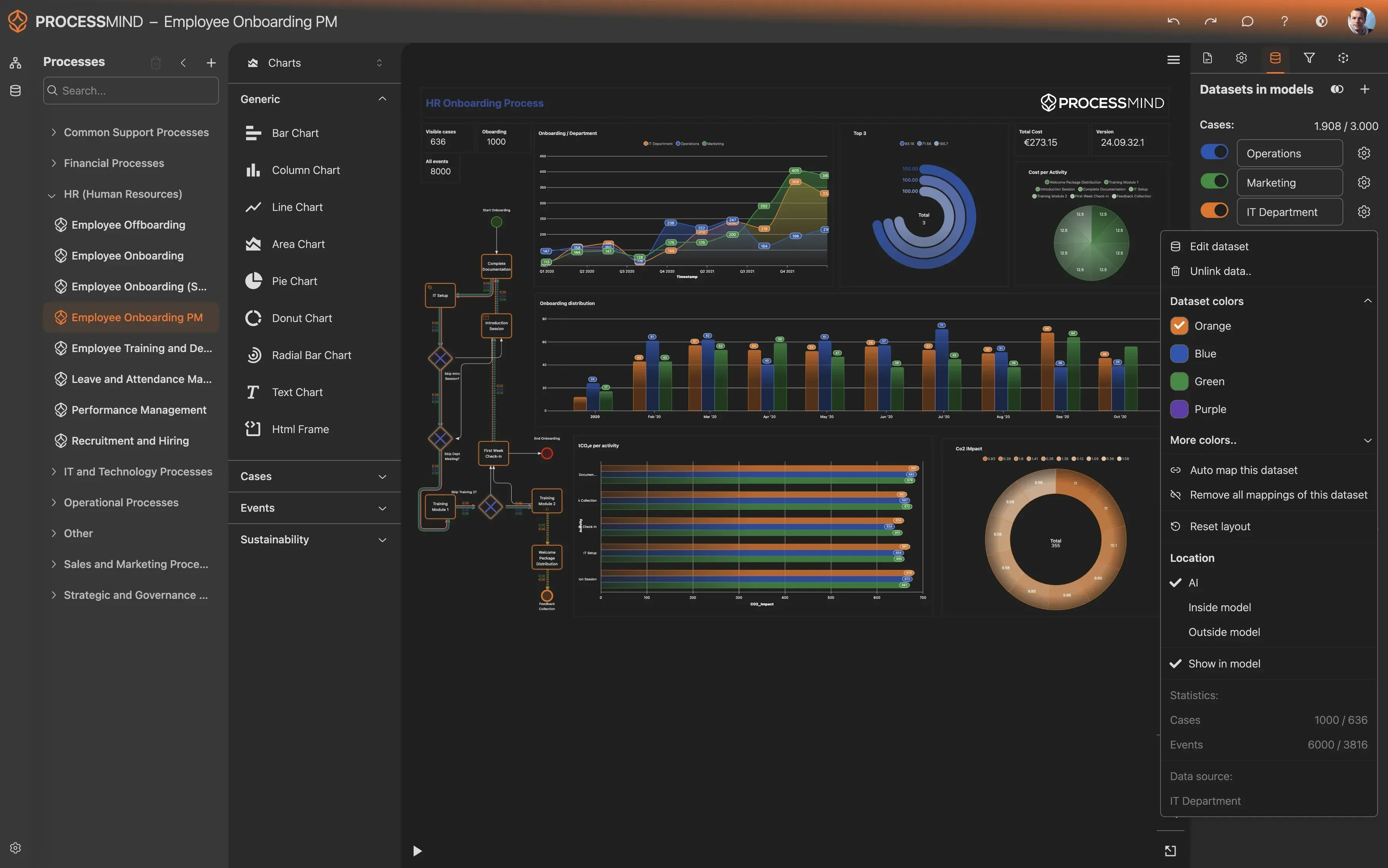
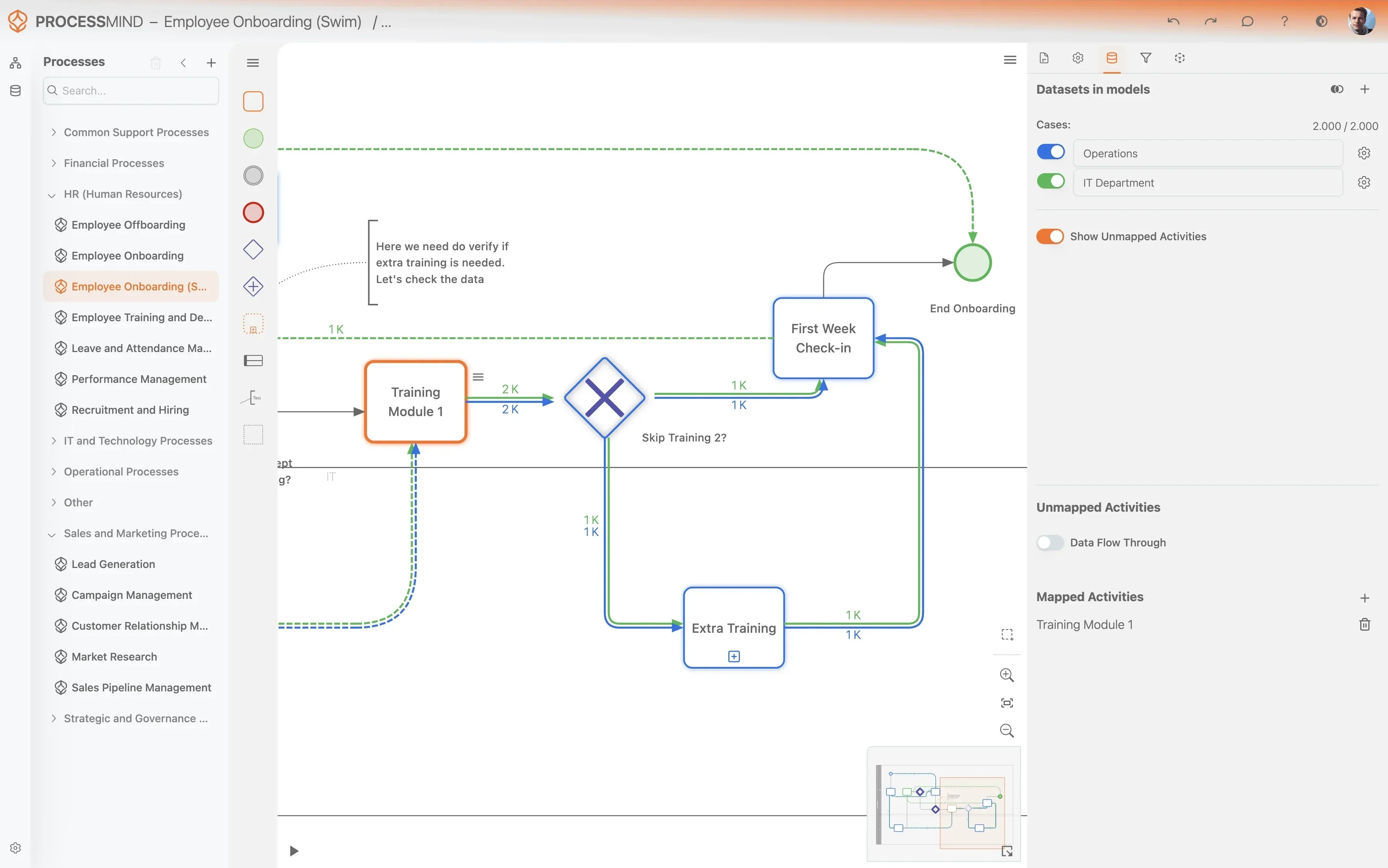
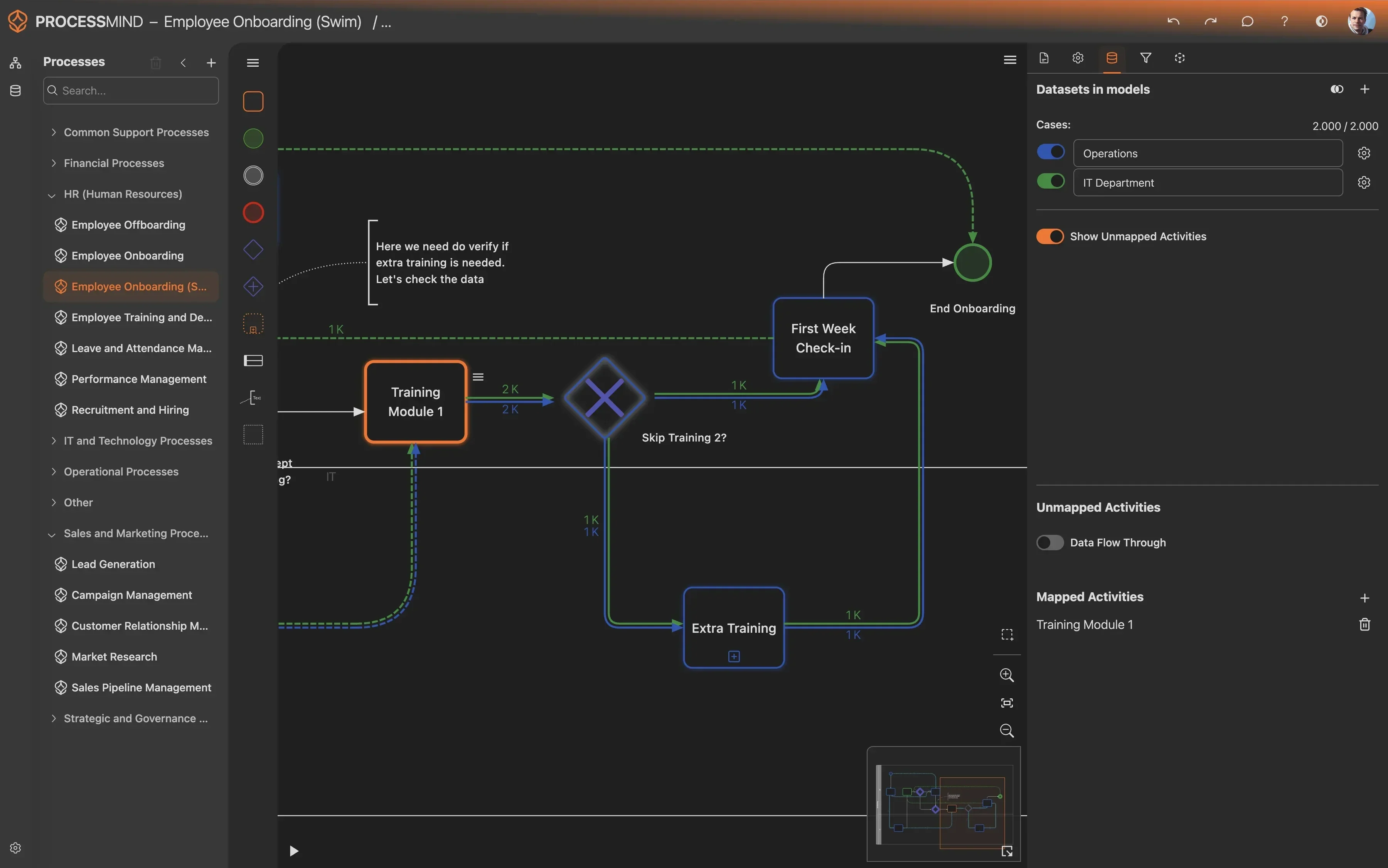
Pinpoint Delays for Faster Service Resolution
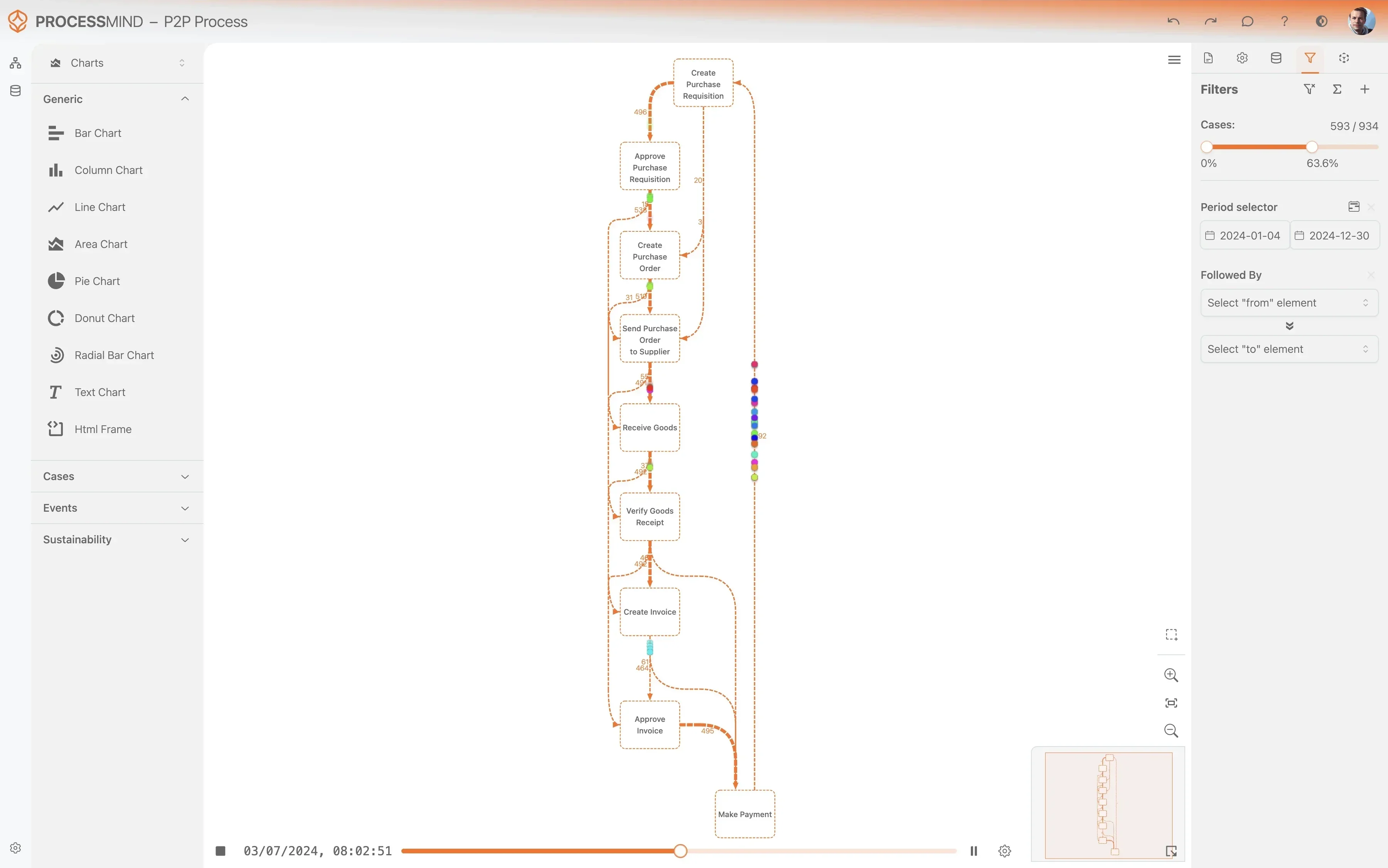
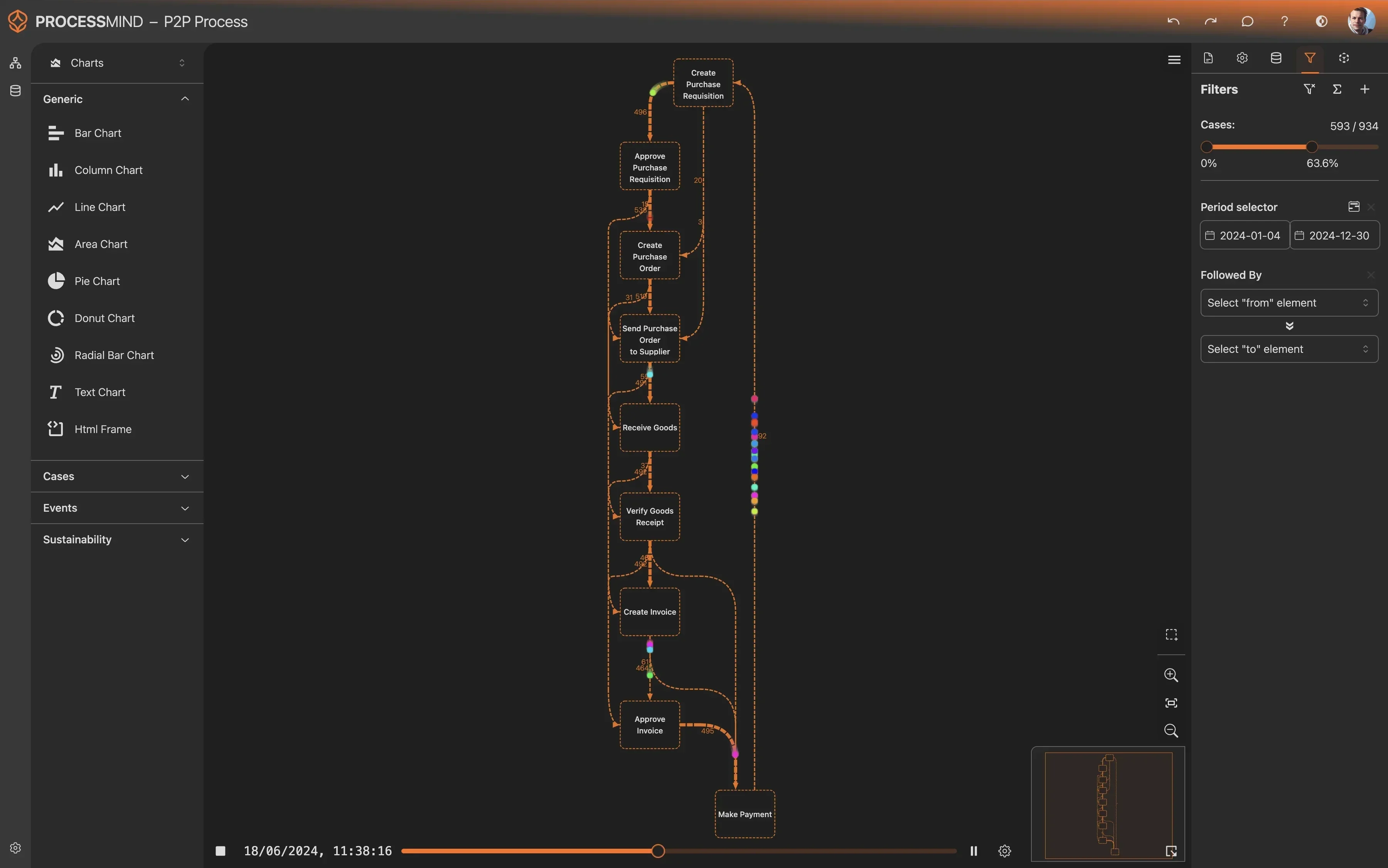
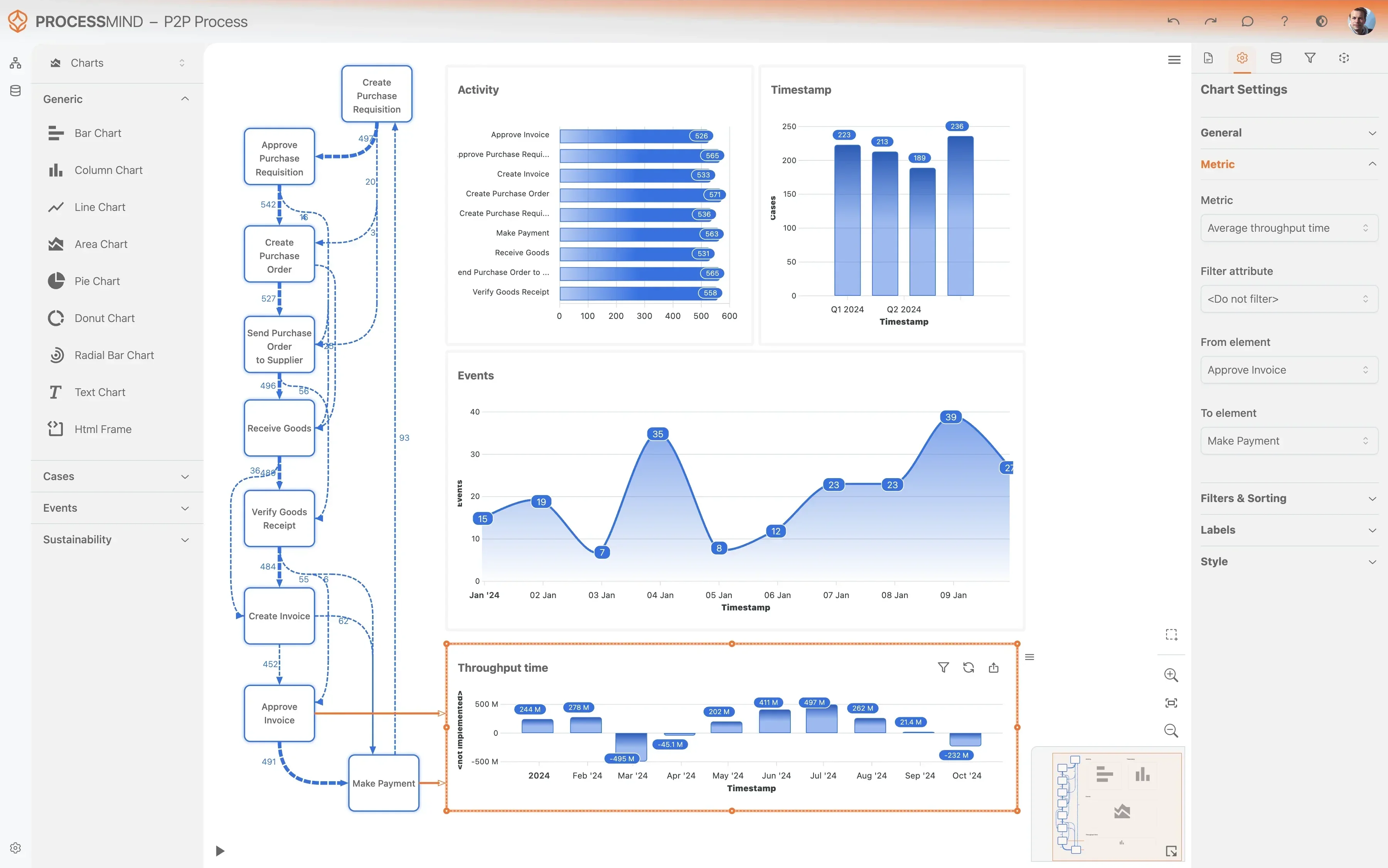
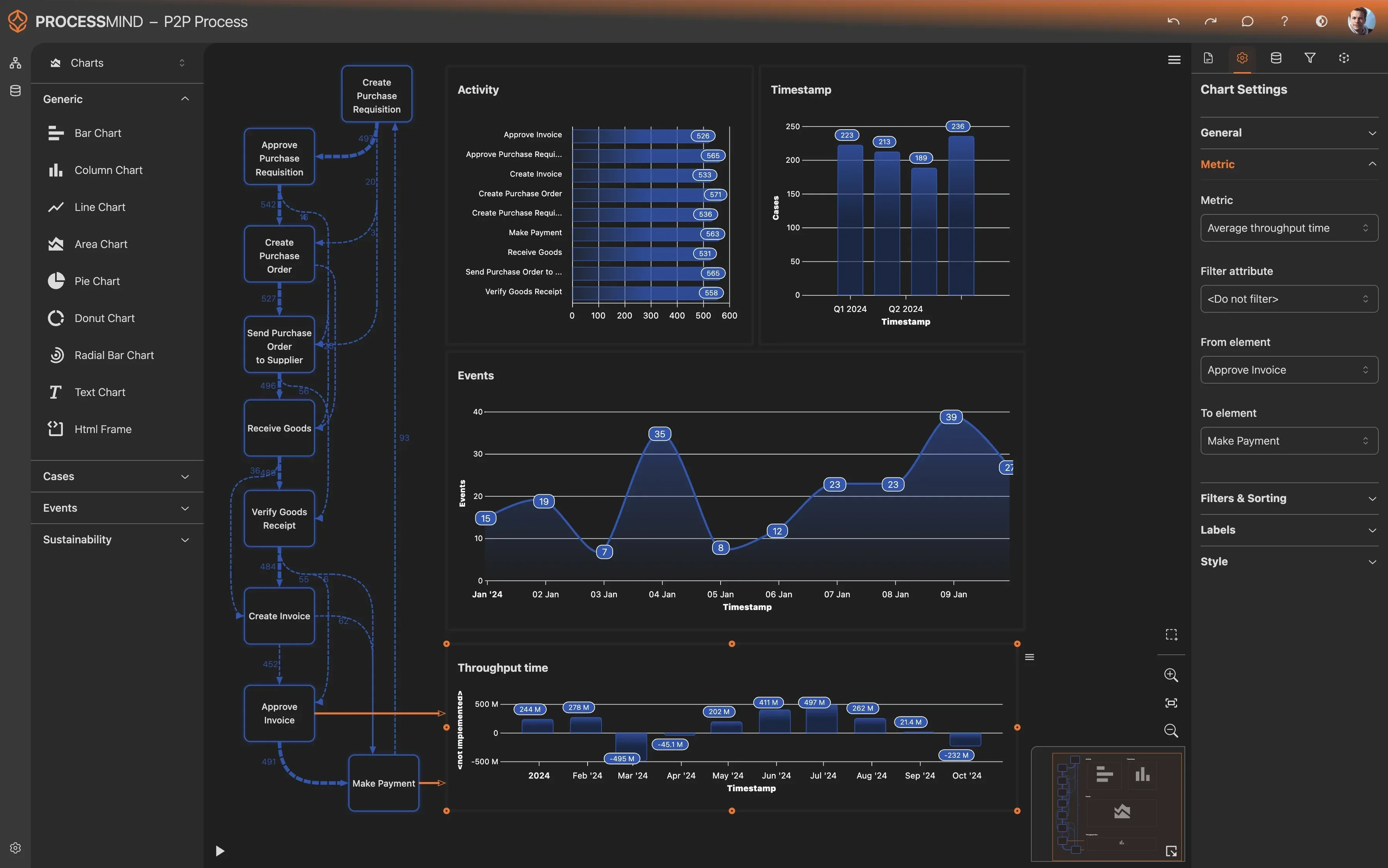
- Visualize end-to-end service request flows
- Identify exact bottlenecks in ServiceNow
- Streamline workflows for quicker resolution
- Enhance customer satisfaction and efficiency
TYPICAL OUTCOMES
Tangible Improvements in Service Request Management
These outcomes highlight common improvements observed when organizations apply process mining to their Service Request Management processes. By analyzing detailed Service Request ID data from systems like ServiceNow, teams can pinpoint inefficiencies and optimize workflows.
Average reduction in end-to-end time
Process mining identifies and removes delays, streamlining the service request lifecycle from creation to resolution, leading to quicker service delivery.
Increase in requests meeting deadlines
By pinpointing activities that cause SLA breaches, organizations can proactively address bottlenecks and process deviations, ensuring more requests are resolved on time.
Decrease in repeated or re-opened requests
Process mining uncovers root causes of rework, such as incomplete information or incorrect initial resolutions, dramatically reducing wasted effort and improving first-pass success.
Increase in process path consistency
By mapping actual process variations against ideal flows, organizations can enforce best practices, reduce deviation, and improve operational consistency across all service requests.
Reduction in agent reassignments
Identify and minimize excessive or inefficient handoffs between agents and teams, accelerating request resolution and ensuring smoother, more direct processing paths.
Results vary based on process complexity and data quality. These figures represent typical improvements observed across implementations and are not guarantees for specific cases.
Recommended Data
FAQs
Frequently asked questions
Process mining helps by visualizing the actual flow of service requests from submission to resolution. It uncovers bottlenecks in approval workflows, identifies excessive rework, and highlights inefficient handoffs between agents. This deep insight allows you to pinpoint exact areas for optimization, leading to faster resolution times and improved efficiency.
To begin, you typically need historical event logs from your ServiceNow Service Request module. Key data points include the Service Request ID as the case identifier, activity names, and timestamps for each activity. Information about the performing agent, status changes, and relevant request details are also valuable for deeper analysis.
Data can be extracted from ServiceNow using various methods, such as direct database queries, standard reporting exports, or API integrations. Many process mining tools also offer pre-built connectors for ServiceNow, simplifying the extraction of event logs into the required format. Ensure the extracted data includes timestamps and a unique case identifier for each request.
You can expect significant improvements, such as a reduction in request resolution time, better SLA adherence, and decreased rework incidents. Process mining helps standardize core request paths, optimize resource utilization, and accelerate information gathering. Ultimately, these lead to enhanced customer satisfaction and compliance.
Modern process mining platforms are designed for user-friendliness, often featuring intuitive interfaces and pre-built connectors for systems like ServiceNow. While some understanding of your ServiceNow data structure is beneficial, deep coding expertise is typically not required. The focus is more on business process analysis than complex technical development.
The initial data extraction and model generation can often be completed within a few weeks, depending on data volume and complexity. Tangible insights, such as identified bottlenecks and rework loops, can emerge almost immediately after the first analysis. Implementing improvements and seeing their impact usually takes several weeks to a few months.
Yes, process mining is excellent for compliance. It can automatically detect deviations from predefined process rules and SLAs, providing a clear audit trail. You can quickly identify instances of SLA breaches, understand their root causes, and ensure that internal policies, such as specific approval steps, are consistently followed.
Process mining complements, rather than replaces, your existing reporting and analytics tools. While traditional tools tell you "what" happened, process mining explains "how" it happened and "why," by visualizing the end-to-end process flow. It provides a deeper, diagnostic understanding that traditional dashboards cannot offer, guiding targeted improvements.
Transform Service Request Management: Act Now
Achieve 70% automation and faster resolution for service requests.
No credit card needed. Setup in minutes.