Improve Your Supply Chain Management

Your 6-step guide to optimize logistics in Manhattan Associates.
Improve Your Supply Chain Management

Optimize Supply Chain Performance in Manhattan Associates

Supply chain operations often conceal inefficiencies, leading to increased costs and delays. Our platform helps you uncover bottlenecks in logistics orders, supplier performance, and inventory flows. This guides you toward data-driven improvements, allowing you to build a more resilient and compliant supply chain.

Download our pre-configured data template and address common challenges to reach your efficiency goals. Follow our six-step improvement plan and consult the Data Template Guide to transform your operations.

Show detailed description

Why Optimize Your Supply Chain Management?

Your supply chain is the backbone of your business, influencing everything from customer satisfaction to operational costs. In today's dynamic market, optimizing Supply Chain Management, especially within sophisticated systems like Manhattan Associates, is not just an advantage, it is a necessity. Inefficiencies, often hidden within complex operations, can lead to significant financial drains, including increased inventory holding costs, missed delivery deadlines, expedited shipping fees, and compromised product quality. Furthermore, an inefficient supply chain can strain supplier relationships and make it challenging to meet increasingly stringent compliance requirements. Without a clear, data-driven understanding of your actual process flows, identifying the root causes of these issues becomes an uphill battle, making it difficult to implement effective, lasting improvements. Understanding the true flow of your logistics orders is paramount to reducing costs and delivering consistent value.

How Process Mining Unlocks Supply Chain Efficiency

Process mining offers a revolutionary approach to understanding and improving your Supply Chain Management processes. By leveraging event log data directly from your Manhattan Associates system, process mining reconstructs the complete, end-to-end journey of every logistics order. This provides an unbiased, factual visualization of how your processes truly execute, from "Demand Forecast Generated" through "Proof of Delivery Signed". Instead of relying on assumptions or anecdotal evidence, you gain precise insights into process variations, reworks, and performance bottlenecks. You can easily see exactly where delays occur, which steps consume the most resources, and where deviations from the ideal path impact efficiency. This holistic view of your supply chain allows you to move beyond surface-level symptoms and address the underlying inefficiencies that are impacting your operations, empowering you to effectively improve Supply Chain Management performance.

Key Areas for Supply Chain Improvement

Process mining specifically highlights critical areas for process optimization within your Supply Chain Management landscape:

  • Bottleneck Identification: Pinpoint the precise activities or stages where logistics orders get stuck, such as prolonged "Quality Control Performed" times or delays in "Shipment Scheduled", which directly impact your overall cycle time. This helps you understand how to reduce Supply Chain Management cycle time effectively.
  • Cycle Time Reduction: Analyze the elapsed time for each step of your "Logistics Order" journey to identify opportunities for accelerating order fulfillment, from raw materials receipt to final delivery. This is crucial for improving customer satisfaction.
  • Supplier Performance Evaluation: Gain clarity on how supplier lead times for "Raw Materials Received" impact your production schedules and inventory levels, enabling better supplier selection and management.
  • Inventory Optimization: Understand the relationship between process flow and inventory movements to reduce overstocking or stock-outs, leading to significant cost savings.
  • Transportation and Logistics Efficiency: Evaluate the effectiveness of different "Mode of Transport" and "Carrier" options, identifying paths to faster and more cost-effective goods movement.
  • Compliance and Risk Mitigation: Detect instances where processes deviate from regulatory standards or internal policies, helping you proactively manage risks and ensure a more compliant supply chain.

Expected Outcomes: Measurable Benefits for Your Business

Implementing process mining for your Supply Chain Management in Manhattan Associates yields tangible benefits:

  • Significant Cost Reduction: By eliminating waste, optimizing inventory, and streamlining logistics, you can achieve substantial reductions in operational expenses.
  • Enhanced Operational Efficiency: Experience faster order fulfillment, improved throughput, and more efficient resource utilization across your entire supply chain.
  • Improved Customer Satisfaction: Deliver products more reliably and quickly, enhancing your customers' experience and building stronger relationships.
  • Stronger Compliance and Reduced Risk: Proactively identify and address compliance gaps, reducing potential penalties and safeguarding your business reputation.
  • Data-Driven Decision Making: Empower your team with accurate, real-time insights to make informed strategic decisions that drive continuous process optimization.

Getting Started with Supply Chain Process Optimization

Embracing process mining for your Supply Chain Management within Manhattan Associates doesn't require extensive process mining expertise. It provides a clear, actionable roadmap for improving your operations, ensuring your supply chain is resilient, efficient, and capable of meeting future demands. Start uncovering the hidden potential within your logistics orders and transform your supply chain into a competitive advantage. Discover exactly how to improve Supply Chain Management and achieve sustained performance excellence.

Supply Chain Management Logistics Optimization Inventory Management Warehouse Operations Order Fulfillment Procurement Transportation Management SCM Compliance

Common Problems & Challenges

Identify which challenges are impacting you

Delays in processing logistics orders from initial demand to final delivery are a common challenge in Supply Chain Management, particularly within a complex system like Manhattan Associates. These extended lead times lead to missed delivery targets, increased inventory holding costs, and ultimately, dissatisfied customers. The inability to consistently meet delivery expectations can damage customer loyalty and competitive standing.ProcessMind analyzes event logs from Manhattan Associates to visualize the actual journey of every logistics order. It pinpoints exactly where delays accumulate, identifying specific activities or handovers that contribute most to extended lead times, allowing organizations to target and streamline those critical paths.

Variability in supplier delivery times for raw materials or finished goods creates significant ripple effects across the entire supply chain. When suppliers frequently miss agreed-upon delivery dates, it disrupts production schedules, causes stockouts, and forces costly expedited shipping, eroding profitability within Supply Chain Management operations.ProcessMind uses event data from Manhattan Associates to provide a clear, objective view of each supplier's actual delivery performance against contractual agreements and historical benchmarks. By tracking the "Raw Materials Received" activity for each logistics order, it highlights unreliable suppliers and quantifies their impact, enabling data-driven supplier relationship management and risk mitigation.

Inaccurate inventory visibility and ineffective management practices lead to a dual problem: excessive holding costs for overstocked items and lost sales due to stockouts. Within Manhattan Associates, this often translates to inefficient warehouse space utilization and an inability to fulfill customer orders promptly, impacting profitability and customer satisfaction across the Supply Chain Management process.ProcessMind analyzes the "Inventory Availability Checked" activity and subsequent order fulfillment steps for each logistics order to reveal discrepancies between recorded and actual stock levels. It uncovers process deviations that lead to inventory inaccuracies, identifies root causes of stockouts, and guides improvements for more efficient inventory flows and better resource allocation.

Bottlenecks in the picking and packing stages of warehouse operations can significantly slow down the entire order fulfillment process. These delays, common in active Supply Chain Management environments leveraging systems like Manhattan Associates, result in late shipments, increased labor costs due to overtime, and reduced throughput, directly impacting operational efficiency and customer delivery promises.ProcessMind visualizes the flow of logistics orders through the "Goods Picked and Packed" activity, identifying specific queues, resource constraints, or process variations that cause slowdowns. It helps uncover underutilized resources or inefficient layouts within the warehouse, providing insights to optimize workflow, balance workloads, and improve overall operational speed in Manhattan Associates.

Making suboptimal decisions regarding transportation modes and carrier selection directly inflates logistics costs and can compromise delivery schedules. In Supply Chain Management, especially when managing diverse logistics orders in a system like Manhattan Associates, choosing the wrong carrier or route leads to higher freight expenses, longer transit times, and a negative impact on profit margins.ProcessMind analyzes the "Mode of Transport" and "Carrier" attributes, alongside "Goods In Transit" activities for each logistics order. It compares planned versus actual routes and costs, revealing patterns of inefficient choices, identifying opportunities for consolidation, and providing data to negotiate better rates or optimize carrier assignments for improved cost-efficiency and faster deliveries.

A high incidence of late deliveries directly erodes customer trust and satisfaction, leading to potential churn and damage to brand reputation. Despite having robust systems like Manhattan Associates, underlying process inefficiencies in Supply Chain Management can consistently cause actual delivery dates to miss requested delivery dates, incurring penalties and loss of future business.ProcessMind provides a clear view of every logistics order's journey, highlighting the specific points where delays lead to late customer deliveries. By comparing "Requested Delivery Date" with "Actual Delivery Date," it uncovers the root causes, whether they are in order processing, warehouse operations, or transportation, enabling targeted interventions to improve on-time delivery performance.

Without a comprehensive view of the entire logistics order lifecycle, organizations struggle to identify root causes of problems, respond effectively to disruptions, or make proactive decisions. This lack of transparency in Supply Chain Management, even with systems like Manhattan Associates, often results in reactive problem-solving, inefficient resource allocation, and an inability to predict future challenges.ProcessMind stitches together event data from across the Manhattan Associates ecosystem, providing an unbroken, end-to-end visualization of every logistics order from "Demand Forecast Generated" to "Proof of Delivery Signed". This holistic view illuminates blind spots, reveals complex interdependencies, and empowers stakeholders with the insights needed to manage and optimize the entire supply chain effectively.

Deviations from established compliance protocols, whether for regulatory requirements or internal best practices, introduce risks and potential penalties. In complex Supply Chain Management processes managed by systems like Manhattan Associates, these inconsistencies can lead to errors, audits, fines, or damage to a company's reputation, especially concerning product traceability or shipping regulations.ProcessMind analyzes the actual process execution of logistics orders against predefined compliance models. It automatically detects and flags instances where activities are skipped, performed out of sequence, or where attribute values, like "Product Category" or "Origin Location", do not meet compliance standards, enabling proactive intervention and strengthening adherence across Manhattan Associates workflows.

Frequent rework, corrections, and manual handling of exceptions significantly increase operational costs and extend cycle times in Supply Chain Management. These deviations from the standard path for a logistics order, often seen in Manhattan Associates environments, consume valuable resources, introduce opportunities for human error, and degrade overall process efficiency and predictability.ProcessMind visualizes all process variants for logistics orders, highlighting the frequency and cost implications of rework loops and exception handling. It identifies the triggers and common patterns leading to these deviations, such as repeated "Quality Control Performed" or unscheduled "Shipment Scheduled" changes, allowing organizations to streamline processes and reduce costly manual interventions.

The unexpected need for expedited shipping to compensate for earlier delays in the supply chain directly impacts the profitability of logistics operations. These unbudgeted costs, frequently a symptom of inefficiencies within Supply Chain Management utilizing Manhattan Associates, eat into margins and indicate systemic issues in planning or execution that require urgent attention.ProcessMind analyzes logistics order paths to identify where delays occur that subsequently necessitate a change to a more expensive "Mode of Transport". It quantifies the cost impact of these expedited shipments and traces them back to their root causes, whether it's supplier delays, warehouse bottlenecks, or poor planning, enabling proactive measures to avoid future unplanned expenses.

Poor allocation and utilization of resources, whether labor, equipment, or dock space, within logistics hubs or warehouses lead to idle times, bottlenecks, and increased operational costs. In a Manhattan Associates-driven Supply Chain Management setup, this can hinder the efficient flow of "Goods Loaded for Transport" or "Goods Unloaded at Destination", impacting throughput and overall efficiency.ProcessMind identifies periods of low activity or excessive queuing for key resources by analyzing the timings and durations of activities like "Goods Picked and Packed" and "Goods Loaded for Transport". It reveals patterns of inefficient resource scheduling or imbalance in workload, offering insights to optimize staffing, equipment deployment, and facility layout for improved operational flow.

Inaccuracies or delays in obtaining and verifying proof of delivery (POD) can lead to billing disputes, customer complaints, and a lack of clear accountability for goods received. In Supply Chain Management, issues around "Proof of Delivery Signed" within the Manhattan Associates process can cause financial reconciliation challenges and weaken the trust chain between partners and customers.ProcessMind tracks the entire lifecycle of a logistics order up to and including the "Proof of Delivery Signed" activity. It highlights delays in POD submission, discrepancies between delivered quantities and recorded values, and identifies the process points most prone to errors, providing the data needed to streamline the POD process and enhance accuracy.

Typical Goals

Define what success looks like

Shorter lead times in Supply Chain Management directly translate to faster market response and improved customer satisfaction. By minimizing the time from initial demand to final delivery, businesses reduce operational costs, optimize inventory holding periods, and enhance overall supply chain agility. This creates a competitive edge and strengthens customer relationships.ProcessMind identifies exact bottlenecks and delays within the Manhattan Associates system, pinpointing stages where logistics orders stall. It quantifies the impact of each delay, allowing organizations to implement targeted improvements. Success is measured by the consistent decrease in average lead time for logistics orders, visible through real-time dashboards and trend analysis.

Consistent supplier performance is crucial for a stable Supply Chain Management operation, preventing stockouts and production delays. Achieving a 95% on-time delivery rate ensures that raw materials and goods arrive as scheduled, supporting smooth production flows and reliable customer fulfillment. This directly impacts efficiency and customer trust.ProcessMind analyzes supplier delivery patterns within the Manhattan Associates system, highlighting inconsistencies and quantifying the impact of late deliveries on subsequent processes. It provides insights into specific suppliers or product categories causing delays. Success is measured by tracking the percentage of logistics orders delivered by suppliers within the agreed timeframe, leading to improved planning and reduced expedited shipping.

Efficient inventory utilization in Supply Chain Management minimizes carrying costs, reduces the risk of obsolescence, and prevents stockouts. A 15% optimization means less capital tied up in inventory while ensuring products are available when needed. This directly impacts profitability and customer service levels.ProcessMind provides visibility into inventory movements and holding periods for each logistics order within Manhattan Associates, identifying patterns of slow-moving or excess stock. It uncovers root causes of poor utilization, such as inefficient storage or forecasting errors. Success is measured by a reduction in inventory holding costs and fewer instances of stockouts, verifiable through inventory turnover rates.

Improving warehouse picking and packing efficiency is vital for faster order fulfillment and lower operational costs in Supply Chain Management. Accelerating these processes by 15% means more orders processed per hour, reducing labor expenses and enhancing customer satisfaction with quicker deliveries. This directly impacts throughput and profitability.ProcessMind maps the exact paths and times taken for picking and packing activities in Manhattan Associates, exposing inefficiencies and bottlenecks within the warehouse. It quantifies the impact of different layouts or resource allocations. Success is measured by a demonstrable reduction in average picking and packing cycle times for logistics orders, improving overall warehouse throughput and reducing overtime.

Transportation represents a significant cost in Supply Chain Management. Reducing these costs by 10% without compromising service levels directly impacts the bottom line and improves competitiveness. This involves optimizing routes, consolidating shipments, and selecting the most efficient carriers for logistics orders.ProcessMind analyzes historical transport data for each logistics order within Manhattan Associates, comparing actual routes, carriers, and costs against optimal scenarios. It identifies opportunities for consolidation, better carrier negotiation, and route optimization. Success is measured by a quantifiable decrease in the average transportation cost per logistics order, without affecting delivery times.

On-time delivery is a critical measure of customer satisfaction and a key performance indicator in Supply Chain Management. Reaching 98% on-time deliveries builds customer loyalty, reduces customer service inquiries, and strengthens brand reputation. It signifies a highly efficient and reliable delivery network.ProcessMind tracks the entire delivery journey for logistics orders in Manhattan Associates, identifying the root causes of late deliveries, whether it is in warehouse processing, transit, or final mile. It highlights consistent patterns of delays that can be addressed proactively. Success is measured by the consistent achievement of the 98% on-time delivery rate, verifiable by comparing requested versus actual delivery dates for all customer logistics orders.

Comprehensive end-to-end visibility is foundational for effective Supply Chain Management, enabling proactive decision-making and risk mitigation. It means understanding every step a logistics order takes, from demand generation to proof of delivery, ensuring no blind spots hinder performance. This leads to better strategic planning and operational control.ProcessMind creates a comprehensive visual map of all logistics order processes within Manhattan Associates, revealing the true sequence and dependencies of activities. It highlights deviations from the standard path and identifies all actors involved. Success is measured by the ability to trace any logistics order at any stage, understanding its current status and potential future delays, leading to improved decision-making.

Adherence to regulatory requirements and internal policies is paramount in Supply Chain Management to avoid penalties, maintain reputation, and ensure ethical operations. Achieving 100% compliance in logistics workflows means every step aligns with set standards, reducing legal and financial risks. This builds trust with stakeholders and authorities.ProcessMind automatically compares actual logistics order execution paths within Manhattan Associates against predefined compliance rules and ideal process models. It immediately flags any deviations or unapproved shortcuts. Success is measured by the absence of non-compliant activities or steps identified in the process, providing an auditable trail for all logistics orders and ensuring adherence to regulations.

Order rework and exceptions are costly, time-consuming, and indicative of underlying process flaws in Supply Chain Management. Reducing rework by 50% directly translates to significant savings in labor, materials, and expedited shipping, while improving customer satisfaction and process reliability. This enhances efficiency and reduces waste.ProcessMind identifies the exact stages and root causes leading to rework for logistics orders in Manhattan Associates, such as data entry errors, incorrect picking, or quality control failures. It quantifies the frequency and cost impact of each rework type. Success is measured by a significant decrease in the number of logistics orders requiring manual intervention or re-processing, streamlining the entire fulfillment cycle.

Expedited shipping costs are a direct indicator of planning failures or process inefficiencies in Supply Chain Management. A 25% reduction means better foresight, improved lead times, and fewer reactive measures. This directly impacts profitability and indicates a more robust and predictable supply chain.ProcessMind analyzes the triggers for expedited shipping in Manhattan Associates, linking them back to earlier process steps such as late supplier deliveries, production delays, or warehouse bottlenecks affecting logistics orders. It quantifies the cost impact of each trigger. Success is measured by a tangible decrease in the budget allocated to and spent on emergency transportation, reflecting a more stable and efficient process.

Optimizing resource utilization, whether labor, equipment, or space, by 20% leads to substantial cost savings and increased capacity in Supply Chain Management operations. It means getting more output from existing assets, enhancing productivity and operational efficiency across hubs. This maximizes asset value and reduces operational expenses.ProcessMind visualizes resource allocation and idle times for each step of logistics orders within Manhattan Associates, pinpointing where resources are underutilized or overstretched. It identifies patterns of inefficient scheduling or unbalanced workloads. Success is measured by an increase in throughput per resource unit and a reduction in idle time across various hubs, leading to better operational flow and reduced bottlenecks.

Proof of Delivery (POD) discrepancies can lead to billing errors, customer disputes, and lost revenue in Supply Chain Management. Resolving these discrepancies quickly and systematically ensures accurate invoicing, improves cash flow, and maintains strong customer relationships. This strengthens financial integrity and customer trust.ProcessMind tracks the entire delivery process for logistics orders in Manhattan Associates, identifying the exact points where POD information deviates from expected outcomes. It helps pinpoint whether discrepancies originate from the carrier, recipient, or internal record-keeping. Success is measured by a significant reduction in the number of disputed invoices or customer complaints related to delivery, improving financial reconciliation and transparency.

The 6-Step Improvement Path for Supply Chain Management

1

Download the Template

What to do

Access and download the pre-configured Excel data extraction template designed for Supply Chain Management in Manhattan Associates.

Why it matters

This ensures your data is structured correctly from the start, streamlining the upload process and enabling accurate analysis without manual reformatting.

Expected outcome

A standardized Excel template, ready to be populated with your Manhattan Associates supply chain data.

YOUR DISCOVERIES

Unlock Hidden Efficiencies in Your Supply Chain

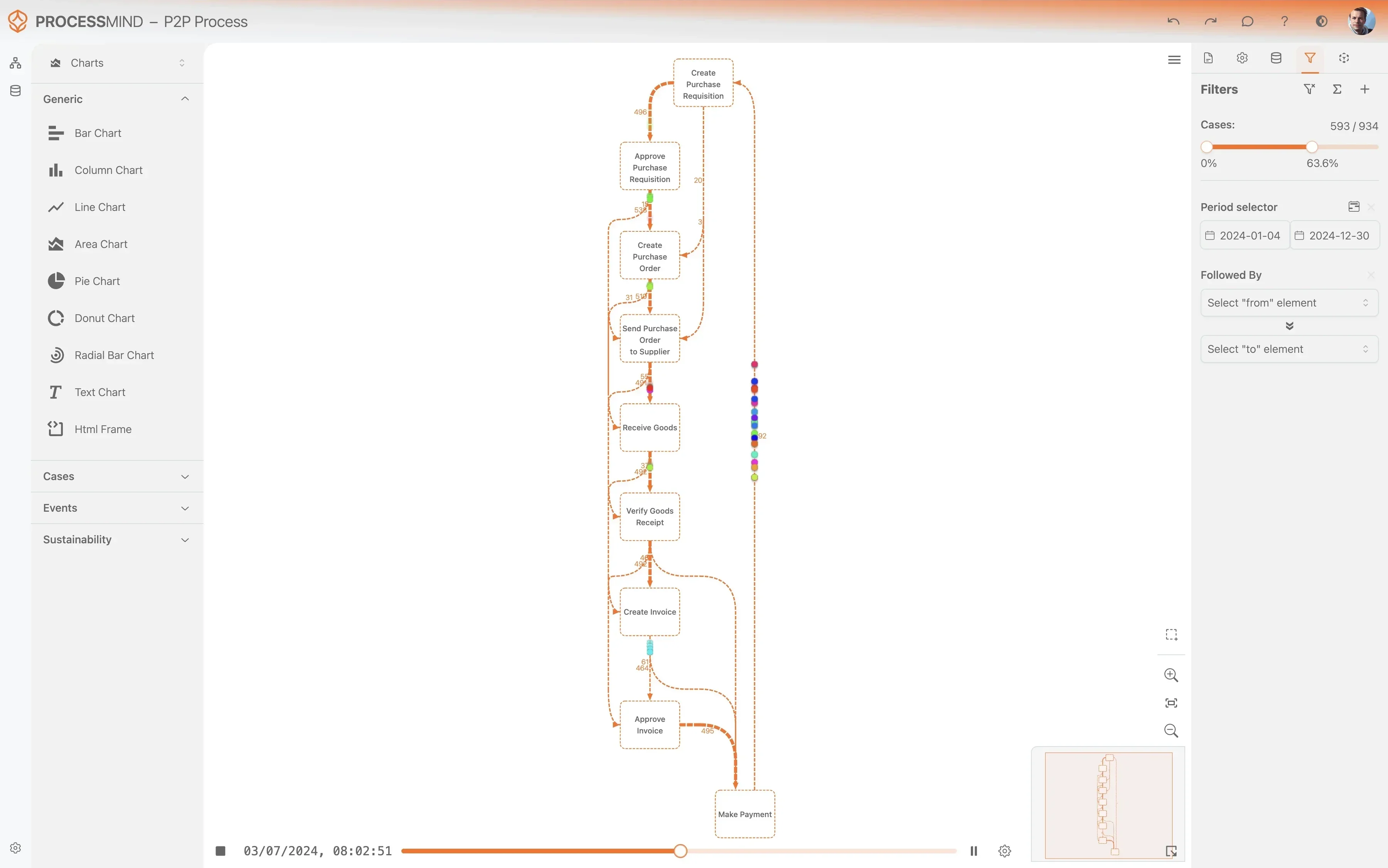
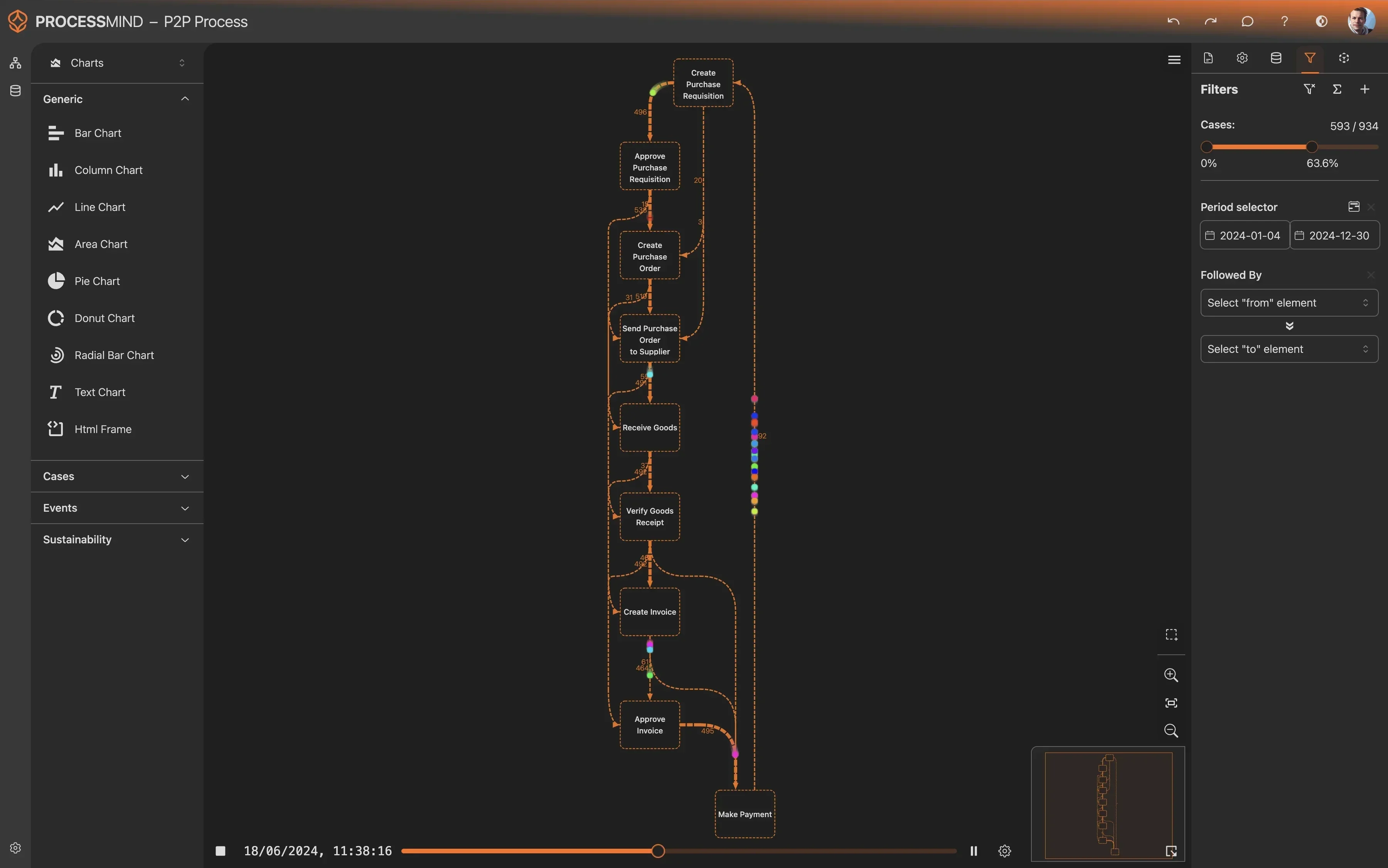
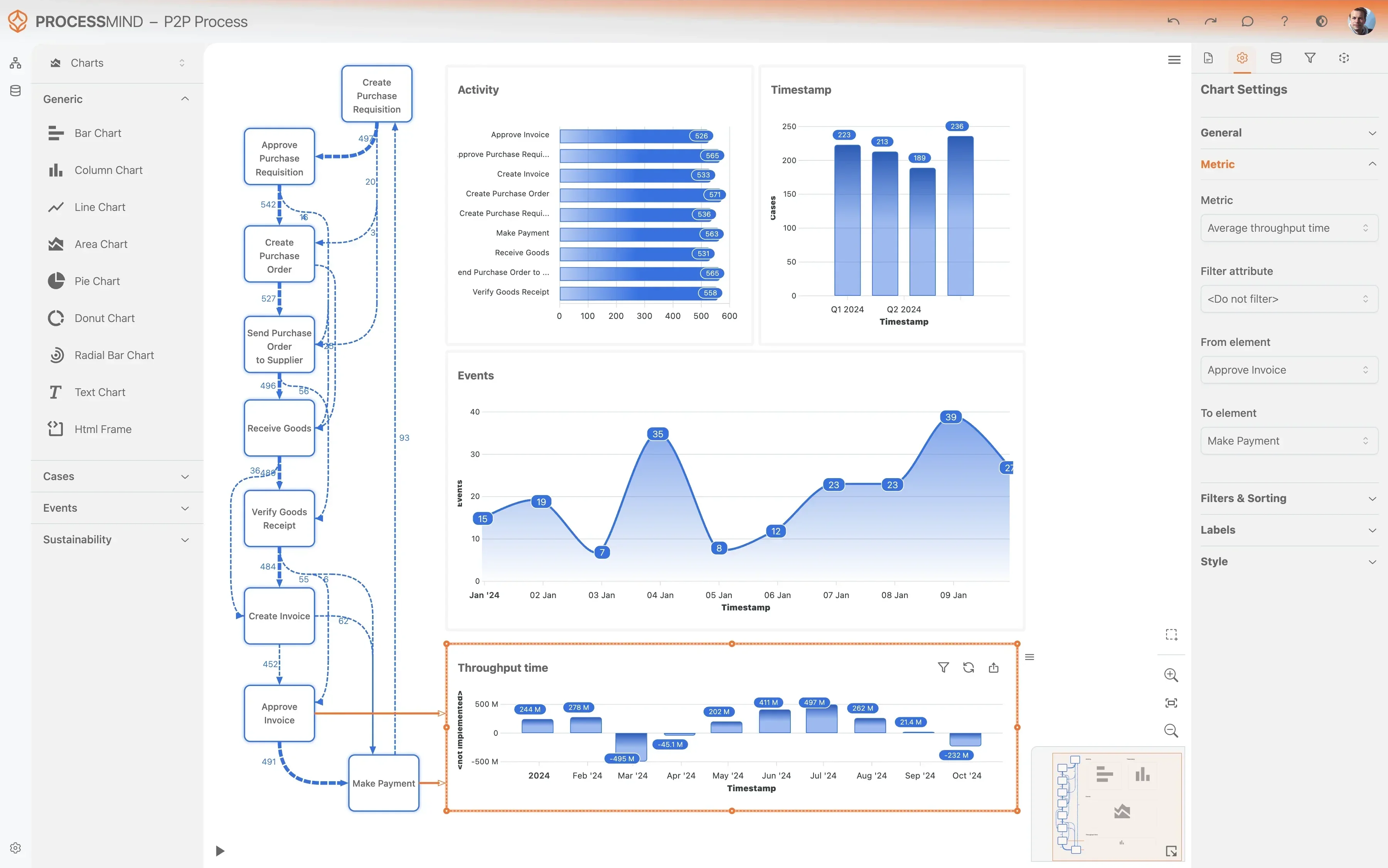
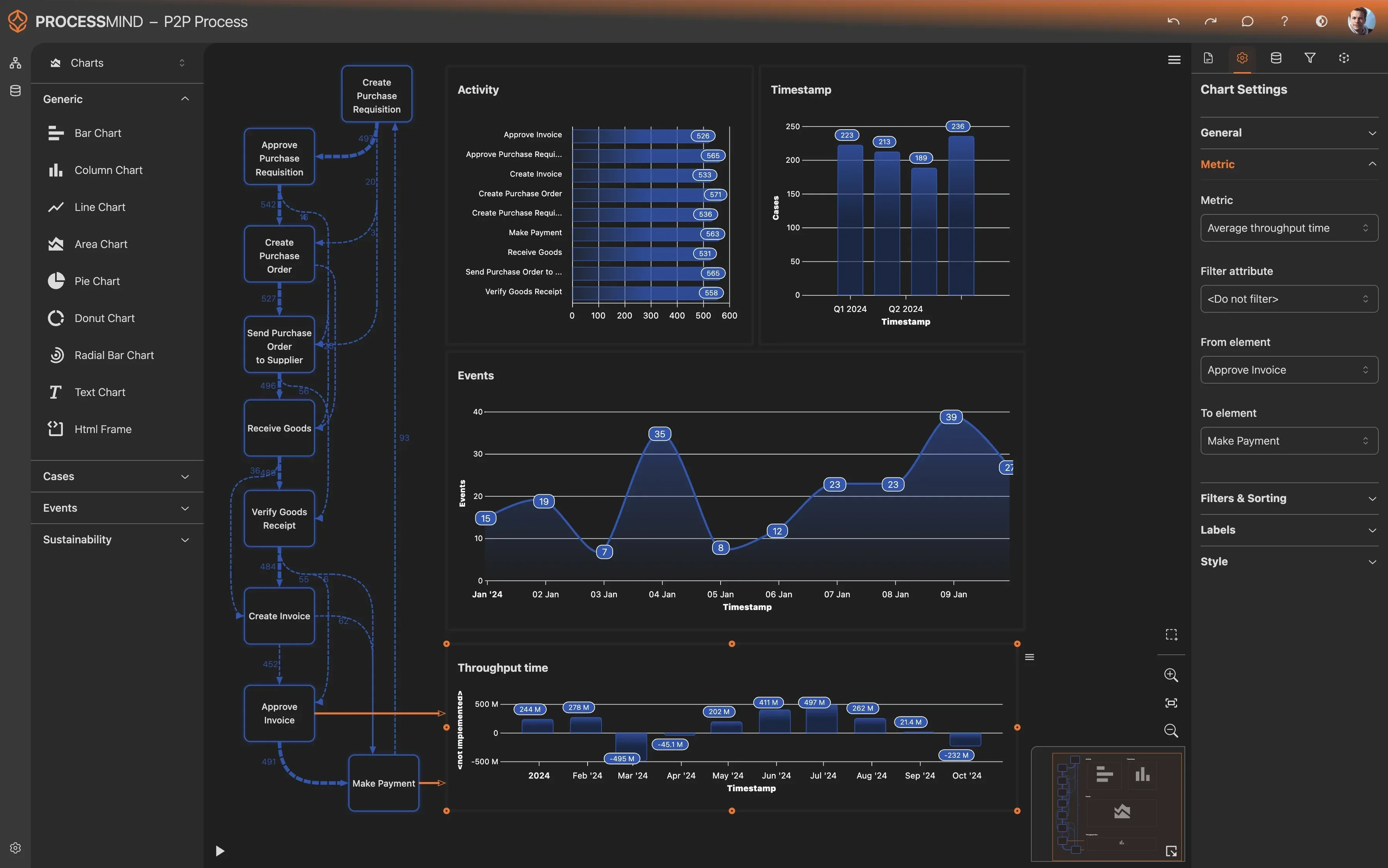
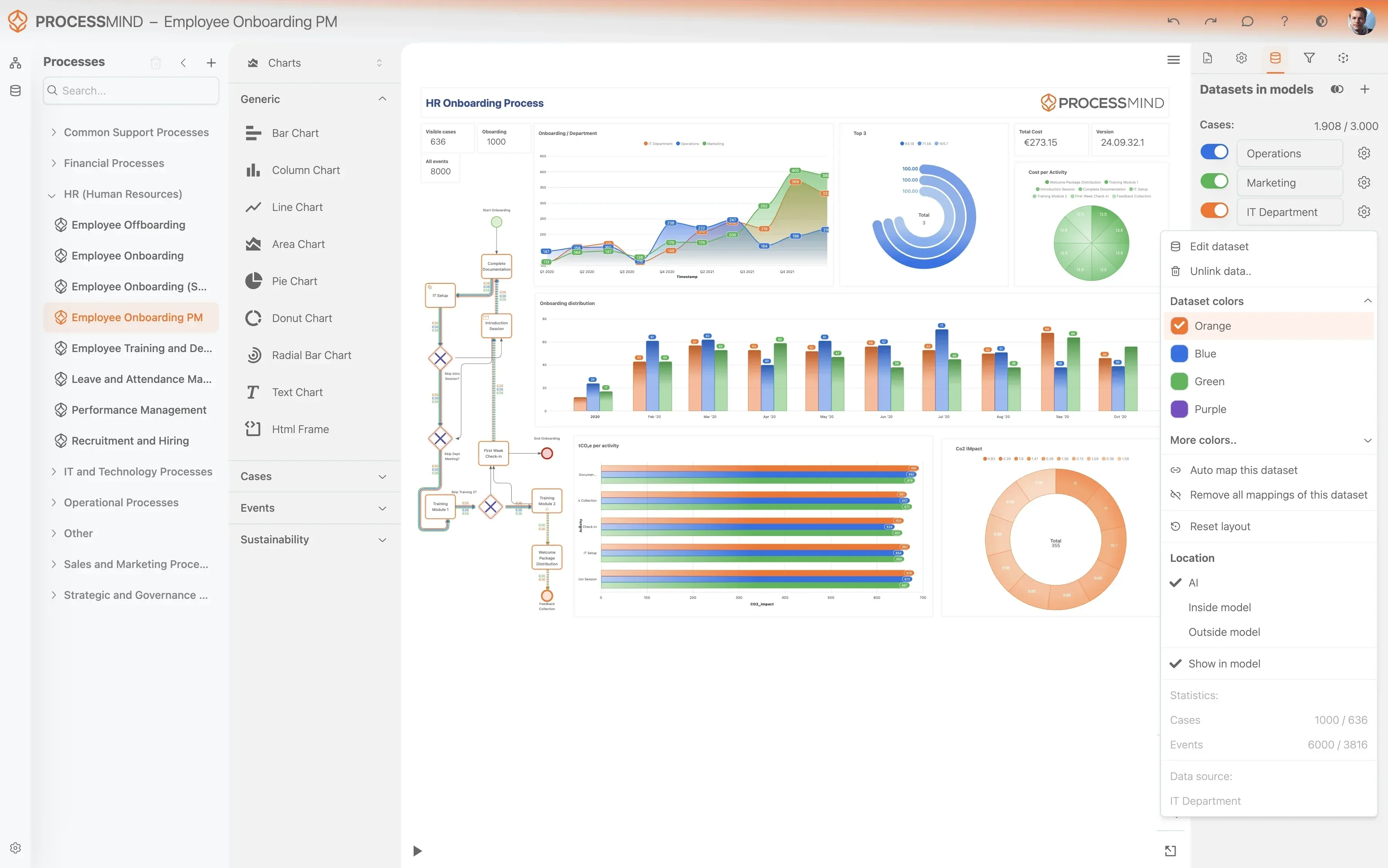
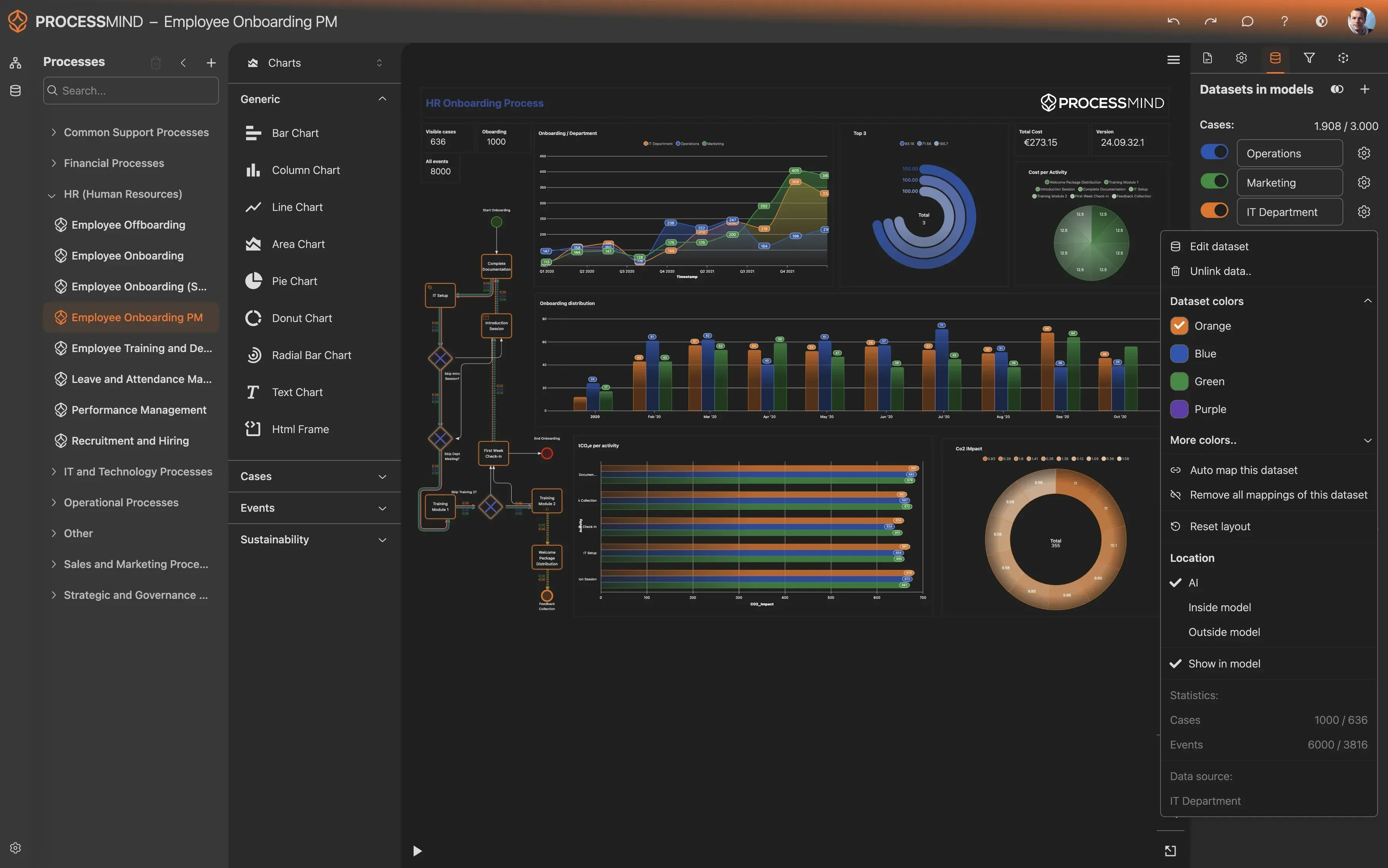
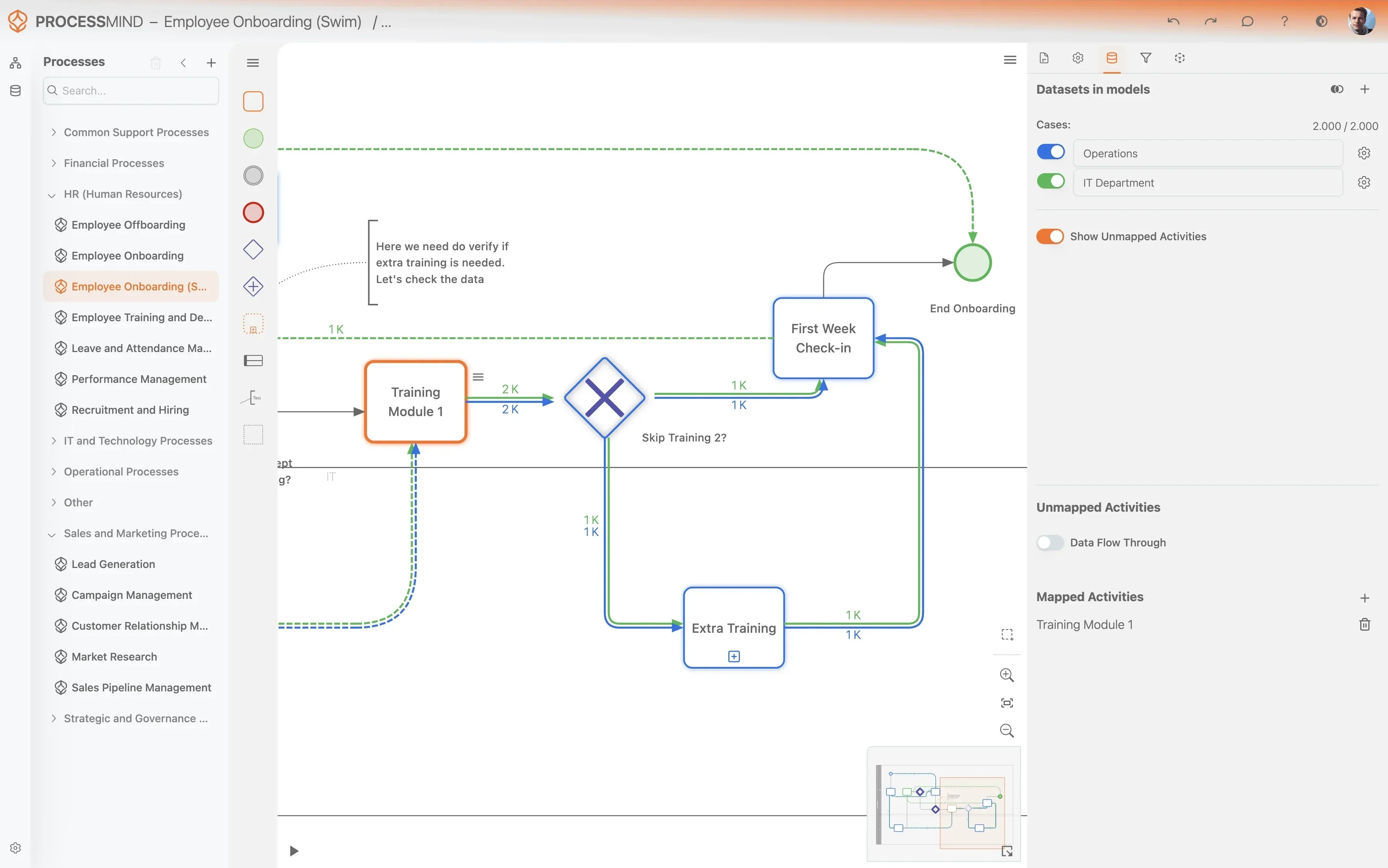
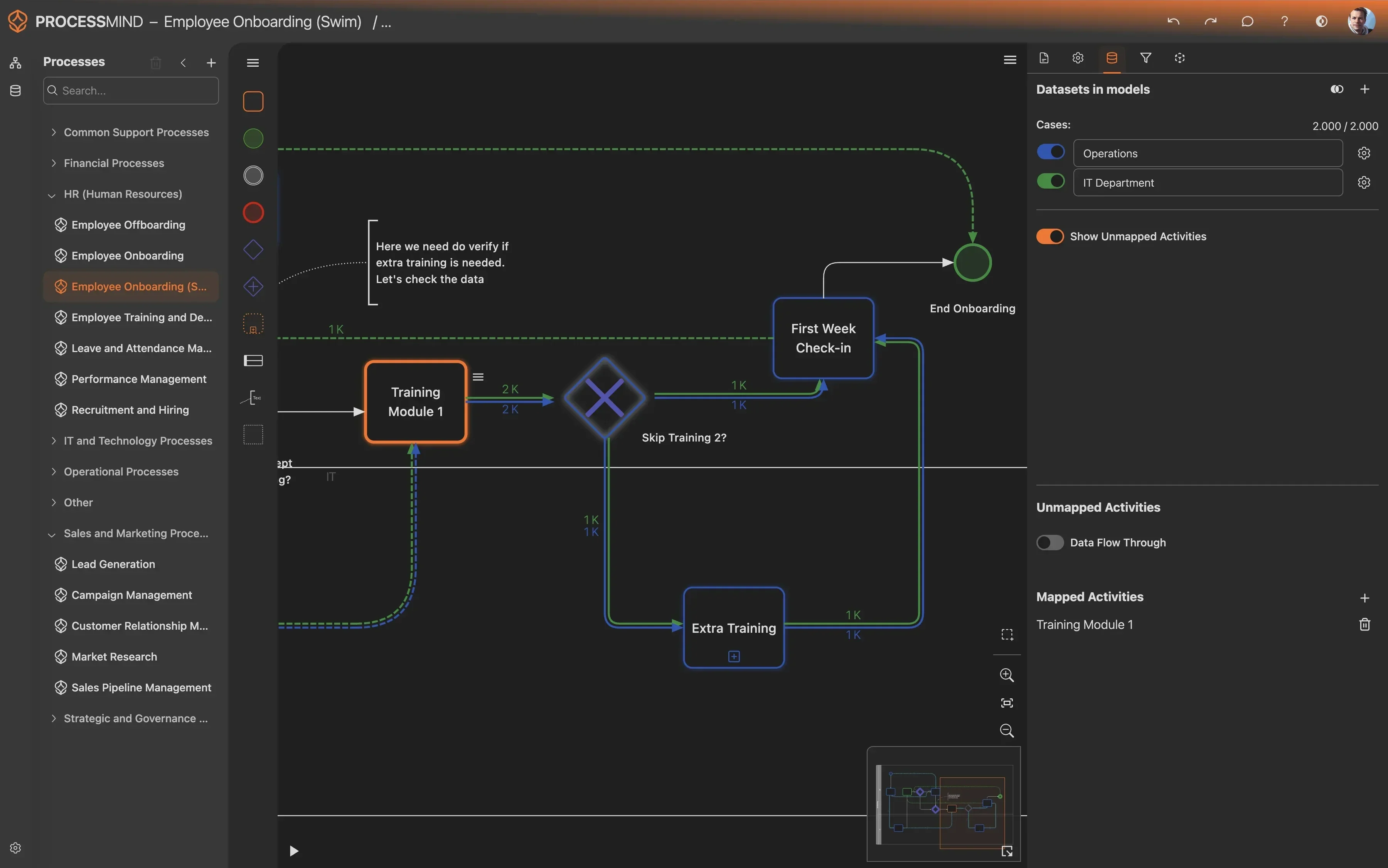
ProcessMind visualizes your actual supply chain operations, revealing inefficiencies and hidden patterns. Gain clear, actionable insights to optimize logistics, supplier performance, and inventory within Manhattan Associates.
  • Visualize actual supply chain process flows
  • Pinpoint logistics bottlenecks and delays
  • Optimize inventory and supplier performance
  • Drive resilient, compliant supply chain
Discover your actual process flow
Identify bottlenecks and delays
Analyze process variants
Design your optimized process

TYPICAL OUTCOMES

Achieve Operational Excellence in Supply Chain

By leveraging process mining to analyze Logistics Order flows within Manhattan Associates, organizations gain unprecedented visibility into their supply chain operations. This leads to the identification of bottlenecks and inefficiencies, driving significant improvements in performance.

0 %
Faster Order Fulfillment

Avg. reduction in logistics order cycle

Streamline your supply chain by identifying and eliminating bottlenecks, ensuring products reach customers quicker and boosting efficiency.

0 %
Lower Expedited Shipping Cost

Reduction in unbudgeted shipping expenses

Minimize costly expedited shipping by proactively identifying and resolving delays in the supply chain before they escalate into urgent situations.

0 %
Improved On-Time Delivery

Increase in successful customer deliveries

Boost customer satisfaction and loyalty by consistently meeting promised delivery dates, improving overall service reliability and reputation.

0 %
Reduced Process Non-Comp.

Decrease in non-compliant logistics steps

Identify and rectify deviations from standard logistics processes, ensuring operations are consistently compliant with regulations and internal policies.

0 %
Minimized Order Rework

Reduction in unexpected order modifications

Eliminate costly and time-consuming rework by pinpointing root causes of errors and process deviations in logistics orders, improving first-time right delivery.

0 %
Optimized Inventory Use

Reduction in inventory stockout frequency

Improve inventory efficiency and reduce stockouts by gaining deeper insights into material flow and demand patterns, preventing lost sales and delays.

Results vary based on specific process complexity, data quality, and strategic focus. These figures represent typical improvements observed across various supply chain implementations.

FAQs

Frequently asked questions

Process mining analyzes your logistics order data from Manhattan Associates to reveal actual process flows. It helps identify bottlenecks, inefficiencies, and non-compliance, leading to significant improvements in areas like lead times and inventory utilization.

Process mining can uncover root causes for extended logistics order lead times, inconsistent supplier delivery performance, and poor inventory utilization. It also helps optimize warehouse picking and packing, reduce transport costs, and minimize late customer deliveries.

You typically need event logs that include a case identifier, activity, and timestamp for each step in your logistics order process. Key tables would involve order details, shipment tracking, warehouse activities, and proof of delivery records. Data extraction can usually be done via standard reporting or database access tools.

Initial setup, including data extraction and model configuration, usually takes a few weeks, depending on data availability and complexity. You can often see the first insights and identify high-impact improvement areas within 4-6 weeks after data ingestion.

You can expect to reduce logistics order lead times, enhance supplier on-time delivery, and optimize inventory utilization. Other outcomes include accelerated warehouse picking, reduced transport costs, and improved overall end-to-end supply chain visibility and compliance.

The primary technical requirement is access to your Manhattan Associates database or data warehouse to extract relevant event log data. While many process mining tools are cloud-based, you will need secure data connectivity and potentially some internal IT support for initial data pipeline setup.

Yes, process mining allows you to compare actual process execution against predefined compliance rules and ideal process models. It highlights deviations and non-compliant steps, helping you ensure 100% logistics process compliance and identify areas for audit.

By visualizing the actual paths and timings of your logistics orders, process mining clearly identifies where delays occur and where resources are strained. It can pinpoint specific activities or stages, such as warehouse picking or transport hubs, that cause significant slowdowns.

Boost Supply Chain Performance in Manhattan Associates

Gain end-to-end visibility and achieve 90% forecast accuracy.

Start Your Free Trial

No credit card required. Setup in minutes.