Improve Your Inventory Management

Select a process
Choose a process to continue working in your connected workspace.
Optimize Inventory Management in SAP ECC and Improve Warehouse Efficiency
Inventory management can be complex, leading to hidden costs and missed opportunities. Our platform helps you discover bottlenecks in goods receipt, put-away, and stock movements. These insights minimize stockouts, reduce carrying costs, and significantly improve order fulfillment, guiding you toward a more efficient operation.
Download our pre-configured data template and address common challenges to reach your efficiency goals. Follow our six-step improvement plan and consult the Data Template Guide to transform your operations.
Show detailed description
Why Optimizing Inventory Management in SAP ECC is Critical
Managing inventory within SAP ECC can be an exceptionally intricate undertaking, involving numerous transactions, movements, and stakeholders. Inefficient Inventory Management directly translates into significant financial implications for your organization. These include inflated carrying costs for excess stock, lost sales due to stockouts, operational delays across your supply chain, and potential compliance penalties. Understanding how to improve Inventory Management is not just about efficiency, it is about enhancing profitability, improving customer satisfaction, and ensuring the smooth flow of your entire operation. Leveraging SAP ECC as your system of record, an optimized inventory process is fundamental to achieving operational excellence and maintaining a competitive edge.
Unlocking Efficiency with Process Mining for Inventory
Process mining offers a revolutionary approach to understanding and improving your Inventory Management processes in SAP ECC. Instead of relying on theoretical models or anecdotal evidence, process mining analyzes your actual event data from SAP ECC tables, such as MSEG, MKPF, and MARD. This provides an X-ray view into the real lifecycle of every inventory batch or lot, from its initial goods receipt through quality inspections, put-away, internal movements, adjustments, and eventual issue or consumption. By tracking these intricate details, you can pinpoint the exact locations of bottlenecks, identify deviations from your standard operating procedures, and uncover hidden inefficiencies that impact your inventory cycle time. This powerful analytical tool helps you visualize the true end-toto-end process, enabling data-driven decisions on how to reduce Inventory Management cycle time and enhance overall performance.
Key Improvement Areas Identified Through Process Mining
Process mining for Inventory Management in SAP ECC typically reveals several crucial areas ripe for optimization:
- Goods Receipt and Put-Away Optimization: Discover delays between goods receipt and subsequent put-away completion. Identify reasons for slow processing, allowing you to streamline warehouse receiving procedures and ensure faster stock availability.
- Internal Logistics and Stock Movement Efficiency: Analyze the actual paths and times taken for internal stock movements. This can expose redundant transfers, suboptimal storage strategies, or inefficiencies in your picking and packing processes, helping you reduce unnecessary handling costs.
- Inventory Accuracy and Adjustment Processes: Understand the root causes of frequent inventory adjustments and discrepancies. By mapping out the sequence of events leading to these adjustments, you can improve cycle counting efficiency, enhance data accuracy, and minimize write-offs.
- Compliance and Risk Mitigation: Ensure your inventory processes adhere to both internal policies and external regulations. Process mining can highlight instances where procedures are bypassed or not followed, allowing you to strengthen controls and reduce compliance risks.
- Resource and Storage Utilization: Optimize how your warehouse space and personnel are utilized. By identifying bottlenecks and idle times, you can make informed decisions to improve throughput and reduce operational costs associated with Inventory Management.
Measurable Outcomes and Business Benefits
Implementing process optimization in your SAP ECC Inventory Management, guided by process mining insights, delivers tangible and measurable benefits:
- Reduced Carrying Costs: By identifying and eliminating excess stock and optimizing replenishment strategies, you can significantly lower the costs associated with holding inventory.
- Minimized Stockouts: Understanding the flow of inventory helps in predicting and preventing stockouts, ensuring product availability and improving customer satisfaction.
- Faster Order Fulfillment: Streamlined goods receipt, put-away, and picking processes directly contribute to reduced order fulfillment cycle times and improved delivery performance.
- Improved Inventory Accuracy: A clearer understanding of inventory movements and adjustment triggers leads to more reliable stock levels, better planning, and fewer financial discrepancies.
- Enhanced Operational Efficiency: Automating manual tasks, eliminating reworks, and optimizing process flows within your SAP ECC environment will boost overall warehouse productivity and reduce operational expenses.
Embarking on Your Inventory Optimization Journey
Embracing process mining for Inventory Management in SAP ECC empowers you to move beyond reactive problem-solving. It provides the actionable insights needed to transform your inventory operations into a strategic advantage. By continuously monitoring and improving your processes, you can achieve unprecedented levels of efficiency, reduce costs, and ensure your SAP ECC system truly supports your business goals. Start your journey towards a more agile, cost-effective, and compliant Inventory Management system today.
The 6-Step Improvement Path for Inventory Management
Download the Template
What to do
Obtain the pre-configured Excel template designed for Inventory Management process mining, ensuring all necessary data fields for SAP ECC are included.
Why it matters
A standardized template ensures you collect the right data in the correct format, streamlining analysis and preventing data quality issues.
Expected outcome
A ready-to-use Excel template tailored for SAP ECC Inventory Management data.
Export Your Data
What to do
Extract 3-6 months of historical inventory movement data from SAP ECC, focusing on tables like MSEG, MKPF, MARD, and MCHB.
Why it matters
Comprehensive historical data is crucial for identifying recurring patterns, bottlenecks, and root causes of inefficiencies within your inventory processes.
Expected outcome
Your Inventory Management template populated with relevant, recent historical data from SAP ECC.
Upload Your Dataset
What to do
Securely upload your filled Excel template to the ProcessMind platform. The system will automatically prepare your data for analysis.
Why it matters
A secure and efficient upload ensures your data is quickly available for processing, allowing immediate access to powerful analytics without manual setup.
Expected outcome
Your Inventory Management data securely processed and ready for automated analysis in ProcessMind.
Analyze Your Process
What to do
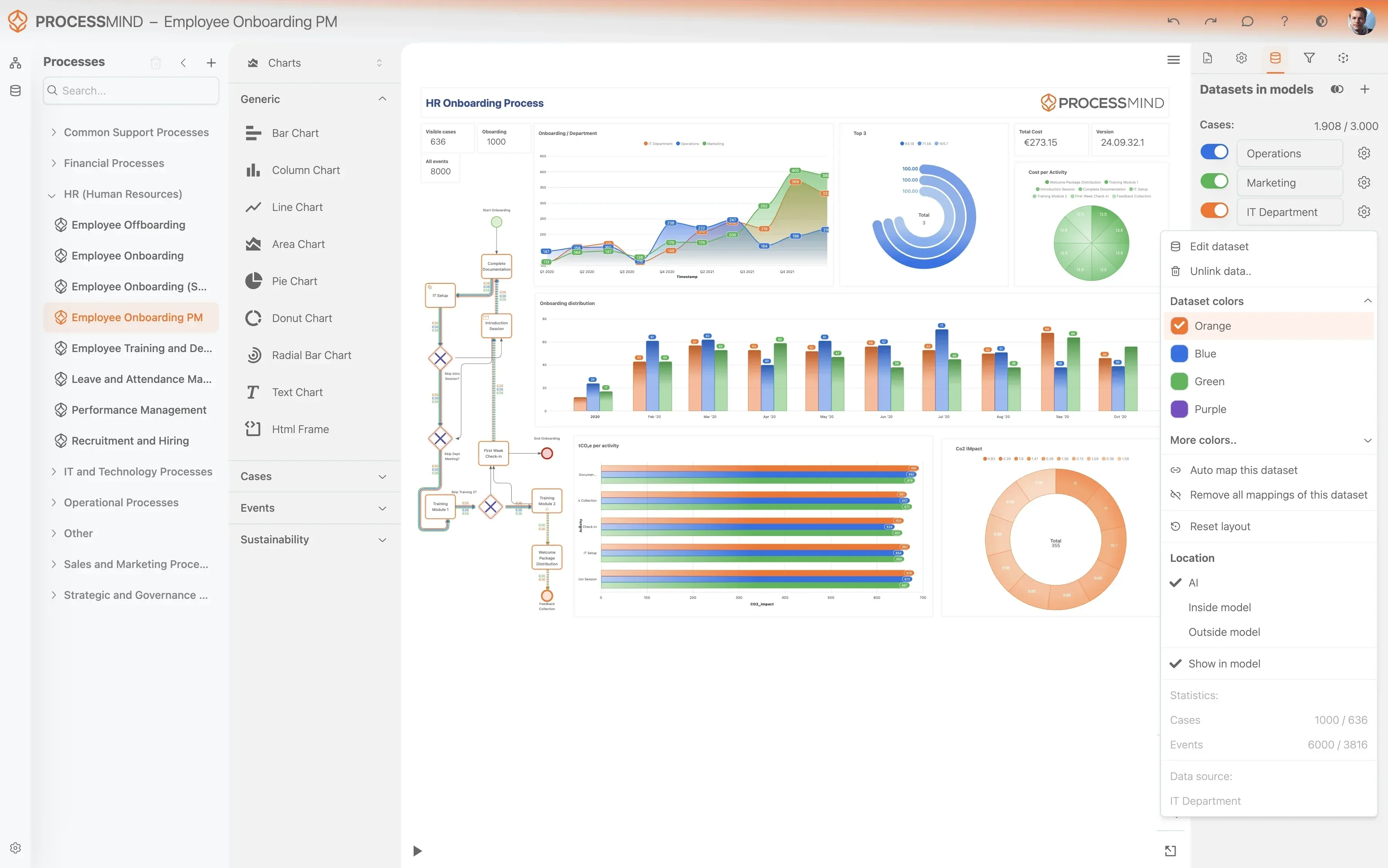
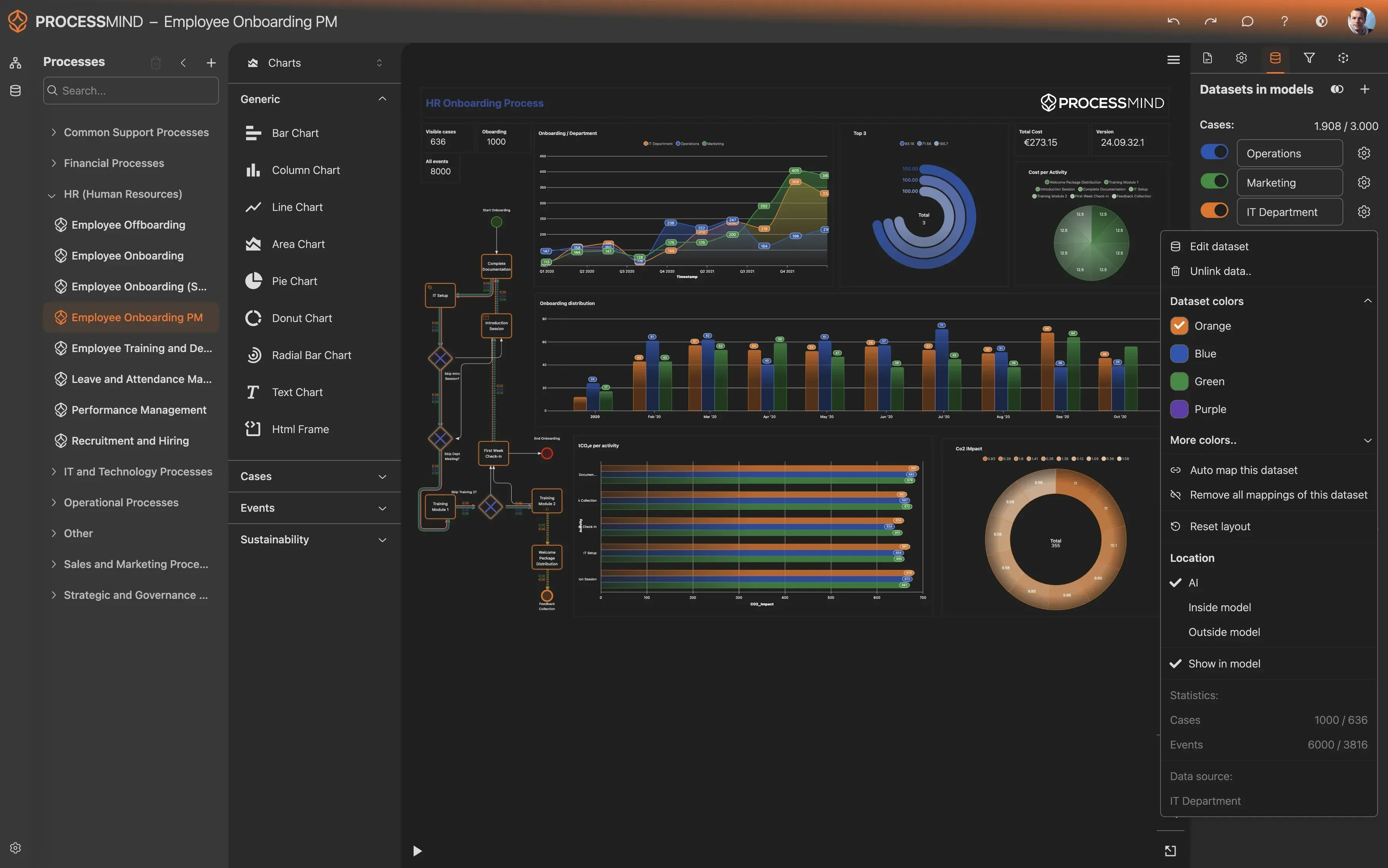
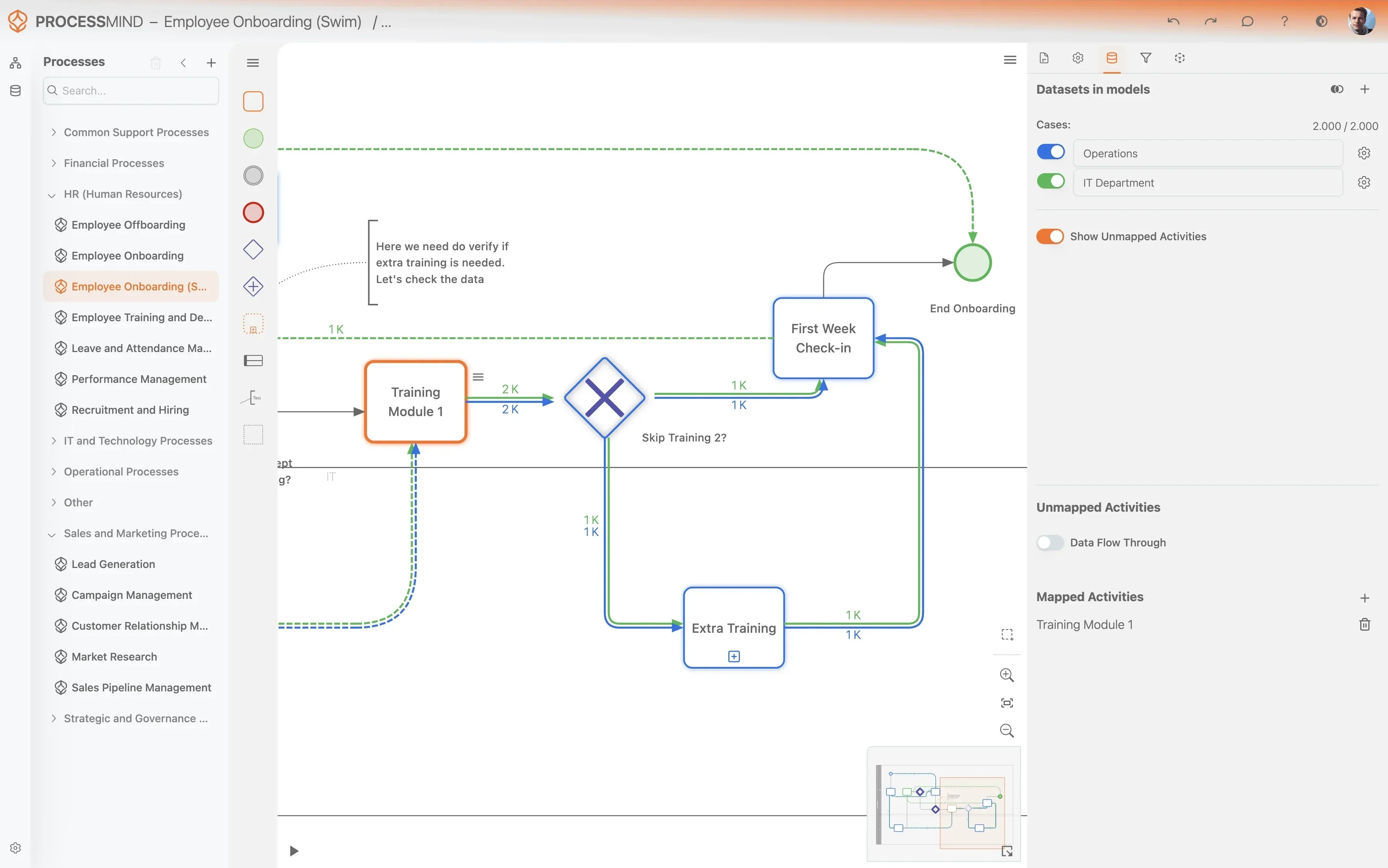
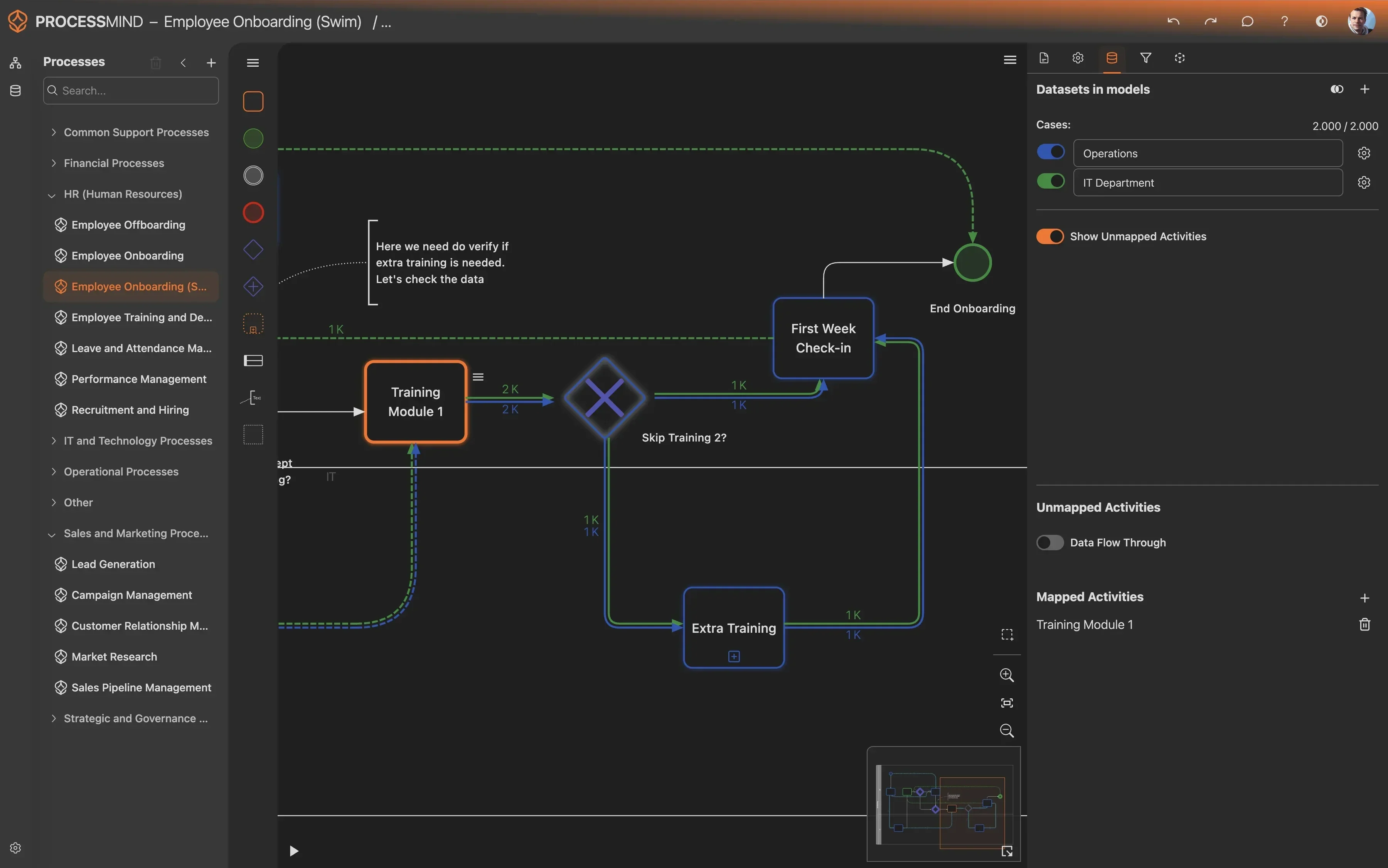
Explore the automatically generated dashboards and process maps, reviewing AI-driven recommendations to pinpoint inefficiencies in inventory flows.
Why it matters
Visualizing your actual process execution helps uncover hidden delays, deviations, and compliance gaps, providing concrete areas for improvement.
Expected outcome
A clear understanding of your inventory process performance, including bottlenecks and AI-identified optimization opportunities.
Implement Improvements
What to do
Prioritize and implement the identified improvement opportunities, focusing on areas like put-away optimization or internal transfer lead times in SAP ECC.
Why it matters
Taking action on data-backed insights directly leads to tangible benefits, such as reduced carrying costs, improved stock utilization, and faster order fulfillment.
Expected outcome
Concrete changes made to your SAP ECC Inventory Management processes, addressing identified inefficiencies.
Monitor Your Process
What to do
Periodically re-upload fresh Inventory Management data to ProcessMind to continuously track the impact of your implemented changes and measure KPI improvements.
Why it matters
Continuous monitoring ensures sustained performance gains and allows for agile adjustments, maintaining an optimized and efficient inventory operation over time.
Expected outcome
Ongoing visibility into the effectiveness of your process improvements and measurable KPI progress in Inventory Management.
WHAT YOU WILL GET
See Your Inventory Flow, Unlock Optimal Efficiency
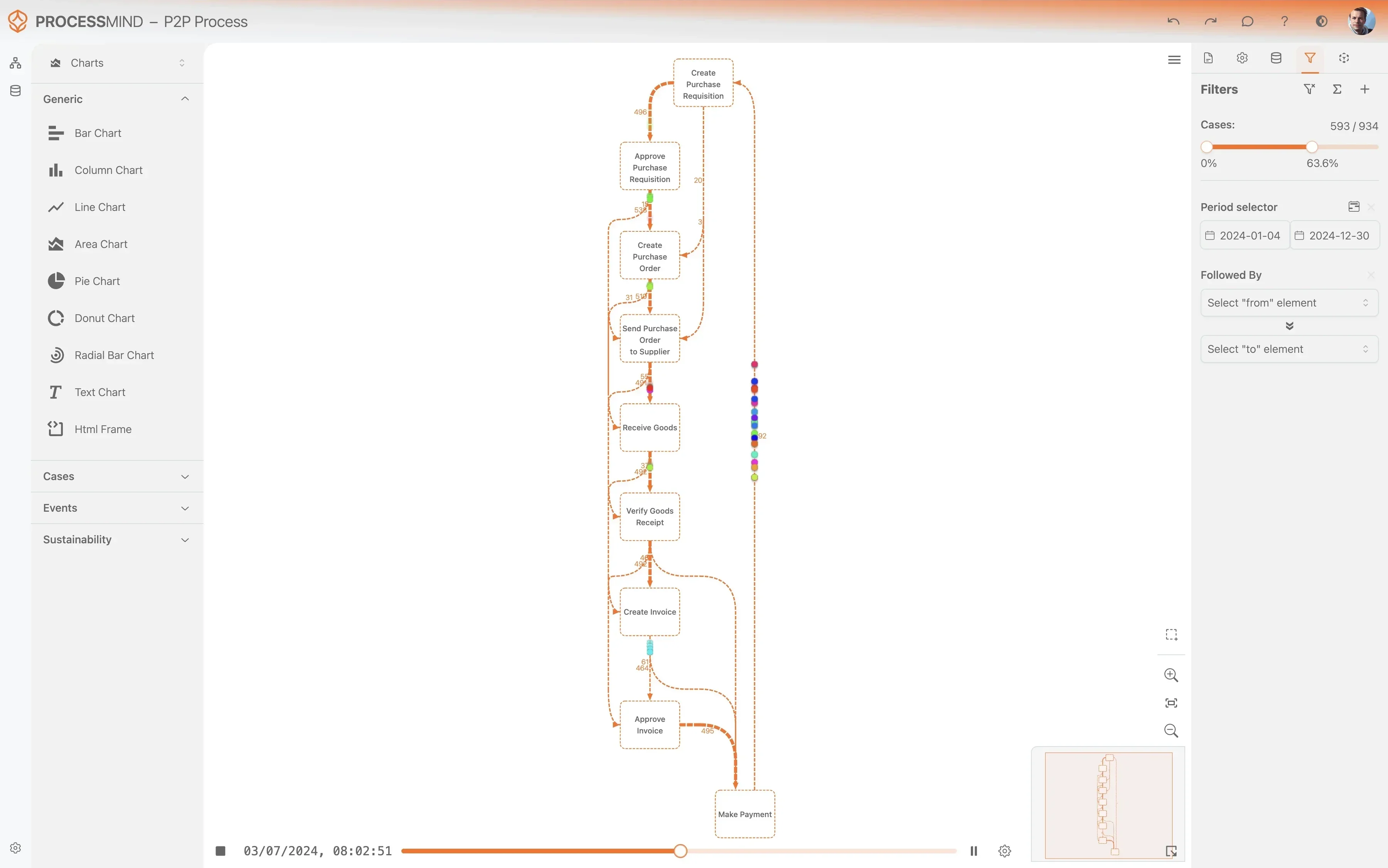
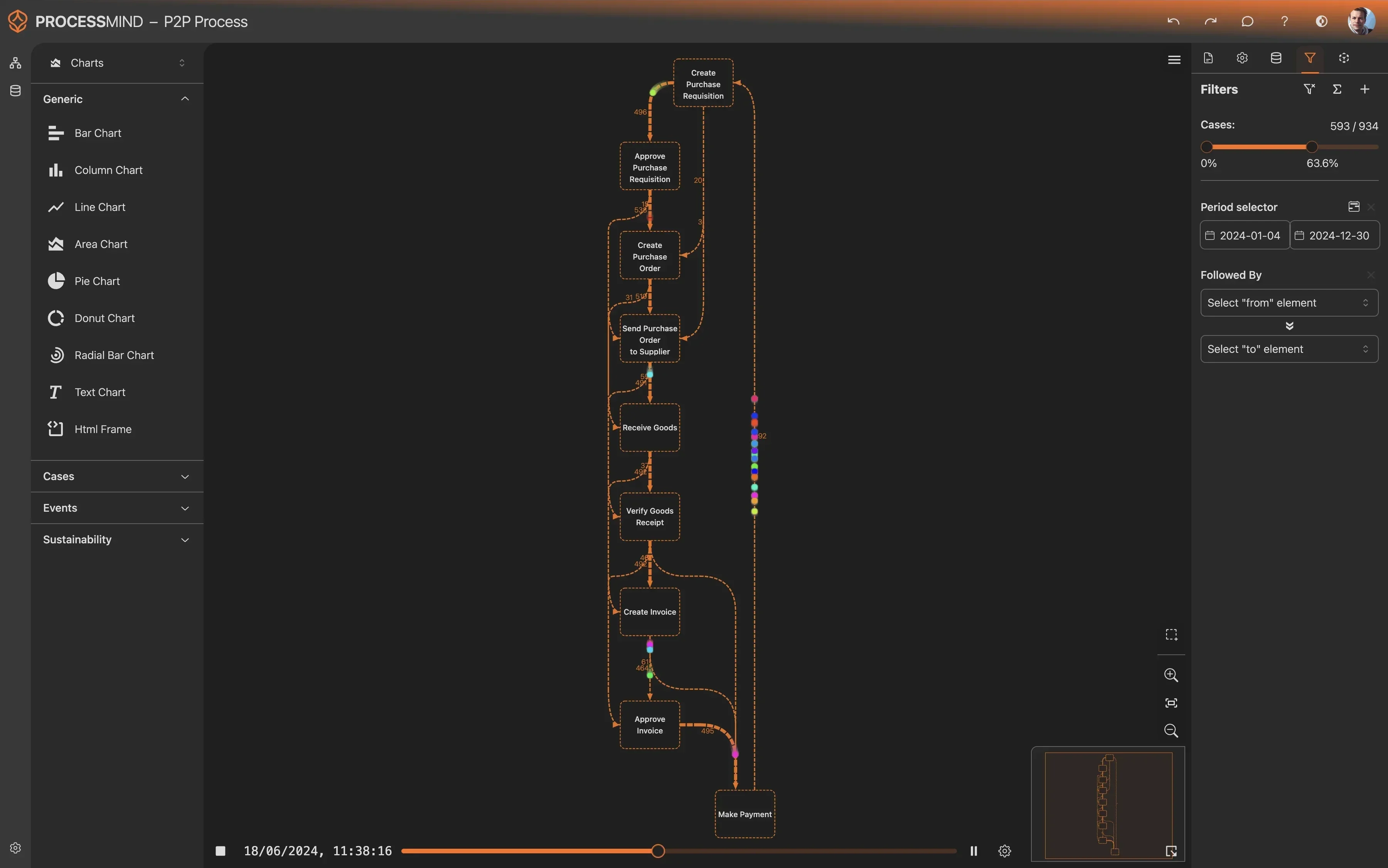
- Visualize actual goods receipt and put-away flows.
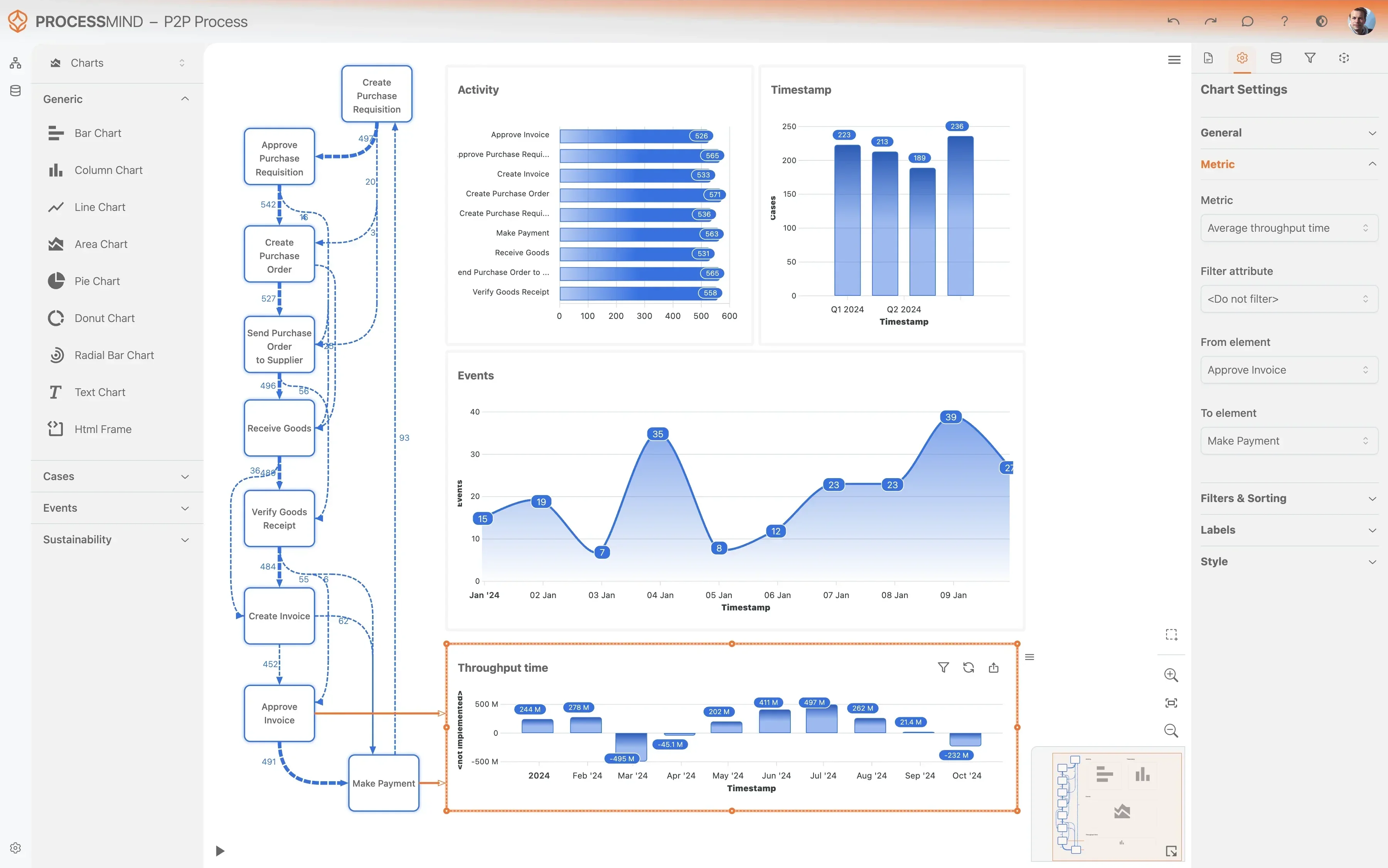
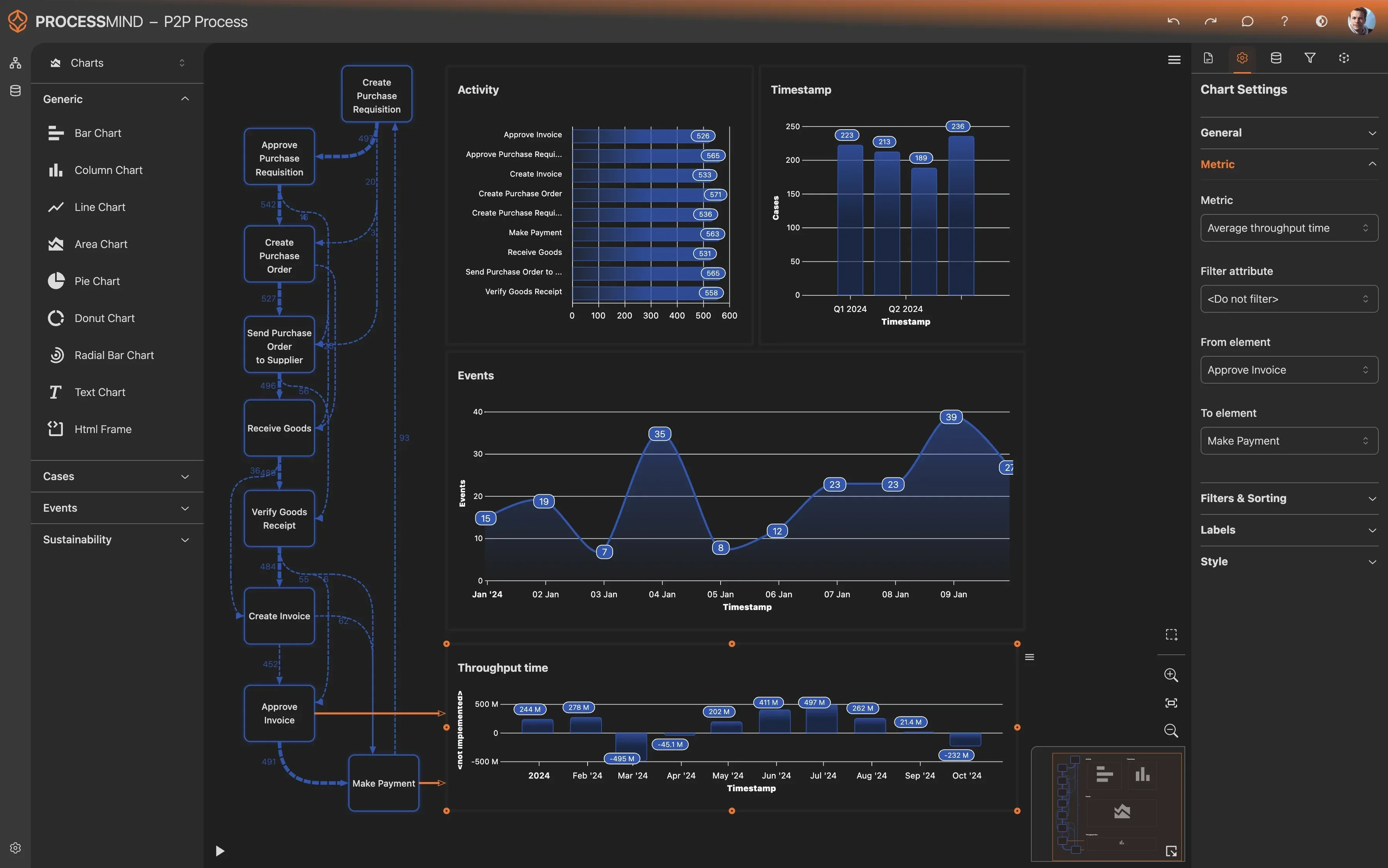
- Identify stockout risks and hidden carrying costs.
- Benchmark warehouse efficiency across plants.
- Pinpoint root causes of delayed stock movements.
TYPICAL OUTCOMES
Tangible Improvements in Inventory Management
These outcomes represent the measurable benefits achieved by organizations that optimize their Inventory Management processes, identifying and resolving inefficiencies within SAP ECC using process mining. By pinpointing bottlenecks and compliance gaps, businesses drive significant operational improvements.
Average cycle time reduction
Process mining identifies bottlenecks and rework in put-away processes, leading to significant time savings in getting goods into storage and available for orders.
Reduction in inventory adjustment costs
By pinpointing the root causes of inventory discrepancies, organizations can minimize manual adjustments, audits, and associated financial losses.
Cycle time decrease
Visualizing picking and packing paths helps identify suboptimal routes and delays, drastically cutting the time from order creation to shipment.
Increase in stock rotation adherence
Process mining provides clear visibility into actual stock movement, ensuring adherence to FIFO/FEFO rules and minimizing compliance risks and potential write-offs.
Reduction in material loss costs
Understanding the process deviations leading to damaged, obsolete, or expired stock allows for proactive measures to reduce costly inventory write-offs.
Decrease in stockout incidents
By identifying patterns causing inventory shortages, process mining helps optimize stock levels and replenishment strategies, ensuring product availability and improving customer satisfaction.
Results vary based on process specifics, data quality, and system configuration. The figures presented here illustrate typical improvements observed in similar Inventory Management implementations.
Recommended Data
FAQs
Frequently asked questions
Process mining helps visualize the actual execution of inventory processes, identifying bottlenecks like slow put-away or inefficient stock movements. It uncovers root causes for issues like high discrepancy rates or long quality inspection times. This allows for data-driven decisions to optimize the entire inventory lifecycle.
To perform process mining for Inventory Management, you typically need event logs from relevant SAP ECC tables. Key data includes event IDs, timestamps, activity names, and case identifiers, such as Inventory Batch or Lot numbers. Specific tables often include MSEG for material documents and LIPS for deliveries.
While initial data extraction and transformation require some technical expertise, modern process mining tools simplify the analysis phase. Many solutions offer pre-built connectors and templates for SAP ECC, reducing the complexity. The focus shifts from manual data analysis to automated discovery and continuous monitoring.
Initial insights, including process maps and bottleneck identification, can often be generated within weeks of data extraction and loading. Comprehensive optimization projects, addressing identified issues, may take several months. Expected results include reduced put-away times, lower discrepancy rates, and improved stock rotation compliance.
Yes, process mining is designed to pinpoint specific inefficiencies within your inventory processes. It can directly visualize and quantify the impact of slow put-away, long quality inspection holds, or excessive scrapping costs. By mapping actual process flows, it identifies the exact steps causing delays or waste.
You will need access to your SAP ECC system to extract raw data from relevant tables, typically through a data extract or direct connection. Technical skills for data extraction, transformation, and potentially some SQL querying are beneficial. A suitable process mining software platform is also essential.
High-quality, complete, and accurate data from SAP ECC is crucial for meaningful process mining results. Inconsistent or missing event data can lead to skewed process maps and inaccurate bottleneck identification. It is important to validate data integrity during the extraction and preparation phases.
Absolutely, process mining can trace the flow of individual inventory batches, allowing you to monitor adherence to stock rotation rules like FIFO or LIFO. It can identify instances where older stock is not moved first, highlighting non-compliance patterns and their impact. This supports improved operational discipline.
Optimize SAP ECC Inventory: Reduce Cycle Time by 30%
Pinpoint inefficiencies and achieve 30% faster inventory processes.
No credit card required, setup in minutes.